
- Why Reactive Metals Punish Heat
- What SPT Changes
- Shielding Strategy for Ti
- Where It Runs
- A Ti Parameter Ladder with SPT
- Applications and Inspection
- Frequently Asked Questions
- What is the main advantage of SPT for welding titanium?
- How can I tell if my shielding is effective when welding titanium?
- Which Sigma Laser machines offer SPT for reactive metals?
- What post-weld inspections are recommended for titanium joints?
- Related Articles
Quick Answer: Welding titanium and reactive metals with SPT (microsecond fibre pulse control) enables precise heat management, minimized HAZ, and strong, clean joints—especially critical for biocompatible and high-value components. Success depends on shielding, parameter control, and post-weld inspection, all supported by Sigma’s fibre series with SPT.
| Challenge | Effect | Indicator |
|---|---|---|
| Atmospheric Gas Absorption | Embrittlement, loss of ductility, degraded mechanical properties | Discoloration, brittle joints |
| Oxidation | Reduced corrosion resistance, microcracks | Color spectrum (straw, blue, gray) |
| Insufficient Shielding | Contamination, weld failure | Excessive discoloration, failed welds |
Why Reactive Metals Punish Heat
Titanium and other reactive metals, such as zirconium and tantalum, present unique challenges in laser welding due to their strong affinity for oxygen, nitrogen, and hydrogen at elevated temperatures. When exposed to air during welding, these metals rapidly absorb atmospheric gases, leading to embrittlement, loss of ductility, and severe degradation of mechanical properties. Even trace amounts of contamination can compromise the integrity of a weld, making process control and shielding absolutely critical.
One of the most visible signs of improper welding on reactive metals is discoloration. Titanium, for example, will display a spectrum of colors—ranging from straw yellow to deep blue and even gray—depending on the degree of oxidation. While some color changes are acceptable, excessive discoloration indicates significant oxygen uptake, which correlates directly with embrittlement and reduced corrosion resistance. For critical applications such as medical devices or aerospace components, any deviation from the desired color can signal a failed weld.
Embrittlement is particularly unforgiving in reactive metals. Unlike steels, which may tolerate minor oxidation without catastrophic loss of performance, titanium’s mechanical properties degrade rapidly with even slight contamination. Welds that appear visually sound may still harbor microcracks or brittle phases, which can propagate under service loads. This makes it essential not only to control the welding environment but also to adopt process technologies that minimize thermal exposure and allow for precise heat input management.
- Oxygen affinity makes reactive metals highly sensitive to atmospheric contamination.
- Discoloration is a direct visual cue of weld quality and shielding effectiveness.
- Embrittlement from gas absorption leads to brittle, failure-prone joints.
| Feature | SPT (Microsecond Pulse Control) | Conventional Pulsed/CW Laser |
|---|---|---|
| Pulse Duration Control | Microsecond-scale, ultra-fine adjustment | Limited, less precise |
| Heat Input Management | Precisely matched to joint/material | Broader, less targeted |
| HAZ Size | Minimized | Larger |
| Risk of Oxidation/Embrittlement | Reduced | Higher |
| Suitability for Thin/Complex Parts | Excellent | Limited |
What SPT Changes
SPT (Microsecond Fiber Laser Pulse Control) represents a significant advancement for welding titanium and other reactive metals. Unlike conventional pulsed or continuous wave (CW) fibre lasers, SPT enables the operator to tailor pulse duration and energy delivery at the microsecond scale. This ultra-fine control allows the heat input to be matched precisely to the joint geometry and material thickness, minimizing the time the metal spends at critical temperatures where gas absorption and oxidation occur.
For titanium and stainless steel, this means SPT can dramatically reduce the heat-affected zone (HAZ). A smaller HAZ translates to less grain growth, lower residual stresses, and reduced risk of microcracking or embrittlement. The catalogue and product pages confirm that SPT is designed specifically to address the challenges of biocompatible and high-value metals, enabling strong, clean welds even on delicate or thin-walled components.
Operators benefit from the ability to fine-tune pulse parameters in real time, adjusting for part geometry, joint fit-up, and shielding effectiveness. SPT’s microsecond pulse shaping is particularly effective for applications where traditional pulsed or CW modes risk overheating or excessive oxidation. The result is a process window that supports both high productivity and the stringent quality demands of medical, tooling, and aerospace sectors.
- Ultra-fine pulse control reduces HAZ and oxidation risk.
- Supports welding of biocompatible and reactive metals with minimal embrittlement.
- Enables strong, aesthetically clean joints on thin or complex parts.
| Practice | Purpose |
|---|---|
| Use high-purity argon (99.99%+) | Prevent atmospheric contamination |
| Maintain argon flow during welding and cooling | Avoid post-weld oxidation |
| Extend shielding beyond weld pool | Protect entire heat-affected area |
| Observe weld color | Verify shielding effectiveness |
| Inspect and maintain gas delivery system | Prevent contamination from leaks or impurities |
Shielding Strategy for Ti
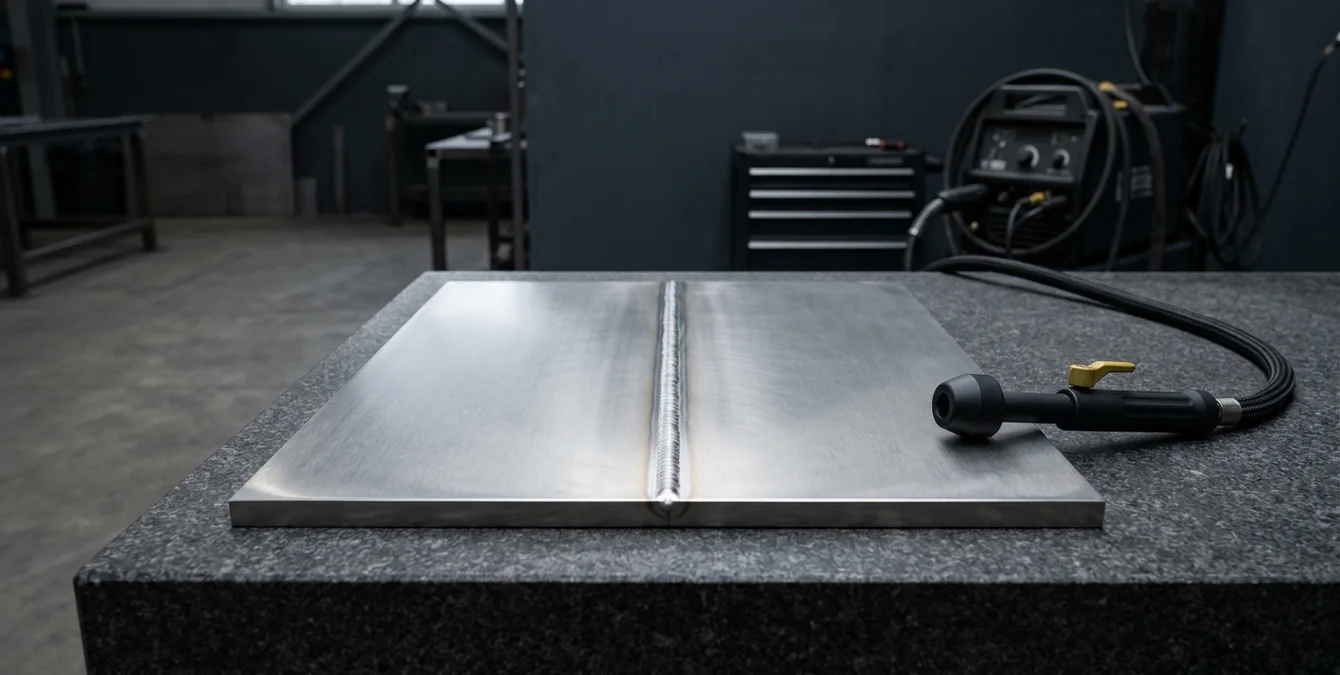
Effective shielding is the cornerstone of successful titanium welding. Argon is the industry-standard shielding gas, chosen for its inertness and ability to displace atmospheric gases from the weld zone. For titanium, it is critical to maintain a robust argon flow not only during the weld but also throughout the cooling phase. This prevents post-weld oxidation, which can occur while the metal remains above its critical temperature for gas absorption.
Operators should ensure that argon coverage extends beyond the immediate weld pool, enveloping the entire heat-affected area. This may involve the use of trailing shields, custom nozzles, or auxiliary gas curtains, depending on part geometry and fixture setup. The effectiveness of shielding is best verified by observing the color of the finished weld. A bright, silvery appearance indicates excellent protection, while straw, blue, or gray hues suggest insufficient coverage or gas purity issues.
Maintaining gas purity is equally important. Any contamination—moisture, oxygen, or nitrogen—will compromise weld quality. Regular checks of gas lines, fittings, and flow rates are essential, as is the use of high-purity argon (typically 99.99% or better). In production environments, operators should establish protocols for pre-purge and post-flow durations to ensure consistent protection during all stages of the weld cycle.
- Use high-purity argon and maintain flow during welding and cooling.
- Observe weld color as a direct indicator of shielding effectiveness.
- Inspect and maintain gas delivery systems to prevent contamination.
Where It Runs
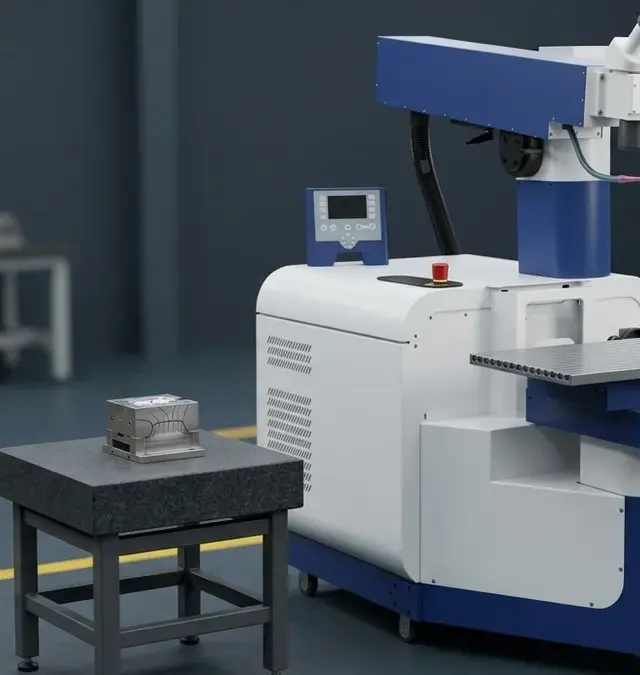
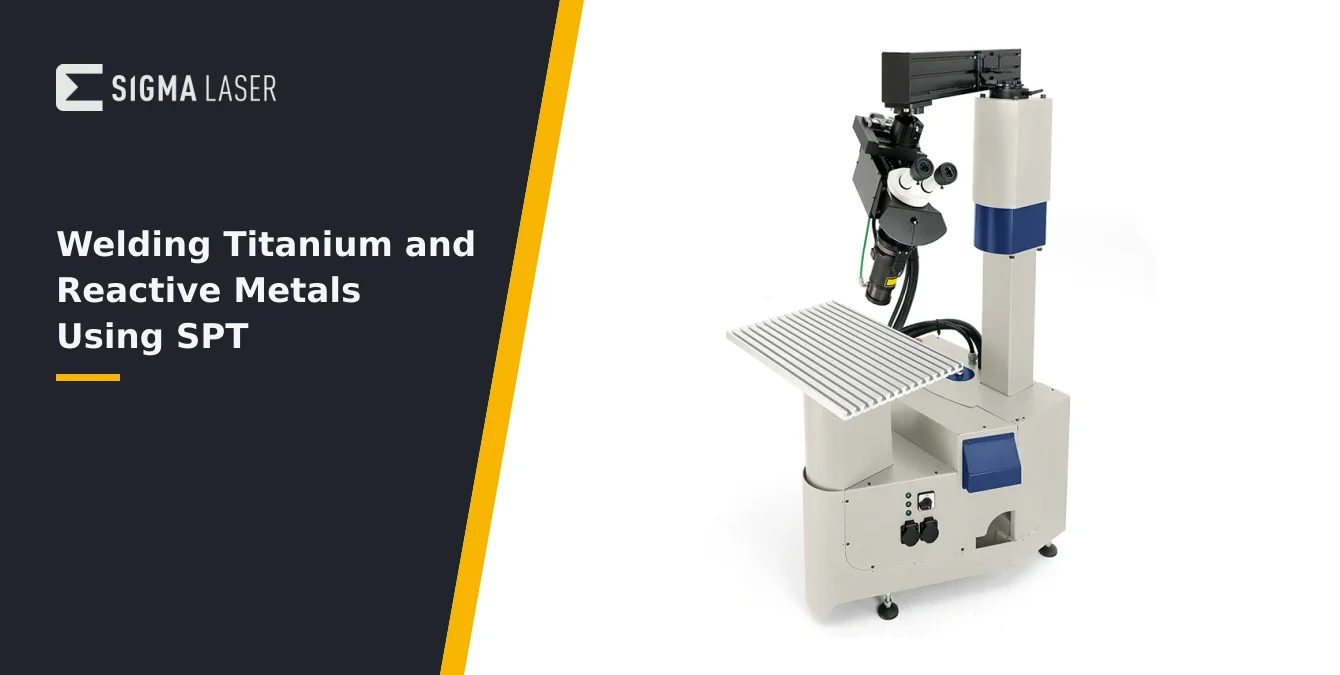
SPT (microsecond fibre pulse control) is a technology available on all six Sigma Laser welding machines—including both Fibre and Light series platforms. According to the official catalogue and product pages, SPT is available across the full range of Sigma Laser welding systems. This compact stationary system is engineered for applications demanding ultra-fine control over heat input, such as welding titanium, stainless steel, and other biocompatible or reactive metals.
The Siega Fibre combines a Yb fibre laser source (1070 nm) with advanced pulse modulation capabilities, supporting both pulsed, continuous wave (CW), and SPT operation modes. This versatility allows operators to select the optimal welding regime for the material and joint configuration at hand. The system’s working envelope and axis precision are well-suited for medical, tooling, and microfabrication tasks where reactive metals are commonly used.
SPT is available on all six Sigma Laser welding machines, including the Siega Fibre as well as the Sidanus Fibre, Sineo Fibre, and all Light series models. This provides operators with advanced pulse control and flexibility for a wide range of material types and thicknesses. For all SPT-enabled operations, the Sigomatic software suite provides real-time process monitoring and parameter adjustment, ensuring safe and repeatable results.
- SPT is available on all six Sigma Laser welding machines, including Siega Fibre, Sidanus Fibre, Sineo Fibre, and all Light series models.
- Other fibre series machines support pulsed and CW modes.
- Consult documentation or Sigma for SPT availability on additional models.
A Ti Parameter Ladder with SPT
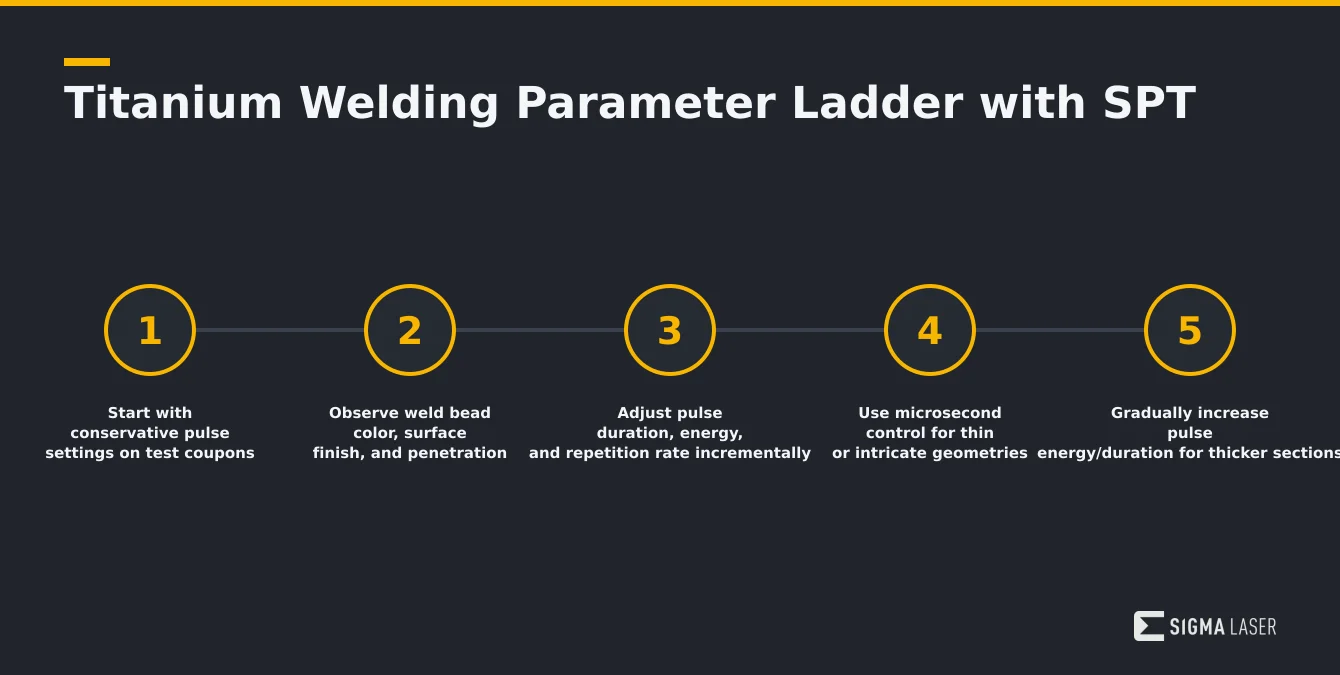
Developing a parameter ladder is a best practice when welding titanium with SPT. Begin by referencing your material parameter table and select conservative pulse settings—shorter pulse durations and lower energy—for initial trials, especially on thin or delicate parts. This approach minimizes the risk of overheating, excessive HAZ, or discoloration, allowing you to dial in optimal settings incrementally.
Start with test coupons or scrap material that closely match your production components. Observe the weld bead for color, surface finish, and penetration. Adjust pulse duration, energy, and repetition rate via the Sigomatic panel as needed, aiming for a clean, silvery weld with minimal heat tint. For thin-walled or intricate geometries, SPT’s microsecond control enables precise heat input, reducing the likelihood of warping or burn-through.
As you gain confidence, gradually increase pulse energy or duration to achieve full penetration or desired bead geometry on thicker sections. Always verify shielding effectiveness at each step, as parameter changes can influence gas coverage requirements. Document successful parameter sets for future reference and quality assurance. This iterative, data-driven approach ensures reproducible, high-quality welds across a range of titanium part geometries and thicknesses.
- Start with conservative settings on test pieces.
- Observe weld color and bead profile; adjust parameters incrementally.
- Document optimal settings for production consistency.
Applications and Inspection
SPT-enabled welding of titanium and reactive metals is especially valued in sectors where joint integrity and biocompatibility are paramount. Medical instruments and implants, such as surgical tools, dental components, and orthopedic devices, demand welds that are not only mechanically robust but also free from contamination and discoloration. The ability to produce clean, precise welds with minimal HAZ makes SPT-equipped systems ideal for these applications.
Post-weld inspection is a critical step for reactive metals. Begin with a thorough visual examination under good lighting and, if available, magnification. Look for uniform bead appearance, absence of discoloration, and smooth transitions between weld and base material. Any evidence of blue, purple, or gray hues should prompt a review of shielding practices and process parameters. For mission-critical components, consider additional non-destructive testing methods such as dye penetrant inspection or X-ray analysis to detect subsurface flaws.
Mechanical testing—such as tensile, bend, or fatigue tests—may be required for qualification, especially in regulated industries. Keep detailed records of weld parameters, inspection results, and any corrective actions taken. This documentation supports traceability and continuous improvement, ensuring that every titanium or reactive metal weld meets the demanding standards of your application sector.
- Medical, tooling, and aerospace sectors benefit from SPT’s precision.
- Visual and non-destructive inspections are essential for quality assurance.
- Maintain comprehensive records for traceability and compliance.
Frequently Asked Questions
What is the main advantage of SPT for welding titanium?
SPT (microsecond fibre pulse control) enables ultra-fine adjustment of heat input, minimizing the heat-affected zone and reducing oxidation risk. This results in stronger, cleaner welds with less embrittlement, making SPT especially valuable for high-purity titanium and biocompatible components.
How can I tell if my shielding is effective when welding titanium?
The color of the finished weld is your best indicator. A bright, silvery weld surface suggests effective argon shielding, while straw, blue, or gray hues indicate oxidation and possible contamination. Consistent gas flow and coverage during welding and cooling are essential.
Which Sigma Laser machines offer SPT for reactive metals?
SPT is available on all six Sigma Laser welding machines, including the Siega Fibre platform, which is designed for applications requiring precise control over heat input. SPT is also standard on Sidanus Fibre, Sineo Fibre, and all Light series models.
What post-weld inspections are recommended for titanium joints?
Begin with a visual inspection for color and surface quality. For critical parts, use non-destructive testing methods like dye penetrant or X-ray to detect internal flaws. Mechanical tests may be required for qualification in regulated sectors. Always document parameters and results for traceability.