
- The one hard requirement: a clear line of sight
- How flexible head positioning opens up difficult geometry
- What tilting and swivelling optics change
- Combining optics with the machine’s movement range
- When disassembly is still the better decision
- Frequently Asked Questions
- What is the minimum requirement for welding hard-to-reach areas?
- How do swivelling optics help in welding complex geometries?
- Can all hard-to-reach areas be welded without disassembly?
- What practical steps can maximize access to difficult weld areas?
- Related Articles
Quick Answer: Laser welding hard-to-reach areas is possible if there is a clear line of sight between the welding optics and the repair zone. Flexible head positioning and swivelling optics allow access to complex geometries, often eliminating the need for disassembly. However, if no line of sight is possible, disassembly may still be required.
| Welding Method | Access Requirement | Typical Tool Flexibility |
|---|---|---|
| Laser Welding | Clear, unobstructed line of sight between optics and weld zone is mandatory | Requires direct optical path; cannot weld around corners or through gaps |
| Arc/Resistance Welding | Direct line of sight not always required | Electrodes or torches can sometimes be maneuvered around corners or through small gaps |
This table summarizes the fundamental difference in access requirements between laser welding and traditional arc/resistance welding, as described in the article.
The one hard requirement: a clear line of sight
Laser welding is an exceptionally precise process, but it is fundamentally limited by one non-negotiable requirement: a clear line of sight between the welding optics and the area to be repaired. The laser beam must travel unobstructed from the optics to the weld zone to deliver energy exactly where it is needed. This is not a matter of preference or convenience, but a physical necessity dictated by the nature of laser energy transmission.
For production managers and toolmakers, this means that any repair or modification planned for a hard-to-reach area must first be evaluated for direct optical access. Unlike arc or resistance welding, where electrodes or torches can sometimes be maneuvered around corners or through small gaps, laser welding cannot function without a direct path. This requirement applies regardless of the complexity of the component, the orientation of the weld, or the type of laser system in use.
In practice, this means that before scheduling a repair, teams should inspect the component and map out potential access routes for the optics. If the area is blocked by other features, internal cavities, or overhanging structures, these obstructions must be considered early in the planning process. Understanding this core limitation is the starting point for all further decisions about fixturing, machine selection, and repair strategy.
While this may seem restrictive, it is also what enables laser welding’s unique advantages: minimal heat input, precise energy delivery, and high-quality results in sensitive or geometrically complex parts. The challenge is to work within this requirement using the right technologies and techniques.
| Feature | Benefit for Hard-to-Reach Areas |
|---|---|
| Flexible Head Positioning | Allows approach from multiple angles; reduces need for fixturing or repositioning |
| Tilting & Swivelling Optics | Enables beam direction at various angles; accesses internal surfaces, undercuts, and recessed features |
| Multi-Axis Machine Movement | Coordinates head and optics movement to reach deep cavities and complex geometries |
These features, when combined, minimize the need for disassembly and enable efficient in situ repairs.
How flexible head positioning opens up difficult geometry
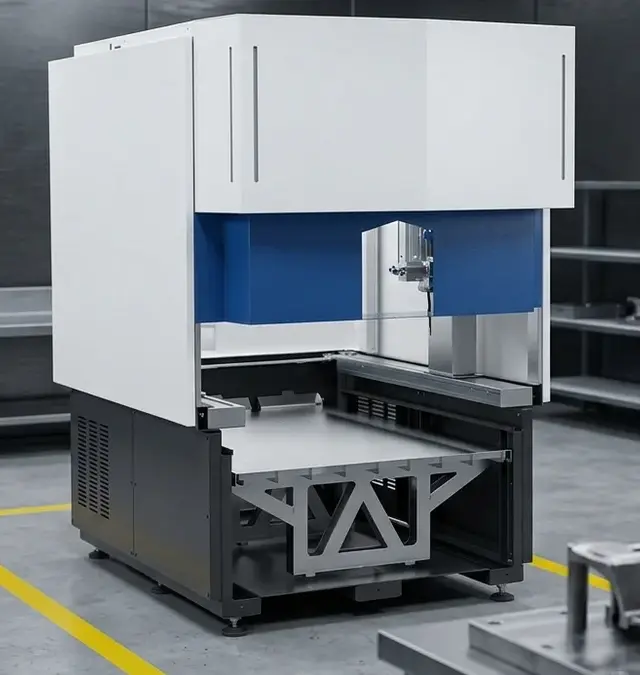
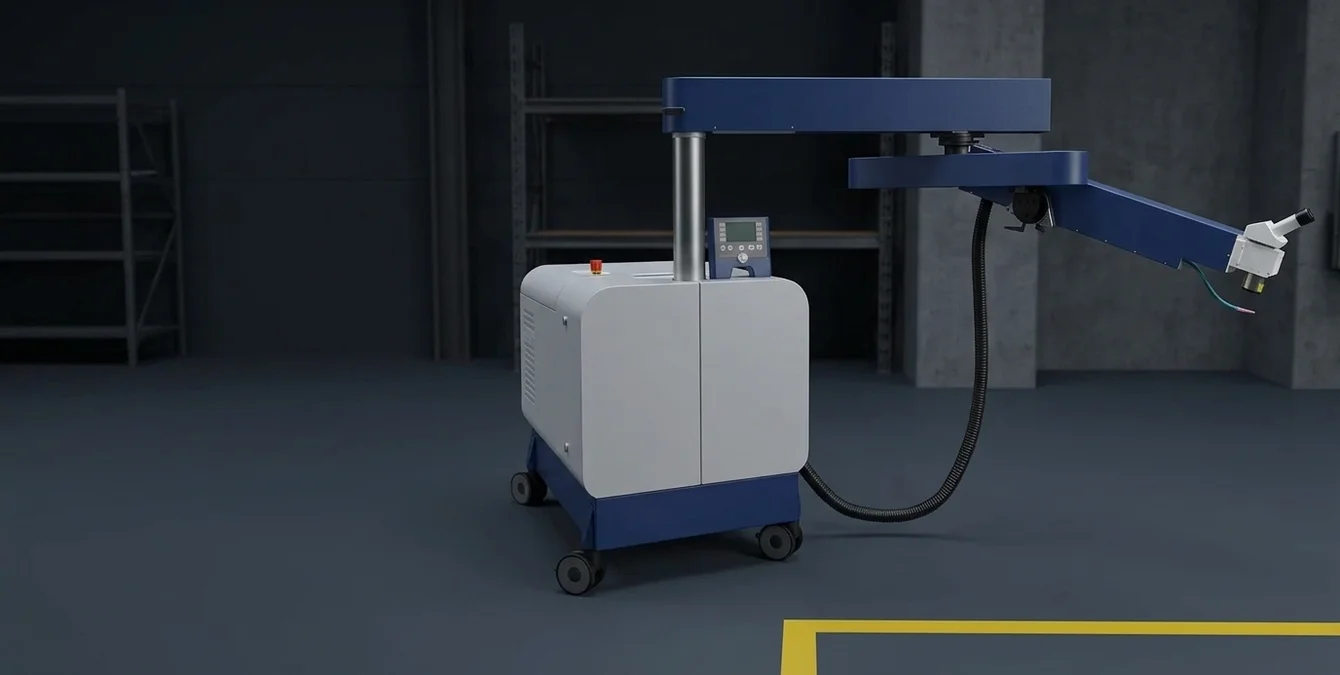
Once a clear line of sight is confirmed, the next challenge is physically bringing the laser optics into position. Modern laser welding systems are engineered with highly flexible head positioning to address the realities of complex component geometry. The ability to move, tilt, and rotate the welding head is not just a convenience—it is essential for accessing areas that would otherwise be out of reach for conventional tools.
For production environments dealing with large molds, dies, or intricate assemblies, flexible head positioning allows operators to approach the weld zone from multiple angles. This is particularly valuable when working inside deep cavities, along internal corners, or around features that restrict direct access. The welding head can be maneuvered to align the optics precisely with the repair site, maintaining the required line of sight while adapting to the component’s contours.
From a practical standpoint, this flexibility reduces the need for extensive fixturing or repositioning of the workpiece. Instead of moving a heavy or delicate component multiple times, the operator can adjust the welding head to reach different areas in a single setup. This not only saves time but also minimizes the risk of introducing errors or damage during handling. It also enables more efficient workflow, as operators can address several repair zones on a single component without repeated stops for reconfiguration.
For decision-makers, the key takeaway is that investing in a laser welding system with robust head positioning capabilities directly translates into greater versatility and productivity on the shop floor. It is a critical factor when evaluating systems for applications involving frequent repairs to complex or high-value components.
What tilting and swivelling optics change
Tilting and swivelling optics represent a significant advancement in the ability to weld hard-to-reach areas. These specialized optical modules enable the laser beam to be directed at a wide range of angles, rather than being limited to a straight-line approach. This capability is particularly valuable for accessing internal surfaces, undercuts, or recessed features that are common in mold and die repair.
By equipping a laser welding system with swivel optics, operators can adjust the beam direction in real time, aligning it with the repair zone even when the area is not directly accessible from above. This flexibility often makes the difference between a straightforward repair and one that would otherwise require partial or complete disassembly of the component. Swivelling optics also support a higher degree of process control, as the operator can maintain optimal focal distance and beam orientation regardless of the component’s geometry.
Implementing and maintaining these advanced optics requires proper setup and alignment. Resources such as Installing and Aligning Swivel Optics on Laser Welding Systems provide practical guidance for ensuring that the system delivers consistent, high-quality results. For production managers, this means that the investment in swivelling optics should be matched with operator training and maintenance routines to fully realize their benefits.
Ultimately, tilting and swivelling optics expand the range of feasible repairs, reduce downtime, and enhance the ability to respond to complex repair challenges without major component handling or rework.
Combining optics with the machine’s movement range
The true potential of laser welding for hard-to-reach areas is realized when swivelling optics are combined with the machine’s full range of movement. Modern systems are designed with multi-axis positioning, allowing the welding head to traverse, tilt, and rotate with precision. This synergy between optical flexibility and mechanical reach means that even large or awkwardly shaped components can be repaired efficiently and safely.
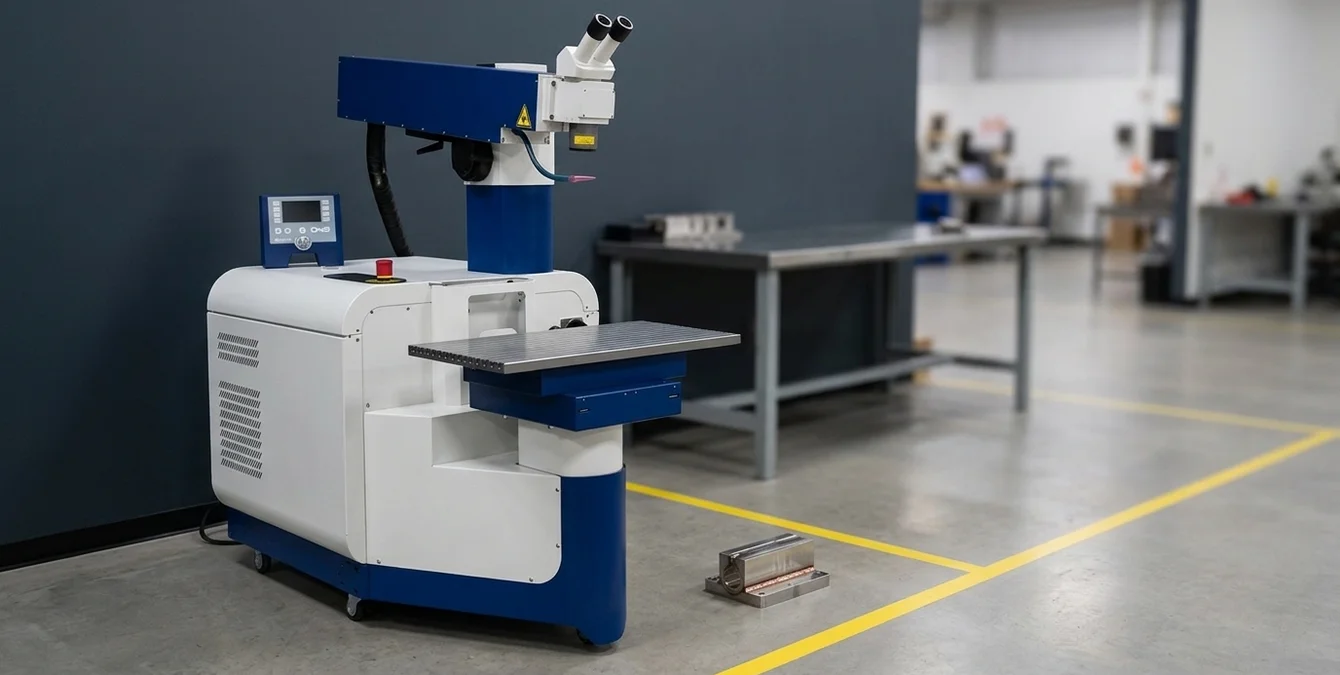
For example, a mobile laser welding system equipped with swivelling optics can be positioned around a stationary mold or tool, with the welding head maneuvered into position to reach multiple repair sites without moving the component itself. This approach is particularly advantageous for heavy or delicate parts, where unnecessary lifting or repositioning increases risk and handling time. The operator can access deep cavities, sidewalls, or internal features by coordinating the movement of the machine and the adjustment of the optics.
In many cases, this combination eliminates or significantly reduces the need for disassembly or complex fixturing. The repair can be completed in situ, minimizing production downtime and preserving the integrity of the component. For practical strategies on maximizing access, see Optimizing Access to Difficult-to-Reach Weld Areas. The result is a more agile and responsive repair process, with fewer interruptions to the overall production schedule.
For decision-makers, the key is to assess both the optical and mechanical capabilities of a system when planning for in-house laser welding. The right combination enables a broader range of repairs, faster turnaround, and a safer working environment.
When disassembly is still the better decision
Despite the significant advantages of flexible head positioning and swivelling optics, there are scenarios where disassembly remains the most practical or necessary approach. If a clear line of sight cannot be established—due to internal obstructions, complex internal geometry, or inaccessible cavities—no amount of optical or mechanical adjustment will overcome this physical barrier.
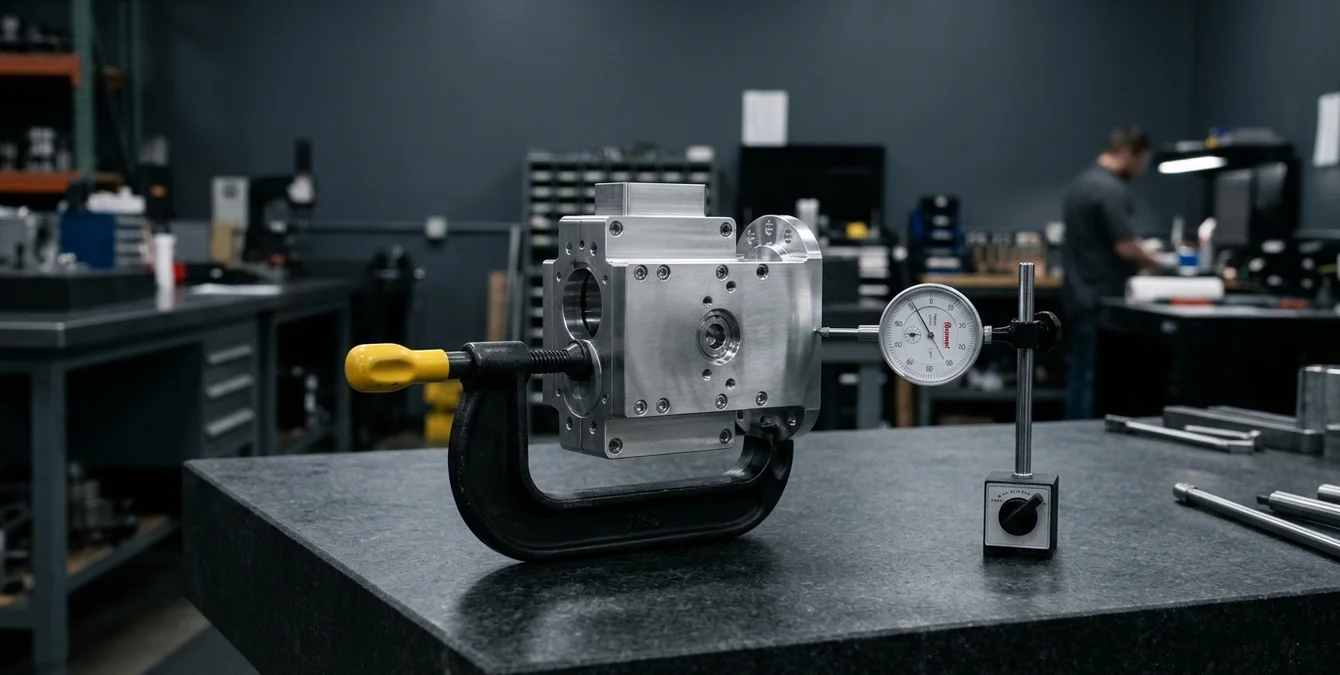
Additionally, even when access is technically possible, it may not always be advisable to proceed without disassembly. If reaching the area would require compromising the rigidity of fixturing, or if it would make inspection and quality control of the finished weld difficult, disassembly can offer better control over the process. Proper fixturing is an industry-standard best practice to ensure weld quality, repeatability, and operator safety.
In these cases, the decision should be based on a careful assessment of the trade-offs: the time and effort required for disassembly versus the risks and potential quality issues of attempting a repair in situ. For high-value or precision-critical components, the ability to inspect the weld thoroughly may outweigh the benefits of avoiding disassembly. Production managers should include these considerations in their standard repair planning workflow.
Ultimately, while advanced optics and machine movement greatly expand what is possible, they do not eliminate the need for sound engineering judgment. The optimal approach balances access, quality, and efficiency for each specific repair scenario.
Frequently Asked Questions
What is the minimum requirement for welding hard-to-reach areas?
The absolute requirement is a clear line of sight between the welding optics and the repair area. Without this, laser energy cannot be delivered to the weld zone, regardless of the system’s flexibility or features.
How do swivelling optics help in welding complex geometries?
Swivelling optics allow the laser beam to be directed at various angles, enabling access to internal surfaces, undercuts, or recessed features without moving the component. This often eliminates the need for disassembly.
Can all hard-to-reach areas be welded without disassembly?
Not always. If no clear line of sight can be established, or if access would compromise fixturing or inspection, disassembly may still be necessary. Each case should be evaluated individually.
What practical steps can maximize access to difficult weld areas?
Use a system with flexible head positioning and swivelling optics, plan repairs to maintain line of sight, and combine mechanical movement with optical adjustment. Assess each repair for the need for fixturing or disassembly.