
- Key Takeaways
- What are the Best Metals for Laser Welding?
- Stainless Steel Laser Welding
- Aluminum Laser Welding
- Titanium Laser Welding
- How Does Laser Welding Compare to TIG Welding?
- Efficiency and Precision
- Cost and Application Scenarios
- Which Thermoplastics are Suitable for Laser Welding?
- Common Thermoplastics for Laser Welding
- Challenges in Thermoplastic Laser Welding
- Challenges with Different Metals in Laser Welding
- Thermal Conductivity and Reflectivity
- Material Thickness Considerations
- Why Choose Laser Welding for Your Procurement Needs?
- Speed and Precision Benefits
- Cost-Effectiveness and Quality Improvement
- Frequently Asked Questions
- What are the best metals for laser welding?
- How does laser welding compare to TIG welding?
- What factors should be considered when selecting materials for laser welding?
- Can laser welding be used for dissimilar metal joints?
- What are the advantages of laser welding in industrial applications?
- Are there any limitations to laser welding?
- How does material thickness affect laser welding?
Key Takeaways
As procurement managers explore the most effective materials for laser welding, understanding the nuances of material compatibility is crucial for optimizing both performance and cost-efficiency. This section provides a concise overview of key considerations when selecting materials for laser welding applications.
- Aluminum alloys, particularly those with high silicon content, offer excellent laser absorption and weldability, making them ideal for lightweight applications.
- Stainless steel grades such as 304 and 316 are preferred for their corrosion resistance and thermal conductivity, which enhance weld integrity.
- Copper and its alloys require specialized laser settings due to their high reflectivity, yet they are indispensable in electrical applications for their conductivity.
- Carbon steels can be effectively welded using laser techniques, but attention must be paid to carbon content to avoid brittleness in the weld area.
- Nickel-based alloys provide superior strength and corrosion resistance, suitable for high-temperature and harsh environments, though they may require more advanced laser systems for optimal results.
- Material thickness and joint configuration significantly influence laser welding parameters; thin materials may require lower power settings to prevent burn-through.
- Ensuring material surface cleanliness is essential, as contaminants can affect laser absorption and lead to weld defects.
Understanding the specific properties and requirements of each material can greatly enhance the efficiency and quality of laser welding processes. The following sections delve deeper into material compatibility and provide insights into selecting the best materials for your laser welding needs.
What are the Best Metals for Laser Welding?
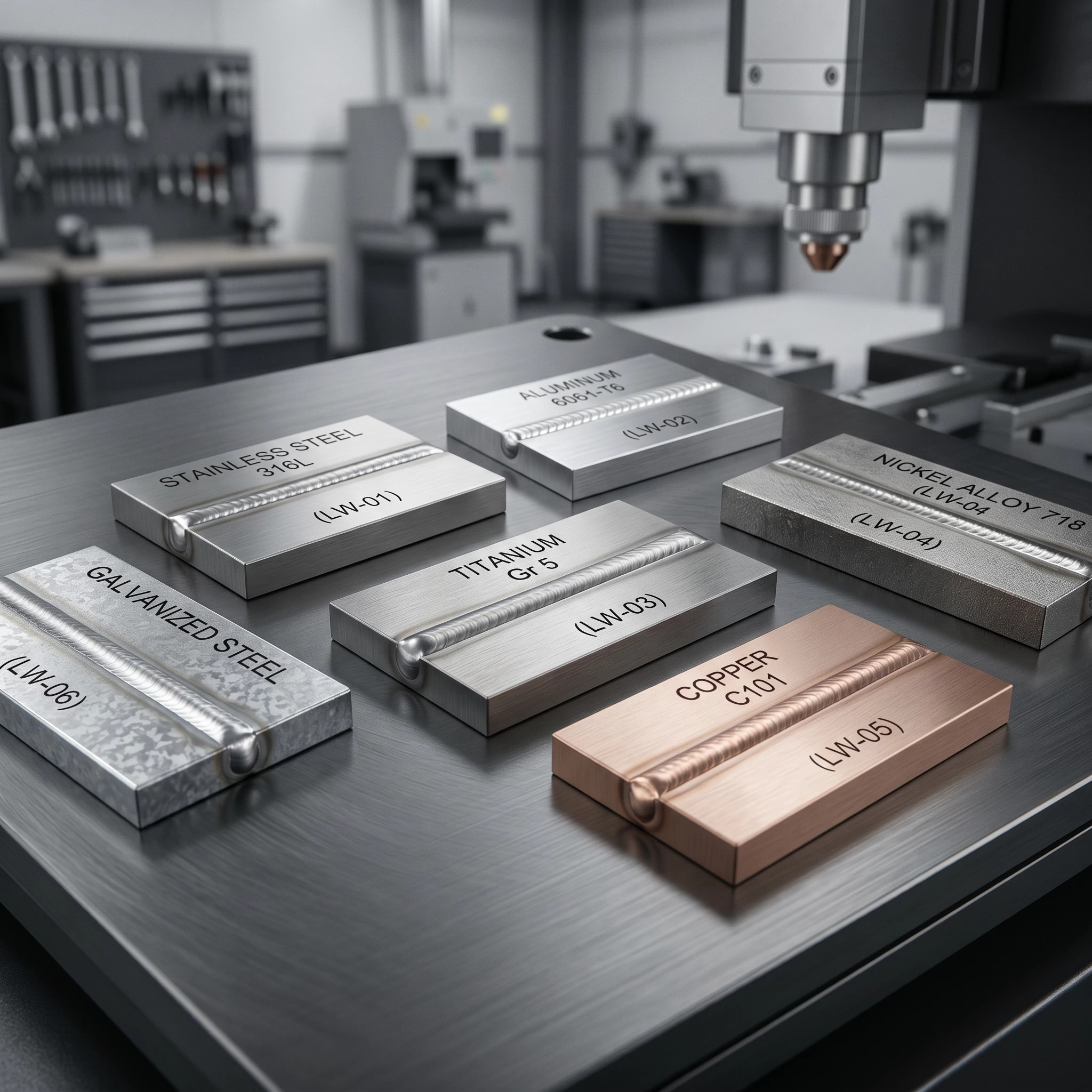
In modern manufacturing, selecting the right materials for laser welding is crucial for achieving high-quality and efficient results. Laser welding, which uses high-intensity light beams to join metals, is celebrated for its precision and minimal heat-affected zones. This article examines the compatibility of stainless steel, aluminum, and titanium with laser welding, offering insights for procurement managers seeking optimal materials for their industrial applications.
Stainless Steel Laser Welding
Stainless steel is a favored choice for laser welding due to its excellent thermal conductivity and corrosion resistance. It is widely utilized in industries such as automotive, aerospace, and medical device manufacturing. Its ability to maintain structural integrity under high temperatures makes it ideal for applications requiring durability and strength. However, precise control of welding parameters is essential to avoid issues like thermal distortion and oxidation.
- Advantages: High strength, corrosion resistance, good thermal conductivity.
- Limitations: Potential for thermal distortion, requires precise control over welding parameters.
- Applications: Automotive parts, surgical instruments, kitchen appliances.
- Typical Laser Parameters: Power ranges typically from 1 kW to 4 kW, with beam quality M² ≤ 1.2 for precision applications. Common wavelengths are 1064 nm for fiber lasers.
- Process Parameters: Welding speeds typically range from 1 to 10 m/min, with penetration depths up to 6 mm depending on the thickness and type of stainless steel (e.g., 304, 316L).
- Standards: ISO 15614-11:2002 provides guidance on welding procedure qualification for stainless steels.
Aluminum Laser Welding
Aluminum is renowned for its lightweight properties and is extensively used in transportation, construction, and consumer electronics. Its high reflectivity and thermal conductivity can pose challenges during laser welding. Incorporating Sigma Laser’s Super Pulse Technology (SPT) can mitigate these issues, enhancing weld quality. The use of fiber lasers, such as the Sidanus Fibre, optimizes the welding of aluminum alloys, ensuring minimal defects and improved joint strength.
- Advantages: Lightweight, excellent thermal conductivity, corrosion resistance.
- Limitations: High reflectivity, requires advanced laser technology for optimal results.
- Applications: Aerospace components, automotive frames, electronic housings.
- Typical Laser Parameters: Power levels often range from 2 kW to 6 kW, with wavelengths around 1070 nm to reduce reflectivity issues. Beam quality M² is crucial for fine welding, typically ≤ 1.5.
- Process Parameters: Welding speeds can reach up to 15 m/min, with penetration depths of up to 3 mm for alloys like 6061 and 7075.
- Standards: AWS D17.1/D17.1M:2017 is relevant for aerospace applications involving aluminum welding.
Titanium Laser Welding
Titanium is distinguished by its high strength-to-weight ratio and biocompatibility, making it suitable for aerospace, military, and medical industries. Laser welding of titanium ensures superior joint quality and minimal contamination, crucial for maintaining its intrinsic properties. However, welding in an inert atmosphere is necessary to prevent oxidation. Sigma Laser’s Sineo Light systems are adept at delivering precise, controlled welds on titanium.
- Advantages: High strength-to-weight ratio, excellent corrosion resistance, biocompatibility.
- Limitations: Requires inert gas shielding, potential for contamination if not controlled.
- Applications: Aerospace components, medical implants, military equipment.
- Typical Laser Parameters: Power outputs generally range from 1 kW to 3 kW, with beam quality M² ≤ 1.1 for high precision. Wavelengths around 1064 nm are standard for titanium.
- Process Parameters: Welding speeds typically range from 0.5 to 5 m/min, with penetration depths up to 4 mm. Inert gas shielding, such as argon, is essential to prevent oxidation.
- Standards: ISO 11145 and ISO 11146 are relevant for ensuring laser beam quality and stability during titanium welding.
By understanding the specific properties and requirements of each metal, procurement managers can make informed decisions, ultimately enhancing their production capabilities and product quality with Sigma Laser’s advanced laser welding solutions.
How Does Laser Welding Compare to TIG Welding?
In the realm of precision welding, both laser welding and TIG (Tungsten Inert Gas) welding play crucial roles across various industrial applications. Engineers and procurement managers often evaluate these options based on specific project needs, especially when dealing with materials like stainless steel, aluminum, and titanium.
Efficiency and Precision
Laser welding, particularly with systems such as Sigma Laser’s Sidanus Light and Siega Fibre, offers unmatched efficiency and precision. This technology is ideal for projects requiring high-speed operations and minimal thermal distortion, making it perfect for applications in the electronics and aerospace industries. Laser welding excels in providing consistent and precise welds on challenging materials like aluminum and titanium, which are common in high-stakes manufacturing environments.
Laser systems typically operate in the power range of 500 W to 10 kW, with wavelengths around 1064 nm for fiber lasers, providing excellent beam quality (M² < 1.5) that enables fine focus and high precision. The welding speed can reach up to 10 m/min, with penetration depths varying from 0.1 mm to over 10 mm, depending on the material and laser parameters. The heat-affected zone (HAZ) is minimal, often less than 1 mm, which is crucial for maintaining material integrity and reducing post-weld processing.
In contrast, TIG welding is celebrated for its ability to produce high-quality welds on thin sections of stainless steel and non-ferrous metals. However, it involves a slower process with the potential for higher heat input, leading to increased thermal distortion. While TIG welding may not match the speed and precision of laser systems, it remains a preferred method for projects where weld appearance and control over the weld pool are critical.
Cost and Application Scenarios
Cost considerations are crucial when choosing between laser and TIG welding. Laser welding equipment, such as Sigma Laser’s Sineo Fibre and Super Pulse Technology (SPT), represents a higher initial investment but offers long-term savings through increased efficiency and reduced post-processing needs. This makes laser welding particularly beneficial for high-volume production runs or when working with expensive materials like titanium.
TIG welding, on the other hand, involves lower initial capital expenditure, which can be appealing for smaller operations or projects where budget constraints are a concern. However, the slower processing speeds and higher labor costs may outweigh the upfront savings in scenarios requiring large-scale production.
For procurement managers, the choice between laser and TIG welding depends on specific project metrics—speed, precision, and material type. For instance, in sectors such as automotive and aerospace, where stainless steel laser welding and thermoplastics laser welding are common, the enhanced capabilities of laser systems present a compelling advantage.
Laser welding is particularly effective for high-strength steels (e.g., ASTM A514, AISI 4130) and aerospace-grade aluminum alloys (e.g., 2024, 7075), where precision and minimal thermal distortion are paramount. According to ISO 15614-11:2002, the qualification of welding procedures for metallic materials ensures that the welds meet stringent quality standards, which is critical in high-reliability applications.
Which Thermoplastics are Suitable for Laser Welding?
In industrial applications, selecting the best materials for laser welding is crucial for ensuring optimal performance and efficiency. At Sigma Laser, we understand the importance of precision and material compatibility in laser welding processes. While metals like stainless steel, aluminum, and titanium are commonly associated with laser welding, thermoplastics also offer significant potential in various engineering contexts.
Common Thermoplastics for Laser Welding
Thermoplastics such as polycarbonate (PC), polypropylene (PP), and polyamide (PA) are frequently chosen for laser welding due to their excellent compatibility with laser technology. These materials are commonly used in industries ranging from automotive to consumer electronics, where components require secure and precise joining. The versatility of thermoplastic laser welding allows for applications that demand high-strength bonds without compromising aesthetics.
- Polycarbonate (PC): Known for its optical clarity and strength, PC is ideal for applications where transparency is needed, such as in automotive lighting and electronic housings. Typically, a laser wavelength of 808 nm to 1064 nm is used, with power settings ranging from 20W to 100W, depending on the thickness.
- Polypropylene (PP): With its chemical resistance and flexibility, PP is suitable for applications in the chemical and medical industries. The laser welding process often employs a wavelength of 980 nm, with welding speeds ranging from 100 mm/s to 300 mm/s to ensure optimal bond strength.
- Polyamide (PA): This material is valued for its thermal resistance and is often used in high-temperature environments like under-the-hood automotive components. PA typically requires a laser power of 30W to 150W and a wavelength of 1064 nm, with a focus on minimizing the heat-affected zone (HAZ) to maintain material integrity.
Challenges in Thermoplastic Laser Welding
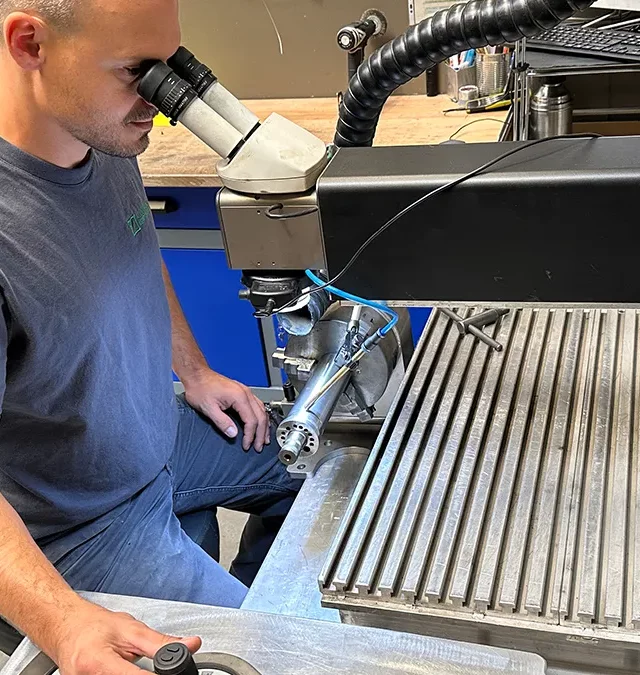
While thermoplastics offer numerous advantages, there are challenges associated with their laser welding. Key considerations include material thickness, laser wavelength compatibility, and joint design. Unlike metals such as stainless steel, aluminum, and titanium, thermoplastics require careful selection of laser parameters to prevent degradation or distortion. At Sigma Laser, our advanced systems, including the Sidanus Light and Sirius Light, are engineered to address these challenges effectively, ensuring high-quality welds that meet industry standards such as ISO 9001 and DIN EN ISO 4063.
It is critical to consider the beam quality, typically characterized by an M² value of less than 1.3, to ensure precision and repeatability. The focal length of the laser optics, often ranging from 50 mm to 200 mm, plays a significant role in achieving the desired penetration depth and weld seam quality.
Overall, understanding the intricacies of thermoplastic laser welding can lead to significant advancements in manufacturing processes, offering procurement managers the ability to enhance product quality and production efficiency.
Challenges with Different Metals in Laser Welding
In industrial laser welding, the characteristics of the materials involved significantly affect the process and outcome. Understanding these challenges is crucial for procurement managers to ensure optimal performance and efficiency in manufacturing operations. This section delves into critical issues such as thermal conductivity, reflectivity, and material thickness, offering insights and best practices to effectively mitigate these challenges.
Thermal Conductivity and Reflectivity
Thermal conductivity and reflectivity are key factors in laser welding, influencing heat input and absorption. Metals like copper and aluminum exhibit high thermal conductivity, dispersing heat rapidly, which requires higher power settings or specialized laser systems like the Sidanus Light or Sineo Fibre from Sigma Laser. High reflectivity, especially in aluminum, can lead to inefficient energy absorption, necessitating advanced technologies such as Super Pulse Technology (SPT) to enhance penetration and weld quality.
- Stainless Steel Laser Welding: Offers consistent absorption and is less challenging due to lower reflectivity and moderate thermal conductivity. Commonly welded using 1064 nm wavelength lasers with power ranges from 1 kW to 6 kW, achieving penetration depths up to 10 mm with typical welding speeds of 1 to 3 m/min.
- Aluminum Laser Welding: Requires careful parameter adjustments and potentially pre-heating to counteract high conductivity and reflectivity. Utilizing Nd:YAG or fiber lasers with wavelengths around 1064 nm, power levels often exceed 4 kW, and welding speeds can range from 0.5 to 2 m/min.
- Titanium Laser Welding: Benefits from low thermal conductivity but necessitates controlled environments to prevent contamination. Typically performed in inert gas atmospheres like argon, with laser powers ranging from 1 kW to 3 kW and focal lengths between 100 to 200 mm to maintain a narrow heat-affected zone (HAZ).
- Thermoplastics Laser Welding: Demands low power settings and precise control to prevent material degradation. CO2 lasers with power levels of 20 to 100 W are commonly used, and welding speeds can be adjusted between 0.1 to 0.5 m/min to ensure optimal joint quality.
Material Thickness Considerations
Material thickness directly impacts the choice of laser system and settings. Thicker materials require more energy and specific focal points, achievable through Swivel Optics with Telescopic Lens for superior precision and control. Thin materials, on the other hand, benefit from technologies like the Sineo Light, which offer fine-tuned energy delivery without causing warping or burn-through.
The process parameters must adhere to standards such as ISO 15614-11:2002 for metallic materials, ensuring that welding procedures are qualified and repeatable. For applications such as aerospace or automotive, where precision is paramount, selecting the best materials for laser welding involves understanding the interplay of these challenges. Sigma Laser’s range of solutions, including the Siega Fibre and Sigomatic Pro, ensures that these challenges are met with cutting-edge technology and engineering expertise.
Why Choose Laser Welding for Your Procurement Needs?
In the realm of advanced manufacturing, laser welding emerges as a pivotal technology for procurement managers aiming to optimize production processes. Engineered for precision and speed, Sigma Laser’s welding systems are not only highly efficient but also cost-effective, making them an ideal choice for various industrial applications. When considering materials like stainless steel, aluminum, and titanium for laser welding, the advantages become even more apparent.
Laser welding systems typically operate within a power range of 1 kW to 10 kW, with wavelengths around 1064 nm for fiber lasers, which are optimal for high-reflectivity materials such as aluminum and copper. The beam quality, often denoted by the M² value, is crucial for achieving fine focus and high precision, with values typically less than 1.2 for high-quality fiber lasers.
Speed and Precision Benefits
Laser welding offers unmatched speed and precision, essential for industries demanding high throughput and exacting standards. Systems such as Sigma Laser’s Sidanus Light and Sirius Light utilize Super Pulse Technology (SPT), ensuring rapid weld cycles without compromising accuracy. This technology is particularly advantageous when working with materials like aluminum and titanium, where precision is crucial for maintaining structural integrity. The use of fiber laser technology further enhances this, allowing for minimal thermal distortion and superior weld quality.
Typical welding speeds can range from 1 mm/s to 50 mm/s depending on the material and thickness, with penetration depths varying from 0.5 mm to 5 mm for common industrial applications. The heat-affected zone (HAZ) is minimized, often limited to a few micrometers, which is critical for maintaining the mechanical properties of sensitive materials.
Cost-Effectiveness and Quality Improvement
From a procurement perspective, laser welding is a cost-effective solution that enhances product quality. By minimizing material waste and reducing the need for post-weld processing, systems like the Siega Fibre and Sineo Fibre offer a significant return on investment. The precision control provided by laser technology ensures consistent weld quality, which is crucial for applications involving complex geometries and sensitive materials such as stainless steel and thermoplastics. This consistency reduces the risk of defects, thereby lowering costs associated with rework and scrap.
Laser welding is particularly compatible with materials such as austenitic stainless steels (e.g., 304, 316), aluminum alloys (e.g., 6061, 7075), and titanium alloys (e.g., Ti-6Al-4V). These materials benefit from the controlled heat input and minimal distortion offered by laser processes. The process adheres to standards such as ISO 15614-11:2002 for metallic materials and AWS D17.1/D17.1M:2017 for aerospace applications, ensuring compliance with industry requirements.
Incorporating laser welding into your production line not only meets ISO 9001 standards but also aligns with the stringent requirements of the European Committee for Standardization (CEN). Whether you’re welding nickel alloys for aerospace components or copper for electronics, Sigma Laser’s advanced systems deliver the reliability and efficiency needed to maintain a competitive edge in today’s industrial landscape.
Frequently Asked Questions
What are the best metals for laser welding?
The best metals for laser welding include stainless steel, carbon steel, aluminum, and titanium. These materials absorb laser energy efficiently, allowing precise control over the welding process. Stainless steel and aluminum are particularly popular due to their widespread industrial use and excellent weld quality.
How does laser welding compare to TIG welding?
Laser welding offers higher precision and speed compared to TIG welding. It provides deeper penetration with minimal heat distortion, making it ideal for thin materials. TIG welding, however, is more versatile for different joint types and thicker materials but is generally slower.
What factors should be considered when selecting materials for laser welding?
Key factors include the material’s thermal conductivity, reflectivity, and thickness. High reflectivity materials like copper may require specialized lasers. Material cleanliness and joint fit-up are also crucial for optimal weld quality.
Can laser welding be used for dissimilar metal joints?
Laser welding can join dissimilar metals, but it requires careful control of welding parameters to manage differences in melting points and thermal expansion. Common dissimilar combinations include steel to aluminum and titanium to nickel-based alloys.
What are the advantages of laser welding in industrial applications?
Laser welding offers high precision, low distortion, and the ability to automate processes. It is suitable for complex geometries and high-speed production lines, providing consistent weld quality with minimal post-processing.
Are there any limitations to laser welding?
Limitations include high initial equipment costs and challenges with highly reflective or conductive materials. Proper setup and maintenance are essential to prevent beam misalignment and ensure consistent performance.
How does material thickness affect laser welding?
Material thickness impacts the laser’s power requirements and penetration depth. Thinner materials require less power and are more prone to distortion, while thicker materials need higher power and may require multiple passes for full penetration.