
- Key Takeaways
- Introduction to Laser Welding Materials
- What is Laser Welding?
- Importance of Material Selection
- What are the Most Common Materials Used in Laser Welding?
- Metals Suitable for Laser Welding
- Material Properties and Suitability
- How Does Laser Welding Compare to Traditional Welding Methods?
- Laser Welding vs. Arc Welding
- Efficiency and Precision
- Process Parameters in Laser Welding
- Laser Power and Speed
- Focal Point and Beam Quality
- Process Control in Laser Welding
- Monitoring Techniques
- Control Systems and Feedback
- Optimization of Laser Welding Processes
- Parameter Optimization
- Cost-Effectiveness and Efficiency
- Industrial Implementation of Laser Welding
- Integration into Production Lines
- Case Studies and Examples
- Challenges and Best Practices in Welding Different Materials
- Material-Specific Challenges
- Solutions and Best Practices
- Frequently Asked Questions
- What are the most common materials used in laser welding?
- How does laser welding compare to traditional welding methods?
- Can laser welding be used on dissimilar materials?
- What are the advantages of using laser welding for high-volume production?
- What thickness of materials can be welded using laser welding?
- Is laser welding suitable for automated production lines?
Key Takeaways
Laser welding is a versatile and efficient technique that has revolutionized material joining in various industries. Understanding the types of materials suitable for laser welding and the advantages it offers can help welding engineers and production managers optimize their processes.
- Laser welding is compatible with a wide range of materials, including stainless steel, aluminum, titanium, and certain plastics, making it a versatile choice for diverse applications.
- Materials with high thermal conductivity, like copper, require specialized laser parameters to achieve successful welds due to their heat dissipation characteristics.
- High-strength steels benefit from laser welding’s precision, reducing thermal distortion and maintaining material integrity.
- Laser welding offers superior speed and accuracy compared to traditional welding methods, significantly increasing production efficiency.
- The non-contact nature of laser welding minimizes contamination risks, ensuring cleaner and more reliable joints.
- Laser welding can be easily automated, providing consistent results and reducing the dependency on operator skill levels.
- Advanced laser technologies, such as fiber lasers, offer enhanced penetration and focus, enabling welding of thicker materials with high precision.
By exploring the compatibility of various materials with laser welding and its numerous advantages, professionals can make informed decisions to enhance their production capabilities. Delve into the specifics of material selection and process benefits to unlock the full potential of laser welding in your operations.
Introduction to Laser Welding Materials
In the ever-evolving landscape of modern manufacturing, laser welding plays an increasingly pivotal role. This precision technology, exemplified by Sigma Laser’s lineup of welding systems such as the Sidanus Light and Sirius Light, offers unmatched advantages in joining a wide array of materials. For welding engineers and production managers, understanding the intricacies of laser welding materials is crucial for optimizing manufacturing processes and achieving superior weld quality.
What is Laser Welding?
Laser welding is a high-precision technique that uses concentrated light energy to melt and fuse materials at the molecular level. Unlike traditional welding methods, laser welding provides high-speed processing, minimal thermal distortion, and the capability to weld complex geometries. Sigma Laser’s advanced technologies, such as Swivel Optics and Super Pulse Technology (SPT), enhance the precision and efficiency of the welding process, making it suitable for applications in industries ranging from aerospace to automotive.
Real-world applications of laser welding include assembling intricate components in the electronics industry, joining lightweight materials in automotive manufacturing, and creating leak-proof seals in medical device fabrication. The precision offered by fiber lasers, like those in the Siega Fibre series, ensures consistent weld quality for critical applications.
Typical industrial laser specifications include power ranges from 500 watts to 10 kilowatts, wavelengths of 1.06 micrometers for fiber lasers, and beam quality M² values typically less than 1.2, which are crucial for achieving high precision and minimal heat-affected zones (HAZ). Welding speeds can range from 1 to 10 meters per minute, depending on the material and thickness, with penetration depths up to 10 mm for steel materials.
Importance of Material Selection
Selecting appropriate laser welding materials is a fundamental factor in the success of any welding operation. Different materials respond uniquely to laser energy, and their weldability can significantly impact the structural integrity and performance of the final product.
- Stainless Steel: Known for its corrosion resistance and strength, stainless steel is commonly welded using Nd:YAG and fiber lasers, offering clean and precise welds essential in the food and pharmaceutical industries. Typical grades include 304 and 316, which require careful control of welding parameters to maintain corrosion resistance.
- Aluminum Alloys: These materials, prevalent in the aerospace sector, require careful control of welding parameters to prevent defects like porosity. Sigma Laser’s Sineo Fibre systems are adept at handling such challenges. Common alloys such as 6061 and 7075 demand precise energy input to avoid issues like hot cracking.
- Copper: With its high thermal conductivity, copper can be challenging to weld. However, Sigma Laser’s Super Pulse Technology (SPT) optimizes energy delivery for superior welds. Achieving weld penetration in copper often requires power densities exceeding 10^6 W/cm².
- Titanium: Valued for its strength-to-weight ratio, titanium demands precise control to avoid contamination. The advanced features of Sigma Laser’s Swivel Optics ensure high-quality welds without compromising material properties. Welding in inert atmospheres is crucial to prevent oxidation and maintain material integrity.
By leveraging the capabilities of Sigma Laser systems and adhering to standards like ISO 9001 and DIN EN ISO 4063, manufacturers can achieve optimal results in laser welding applications. The choice of material, combined with the right equipment, directly influences the efficiency and durability of the manufacturing process.
What are the Most Common Materials Used in Laser Welding?
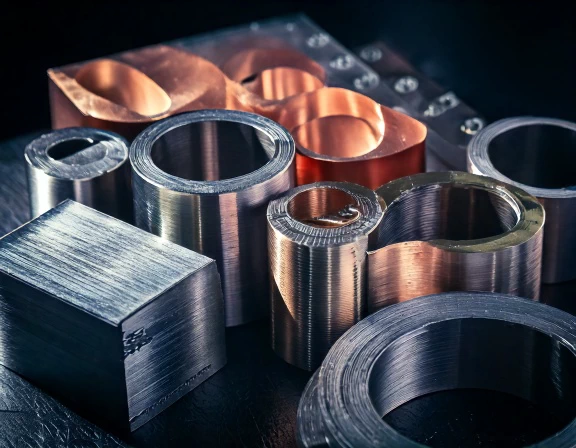
In the realm of precision manufacturing, laser welding has emerged as a pivotal technique, offering unparalleled advantages in terms of speed, precision, and versatility. Understanding the most suitable laser welding materials is crucial for optimizing industrial applications. Laser welding is highly effective in joining a variety of metals, which are selected based on their material properties and suitability for specific engineering challenges.
Metals Suitable for Laser Welding
The selection of metals for laser welding depends on their thermal conductivity, reflectivity, and melting point. At Sigma Laser, we engineer systems like the Sidanus Fibre and Siega Fibre to handle a broad spectrum of weldable materials with laser technology.
- Stainless Steel: Often preferred for its corrosion resistance and high strength, stainless steel is a staple in industries ranging from automotive to medical device manufacturing. Using our Super Pulse Technology (SPT), stainless steel can be welded efficiently with minimal distortion. Typical laser parameters include power levels ranging from 500W to 6kW, with a beam quality M² of less than 1.2, ensuring deep penetration and a narrow heat-affected zone (HAZ).
- Aluminum Alloys: Known for their lightweight and high strength-to-weight ratio, aluminum alloys are commonly used in aerospace and automotive sectors. Laser welding overcomes the high thermal conductivity and reflectivity challenges of aluminum, providing clean and strong welds. Commonly welded alloys include 6061 and 7075, with laser wavelengths typically around 1.064 µm to enhance absorption.
- Copper: While copper’s high thermal conductivity presents a challenge, advancements in laser technology, such as the Swivel Optics, allow for effective welding. Copper is widely used in electrical and thermal applications. Process parameters often require higher laser power, typically exceeding 2kW, and precise beam focus to achieve a penetration depth of up to 3mm.
- Titanium: Valued for its high strength and resistance to corrosion, titanium is ideal for aerospace and medical applications. Laser welding ensures precise and contamination-free joints. The welding process typically uses a controlled atmosphere to prevent oxidation, with power settings adjusted to maintain a narrow HAZ and minimize thermal distortion.
Material Properties and Suitability
The suitability of materials for laser welding is closely tied to their inherent properties. The choice of material impacts the welding parameters and ultimately the quality and performance of the weld. Here are key considerations for selecting laser welding materials:
- Thermal Conductivity: Materials with high thermal conductivity, such as copper, require precise control of laser parameters to prevent heat dissipation from affecting the weld quality. This often involves using shorter pulse durations and higher peak powers.
- Reflectivity: High reflectivity materials like aluminum require specific laser settings or coatings to enhance absorption and welding efficiency. Techniques such as using a laser with a wavelength of 532 nm (green laser) can improve absorption in aluminum.
- Melting Point: The melting point influences how much energy is needed to achieve a successful weld. Our Sidanus Light and Sineo Fibre systems are designed to adjust to varying energy requirements, accommodating melting points ranging from 660°C for aluminum to over 1,500°C for stainless steel.
- Corrosion Resistance: For applications demanding longevity and exposure to corrosive environments, materials like stainless steel and titanium are preferred. These materials comply with standards such as ISO 15614-11:2002, ensuring weld quality and performance in harsh conditions.
In conclusion, understanding the material properties and their compatibility with laser welding technology is essential for any manufacturing engineer or production manager. Sigma Laser’s advanced welding systems are engineered to accommodate a wide array of materials, ensuring that industries ranging from automotive to aerospace can achieve precise and high-quality welds. By leveraging our innovations such as the Motor-driven Turning Device and Z-Axis Module, manufacturers can optimize their production processes, achieving the highest standards in welding quality.
How Does Laser Welding Compare to Traditional Welding Methods?
In the realm of industrial manufacturing, laser welding systems, such as those engineered by Sigma Laser, offer a revolutionary approach to joining materials. These systems leverage highly concentrated laser beams to fuse weldable materials with laser precision, delivering unmatched accuracy and speed. But how does this advanced technology stack up against traditional welding methods like arc welding? This section delves into the engineering nuances and practical applications of laser welding compared to its conventional counterparts.
Laser Welding vs. Arc Welding
Arc welding, a time-honored method, employs electrical arcs to generate heat for joining metals. While this technique is widely used for its versatility and cost-effectiveness, it often falls short in terms of precision and efficiency when compared to laser welding. Laser welding, particularly with Sigma Laser’s Nd:YAG and fiber laser technologies, offers significant advantages:
- Precision: The concentrated laser beam can target exceptionally small areas, making it ideal for applications that demand high precision, such as in the aerospace and medical device industries. Typical beam quality (M²) values for fiber lasers are less than 1.1, allowing for spot sizes as small as 0.1 mm.
- Heat-Affected Zone: Laser welding’s minimal heat-affected zone reduces thermal distortion, crucial for applications involving complex geometries or heat-sensitive materials like aluminum alloys (e.g., 6061, 7075) and titanium. The heat-affected zone can be as narrow as 0.2 mm, depending on the material and laser parameters.
- Speed: The rapid processing speeds of laser welding, enhanced by Sigma Laser’s Super Pulse Technology (SPT), result in faster production cycles, thus increasing throughput in high-volume manufacturing environments. Typical welding speeds can range from 1 to 10 m/min, depending on material thickness and laser power.
- Material Compatibility: While arc welding can be limited by material thickness and type, laser welding materials include a wide range, from stainless steel (e.g., 304, 316) to copper, making it versatile for various industrial applications. The penetration depth can reach up to 25 mm in steel with high-power lasers.
Efficiency and Precision
When examining efficiency, laser welding systems like Sigma Laser’s Sidanus and Sirius models provide significant operational advantages. With the integration of Swivel Optics and motor-driven turning devices, these systems achieve precise, repeatable welds that are critical for sectors like electronics and automotive manufacturing. The repeatability of laser welding systems can be within ±0.01 mm, ensuring high-quality welds.
The precision offered by laser welding is unmatched by traditional methods. The use of advanced control systems, such as the Sigomatic Pro, allows for real-time adjustments and monitoring, ensuring consistent weld quality. This level of control is essential in industries where weld integrity is non-negotiable, such as in the production of high-performance engines and precision instrumentation.
While laser welding presents numerous advantages, it is important to acknowledge its limitations. Initial investment costs can be high, and specialized training is required to operate sophisticated equipment. However, these are often offset by the long-term benefits of reduced waste, improved product quality, and enhanced production efficiency.
In conclusion, for manufacturing engineers and production managers seeking to enhance their welding processes, laser welding represents a significant advancement over traditional methods like arc welding. With its array of advantages in precision, efficiency, and material compatibility, it is an indispensable tool for modern industrial applications.
Process Parameters in Laser Welding
In the realm of advanced manufacturing, laser welding stands out for its precision and efficiency in joining a variety of materials with laser technology. Sigma Laser systems, featuring cutting-edge technologies like the Sidanus Light and Sirius Light, are engineered for optimal performance across diverse industrial applications. Understanding and controlling the key process parameters is crucial to maximizing the quality and efficiency of laser welding operations.
Laser Power and Speed
The first critical parameter in laser welding materials is the laser power and speed. These elements must be meticulously calibrated to match the material properties and thickness of the workpiece. High laser power can facilitate deeper penetration and faster processing speeds but may also increase the risk of defects such as porosity or excessive spatter if not properly managed. Conversely, lower power settings can improve surface finish but may require slower speeds to achieve adequate penetration.
For example, when working with stainless steel or aluminum alloys, the Sineo Fibre system can be adjusted for optimal power and speed to achieve a smooth, strong weld, essential in industries ranging from automotive to aerospace. The ability to fine-tune these parameters is one of the laser welding advantages that make Sigma Laser systems trusted by manufacturing engineers and production managers across Europe.
Typical laser power for industrial applications ranges from 500W to 10kW, with welding speeds often between 1 m/min to 10 m/min, depending on material thickness and type. For stainless steel, a power density of approximately 10^6 W/cm² is often required to achieve full penetration in a 2 mm thick sheet. Aluminum alloys, due to their high thermal conductivity, may require power adjustments within a similar range but with a focus on minimizing heat input to reduce the heat-affected zone (HAZ).
Focal Point and Beam Quality
The focal point and beam quality are equally critical in determining the success of a laser welding operation. The focal point, or the spot where the laser beam converges, must be precisely controlled to ensure that the energy is concentrated exactly where needed. Misalignment can lead to suboptimal welds, affecting the integrity and appearance of the joint.
Beam quality, often influenced by the type of laser used, such as Nd:YAG laser or Fiber laser, affects the precision and consistency of the weld. High beam quality ensures that the energy distribution is even, minimizing the risk of defects. Utilizing Sigma Laser’s Swivel Optics and Swivel Optics with Telescopic Lens, operators can achieve impeccable focus and beam quality, even with challenging materials like copper and titanium.
- Stainless steel: Requires careful control of power and focus to ensure strength and aesthetics. Common grades include 304 and 316, which demand precise control to prevent distortion.
- Aluminum alloys: Sensitive to heat, necessitating precise power and speed adjustments. Alloys such as 6061 and 7075 are frequently used, requiring careful parameter tuning to avoid cracking.
- Copper and Titanium: Demand high beam quality for effective energy absorption and minimal defects. Copper’s reflectivity and titanium’s reactivity necessitate specialized optics and shielding gases.
Incorporating advanced technologies such as Super Pulse Technology (SPT) and motor-driven turning devices, Sigma Laser systems deliver unparalleled precision and adaptability, setting a benchmark for laser welding materials. These capabilities are not just theoretical; they translate into real-world applications where precision and reliability are non-negotiable, reinforcing Sigma Laser’s commitment to quality and innovation in the industrial sector.
According to ISO 15614-11:2002, the qualification of welding procedures for metallic materials ensures that the process parameters are optimized for each material type, enhancing weld quality and repeatability. The beam quality factor (M²) for fiber lasers typically ranges from 1.1 to 1.5, providing the necessary focus for high-precision applications.
Process Control in Laser Welding
In the realm of precision manufacturing, ensuring consistent and high-quality welds is paramount. Laser welding has emerged as a pivotal technology for its precision and ability to deliver exceptional results with a wide array of weldable materials. In this section, we delve into the methods employed to control the laser welding process, which are critical for maintaining consistency across production cycles.
Monitoring Techniques
Effective process control in laser welding begins with comprehensive monitoring techniques. These techniques are designed to scrutinize weld quality in real-time, enabling instantaneous adjustments. At Sigma Laser, we integrate advanced sensor technologies within our Sidanus Light and Sineo Fibre systems. These systems utilize optical and thermal sensors to constantly evaluate weld pool dynamics, which is crucial when working with sensitive materials like aluminum alloys and titanium.
Monitoring techniques are not limited to sensor technology alone. Vision systems are employed to capture high-resolution images of the weld seam. By analyzing these images, deviations in bead geometry can be detected early, allowing for immediate corrective action. This is particularly beneficial when welding complex geometries or transitioning between different laser welding materials.
For instance, when welding aluminum alloys such as 6061 or titanium grades like Ti-6Al-4V, maintaining a consistent weld pool temperature is critical to avoid defects such as porosity or cracking. The use of infrared thermography can provide real-time feedback on the thermal profile of the weld area, ensuring that the heat-affected zone (HAZ) remains within acceptable limits as per ISO 15614-11:2002 standards.
Control Systems and Feedback
Control systems play an integral role in ensuring that laser welding maintains its numerous advantages, such as precision and minimal thermal distortion. At Sigma Laser, our control systems are engineered to interface seamlessly with our range of products, including the Simass Base Unit and Swivel Optics with Telescopic Lens.
Feedback loops are essential to these control systems, providing real-time data on key parameters such as laser power, spot size, and welding speed. This feedback allows for dynamic adjustments that keep the welding process within the desired parameters. For instance, when welding copper, a material known for its high reflectivity, precise laser power modulation is required to avoid defects.
Advanced control systems also incorporate artificial intelligence algorithms that predict potential welding defects before they occur. By analyzing historical data from past welds, these systems can automatically adjust parameters to optimize the welding process for specific material properties and thicknesses. This level of automation not only enhances the reliability of the weld but also increases throughput, benefiting production managers aiming for efficiency and cost-effectiveness.
Typically, industrial laser welding systems operate with power ranges from 500W to 10kW, with a wavelength around 1064 nm for fiber lasers, and beam quality M² values often below 1.2 to ensure high precision. Welding speeds can range from 1 to 10 meters per minute depending on material and thickness, with penetration depths reaching up to 10 mm for steel grades like AISI 304 under optimal conditions.
In conclusion, process control in laser welding is a sophisticated interplay of monitoring techniques and adaptive control systems. These components are critical in ensuring the consistent quality of welds across various laser welding materials, from stainless steel to titanium. With Sigma Laser’s cutting-edge technology, manufacturers can achieve unparalleled precision and efficiency, reinforcing their competitive edge in the ever-evolving industrial landscape.
Optimization of Laser Welding Processes
In the realm of modern manufacturing, optimizing laser welding processes is crucial for enhancing both performance and cost-effectiveness. Laser welding, a precise and efficient technique, is especially beneficial when dealing with diverse laser welding materials such as stainless steel, aluminum alloys, copper, and titanium. This section delves into strategies to refine these processes, leveraging Sigma Laser’s advanced technology to meet industrial demands.
Parameter Optimization
Achieving optimal laser welding results hinges on meticulous parameter optimization. This involves fine-tuning laser power, speed, and focus to suit specific weldable materials with laser. For instance, Sigma Laser’s Super Pulse Technology (SPT) allows for precise control of pulse duration and energy, crucial for materials like copper and aluminum alloys, which require careful handling to prevent thermal distortion.
- Laser Power: Adjusting laser power is critical for achieving desired penetration and weld strength. Sigma Laser’s Nd:YAG and Fiber laser systems provide the flexibility needed to handle varied material thicknesses. Typically, power ranges from 500 W to 6 kW are employed, with beam quality M² values typically below 1.5 for high precision applications.
- Welding Speed: Optimizing speed ensures efficient heat input and reduces the risk of defects. The Sineo Light and Sidanus Fibre models are engineered for high-speed operations without compromising quality. Welding speeds can range from 0.5 m/min to 10 m/min depending on the material and thickness.
- Beam Focus: Precise focusing is essential for narrow, deep welds. Sigma Laser’s Swivel Optics with Telescopic Lens offers unparalleled focus control, enhancing weld precision on intricate parts. Focal lengths typically range from 100 mm to 300 mm, with focus spot sizes as small as 50 µm.
- Material Compatibility: Stainless steel grades such as 304 and 316, aluminum alloys like 6061 and 7075, and titanium grades such as Ti-6Al-4V are commonly welded materials, each requiring specific parameter adjustments to optimize weld integrity and minimize the heat-affected zone (HAZ).
Cost-Effectiveness and Efficiency
Cost-effectiveness in laser welding is achieved not only by reducing material waste but also by minimizing energy consumption and downtime. Sigma Laser’s innovations provide significant advantages:
- Reduced Material Waste: The precision of Sigma Laser systems ensures minimal scrap and rework, particularly with expensive materials like titanium. Tolerances for laser welding can typically be maintained within ±0.1 mm, ensuring high repeatability and consistency.
- Energy Efficiency: The integration of Fiber laser technology reduces energy usage, offering a sustainable solution for high-volume production. Fiber lasers can achieve electrical efficiencies of up to 30%, significantly reducing operational costs.
- Downtime Minimization: Features such as the Motor-driven Turning Device and Simass Rotate enhance automation, reducing manual intervention and increasing throughput. Automation systems can improve uptime by up to 20%, contributing to overall productivity gains.
Industries across Europe are leveraging these advancements to streamline production lines, enhance product quality, and maintain competitiveness. By integrating Sigma Laser’s state-of-the-art welding systems in compliance with ISO 9001 and DIN EN ISO 4063 standards, businesses can achieve superior outcomes while adhering to stringent quality requirements.
In conclusion, the strategic optimization of laser welding processes not only improves operational efficiency but also advances the bottom line. By employing Sigma Laser’s cutting-edge technology, manufacturers can fully exploit the laser welding advantages in today’s demanding industrial landscape.
Industrial Implementation of Laser Welding
Laser welding, a high-precision technology, plays a crucial role in modern manufacturing processes, providing unmatched control over weld quality and efficiency. In industrial environments, laser welding is increasingly preferred for its ability to join diverse materials with exceptional accuracy. Sigma Laser, a leader in precision laser systems, offers advanced solutions that facilitate the seamless integration of laser welding into complex production lines.
Integration into Production Lines
Incorporating laser welding into production lines requires careful planning and adaptation to existing manufacturing processes. Sigma Laser’s systems, such as the Sidanus Light and Siega Fibre, are designed to meet these needs with flexibility and precision. By employing technologies like Swivel Optics and the Z-Axis Module, manufacturers can achieve precise alignment and positioning, which is crucial for maintaining weld integrity across various materials.
- Automotive Manufacturing: Laser welding is essential in automotive production for tasks such as assembling car bodies and fabricating intricate components. The high-speed and low-heat characteristics of fiber lasers, like those in the Sirius Light system, ensure minimal distortion when welding materials like aluminum alloys (e.g., 6061, 7075) and stainless steel (e.g., 304, 316). Typical laser power ranges from 1 kW to 6 kW, with welding speeds up to 10 m/min, depending on material thickness and joint configuration.
- Medical Device Fabrication: In the medical industry, the precision of Sigma Laser’s Super Pulse Technology (SPT) facilitates the welding of titanium components, ensuring biocompatibility and structural integrity in medical devices. The process adheres to standards such as ISO 15614-11:2002, with penetration depths precisely controlled to ±0.1 mm to maintain the integrity of thin-walled structures.
- Electronics and Semiconductor Manufacturing: The use of Nd:YAG laser systems in the precision welding of copper and other conductive materials is critical in electronics assembly, offering reduced thermal impact and superior electrical performance. These systems typically operate at wavelengths around 1064 nm, with beam quality M² values less than 1.5, ensuring high precision and minimal heat-affected zones (typically <0.5 mm).
Case Studies and Examples
Real-world applications of laser welding highlight its benefits, from enhanced productivity to superior quality control. Sigma Laser’s collaboration with industry leaders like Trumpf and IPG Photonics showcases the transformative potential of advanced laser systems in large-scale manufacturing.
One notable example is a European automotive manufacturer that integrated the Simass Base Unit with a Motor-driven Turning Device into their assembly line. This setup improved their ability to produce complex geometries with consistent weld quality, significantly reducing production time and cost. The system’s repeatability was verified to be within ±0.05 mm, aligning with industry standards for high-volume automotive production.
Another case involves a medical device company that adopted the Sineo Fibre system to weld miniature titanium components. This implementation not only enhanced the precision of their products but also ensured compliance with ISO 9001 and DIN EN ISO 4063 standards, reinforcing their market competitiveness. The system’s capability to maintain a consistent focal length, typically around 150 mm, ensured optimal focus and minimal weld defects.
These examples illustrate how the advantages of laser welding, such as reduced thermal distortion and enhanced automation, drive innovation and efficiency in industrial applications. As industries continue to evolve, the adaptability and precision of Sigma Laser’s solutions remain at the forefront of manufacturing excellence.
Challenges and Best Practices in Welding Different Materials
In precision manufacturing, effectively welding different materials using advanced technologies like laser welding is crucial for achieving high-quality, reliable joints. As a leading provider of precision laser welding systems, Sigma Laser understands the intricate challenges that arise when welding diverse materials with lasers. This section examines these challenges and outlines best practices for overcoming them, ensuring superior results in your welding processes.
Material-Specific Challenges
Welding various materials presents unique challenges, primarily due to differences in thermal conductivity, reflectivity, and melting points. Understanding these challenges is essential for optimizing laser welding processes:
- Stainless Steel: Known for its corrosion resistance and strength, stainless steel poses challenges due to its high reflectivity and thermal expansion. Precision control is vital to prevent warping and ensure consistent weld quality. Typical laser parameters include power levels ranging from 1 kW to 6 kW, with a beam quality M² of less than 1.2 for optimal focusability.
- Aluminum Alloys: With high thermal conductivity and reflectivity, aluminum alloys require precise laser parameters. The potential for porosity and cracking demands careful attention to heat input and welding speed. Commonly, a wavelength of 1.06 µm is used, and welding speeds can range from 0.5 to 3 m/min, depending on the alloy and thickness.
- Copper: Copper’s high thermal conductivity and reflectivity make it one of the most challenging materials to weld. An optimized laser wavelength and power setting are crucial for effective penetration and minimal spatter. Power levels typically range from 2 kW to 10 kW, and the use of green lasers (around 515 nm) can enhance absorption.
- Titanium: While offering a high strength-to-weight ratio, titanium is reactive with oxygen and nitrogen at high temperatures, necessitating an inert atmosphere during welding to prevent contamination. The use of argon or helium shielding gas is recommended, and welding speeds typically range from 0.5 to 2 m/min.
Solutions and Best Practices
To tackle these material-specific challenges, Sigma Laser provides advanced solutions tailored to each material type. Here are some best practices to enhance your laser welding processes:
- Optimized Laser Technology: Utilizing Sigma Laser’s Sidanus Light and Sirius Light systems, which incorporate Fiber laser technology, can enhance precision and control, particularly when dealing with reflective materials like aluminum and copper. These systems typically operate at wavelengths of 1.03 to 1.08 µm, ideal for industrial applications.
- Advanced Control Systems: Employ technologies such as the Sigomatic Pro and Super Pulse Technology (SPT) to achieve precise control over pulse duration and intensity, reducing thermal distortion in materials like stainless steel and titanium. Pulse durations can be as short as 0.1 ms, allowing for fine control over the heat-affected zone.
- Environmental Control: For reactive materials like titanium, ensure the use of an inert gas shield to prevent contamination and maintain weld integrity. Compliance with ISO 15614-11:2002 is recommended for process qualification.
- Parameter Optimization: Conduct thorough testing to determine optimal laser parameters, including power, speed, and focus, tailored to each material’s unique properties. Tolerances for welding precision are typically within ±0.1 mm, ensuring high repeatability and consistency.
- Use of Swivel Optics: Implement Swivel Optics with Telescopic Lens for flexible positioning and precise focus adjustment, which is vital for intricate and high-precision welding tasks. This approach can achieve focal lengths ranging from 100 mm to 200 mm, adaptable to various material thicknesses.
By addressing these challenges with tailored solutions, Sigma Laser enables manufacturing engineers and production managers to leverage the full advantages of laser welding materials, ensuring robust and reliable welded joints across various industrial applications. For further assistance and expert advice, Sigma Laser’s team remains at your service, dedicated to advancing your welding capabilities with precision-engineered solutions.
Frequently Asked Questions
What are the most common materials used in laser welding?
Laser welding is highly effective with materials such as stainless steel, carbon steel, aluminum, titanium, and nickel alloys. These materials are favored due to their high thermal conductivity and reflectivity, which are well-suited to the precision and control offered by laser welding systems.
How does laser welding compare to traditional welding methods?
Laser welding offers superior precision, deeper penetration, and higher speeds compared to traditional methods like MIG or TIG welding. It produces minimal distortion and allows for welding of complex geometries. However, it requires higher initial investment and operator training.
Can laser welding be used on dissimilar materials?
Yes, laser welding can join dissimilar materials such as copper to aluminum or titanium to steel. The precise control of heat input minimizes the formation of brittle intermetallic compounds, which is a common challenge when welding dissimilar metals.
What are the advantages of using laser welding for high-volume production?
Laser welding is ideal for high-volume production due to its high speed, repeatability, and automation capabilities. It reduces cycle times and increases throughput, making it cost-effective for industries requiring consistent and high-quality welds.
What thickness of materials can be welded using laser welding?
Laser welding is effective for materials ranging from a few micrometers to several millimeters thick. For thicker materials, deep penetration welding techniques can be used, but it may require multiple passes or hybrid welding processes for optimal results.
Is laser welding suitable for automated production lines?
Laser welding is highly compatible with automated production lines, offering precise control and flexibility. It can be integrated with robotics and CNC systems to streamline operations, reduce labor costs, and enhance production efficiency.