
- Key Takeaways
- What is the best mobile laser welder for toolmaking?
- Pulse Energy and Precision
- 5-Axis Mobility
- Mobility Concept
- Service and Support
- The comparison-criteria table
- Small batches and single repairs: when does mobile pay?
- Cost Efficiency of Mobile Laser Welding
- Reduction in Downtime
- Applications and Benefits
- Own Machine or Welding Service?
- Evaluating the Decision
- Sineo and Sirius in Toolmaking Use
- Sineo Light and Sineo Fibre: 360° Mobility
- Sirius Light: Heavy-Duty Performance
- How do you validate a machine before buying?
- Conducting a Sample-Weld Test
- On-Site Demonstrations
- Reference Visits
- Frequently Asked Questions
- What are the benefits of using a mobile laser welder for tool repair?
- How does a mobile laser welder compare to traditional welding methods?
- What types of lasers are used in Sigma’s mobile welding systems?
- Can mobile laser welders handle all types of tool materials?
- How does investing in a mobile laser welder impact a toolmaking shop’s ROI?
- What factors should be considered when choosing a mobile laser welder for tool repair?
- Welche Vorteile bietet die 5-Achs-Kinematik mobiler Sigma Laser-Systeme für Werkzeugmacher?
- Related Articles
- Sources
Quick Answer: When considering a mobile laser welder tool repair solution for mid-sized toolmaking shops, prioritize flexibility, precision, and ease of integration. Sigma Laser’s 5-axis laser welding machines offer advanced mobility without compromising on stability, making them ideal for intricate tool repairs. Evaluate the machine’s power output, beam quality, and software compatibility to ensure seamless operation within existing workflows. Additionally, consider the availability of technical support and training to maximize productivity and minimize downtime.
Key Takeaways
For mid-sized toolmaking shops looking to enhance their repair capabilities, investing in a mobile laser welding system can significantly improve efficiency and precision. Understanding the potential applications and benefits of portable laser welders in tool repair is crucial for making an informed decision.
- Mobile laser welding systems offer flexibility in repairing tools directly on-site, minimizing downtime and transportation costs.
- These systems are ideal for intricate welding tasks, providing high precision and control in repairing complex tool geometries.
- Portable laser welders are effective in handling various materials, including hardened steels and exotic alloys commonly used in toolmaking.
- Adopting laser welding technology can extend the lifecycle of tools by enabling precise and minimally invasive repairs.
- With reduced heat input, laser welding minimizes thermal distortion, preserving the integrity and dimensional accuracy of repaired tools.
- Integration of mobile laser welders can streamline repair processes, leading to increased productivity and reduced operational costs.
- Investing in a portable laser welding system can enhance a shop’s competitive edge by offering advanced repair capabilities to clients.
Exploring the specific features and advantages of mobile laser welding systems can provide invaluable insights for toolmaking shops aiming to optimize their repair operations. The following sections delve into the technical specifications and practical applications of these systems.
What is the best mobile laser welder for toolmaking?
When selecting an optimal mobile laser welder for tool repair in toolmaking, practical criteria such as pulse energy, the reach provided by 5-axis mobility, and service support are crucial. Evaluating these factors offers a more precise choice than simply considering brand names.
Pulse Energy and Precision
Pulse energy is pivotal in determining the effectiveness of a mobile laser welder. Systems like the Sineo Light, with its pulse frequency range of 0.05–40 Hz, are engineered for precision work on materials such as 1.2344 (AISI H13). This ensures minimal heat-affected zones, which is crucial for maintaining the integrity of the tool. The precise control of pulse duration, ranging from 0.05 to 50 ms, allows for tailored energy input, reducing the risk of thermal distortion in sensitive components.
5-Axis Mobility
The ability to maneuver around complex geometries is essential in toolmaking. Sigma Laser’s mobile systems, including the Sineo Fibre, offer comprehensive 5-axis movement. This capability facilitates access to intricate sections of the tool, enhancing the efficiency and quality of repairs. The 5-axis system allows for precise alignment and welding in hard-to-reach areas, ensuring consistent weld quality across varying geometries.
Mobility Concept
The concept of mobility in laser welding extends beyond portability. It involves the system’s ability to adapt to varying workspace requirements, providing flexibility in industrial settings. Sigma Laser’s mobile systems can be easily positioned at the tool site, reducing downtime and increasing productivity. This adaptability is particularly beneficial in environments where space constraints and complex tool geometries demand versatile equipment.
Service and Support
Reliable service and support are integral to maintaining operational efficiency. Sigma Laser offers robust service agreements, ensuring that technical support is readily available. This aspect of service is particularly beneficial for mid-sized toolmaking shops relying on consistent machine performance. Comprehensive support includes regular maintenance checks and rapid response times, minimizing potential downtime and ensuring continuous operation.
- Consider pulse energy and precision for effective welding.
- Evaluate 5-axis reach for comprehensive tool access.
- Assess the mobility concept for flexibility in use.
- Ensure strong service and support for operational continuity.
The comparison-criteria table
In industrial tool repair, selecting a mobile laser welder tool repair system requires careful consideration of key technical parameters. Sigma Laser’s range of mobile laser welding systems offers notable advantages for mid-sized toolmaking shops, particularly in terms of flexibility and precision. The following table outlines the main criteria to consider when evaluating these systems.
| Criterion | Sineo Light | Sineo Fibre | Sirius Light |
|---|---|---|---|
| Laser Source & Pulse Energy | Nd:YAG, 40 Hz | Ytterbium Fibre, up to 1000 Hz | Nd:YAG, 20 Hz |
| Axis Travel & Reach | 5-axis system for comprehensive coverage | 5-axis system for enhanced precision | 5-axis system for detailed access |
| Mobility (360° Movability) | Yes | Yes | Yes |
| Workpiece Size Limit | Unlimited for open systems | Unlimited for open systems | Unlimited for open systems |
| Software | Sigomatic Control System | Sigomatic Control System | Sigomatic Control System |
| Service | Comprehensive support and maintenance | Comprehensive support and maintenance | Comprehensive support and maintenance |
The flexibility and precision offered by these systems make them highly suitable for industrial laser welding applications in the tool and die industry. The mobile nature allows the welder to be brought directly to the workpiece, facilitating rapid and efficient tool repair with laser welder technology. By utilizing these advanced systems, manufacturers can maintain high-quality repairs while minimizing downtime.
In the context of tool repair, laser welding systems such as the Sineo Light and Sineo Fibre are particularly advantageous due to their ability to deliver precise energy control and minimal heat input, which is crucial for maintaining the integrity of sensitive components. The mobility of these systems allows for on-site repairs, reducing the need for disassembly and transport of large tools, which can significantly decrease operational downtime.
When considering material compatibility, these systems are adept at handling a variety of metals commonly used in toolmaking, including 1.2344 (AISI H13) tool steel, known for its excellent toughness and resistance to thermal fatigue. The precise control over parameters such as pulse duration and energy density ensures that the heat-affected zone (HAZ) is minimized, preserving the material properties of the workpiece.
Adherence to industry standards is critical in ensuring the quality and safety of laser welding operations. The ISO 15614-11 standard specifies the qualification of welding procedures for metallic materials, ensuring that the processes meet rigorous quality requirements.
Small batches and single repairs: when does mobile pay?
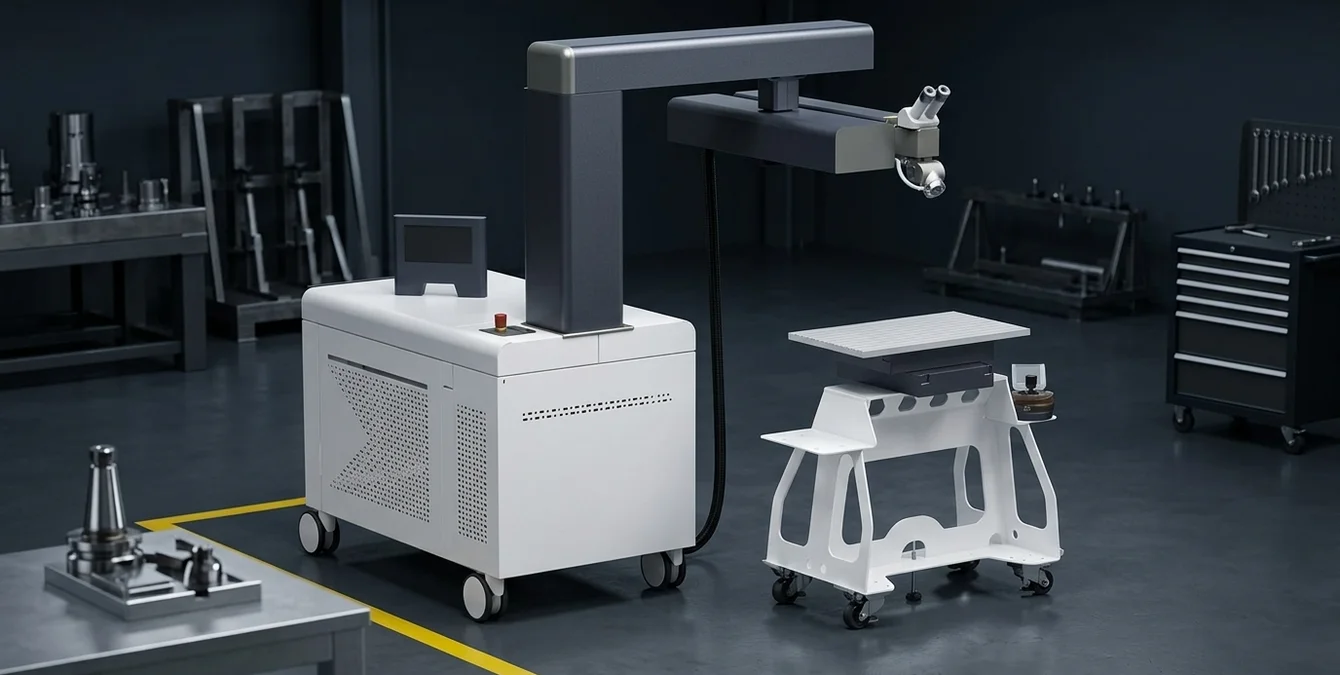
In industrial settings, efficiently and economically performing tool repairs is crucial. Utilizing a mobile laser welder tool repair system, especially from Sigma Laser, offers significant advantages for mid-sized toolmaking shops. These systems eliminate the need for disassembly and transport of large dies, reducing downtime and associated costs.
Cost Efficiency of Mobile Laser Welding
Mobile laser welding systems, like the Sineo Light and Sirius Light from Sigma Laser, are designed to address the unique challenges of repairing tools and dies directly on-site. This capability is particularly valuable for small batch production or single repairs, where transporting heavy equipment could be prohibitively expensive. By bringing the welding system directly to the equipment, manufacturers can minimize operational interruptions.
These systems operate at a wavelength of 1064 nm for Nd:YAG lasers, which is optimal for precision welding applications. The Sineo Light, for instance, offers a peak power of 13 kW, facilitating deep penetration with minimal heat input, which is crucial for maintaining the integrity of sensitive components. The ability to perform repairs without moving large assemblies aligns with the principles outlined in ISO 15614-11, ensuring that welding procedures meet stringent industry standards.
Reduction in Downtime
Traditional welding methods often require extensive preparation, including the disassembly and transport of components to a welding facility. Mobile laser welding eliminates this step by enabling in-situ repairs, drastically reducing downtime. This reduction in downtime can translate to significant cost savings, making mobile systems a viable option for many industrial applications. For a detailed analysis, explore our laser vs traditional welding cost analysis.
Additionally, mobile systems like the Sirius Light can reach up to 1830 mm, allowing access to hard-to-reach areas without the need for repositioning the workpiece. This flexibility is particularly beneficial in applications where precision and accessibility are critical.
Applications and Benefits
- Repair of large molds and dies without disassembly.
- On-site tool maintenance, reducing the need for spare parts inventory.
- Precision welding with minimal heat-affected zone, preserving the integrity of the base material.
- Adaptability to various industrial sectors, including automotive and aerospace.
For mid-sized shops, deploying portable laser welding systems can enhance operational efficiency and cost-effectiveness. Whether for routine maintenance or unexpected repairs, the capability to conduct tool repair with laser welder technology onsite is becoming an essential part of modern industrial operations.
Own Machine or Welding Service?
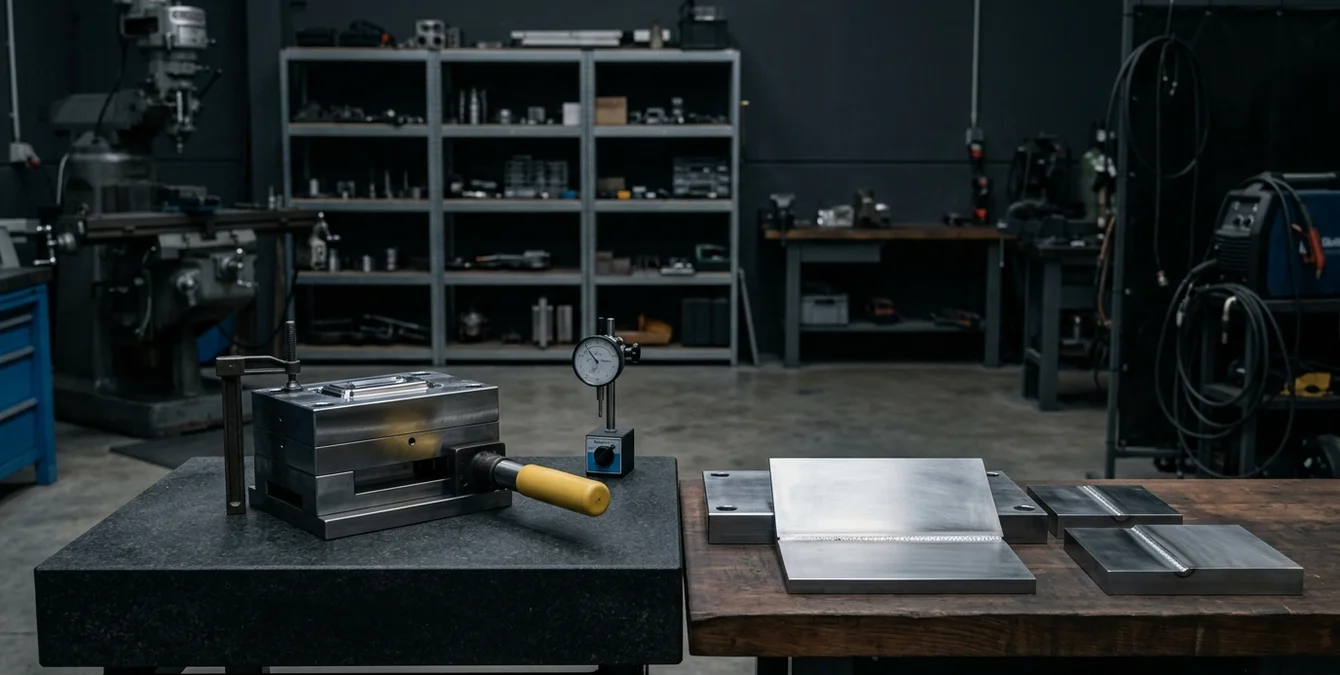
In the competitive landscape of toolmaking, deciding whether to invest in a mobile laser welder tool repair system or to rely on external welding services is crucial. With mobile laser welding systems like Sigma Laser’s Sineo Light, Sineo Fibre, and Sirius Light, mid-sized toolmaking shops can enhance their repair capabilities by bringing precision welding directly to the workpiece. These mobile systems offer the advantage of high precision and minimal heat-affected zones, which are essential for maintaining the integrity of delicate tools during repair.
Evaluating the Decision
The choice depends on factors such as machine utilization, repair frequency, and in-house expertise. For shops with high repair volumes, owning a laser welding system can be more cost-effective than outsourcing. Conversely, if repair needs are sporadic, external services might be more economical. Additionally, compliance with standards such as ISO 15614-11 for welding procedure qualification ensures that the welding processes meet industry requirements.
| Consideration | Owning a Machine | Welding Service |
|---|---|---|
| Initial Investment | High | None |
| Operational Control | Full | Limited |
| Maintenance and Expertise | Required | Not Required |
| Flexibility | High | Variable |
With the capability to perform complex repairs and modifications on-site, portable laser welders offer significant advantages. They provide precise control and minimal heat-affected zones, essential for delicate tool repair with laser welder applications. For industries requiring frequent modifications, such as automotive or aerospace, owning a Sigma Laser system can enhance productivity and operational efficiency. The Sineo Light, for instance, with its pulse frequency range of 0.05–40 Hz and peak power of 13 kW, is well-suited for precision tasks that demand high-quality welds.
Ultimately, the decision should align with the shop’s strategic goals and operational needs. Evaluating the break-even point based on the frequency of use and cost savings compared to service fees is crucial. For more insights on industrial laser welding applications, explore mobile laser welding applications.
Sineo and Sirius in Toolmaking Use
In toolmaking, precision and efficiency are crucial. Sigma Laser’s Sineo and Sirius models offer advanced solutions for mid-sized toolmaking operations with their mobile laser welder tool repair capabilities. These systems employ cutting-edge mobile laser welding technology to meet the rigorous demands of tool and mould repair, ensuring minimal downtime and increased productivity.
Sineo Light and Sineo Fibre: 360° Mobility
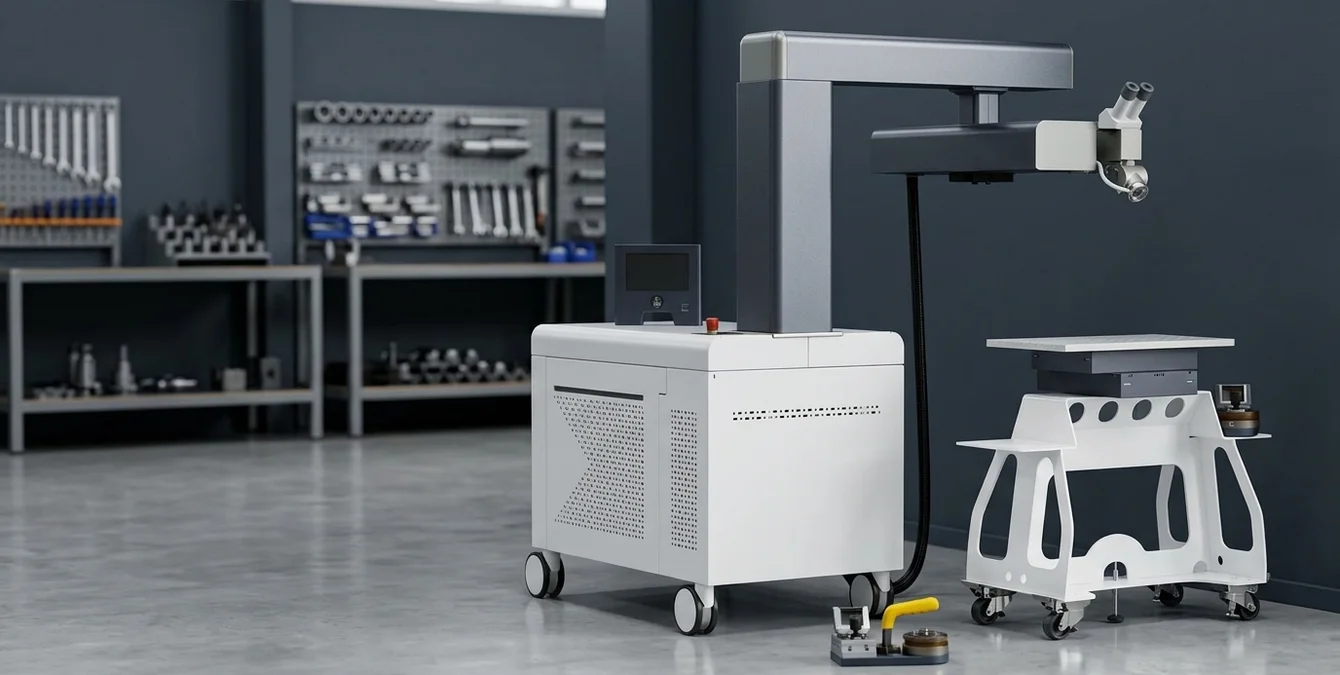
The Sineo Light and Sineo Fibre models are designed for flexibility with their 360° mobility, allowing them to be maneuvered directly to the workpiece. This is particularly beneficial in tool repair scenarios where moving the tool to a stationary system is impractical. The Sineo Light uses Nd:YAG laser technology with a frequency range of 0.05–40 Hz, delivering precise welds with minimal heat input, thereby preserving the integrity of delicate components.
Conversely, the Sineo Fibre utilizes a ytterbium fibre laser, offering high-frequency operation up to 1000 Hz. This capability is ideal for applications requiring rapid cycling and fine control over the weld process. Both models excel in reducing the heat-affected zone, which is critical for maintaining the performance and lifespan of tools and moulds.
In terms of material compatibility, these systems are well-suited for a range of tool steels, including 1.2344 (AISI H13), known for its excellent toughness and thermal fatigue resistance. The ability to maintain a small heat-affected zone is particularly beneficial when working with such high-performance alloys, ensuring that the mechanical properties of the tool are not compromised.
Sirius Light: Heavy-Duty Performance
For more demanding toolmaking tasks, the Sirius Light excels with its heavy-duty mobile design. This model delivers robust laser welding solutions and integrates seamlessly into industrial environments where the repair of large moulds or high-volume components is frequent. Its precision in challenging environments makes it an invaluable asset for maintaining operational continuity.
The Sirius Light’s advanced mobility allows for direct application to workpieces that are difficult to transport, enhancing tool repair efficiency with laser welder technology. Its ability to handle complex geometries ensures consistent weld quality across various applications.
To ensure the quality and reliability of the welding process, the Sirius Light adheres to standards such as EN ISO 15614, which specifies the qualification of welding procedures for metallic materials, ensuring that the welds meet stringent industrial requirements ISO 15614-11:2002.
For more detailed insights into how these systems can benefit your toolmaking operations, visit our tool and moulding application page. Explore the full potential of mobile laser welding technology to enhance your production capabilities.
How do you validate a machine before buying?
Conducting a Sample-Weld Test
Evaluating a mobile laser welder tool repair system involves rigorous testing to ensure it meets your specific industrial needs. A practical method is to conduct a sample-weld test using your actual workpieces. This process allows you to observe the laser welding performance directly on materials like 1.2344 (AISI H13), ensuring the machine’s compatibility with your production requirements. The precision of Sigma Laser’s mobile systems, such as the Sineo Light with its 40 Hz capability, offers exceptional control and minimal heat-affected zones, which are critical factors in tool repair with laser welders.
When conducting a sample-weld test, it is essential to consider the typical industry parameters for laser welding, such as penetration depths which can vary based on material thickness and laser power settings. The heat-affected zone is typically minimized in precision applications, which is crucial for maintaining the integrity of tool repair materials.
On-Site Demonstrations
Requesting an on-site demonstration at your facility can provide further insights into the usability and flexibility of the laser welding system. This is particularly beneficial when evaluating portable laser welder benefits, as it showcases how machines like the Sirius Light can be maneuvered to accommodate various tool repair scenarios. Observing the machine’s operation in your environment helps identify any potential integration challenges and confirms the system’s compatibility with your existing processes.
Reference Visits
Another effective validation step is to arrange reference visits to other companies using Sigma Laser systems. Seeing these machines in action in similar industrial laser welding applications can offer a tangible perspective on their long-term reliability and performance. Engaging with current users provides valuable feedback on aspects such as machine maintenance, after-sales support, and overall user experience, which are crucial for informed decision-making.
Reference visits also provide an opportunity to discuss compliance with welding procedure specifications, such as those outlined in ISO 15614-11, which ensures that the welding processes are qualified for the intended materials and applications.
For more insights and to explore top picks for mold repair experts, visit our detailed guide.
- Ensure the machine meets industrial standards like ISO 9001 and EN ISO 14732.
- Evaluate the ease of integration with current manufacturing setups.
- Consider the availability of advanced features, such as Sigma’s Super Pulse Technology (SPT) on stationary models like the Siega Fibre.
Frequently Asked Questions
What are the benefits of using a mobile laser welder for tool repair?
Mobile laser welders offer precision and flexibility in tool repair, enabling on-site repairs with minimal downtime. They provide high-quality welds with reduced heat-affected zones, preserving the integrity of the tool material. This technology is ideal for intricate repairs, reducing the need for extensive disassembly and transportation.
How does a mobile laser welder compare to traditional welding methods?
Compared to traditional methods, mobile laser welders deliver superior precision and control, minimizing thermal distortion. They facilitate repairs in confined spaces and complex geometries, which are challenging for conventional welding. Additionally, laser welding requires less post-processing, enhancing efficiency and reducing lead times.
What types of lasers are used in Sigma’s mobile welding systems?
Sigma’s mobile welding systems utilize Nd:YAG and ytterbium fibre lasers. These lasers are known for their stability and precision, making them suitable for high-quality tool repair applications. Their adaptability allows for efficient handling of various materials and thicknesses.
Can mobile laser welders handle all types of tool materials?
Mobile laser welders are versatile and can handle a wide range of tool materials, including steels, aluminum, and titanium. Their precision and adaptability make them suitable for repairing diverse materials, ensuring high-quality welds and extending the life of the tools.
How does investing in a mobile laser welder impact a toolmaking shop’s ROI?
Investing in a mobile laser welder can enhance ROI by reducing repair times and minimizing tool downtime. The precision and efficiency of laser welding lower operational costs and improve productivity, leading to faster turnaround times and increased customer satisfaction.
What factors should be considered when choosing a mobile laser welder for tool repair?
Considerations include the types of materials to be repaired, the complexity of the repairs, and the required precision. Evaluating the laser’s power, beam quality, and system mobility is crucial to ensure it meets specific operational needs and enhances repair capabilities.
Welche Vorteile bietet die 5-Achs-Kinematik mobiler Sigma Laser-Systeme für Werkzeugmacher?
Die 5-Achs-CNC-Kinematik (X·Y·Z·C·D) der mobilen Sigma Laser-Systeme ermöglicht präzise und reproduzierbare Schweißnähte auch an komplexen Werkzeuggeometrien. Dadurch lassen sich Reparaturen direkt vor Ort am eingebauten Werkzeug durchführen, ohne Ausbau oder Transport – ein entscheidender Vorteil für mittelständische Werkzeugmacher.
Sources
- ISO 15614-11:2002 – Specification and qualification of welding procedures for metallic materials — This standard provides guidelines for the specification and qualification of welding procedures, which is crucial for ensuring the quality and safety of mobile laser welder tool repairs.
- EN 60825-1:2014 – Safety of laser products — This European standard outlines safety requirements for laser products, which is essential for the safe operation of mobile laser welders.
- AWS D17.1/D17.1M:2017 – Specification for Fusion Welding for Aerospace Applications — This standard from the American Welding Society provides specifications for fusion welding, relevant for high-precision applications such as tool repair.
- NIST – Laser Welding Process Monitoring — NIST provides research and guidelines on process monitoring for laser welding, which can enhance the reliability of mobile laser welder tool repairs.
- Fraunhofer ILT – Laser Welding Research — Fraunhofer ILT conducts extensive research on laser welding technologies, offering valuable insights into mobile laser welder applications.
- Journal of Laser Applications — A peer-reviewed journal that publishes research on laser applications, including mobile laser welding technologies.
- Welding Journal — A publication by the American Welding Society that covers various aspects of welding, including mobile laser welding technologies.