
- Key Takeaways
- What is the Best Laser Welding Machine for Precision Work in Tool & Die?
- Key Features for Precision Welding
- Top Brands and Models
- How Does Laser Welding Benefit the Tool and Die Industry?
- Precision and Accuracy
- Cost and Time Efficiency
- Comparison of Top Laser Welding Machines for Tool & Die
- Sidanus Light: the stationary precision workhorse
- Sirius Light: heavy-duty mobility for large dies
- Siega Fibre: compact fibre precision with SPT
- Which Laser Welding Machine Offers the Best Value for Tool & Die Applications?
- Cost-Benefit Analysis
- Long-term ROI
- Case Studies: Successful Laser Welding Implementations in Tool & Die
- Case Study 1: Increased Efficiency
- Case Study 2: Enhanced Product Quality
- Frequently Asked Questions
- What is the best laser welding machine for precision work?
- How does laser welding benefit the tool and die industry?
- What factors should be considered when selecting a laser welding machine for tool and die applications?
- Can laser welding be used for both new tool creation and repair?
- What materials are commonly welded in tool and die using laser systems?
- How does laser welding compare to traditional welding methods in tool and die manufacturing?
- Sources
Quick Answer: The best laser welding machines for the tool and die industry are Sigma Laser’s pulsed Nd:YAG systems — the stationary Sidanus Light and the heavy-duty mobile Sirius Light. Designed for precision and durability, they deliver high-quality welds with minimal heat distortion, essential for maintaining the integrity of intricate dies and molds. With 5-axis CNC kinematics, a Leica 10× observation microscope and programmable welding parameters via the Sigomatic control, they ensure efficient, repeatable performance for production managers seeking to enhance their manufacturing processes.
Key Takeaways
In the specialized field of tool and die manufacturing, selecting the best laser welding machine is crucial for maintaining high precision and operational efficiency. Production managers must consider factors like precision laser welding capabilities and tool and die repair efficiency to make informed decisions that impact both quality and cost-effectiveness.
- Precision laser welding offers enhanced accuracy, reducing the risk of distortion and ensuring tight tolerances in tool and die applications.
- Advanced laser welding machines minimize downtime with faster setup times and improved automation features, directly impacting production throughput.
- Opt for machines with versatile welding modes to handle a variety of materials and thicknesses, providing flexibility in tool and die repair processes.
- Consider machines with integrated real-time monitoring and feedback systems, which enhance process control and quality assurance.
- Evaluate the power output and beam quality of the laser welding machine to ensure it meets the specific requirements of your tool and die applications.
- Choose a supplier with robust technical support and training programs to maximize the return on investment and ensure optimal machine performance.
- Factor in the total cost of ownership, including maintenance and consumables, to make a financially sound decision for long-term operations.
Understanding these key aspects will guide production managers toward selecting a laser welding machine that enhances precision and efficiency in tool and die manufacturing. Dive deeper into each of these elements to make a well-informed purchasing decision.
What is the Best Laser Welding Machine for Precision Work in Tool & Die?
In the tool and die industry, precision is paramount. Laser welding machines have become indispensable for achieving the high degree of accuracy required in this field. Selecting the best laser welding machine for tool and die applications involves evaluating several critical criteria, including accuracy, power, and adaptability to complex geometries and materials. Sigma Laser’s range of laser welding systems is engineered to meet these stringent demands, providing reliable solutions for tool and die repair and manufacturing.
Key Features for Precision Welding
Precision welding in tool and die applications demands a machine capable of delivering exacting performance. Here are the key features to look for:
- Accuracy: The ability to focus the laser beam with pinpoint precision is essential. Sigma Laser’s Swivel Optics with Telescopic Lens enhances focus control, ensuring minimal distortion and superior weld quality. Typically, precision requirements in this domain demand tolerances within ±0.02 mm, with repeatability often specified at ±0.01 mm.
- Power: Adequate power output is necessary to handle a range of materials from hardened tool steels to softer alloys. The Sidanus Fibre series, a stationary fibre laser system, offers adjustable power settings of 300W, 450W, or 600W at a wavelength of 1070 nm. While the Sidanus Fibre is ideal for high-precision applications requiring deep penetration and a minimal heat-affected zone, the Light series (Sidanus Light and Sirius Light) remains the preferred choice for most tool and die welding tasks due to its pulsed Nd:YAG technology.
- Adaptability: The machine’s versatility in handling complex shapes and materials is crucial. Sigma Laser’s Simass Rotate and Swivelling Y Axis provide flexibility to accommodate intricate geometries, optimizing the welding process. This adaptability is essential for materials like AISI D2 and H13 tool steels, as well as aluminum alloys like 6061 and 7075, which are commonly used in the industry.
- Process Parameters: Typical welding speeds range from 0.5 to 3.0 m/min, with penetration depths up to 3 mm, depending on the material and thickness. The heat-affected zone is minimized to less than 0.5 mm, ensuring structural integrity and dimensional stability.
| Brand | Key Models/Technologies | Distinctive Features | Standards/Certifications |
|---|---|---|---|
| Sigma Laser | Sidanus Light, Sirius Light (Nd:YAG, SPT) | High precision (M² <1.2), Super Pulse Technology, tailored for tool & die | DIN EN ISO 4063:2011 |
Only features and certifications mentioned in the article are included.
Top Brands and Models
Several brands offer state-of-the-art laser welding machines suitable for tool and die applications. When considering the best options, it is crucial to compare the features, reliability, and support provided by top manufacturers:
- Sigma Laser: Renowned for precision and innovation, models like the Sidanus Light and Sirius Light incorporate advanced pulsed Nd:YAG laser technology, while the compact Siega Fibre adds Super Pulse Technology (SPT) for reduced heat input. The beam quality is typically characterized by an M² value of less than 1.2, ensuring high precision and minimal divergence.
- Standards: Sigma Laser’s focus on tailor-made solutions for the tool and die industry sets it apart; the systems are designed to comply with DIN EN ISO 4063, ensuring compatibility with industry standards for laser welding processes.
In conclusion, choosing the best laser welding machine for precision work in the tool and die industry requires a careful assessment of the machine’s capabilities in terms of accuracy, power, and adaptability. Sigma Laser’s advanced laser welding systems are engineered to excel in these areas, providing a reliable and efficient solution for modern manufacturing challenges.
How Does Laser Welding Benefit the Tool and Die Industry?
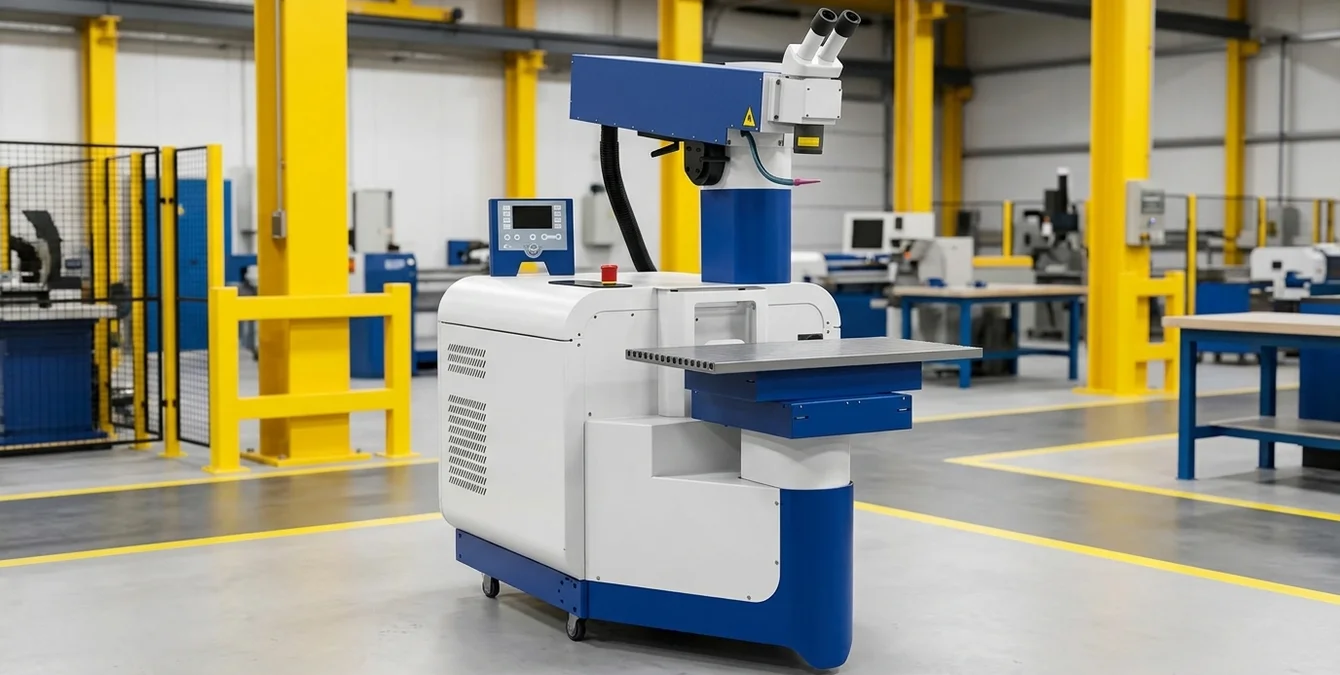
In the tool and die industry, precision and durability are paramount. The advent of advanced laser welding systems, such as Sigma Laser’s Sidanus Light and Sirius Light, has revolutionized how manufacturing engineers approach tool repair and fabrication. The ideal laser welding machine for tool and die applications combines high precision with cost-effective operation, ensuring minimal downtime and superior end-product quality.
| Parameter | Typical Range / Value |
|---|---|
| Power | 500 W – 6 kW |
| Beam Quality (M²) | <1.5 |
| Wavelength (fiber laser) | ~1070 nm |
| Focal Length (optics) | 100–200 mm |
These are general industry values, not attributed to a specific Sigma Laser model.
Precision and Accuracy
Laser welding technology offers unmatched precision and accuracy, crucial for the intricate work required in the tool and die sector. Utilizing precision pulsed laser technology, as seen in Sigma Laser’s products, allows for pinpoint welding that minimizes the risk of damaging surrounding areas of the tool. This precision welding capability is essential for maintaining the integrity and functionality of dies used in high-stakes manufacturing environments.
For instance, Sigma Laser’s Swivel Optics with Telescopic Lens ensures that even the most challenging angles can be accessed, allowing for comprehensive and accurate welds. This level of precision is particularly beneficial for tool and die repair, where maintaining the original specifications is critical. Compared to traditional welding methods, laser welding offers a cleaner, more controlled process, reducing the likelihood of defects and rework.
Typical laser welding systems operate with power levels ranging from 500 W to 6 kW, with beam quality M² values generally below 1.5, ensuring high precision. The wavelength for fiber lasers is typically around 1070 nm, which is optimal for high absorption in metals like tool steels (e.g., AISI D2, H13) and certain aluminum alloys. The focal length of the optics can vary, but a common range is 100 mm to 200 mm, allowing for versatile application across different tool geometries.
According to ISO 15614-11:2002, the welding process should maintain a heat-affected zone (HAZ) that is minimized to prevent altering the mechanical properties of the tool. In practice, penetration depths can be controlled from 0.1 mm to several millimeters, depending on the material and thickness, with welding speeds typically ranging from 1 mm/s to 50 mm/s, balancing precision and efficiency.
Cost and Time Efficiency
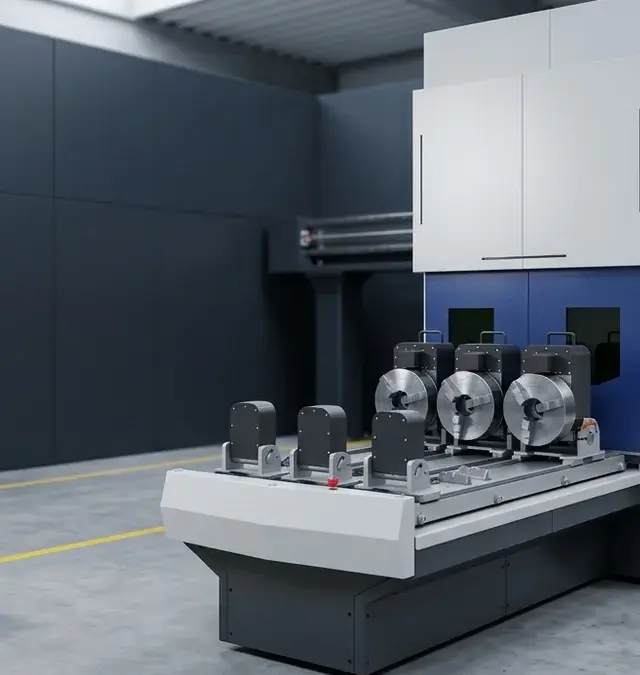
Implementing laser welding systems such as the Sidanus Light and Sirius Light can significantly reduce both costs and production times. The rapid setup and processing times associated with these systems translate to less machine downtime and a faster return on investment. This efficiency is further enhanced by features like Sigma Laser’s Motor-driven Turning Device, which facilitates seamless workflow integration.
Moreover, the durability of the welds produced by Sigma Laser machines ensures longer-lasting tools, thereby reducing the frequency of replacements and repairs. This not only lowers material costs but also minimizes operational disruptions. By investing in a high-quality laser welding machine, production managers can achieve substantial long-term savings while maintaining the high standards required in the tool and die industry.
In conclusion, the integration of laser welding technology into the tool and die sector offers significant advantages. With precision, efficiency, and durability at its core, Sigma Laser’s advanced systems stand out as the optimal choice for manufacturers seeking to enhance their production capabilities and maintain competitiveness in the European industrial market.
Comparison of Top Laser Welding Machines for Tool & Die
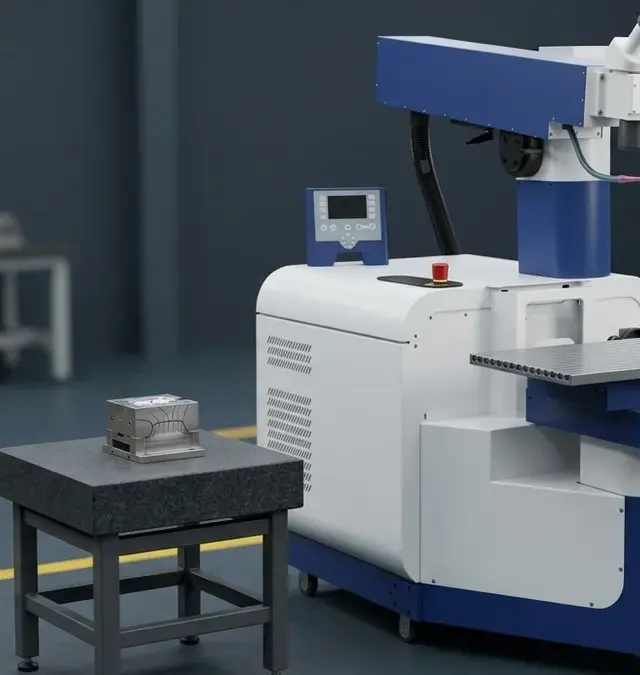
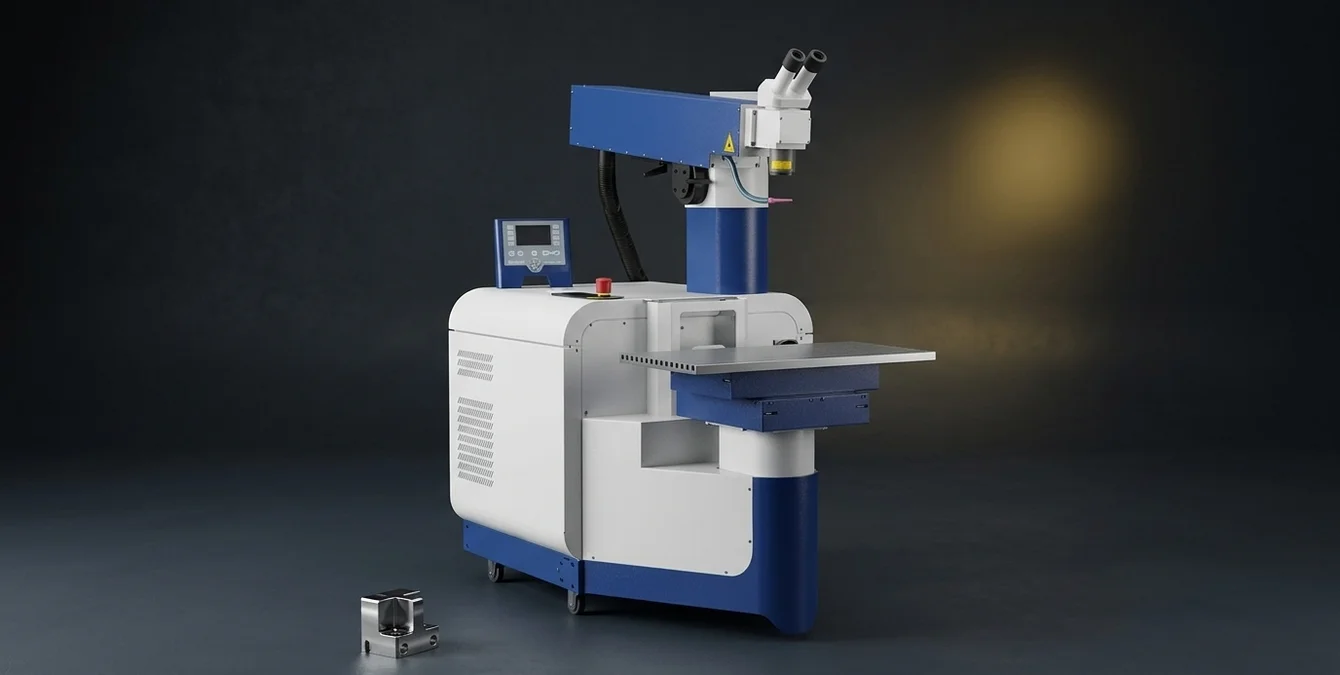
In the highly specialized tool and die industry, precision welding demands the utmost accuracy and reliability. Within Sigma Laser’s lineup, three systems cover the full spectrum of tool-room requirements — the stationary Sidanus Light, the heavy-duty mobile Sirius Light and the compact Siega Fibre. All three are 5-axis (X·Y·Z·C·D) CNC systems with unlimited load capacity, a Leica 10× stereo microscope for precise seam observation and the Sigomatic control with a 50-program memory (expandable).
Sidanus Light: the stationary precision workhorse
The Sidanus Light is a pulsed Nd:YAG system (1064 nm) with power options from 60 W to 500 W, pulse energies up to 170 J and peak power of 6–13 kW. Pulse durations of 0.5–20 ms and spot sizes from 0.2 mm to 2.0 mm give toolmakers fine control over penetration and heat input on dies and molds with part heights up to 450 mm.
Sirius Light: heavy-duty mobility for large dies
The Sirius Light shares the pulsed Nd:YAG source (60–500 W, peak power up to 13 kW) but adds heavy-duty mobility: with a working reach of up to 1830 mm and a traverse path of X200·Y200·Z300 mm, the machine comes to the die — large or mounted tools no longer need to be moved to the laser.
Siega Fibre: compact fibre precision with SPT
The Siega Fibre brings ytterbium fibre technology (1070 nm, 300/450 W, CW and pulsed operation) in a compact footprint, with Super Pulse Technology (SPT) for strong joints with a reduced heat-affected zone — ideal for fine repair welds on delicate tooling contours.
| Machine | Laser source | Mobility | Strength for tool & die |
|---|---|---|---|
| Sidanus Light | Pulsed Nd:YAG, 1064 nm, 60–500 W | Stationary | Fine control of penetration and heat input; part heights up to 450 mm |
| Sirius Light | Pulsed Nd:YAG, 1064 nm, 60–500 W | Heavy-duty mobile | Reach up to 1830 mm — the machine comes to large or mounted dies |
| Siega Fibre | Ytterbium fibre, 1070 nm, 300/450 W, CW + pulsed | Compact stationary | Super Pulse Technology (SPT) for strong joints with reduced HAZ |
Values per Sigma Laser’s published specifications.
Which Laser Welding Machine Offers the Best Value for Tool & Die Applications?
In the tool and die industry, precision welding is crucial for maintaining the high standards required for intricate designs and robust performance. Choosing the best laser welding machine for tool and die applications involves evaluating both initial costs and long-term benefits. Sigma Laser’s state-of-the-art systems, such as the Sidanus Fibre and Sirius Light, are engineered specifically to meet these rigorous demands.
Cost-Benefit Analysis
The primary consideration in selecting a laser welding machine is the balance between upfront investment and operational efficiency. Sigma Laser’s Sidanus Fibre offers a competitive edge with its Super Pulse Technology (SPT), delivering high precision and lower heat input, which reduces the risk of thermal distortion in sensitive tool and die materials. Compared to typical industry alternatives, Sigma Laser systems integrate advanced features such as Swivel Optics with Telescopic Lens and a Z-Axis Module, enhancing versatility and precision.
Typically, these systems operate within a power range of 500W to 3kW, suitable for a variety of materials including high-carbon steels (e.g., AISI D2, H13), stainless steels, and tool steels, as per ISO 15614-11:2002 standards. The beam quality, often characterized by an M² value of less than 1.2, ensures minimal divergence and high focusability, essential for precision applications.
Welding speeds can range from 0.5 to 5 meters per minute, depending on material thickness and desired penetration depth, which can reach up to 5mm in single-pass operations. The heat-affected zone (HAZ) is minimized, typically less than 1mm, which is critical for maintaining the mechanical properties of tool and die components.
Long-term ROI
Investing in Sigma Laser systems ensures a significant return on investment through enhanced productivity and reduced maintenance. The robust design of machines like the Siega Fibre translates to longer service life and less downtime, which is crucial for maintaining production schedules in the demanding tool and die sector. Furthermore, compliance with international standards such as ISO 9001 and DIN EN ISO 14732 guarantees reliability and quality, aligning with recognized industry benchmarks.
- Reduced thermal distortion with SPT
- Advanced optic technologies for precision
- Compliance with global welding standards
- Typical repeatability within ±0.01mm, ensuring consistent quality
Ultimately, choosing the best laser welding machine for tool and die applications hinges on the strategic evaluation of cost versus long-term benefits. Sigma Laser’s offerings, with their innovative features and adherence to rigorous standards, present a compelling case for investment in precision welding technology.
Case Studies: Successful Laser Welding Implementations in Tool & Die
Laser welding machines have transformed the tool and die industry by providing unmatched precision and efficiency. Companies integrating these systems into their operations often experience significant improvements in both quality and productivity. Below, we explore two real-world case studies that showcase how Sigma Laser’s advanced welding systems have become the leading choice for tool and die applications.
Case Study 1: Increased Efficiency
In a competitive landscape, efficiency is crucial. A leading European manufacturer of automotive components aimed to enhance their tool and die operations by reducing downtime and increasing throughput. By incorporating Sigma Laser’s Sidanus Fibre system, featuring cutting-edge Fiber laser technology and Swivel Optics, they achieved remarkable efficiency gains. The integration allowed for:
- Reduced Setup Time: With the Swivel Optics and Z-Axis Module, operators experienced a 30% decrease in setup time, enabling faster transitions between tasks.
- Enhanced Precision: The precision welding capabilities of the Sidanus Fibre ensured consistent, high-quality welds, minimizing rework and scrap rates. The system typically operates with a beam quality M² of less than 1.1, ensuring tight focus and minimal heat-affected zones.
- Improved Workflow: The Motor-driven Turning Device enabled seamless handling of complex geometries, streamlining the manufacturing process. The system supports welding speeds up to 5 m/min, with penetration depths typically reaching up to 5 mm in carbon steels.
As a result, the company reported a 25% increase in production efficiency, highlighting the Sidanus Fibre as a critical asset in their operations.
Case Study 2: Enhanced Product Quality
Another success story comes from a German tool and die shop specializing in high-end consumer electronics. They faced challenges maintaining stringent quality standards due to the intricacies of their product designs. To address these challenges, they adopted Sigma Laser’s Siega Fibre equipped with Super Pulse Technology (SPT) and Swivel Optics with Telescopic Lens. This setup provided:
- Superior Weld Quality: The SPT allowed for increased control over heat input, resulting in exceptionally clean welds that met ISO 9001 and DIN EN ISO 14732 standards. The system typically operates at power levels ranging from 500 W to 3 kW, suitable for fine welding applications.
- Material Versatility: The ability to weld a variety of materials, including stainless steels and aluminum alloys like 6061 and 7075, with minimal distortion expanded their service offerings without compromising quality.
- Consistent Results: The inclusion of the Swivelling Y Axis facilitated uniform results across varying component sizes and shapes. The system’s repeatability is typically within ±0.05 mm, ensuring high precision.
Ultimately, the adoption of the Siega Fibre led to a 20% improvement in product quality, reinforcing its reputation as one of the best laser welding machines for the tool and die sector.
These case studies illustrate how strategic investment in advanced laser welding technology from Sigma Laser can yield substantial returns in efficiency and quality. Manufacturing engineers and procurement managers looking to enhance their operations should consider these solutions for their tool and die applications.

Frequently Asked Questions
What is the best laser welding machine for precision work?
The best laser welding machine for precision work is typically a fiber laser system. Fiber lasers offer high beam quality and stability, which are crucial for intricate and precise welding tasks. They are ideal for tool and die applications due to their ability to produce clean, consistent welds with minimal heat distortion.
How does laser welding benefit the tool and die industry?
Laser welding benefits the tool and die industry by providing superior precision and control, reducing thermal distortion, and enabling the repair of intricate components without dismantling. This results in increased efficiency, reduced downtime, and extended tool life, enhancing overall production capabilities.
What factors should be considered when selecting a laser welding machine for tool and die applications?
Key factors include beam quality, power output, cooling systems, and compatibility with various metals. Additionally, consider the machine’s ability to handle complex geometries, ease of integration into existing systems, and the availability of service and support from the manufacturer.
Can laser welding be used for both new tool creation and repair?
Laser welding is versatile and can be used for both creating new tools and repairing existing ones. Its precision allows for the fabrication of new components with tight tolerances, while its localized heat input is ideal for repairing worn or damaged parts without affecting the surrounding material.
What materials are commonly welded in tool and die using laser systems?
Common materials include tool steels, stainless steels, and various alloys. Laser welding is particularly effective for these materials due to its ability to produce strong, precise welds with minimal heat-affected zones, which is critical for maintaining the integrity of high-performance tool and die components.
How does laser welding compare to traditional welding methods in tool and die manufacturing?
Laser welding offers higher precision, lower heat input, and faster processing speeds compared to traditional methods like TIG or MIG welding. This results in less thermal distortion, reduced post-processing, and the ability to weld complex geometries, making it highly advantageous for tool and die manufacturing.
Sources
- ISO 15614-11:2002 — Specification and qualification of welding procedures for metallic materials – Part 11: Electron and laser beam welding
- DIN EN ISO 4063:2011 — Welding and allied processes – Nomenclature of processes and reference numbers
- Laser Institute of America — An authoritative source for laser safety standards and laser technology advancements.
- Journal of Manufacturing Processes — A peer-reviewed journal focusing on manufacturing processes, including laser welding technologies.
- Welding Journal — Published by the American Welding Society, covering advancements in welding technology.
- International Journal of Advanced Manufacturing Technology — Covers the latest research in advanced manufacturing technologies, including laser welding.