
- Key Takeaways
- Why is laser welding the standard for mold repair?
- Advantages of Laser Welding in Mold Repair
- Industrial Applications
- The Damage Catalog: 10 Defects and Their Repair Route
- Understanding Common Mold Defects
- Industrial Applications and Considerations
- Injection Molds vs. Die-Casting Dies: What Changes?
- Understanding Thermal-Fatigue in Die Casting
- Filler Material Selection
- Strategies for Repair Build-Up
- Industrial Application and Technology
- How are textured and polished surfaces restored?
- Precision in Surface Restoration
- Polish-Ready Build-Up
- Understanding the Limits
- Which Machines Fit Mold Repair — Mobile or In-Cab?
- Understanding the Practical Needs of Mold Repair
- Advantages of Mobile Welding Systems
- Stationary Solutions for Transportable Inserts
- Further Considerations
- Which filler wires and parameters matter for tool steels?
- Filler Wire Selection
- Key Welding Parameters
- Practical Considerations
- Frequently Asked Questions
- What are the benefits of laser welding for mold repair?
- How does laser welding minimize heat distortion in mold repair?
- What types of lasers are used in Sigma’s laser welding systems?
- How does in-house laser welding capability improve mold maintenance?
- What factors influence the cost of Sigma laser welding machines?
- Can Sigma laser welding systems handle complex mold geometries?
- What maintenance is required for Sigma laser welding machines?
- Wie ermöglicht Sigma Laser die Reparatur großer oder schwerer Formen direkt vor Ort?
- Related Articles
- Sources
Quick Answer: Laser welding mold repair is a precise technique used to address common defects such as surface cracks, pitting, and edge wear in molds and dies. By utilizing a high-precision laser welding machine, toolmakers can achieve minimal heat distortion and maintain the integrity of the mold. This method is ideal for restoring fine details and extending the lifespan of expensive tooling components, ensuring high-quality production runs and reducing downtime in industrial operations.
Key Takeaways
In the competitive landscape of mold repair, laser welding has emerged as a transformative technology, offering precision and efficiency that traditional methods struggle to match. For toolmakers and mold maintenance leads, understanding the intricacies of laser welding can significantly impact decision-making and operational outcomes.
- Laser welding offers unparalleled precision, allowing for repairs that maintain the integrity and original specifications of the mold.
- The process minimizes thermal distortion, which is crucial for maintaining the dimensional accuracy of complex mold geometries.
- With laser welding, material waste is significantly reduced due to its focused energy application, enhancing cost-effectiveness.
- Laser welding systems can accommodate a wide range of materials, from tool steels to exotic alloys, broadening the scope of repair applications.
- The flexibility of laser welding machines in adjusting power and focus parameters enables customization for specific mold repair needs, improving repair quality.
- Reduced downtime is a key advantage, as laser welding often requires minimal post-processing, accelerating the overall repair timeline.
- Integration with 5-axis systems allows for complex repair tasks that are otherwise challenging with conventional welding techniques.
By leveraging the advanced capabilities of laser welding, toolmakers can enhance the longevity and performance of molds. The following article delves deeper into the technical aspects and strategic advantages of adopting laser welding for mold repair.
Why is laser welding the standard for mold repair?
Laser welding has become the standard for laser welding mold repair due to its capability to deliver minimal heat input and precise build-up on hardened tool steels. This technique allows for repairs to be made directly on the mold, eliminating the need for costly replacements. For further insights, explore our detailed overview on laser welding in tool and moulding applications.
Advantages of Laser Welding in Mold Repair
The precision laser welding capabilities of Sigma Laser systems offer several notable advantages:
- Minimal Heat-Affected Zone (HAZ): This reduces the risk of thermal distortion and maintains the integrity of the mold’s material properties. Typically, the HAZ is kept to a minimal width, preserving the mechanical properties of the base material.
- Precision and Control: Advanced 5-axis positioning ensures accurate material deposition, which is crucial for intricate mold geometries. The use of Leica 10× optics further enhances the precision of the welding process, allowing for detailed work on complex surfaces.
- Cost Efficiency: It significantly lowers repair costs by enabling in-situ repairs, reducing downtime, and eliminating the need for mold transportation. This is particularly beneficial in high-value industries where mold availability directly impacts production schedules.
Industrial Applications
Laser welding is extensively used in industries such as automotive, electronics, and aerospace, where maintaining mold components is critical. The ability to perform repairs without removing the mold from its installation site enhances productivity and operational efficiency.
Employing technologies like Sigma Laser’s Swivel Optics and their advanced control systems, these solutions provide unmatched precision and reliability in maintaining complex mold designs. The systems are compliant with standards such as ISO 15614-11, which ensures the qualification of welding procedures for metallic materials, thereby guaranteeing high-quality repairs.
In terms of material compatibility, Sigma Laser systems are adept at handling a variety of tool steels, including 1.2344 (AISI H13), commonly used in mold manufacturing due to its excellent toughness and thermal fatigue resistance. The capability to weld such materials with minimal distortion is a testament to the precision engineering of these systems.
The Damage Catalog: 10 Defects and Their Repair Route
In the industrial world where precision is paramount, maintaining and repairing molds is a critical task. Laser welding mold repair offers an efficient solution to restore mold functionality, minimizing downtime and reducing repair costs. By understanding common defects and their causes, toolmakers can apply appropriate laser welding techniques to maintain optimal production quality.
Understanding Common Mold Defects
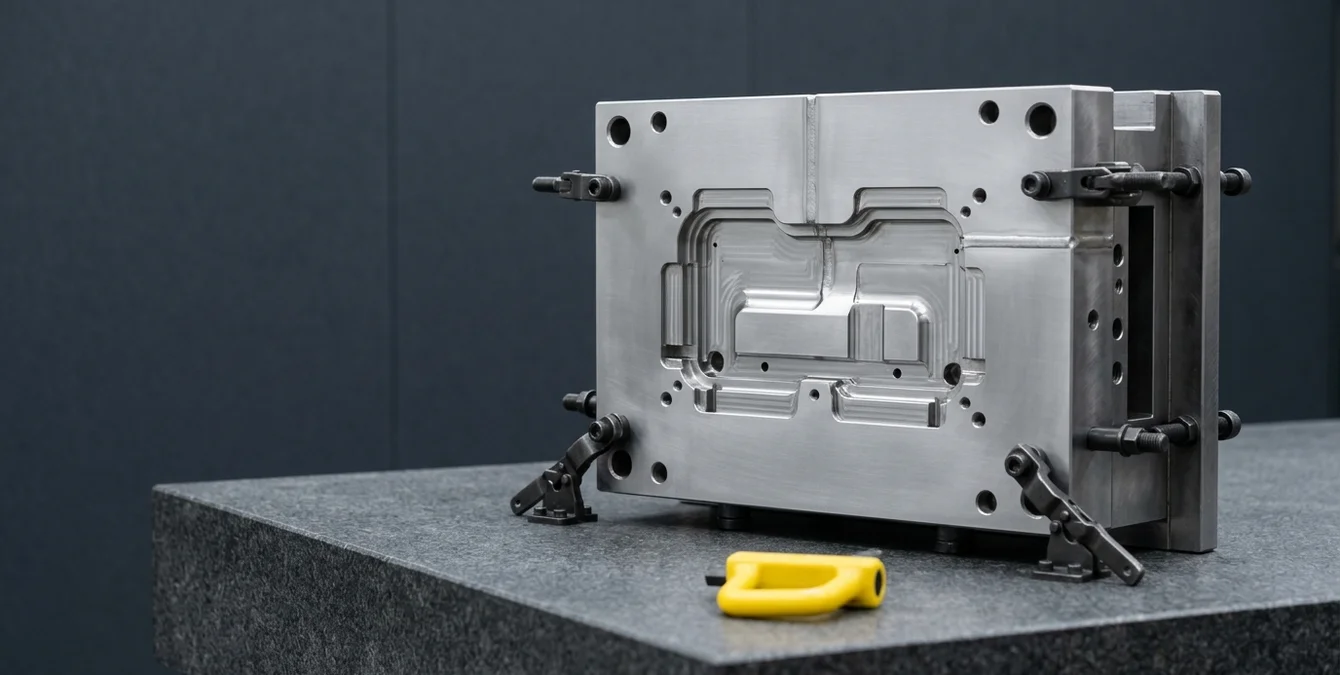
Mold defects can arise from various operational stresses and wear patterns. Addressing these defects with precision laser welding not only extends the lifespan of molds but also ensures consistent quality in high-volume production environments. Below is a detailed catalog of common mold defects, their causes, and the laser repair approaches suitable for different types of tool steel.
| Defect | Cause | Laser Repair Approach | Typical Tool Steel |
|---|---|---|---|
| Worn Parting Line | High friction and repetitive use | Precision laser welding to rebuild the edge | 1.2344 (AISI H13) |
| Broken Edge | Impact or mishandling | Layered laser weld buildup and finishing | 1.2343 |
| Damaged Sealing Face | Continuous pressure and temperature cycles | Surface layer restoration using fine laser welding | 1.2379 |
| Wear on Cores/Cavities | Abrasive materials and high wear cycles | Localized laser welding to restore dimensions | 1.2344 (AISI H13) |
| Cracked Rib | Thermal stress and mechanical loading | Crack filling and reinforcement using laser welding | 1.2343 |
| Polished-Surface Damage | Surface abrasion and polishing errors | Micro-welding for surface smoothness restoration | 1.2379 |
| Textured-Surface Damage | Improper handling or surface contact | Precision laser welding followed by texturing | 1.2344 (AISI H13) |
| Flash-Causing Wear | Misalignment or excessive pressure | Edge buildup with laser welding | 1.2343 |
| Dimensional Undersize | Wear and erosion | Restorative build-up welding to regain dimensions | 1.2344 (AISI H13) |
| Corrosion Pitting | Exposure to corrosive materials | Pit filling and surface restoration with laser | 1.2379 |
Industrial Applications and Considerations
Industries such as automotive, aerospace, and consumer goods heavily rely on mold integrity for product quality. The use of Sigma Laser systems, such as the Sidanus Light or Siega Fibre, enables rapid, precise repairs that reduce heat-affected zones and maintain material integrity. Incorporating these advanced laser welding techniques into regular maintenance routines can significantly enhance mold longevity and operational efficiency.
Laser welding is particularly advantageous for mold repair due to its ability to deliver high precision with minimal heat input, which is crucial for maintaining the dimensional accuracy of molds. Typical laser welding systems for mold repair operate at wavelengths around 1064 nm for Nd:YAG lasers and 1070 nm for fibre lasers, which are well-suited for processing tool steels like 1.2344 (AISI H13) and 1.2379. The precision of laser welding is further supported by standards such as ISO 15614-11, which specifies the qualification of welding procedures for metallic materials, ensuring that repairs meet stringent quality requirements.
For effective mold repair, the choice of laser parameters such as power, pulse duration, and spot size is critical. For instance, the Sidanus Light offers a range of power outputs from 60 to 500 W and a spot size adjustable between 0.2 to 2.0 mm, allowing for tailored welding strategies to address specific defects. The use of controlled laser environments as mandated by EN ISO 14732 ensures operator safety and process reliability.
Injection Molds vs. Die-Casting Dies: What Changes?
Understanding Thermal-Fatigue in Die Casting
In the high-pressure world of die casting, thermal-fatigue is a critical factor affecting the longevity and performance of dies. Unlike injection molds, die-casting dies endure rapid temperature fluctuations that can lead to premature cracking and failure. This thermal cycling necessitates precision solutions, such as laser welding mold repair, to effectively restore and extend die life.
Laser welding offers a controlled heat input, which is essential in minimizing the heat-affected zone (HAZ) and preventing thermal distortion. The precision of laser welding systems, such as those from Sigma Laser, ensures that the repaired area maintains its structural integrity, even under the intense thermal cycling conditions typical in die casting applications.
Filler Material Selection
The choice of filler material significantly impacts the outcome of any repair process. In die-casting applications, materials must be selected based on their thermal conductivity and compatibility with the base material. For instance, steels like 1.2344 (AISI H13) are commonly used due to their high resilience to thermal stress. The precision offered by advanced laser welding systems from Sigma Laser ensures minimal heat-affected zones, making the process ideal for maintaining the integrity of complex die geometries.
It is crucial to adhere to standards such as ISO 15614-11, which outlines the specification and qualification of welding procedures for metallic materials, ensuring that the selected filler material and welding process are compatible with the base material.
Strategies for Repair Build-Up
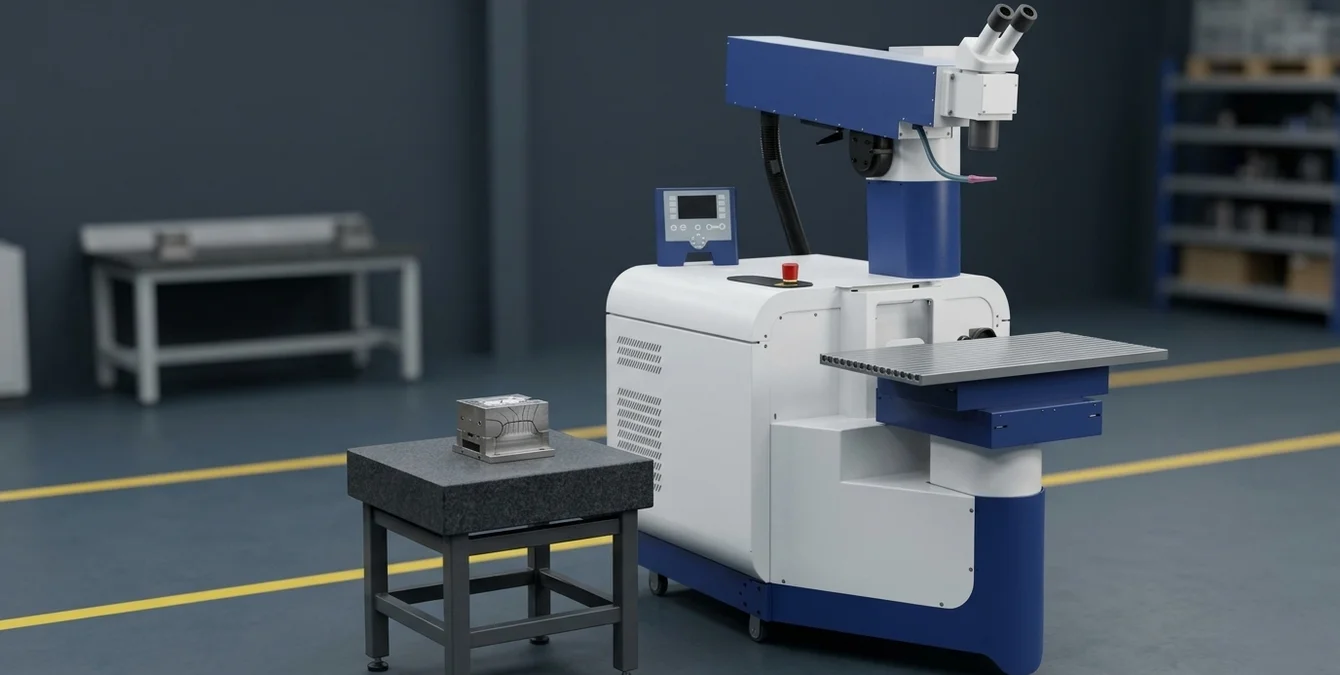
Repair strategies vary between injection molds and die-casting dies due to their distinct operational environments. Injection molds typically require detailed attention to surface finishes and dimensional accuracy. In contrast, die-casting dies require a robust approach to handle the intense operational stresses. Sigma Laser’s stationary systems like the Sidanus Light or the Siega Fibre offer high-precision capabilities essential for effective build-up strategies in mold repair, leading to significant cost savings over traditional methods.
These systems provide the flexibility to handle complex geometries and ensure repeatability and precision, which are critical in maintaining the dimensional accuracy required in high-tolerance applications.
Industrial Application and Technology
In the competitive landscape of die-casting and injection molding, maintaining operational efficiency and reducing downtime are paramount. Utilizing precision laser welding can not only restore molds and dies to their original performance levels but also enhance their operational lifespan. With Sigma Laser’s systems, manufacturers can achieve exceptional precision and reliability, ensuring that their production processes remain uninterrupted.
For further insights into how Sigma Laser systems can support your mold repair needs, explore our comprehensive solutions tailored for industrial applications.
Qualification of welding operators and weld setters is crucial for ensuring consistent quality in mechanized and automatic welding processes. Compliance with EN ISO 14732 is recommended to verify the competence of personnel involved in the welding repair of molds and dies.
How are textured and polished surfaces restored?
Precision in Surface Restoration
In the field of laser welding mold repair, restoring textured and polished surfaces demands meticulous attention to detail. The process begins with precision laser welding, enabling the accurate deposition of material onto worn or damaged mold surfaces. This method is particularly effective for grain or texture matching, ensuring that the repaired area seamlessly integrates with the existing surface pattern. Utilizing advanced laser systems like the Sidanus Light, toolmakers can achieve high-quality surface restoration while maintaining the structural integrity of the mold.
Laser welding systems typically operate at wavelengths around 1064 nm for Nd:YAG lasers, such as those in the Light series, providing excellent absorption in metallic materials. The Sidanus Light, with its peak power capabilities ranging from 6 to 13 kW, allows for precise control over the welding process, minimizing the heat-affected zone (HAZ) and ensuring minimal thermal distortion. This capability is essential for maintaining the fine details of textured surfaces during repair.
Polish-Ready Build-Up
For polished surfaces, the build-up process must focus on achieving a polish-ready finish. Laser systems such as the Siega Fibre offer the necessary control over heat input and material deposition, minimizing the heat-affected zone (HAZ). This precision allows for a smooth transition between the repaired area and the original surface, ultimately reducing the need for extensive post-weld polishing. The integration of technologies like Super Pulse Technology (SPT) further enhances the ability to produce a fine surface finish.
In addition to the precise control over heat input, the choice of filler material is crucial. Commonly used materials include tool steels such as 1.2344 (AISI H13), which offer excellent compatibility with mold base materials. The ability to deposit these materials with minimal dilution is a key advantage of using laser welding techniques, ensuring that the mechanical properties of the repaired section match those of the original mold.
Understanding the Limits
While laser welding provides significant mold repair cost savings and precision, it is crucial to recognize the limits of the technology. Not every surface can be restored to its original condition, especially in cases of extensive wear or damage. The success of the repair also depends on the material composition and the complexity of the surface texture. By understanding these limitations, engineers can make informed decisions about when laser welding is the ideal solution for mold restoration.
Standards such as ISO 15614-11 provide guidelines for the specification and qualification of welding procedures for metallic materials, ensuring that the repair processes meet stringent quality requirements. Additionally, the qualification of welding operators, as per EN ISO 14732, ensures that personnel are adequately trained to handle the complexities of laser welding in mold repair applications.
Which Machines Fit Mold Repair — Mobile or In-Cab?
Understanding the Practical Needs of Mold Repair
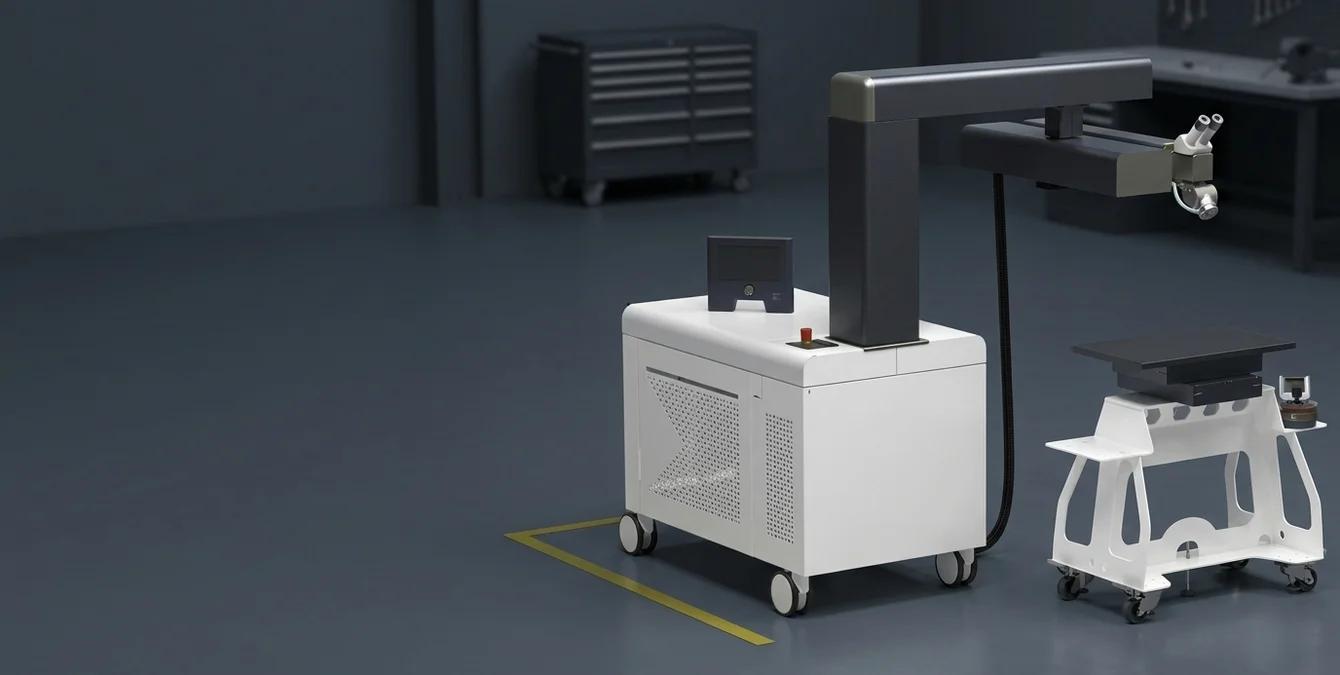
In the industrial landscape, laser welding mold repair is a critical task that requires precision and adaptability. The choice between mobile and in-cab welding solutions depends on the nature of the mold components. For substantial molds that remain stationary due to their sheer size, mobile systems like the Sineo Light and Sirius Light are engineered to address the challenge directly at the workpiece location. This approach eliminates the logistical complexities associated with moving heavy molds, allowing for seamless integration into existing workflows without constraints on workpiece dimensions.
Laser welding is particularly effective for mold repair due to its ability to deliver minimal heat input, which reduces the heat-affected zone (HAZ) and minimizes distortion. This precision is crucial when working with high-value materials such as 1.2344 (AISI H13) tool steel, commonly used in mold making for its excellent thermal fatigue resistance and toughness.
Advantages of Mobile Welding Systems
Mobile laser welding systems are particularly advantageous in scenarios where molds are fixed or cumbersome. The Sineo Light, operating at 40 Hz, offers the flexibility to perform precision laser welding directly at the mold site, enhancing operational efficiency while minimizing downtime. The Sirius Light, with its capability to handle high-frequency tasks at 20 Hz, complements the requirement for heavy-duty operations, ensuring reliable mold repair with minimal heat input and a reduced heat-affected zone (HAZ).
These systems are designed to meet the stringent requirements of mold repair, where precision and adaptability are paramount. The use of Nd:YAG lasers in these mobile systems allows for effective penetration depths and high peak power, typically up to 13 kW, which is essential for welding through thick sections of molds.
Stationary Solutions for Transportable Inserts
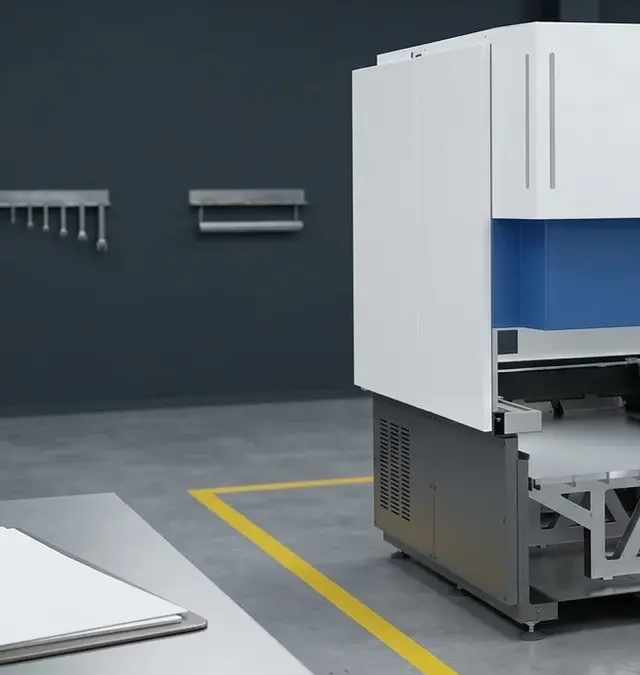
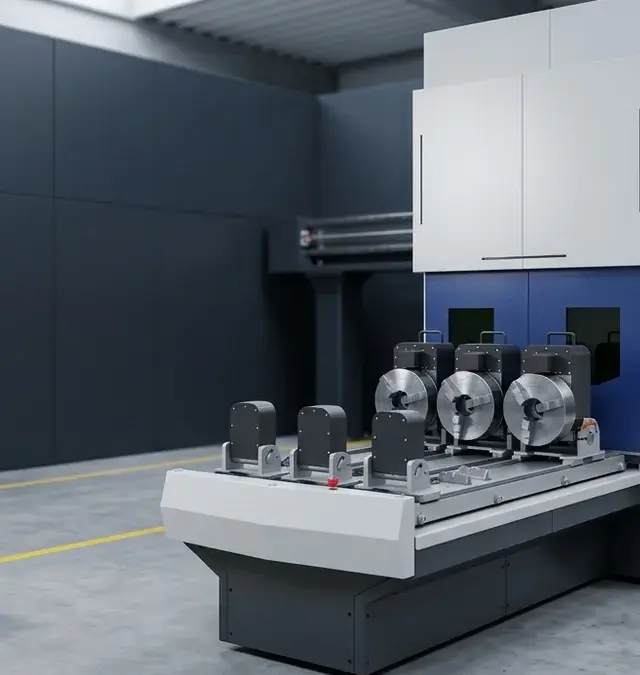
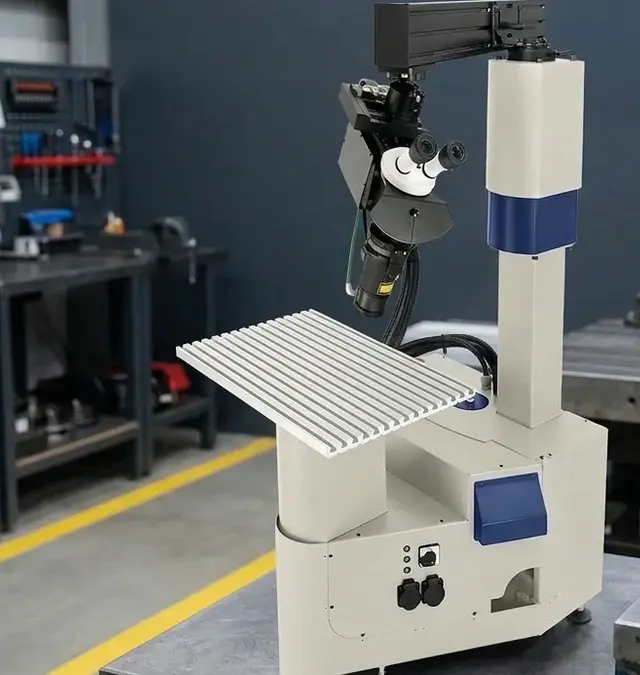
Conversely, when dealing with transportable mold inserts, stationary systems like the Sidanus Light and Siega Fibre provide an in-cab solution that excels in controlled environments. These systems can enhance mold repair cost savings by offering precision in smaller, manageable components. The stationary systems are well-suited for environments where workpieces can be easily moved, providing a robust platform for intricate repairs.
The stationary systems offer superior control over welding parameters, allowing for precise adjustments to pulse duration and energy, which are critical when working with delicate or thin-walled components. This precision is supported by standards such as ISO 15614-11, which governs the specification and qualification of welding procedures for metallic materials, ensuring consistent and reliable results.
Further Considerations
For additional insights into optimizing mold repair processes, Sigma Laser provides comprehensive guides, such as the 25-ton guide on laser mold welding and precision welding techniques. These resources offer detailed strategies to maximize the effectiveness of laser welding technologies in industrial applications, further enhancing the decision-making process for selecting the appropriate equipment for mold repair.
Moreover, the qualification of welding operators is essential for ensuring high-quality repairs, as outlined in EN ISO 14732, which specifies the requirements for testing and certifying welding personnel in mechanized and automatic welding of metallic materials.
Which filler wires and parameters matter for tool steels?
In the context of laser welding mold repair, selecting the appropriate filler wire and setting precise parameters are vital to ensure the integrity and durability of tool steels. This process is crucial for maintaining and extending the life of molds, which are essential components in industrial manufacturing. By leveraging advanced welding techniques, companies can achieve significant mold repair cost savings.
Filler Wire Selection
For effective mold repair, the choice of filler wire is crucial. It must match the base material in both composition and mechanical properties to avoid issues such as cracking or distortion. Commonly used filler wires for tool steels include 1.2344 (AISI H13) and other high-chromium alloys, known for their hardness and wear resistance. The correct selection ensures compatibility with the base material and contributes to a minimal heat-affected zone (HAZ).
When selecting filler wires, it is important to consider the thermal expansion coefficient and melting point of the filler relative to the base material to minimize thermal stresses and distortion during welding. This is particularly important in precision applications where dimensional accuracy is critical.
Key Welding Parameters
Adjusting welding parameters plays a significant role in achieving precision laser welding. Parameters such as laser power, pulse frequency, and travel speed require careful calibration. For instance, Sigma Laser’s Sineo Light operates at a pulse frequency of 40 Hz, which is ideal for fine control over the welding process. These parameters must be optimized to prevent defects and ensure a smooth weld bead.
Typical industry parameters for laser welding of tool steels include laser powers ranging from a few hundred watts to just under a kilowatt, with pulse durations from 0.5 to 20 ms, depending on the specific application and material thickness. The travel speed must be adjusted to balance penetration depth with heat input, ensuring a small HAZ and avoiding thermal distortion.
Compliance with standards such as ISO 15614-11 ensures that welding procedures are properly qualified, contributing to consistent quality and reliability in mold repair applications.
Practical Considerations
- Follow the safety guidelines supplied with your system; Sigma offers certified operator trainings.
- Regularly inspect and maintain equipment to prevent downtime and ensure ongoing precision.
- Consider strategies to prevent cracking when working with high-carbon steels.
- Operator qualification is crucial for maintaining high standards in laser welding operations. Adhering to EN ISO 14732 ensures that personnel are adequately trained and certified for mechanized and automatic welding processes.
Frequently Asked Questions
What are the benefits of laser welding for mold repair?
Laser welding offers precision and minimal heat input, which is crucial for mold repair. This process allows for accurate deposition of material with minimal impact on surrounding areas, preserving the integrity of the mold. Additionally, it reduces the need for post-processing, thus shortening repair times and improving productivity.
How does laser welding minimize heat distortion in mold repair?
Laser welding minimizes heat distortion by focusing energy precisely onto the repair area, limiting heat-affected zones. The high cooling rates of laser welding ensure that the surrounding material remains largely unaffected, preventing warping or deformation that can occur with traditional welding methods.
What types of lasers are used in Sigma’s laser welding systems?
Sigma’s laser welding systems utilize Nd:YAG and ytterbium fibre lasers. These lasers are chosen for their ability to deliver high precision and control, making them ideal for delicate operations such as mold repair where accuracy and minimal thermal impact are essential.
How does in-house laser welding capability improve mold maintenance?
In-house laser welding capability enhances mold maintenance by reducing downtime and dependency on external service providers. It allows for immediate response to repair needs, ensuring quick turnaround times and maintaining production schedules, ultimately improving operational efficiency and cost-effectiveness.
What factors influence the cost of Sigma laser welding machines?
The cost of Sigma laser welding machines is influenced by factors such as system configuration, power output, and additional features tailored to specific industrial needs. The investment should be evaluated based on potential ROI, including reduced outsourcing costs and improved productivity.
Can Sigma laser welding systems handle complex mold geometries?
Sigma’s 5-axis laser welding systems are designed to handle complex mold geometries with high precision. The multi-axis capability allows for accurate positioning and welding on intricate surfaces, ensuring comprehensive repair solutions for even the most challenging mold designs.
What maintenance is required for Sigma laser welding machines?
Regular maintenance for Sigma laser welding machines includes routine checks of optical components, calibration of the laser system, and inspection of mechanical parts. Adhering to the maintenance schedule ensures optimal performance and longevity of the equipment.
Wie ermöglicht Sigma Laser die Reparatur großer oder schwerer Formen direkt vor Ort?
Mit den mobilen 360°-Systemen Sineo Light, Sineo Fibre und Sirius Light von Sigma Laser erfolgt die Reparatur direkt am Einsatzort. Dank unbegrenzter Bauteilgröße und -gewicht kommt die Anlage zum Bauteil – ein Ausbau oder Transport der Form ist nicht erforderlich.
Sources
- ISO 15614-11:2002 – Specification and qualification of welding procedures for metallic materials — This standard provides guidelines for laser welding procedures, which are applicable to mold repair.
- EN ISO 14732:2013 – Welding personnel – Qualification testing of welding operators and weld setters for mechanized and automatic welding of metallic materials — This standard covers the qualification of welding operators, relevant to laser welding in mold repair.
- Fraunhofer Institute for Laser Technology ILT — Fraunhofer ILT conducts research on laser technology, including applications in mold repair.
- NIST – National Institute of Standards and Technology — NIST provides standards and research relevant to laser welding technologies.
- Laser Welding and Cladding: Principles and Applications — A comprehensive resource on laser welding and cladding, applicable to mold repair.
- Journal of Manufacturing Processes — A peer-reviewed journal that publishes research on manufacturing processes, including laser welding techniques.
- Welding Journal — Published by the American Welding Society, this journal covers advancements in welding, including laser welding.