
- Introduction
- Challenges of Welding Large Molds (Up to 25 Tons)
- Thermal Distortion and Heat-Affected Zone (HAZ)
- Limited Accessibility and Complex Geometries
- Material Sensitivity and Metallurgical Constraints
- Downtime and Economic Impact
- Summary of Pain Points
- Why Laser Welding is the Ideal Solution
- Low Heat Input & Minimal Distortion
- High Precision on Complex Geometries
- Suitable for High-Alloy Tool Steels
- On-Site Repair Capability
- Laser Welding Technologies Explained
- Pulsed vs Continuous Wave (CW) Laser Welding
- Fibre Laser vs Nd:YAG Laser
- Pulse Peak Power and Metallurgical Impact
- Implications for Large Mold Repair
- Advanced Process Control: Super Pulse Technology (SPT)
- Microsecond-Level Pulse Modulation
- Control of Cooling Rates (t8/5 Time)
- Prevention of Cracking and Metallurgical Defects
- Microstructure Optimization and Mechanical Performance
- Process Stability and Repeatability
- Relevance for Large Mold Repair Applications
- Welding Large Molds (Up to 25 Tons): Process Workflow
- Damage Assessment and Failure Analysis
- Surface Preparation and Pre-Treatment
- Parameter Selection and Process Setup
- Laser Deposition Welding (Build-Up Phase)
- Thermal Management During Welding
- Post-Processing and Finishing
- Quality Control and Inspection
- Process Summary
- Recommended Systems for Large Mold Welding
- Sirius Light
- Sineo Light
- Sineo Fibre
- System Selection Strategy
- Integration into Industrial Workflows
- Key Advantages of Sigma Laser Systems for Mold Welding
- Modular Architecture
- Retrofit Capability
- Remote Diagnostics & Process Monitoring
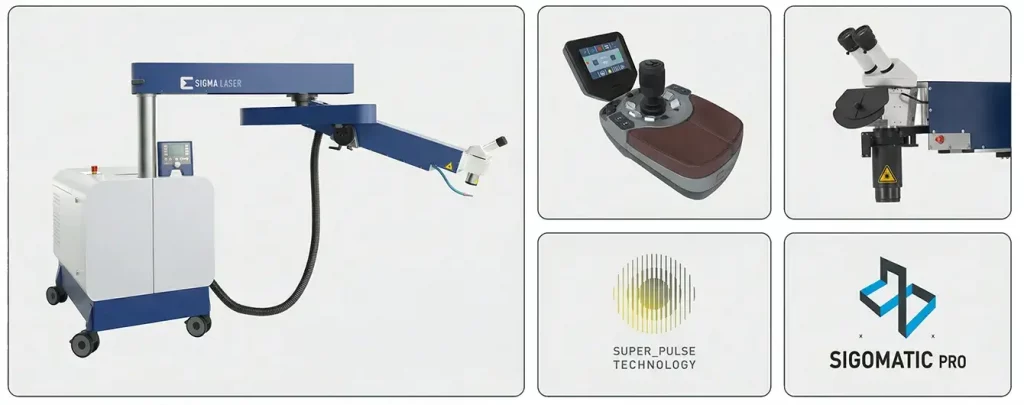
- Ergonomics & Joystick-Based Control
- Mobility + Precision Combination
- Engineering Summary
- Industry Applications
- Injection Molding Industry
- Automotive Tooling and Die Manufacturing
- Aerospace Component Manufacturing
- Die Casting and Heavy Industrial Molds
- Energy, Oil & Gas Component Tooling
- General Tool & Die Industry
- Cost vs ROI of Laser Mold Repair
- Repair Cost vs Full Mold Replacement
- Downtime Reduction (Hidden ROI Driver)
- Extended Tool Life
- Reduced Post-Processing Requirements
- Predictable Maintenance Strategy
- ROI Summary
- Best Practices & Expert Tips for weld molds up to 25 tons
- Parameter Tuning (Energy, Frequency, Pulse Shape)
- Material-Specific Welding Strategies
- Crack Prevention Techniques
- Heat Management Discipline
- Operator Consistency and Process Control
- Engineering Summary
- Conclusion
- Final Takeaway
Introduction
In high-volume manufacturing environments such as injection molding, automotive tooling, and die casting, large molds are not merely production tools, they are critical capital assets directly tied to throughput, product quality, and operational continuity. When these molds often weighing several tons, develop defects such as cracks, wear zones, or surface degradation, the impact is immediate and costly.
Unplanned downtime caused by mold failure can halt entire production lines. In industries with tight takt times and just-in-time manufacturing models, even a few hours of interruption can translate into significant financial losses, delayed deliveries, and contractual penalties. For molds in the range of 10 to 25 tons, the challenge is compounded by their size, complexity, and integration into production systems.
Conventional repair methods such as TIG (Tungsten Inert Gas) and MIG (Metal Inert Gas) welding are still widely used; however, they introduce fundamental limitations when applied to high-value tooling. These processes rely on relatively broad heat input, resulting in large heat-affected zones (HAZ), uncontrolled thermal gradients, and significant residual stresses. From a metallurgical standpoint, this often leads to grain coarsening, hardness variation, and an increased susceptibility to cracking—particularly in high-alloy tool steels.
Moreover, traditional welding typically requires partial or complete disassembly of the mold, followed by transport to a repair station. For large molds, this is not only logistically complex but also time-intensive, further extending downtime and increasing total repair costs.
Laser welding technology addresses these limitations by fundamentally redefining how energy is delivered to the material. Through highly concentrated, precisely controlled energy input—often in pulsed mode—laser systems enable localized melting with minimal thermal impact on the surrounding structure. This allows for high-precision repair of critical area without compromising the integrity of the entire mold.
As a result, laser welding has become the preferred solution for modern mold repair operations where precision, repeatability, and process control are non-negotiable.
Challenges of Welding Large Molds (Up to 25 Tons)
Repairing large-scale molds introduces a unique set of engineering and metallurgical challenges that go far beyond conventional welding scenarios. These challenges must be carefully managed to avoid compromising both the structural integrity and functional performance of the tool.
Thermal Distortion and Heat-Affected Zone (HAZ)
One of the most critical issues in mold repair welding is the control of heat input. Large molds, particularly those made from hardened or pre-hardened tool steels, are highly sensitive to thermal gradients.
During conventional welding, the localized introduction of heat creates steep temperature differentials between the weld zone and the surrounding material. This leads to:
- Non-uniform thermal expansion
- Residual stress accumulation
- Distortion and dimensional deviation
From a metallurgical perspective, excessive heat input enlarges the heat-affected zone (HAZ), altering the microstructure of the base material. Common effects include:
- Grain growth in the austenitic phase
- Reduction in hardness after cooling
- Formation of brittle microstructures in improperly controlled cooling cycles
For precision molds, even minimal distortion can render the tool unusable or require extensive post-machining.
Limited Accessibility and Complex Geometries
Large molds often feature intricate geometries, including deep cavities, undercuts, narrow channels, and confined areas that are difficult to access with traditional welding torches.
This limitation introduces several practical constraints:
- Inability to maintain optimal torch angle
- Reduced visibility during welding
- Inconsistent weld bead formation
In many cases, accessing these areas requires complete disassembly of the mold or repositioning of heavy components—both of which significantly increase repair time and operational complexity.
Material Sensitivity and Metallurgical Constraints
Tool and die materials are specifically engineered for hardness, wear resistance, and thermal stability. Common materials include:
- Cold work tool steels (e.g., high carbon, high chromium grades)
- Hot work tool steels
- Nitrided or surface-hardened components
These materials exhibit complex phase transformations under thermal loading. Improper welding parameters can lead to:
- Martensitic cracking due to rapid cooling
- Loss of surface hardness in nitrided layers
- Hydrogen-induced cracking
- Residual tensile stresses in the weld zone
Additionally, the absorption of laser or arc energy is temperature-dependent. As the material heats up, its absorptivity changes, which directly affects melt pool stability and energy distribution. Without precise control, this can result in:
- Irregular penetration depth
- Porosity formation
- Lack of fusion defects
Downtime and Economic Impact
Beyond the technical challenges, the economic implications of large mold repair are substantial.
For molds weighing up to 25 tons:
- Disassembly and transport require heavy handling equipment
- Repair cycles can extend from hours to days
- Production lines may remain idle during the entire process
In high-throughput manufacturing environments, the cost of downtime often exceeds the cost of repair itself. This makes efficiency, speed, and reliability critical factors in selecting a welding method.
Summary of Pain Points
From both an engineering and operational standpoint, the primary challenges in large mold welding can be summarized as:
- Precise control of heat input to prevent distortion
- Accessing complex geometries without disassembly
- Managing sensitive metallurgical transformations
- Minimizing downtime and operational disruption
These constraints highlight the limitations of conventional welding processes and underscore the need for more advanced, controlled technologies—such as laser welding.
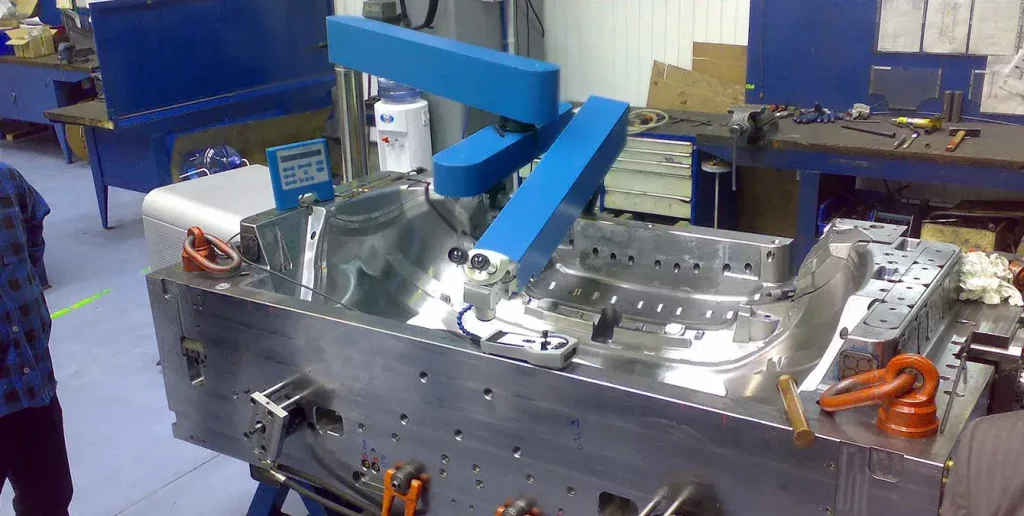
Why Laser Welding is the Ideal Solution
Given the thermal, geometric, and metallurgical constraints associated with repairing large molds, the selection of an appropriate welding technology is not merely a process choice, it is a critical engineering decision. Laser welding has emerged as the most effective solution because it fundamentally changes how energy is transferred into the material.
Unlike conventional arc-based processes, laser systems deliver energy with high spatial and temporal precision. This enables controlled melting, predictable solidification behavior, and minimal impact on the surrounding material. As a result, laser welding directly addresses the core limitations of traditional repair methods in large-scale tooling environments.
Low Heat Input & Minimal Distortion
One of the defining advantages of laser welding is its ability to deliver high energy density within an extremely localized area. The laser beam can be focused to a small spot size, allowing energy to be introduced precisely where it is needed without significantly heating adjacent material.
From a thermal perspective, this results in:
- A significantly reduced heat-affected zone (HAZ)
- Lower overall heat input per unit length
- Controlled thermal gradients across the workpiece
This is particularly critical in large molds, where uneven heating can induce internal stresses and geometric distortion. By minimizing the thermal load, laser welding reduces:
- Warping and dimensional deviation
- Residual tensile stresses
- Post-weld machining requirements
Additionally, when operating in pulsed mode, the energy input can be further segmented into discrete pulses, enabling precise control over heat accumulation and cooling rates. This allows the welding process to remain within a controlled thermal envelope—even in sensitive materials.
High Precision on Complex Geometries
Large molds are rarely simple in geometry. Features such as deep cavities, narrow ribs, and Complex contours require a welding process capable of maintaining accuracy under constrained conditions.
Laser welding systems offer:
- Focus diameters typically in the range of 0.1–2.0 mm
- Stable beam quality across varying working distances
- High repeatability in energy delivery
This level of precision enables:
- Localized material deposition without affecting surrounding area
- Accurate restoration of worn or damaged features
- Consistent weld bead geometry
Moreover, modern laser systems equipped with multi-axis control (X, Y, Z, and rotational axes) allow the operator to maintain optimal زاویه and focal positioning—even in hard-to-reach areas. This eliminates many of the accessibility limitations associated with traditional welding torches.
Suitable for High-Alloy Tool Steels
Tool and die applications frequently involve materials with complex metallurgical behavior, including high carbon content, alloying elements, and surface treatments such as nitriding.
Laser welding is particularly well-suited for these materials due to its precise control over heat input and cooling kinetics.
Key metallurgical advantages include:
- Controlled melt pool size and solidification rate
- Reduced risk of martensitic cracking
- Preservation of base material properties
- Minimal dilution of alloy composition
Because the energy input is localized and transient, the surrounding microstructure experiences limited thermal exposure. This helps maintain:
- Hardness profiles in heat-treated steels
- Integrity of nitrided or surface-hardened layers
- Desirable mechanical properties such as toughness and fatigue resistance
Furthermore, advanced pulse control strategies enable engineers to tailor the thermal cycle (including cooling rates such as t8/5) to the specific material—ensuring optimal microstructure formation in the weld zone.
On-Site Repair Capability
For large molds—particularly those approaching or exceeding 25 tons—logistics become a major constraint in the repair process. Traditional workflows often require:
- Disassembly of the mold
- Transport to a welding station
- Reinstallation and realignment
This process is not only time-consuming but also introduces risks related to handling and repositioning.
Laser welding systems, especially mobile configurations, eliminate these limitations by enabling on-site repair. The system can be positioned directly at the mold location, allowing repairs to be performed without removing the component from the production environment.
This capability delivers several operational advantages:
- Drastic reduction in downtime
- Elimination of transport-related delays
- Increased flexibility in maintenance scheduling
From a production standpoint, this transforms mold repair from a disruptive event into a controlled, efficient maintenance operation.
Sigma Laser systems are specifically engineered to support this approach, combining mobility, extended reach, and precise process control making them particularly suitable for large-scale industrial applications.
Laser Welding Technologies Explained
Selecting the appropriate laser welding technology is not a matter of preference—it is a function of material behavior, energy transfer dynamics, and the specific requirements of the repair process. For large mold welding, understanding the interaction between laser type, operating mode, and metallurgical response is essential to achieving consistent and defect-free results.
This section outlines the core technologies that define modern industrial laser welding systems and their implications for large-scale mold repair.
Pulsed vs Continuous Wave (CW) Laser Welding
Laser welding systems operate in two primary modes: continuous wave (CW) and pulsed mode. Each mode defines how energy is delivered over time and directly influences heat input, penetration depth, and microstructural evolution.
Continuous Wave (CW) Mode
In CW operation, the laser emits a constant energy output over time. This results in:
- Stable and continuous melt pool formation
- Higher welding speeds
- Deeper penetration depth
However, this mode also introduces:
- Higher total heat input
- Larger heat-affected zones (HAZ)
- Increased risk of thermal distortion
From a process standpoint, CW mode is typically better suited for applications where speed and penetration are prioritized over precision—such as seam welding in production environments.
Pulsed Laser Mode
In pulsed operation, the laser delivers energy in discrete, high-intensity bursts. Each pulse introduces a controlled amount of energy into the material over a very short duration (typically in the millisecond range).
This results in:
- High pulse peak power with relatively low average heat input
- Precise control over melt pool size
- Reduced thermal diffusion into surrounding material
For mold repair, this is a decisive advantage. Pulsed laser welding enables:
- Localized heating without affecting adjacent area
- Reduced residual stress formation
- Improved control over solidification behavior
Additionally, weld quality in pulsed mode is influenced by:
- Pulse frequency
- Pulse duration
- Overlap ratio between pulses
By adjusting these parameters, engineers can fine-tune the welding process to match the geometry and material properties of the mold.
Fibre Laser vs Nd:YAG Laser
The choice of laser source is another critical factor in determining welding performance. The two dominant technologies in industrial mold repair are fibre lasers and lamp-pumped Nd:YAG lasers, each with distinct physical characteristics.
Fibre Laser Systems
Fibre lasers generate the laser beam within an optical fiber doped with rare-earth elements (typically ytterbium). Energy is introduced via diodes and converted into a highly focused beam.
Key characteristics:
- Electrical-to-optical efficiency exceeding 20%
- Very small focus diameters
- Stable beam quality
- Near maintenance-free operation
From an application standpoint, fibre lasers are ideal for:
- High-speed welding
- Continuous operation (CW mode)
- Fine, precision welding tasks
Their low maintenance requirements and energy efficiency make them particularly attractive for production environments.
Nd:YAG (Lamp-Pumped) Laser Systems
Lamp-pumped Nd:YAG lasers operate by exciting a solid-state laser medium using flash lamps. This architecture enables the generation of extremely high pulse energies and peak powers.
Key characteristics:
- Very high pulse peak power
- Strong energy delivery in short durations
- Proven reliability in tool and mold applications
One of the defining advantages of this technology is its ability to generate intense انرژی spikes during each pulse. This is particularly beneficial for:
- Deposition welding
- Repair of thick sections
- Melting of filler wire with high control
In the context of large mold repair, Nd:YAG systems remain highly relevant due to their superior performance in pulsed welding scenarios.
Practical Comparison for Mold Welding
From an engineering perspective:
- Fibre lasers excel in efficiency, stability, and continuous processes
- Nd:YAG lasers excel in peak power, pulse control, and metallurgical precision
For repairing large molds—especially when working with high-alloy tool steels and localized defects—systems capable of delivering high pulse peak power are often preferred.
Pulse Peak Power and Metallurgical Impact
Pulse peak power is one of the most critical parameters in pulsed laser welding. It defines the rate at which energy is delivered into the material during each pulse.
Energy Absorption Dynamics
Metallic materials do not absorb laser energy uniformly. Instead, absorption increases with temperature. This creates a nonlinear relationship between energy input and material response.
Higher pulse peak power leads to:
- Rapid temperature rise at the level
- Faster transition into the molten state
- Increased absorption efficiency
This dynamic behavior is essential for achieving stable weld initiation and consistent penetration.
Melt Pool Behavior
The characteristics of the melt pool are directly influenced by pulse peak power:
- High peak power → rapid melting and fluid flow
- Controlled pulse shaping → stable melt pool dynamics
- Reduced energy input after initial melting → smoother solidification
This can be compared to thermal process control in other systems: once the material reaches the desirable melting point, maintaining rather than increasing energy input leads to more stable outcomes.
Microstructural Control
From a metallurgical standpoint, pulse peak power affects:
- Cooling rates
- Grain structure formation
- Residual stress distribution
When properly controlled, this enables:
- Fine-grained microstructures
- Reduced crack susceptibility
- Improved mechanical properties
Conversely, insufficient or poorly controlled peak power can result in:
- Lack of fusion
- Porosity
- Inconsistent weld geometry
Implications for Large Mold Repair
For large molds, where material integrity is critical, precise control over pulse peak power allows engineers to:
- Minimize thermal damage to surrounding material
- Maintain consistent weld quality across large surfaces
- Adapt the process to different alloys and surface conditions
This level of control is a key reason why advanced pulsed laser systems are widely used in tool and mold repair applications.
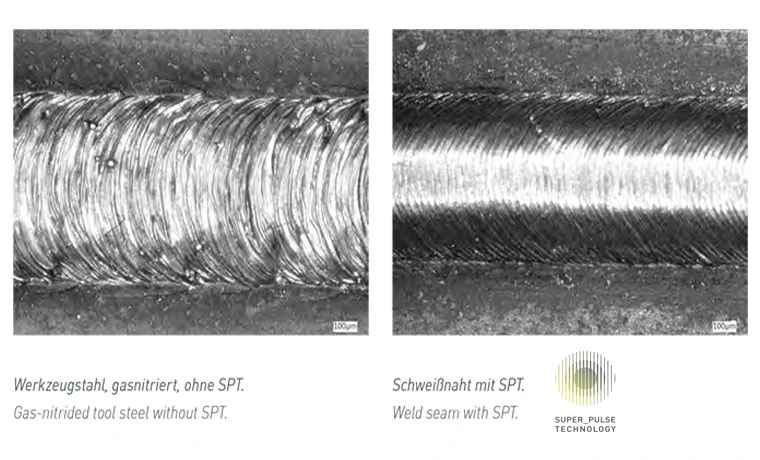
Advanced Process Control: Super Pulse Technology (SPT)
In high-precision mold repair, the difference between a structurally sound weld and a failure-prone repair often lies not in the heat source itself, but in the level of control over the thermal cycle. Conventional pulsed laser systems offer discrete energy delivery, but they are still limited in how precisely they can shape the energy profile of each pulse.
To overcome these limitations, advanced systems have introduced pulse-shaping technologies that allow real-time modulation of energy input. One of the most sophisticated implementations of this approach is Super Pulse Technology (SPT)—a proprietary development by Sigma Laser.
SPT fundamentally enhances how laser energy is delivered, enabling engineers to control not only the amount of energy, but also its temporal distribution within each pulse.
Microsecond-Level Pulse Modulation
At the core of SPT is the ability to modulate laser pulses at the microsecond scale. Unlike conventional pulse systems—where energy is delivered in a relatively fixed profile—SPT allows dynamic shaping of the pulse curve.
This means that instead of a simple energy spike, each pulse can be engineered with:
- Controlled ramp-up phase
- Stabilized peak energy plateau
- Gradual ramp-down phase
From a process engineering perspective, this provides a much finer degree of control over how the material is heated and cooled during each pulse cycle.
Control of Cooling Rates (t8/5 Time)
One of the most critical parameters in welding metallurgy is the cooling rate, often characterized by the t8/5 time—the time it takes for the material to cool from 800°C to 500°C.
This temperature range is crucial because it determines:
- Phase transformations
- Grain structure evolution
- Residual stress formation
With conventional welding processes, t8/5 is largely uncontrolled and depends on external factors such as heat input and material thickness.
SPT changes this paradigm by enabling indirect control over cooling rates through precise pulse shaping. By adjusting the energy input and duration at each stage of the pulse, engineers can:
- Slow down or accelerate cooling locally
- Influence phase transformation pathways
- Optimize microstructure formation
This level of control is particularly valuable for high-alloy tool steels, where small deviations in cooling rate can lead to significant changes in mechanical properties.
Prevention of Cracking and Metallurgical Defects
Cracking is one of the most critical failure modes in mold repair welding. It can occur due to:
- Rapid cooling (leading to martensitic structures)
- High residual stresses
- Incompatible microstructures between base material and weld metal
SPT directly addresses these issues by stabilizing the thermal cycle.
Key effects include:
- Reduction of thermal shock during rapid heating and cooling
- Controlled solidification behavior in the melt pool
- Lower residual tensile stresses
As a result, SPT significantly reduces the risk of:
- Hot cracking during solidification
- Cold cracking after cooling
- Hydrogen-assisted cracking in sensetive materials
This is especially important when working with:
- Nitrided surfaces
- Hardened tool steels
- High-carbon alloys
Microstructure Optimization and Mechanical Performance
The ultimate goal of any welding process is not just to join material—but to preserve or enhance its mechanical performance.
Through precise control of the thermal cycle, SPT enables:
- Formation of fine-grained microstructures
- Improved ductility and toughness
- Consistent hardness profiles across the weld zone
Unlike conventional processes that may degrade material properties, SPT allows the weld to closely match—or in some cases improve—the original material characteristics.
Additionally, the controlled energy input minimizes dilution effects, preserving the intended chemical composition of the weld deposit.
Process Stability and Repeatability
In industrial environments, repeatability is as critical as quality. Variations in weld results can lead to unpredictable performance and increased rework.
SPT enhances process stability by:
- Providing consistent pulse-to-pulse energy delivery
- Reducing sensitivity to operator variability
- Maintaining stable melt pool conditions
This leads to:
- Uniform weld seams
- Predictable results across different repair scenarios
- Reduced need for post-weld corrections
Relevance for Large Mold Repair Applications
When repairing molds up to 25 tons, the scale of the component amplifies every metallurgical and thermal challenge. Small inconsistencies in heat input can lead to large-scale defects.
SPT is particularly valuable in this context because it enables:
- Localized control in critical area without affecting the entire structure
- Adaptation to varying material thickness across the mold
- High-quality repairs in both surface and deeper area
Sigma Laser integrates Super Pulse Technology into its advanced systems to ensure that even the most demanding mold repair applications can be executed with precision, reliability, and metallurgical integrity.
Welding Large Molds (Up to 25 Tons): Process Workflow
Repairing large molds using laser technology is not a single-step operation—it is a multi-stage, highly controlled process that integrates material science, parameter optimization, and precision execution. Each stage directly influences the final weld quality, structural integrity, and service life of the mold.
For molds in the range of 10 to 25 tons, even minor deviations in process control can lead to significant defects. Therefore, a structured and repeatable workflow is essential to ensure consistent results.
Damage Assessment and Failure Analysis
The repair process begins with a detailed evaluation of the mold condition. This is not limited to visual inspection; it involves identifying the root cause of failure.
Key considerations include:
- Type of defect (crack, wear, chipping, deformation)
- Depth and propagation of cracks
- Location relative to critical functional surfaces
- Material type and heat treatment condition
Advanced inspection methods may include:
- Dye penetrant testing (PT)
- Magnetic particle inspection (MT)
- Microscopic analysis of crack morphology
From an engineering standpoint, distinguishing between surface-level defects and structural failures is critical for selecting the appropriate repair strategy.
Surface Preparation and Pre-Treatment
Proper surface preparation is essential to ensure metallurgical bonding and avoid defects such as porosity or lack of fusion.
This stage typically includes:
- Removal of damaged or contaminated material (grinding or machining)
- Cleaning to eliminate oil, oxides, and residues
- create a defined weld zone with controlled geometry
For high-alloy tool steels or nitrided surfaces, additional considerations may include:
- Partial removal of hardened layers
- Controlled preheating (if required) to reduce thermal gradients
Surface condition directly affects energy absorption and melt pool stability. Any contamination can disrupt the laser-material interaction and compromise weld integrity.
Parameter Selection and Process Setup
Laser welding performance is highly sensitive to process parameters. Unlike conventional welding, where adjustments are relatively coarse, laser systems require precise calibration.
Critical parameters include:
- Pulse energy and peak power
- Pulse duration and frequency
- Spot size (focus diameter)
- Pulse overlap ratio
- Shielding gas type and flow rate
These parameters must be adapted based on:
- Material composition
- Thickness of the repair area
- Required penetration depth
- Desired microstructure
In advanced systems, parameters can be fine-tuned using pulse shaping techniques (such as SPT), enabling control over both heat input and cooling behavior.
Laser Deposition Welding (Build-Up Phase)
This is the core phase of the repair process, where material is added to restore the original geometry.
Laser deposition welding involves:
- Controlled melting of base material
- Simultaneous or sequential addition of filler wire
- Layer-by-layer material buildup
Key process characteristics:
- Highly localized melting zone
- Minimal dilution of base material
- Precise control over bead geometry
For large molds, deposition must be performed incrementally to avoid heat accumulation. Each layer is allowed to stabilize thermally before the next pass is applied.
From a metallurgical perspective, maintaining a stable melt pool and controlled solidification is essential to prevent:
- Porosity
- Cracking
- Irregular bead formation
Thermal Management During Welding
Even with laser technology, cumulative heat input must be managed—especially in large components where heat dissipation is uneven.
Effective thermal control strategies include:
- Pulsed energy delivery to limit heat buildup
- Inter-pass cooling intervals
- Monitoring of surface temperature
- Strategic sequencing of weld paths
In advanced systems, thermal behavior can be indirectly controlled through pulse shaping, allowing engineers to maintain optimal cooling rates throughout the process.
Post-Processing and Finishing
Once the weld buildup is complete, the repaired area must be finished to restore functional and dimensional accuracy.
Post-processing steps include:
- Precision grinding and polishing
- Machining to final tolerances
- Surface texturing (if required)
Dimensional verification is critical, particularly for molds used in high-precision applications such as automotive or aerospace manufacturing.
In some cases, additional treatments may be applied:
- Stress relieving
- Surface hardening or re-nitriding
Quality Control and Inspection
Final validation ensures that the repaired mold meets both mechanical and functional requirements.
Inspection methods may include:
- Visual inspection of weld integrity
- Non-destructive testing (NDT)
- Hardness testing across weld zones
- Dimensional measurement using CMM systems
The goal is to confirm:
- Absence of cracks or internal defects
- Uniform microstructure
- desired mechanical performance
Process Summary
A successful large mold repair using laser welding depends on the integration of:
- Accurate failure analysis
- Controlled surface preparation
- Precise parameter selection
- Stable deposition process
- Effective thermal management
- Rigorous post-process inspection
This structured workflow ensures that even molds up to 25 tons can be restored with high precision, minimal distortion, and long-term reliability.
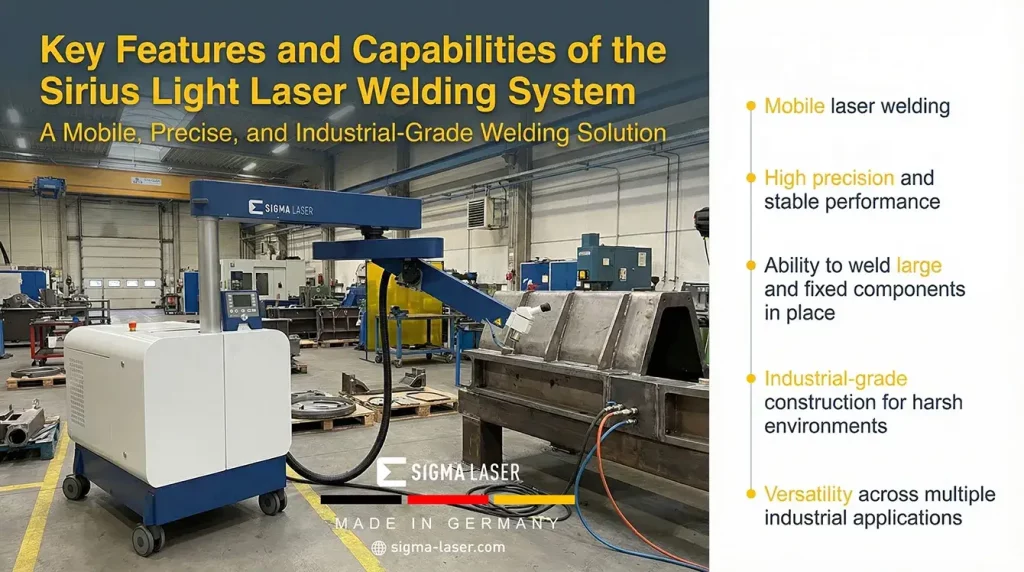
Recommended Systems for Large Mold Welding
Selecting the appropriate laser welding system for molds up to 25 tons requires careful consideration of both process requirements and operational constraints. Key factors include reach, mobility, pulse control capability, and adaptability to complex geometries.
Sigma Laser has developed a range of systems specifically engineered to address these challenges in large-scale mold repair applications. The following solutions represent optimized configurations based on different operational priorities.
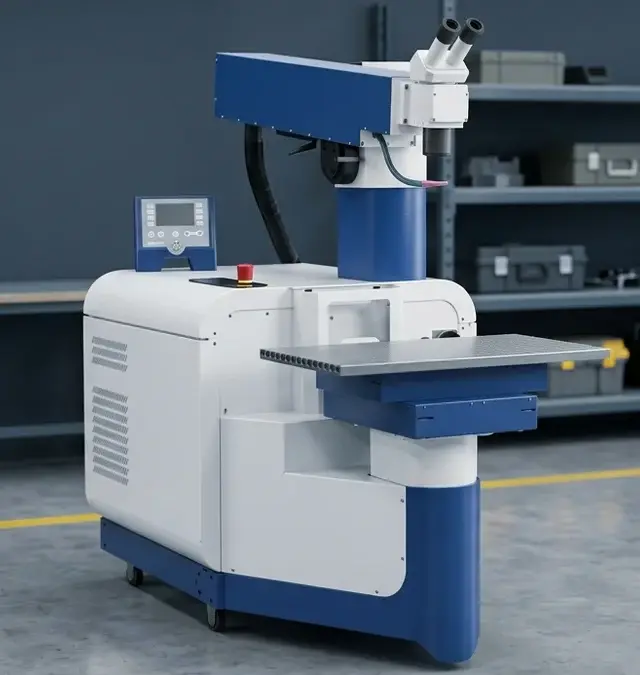
Sirius Light
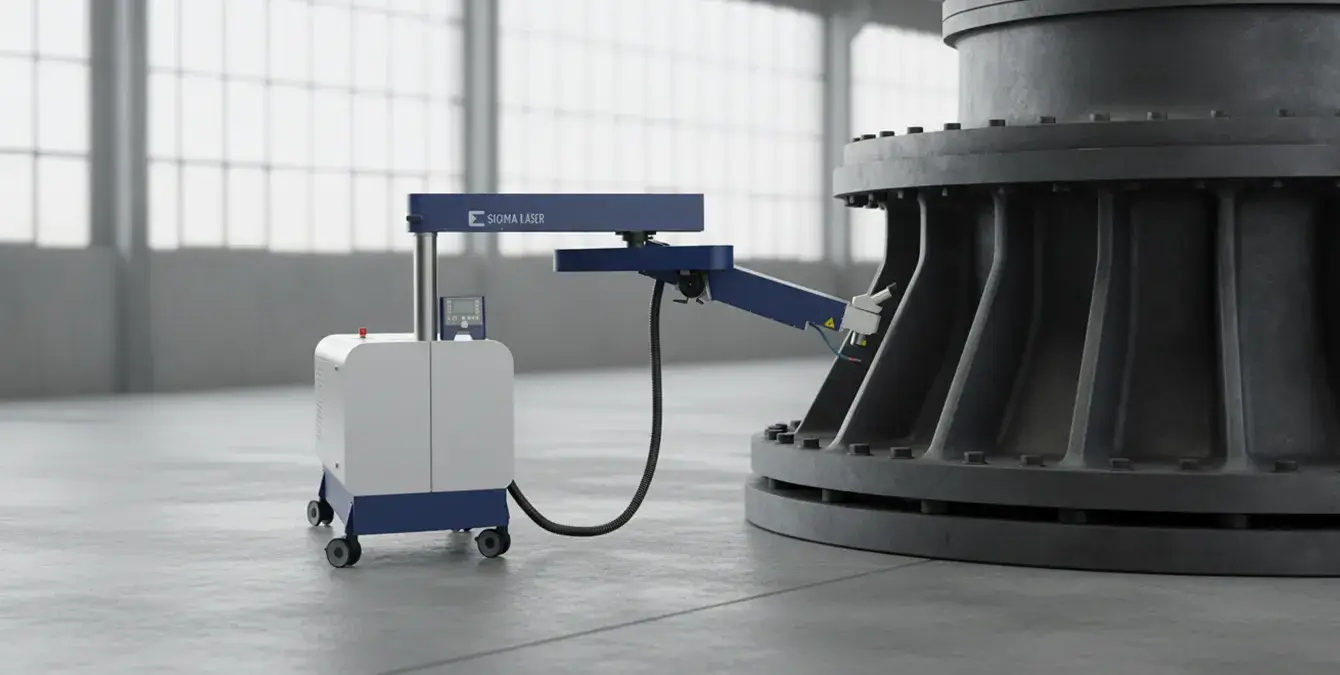
Designed as a dedicated solution for large mold repair, this system addresses one of the primary constraints in heavy tooling environments: accessibility.
Engineering Advantages:
- Extended working range with reach up to ~1,830 mm
- Capability to handle components up to 25 tons
- Fully mobile architecture for on-site deployment
- Stable beam delivery across extended distances
From a process perspective, the extended reach allows operators to access deep cavities and large surface areas without repositioning the mold. This significantly reduces setup time and eliminates the need for disassembly in many cases.
The system’s mobility is particularly critical in production environments where molds are integrated into large machinery and cannot be easily transported. By enabling in-situ repair, Sirius Light minimizes downtime and simplifies maintenance logistics.
Typical Use Cases:
- Large injection molds
- Automotive tooling
- Die casting molds with limited accessibility
→ View Sirius Light details (Heavy-Duty Mobile Nd:YAG Laser Welding System)
Sineo Light
Positioned as a high-performance, premium system, this platform is optimized for applications where weld quality, process control, and repeatability are the primary concerns.
Engineering Advantages:
- Integration of Super Pulse Technology (SPT) for advanced pulse shaping
- High stability in pulse-to-pulse energy delivery
- Optimized ergonomics for precision operation
- Advanced control interface for parameter tuning
From a metallurgical standpoint, the integration of SPT enables precise control over thermal cycles, making this system particularly suitable for:
- High-alloy tool steels
- Nitrided components
- Crack-sensitive materials
The system allows engineers to tailor the welding process at a microstructural level—controlling cooling rates, reducing residual stresses, and ensuring consistent mechanical properties.
Typical Use Cases:
- High-precision mold repair
- Aerospace tooling
- Critical components requiring defect-free welds
→ View Sineo Light details (the mobile laser welding system)
Sineo Fibre
This system represents an energy-efficient and low-maintenance alternative, leveraging fibre laser technology for stable and continuous operation.
Engineering Advantages:
- High electrical-to-optical efficiency
- Minimal maintenance requirements
- Stable beam quality for precision welding
- Suitable for both pulsed and continuous applications
While fibre systems typically offer lower peak pulse power compared to lamp-pumped Nd:YAG systems, they provide excellent performance in applications where:
- Continuous operation is required
- Operational costs must be minimized
- Process stability is prioritized
Typical Use Cases:
- Production-oriented repair workflows
- Facilities with high utilization rates
- Applications requiring consistent, repeatable weld seams
→ View Sineo Fibre details (the Award winning powerful mobile 5-axis fibre laser welding system)
System Selection Strategy
From an engineering decision-making perspective, system selection should be aligned with the dominant constraint of the application:
- Accessibility & mobility constraints → Sirius Light
- Metallurgical precision & advanced control → Sineo Light
- Operational efficiency & low maintenance → Sineo Fibre
In many industrial environments, a combination of these capabilities is required. Sigma Laser systems are designed with a modular architecture, allowing configurations to be adapted to specific production and repair requirements.
Integration into Industrial Workflows
All three systems are engineered to integrate into modern manufacturing environments with:
- Multi-axis positioning capability
- Stable parameter control
- Compatibility with a wide range of tool steels and alloys
This ensures that large mold repair can be performed as a controlled, repeatable process rather than a reactive, high-risk intervention.
Key Advantages of Sigma Laser Systems for Mold Welding
Sigma Laser systems are engineered specifically for high-precision mold and tool repair environments where thermal stability, repeatability, and accessibility directly impact production uptime and repair quality. The system architecture is not a generic laser platform adapted for molds; it is purpose-built for heavy industrial geometries and high-value tooling repair workflows.
Modular Architecture
The system design follows a modular engineering approach, allowing configuration based on repair scale, accessibility constraints, and production environment.
Key implications in mold repair:
- Easy adaptation between workshop and on-site repair setups
- Upgradeable subsystems (optics, motion units, control interfaces) without full system replacement
- Reduced lifecycle cost through scalable configuration rather than replacement
This is particularly critical in tool and die environments where repair requirements vary significantly between small precision inserts and large multi-ton injection molds.
Retrofit Capability
Sigma Laser platforms are designed to integrate into existing industrial maintenance ecosystems without requiring full infrastructure redesign.
Technical advantages:
- Compatibility with existing mold repair stations and tooling fixtures
- Integration into legacy maintenance workflows (TIG/MIG replacement scenarios)
- Minimal disruption during system deployment in active production facilities
For large-scale mold shops, retrofit capability directly reduces adoption friction and accelerates ROI by leveraging existing operational assets.
Remote Diagnostics & Process Monitoring
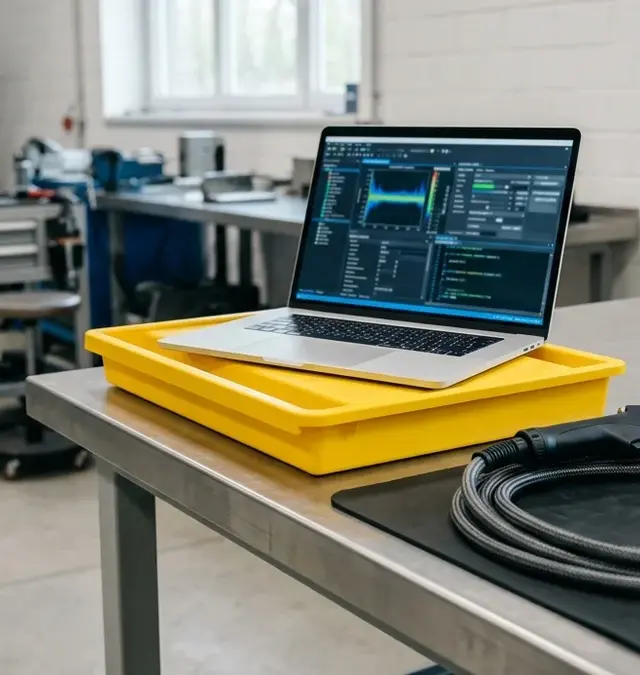
Modern mold repair demands traceability and process stability. Sigma Laser systems incorporate remote diagnostic and monitoring capabilities for real-time system evaluation.
Core functions include:
- Live monitoring of laser parameters (pulse energy, frequency, stability curves)
- Fault detection and predictive maintenance alerts
- Remote support access for parameter optimization and troubleshooting
This reduces unplanned downtime and ensures consistent weld quality across operators with different skill levels.
Ergonomics & Joystick-Based Control
Precision mold welding often requires long-duration manual operation on complex geometries. Operator ergonomics directly affect weld consistency.
Design advantages:
- Joystick-controlled multi-axis positioning for fine deposition control
- Reduced operator fatigue during extended repair cycles
- Improved micro-positioning accuracy on intricate tool cavities
This is particularly relevant in high-detail mold restoration where bead placement accuracy directly affects final machining allowance.
Mobility + Precision Combination
One of the defining advantages of Sigma Laser systems is the integration of mobility with high-precision control—an uncommon combination in industrial laser welding platforms.
Operational impact:
- On-site repair capability for large molds (up to multi-ton class components)
- High-precision beam delivery despite mobile deployment structure
- Reduced need for mold transportation, lowering logistical risk and cost
This dual capability is essential for industries where mold downtime is more expensive than repair complexity itself.
Engineering Summary
Collectively, these advantages position Sigma Laser systems as a dedicated infrastructure for industrial mold restoration rather than a conventional welding tool. The focus is not only weld quality, but also operational continuity, deployment flexibility, and process control across varying production environments.
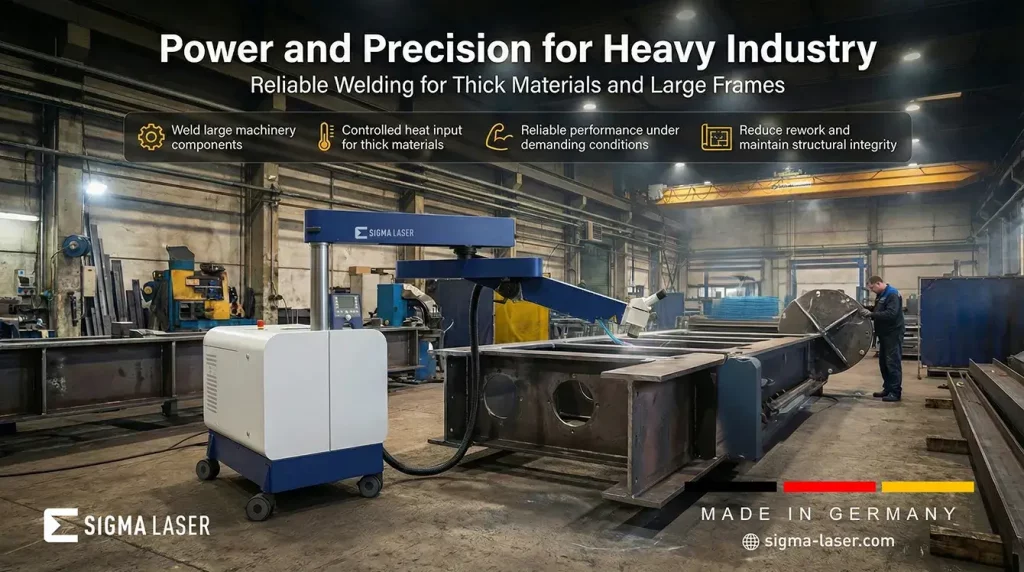
Industry Applications
Laser welding for large-scale mold and tool repair is not limited to a single manufacturing domain. Its value becomes most evident in industries where tooling downtime directly interrupts production cycles, and where component replacement costs significantly exceed repair costs. The ability to restore high-value tooling with controlled thermal input makes laser-based processes particularly relevant across several precision-driven sectors.
Injection Molding Industry
Injection molding represents one of the largest application areas for laser mold repair due to the high cost and operational criticality of production molds.
Typical use cases:
- Repair of worn or damaged cavity surfaces
- Restoration of ejector pin zones and gate areas
- Correction of surface defects caused by cyclic thermal stress
Key advantage:
- Minimal thermal distortion preserves dimensional integrity of complex cavity geometries, reducing post-repair machining effort and ensuring tight tolerance compliance.
Automotive Tooling and Die Manufacturing
The automotive sector relies heavily on large, high-precision stamping dies and injection molds with long production lifecycles.
Applications include:
- Repair of forming dies and stamping tools
- Localized restoration of wear zones on high-stress contact areas
- Maintenance of prototype tooling and short-run production dies
Key advantage:
- Ability to perform localized repairs without dismantling or transporting large tooling assemblies significantly reduces production line downtime.
Aerospace Component Manufacturing
Aerospace tooling and components often involve high-alloy steels and stringent quality requirements, particularly in structural and precision assemblies.
Common applications:
- Repair of high-strength alloy molds and fixtures
- Restoration of precision forming tools for composite parts
- Localized correction of heat-affected tooling surfaces
Key advantage:
- Controlled heat input reduces micro-structural degradation in sensitive materials, preserving mechanical integrity and fatigue resistance.
Die Casting and Heavy Industrial Molds
Die casting molds operate under extreme thermal cycling and mechanical stress, making them highly susceptible to cracking and surface fatigue.
Applications include:
- Crack repair in high-pressure die casting molds
- Surface rebuilding of erosion-prone areas
- Restoration of thermal fatigue zones in repeated-cycle tooling
Key advantage:
- Precision deposition welding allows controlled material addition without compromising the base structure, extending tool life significantly.
Energy, Oil & Gas Component Tooling
Large-scale industrial components used in energy systems often require specialized tooling for manufacturing and maintenance.
Applications:
- Repair of molds used in turbine and compressor component production
- Restoration of high-wear forming dies for pipeline and valve parts
- Localized repair of high-load tooling inserts
Key advantage:
- On-site repair capability reduces the logistical burden of transporting oversized or fixed industrial tooling.
General Tool & Die Industry
Across general manufacturing environments, tool and die shops represent a core user base for laser mold repair systems.
Applications:
- Maintenance of progressive dies and punching tools
- Repair of cutting edges and forming surfaces
- Restoration of hardened tool steel components
Key advantage:
- High precision material deposition supports multiple steel grades, including high-carbon and alloyed tool steels, without introducing excessive hardness gradients or cracking risk.
Across all these industries, the critical driver is not only weld quality but production continuity. Laser welding enables localized, high-precision repair of expensive tooling assets without full disassembly or replacement, making it a key enabling technology in modern industrial maintenance strategies.
In high-value manufacturing environments, this translates directly into reduced downtime, extended tool life, and improved lifecycle cost efficiency.
Cost vs ROI of Laser Mold Repair
Laser mold repair is fundamentally an economic decision, not just a technical one. In high-value tooling environments, the cost of downtime and replacement often exceeds the cost of repair by an order of magnitude. Laser welding shifts the economics by enabling localized restoration with minimal interruption to production cycles.
Repair Cost vs Full Mold Replacement
Replacing a large industrial mold can involve:
- High tooling manufacturing cost
- Long lead times (weeks to months)
- Recalibration and requalification of production lines
Laser repair, in contrast:
- Targets only damaged zones
- Preserves base tooling structure
- Eliminates full re-machining cycles
Result:
- Repair cost is typically a fraction of full replacement, especially for multi-ton molds used in injection molding and automotive tooling.
Downtime Reduction (Hidden ROI Driver)
In industrial production, downtime is often more expensive than the repair itself.
Laser welding impact:
- On-site repair reduces transport and handling delays
- Localized processing shortens maintenance cycles
- Faster return-to-production compared to TIG/MIG rebuild workflows
Even small reductions in downtime can translate into significant financial savings in high-volume manufacturing environments.
Extended Tool Life
Laser deposition allows precise material addition with controlled thermal input, which directly improves tool longevity.
Key effects:
- Reduced thermal stress on base material
- Lower risk of secondary cracking
- Improved wear resistance in repaired zones
This extends the operational life of molds, delaying capital-intensive replacements.
Reduced Post-Processing Requirements
Traditional welding methods often require extensive grinding, machining, and surface correction.
Laser welding benefits:
- High-precision deposition reduces excess material buildup
- Minimal distortion preserves geometry
- Less rework required after repair
This reduces labor cost and shortens overall maintenance cycles.
Predictable Maintenance Strategy
Laser repair enables a shift from reactive to planned maintenance.
Operational advantage:
- Damage can be repaired early before catastrophic failure
- Maintenance windows can be scheduled strategically
- Reduced risk of unexpected production shutdowns
This improves production planning efficiency and asset utilization.
ROI Summary
From an ROI perspective, laser mold welding is driven by three main factors:
- Lower direct repair cost compared to replacement
- Significant reduction in production downtime
- Extended lifecycle of high-value tooling assets
In most industrial scenarios, the ROI is realized not in the repair itself, but in the avoided losses from downtime and premature tool replacement.
Best Practices & Expert Tips for weld molds up to 25 tons
Achieving stable, defect-free laser mold repair depends less on raw system power and more on process control, parameter optimization, and material-specific strategy. In large mold applications, small deviations in settings can significantly affect microstructure, hardness gradients, and crack susceptibility.
Parameter Tuning (Energy, Frequency, Pulse Shape)
Proper parameter configuration is the foundation of consistent weld quality.
Key considerations:
- Energy density control: avoid excessive melting that increases dilution and distortion
- Pulse frequency adjustment: balance deposition rate with thermal stability
- Pulse shaping: smoother energy profiles reduce spatter and microcrack formation
Practical rule:
- Lower heat input with stable overlap is preferred over high-speed deposition in precision mold repair.
Material-Specific Welding Strategies
Different tool steels and alloys respond differently to laser energy absorption and cooling rates.
Common scenarios:
- High-carbon tool steels: require controlled preheating to reduce thermal shock
- Hardened tool steels: demand low dilution and strict heat input control
- Nitrided surfaces: require localized removal or careful layer restoration to avoid brittle interface zones
Key principle:
- Always align laser parameters with material thermal conductivity and phase transformation behavior, not just geometry.
Crack Prevention Techniques
Cracking is one of the most critical failure modes in mold welding, especially in high-stress tooling.
Effective prevention methods:
- Controlled cooling rates (t8/5 management): avoid rapid thermal gradients
- Multi-layer deposition strategy: reduce stress accumulation per pass
- Edge-to-center welding sequence: distribute residual stress more evenly
- Stress-relief pass: final low-energy layer to stabilize surface structure
Critical insight:
- Most cracking failures are not caused during welding, but during uncontrolled cooling phases.
Heat Management Discipline
Thermal stability is often more important than deposition speed.
Best practices:
- Intermittent welding cycles for large sections
- Monitoring interpass temperature
- Avoiding localized overheating in confined geometries
This is especially important in large molds where heat dissipation is uneven across complex structures.
Operator Consistency and Process Control
Even with advanced systems, operator technique remains a key variable.
Recommendations:
- Maintain consistent torch distance and angle
- Use guided motion paths for repeatable bead placement
- Standardize parameter sets for specific material groups
Reducing operator variability directly improves repeatability and final surface quality.
Engineering Summary
In laser mold repair, process stability is achieved through a controlled balance of energy input, thermal management, and material-aware parameter selection. Systems such as Sigma Laser are designed to support this level of precision control, but final weld integrity is ultimately determined by how effectively these best practices are applied in real industrial conditions.
Conclusion
Laser welding has redefined how large-scale molds up to 25 tons are maintained and restored in modern industrial environments. Instead of full replacement or high-risk conventional welding, manufacturers now rely on controlled, localized repair processes that preserve dimensional accuracy, reduce downtime, and extend tool life.
Across injection molding, automotive tooling, and heavy die casting applications, the shift is clear: precision laser deposition is no longer an alternative method, it is becoming the standard for high-value mold maintenance.
The key advantage is not only metallurgical control, but operational continuity. By minimizing thermal distortion and enabling on-site repair of large tooling systems, laser technology directly impacts production efficiency and lifecycle cost.
Systems developed by Sigma Laser are engineered specifically for these demands, combining mobility, precision control, and advanced pulse management to support critical industrial repair workflows.
Final Takeaway
- Reduce downtime instead of replacing molds
- Restore geometry with micron-level control
- Maintain mechanical integrity of high-value tool steels
- Extend service life of multi-ton industrial molds
If you are working with large-scale tooling systems and facing recurring repair costs or production interruptions, upgrading to laser-based repair technology is a strategic step toward long-term efficiency.