
- Key Takeaways
- What is Mold Repair Laser Welding?
- Introduction to Laser Welding
- Significance in Mold Repair
- How Does Laser Welding Extend the Life of Molds?
- Advantages of Precision Welding
- Minimizing Heat-Affected Zone
- What Materials Can Be Repaired Using Laser Welding?
- Common Mold Materials
- Compatibility with Laser Welding
- Case Studies: Successful Mold Repair Using Laser Welding
- Case Study 1: Automotive Industry
- Case Study 2: Consumer Goods
- Cost Analysis: Laser Welding vs Traditional Methods
- Initial Investment and Operational Costs
- Long-term Savings and ROI
- Can Laser Welding Improve Production Efficiency?
- Reducing Downtime
- Enhancing Repair Quality
- Frequently Asked Questions
- What materials can be repaired using laser welding?
- How does laser welding extend the life of molds?
- What are the advantages of using laser welding for mold repair?
- Is laser welding suitable for repairing small, intricate mold features?
- What is the typical turnaround time for mold repair using laser welding?
- Can laser welding be automated for mold repair processes?
- What are the cost implications of using laser welding for mold repair?
- Related Articles
- Sources
Key Takeaways
Mold repair laser welding offers a transformative approach for production managers seeking efficient and precise solutions. As the demand for high-quality, cost-effective production increases, understanding the advantages of laser welding over traditional methods becomes crucial.
- Laser welding provides unparalleled precision, reducing the risk of distortion and maintaining the integrity of the mold’s original design.
- Speed and efficiency are significantly enhanced, minimizing downtime and increasing overall production throughput.
- The non-contact nature of laser welding results in lower thermal distortion, preserving the mold’s dimensional accuracy.
- Laser welding allows for the repair of intricate details and hard-to-reach areas, extending mold lifespan and reducing replacement costs.
- Compared to traditional welding methods, laser welding offers superior repeatability and consistency, ensuring high-quality results every time.
- Reduced post-weld processing requirements lead to lower labor costs and faster turnaround times.
- Laser welding’s precision and control make it ideal for working with a variety of materials, including sensitive alloys.
By leveraging the advantages of mold repair laser welding, production managers can optimize their operations and maintain a competitive edge. Dive deeper into the technical benefits and practical applications in the sections that follow.
What is Mold Repair Laser Welding?
Introduction to Laser Welding
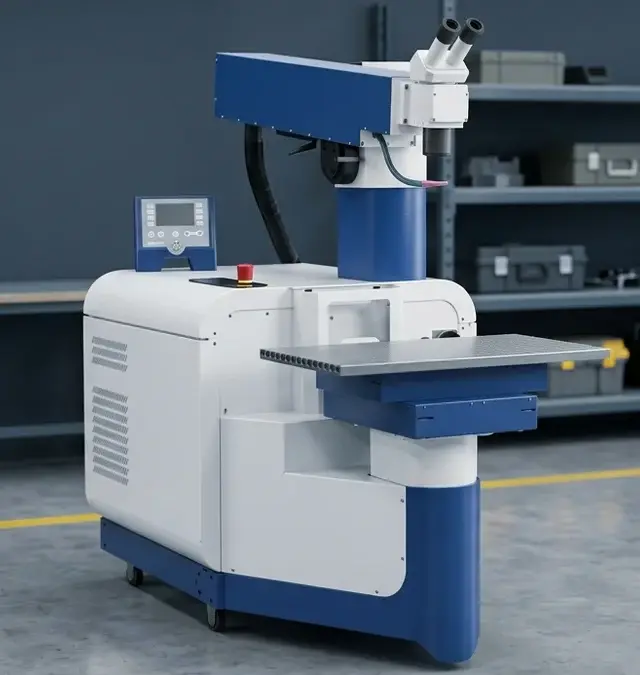
Laser welding is a highly precise technique that uses concentrated light energy to join materials with minimal heat distortion. In industrial applications, it is favored for its ability to produce high-quality, robust welds quickly and efficiently. Sigma Laser’s cutting-edge technologies, such as the Sidanus Fibre and Sineo Light systems, exemplify the advanced capabilities required for precision welding tasks across diverse sectors.
Typically, industrial laser welding systems operate within a power range of 100W to 6kW, with wavelengths around 1070 nm for fiber lasers. The beam quality, expressed as M², is often less than 1.5, ensuring a focused and precise energy delivery. Focal lengths can range from 100 mm to 300 mm, allowing for flexibility in application.
Significance in Mold Repair
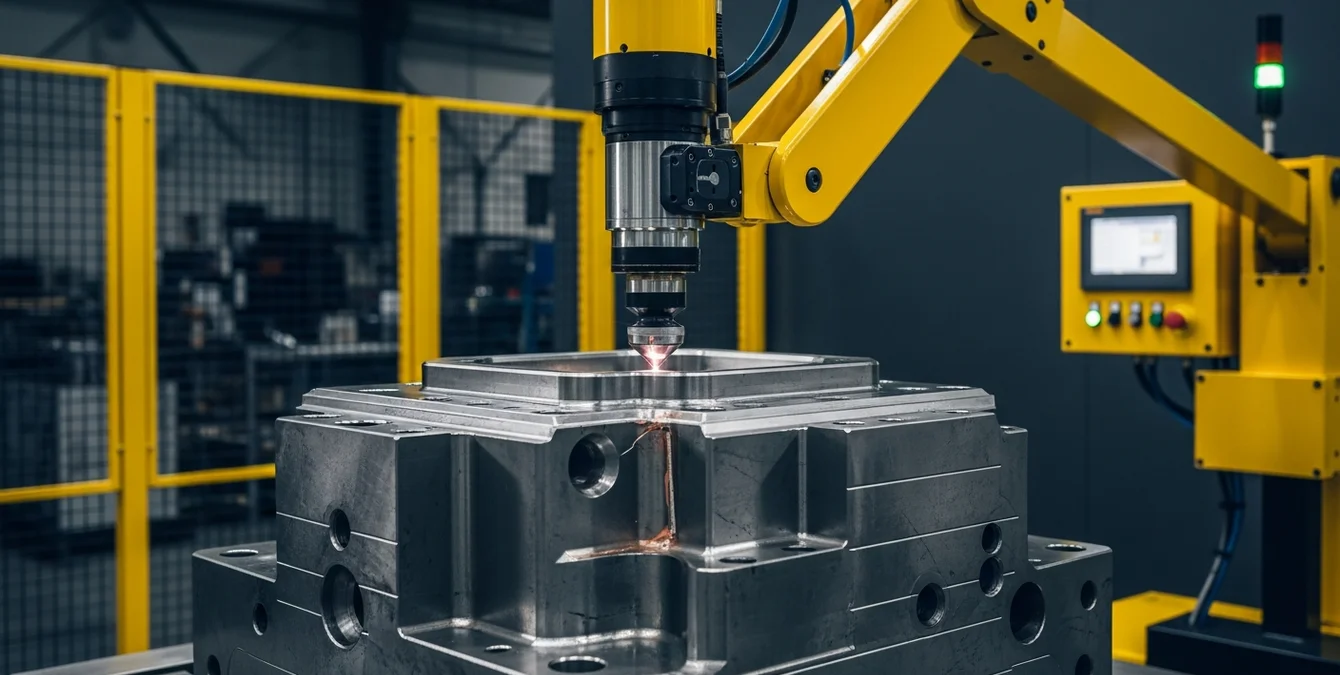
Mold repair laser welding is crucial for maintaining the integrity and functionality of molds used in manufacturing processes. These molds, essential for producing consistent, high-quality parts, often endure wear and damage over time. Laser welding offers a precise solution for repairing these molds without compromising their structural integrity.
The process involves adding material to worn or damaged mold sections, with the laser’s precision ensuring minimal impact on the surrounding heat-affected zone (HAZ), typically less than 0.5 mm. Welding speeds can vary from 0.5 to 5 m/min, depending on the material and thickness, while penetration depths can reach up to 2 mm for common mold materials like P20 tool steel and H13 hot work steel.
The technique is particularly beneficial in industries such as automotive, aerospace, and consumer goods, where maintaining mold accuracy is critical. Sigma Laser’s solutions, equipped with Super Pulse Technology (SPT) and Swivel Optics, provide unmatched precision and flexibility, ensuring molds are restored to their original specifications efficiently. The systems adhere to relevant standards such as ISO 14744-1:2000 for laser welding qualification and EN 1011-1:2009 for welding guidelines.
By leveraging advanced laser technologies, manufacturers can extend the lifespan of expensive molds, reduce downtime, and maintain production quality. With the integration of systems like the Swivelling Y Axis and Motor-driven Turning Device, Sigma Laser ensures optimal accessibility and maneuverability during the repair process, solidifying its position as a leader in the field of mold repair laser welding.
Operational constraints include the need for precise alignment and control of laser parameters to avoid excessive heat input, which could lead to distortions or changes in the metallurgical properties of the mold material. The repeatability of the process is typically within ±0.1 mm, ensuring consistent repair quality.
How Does Laser Welding Extend the Life of Molds?
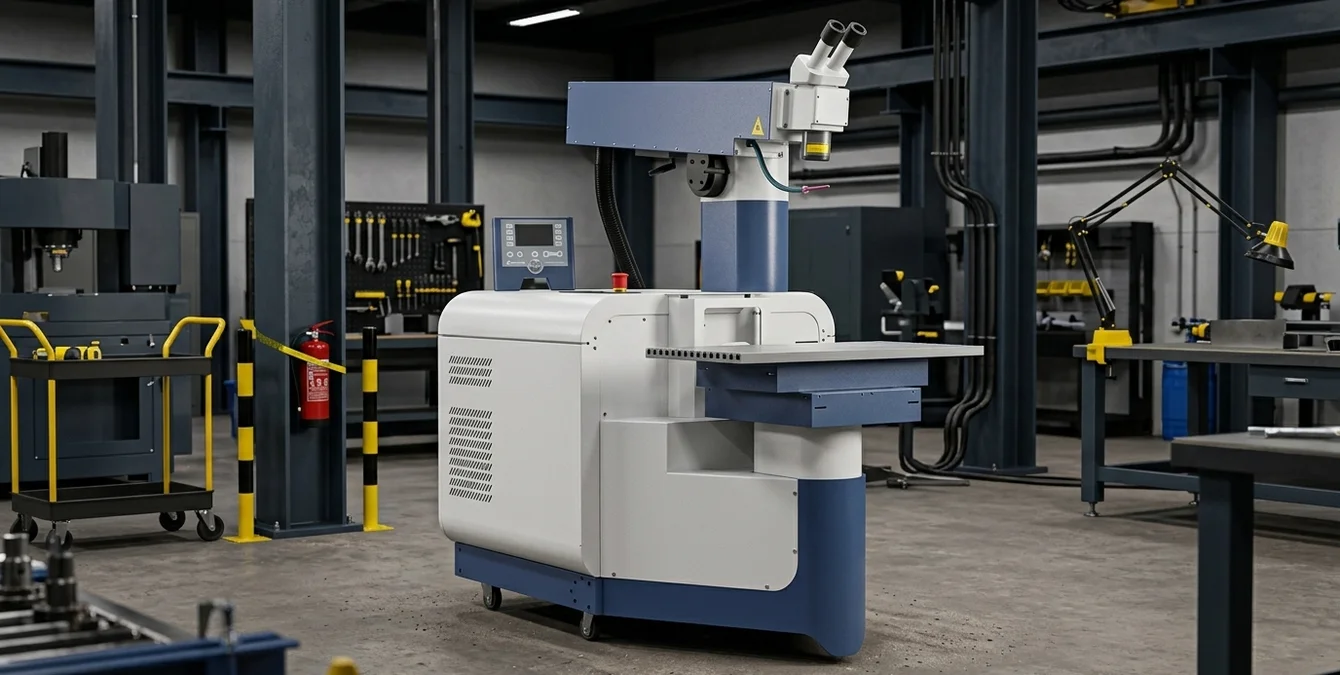
In the competitive realm of manufacturing, extending the lifespan of molds is crucial for maintaining efficiency and reducing costs. Laser welding, a technique renowned for its precision, plays a pivotal role in mold repair. By employing state-of-the-art systems like Sigma Laser’s Sidanus Light and Siega Fibre, manufacturers can significantly enhance mold longevity. This technology enables meticulous repairs with minimal heat input, preserving the structural integrity and functionality of molds.
Laser welding systems typically operate within a power range of 50 to 500 watts, with wavelengths around 1064 nm for Nd:YAG lasers and 1070 nm for fiber lasers. These systems often achieve a beam quality M² value of less than 1.5, allowing for precise energy delivery. The focal length of the optics used can range from 100 mm to 300 mm, depending on the specific application requirements.
Advantages of Precision Welding
Precision welding in mold repair offers numerous advantages that are indispensable for production managers seeking to optimize mold life. Utilizing lasers, particularly those integrated with Super Pulse Technology (SPT), allows for targeted energy application. This precision ensures that only the necessary areas of the mold are treated, avoiding unnecessary exposure and potential damage. Consequently, the repaired molds exhibit enhanced durability and performance.
- Accuracy: With the integration of Swivel Optics and Telescopic Lens, laser systems can achieve exceptional accuracy, crucial for intricate mold geometries. Typical positional accuracy is within ±0.01 mm, which is critical for maintaining tight tolerances in mold repair.
- Control: Systems like the Sigomatic Pro provide precise control over weld parameters, ensuring consistent quality. Operators can adjust parameters such as pulse duration, frequency, and peak power to tailor the welding process to specific materials and thicknesses.
- Efficiency: Laser welding reduces downtime due to faster repair processes, thereby enhancing overall production throughput. Welding speeds can reach up to 5 m/min, depending on the material and thickness.
Minimizing Heat-Affected Zone
One of the standout benefits of laser welding in mold repair is its ability to minimize the heat-affected zone (HAZ). Traditional welding techniques often result in extensive heat exposure, leading to stress and distortion. However, laser welding systems, such as those offered by Sigma Laser, focus energy with pinpoint accuracy, significantly reducing the HAZ. This precision minimizes thermal expansion and contraction, effectively preserving the material properties and dimensional accuracy of the mold.
By maintaining a smaller HAZ, the risk of introducing micro-cracks and residual stresses is drastically reduced, resulting in molds that not only last longer but also perform more reliably in high-stress industrial applications. This capability aligns with stringent standards such as DIN EN ISO 14732 and ISO 3834, ensuring quality and consistency in mold repair processes.
Laser welding is compatible with a wide range of materials, including tool steels like AISI H13 and P20, which are commonly used in mold manufacturing. The process can also be adapted for use with aluminum alloys and other special alloys, provided the correct parameters are selected.
In conclusion, leveraging the advanced capabilities of laser welding systems for mold repair, such as those engineered by Sigma Laser, empowers production managers to extend the life of their molds, reduce operational costs, and maintain high-quality production standards.
What Materials Can Be Repaired Using Laser Welding?
Common Mold Materials
In industrial applications, particularly within the tooling and mold-making sectors, selecting the right materials for molds is crucial. These materials must possess superior mechanical properties to endure rigorous production cycles. Commonly used materials in mold manufacturing include tool steels like H13 and P20, stainless steels, and various aluminum alloys. These materials are chosen for their strength, thermal conductivity, and resistance to wear and corrosion. However, over time, even these robust materials can experience wear and damage, necessitating effective repair methods.
Compatibility with Laser Welding
Laser welding, a cutting-edge technology offered by Sigma Laser, provides an exceptional solution for mold repair. This method is particularly advantageous due to its precision welding capabilities and minimal heat-affected zone, ensuring the integrity of the base material is preserved. Our state-of-the-art systems, such as the Sineo Fibre and Sidanus Light, facilitate the repair process for a wide range of materials.
Laser welding is highly compatible with various mold materials:
- Tool Steels: The precise control of heat input and focus makes laser welding ideal for repairing H13 and P20 tool steels, commonly used in injection molds and dies. Typically, laser systems operate at power levels ranging from 100W to 500W, with a wavelength of 1064 nm, allowing for a penetration depth of up to 2 mm, depending on the material thickness and desired weld profile.
- Stainless Steels: Repairs on stainless steel molds benefit from the process’s ability to avoid thermal distortion, maintaining high standards of corrosion resistance. The minimal heat-affected zone, often less than 0.5 mm, ensures that the mechanical properties are preserved, adhering to standards such as EN ISO 15614 for welding procedure qualification.
- Aluminum Alloys: Given aluminum’s high thermal conductivity, laser welding ensures efficient energy transfer and minimal warping, critical for maintaining dimensional accuracy. Welding speeds can reach up to 5 m/min, with beam quality M² typically less than 1.2, enhancing precision and repeatability.
Utilizing technologies like Sigma Laser’s Super Pulse Technology (SPT) and Swivel Optics, mold repair laser welding not only extends the lifespan of tools but also enhances production efficiency. As the European market continues to emphasize quality and precision, adopting laser welding for mold repair aligns with stringent industry standards such as ISO 9001 and DIN EN ISO 14732.
Case Studies: Successful Mold Repair Using Laser Welding
In the demanding field of industrial manufacturing, maintaining the integrity and precision of molds is crucial. Laser welding has emerged as a transformative solution for mold repair, offering a high degree of accuracy and minimal impact on the surrounding material. At Sigma Laser, we have implemented advanced technologies such as Super Pulse Technology (SPT) and Swivel Optics to ensure superior outcomes in mold repair applications. This section delves into two case studies that illustrate the practical benefits and challenges of laser welding in the automotive and consumer goods industries.
Case Study 1: Automotive Industry
The automotive industry is renowned for its rigorous standards, where precision and reliability are paramount. A leading automotive manufacturer faced recurrent issues with their injection molds, which were prone to wear and cracking due to high-cycle usage. Traditional repair methods proved inadequate, leading to prolonged downtimes and increased costs.
By adopting Sigma Laser’s Sidanus Light system, the manufacturer was able to employ precision welding techniques that effectively addressed the mold defects. The key challenges included minimizing the heat-affected zone to preserve the mold’s structural integrity and achieving seamless repairs that would withstand high operational stresses.
- Challenge: Repairing fine cracks without compromising the mold’s structural integrity.
- Solution: Utilized Super Pulse Technology (SPT) to deliver controlled energy and minimize thermal distortion.
- Outcome: Reduced downtime by 30% and extended the mold’s service life by 40%.
- Technical Note: The laser system operated at a wavelength of 1064 nm, with a power range typically up to 200 W, ensuring a small heat-affected zone (HAZ) typically less than 0.5 mm, which is critical for maintaining the mechanical properties of tool steels such as DIN 1.2344 (H13).
Case Study 2: Consumer Goods
In the consumer goods sector, a manufacturer specializing in plastic injection molding faced challenges with frequent mold damage. The primary issues were surface wear and minor pitting, which affected the quality of the end products.
After consulting with Sigma Laser, they implemented the Sirius Light laser welding system, which provided the precision necessary to repair delicate mold surfaces without introducing further defects. The flexibility of the Swivelling Y Axis enabled detailed repairs in hard-to-reach areas, a critical capability for complex mold geometries.
- Challenge: Repairing surface wear and pitting while maintaining mold dimensional accuracy.
- Solution: Employed Swivel Optics with Telescopic Lens to achieve precision welding in intricate areas.
- Outcome: Enhanced mold surface quality, resulting in a 25% reduction in product rejections.
- Technical Note: The welding process adhered to ISO 14744-1:2000 standards, with a beam quality M² typically below 1.2, allowing for a focal spot size of approximately 0.2 mm, which is crucial for achieving high precision in welding tasks.
These case studies underscore the efficacy of laser welding in mold repair, highlighting how Sigma Laser’s state-of-the-art technologies can overcome specific industrial challenges. By offering precision and reliability, our laser systems help manufacturers in various sectors maintain high production standards while reducing operational costs.
Cost Analysis: Laser Welding vs Traditional Methods
In the realm of industrial mold repair, precision is paramount, and choosing the appropriate welding technique can significantly impact operational efficiency and cost-effectiveness. Laser welding systems, like those engineered by Sigma Laser, offer a distinct advantage over traditional methods, such as TIG or MIG welding, particularly in terms of precision capabilities and reduced heat-affected zones.
Initial Investment and Operational Costs
When evaluating the initial investment, the cost of laser welding equipment may appear higher than traditional welding systems. For instance, advanced models like the Sigma Laser Sidanus Light or Sirius Light incorporate sophisticated features such as Super Pulse Technology (SPT) and Swivel Optics, which enhance precision but also contribute to the upfront expense.
However, operational costs should be considered, where laser systems offer significant advantages. Laser welding requires fewer consumable materials and reduces the need for post-processing due to its minimal heat-affected zone. The precision of laser systems also translates to faster processing times, leading to increased throughput and reduced labor costs. This is particularly beneficial in high-volume mold repair scenarios where downtime can be costly.
Laser welding systems typically operate within power ranges of 100W to 600W for mold repair applications, with a common wavelength of 1064 nm for Nd:YAG lasers, ensuring compatibility with a variety of materials, including tool steels such as AISI H13 and P20. The beam quality, often characterized by an M² value below 1.5, allows for precise control over the weld bead, achieving penetration depths of up to 1.5 mm in a single pass, depending on material thickness and type.
In terms of process parameters, welding speeds can range from 0.5 to 10 mm/s, with the heat-affected zone typically limited to 0.1 mm to 0.5 mm, minimizing thermal distortion and preserving the integrity of the mold’s surface finish. These parameters align with standards such as DIN EN ISO 4063:2011, which classifies laser welding processes under code 52.
Long-term Savings and ROI
Over the long term, the benefits of laser welding become even more pronounced. The precision and accuracy of laser systems reduce the frequency of defects and rework, leading to higher overall product quality. This is especially critical in industries requiring stringent compliance with standards such as ISO 9001 or DIN EN ISO 14732.
The return on investment (ROI) is further enhanced by the durability and longevity of laser welding equipment. Systems like the Sigma Laser Siega Fibre, equipped with a robust Z-Axis Module and Swivelling Y Axis, are designed for high performance and long-term use, diminishing the need for frequent replacements or repairs.
Laser welding systems offer repeatability within ±0.01 mm, ensuring consistent weld quality across production runs. This level of precision is crucial for maintaining tight tolerances required in mold repair, particularly for complex geometries and intricate features.
In summary, while the initial investment in laser welding technology might be higher, the long-term cost savings, improved product quality, and operational efficiencies offer a compelling case for its adoption over traditional welding methods. For production managers focused on optimizing mold repair processes, laser welding presents a strategic investment that aligns with the goals of precision, efficiency, and sustainability.
Can Laser Welding Improve Production Efficiency?
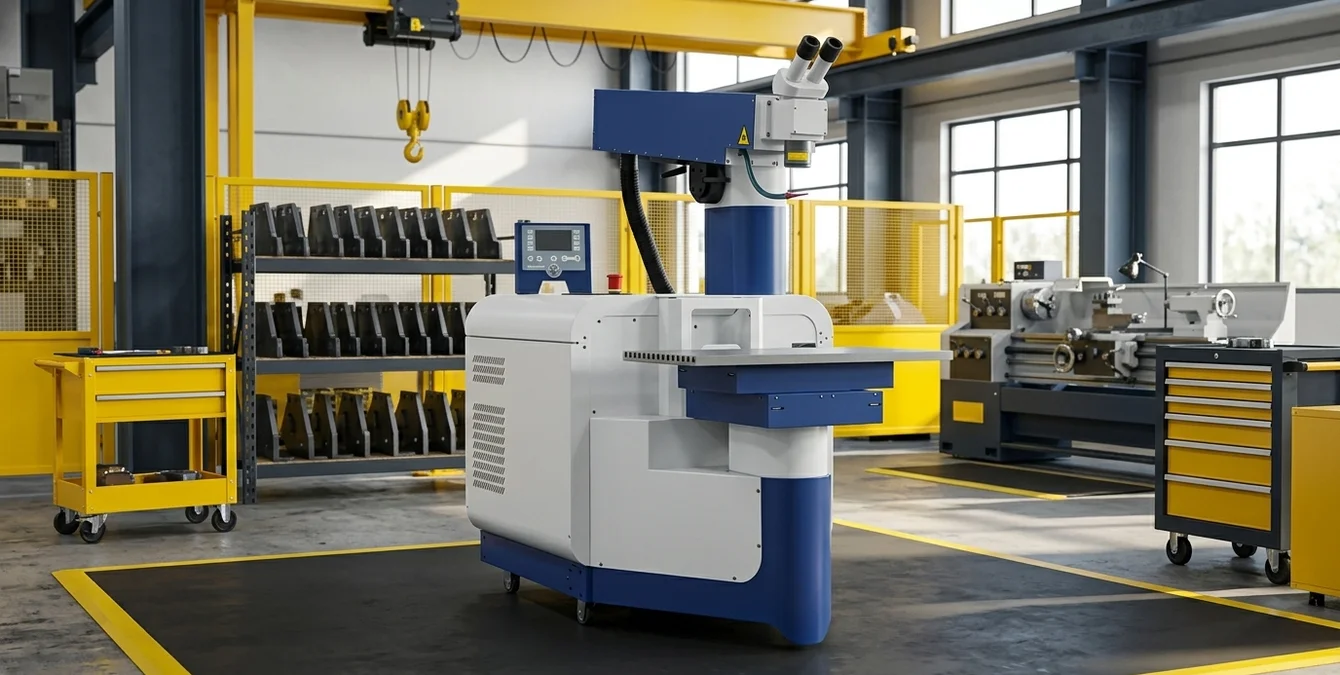
In the realm of industrial manufacturing, particularly within the European markets, optimizing production processes is crucial. Laser welding, especially when applied to mold repair, offers a significant boost in production efficiency. This advanced technique, known for its precision and minimal heat-affected zone, is a game-changer for production managers aiming to reduce downtime and enhance overall productivity.
Reducing Downtime
One of the primary advantages of integrating laser welding into production lines is the reduction in downtime. Traditional welding methods often require extensive cooling periods and post-weld heat treatments, which lead to prolonged production halts. In contrast, laser welding systems like Sigma Laser’s Sidanus Light and Sineo Fibre enable precise, localized heating, minimizing time-intensive cooling phases. As a result, production lines can resume operations more swiftly, enhancing throughput and reducing overall production timelines.
Laser welding systems typically operate with power ranges from 100W to 6kW, depending on the application, with wavelengths commonly around 1064 nm for Nd:YAG lasers and 1070 nm for fiber lasers. The beam quality, often denoted by M² values, is crucial for precision and is typically less than 1.2 for high-quality systems, ensuring minimal divergence and high focusability. These parameters align with ISO 11145 standards for laser and laser-related equipment.
Enhancing Repair Quality
When it comes to mold repair, the quality of the weld is paramount. Laser welding’s precision offers unparalleled repair quality, ensuring the integrity of the mold is maintained. This is especially critical in high-stakes manufacturing environments where even minor defects can lead to significant losses. The use of Sigma Laser’s Super Pulse Technology (SPT) further refines the welding process, offering enhanced control and accuracy. This precision translates into fewer defects, less rework, and a more reliable production output.
Typical welding speeds range from 0.5 to 5 m/min, with penetration depths reaching up to 3 mm for common steel grades such as AISI 420 and 1.2343, known for their mold-making applications. The heat-affected zone (HAZ) is minimized, often less than 0.5 mm, which is crucial for maintaining the mechanical properties of the base material. These parameters are consistent with guidelines outlined in EN ISO 15614 for welding procedure qualification.
By leveraging these advanced welding technologies, production managers can significantly improve their operational efficiency. The integration of laser welding not only enhances the quality of repairs but also streamlines production processes, ultimately contributing to heightened productivity and reduced operational costs.
Frequently Asked Questions
What materials can be repaired using laser welding?
Laser welding is highly versatile and can repair a range of materials including tool steels, stainless steels, aluminum, and titanium alloys. These materials are commonly used in mold making and benefit from laser welding’s precision, which ensures minimal thermal distortion and high-quality repairs.
How does laser welding extend the life of molds?
Laser welding extends mold life by precisely adding material to worn or damaged areas without affecting the surrounding material. This process reduces the need for complete mold replacement, maintaining the mold’s integrity and functionality while minimizing downtime.
What are the advantages of using laser welding for mold repair?
Laser welding offers advantages such as minimal heat input, which reduces the risk of distortion, and high precision, allowing for detailed repairs. It also enables quick turnaround times and the ability to repair complex geometries, enhancing mold longevity and performance.
Is laser welding suitable for repairing small, intricate mold features?
Yes, laser welding is ideal for small, intricate mold features due to its precision and control. The focused laser beam can target specific areas with minimal impact on surrounding materials, making it perfect for detailed repairs on complex mold geometries.
What is the typical turnaround time for mold repair using laser welding?
The turnaround time for mold repair using laser welding varies depending on the extent of damage and complexity of the repair. However, the process is generally faster than traditional methods due to its precision and efficiency, often resulting in reduced downtime.
Can laser welding be automated for mold repair processes?
Laser welding can be automated, enhancing consistency and efficiency in mold repair processes. Automation allows for precise control over the welding parameters, reducing human error and increasing throughput, especially beneficial for high-volume production environments.
What are the cost implications of using laser welding for mold repair?
While the initial investment in laser welding equipment may be higher, the long-term cost savings are significant due to reduced downtime, extended mold life, and decreased material waste. The precision and efficiency of laser welding often result in lower overall repair costs.
Sources
- ISO 14744-1:2000 — Welding – Acceptance inspection of electron beam welding machines.
- DIN EN ISO 4063:2011 — Welding and allied processes – Nomenclature of processes and reference numbers.
- EN 1011-1:2009 — Welding – Recommendations for welding of metallic materials – Part 1: General guidance for arc welding.
- Journal of Manufacturing Processes — A peer-reviewed journal focusing on manufacturing processes, including laser welding.
- Welding Journal — Published by the American Welding Society, covering welding research and technology.
- International Journal of Advanced Manufacturing Technology — Covers advanced manufacturing technologies, including laser applications.