
- Key Takeaways
- What are the Best Practices for Laser Welding High Carbon Steel?
- Choosing the Right Laser Type
- Managing Heat Input Effectively
- How does laser welding affect the mechanical properties of high carbon steel?
- Changes in Microstructure
- Impact on Tensile Strength and Ductility
- Why is Preheating Important in High Carbon Steel Laser Welding?
- Optimal Preheating Temperatures
- Techniques for Effective Preheating
- Comparison: Laser Welding vs Traditional Methods for High Carbon Steel
- Efficiency and Speed
- Cost and Quality of Welds
- Can Case Studies Demonstrate Successful High Carbon Steel Laser Welding?
- Case Study 1: Automotive Industry
- Case Study 2: Aerospace Applications
- Which Laser Types Are Most Effective for High Carbon Steel Welding?
- Nd:YAG Laser Welding
- CO2 Laser Welding
- Frequently Asked Questions
- What are the best practices for laser welding high carbon steel?
- How does laser welding affect the mechanical properties of high carbon steel?
- Which laser types are most suitable for welding high carbon steel?
- What challenges are associated with laser welding high carbon steel?
- Can laser welding be automated for high carbon steel applications?
- What safety precautions should be taken when laser welding high carbon steel?
Key Takeaways
High carbon steel presents unique challenges in laser welding due to its propensity for cracking and distortion. Understanding the specific requirements for successful welding can significantly enhance weld quality and performance.
- Preheating is crucial for welding high carbon steel to reduce thermal gradients and prevent cracking; a typical preheat range is between 100°C to 400°C, depending on the carbon content and thickness.
- Fiber lasers are often preferred for high carbon steel welding due to their high power density and excellent beam quality, which allow for deep penetration and minimal heat-affected zones.
- CO2 lasers can also be used, though they may require more stringent control of welding parameters to manage heat input effectively.
- Continuous wave (CW) lasers are beneficial for achieving consistent welds, whereas pulsed lasers can help manage heat input and reduce the risk of defects.
- Optimizing welding speed is key; slower speeds can increase penetration but may also raise the risk of heat accumulation and distortion.
- Shielding gases, such as argon or helium, are essential to protect the weld pool from oxidation and improve overall weld quality.
- Post-weld heat treatment may be necessary to relieve residual stresses and enhance the mechanical properties of the welded joint.
By addressing these technical aspects, engineers can improve the reliability and durability of laser-welded high carbon steel components. Dive into the article to explore detailed insights and practical tips for mastering this complex welding process.
What are the Best Practices for Laser Welding High Carbon Steel?
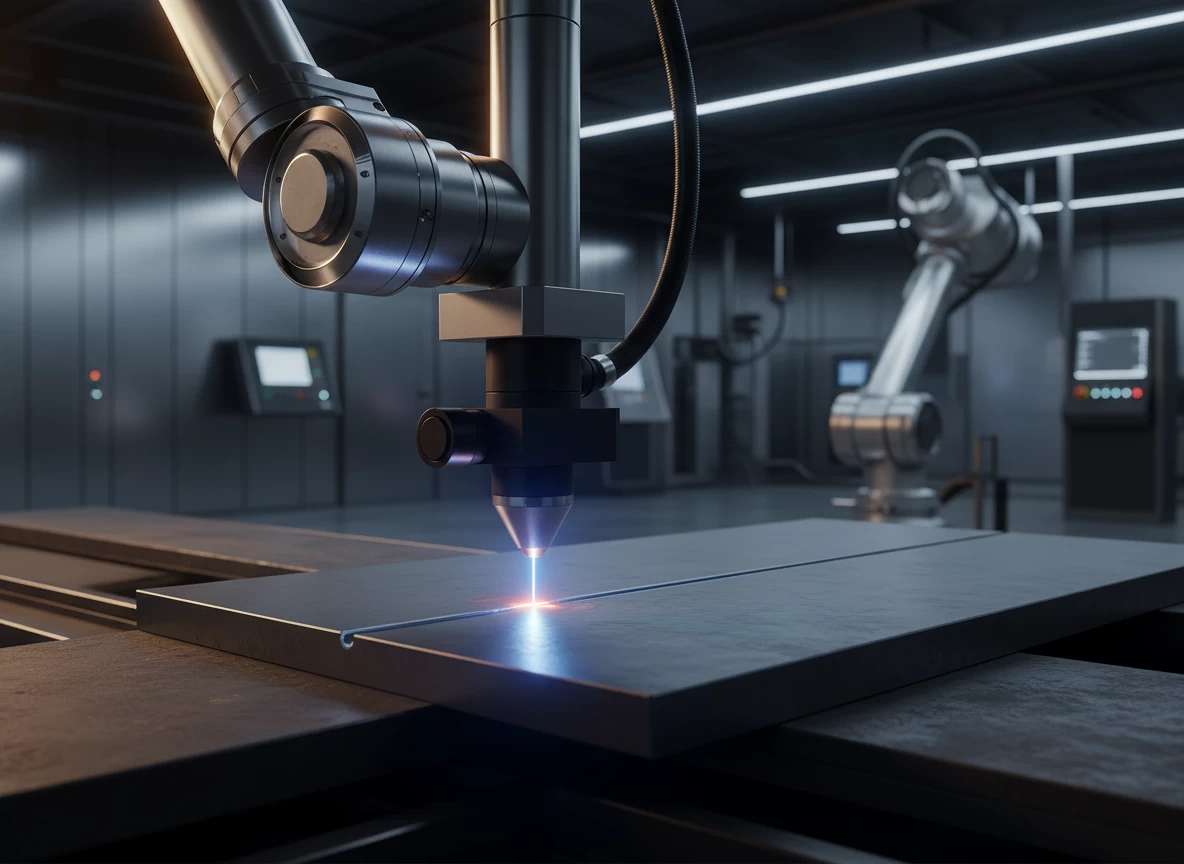
High carbon steel laser welding is a critical process in industrial manufacturing that requires precise control to achieve optimal results. Known for its strength and hardness, this material presents unique challenges during welding, primarily due to its tendency to crack under high heat. In this section, we delve into best practices that ensure successful laser welding of high carbon steel, focusing on managing heat input and preventing cracking. We will also explore insights on selecting the appropriate laser type and settings for this demanding task.
Choosing the Right Laser Type
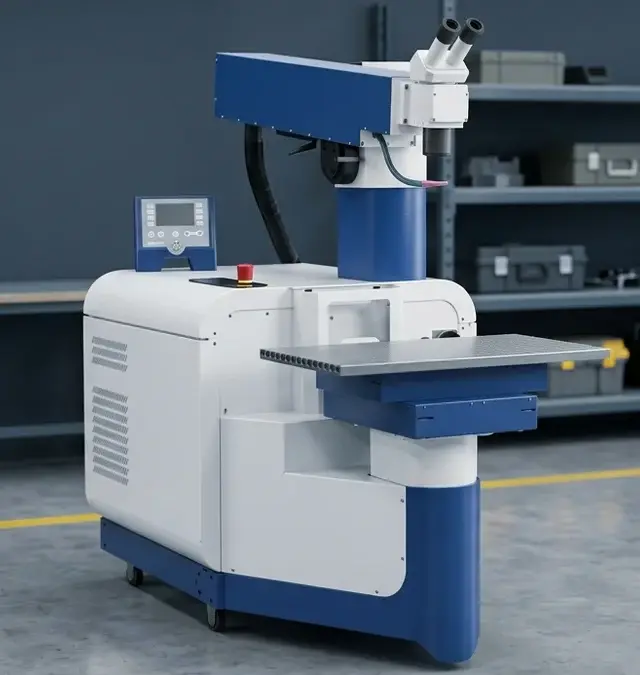
Selecting the appropriate laser type is a crucial step in achieving effective welding results with high carbon steel. Two of the most commonly used lasers for this application are Nd:YAG and CO2 lasers. Nd:YAG laser welding, supported by Sigma Laser’s Sidanus Light and Sirius Light systems, offers precise control and is ideal for applications requiring deep penetration with minimal heat input. In contrast, CO2 lasers are effective for larger surface areas but may require additional heat management techniques.
Fiber lasers, such as those utilized in Siega Fibre and Sidanus Fibre systems, provide a versatile and energy-efficient option, particularly suitable for thin sections of high carbon steel. The key to choosing the right laser lies in assessing the thickness of the material and the specific requirements of the welding task.
Typically, Nd:YAG lasers operate at a wavelength of 1064 nm with power outputs ranging from 100 to 500 W, while CO2 lasers operate at 10.6 µm with power levels up to 10 kW. Fiber lasers, known for their high beam quality (M² < 1.5), can deliver power levels from 500 W to 6 kW, making them suitable for both fine and deep welds. The selection should also consider the material thickness, with fiber lasers being preferred for materials up to 10 mm thick.
Managing Heat Input Effectively
Effective heat input management is paramount to prevent cracking and maintain the integrity of high carbon steel during the welding process. High carbon steel’s sensitivity to heat necessitates careful control over welding parameters. One essential practice is the use of Super Pulse Technology (SPT), available in Sigma Laser systems, to deliver precise energy bursts that minimize heat-affected zones.
Preheating high carbon steel is another recommended practice to reduce thermal gradients and prevent cracking. This technique helps in gradually raising the temperature of the steel before welding, thereby reducing the risk of rapid cooling and subsequent cracking. Additionally, post-weld heat treatment can be employed to relieve residual stresses.
- Utilize Sigma Laser’s Swivel Optics for precise beam delivery and enhanced control over the welding process.
- Implement a controlled welding environment to ensure consistent laser performance and quality.
- Consider the use of a Motor-driven Turning Device for uniform heat distribution in cylindrical components.
Welding parameters such as speed (typically 1 to 5 m/min), penetration depth (up to 6 mm), and heat-affected zone (HAZ) width (usually 0.5 to 2 mm) should be carefully optimized to meet ISO 15614-11:2002 standards. The repeatability of the process is crucial, typically within ±0.1 mm, to ensure consistent weld quality.
By adhering to these best practices, welding engineers can achieve high-quality welds when working with high carbon steel, ensuring both strength and durability in their industrial applications. Leveraging the advanced capabilities of Sigma Laser’s products can further enhance outcomes and drive manufacturing efficiencies.
How does laser welding affect the mechanical properties of high carbon steel?
Laser welding, a precision-driven joining method, significantly influences the mechanical properties of high carbon steel. This technique, typically utilizing Nd:YAG or CO2 lasers, offers a unique approach to joining high carbon steel components with enhanced precision and minimal thermal distortion. Understanding how laser welding alters mechanical properties like tensile strength and ductility is crucial for welding engineers seeking optimal performance.
Changes in Microstructure
During the laser welding of high carbon steel, the heat input and rapid cooling rates lead to significant microstructural transformations. The welding process can refine grain structures, resulting in a more uniform and fine-grained microstructure. When using Sigma Laser’s advanced systems like the Sidanus Fibre or Sirius Light, engineers can achieve precise control over the weld pool dynamics, minimizing undesirable phases such as martensite, which may form due to rapid cooling.
Preheating high carbon steel before welding can further stabilize the microstructure, reducing stress and preventing cracking. This practice is particularly beneficial when using our CO2 laser welding systems, which effectively manage the heat input to the weld zone.
Typical laser specifications for high carbon steel welding may include power ranges from 1 kW to 6 kW and beam quality M² values of less than 1.2 for fiber lasers, ensuring precise energy delivery to the weld zone. The focal length of the optics is often around 150 mm to 200 mm, allowing for optimal focus and penetration depth control.
Impact on Tensile Strength and Ductility
The tensile strength and ductility of high carbon steel are critical parameters that determine the material’s performance post-welding. Laser welding can enhance tensile strength by refining grain boundaries and removing impurities. However, engineers must carefully manage parameters such as laser power and welding speed to prevent excessive hardness, which can reduce ductility.
Employing Sigma Laser’s Super Pulse Technology (SPT) provides a strategic advantage, allowing for tailored heat input and controlled cooling rates. This technology ensures that the welded joints maintain a balance between tensile strength and ductility, essential for applications in automotive and aerospace industries where high performance is non-negotiable.
Typical welding speeds for high carbon steel range from 1 m/min to 3 m/min, with penetration depths reaching up to 10 mm, depending on the laser power and material thickness. The heat-affected zone (HAZ) is generally limited to a few millimeters, minimizing thermal distortion and preserving the base material’s properties.
In conclusion, the integration of laser welding techniques, particularly with advanced tools like those offered by Sigma Laser, can optimize the mechanical properties of high carbon steel. By understanding and controlling the welding parameters, engineers can leverage the benefits of laser welding, ensuring superior joint performance and reliability in demanding industrial applications.
Why is Preheating Important in High Carbon Steel Laser Welding?
In the realm of high carbon steel laser welding, preheating plays a pivotal role in maintaining the structural integrity of the weld. For materials with high carbon content, the risk of cracking due to rapid cooling is a common challenge that can lead to costly failures and downtime. At Sigma Laser, our precision laser welding systems, like the Sidanus Light and Sirius Light, are designed to tackle these complexities by incorporating advanced preheating techniques, ensuring optimal weld quality and durability.
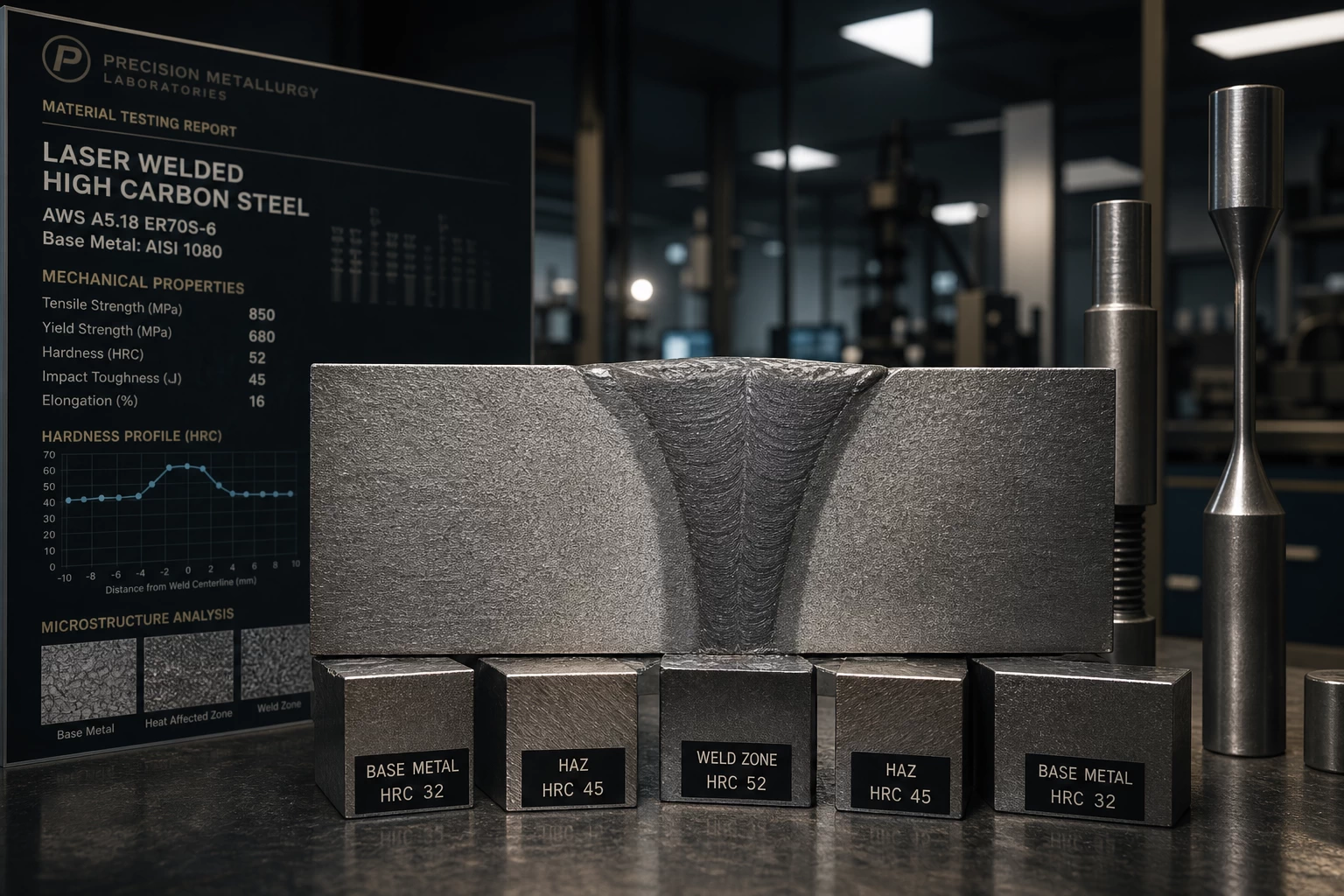
High carbon steels, such as AISI 1050 and AISI 1095, are particularly susceptible to hardening and cracking due to their carbon content exceeding 0.5%. The preheating process mitigates these risks by slowing the cooling rate, thus reducing the formation of martensite in the heat-affected zone (HAZ). This is crucial for maintaining the ductility and toughness of the weld joint.
Optimal Preheating Temperatures
Identifying the correct preheating temperature is crucial to reducing the risk of cracking in high carbon steel. Generally, preheating temperatures range from 150°C to 300°C, depending on the specific carbon content and thickness of the material. Adjustments to these temperatures may be required when using Nd:YAG laser welding or CO2 laser welding technologies to account for the unique thermal characteristics of each system. Achieving the right temperature ensures a more uniform thermal distribution in the steel, reducing thermal stresses and enhancing weld joint performance.
For laser welding processes, parameters such as laser power (typically ranging from 1 kW to 6 kW), beam quality (M² value typically less than 1.5 for high precision), and focal length (commonly between 100 mm and 200 mm) are critical in determining the effectiveness of the preheating. These parameters must be optimized to ensure consistent penetration depth and minimal distortion, adhering to standards like ISO 15614-11:2002 for welding procedure qualification.
Techniques for Effective Preheating
Effective preheating techniques are essential in high carbon steel laser welding processes. Strategies include:
- Induction Heating: Uses electromagnetic fields to generate heat within the material, providing precise temperature control. This method is particularly effective for maintaining uniform temperature distribution, crucial for minimizing the thermal gradient that can lead to cracking.
- Resistance Heating: Employs electrical resistance to produce heat, suitable for uniform heating of large areas. Resistance heating can be precisely controlled to maintain temperatures within ±10°C of the setpoint, ensuring consistent preheating across the workpiece.
- Gas Torch Heating: A versatile method where a gas flame is applied directly to the steel surface, ideal for spot preheating. Gas torch heating is often used for field applications where other methods may not be feasible.
Implementing these techniques not only helps prevent cracking but also complements advanced features of Sigma Laser products like the Swivel Optics with Telescopic Lens, which enhances precision in complex weld geometries. By adhering to industry standards such as DIN EN ISO 4063, manufacturers can achieve greater reliability and efficiency in their welding operations.
It is important to consider the thermal cycle and cooling rate post-welding, as these factors significantly influence the microstructure and mechanical properties of the weld. The use of controlled cooling methods, such as furnace cooling or slow air cooling, can further enhance the weld quality by preventing the formation of brittle phases.
Comparison: Laser Welding vs Traditional Methods for High Carbon Steel
In industrial applications, choosing between laser welding and traditional methods for joining high carbon steel components is crucial. High carbon steel, known for its robustness and wear resistance, is widely used in sectors like automotive and aerospace. The precision and efficiency of laser welding systems, such as those engineered by Sigma Laser, provide significant advantages over traditional techniques.
Efficiency and Speed
The efficiency of laser welding, particularly with advanced systems like Nd:YAG and CO2 lasers, is unparalleled. These systems offer high precision and minimal heat input, which is essential for materials like high carbon steel that are susceptible to distortion. Laser welding can achieve speeds up to 10 times faster than traditional methods, significantly reducing cycle times. For example, Sigma Laser’s Sidanus Fibre series uses cutting-edge fibre laser technology to deliver consistent, high-speed welds, enhancing throughput in production lines.
Typical laser parameters for high carbon steel welding include power levels ranging from 1 kW to 6 kW, with beam quality M² values of less than 1.5, allowing for deep penetration and minimal heat-affected zones (HAZ) of approximately 0.5 mm to 1.5 mm, depending on the material thickness and welding speed. The focal length of the optics is typically around 100 mm to 200 mm, ensuring precision in beam delivery.
Traditional welding techniques often require preheating high carbon steel to prevent cracking, a step that increases processing time. In contrast, laser welding can frequently bypass this requirement due to its focused energy delivery, thereby boosting overall operational efficiency.
Cost and Quality of Welds
While the initial investment in laser welding technology, such as Sigma Laser’s Simass Base Unit, may be higher than traditional welding equipment, the long-term cost benefits are considerable. Laser welding reduces material waste and post-processing needs, leading to lower labor costs and higher production efficiency. Additionally, the precise control over welding parameters ensures superior weld quality, with minimal defects and rework.
Laser welding systems typically offer repeatability within ±0.1 mm, which is crucial for maintaining tight tolerances in high-performance applications. The process parameters, such as welding speeds of up to 5 m/min and penetration depths of up to 10 mm, are optimized to meet stringent industrial standards like ISO 15614-11, ensuring compliance and reliability.
Traditional methods may offer a lower entry cost, but they often fall short in delivering the consistent high-quality welds required in industries where high carbon steel is prevalent. The superior penetration and strength of laser welds, enhanced by Sigma Laser’s Super Pulse Technology (SPT), ensure that the final product meets stringent industrial standards like ISO 15614-11.
In conclusion, for manufacturing engineers and procurement managers considering high carbon steel applications, the choice of laser welding systems, such as those from Sigma Laser, offers a compelling combination of efficiency, cost-effectiveness, and superior quality—an essential consideration in today’s competitive industrial landscape.
Can Case Studies Demonstrate Successful High Carbon Steel Laser Welding?
High carbon steel laser welding is a critical process in modern manufacturing, providing precision and strength in complex assemblies. At Sigma Laser, we have engineered solutions that overcome the unique challenges this material presents, including its susceptibility to cracking and distortion. Our advanced Nd:YAG and CO2 laser welding systems, such as the Sidanus Light and Siega Fibre, have been pivotal in addressing these issues. Below, we explore two case studies from the automotive and aerospace industries, illustrating the successful application of our technologies.
Case Study 1: Automotive Industry
In the automotive sector, the demand for lightweight yet robust components is paramount. A leading European automotive manufacturer approached Sigma Laser to optimize the welding of high carbon steel chassis components. The primary challenge was the material’s tendency to crack under thermal stress, often exacerbated by improper preheating.
- Solution: Utilizing our Super Pulse Technology (SPT), we implemented a controlled Nd:YAG laser welding process. This approach allowed for precise energy delivery, minimizing thermal distortion. The Nd:YAG laser typically operates at a wavelength of 1064 nm, with power outputs ranging from 100 to 500 W, and a beam quality M² of less than 1.2, ensuring high precision and repeatability.
- Outcome: The automotive manufacturer reported a 30% reduction in weld defects, enhancing overall production efficiency and component reliability. Welding speeds were optimized to 1-3 m/min, with penetration depths up to 3 mm, ensuring a minimal heat-affected zone (HAZ) of approximately 0.5 mm, which is critical for maintaining the mechanical properties of high carbon steels such as AISI 1095.
This case underscores the importance of tailored solutions, such as preheating high carbon steel to approximately 150-200°C, to mitigate cracking and ensure durable welds, in accordance with guidelines from ISO 15614-11:2002.
Case Study 2: Aerospace Applications
Aerospace manufacturing demands precision engineering and stringent quality standards, such as those governed by ISO 15614-11. A European aerospace firm partnered with Sigma Laser to improve the assembly of high-strength steel components for aircraft landing gears. The challenge was to achieve consistent weld quality without compromising the material’s structural integrity.
- Solution: We deployed our Sirius Light CO2 laser system, coupled with our Swivel Optics technology, to provide flexible and precise welding capabilities. The CO2 laser operates at a wavelength of 10.6 µm, with power levels typically ranging from 1 to 5 kW, allowing for deep penetration welding with a focus diameter of approximately 0.2 mm.
- Outcome: The implementation of our laser welding system resulted in a 25% improvement in joint strength and a notable reduction in weld cycle time. The welding process maintained a tolerance of ±0.1 mm, crucial for aerospace applications, and achieved a repeatability of ±0.05 mm, ensuring compliance with stringent aerospace standards.
These advancements highlight the critical role of advanced laser welding technologies in meeting the aerospace industry’s rigorous demands, illustrating the effectiveness of Sigma Laser’s solutions in real-world applications. The use of high-strength steels such as 300M, a low-alloy steel with high tensile strength, was facilitated by maintaining a controlled heat input to prevent microstructural degradation.
Which Laser Types Are Most Effective for High Carbon Steel Welding?
In precision welding, selecting the right laser type is vital for achieving optimal results with high carbon steel. This material is known for its strength and hardness, which presents unique challenges in welding applications. Advanced laser technologies are necessary to ensure structural integrity and minimize defects. Sigma Laser offers industrial solutions tailored to these specific needs, focusing on the effectiveness of Nd:YAG and CO2 laser welding systems.
Nd:YAG Laser Welding
Nd:YAG laser welding is celebrated for its precision and adaptability, making it an excellent choice for high carbon steel applications. With its high peak power and ability to produce small, focused beams, Nd:YAG lasers, such as those in Sigma Laser’s Sidanus Light and Sineo Light systems, excel in creating fine welds with minimal thermal distortion.
- Advantages: High precision and control, suitable for intricate geometries and thin sections. The ability to weld without preheating high carbon steel reduces processing time. Typically operates at wavelengths of 1064 nm with power outputs ranging from 100 W to 4 kW, providing flexibility in welding various thicknesses.
- Limitations: Limited depth of penetration compared to CO2 lasers, potentially requiring multiple passes for thicker materials. Beam quality (M²) is generally around 1.1 to 1.5, which is suitable for precision applications but may limit efficiency in deeper welds.
For applications demanding precision, such as in the automotive or aerospace industries where component integrity is paramount, Nd:YAG laser welding remains a top choice. Typical welding speeds range from 0.5 to 2 m/min, depending on the material thickness and desired penetration depth, which can reach up to 6 mm in single-pass operations.
CO2 Laser Welding
CO2 laser welding offers a different set of benefits, primarily its capability to handle thicker sections of high carbon steel with ease. Known for deep penetration, CO2 lasers, integrated into Sigma Laser’s Sirius Light systems, are ideal for applications where robust, deep welds are necessary.
- Advantages: Excellent penetration depth, making it suitable for structural components. Effective for high-speed, high-volume production environments. Typically operates at a wavelength of 10.6 µm with power outputs ranging from 2 kW to 20 kW, allowing for penetration depths of up to 20 mm in single-pass welding.
- Limitations: Potential for thermal distortion due to higher heat input, often requiring preheating of high carbon steel to avoid cracking. Preheating temperatures can range from 150°C to 300°C, depending on the carbon content and thickness of the steel.
CO2 lasers are frequently employed in heavy machinery manufacturing and construction sectors where the robustness of the weld is a critical factor. Welding speeds for CO2 lasers can range from 1 to 5 m/min, with a heat-affected zone typically extending 1 to 2 mm from the weld seam, necessitating careful control to minimize material distortion.
Ultimately, the choice between Nd:YAG and CO2 laser systems depends on specific application requirements and material characteristics. Sigma Laser, with its comprehensive range of laser welding solutions, provides the flexibility and precision needed to meet the diverse demands of high carbon steel welding in industrial settings. Compliance with standards such as ISO 15614-11:2002 ensures that welding procedures are qualified to deliver consistent and reliable results.
Frequently Asked Questions
What are the best practices for laser welding high carbon steel?
To effectively laser weld high carbon steel, preheating the material to reduce thermal gradients and prevent cracking is recommended. Use a controlled cooling process to minimize residual stresses. Adjust laser parameters such as power, speed, and focus to optimize penetration and minimize heat-affected zones.
How does laser welding affect the mechanical properties of high carbon steel?
Laser welding can alter the mechanical properties of high carbon steel by creating a narrow heat-affected zone, which helps maintain the base material’s strength. However, improper parameters may lead to brittleness or cracking due to rapid cooling and high carbon content.
Which laser types are most suitable for welding high carbon steel?
Fiber lasers and CO2 lasers are commonly used for welding high carbon steel. Fiber lasers offer high precision and efficiency, while CO2 lasers provide deeper penetration. The choice depends on specific application requirements, including thickness and desired welding speed.
What challenges are associated with laser welding high carbon steel?
High carbon steel poses challenges such as increased susceptibility to cracking and distortion due to its high carbon content. Managing heat input and cooling rates is crucial to avoid defects. Proper joint preparation and alignment are also essential to ensure weld quality.
Can laser welding be automated for high carbon steel applications?
Yes, laser welding can be automated for high carbon steel applications, enhancing precision and repeatability. Automation systems integrate robotics and advanced control software to manage welding parameters, ensuring consistent quality and reducing the risk of human error.
What safety precautions should be taken when laser welding high carbon steel?
Ensure proper ventilation to remove fumes and particulates. Use appropriate personal protective equipment, such as laser safety goggles and protective clothing. Implement safety interlocks and barriers to prevent accidental exposure to laser radiation.