
- One Base, Three Modules
- Which Module for Which Geometry
- Modules Are Interchangeable Later
- Adding a Module: Mechanical and Reference Points
- Recommissioning After Every Expansion
- Planning for Growth
- Frequently Asked Questions
- Can I retrofit a Simass system with a different module after installation?
- What steps are involved in aligning a new module to the Simass base unit?
- How do I ensure production quality after expanding my Simass system?
- What should I consider when planning for future Simass expansions?
- Related Articles
Quick Answer: To expand your Simass system with Rotate or Slide modules, select the right module for your production geometry, coordinate the retrofit with Sigma, mount and align the new module, re-teach reference points, and verify repeatability before resuming production. Plan for space, cabling, and program updates to ensure seamless integration.
| Component | Description |
|---|---|
| Base Unit | Houses primary axes (X, Y, Z), supply elements, and core handling infrastructure; standardized foundation for all modules |
| Rotate Module | Precision rotary table for round/symmetric parts; supports fixed-clock and programmable operation |
| Slide Module | Three independent slides with motorized rotation; parallel loading/unloading for large or long parts |
| Powder Module | Automated powder application for buildup repair and surface restoration |
All modules are interchangeable later; expansion is coordinated with Sigma for compatibility and safety.
One Base, Three Modules
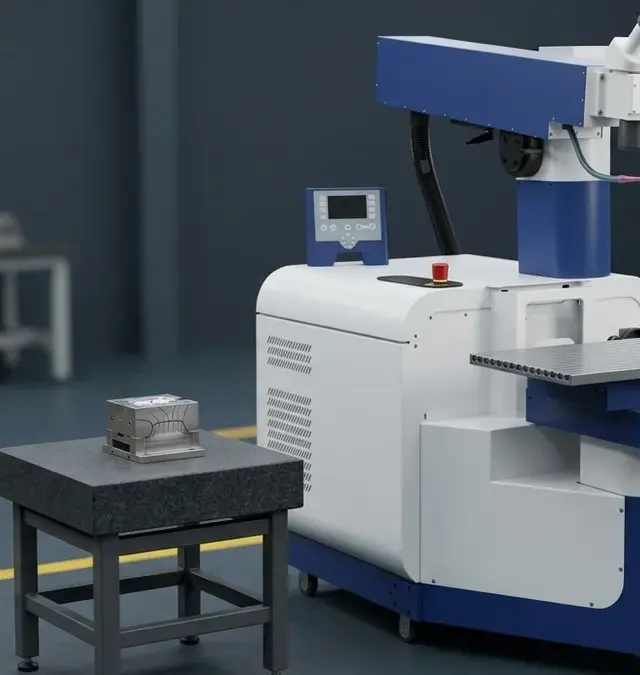
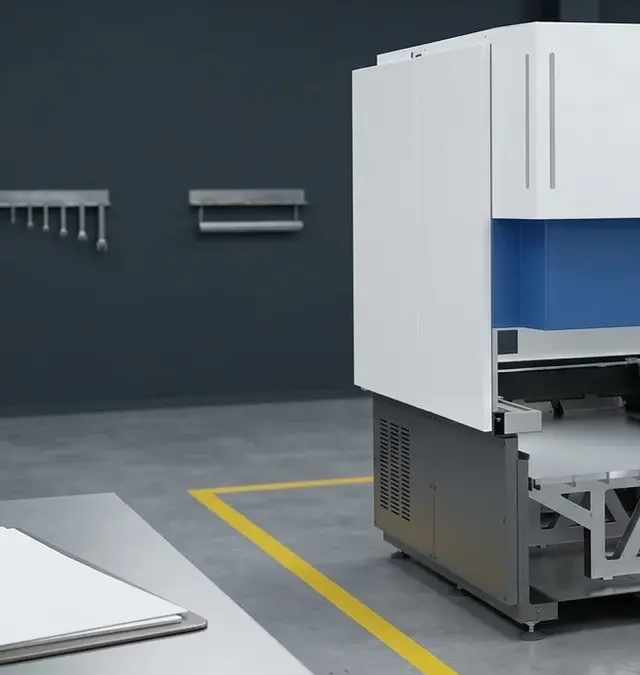
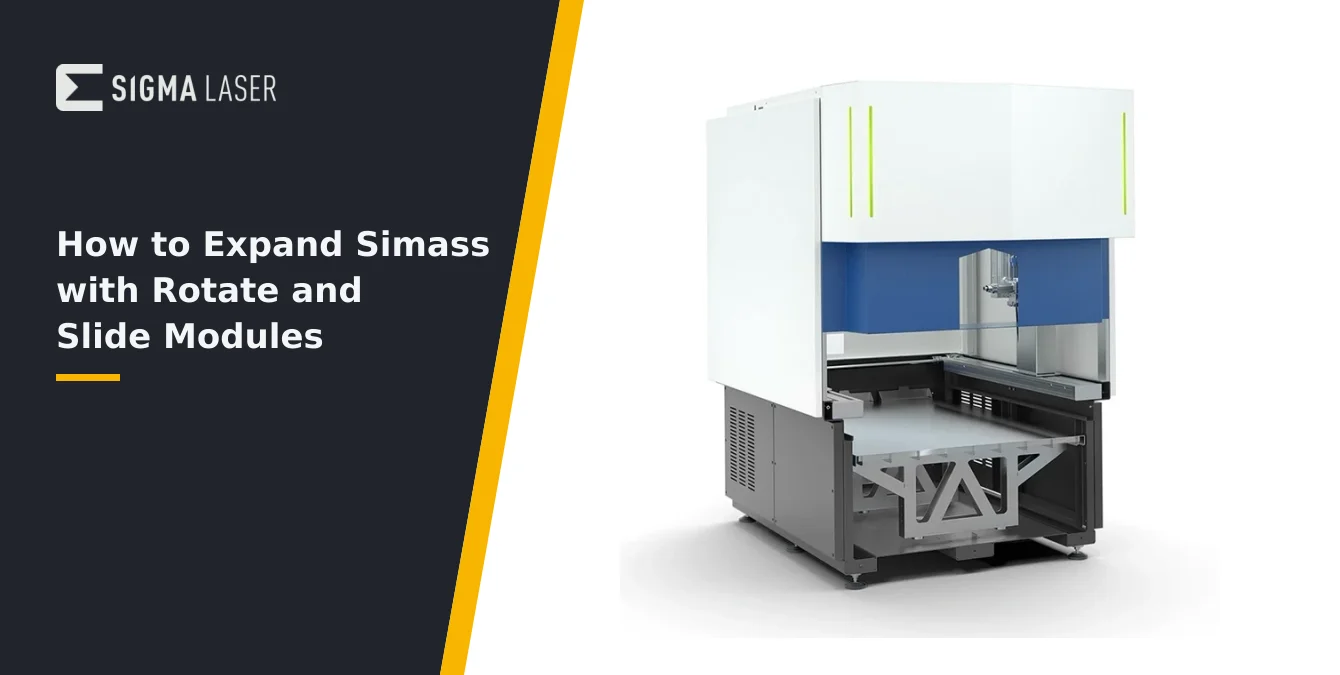
The Simass automation platform is designed around a single, robust base unit that supports three distinct, interchangeable modules: Rotate, Slide, and Powder. This modularity enables users to adapt their laser welding workstation to a wide range of production requirements without the need for a complete system replacement. The base unit itself houses the primary axes (X, Y, Z), supply elements, and the core handling infrastructure, providing a standardized foundation for any module integration.
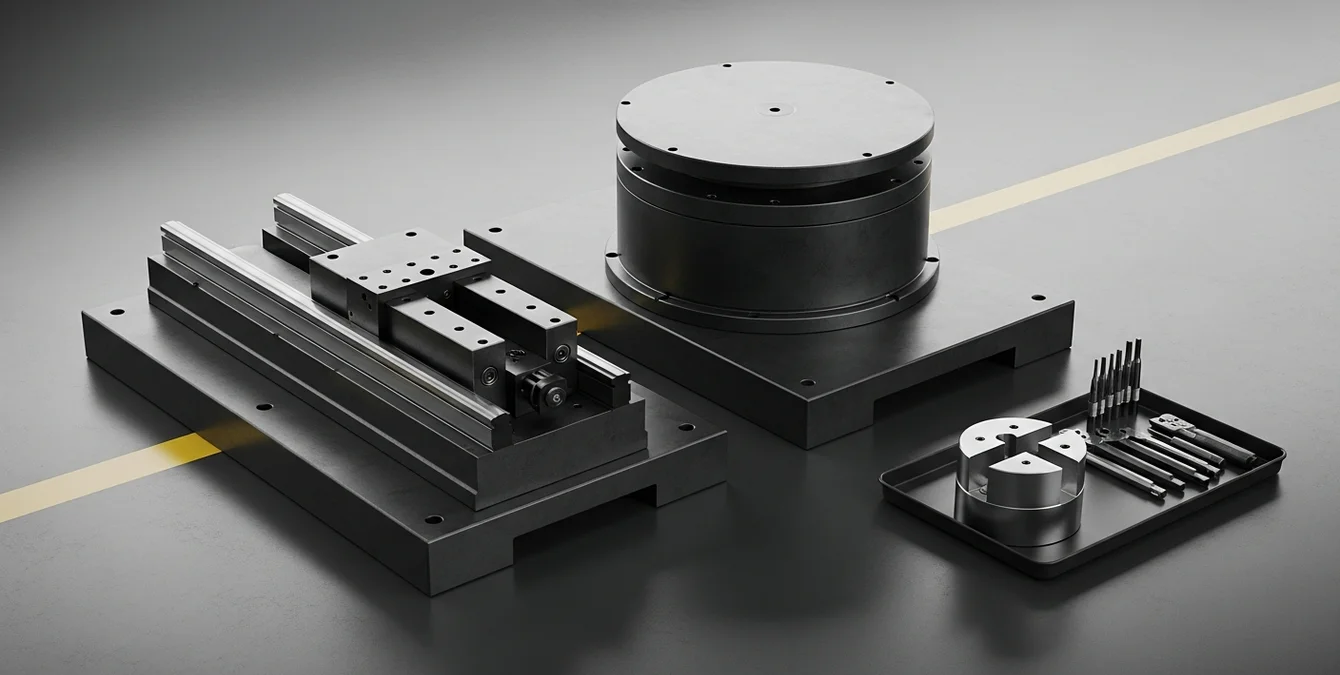
The Rotate module introduces a precision rotary table, ideal for feeding round or rotationally symmetric parts into the welding workspace. It supports both fixed-clock and freely programmable operation, allowing for high-precision positioning at various rotation speeds. This is especially valuable for applications such as circumferential welding of rings, shafts, or round molds.
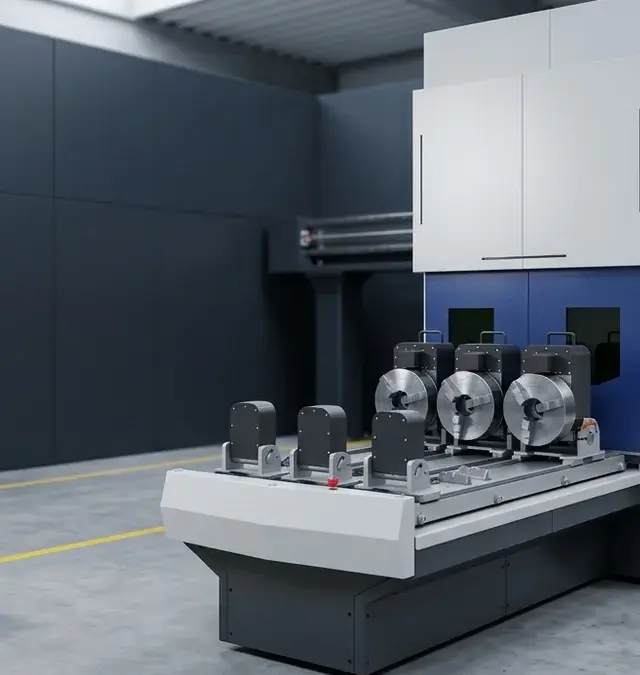
The Slide module is engineered for handling larger or longer workpieces. It features three independent slides (Einschubmodule), each equipped with a motorized rotation axis and a 315 mm three-jaw chuck. The system allows for parallel loading and unloading outside the welding cabin, significantly reducing downtime and supporting continuous production of large components, such as pipes or extended tooling elements.
The Powder module (as detailed in the Sigma catalogue) is specialized for repair welding with automated powder application. This module is particularly suited for buildup repair tasks, where precise material deposition is required to restore or enhance component surfaces. The ability to swap between these modules ensures that the Simass platform remains flexible and future-proof, ready to meet evolving production challenges.
| Module | Application Focus | Key Features |
|---|---|---|
| Rotate | Round or rotationally symmetric parts (e.g. rings, discs, cylindrical molds) | Precision rotary table; fixed-clock or programmable operation; high-precision positioning; ideal for circumferential welds |
| Slide | Large, long, or heavy parts (e.g. pipes, elongated tooling, multi-stage assemblies) | Three independent slides with motorized rotation axis and 315 mm three-jaw chuck; parallel loading/unloading; continuous production |
| Powder | Buildup repair, surface restoration, additive manufacturing tasks | Automated powder application; precise material deposition; suited for repair welding and restoring component surfaces |
Use this table to match Simass modules to your production geometry and process requirements.
Which Module for Which Geometry
Selecting the appropriate Simass module depends primarily on the geometry and handling requirements of your workpieces. The Rotate module is optimized for round or rotationally symmetric components. Its precision rotary table ensures consistent positioning and repeatable welds on parts such as rings, discs, and cylindrical molds. If your workflow involves a high volume of circular or symmetrical parts, Rotate provides both speed and accuracy.
The Slide module is the solution for large, long, or heavy parts that cannot be efficiently managed with a rotary table. Each of its three slides can be loaded or unloaded independently, allowing for parallel processing and minimal downtime. This is particularly advantageous for applications involving pipes, elongated tooling, or multi-stage assemblies where simultaneous handling of multiple large parts is required.
The Powder module is tailored for buildup repair and surface restoration, where precise, automated powder application is needed. This module is ideal for repairing worn or damaged surfaces, adding material to specific zones, or performing additive manufacturing tasks within the laser welding cell.
- Round parts, high rotation speed, circumferential welds: Choose Rotate.
- Long/large parts, parallel feed/removal, multi-stage operations: Choose Slide.
- Buildup repair, material deposition, surface restoration: Choose Powder.
When expanding your Simass system, assess your current and anticipated production mix. Consider not only the immediate geometry but also future flexibility—modular expansion allows you to adapt as your product portfolio evolves.
Modules Are Interchangeable Later
One of the core strengths of the Simass automation platform is its catalogue-confirmed ability to retrofit or exchange modules at any point in the system’s lifecycle. This means that, as your production needs shift—whether due to new product lines, changes in part geometries, or increased throughput requirements—you can adapt your Simass cell by swapping in the appropriate module without investing in a completely new workstation.
The process of module interchangeability is designed to be straightforward, but it should always be coordinated with Sigma’s service team. This ensures that the mechanical, electrical, and software interfaces are properly managed, and that the system’s safety and performance standards are maintained. Sigma’s support covers guidance on the swap procedure, verification of module compatibility, and updates to the control software as needed.
Retrofitting a new module—such as adding a Slide unit to a base system previously equipped with Rotate—enables your cell to handle new workpiece types or adapt to different production volumes. Similarly, if your repair workload increases, the Powder module can be integrated to automate material buildup processes. The ability to exchange modules “nachträglich” (retrospectively) is a key feature for future-proofing your investment and maintaining operational agility.
Plan any module exchange in advance, considering production schedules and the availability of Sigma service personnel. This minimizes downtime and ensures a smooth transition. Always document the configuration changes for traceability and future maintenance planning.
| Step | Description |
|---|---|
| Select Module | Choose Rotate, Slide, or Powder based on production geometry and future needs |
| Coordinate Retrofit | Plan and coordinate the expansion with Sigma’s service team |
| Mechanical Installation | Mount and align the new module using supplied fixtures and alignment jigs |
| Re-teach Reference Points | Use Sigomatic/Sigomatic Pro to define new zero points and verify axis homing |
| Verify Repeatability | Run calibration routines and test with sample workpieces before production |
Document all changes for traceability and future maintenance.
Adding a Module: Mechanical and Reference Points
When adding a new module—whether Rotate, Slide, or Powder—to your Simass base unit, the process involves precise mechanical installation and careful alignment to the existing system axes. Begin by preparing the mounting area, ensuring all surfaces are clean and free of debris. Secure the module according to the manufacturer’s guidelines, using the supplied fixtures and fasteners to achieve a stable, vibration-free installation.
Once the module is physically mounted, alignment to the X, Y, and Z axes of the base unit is critical. Use the reference marks or alignment jigs provided with your system to ensure the new module is positioned accurately relative to the existing coordinate system. This step is essential for maintaining process accuracy and repeatability, especially when switching between modules or handling complex geometries.
After mechanical alignment, re-teach the reference points for all affected axes. This typically involves using the Sigomatic or Sigomatic Pro software to define the new zero points and verify axis homing. Industry best practice recommends running a series of calibration routines and checking the alignment with a test workpiece before returning the system to production. Proper reference point setup prevents cumulative errors and ensures that automated handling and welding programs execute as intended.
Document all alignment and reference point changes in your maintenance log. This record will be valuable for future troubleshooting and for maintaining consistent quality across module swaps.
Recommissioning After Every Expansion
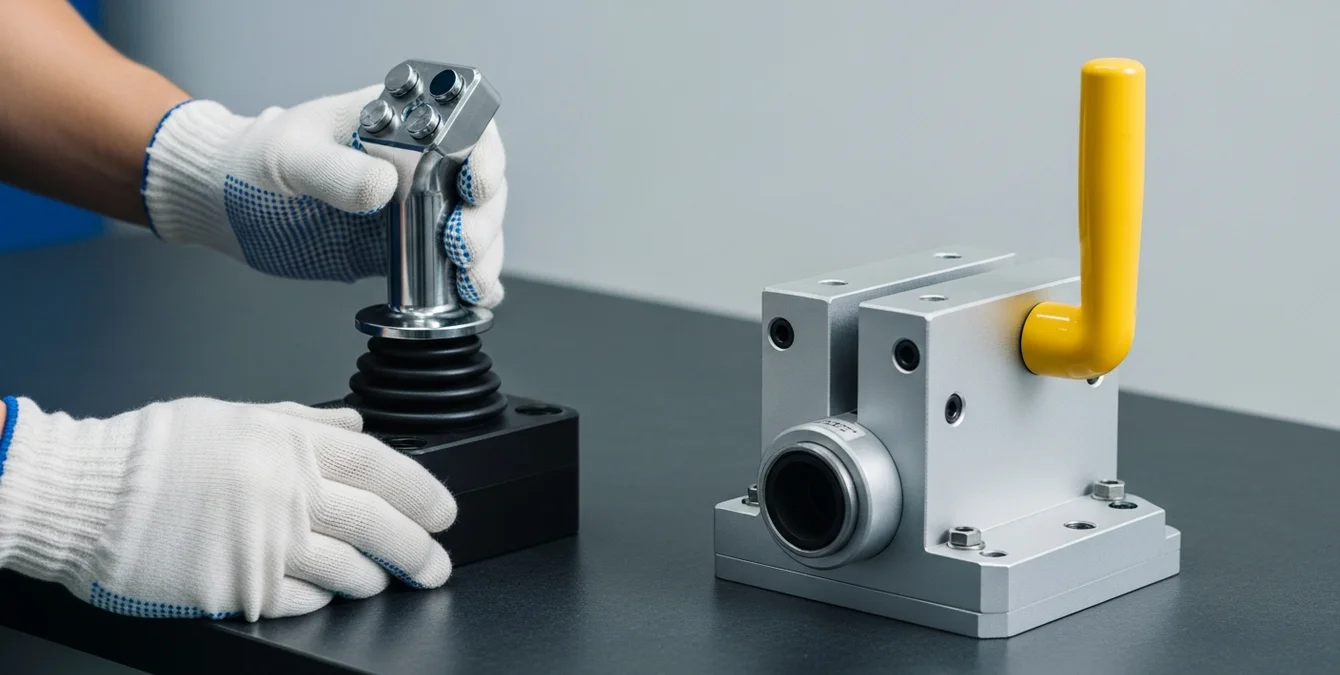
After installing and aligning a new module, it is essential to recommission the Simass system to ensure reliable operation. Start by performing a comprehensive repeatability test. This involves cycling the axes and module mechanisms through their full range of motion, verifying that all movements correspond to the programmed positions and that the system returns to its reference points with minimal deviation.
Next, update or create new welding programs as needed to accommodate the expanded capabilities. Use the teach-in functions of Sigomatic or Sigomatic Pro to define new geometry primitives or handling sequences. Always test new or modified programs with sample workpieces before releasing them for production use. Monitor the process for any unexpected behavior, such as misalignment, axis drift, or handling errors.
Check all safety interlocks and process monitoring functions to ensure they operate correctly with the new module. This includes verifying emergency stop functions, access door interlocks, and any shielding or enclosure elements specific to the module. Industry best practice is to conduct a documented safety check and operator briefing before resuming full-scale production.
Finally, update your system documentation, including wiring diagrams, program libraries, and maintenance records, to reflect the new configuration. This ensures traceability and supports future troubleshooting or further expansions.
Planning for Growth
Expanding your Simass system with additional modules requires careful planning to ensure seamless integration and long-term operational efficiency. Begin by evaluating the available floor space. Both Rotate and Slide modules have specific footprint requirements, and adequate clearance is necessary for safe loading, unloading, and maintenance access. Consider the movement paths of slides, rotary tables, and any auxiliary handling equipment when arranging your workspace.
Cable routing is another critical aspect. Plan for the additional power, control, and safety wiring required by new modules. Use cable trays or protective conduits to prevent damage and minimize trip hazards. Ensure that all connections are properly labeled and documented to facilitate future maintenance or troubleshooting.
As your system grows, the structure of your program library becomes increasingly important. Organize welding programs, reference point definitions, and handling routines in a logical, easily navigable format. This streamlines operator training and reduces the risk of errors during production changeovers. Consider implementing version control or program backup procedures to safeguard against accidental data loss.
Finally, anticipate future expansion needs by leaving space and infrastructure capacity for additional modules or automation elements. Engage with Sigma’s technical support early in the planning process to address any compatibility or integration questions. Proactive planning ensures that your Simass system remains flexible and scalable as your production requirements evolve.
Frequently Asked Questions
Can I retrofit a Simass system with a different module after installation?
Yes, Simass modules are designed to be interchangeable, allowing you to retrofit your system with Rotate, Slide, or Powder modules at any stage. Coordinate the swap with Sigma service to ensure proper mechanical, electrical, and software integration.
What steps are involved in aligning a new module to the Simass base unit?
After mounting the new module, align it to the X, Y, and Z axes using reference marks or alignment jigs. Then, re-teach the reference points via Sigomatic software and verify accuracy with a test workpiece before resuming production.
How do I ensure production quality after expanding my Simass system?
Perform a repeatability test, update welding programs to include the new module’s geometry, and run sample welds. Check all safety interlocks and document the changes to maintain traceability and consistent production quality.
What should I consider when planning for future Simass expansions?
Plan for adequate floor space, cable management, and program library structure. Leave room for additional modules, ensure infrastructure capacity, and consult Sigma technical support to address compatibility and integration requirements.