
- Where Long-Seam Error Comes From
- The Slide Platform Advantages
- Fixture Design for Long Parts
- Segmenting the Seam
- Measuring What Matters
- Frequently Asked Questions
- How does Simass Slide minimize rail deflection during long-axis welding?
- What fixture strategies help prevent part sag on long welds?
- Why is seam segmentation important for long-axis welding accuracy?
- Which measurements are most critical for verifying long-axis weld quality?
- Related Articles
Quick Answer: Long-axis welding accuracy on the Simass Slide depends on controlling rail deflection, thermal effects, and part support. Operators can optimize results by leveraging the Slide’s precision axes, careful fixturing, seam segmentation, and systematic measurement of straightness and repeatability across the full travel range.
| Source of Error | Description | Potential Impact |
|---|---|---|
| Rail deflection | Flexing of linear guides under weight of workpiece or welding head, especially over long spans | Millimeter-scale deviations, misalignment, inconsistent penetration |
| Thermal growth | Expansion of part and fixtures due to welding heat, often non-uniform | Weld drift, warping, subtle positional shifts |
| Part sag | Gravity-induced bowing or drooping of unsupported long/heavy parts | Seam misalignment, increased by heat softening |
| Mechanical backlash | Play in drive system components (ball screws, gearboxes) | Positional errors, especially during direction changes |
Where Long-Seam Error Comes From
Achieving high accuracy in long-axis welding requires a clear understanding of the main sources of error that can affect the final weld quality. The most common contributors include rail deflection, thermal growth, part sag, and mechanical backlash. Each of these factors can introduce deviations along the welded seam, leading to misalignment, inconsistent penetration, or visible distortion.
Rail deflection occurs when the weight of the workpiece or the welding head causes the machine’s linear guides to flex, especially over extended travel distances. This effect is more pronounced with heavier parts or when the axis is unsupported over long spans. Even small deflections can translate into millimeter-scale errors over a meter-long seam.
Thermal growth is another critical factor. As the welding process introduces heat into the workpiece, both the part and the fixtures can expand. This expansion is rarely uniform, leading to localized shifts in position or subtle warping. Over long seams, cumulative thermal effects can cause the weld to drift from its intended path.
Part sag is especially relevant for slender or heavy components. If the workpiece is insufficiently supported, gravity can cause it to bow or droop between supports, pulling the seam out of alignment. This is often exacerbated by the heat of welding, which can soften the material and increase sag.
Finally, mechanical backlash in the drive system—such as play in ball screws or gearboxes—can introduce positional errors, particularly during direction changes or at acceleration/deceleration zones. Understanding and mitigating these sources of error is essential for operators seeking to maximize long-axis welding accuracy on the Simass Slide platform.
| Feature | Function/Benefit |
|---|---|
| Travel ranges (X/Y/Z) | X up to 1010 mm, Y up to 1110 mm, Z up to 510 mm; enables processing of large/complex parts without repositioning |
| Motorized precision axes | High positional accuracy and repeatability via closed-loop control |
| Six numeric axes (including rotation) | Enhanced flexibility for handling long/heavy workpieces |
| Independent slide modules | Continuous production—load/unload outside welding cabin |
| Robust construction | Minimizes rail deflection and supports heavy parts |
| 315 mm three-jaw chuck & pivotable rotation | Secure clamping for horizontal/vertical processing |
The Slide Platform Advantages
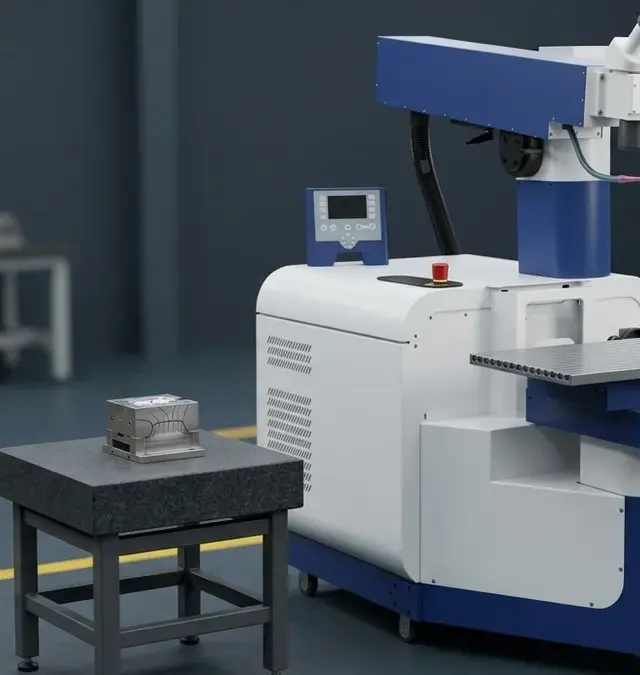
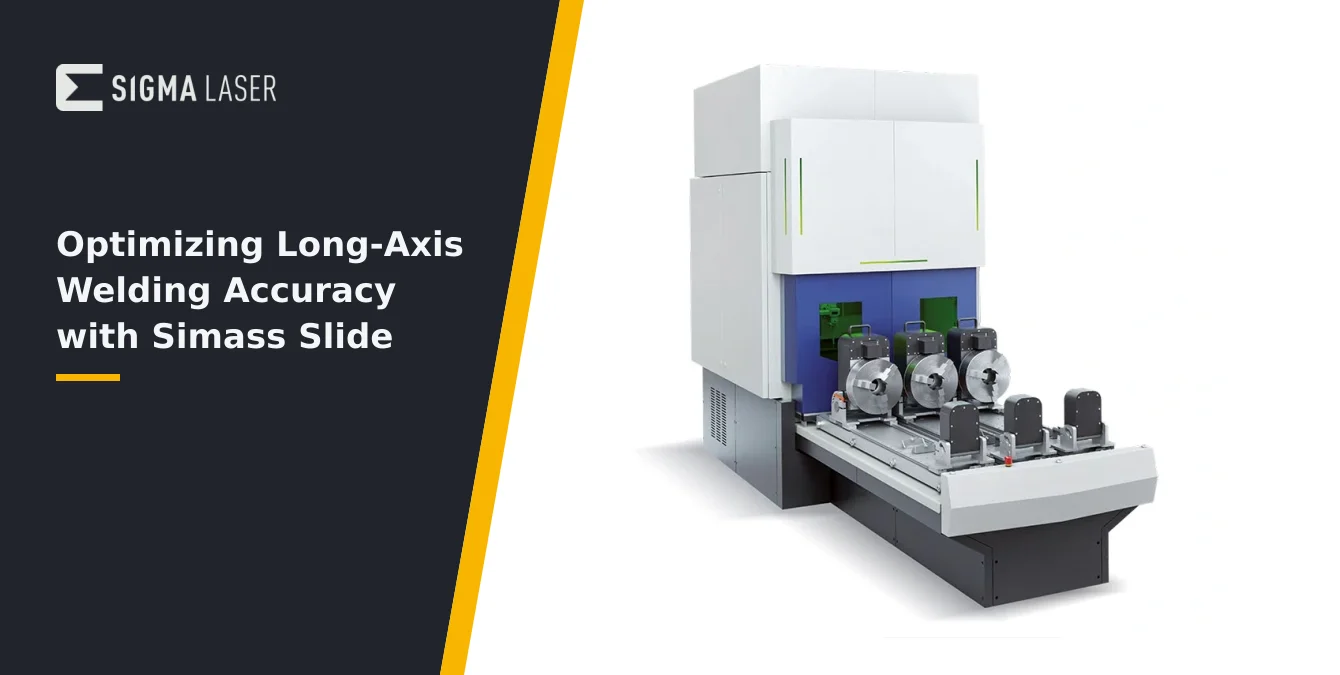
The Simass Slide platform is engineered to address the challenges of long-axis welding, offering a robust foundation for precision over extended seams. Its travel ranges—X up to 1010 mm, Y up to 1110 mm, and Z up to 510 mm—allow operators to process large and complex parts without repositioning, reducing cumulative setup errors and manual handling risks.
One of the core advantages lies in the system’s motorized axes, which deliver high positional accuracy and repeatability through closed-loop control strategies. These motors, combined with precision linear guides, minimize backlash and ensure smooth, controlled movement along the entire travel range. The system’s ability to coordinate six numeric axes, including motorized rotation and independent slide modules, further enhances flexibility for handling long or heavy workpieces.
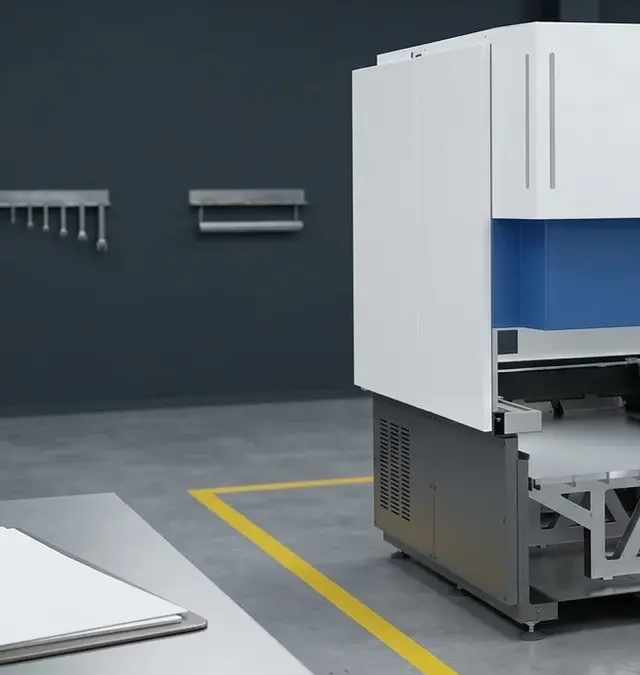
Fixture tips provided in the Simass Slide documentation emphasize the importance of aligning the workpiece parallel to the machine’s axis of travel. The modular slide design allows for loading and unloading outside the welding cabin, enabling continuous production and reducing downtime. This also means that fixture verification and adjustment can be performed without interrupting welding operations, supporting higher throughput and consistent quality.
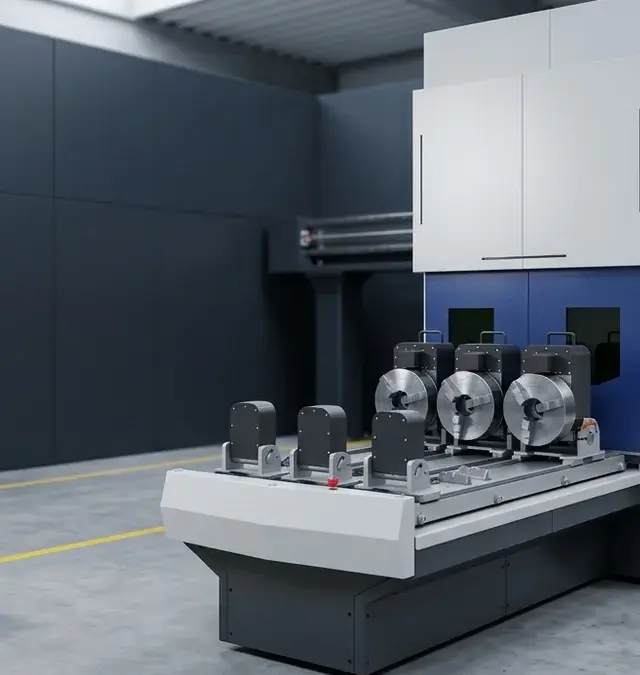
The platform’s robust construction helps counteract rail deflection, while the use of a 315 mm three-jaw chuck and pivotable rotation devices supports both horizontal and vertical processing. These features collectively provide operators with the control and adaptability needed to maintain long-axis welding accuracy, even on large or irregular components.
| Recommendation | Purpose/Benefit |
|---|---|
| Rigid supports at intervals | Prevents sagging and maintains alignment along part length |
| Motorized rotation axis & three-jaw chuck | Secure clamping for cylindrical/round parts |
| Clamping outside weld path | Avoids interference and heat transfer to fixture |
| Adjustable/fine-tuned clamps | Accommodates part geometry and movement |
| Sliding/floating supports at ends | Allows for thermal expansion, prevents warping |
| Dry runs before welding | Verifies fixture stability and detects movement/flex |
| Regular inspection/maintenance | Ensures long-term reliability and repeatability |
Fixture Design for Long Parts
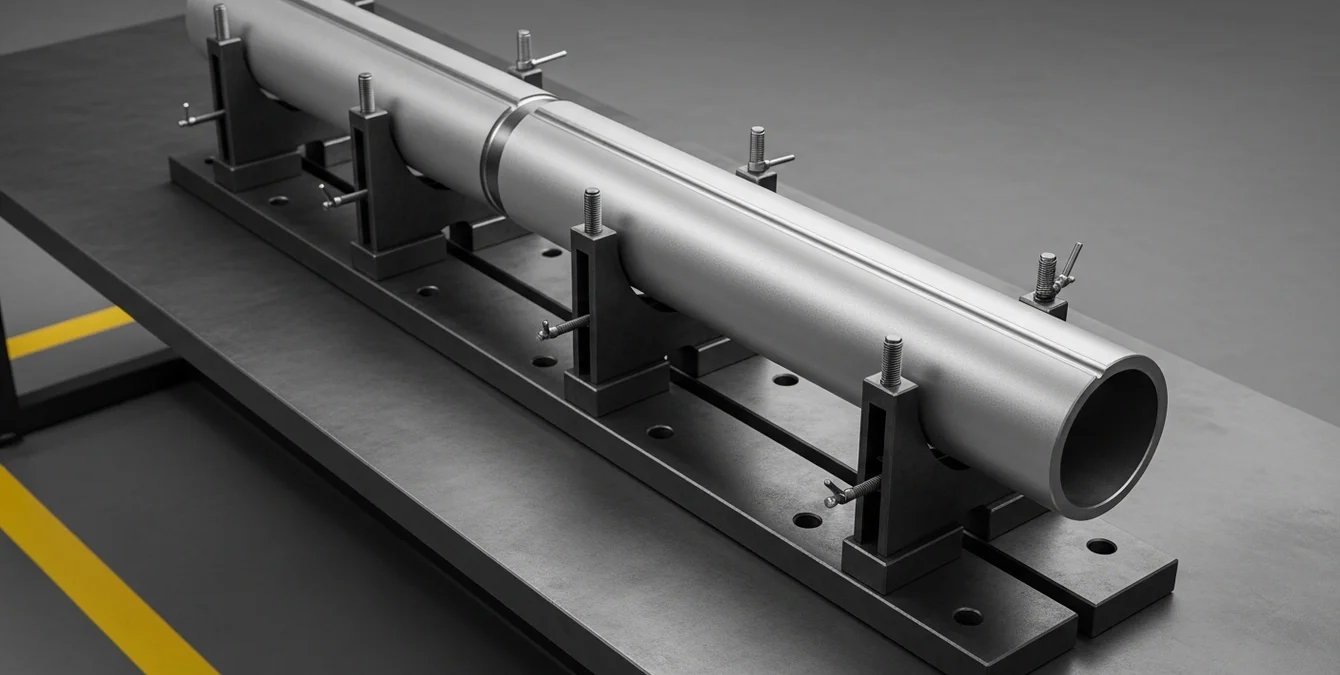
Proper fixture design is fundamental to maintaining long-axis welding accuracy, especially when working with extended or heavy workpieces. The goal is to provide rigid, stable support throughout the welding process while accommodating the dynamic effects of heat and mechanical loads. Operators should prioritize fixtures that minimize deflection and prevent movement during welding, as even minor shifts can compromise seam alignment.
Begin by using rigid supports positioned at regular intervals along the length of the part. These supports should be robust enough to prevent sagging, particularly in the middle sections of long components. For cylindrical or round parts, the Simass Slide’s motorized rotation axis and three-jaw chuck offer secure clamping, but additional supports may be required for very long or flexible workpieces.
Clamping should be applied outside the weld path to avoid interference with the laser beam and to prevent heat transfer into the fixture itself. Where possible, use adjustable clamps that can be fine-tuned to account for part geometry and potential movement. It is also important to allow for thermal expansion by incorporating sliding or floating supports at one or both ends of the part. This prevents the buildup of internal stresses that could lead to warping or distortion as the part heats up and cools down.
Operators should verify fixture stability before welding by performing dry runs along the full seam length, checking for any movement or flex under simulated loads. Regular inspection and maintenance of fixture components are recommended to ensure long-term reliability and repeatability in production environments.
Segmenting the Seam
Dividing long weld seams into manageable segments is a proven strategy for controlling heat input, minimizing distortion, and maintaining accuracy across the entire length. On the Simass Slide, this approach allows operators to apply symmetric heat input and monitor part behavior between segments, reducing the risk of cumulative errors and warping.
Begin by planning the weld sequence to balance heat distribution. Alternating between opposite or symmetric segments helps prevent localized overheating and uneven expansion. This is particularly important for parts sensitive to thermal distortion, such as thin-walled sections or high-carbon steels. Operators should monitor the part’s temperature and appearance between segments, using pauses or cooling intervals as needed to maintain dimensional stability.
Segmenting also facilitates more precise control over welding parameters. By adjusting power, speed, or pulse settings for each segment, operators can compensate for changes in part geometry, mass, or heat sink effects. The Simass Slide’s programmable axes and teach-in software support the creation of complex weld paths, enabling seamless transitions between segments without manual repositioning.
After completing each segment, inspect the seam for signs of distortion, misalignment, or surface irregularities. If necessary, make fixture adjustments or modify the welding sequence before proceeding. This iterative approach ensures that errors do not accumulate over the full seam length, supporting consistent quality and long-axis welding accuracy.
Measuring What Matters
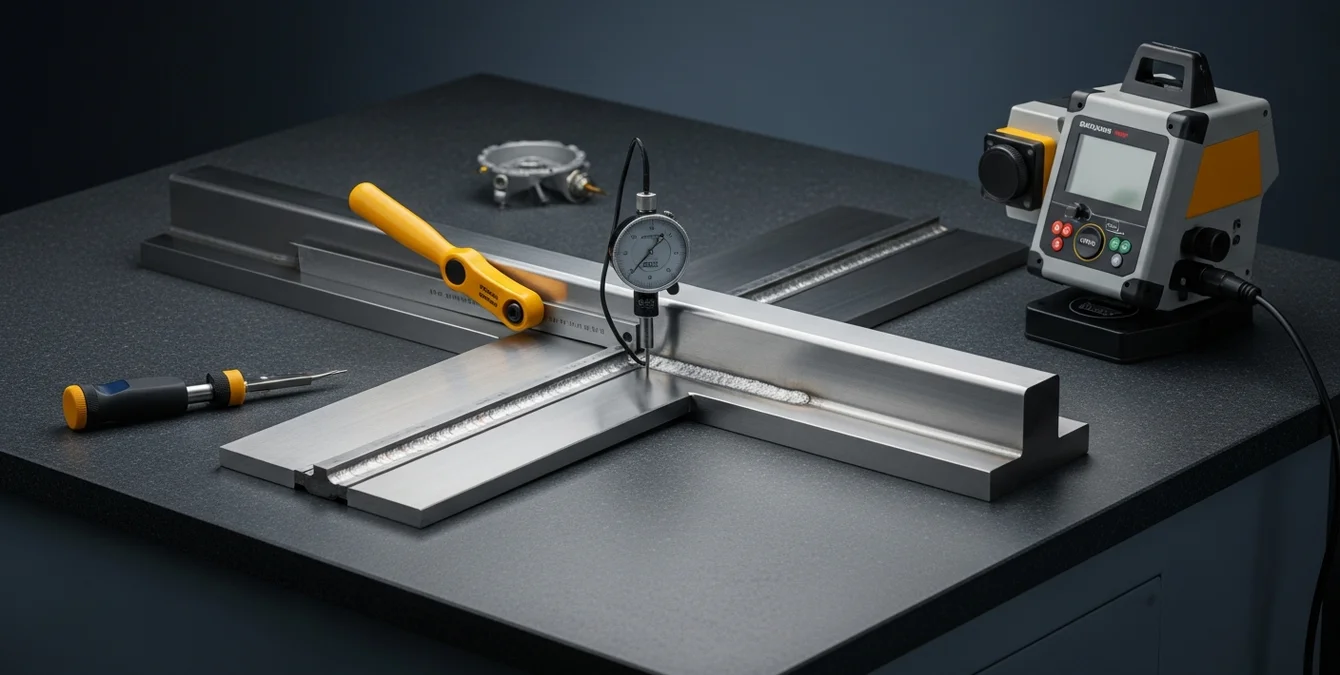
Systematic measurement is essential for verifying long-axis welding accuracy and ensuring that process improvements yield tangible results. Operators should focus on key metrics such as seam straightness, repeatability, and speed consistency across the full travel range of the Simass Slide.
Start by checking seam straightness over the entire weld length. Use precision measuring tools—such as dial indicators, laser trackers, or straightedges—to detect deviations from the intended path. Record measurements at multiple points to identify trends or localized errors, and compare results against specified tolerances for the application.
Repeatability runs are valuable for assessing the system’s ability to produce consistent results over multiple cycles. Program the Simass Slide to execute the same weld path several times, then measure the resulting seams for alignment, width, and penetration. Consistent results indicate stable machine performance and effective fixturing; any variation may point to underlying issues with axis calibration, fixture movement, or thermal effects.
Monitor speed zones along the weld path, paying attention to areas where acceleration or deceleration occurs—such as at the start, end, or corners of the seam. Inconsistent speeds can lead to visible marks or changes in weld quality. Adjust motion profiles via the control software to maintain uniform velocity, and verify the impact by inspecting the seam for smoothness and regularity.
- Check seam straightness at multiple points along the axis
- Perform repeatability runs and compare weld profiles
- Monitor speed consistency, especially at acceleration/deceleration zones
- Document results for process traceability and continuous improvement
By measuring these critical parameters, operators can identify sources of error, validate corrective actions, and maintain high standards of long-axis welding accuracy on the Simass Slide platform.
Frequently Asked Questions
How does Simass Slide minimize rail deflection during long-axis welding?
The Simass Slide’s robust linear guides and motorized axes are engineered to resist deflection, even when supporting large or heavy parts. Regularly verify axis alignment and use distributed supports to further reduce the risk of rail flex over long travel distances.
What fixture strategies help prevent part sag on long welds?
Use rigid supports at regular intervals and ensure clamps are positioned outside the weld path. Floating or sliding supports at one end allow for thermal expansion without inducing stress, helping prevent sag and distortion during welding.
Why is seam segmentation important for long-axis welding accuracy?
Segmenting the seam controls heat input and allows for distortion monitoring between weld sections. This approach helps prevent cumulative errors, supports symmetric heat distribution, and enables timely fixture or parameter adjustments.
Which measurements are most critical for verifying long-axis weld quality?
Focus on seam straightness over the full travel, repeatability across multiple runs, and speed consistency—especially in acceleration/deceleration zones. Systematic measurement and documentation support process control and continuous improvement.