
- Simass Slide in One Picture
- The Three Slides and What They Change
- Mechanical Installation Principles
- Fixturing Large Parts
- Calibration and First Long Seam
- Handover to Production
- Frequently Asked Questions
- What part sizes can the Simass Slide handle?
- How do the three slides improve productivity?
- What fixturing is recommended for long or heavy parts?
- How is the Simass Slide calibrated for long seams?
- Related Articles
Quick Answer: To set up the Simass Slide for large-part welding, anchor and level the system, configure the three independent slides for efficient loading, securely fixture and support large workpieces, calibrate axis travel, and organize welding programs in Sigomatic/Pro for repeatable production. Follow all supplied safety and setup guidelines.
| Parameter | Value |
|---|---|
| Axis Travel (X) | up to 1010 mm |
| Axis Travel (Y) | up to 1110 mm |
| Axis Travel (Z) | up to 510 mm |
| System Weight | 1800 kg |
| Max Part Diameter | Ø500 mm (standard) |
| Max Part Length | 1500 mm (standard) |
| Number of Slides | 3 (independent, parallel operation) |
| Rotation Axis (per slide) | Motorized, 315 mm three-jaw chuck |
| Supported Laser Types | Pulsed & CW fibre lasers |
| Software | Sigomatic / Sigomatic Pro |
All values are as stated in the article body. For full installation and safety requirements, refer to Sigma Laser documentation.
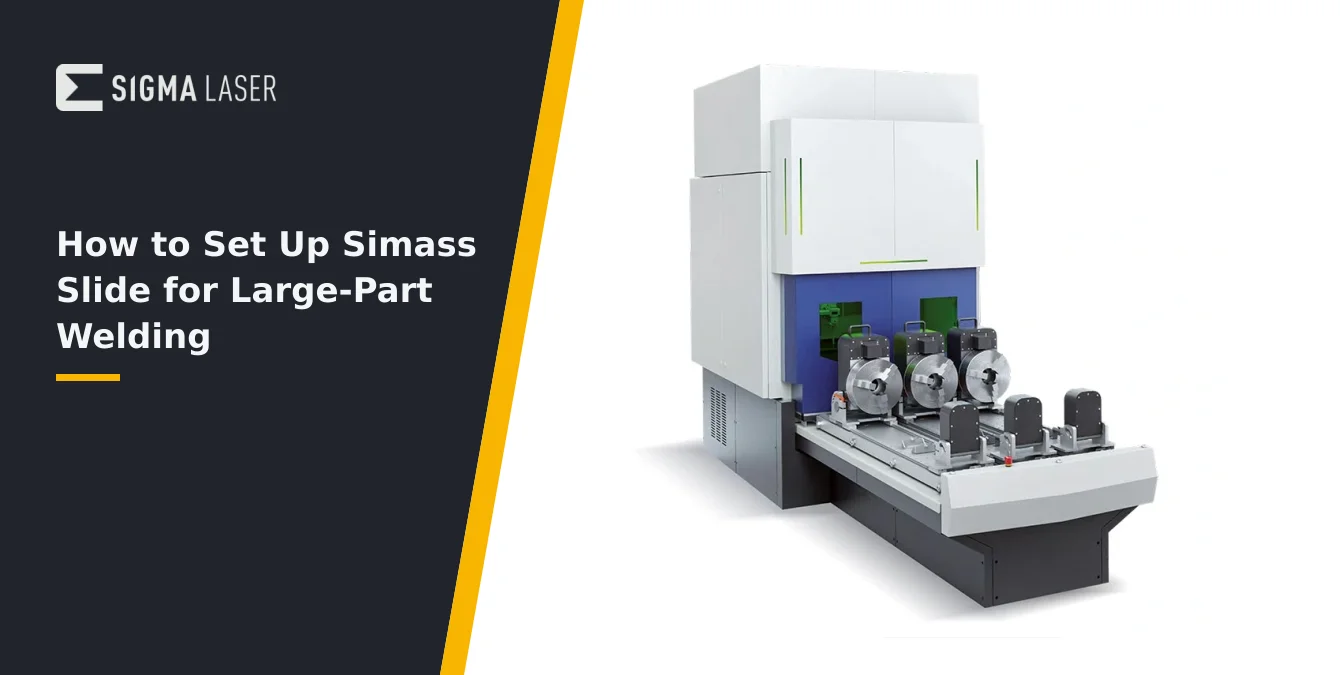
Simass Slide in One Picture
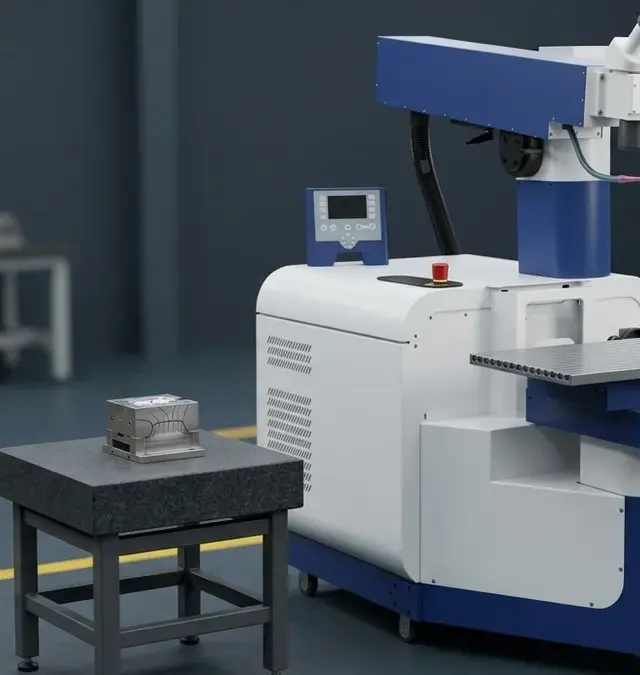
The Simass Slide is Sigma Laser’s modular automated welding system engineered specifically for handling and processing large workpieces, such as oversized pipes, heavy tooling, and long components. Its robust construction and six-axis architecture are designed to accommodate demanding industrial environments where high throughput, flexibility, and repeatability are essential.
Key technical parameters define its capabilities: the Simass Slide offers axis travel of up to X 1010 mm, Y 1110 mm, and Z 510 mm, with axis travel of up to X 1010 mm, Y 1110 mm, and Z 510 mm. The system itself weighs 1800 kg, ensuring mechanical stability during operation and minimizing vibration or positional drift during long welding cycles. These dimensions allow the handling of parts up to Ø500 mm in diameter and 1500 mm in length as standard, making it suitable for sectors such as automotive, aerospace, and heavy tooling.
The Simass Slide integrates seamlessly with Sigma’s laser sources, supporting both pulsed and continuous wave (CW) fibre lasers. The system’s automation is driven by Sigomatic or Sigomatic Pro software, which enables intuitive programming of complex weld paths and integration with modular handling solutions. This makes it possible to automate not only the welding itself but also the loading, unloading, and positioning of large and heavy parts, reducing manual intervention and cycle time.
In summary, the Simass Slide is a purpose-built platform for high-precision, automated laser welding of large-scale workpieces, combining advanced axis control, modular part handling, and robust mechanical design to meet the needs of demanding production environments.
| Feature | Benefit |
|---|---|
| Parallel loading/unloading during welding | Reduced downtime and increased throughput |
| Flexible setup for different part types | Rapid changeover and minimal setup time |
| Improved operator safety | No exposure to process area during welding |
| Independent slide movement | Supports high-mix production and alternating fixtures |
Table summarizes workflow improvements as described in the article.
The Three Slides and What They Change
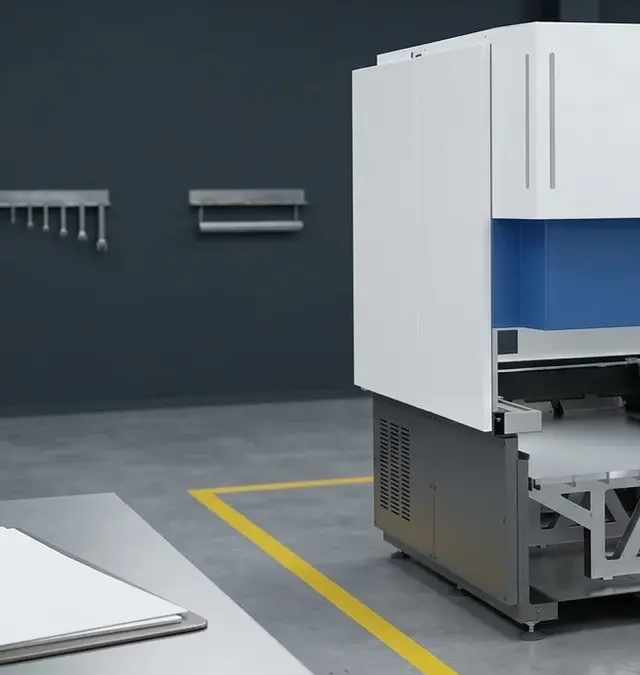
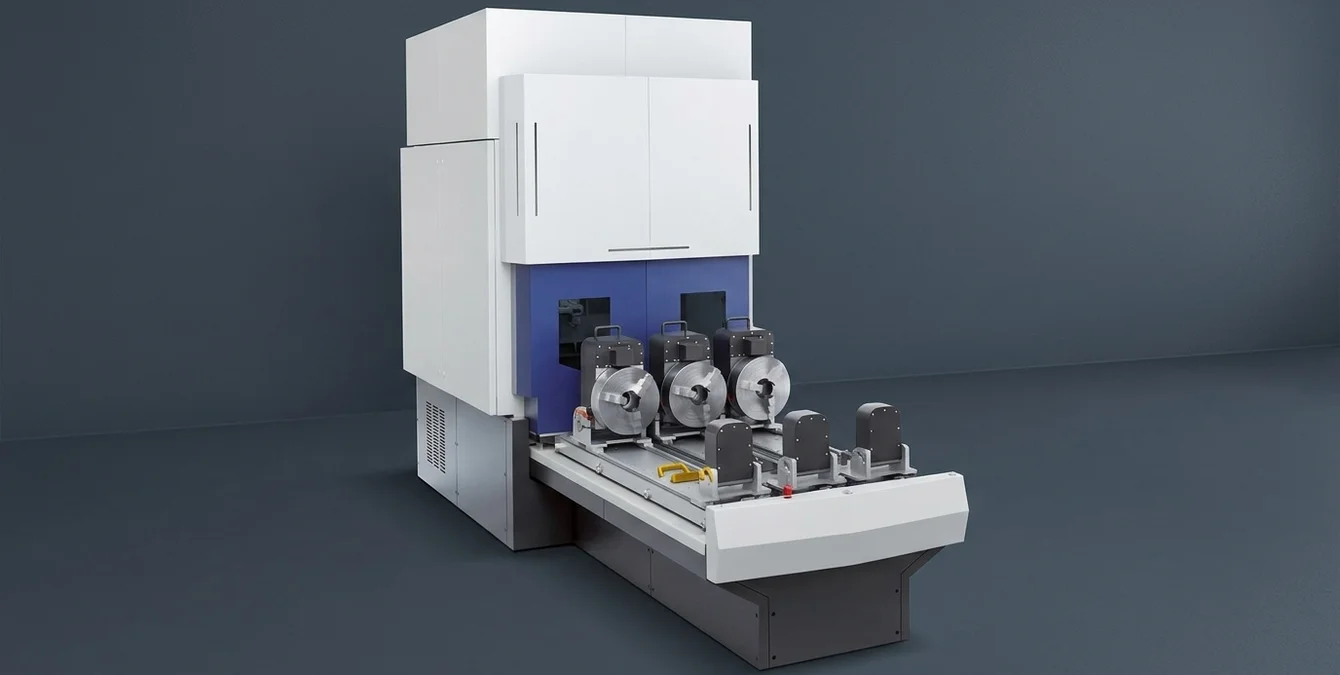
At the core of the Simass Slide’s productivity is its three independent slide modules, each capable of moving into and out of the working area autonomously. This architecture fundamentally transforms workflow efficiency: while one slide is positioned in the welding cabin for active processing, the other two can be loaded or unloaded outside the protected zone, entirely decoupled from the welding operation itself.
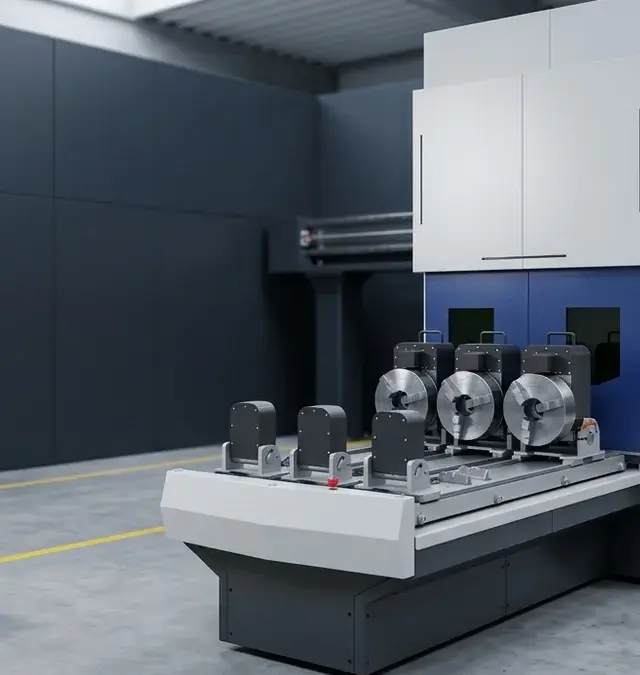
This parallelization is a significant departure from traditional single-station systems, where loading and unloading must wait for the welding cycle to complete, resulting in downtime. With the Simass Slide, operators can prepare the next workpiece or remove finished parts without interrupting the ongoing weld, maximizing machine utilization and throughput. Each slide is equipped with its own motorized rotation axis and a 315 mm three-jaw chuck, ensuring secure and repeatable part positioning.
The slides’ independent movement also supports flexible production scenarios, such as alternating between different part types or fixture setups. For example, one slide may be configured for pipe sections, another for plate components, and the third for custom tooling, allowing rapid changeover and minimal setup time between jobs. The ability to load and unload outside the welding cabin also enhances operator safety and ergonomics, as personnel are not exposed to the process area during active welding.
- Parallel loading/unloading during welding
- Reduced downtime and increased throughput
- Flexible setup for different part types
- Improved operator safety and workflow
In practice, effective use of the three slides requires careful coordination and clear communication between operators, especially in high-mix production environments. Program organization and slide assignment should be planned to match production priorities and minimize non-productive time.
Mechanical Installation Principles
Proper mechanical installation is critical to achieving the Simass Slide’s full precision and reliability. Begin by positioning the system on a stable, vibration-free foundation capable of supporting its 1800 kg mass plus the maximum anticipated workpiece load. Industry best practice is to use a reinforced concrete floor with sufficient thickness and load-bearing capacity, free from settlement or flex.
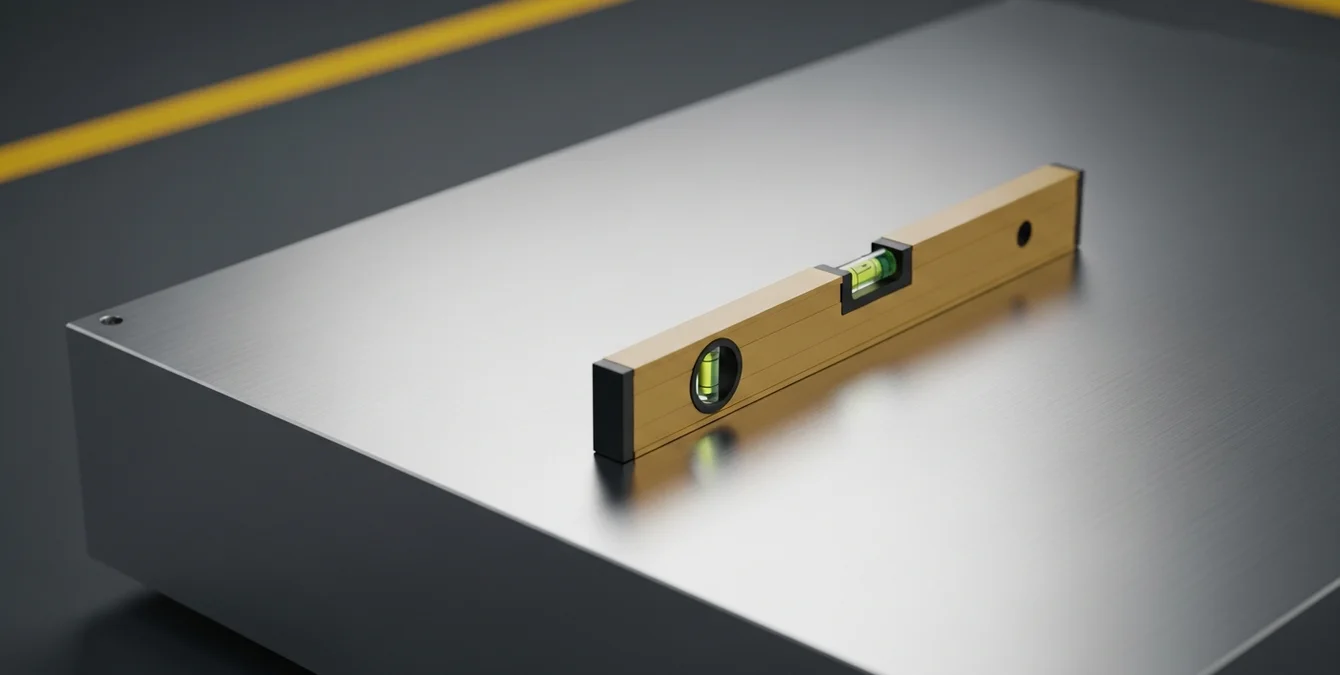
Level the Simass Slide using precision machinist’s levels or electronic leveling tools, checking both longitudinal and transverse axes across the entire machine footprint. Even minor deviations can introduce axis misalignment, affecting weld accuracy and repeatability over long travel distances. Once level, anchor the system securely to the floor using the manufacturer-supplied mounting points and recommended fasteners. Tighten anchors evenly and re-verify level after anchoring to account for any movement during fastening.
Next, verify straightness and parallelism of all linear axes (X, Y, Z) over their full travel. Use a calibrated straightedge, laser tracker, or dial indicator to check for deviations, binding, or backlash. Pay particular attention to the slide rails and rotation axes, as any misalignment here can propagate through to the workpiece and compromise weld quality. Adjust as needed per installation guidelines, and document all measurements for future reference.
Finally, inspect all safety interlocks, emergency stops, and access doors for correct function. Confirm that all axis limit switches and travel sensors are operational and that the system’s laser safety zone is clearly marked and controlled according to supplied safety documentation. Only proceed to commissioning once all mechanical and safety checks are complete.
| Step | Purpose |
|---|---|
| Verify chuck engagement and jaw tightness | Ensure secure clamping of workpiece |
| Check pivot and rotation device locks | Maintain orientation during welding |
| Position supports to minimize sag and vibration | Prevent deflection of long/heavy parts |
| Allow for thermal movement | Reduce risk of distortion or stress cracking |
| Perform dry run with fixture and part | Confirm clearance and safe axis travel |
Checklist items are taken directly from the article’s fixturing section.
Fixturing Large Parts
Securing large and heavy workpieces in the Simass Slide requires careful fixturing to ensure both precision and safety. The system’s standard 315 mm three-jaw chuck, mounted on a motorized rotation axis, is designed to accommodate round parts up to Ø500 mm and lengths up to 1500 mm. For non-cylindrical parts or irregular geometries, custom jaws or auxiliary fixtures may be required; always verify compatibility and secure clamping before operation.
The rotation devices are pivotable, enabling both horizontal and vertical orientation of the workpiece. This flexibility is essential for accessing challenging weld locations and optimizing weld pool behavior, especially on long seams or complex geometries. When positioning large parts, ensure the center of gravity is well supported and that the workpiece is balanced to prevent movement during rotation or welding.
Support against sagging is a key consideration for long or heavy components. Use auxiliary supports, roller stands, or adjustable rests to prevent deflection over the length of the part, particularly when welding pipes or beams. Allow for thermal expansion by avoiding over-constraining the workpiece; fixtures should hold the part securely but permit slight movement as temperatures rise during welding. This reduces the risk of distortion or stress cracking.
- Verify chuck engagement and jaw tightness
- Check pivot and rotation device locks
- Position supports to minimize sag and vibration
- Allow for thermal movement during long welds
Before starting production, perform a dry run with the fixture and part in place to confirm clearance, axis travel, and safe operation throughout the intended weld path.
Calibration and First Long Seam
Calibration is essential to ensure the Simass Slide delivers repeatable, high-quality welds across its full working envelope. Begin by referencing the machine’s home position and verifying axis zero points using the Sigomatic or Sigomatic Pro interface. Conduct a repeatability run: move each axis through its maximum travel, returning to reference points and checking for positional drift or backlash. Document any deviations and adjust per the system’s calibration guidelines.
For large-part welding, particularly long seams, segment the weld path into manageable sections. This approach helps maintain consistent focus, energy input, and shielding gas coverage across the entire length, reducing the risk of defects or incomplete fusion. Use the teach-in functions of Sigomatic/Pro to define seam geometry, breaking long welds into logical segments that match the part’s geometry and support structure.
During the first production run, closely monitor for thermal distortion, especially on thin-walled or asymmetric parts. Use in-process measurement tools or visual inspection to detect warping, misalignment, or unexpected movement. Adjust clamping or support as needed to compensate for observed effects. Record all process parameters and results for future reference and process optimization.
- Reference and verify all axis positions
- Segment long seams for control and consistency
- Monitor for distortion and adjust supports as needed
- Document process parameters and results
Successful calibration and process validation lay the groundwork for reliable, repeatable production of large welded assemblies.
Handover to Production
Transitioning the Simass Slide from setup to full production requires structured program management and operator training. Organize welding programs in Sigomatic or Sigomatic Pro according to fixture families and part types. This enables rapid selection and minimizes the risk of incorrect program loading, especially in high-mix environments where multiple part geometries are processed in parallel.
Establish clear naming conventions and documentation for each program, including details such as fixture type, part orientation, and required process parameters. Store all relevant settings, including axis positions, rotation angles, and weld sequences, within the program memory. With capacity for 50 programs (expandable to over 100), the system supports both short-run and series production workflows.
Train operators on safe loading/unloading procedures, slide assignment, and program selection. Emphasize the importance of verifying fixture setup and part positioning before each weld cycle. Use the live feedback features in Sigomatic/Pro to monitor process status, axis positions, and any safety interlocks in real time. Encourage operators to record any deviations or issues encountered during production for continuous improvement.
Finally, implement a regular maintenance and inspection schedule for all mechanical and safety-critical components, including chucks, slides, rotation axes, and safety interlocks. This proactive approach reduces unplanned downtime and ensures consistent weld quality over the long term.
Frequently Asked Questions
What part sizes can the Simass Slide handle?
The Simass Slide is designed for parts up to 500 mm in diameter and 1500 mm in length as standard. Its three-jaw chuck and modular slides support a wide range of large workpieces, including heavy pipes and tooling components.
How do the three slides improve productivity?
The three independent slides allow loading and unloading outside the welding cabin while welding continues on another slide. This parallelization reduces downtime and increases throughput, especially in high-volume or mixed-part production.
What fixturing is recommended for long or heavy parts?
Use the standard 315 mm three-jaw chuck for round parts, and add auxiliary supports or roller stands to prevent sag. Ensure fixtures allow for thermal expansion and do not over-constrain the workpiece during welding.
How is the Simass Slide calibrated for long seams?
Calibration involves referencing axis zero points, running repeatability checks over full travel, and segmenting long seams for consistent weld quality. Monitor for distortion during initial runs and adjust supports as needed.