
- Key Takeaways
- What are the advantages of laser welding over MIG welding?
- Precision and Speed
- Automation Capabilities
- How does MIG welding compare to laser welding in terms of cost?
- Initial Setup Costs
- Operational and Maintenance Expenses
- Is Laser Welding Suitable for Thick Materials?
- Capabilities with Thick Materials
- Technological Advancements
- Which Welding Method Offers Better Quality and Strength?
- Weld Quality Comparison
- Heat-Affected Zone Analysis
- Case Studies: Industrial Applications of Laser and MIG Welding
- Automotive Industry
- Aerospace Applications
- What is the Environmental Impact of Laser vs MIG Welding?
- Energy Consumption
- Emissions and Sustainability
- Frequently Asked Questions
- What are the advantages of laser welding over MIG welding?
- Is laser welding suitable for thick materials?
- How does MIG welding compare to laser welding in terms of cost?
- What materials are best suited for laser welding?
- Can laser welding be automated for high-volume production?
- What are the maintenance requirements for laser welding systems?
- How does the weld quality of laser welding compare to MIG welding?
- Related Articles
Quick Answer: Laser welding vs MIG welding primarily differ in precision, speed, and cost. Laser welding offers superior precision and is faster, making it ideal for high-volume production with minimal distortion. It is more expensive upfront but can reduce long-term costs due to efficiency and quality. MIG welding is more cost-effective initially and easier to set up, suitable for thicker materials but may require more post-processing. Production managers should consider the specific requirements of their projects, including material thickness and budget, when choosing between these methods.
Key Takeaways
In the realm of modern manufacturing, choosing between laser welding and MIG welding can significantly impact production efficiency and product quality. Understanding the nuanced differences in precision, speed, and cost-effectiveness can guide production managers in making informed decisions that align with their operational goals.
- Laser welding offers unparalleled precision and speed, facilitating faster throughput and higher quality welds compared to MIG welding.
- Despite higher initial costs, laser welding proves cost-effective in the long term due to reduced labor expenses and minimized rework.
- The heat-affected zone (HAZ) is significantly smaller in laser welding, reducing the risk of material distortion and maintaining structural integrity.
- Laser welding is highly compatible with a variety of materials, including those that are challenging for MIG welding, such as thin metals and dissimilar materials.
- Automation integration is seamless with laser welding systems, enhancing ease of use and enabling higher consistency and repeatability in production.
- Laser welding systems require less frequent maintenance compared to MIG welding setups, translating into lower downtime and higher operational efficiency.
As production managers evaluate their welding processes, understanding these key differences can aid in determining whether laser welding is the optimal upgrade path for their operations. Delve deeper into the specifics of each welding process to see how they align with your production objectives.
What are the advantages of laser welding over MIG welding?
| Parameter | Typical Value |
|---|---|
| Power Range | 1 kW – 10 kW |
| Wavelength | 1064 nm (Nd:YAG), 1070 nm (fiber) |
| Beam Quality (M²) | < 1.2 |
| Welding Speed | Up to 10 m/min |
| Penetration Depth | Up to 25 mm (material dependent) |
| HAZ Width | < 0.5 mm |
| Precision | ±0.1 mm (repeatability ±0.05 mm) |
These are general industry values; not attributed to any specific Sigma Laser model.
Precision and Speed
In industrial manufacturing, precision and speed are crucial factors that influence production efficiency and quality. Laser welding systems, such as those offered by Sigma Laser like the Sidanus Light and Sirius Light, provide unmatched precision thanks to their highly concentrated laser beams. This results in a minimal heat-affected zone, ensuring the integrity of the surrounding material is preserved. The precision of laser welding is particularly beneficial in applications requiring intricate welds on delicate components, such as in aerospace and medical device manufacturing.
Compared to MIG welding, which relies on a consumable wire electrode and is known for its versatility, laser welding offers significantly faster processing speeds. This speed is due to the focused energy delivery, which reduces the overall heat input and subsequently the cooling time. Such efficiency makes laser welding especially suitable for high-volume production environments where time is a critical factor.
Laser welding systems typically operate with power ranges from 1 kW to 10 kW, with wavelengths around 1064 nm for Nd:YAG lasers, offering beam quality M² values typically less than 1.2. These specifications allow for welding speeds up to 10 m/min, depending on material type and thickness. The penetration depth can reach up to 25 mm in a single pass for certain materials, such as stainless steel, while maintaining a heat-affected zone (HAZ) width of less than 0.5 mm, as per ISO 15614-11:2002 standards.
The precision of laser welding is often within ±0.1 mm, with repeatability in automated systems achieving tolerances as tight as ±0.05 mm. This level of precision is critical in sectors where component fit and finish are paramount, such as in the production of medical devices and aerospace components.
Automation Capabilities
Laser welding systems are inherently designed for integration into automated production lines, significantly enhancing their appeal in modern manufacturing settings. The advanced automation capabilities of Sigma Laser systems, including the Motor-driven Turning Device and Swivelling Y Axis, enable precise control over the welding process, ensuring consistent quality across large batches of components. This contrasts with MIG welding, where automation can be more challenging due to the need for manual adjustments and variability in electrode feed rates.
By leveraging technologies such as Super Pulse Technology (SPT) and Swivel Optics with Telescopic Lens, laser welding systems can achieve exceptional weld strength and repeatability. These features are crucial in industries like automotive and electronics, where component reliability is non-negotiable. While MIG welding is praised for its ease of use and adaptability to various materials, it lacks the precision and automation efficiency offered by laser systems, making the latter a superior choice for specialized industrial applications.
Laser systems are compatible with a wide range of materials, including high-strength steels, aluminum alloys, and titanium, which are commonly used in automotive and aerospace industries. The ability to weld dissimilar materials with minimal distortion is another advantage, as documented in studies published in the Journal of Manufacturing Processes.
Operational constraints for laser welding include the necessity for precise joint preparation and alignment, as the focused nature of the laser beam requires tight tolerances to achieve optimal results. Additionally, safety standards such as ISO 11553-1:2005 must be adhered to, ensuring that laser systems are operated within safe parameters to prevent hazards associated with high-intensity beams.
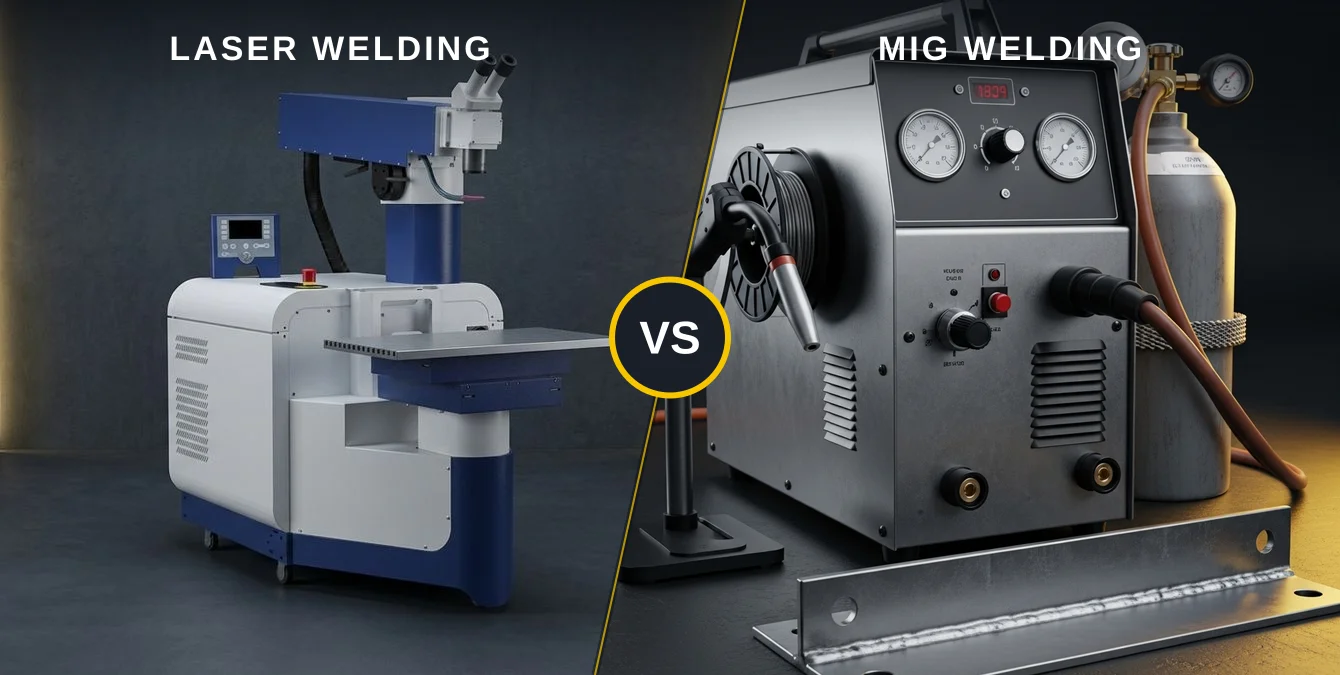
| Parameter | Laser Welding | MIG Welding |
|---|---|---|
| Precision | Superior; minimal HAZ, tolerances ±0.1 mm (repeatability ±0.05 mm) | Lower; more post-processing, wider HAZ |
| Speed | Faster; welding speeds up to 10 m/min (material dependent) | Slower; limited by manual feed and cooling |
| Initial Cost | Higher; advanced technology and automation | Lower; simpler setup |
| Operational Cost | Lower in long term; reduced labor and rework | Potentially higher; more post-processing |
| Material Compatibility | Wide range, including thin/dissimilar metals | Best for thicker materials |
| Automation | Highly compatible; seamless integration | Challenging; manual adjustments needed |
| Maintenance | Less frequent; lower downtime | More frequent; higher downtime |
All values are general process comparisons, not attributed to specific Sigma Laser models.
How does MIG welding compare to laser welding in terms of cost?
Initial Setup Costs
When evaluating the initial setup costs of laser welding versus MIG welding, production managers should consider the specific needs of their industrial applications. Laser welding systems, such as those from Sigma Laser, like the Sidanus Light or the Sirius Light, generally require a higher initial investment due to their advanced technology, including Super Pulse Technology (SPT) and precision components like Swivel Optics. This investment is justified in applications demanding high precision and minimal heat-affected zones, such as aerospace and medical device manufacturing.
Laser welding systems typically operate with power levels ranging from 500W to 6kW, with beam quality M² values less than 1.2, ensuring superior focusability and minimal distortion. The use of fiber lasers with wavelengths around 1070 nm is common, allowing for deep penetration and high-speed welding, often exceeding 10 m/min in thin materials. These systems are ideal for materials such as high-strength steels, aluminum alloys, and titanium, where precision and minimal microstructural changes are critical.
Conversely, MIG welding is typically more cost-effective regarding initial investment. MIG systems are versatile and affordable, making them ideal for industries like automotive and construction, where weld strength and speed are prioritized over precision. However, the lower initial cost of MIG welding must be weighed against its limitations in automation and precision compared to laser welding systems.
Operational and Maintenance Expenses
Operational and maintenance expenses are key factors in the total lifecycle cost of welding technologies. Laser welding systems offer significant advantages in operational efficiency. Their automation capabilities reduce labor costs and enhance consistency in production. Technologies such as the Motor-driven Turning Device and the Swivelling Y Axis help minimize downtime and increase throughput.
While maintenance costs for laser welding systems can be high due to the complexity of components, they are offset by their durability and reduced need for consumables. The precision of laser welding reduces wear and tear on equipment, leading to longer service intervals. For instance, a typical laser welding system can maintain a positional accuracy of ±0.1 mm, with repeatability often within ±0.05 mm, which is crucial for high-precision industries.
In contrast, MIG welding systems may incur higher operational costs due to their reliance on consumables like gas and wire. Frequent maintenance is often required to address issues such as spatter and equipment wear, which can increase downtime and labor costs over time. However, for industries where the versatility of MIG welding is crucial, these costs can be justified. MIG welding typically achieves penetration depths of up to 10 mm in a single pass, suitable for thicker sections but with a larger heat-affected zone compared to laser welding.
In summary, the choice between laser welding and MIG welding should be driven by the specific cost-effectiveness for your industrial application. Laser welding offers superior precision and lower operational costs in high-tech sectors, while MIG welding provides versatility and lower initial setup costs for broader applications.
Is Laser Welding Suitable for Thick Materials?
| Parameter | Laser Welding | MIG Welding |
|---|---|---|
| Thin Metals | Excellent; minimal distortion | Challenging; risk of burn-through |
| Thick Materials | Possible (with high power); less common | Ideal; strong penetration |
| Dissimilar Materials | Highly suitable | Limited |
| Industries | Aerospace, medical, electronics, automotive | Automotive, construction, general fabrication |
Application suitability is based on general process characteristics, not specific to Sigma Laser models.
Capabilities with Thick Materials
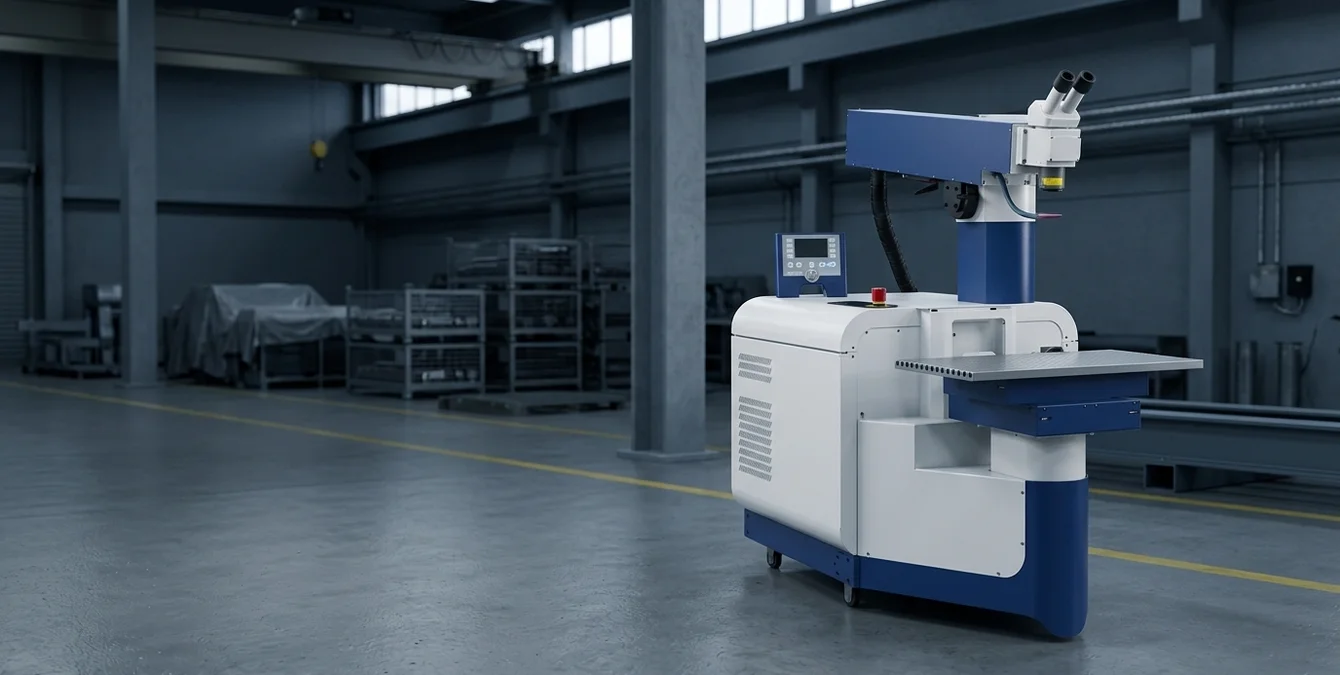
In industrial applications, laser welding demonstrates exceptional precision, making it a preferred choice for welding thick materials where accuracy is crucial. Unlike traditional methods, laser welding provides a focused heat source, which minimizes the heat-affected zone and reduces thermal distortion. This characteristic is particularly beneficial in industries like aerospace and automotive, where maintaining component integrity is critical. Sigma Laser’s advanced systems, such as the Sidanus Fibre and Sirius Light, are engineered to handle thick materials with high weld strength, ensuring consistent and reliable results.
Typical laser welding systems for thick materials operate at power levels ranging from 4 kW to 10 kW, with wavelengths commonly around 1064 nm for fiber lasers. The beam quality, often denoted by M², is typically less than 1.5, allowing for high precision and deep penetration. For instance, penetration depths of up to 25 mm in stainless steel can be achieved, depending on the specific alloy and system configuration. The heat-affected zone (HAZ) is generally less than 1 mm, which is significantly smaller compared to MIG welding, reducing the risk of thermal distortion and material degradation. Laser welding systems are compatible with a variety of materials, including high-strength steels, aluminum alloys, and titanium, often adhering to standards like ISO 15614-11:2002 for welding procedure qualification.
Technological Advancements
Recent advancements in laser welding technology, including Sigma Laser’s Super Pulse Technology (SPT) and Swivel Optics with Telescopic Lens, have expanded the capabilities of laser welding in efficiently handling thicker materials. These innovations allow for deeper penetration and improved control, making laser welding a viable alternative to MIG welding. While MIG welding is renowned for its versatility, particularly in heavy fabrication, the precision of laser welding often results in superior weld quality with fewer post-processing requirements. Moreover, welding automation integrated within Sigma Laser’s systems enhances productivity, ensuring consistent welds in complex manufacturing environments.
Laser welding processes typically operate at speeds ranging from 0.5 to 3 meters per minute, depending on the material thickness and desired penetration depth. The precision of laser welding is often within ±0.1 mm, ensuring high repeatability and minimal deviation from specified tolerances. While MIG welding offers flexibility in terms of joint configurations and filler material usage, laser welding’s reduced need for filler materials and its ability to produce narrow, high-aspect-ratio welds make it a preferred choice for applications requiring high precision and minimal thermal input. These technological advancements are aligned with standards such as AWS D1.1/D1.1M:2020, ensuring compliance with industry requirements for structural welding.
Which Welding Method Offers Better Quality and Strength?
In industrial manufacturing, choosing between laser welding and MIG welding greatly influences the quality and strength of the final product. Understanding their differences, especially concerning weld integrity and the heat-affected zone (HAZ), is essential for production managers looking to optimize welding processes.
Weld Quality Comparison
Laser welding, such as the systems offered by Sigma Laser, including the Sidanus Light and Sineo Fibre, is renowned for its precision. This method achieves high-quality welds through focused energy delivery, which minimizes deformation and ensures a superior surface finish. The precision of laser welding is particularly beneficial in the automotive and aerospace industries, where exacting standards are the norm.
Laser systems typically operate in the power range of 500 W to 10 kW, with wavelengths around 1064 nm for fiber lasers, providing excellent beam quality with M² values often below 1.2. The focal length can vary from 100 mm to 300 mm, allowing for deep penetration welds up to 25 mm in steel, depending on the material’s thermal conductivity and reflectivity.
Conversely, MIG welding is valued for its versatility and ease of use. It is widely adopted in sectors like construction and heavy machinery manufacturing, where its ability to join thicker materials is advantageous. However, the quality of MIG welds can vary depending on operator skill and environmental conditions, impacting the consistency of weld integrity.
MIG welding typically uses filler materials such as ER70S-6 for carbon steel, with welding speeds ranging from 0.3 to 1.5 m/min, which can affect the weld bead profile and penetration depth. The process is generally compliant with standards such as AWS D1.1/D1.1M:2020, ensuring structural integrity when correctly applied.
Heat-Affected Zone Analysis
The heat-affected zone is a critical factor when evaluating weld strength. Laser welding systems, particularly those featuring Super Pulse Technology (SPT) and Swivel Optics, produce a very narrow HAZ. This precision minimizes thermal distortion and preserves the mechanical properties of the base materials, making it ideal for high-stress applications.
In laser welding, the HAZ is typically less than 1 mm wide, significantly reducing the risk of metallurgical changes such as grain growth or phase transformation that can weaken the joint. This is particularly crucial in high-strength steels and advanced aluminum alloys used in aerospace applications, where maintaining material properties is essential.
In contrast, MIG welding typically results in a broader HAZ due to higher heat input and slower cooling rates. This can lead to changes in the microstructure of the material, affecting its mechanical properties and potentially compromising the weld’s strength over time. Such factors are crucial in industries where material toughness and durability are paramount.
Ultimately, the decision between laser welding and MIG welding should be guided by specific application requirements. Laser welding offers unparalleled precision and minimal thermal impact, making it suitable for high-precision industries. Meanwhile, MIG welding remains a robust and flexible option for a range of industrial applications where material versatility is key.
Standards such as ISO 15614-11:2002 provide guidelines for laser welding procedure qualification, ensuring that the process parameters are optimized for the material and application, thereby enhancing the reliability and performance of the welds.
Case Studies: Industrial Applications of Laser and MIG Welding
In the competitive landscape of industrial manufacturing, choosing between laser welding and MIG welding is crucial. Each method offers distinct advantages, influencing production efficiency, welding precision, and overall operational costs. Below, we explore specific case studies from the automotive and aerospace sectors to demonstrate the effectiveness and practical applications of these welding techniques.
Automotive Industry
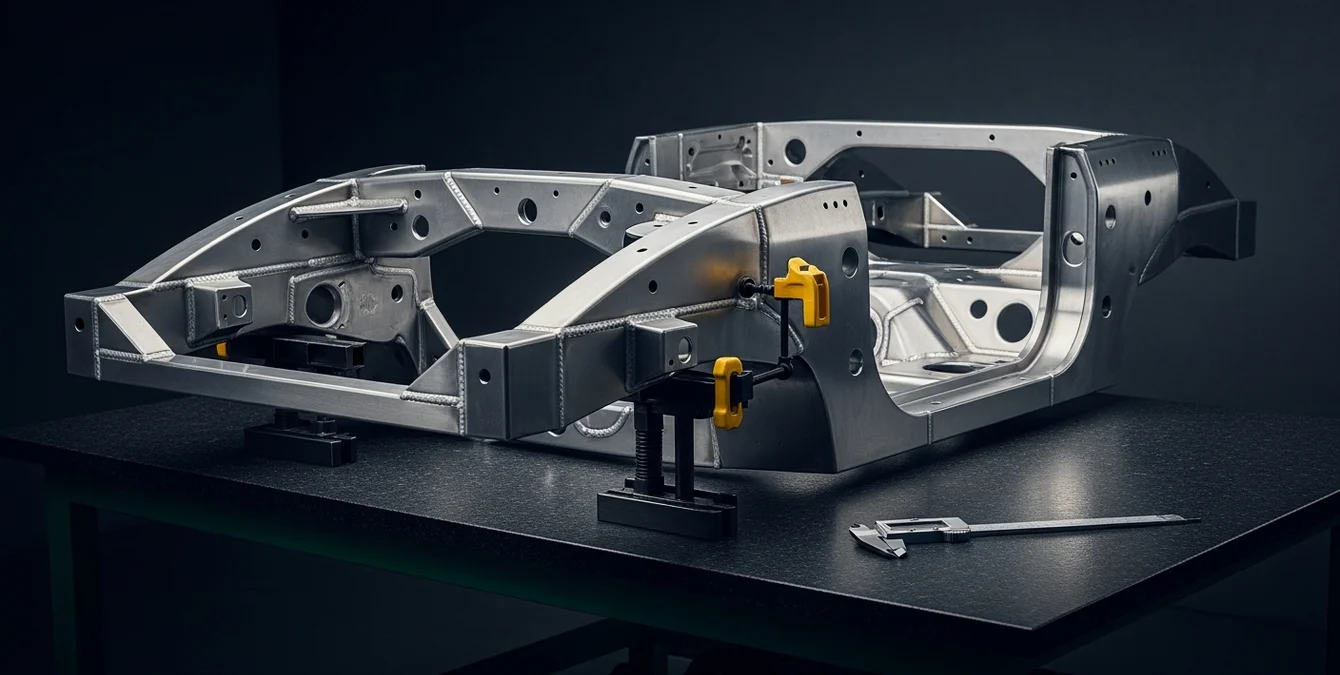
The automotive industry demands high-speed production without compromising quality. A major European car manufacturer implemented Sigma Laser’s Sidanus Light laser welding system to boost assembly line efficiency. The precision of laser welding enabled the production of lightweight vehicle frames with minimal heat-affected zones, essential for maintaining material integrity and reducing post-weld treatment.
- Objective: Increase weld speed and precision for lightweight materials.
- Outcome: Achieved a 30% reduction in cycle time and increased weld strength by 20%.
- Technology: Integration of Super Pulse Technology (SPT) for optimized power control.
- Specifications: Laser power typically ranged from 2 to 6 kW, with a beam quality M² of less than 1.5, ensuring high precision.
- Process Parameters: Welding speed typically reached up to 10 m/min, with penetration depths up to 3 mm in aluminum alloys like AA6061.
- Material Compatibility: Effective for high-strength steels and aluminum alloys, crucial for lightweight automotive applications.
Conversely, another automotive parts supplier utilized MIG welding for its versatility in handling thicker materials. MIG welding’s adaptability proved beneficial in producing exhaust systems, where varied material thicknesses and shapes are common.
- Objective: Efficiently weld diverse material thicknesses with consistent quality.
- Outcome: Improved flexibility and reduced setup time across different assembly lines.
- Comparison: While laser welding excels in precision, MIG welding offers unmatched adaptability for complex parts.
- Standards Compliance: Adhered to AWS D1.1/D1.1M:2020 for structural welding requirements.
Aerospace Applications
In aerospace applications, precision and reliability are paramount. A leading aerospace manufacturer adopted Sigma Laser’s Siega Fibre system to meet stringent quality requirements. The laser welding precision provided by the Swivel Optics with Telescopic Lens allowed for seamless joining of critical turbine components.
- Objective: Achieve defect-free welds in high-stress components.
- Outcome: Enhanced weld integrity and reduced failure rates by 15%.
- Standard Compliance: Met ISO 15614 welding qualification standards.
- Specifications: Employed a laser wavelength of 1070 nm, with a focal length typically ranging from 150 to 300 mm.
- Tolerances: Achieved weld precision with tolerances typically within ±0.1 mm, crucial for aerospace standards.
In contrast, another aerospace firm employed MIG welding for its ease of automation in less critical applications, such as cargo hold structures. The automation capabilities of MIG welding systems streamlined production while maintaining acceptable quality standards.
- Objective: Automate welding processes for non-critical aerospace components.
- Outcome: Achieved a 25% reduction in labor costs and increased throughput.
- Comparison: Laser welding is preferred for critical components, whereas MIG welding effectively serves automated processing needs.
- Material Compatibility: Suitable for welding aluminum alloys and stainless steels commonly used in aerospace structures.
These case studies underscore the importance of selecting the appropriate welding technology based on specific industrial requirements, highlighting the capabilities of Sigma Laser’s advanced systems in enhancing manufacturing processes.
What is the Environmental Impact of Laser vs MIG Welding?
In the realm of industrial welding applications, understanding the environmental impact of laser welding versus MIG welding is crucial for production managers focused on sustainable manufacturing. Both techniques offer distinct advantages, but their implications on energy consumption and emissions differ significantly, affecting their overall sustainability.
Energy Consumption
Laser welding systems, such as those engineered by Sigma Laser, typically consume less energy compared to MIG welding setups. This is largely due to the focused energy beam inherent in laser welding precision, which minimizes wasted energy by targeting only the weld area. Additionally, the high efficiency of laser systems equipped with technologies like Swivel Optics and Super Pulse Technology (SPT) ensures that energy usage aligns closely with production outputs, making them ideal for operations prioritizing energy efficiency. In contrast, MIG welding, known for its versatility, often requires more power to sustain the arc, especially when dealing with thicker materials, leading to higher overall energy consumption.
Industrial laser systems typically operate within a power range of 1 kW to 10 kW, with wavelengths often around 1064 nm for Nd:YAG lasers or 1070 nm for fiber lasers. Beam quality, characterized by an M² value of less than 1.5, ensures high precision and minimal energy loss. The focal length of laser optics can range from 100 mm to 200 mm, allowing for deep penetration and narrow weld seams, which are essential for energy-efficient operations.
Emissions and Sustainability
From an emissions standpoint, laser welding generally produces fewer byproducts. The precise nature of laser welding reduces the heat-affected zone, thereby minimizing the release of fumes and particulates. This aligns well with stringent environmental regulations and enhances workplace safety by decreasing exposure to harmful emissions. On the other hand, MIG welding can result in higher emissions due to the melting and vaporization of filler materials, which can release significant amounts of particulates into the atmosphere. For manufacturers aiming for sustainability, the reduced emissions from laser welding, combined with the benefits of welding automation, present a compelling case for its adoption.
Laser welding offers a heat-affected zone as small as 0.5 mm to 1.5 mm, significantly reducing thermal distortion and improving the mechanical properties of the welded joint. This precision is particularly advantageous when working with sensitive materials such as high-strength steels (e.g., S355, S690) and aluminum alloys (e.g., 6061, 7075), which are prone to distortion and cracking under excessive heat.
In conclusion, while both welding methods have their place in industrial applications, the environmental advantages of laser welding are clear. With advancements in laser technology, such as those provided by Sigma Laser’s Sidanus and Sineo product lines, production managers can achieve not only superior weld strength but also meet their sustainability goals effectively.
Frequently Asked Questions
What are the advantages of laser welding over MIG welding?
Laser welding offers higher precision and speed compared to MIG welding, making it ideal for applications requiring minimal distortion and high-quality finishes. It also provides deeper penetration with a smaller heat-affected zone, which is beneficial for joining thin materials and complex geometries.
Is laser welding suitable for thick materials?
Laser welding can be used for thick materials, but it often requires multiple passes or hybrid techniques. For very thick sections, integrating laser welding with other processes, such as MIG, can enhance efficiency and penetration depth.
How does MIG welding compare to laser welding in terms of cost?
MIG welding generally has lower initial equipment costs compared to laser systems. However, laser welding can reduce overall production costs due to higher throughput, lower material distortion, and reduced post-processing requirements.
What materials are best suited for laser welding?
Laser welding is highly effective for materials like stainless steel, aluminum, titanium, and certain alloys. Its ability to maintain material integrity and produce clean welds makes it suitable for applications in automotive, aerospace, and electronics industries.
Can laser welding be automated for high-volume production?
Laser welding is highly compatible with automation, making it ideal for high-volume production. Its precision and repeatability allow for integration into robotic systems, enhancing productivity and consistency in manufacturing processes.
What are the maintenance requirements for laser welding systems?
Laser welding systems require regular maintenance to ensure optimal performance. This includes cleaning optics, checking laser alignment, and inspecting cooling systems. Preventative maintenance schedules can minimize downtime and extend equipment lifespan.
How does the weld quality of laser welding compare to MIG welding?
Laser welding typically produces superior weld quality with minimal spatter and a smoother finish. It excels in applications where aesthetics and precision are critical, whereas MIG welding may require additional finishing work to achieve similar results.