
- Key Takeaways
- Which laser welding machine manufacturers are there?
- Precision vs. Macro Applications
- Source Technology
- Market Focus
- Manufacturer Types: Corporation, Specialist, Importer
- Corporate Manufacturers
- Specialist Manufacturers
- Importers
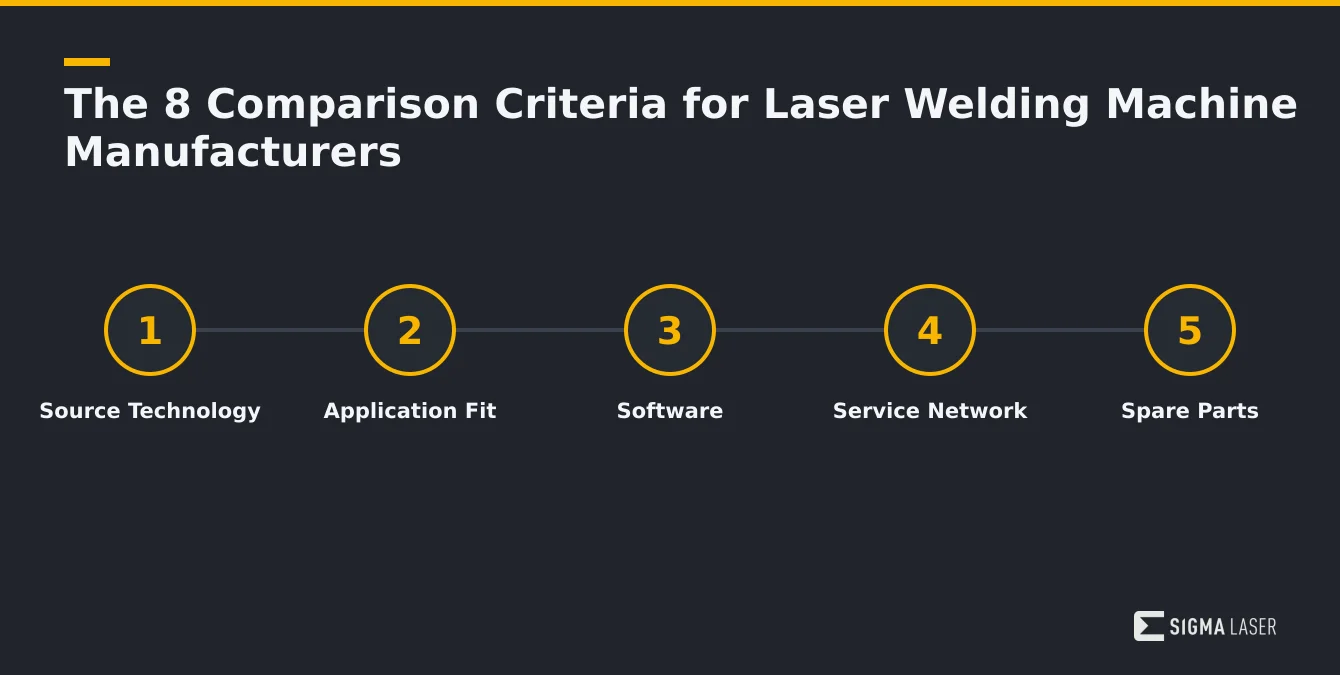
- The 8 Comparison Criteria
- Source Technology
- Axis Concept
- Application Fit
- Software
- Service Network
- Spare Parts
- Training
- References
- What does ‘Made in Germany’ change in practice?
- Engineering Excellence and Precision
- Comprehensive Service and Support
- Access to Advanced Technologies
- Strategic Industrial Advantage
- Machine, System or Workstation — Which Term Means What?
- Machine
- System
- Workstation
- Welder
- How should you shortlist and test?
- Defining Your Requirements Profile
- Conducting Sample Welds
- Experience a Live Demonstration
- Frequently Asked Questions
- What are the leading laser welding machine manufacturers?
- How does laser welding compare to traditional welding methods?
- What are the advantages of in-house laser welding capabilities?
- How does the ROI of laser welding systems compare to traditional welding equipment?
- What distinguishes Sigma Laser’s welding systems in the B2B market?
- What factors should be considered when selecting a laser welding machine?
- Related Articles
- Sources
Quick Answer: Laser welding machine manufacturers, such as Sigma Laser, provide advanced solutions for precision welding applications across various industries. In 2026, buyers should consider factors like machine versatility, automation capabilities, and integration with existing production lines. Sigma Laser specializes in manufacturing 5-axis laser welding systems, offering high precision and adaptability for complex welding tasks. Evaluating energy efficiency, maintenance requirements, and support services are crucial when selecting a manufacturer to ensure optimal performance and return on investment.
Key Takeaways
As procurement and engineering managers evaluate laser welding machines, understanding the landscape of top manufacturers and recent technological advancements becomes crucial. Laser welding offers precision and efficiency, making it a preferred choice in various industrial applications. Here are key takeaways to guide your decision-making process:
- Identify leading laser welding machine manufacturers who specialize in advanced 5-axis systems, ensuring compatibility with complex geometries and materials.
- Consider manufacturers that offer robust support and training programs, enabling your team to maximize the machine’s capabilities and ensure operational safety.
- Evaluate the technological advancements in laser welding, such as real-time monitoring and adaptive control features, to enhance process reliability and quality.
- Assess the total cost of ownership, including maintenance and consumables, to ensure budget alignment and long-term value.
- Research manufacturers with a proven track record in your industry sector, ensuring their solutions meet specific regulatory and performance standards.
- Look for manufacturers who provide flexible financing options, facilitating smoother capital expenditure planning for your organization.
- Ensure the manufacturer offers comprehensive after-sales support, including spare parts availability and technical assistance, to minimize downtime and maintain productivity.
By focusing on these key factors, you can effectively navigate the landscape of laser welding machine manufacturers. The following sections will delve deeper into the specifics of how these elements impact your procurement and engineering strategies.
Which laser welding machine manufacturers are there?
In the realm of industrial welding, selecting laser welding machine manufacturers depends on several critical criteria. These include the type of welding application, the source technology employed, and the specific market focus. Understanding these factors is vital for making informed procurement decisions.
Precision vs. Macro Applications
Manufacturers can be broadly categorized based on their focus on precision welding systems versus macro-scale applications. Precision systems are designed for intricate work requiring fine control and minimal heat input, such as in medical and electronic component manufacturing. In contrast, macro systems cater to large-scale industrial needs, such as automotive and aerospace applications, where high power and robust performance are essential.
In precision applications, laser systems typically operate at sub-kilowatt average power levels, with peak powers reaching several kilowatts to achieve fine welds with minimal heat-affected zones. The ability to maintain tight tolerances is crucial, often requiring repeatability within microns, although specific figures depend on the machine and setup.
Source Technology
The choice between fiber laser welding systems and Nd:YAG laser technology is another significant criterion. Fiber laser systems, known for their high beam quality and efficiency, are preferred in sectors demanding consistent performance and minimal maintenance. Nd:YAG lasers, utilized in Sigma Laser’s Light series, offer flexibility and are ideal for applications requiring precise control over pulse duration and energy delivery.
Fiber lasers, such as those in Sigma’s Fibre series, typically operate at wavelengths around 1070 nm and offer high repetition rates, up to 1000 Hz in models like the Sineo Fibre. These systems are well-suited for applications requiring deep penetration and high-speed welding, often achieving speeds of several meters per minute depending on the material and thickness.
Market Focus
Manufacturers also differentiate themselves based on market focus. Some specialize in automated solutions for high-volume production environments, integrating advanced control systems like Sigma Laser’s Sigomatic Pro. Others may offer modular systems such as the Simass Base Unit, Simass Slide, and Simass Rotate, tailored for industries like automotive and packaging, where flexibility and adaptability are key.
For industries such as aerospace and automotive, compliance with standards like EN ISO 15614 for welding procedure qualification is essential to ensure the integrity and reliability of welds ISO 15614-11. In these sectors, the ability to handle a variety of materials, including high-strength steels like 1.2344 (AISI H13), is often required.
When selecting a laser welding system, it is crucial to evaluate the specific requirements of your application, including material types, production volumes, and precision needs. Leveraging insights from trusted sources and understanding the capabilities of each manufacturer’s offerings can significantly impact the efficiency and quality of your production processes.
Manufacturer Types: Corporation, Specialist, Importer
Corporate Manufacturers
Corporate manufacturers of laser welding machines often provide a broad spectrum of industrial laser welding machines, catering to sectors such as automotive, aerospace, and electronics. Their extensive product lines offer solutions for diverse welding requirements, though they may lack the depth of customization available from more specialized producers. A corporate entity typically excels in providing robust support networks and global service coverage, ensuring availability and maintenance across multiple regions.
Specialist Manufacturers
Specialist manufacturers, such as Sigma Laser, focus on developing niche solutions tailored to specific industry needs. They offer precision-engineered systems like the Sidanus Fibre and Siega Fibre, optimized for high-precision applications requiring minimal heat input and fine 5-axis positioning. With a deep understanding of fiber laser welding systems, these specialists provide highly customized solutions, making them ideal for industries that demand sophisticated engineering capabilities. However, this specialization focus can sometimes limit their geographical service reach compared to larger corporations.
Sigma Laser’s systems are designed to handle a variety of materials, including common steels like 1.2344 (AISI H13) and aluminum alloys, which are frequently used in aerospace and automotive industries. The Sidanus Fibre, for example, offers peak powers up to 6 kW, making it suitable for applications that require both pulsed and continuous wave (CW) operations. The precision of these systems is further enhanced by the use of Leica 10× optics, which ensures minimal deviation and high repeatability.
Compliance with standards such as ISO 15614-11 for the specification and qualification of welding procedures ensures that these systems meet rigorous industrial requirements. This standard is crucial for maintaining consistency and quality in welding operations, particularly in sectors where safety and reliability are paramount.
Importers
Importers act as intermediaries, sourcing industrial laser welding machines from various international manufacturers. They offer a range of products from multiple brands, providing buyers with a wide selection. While importers facilitate access to global technologies, they might not offer the same level of technical support or customization as direct manufacturers. The trade-off here is between convenience and the potential lack of tailored engineering solutions that specialist manufacturers provide. Importers are often utilized when the priority is to quickly access a variety of machine types without the need for in-depth customization.
The 8 Comparison Criteria
Choosing the right laser welding machine manufacturers is crucial for ensuring the efficiency and precision of your industrial processes. The landscape of industrial laser welding machines is diverse, with options catering to various technical requirements and industry standards. Here, we outline key comparison criteria to assist in evaluating and selecting the most suitable supplier for your specific applications.
Source Technology
Axis Concept
Flexibility and precision in positioning are paramount. Sigma Laser’s machines, such as the Sidanus Light and Sineo Fibre, feature advanced 5-axis systems, allowing complex geometries to be welded with minimal repositioning. This capability is especially beneficial in industries like aerospace and automotive, where intricate components demand exacting precision.
Application Fit
Understanding the specific industrial applications is essential. From medical technology to automotive, Sigma Laser’s systems are designed to handle diverse materials and joint configurations, ensuring compatibility with your production requirements. For instance, the ability to weld materials like 1.2344 (AISI H13) and other tool steels is critical in mold and die applications, where durability and precision are key.
Software
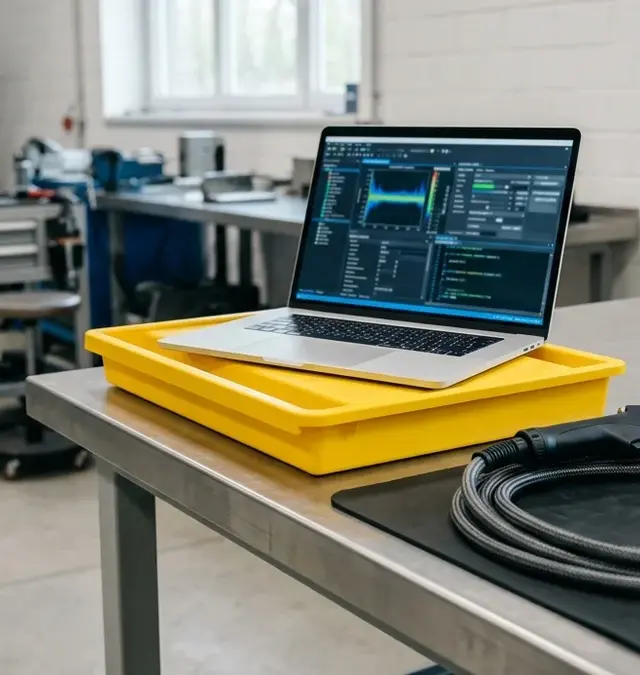
Control software plays a pivotal role in process optimization. Sigma’s Sigomatic Pro system provides intuitive interfaces and advanced programming capabilities, facilitating seamless integration into existing production lines. The software supports complex welding sequences and real-time process monitoring, enhancing productivity and quality control.
Service Network
A robust service network ensures minimal downtime. Sigma Laser supports its clients with a comprehensive service network across Europe, providing timely maintenance and technical support. This network is crucial for industries with high production demands, ensuring that any technical issues are resolved swiftly to maintain operational continuity.
Spare Parts
Availability of spare parts is vital for operational continuity. Sigma Laser’s commitment to a reliable supply chain ensures that replacement parts are readily accessible, minimizing disruption to production schedules. This is particularly important in high-volume manufacturing environments where downtime can significantly impact output.
Training
Proper training enhances operational safety and efficiency. Sigma Laser offers tailored training programs to equip teams with the skills necessary for optimal machine operation and maintenance. These programs are designed to meet the specific needs of different industries, ensuring that personnel are proficient in both the technical and safety aspects of laser welding.
References
Evaluating a manufacturer’s past projects and client feedback can provide insights into their reliability and expertise. Sigma Laser’s extensive portfolio across various sectors demonstrates its capability and trustworthiness. Their projects often showcase the integration of advanced laser technology in challenging applications, underscoring their role as a leader in precision welding solutions.
| Criterion | Details |
|---|---|
| Source Technology | Nd:YAG, Ytterbium Fiber |
| Axis Concept | 5-axis systems |
| Application Fit | Medical, Automotive, Electronics |
| Software | Sigomatic Pro |
| Service Network | European Coverage |
| Spare Parts | Readily Available |
| Training | Custom Programs |
| References | Extensive Portfolio |
For further insights on selecting the right supplier, explore our comprehensive guide on top criteria for choosing a laser welding machine supplier, and delve into specific evaluation criteria detailed in our article on industrial laser welding machine evaluation.
What does ‘Made in Germany’ change in practice?
Engineering Excellence and Precision
Within the realm of laser welding machine manufacturers, the ‘Made in Germany’ label signifies a commitment to engineering excellence and precision. Sigma Laser, with its manufacturing hub in Hanau, exemplifies this standard by integrating thorough in-house development and production processes. This approach ensures that every component of their industrial laser welding machines is crafted with meticulous attention to quality and performance.
German engineering is renowned for its precision, which is crucial in laser welding applications where minimal heat input and small heat-affected zones are desired. This precision is achieved through the use of advanced beam characterization techniques as outlined in ISO 11146, ensuring optimal beam quality and focus for precise welding operations.
Comprehensive Service and Support
The service depth offered by Sigma Laser is a hallmark of its dedication to customer satisfaction. With local engineering teams available for consultation, the company provides technical support tailored to the specific needs of each client. This ensures that Nd:YAG and fiber laser options, such as the Sidanus Light (Nd:YAG) and Sineo Fibre (fiber laser), are optimized for diverse industrial applications.
Sigma’s support extends to ensuring compliance with international standards such as EN ISO 15614, which specifies the qualification of welding procedures for metallic materials, ensuring that each system is tailored to meet the rigorous demands of industries like aerospace and automotive.
Access to Advanced Technologies
Sigma Laser’s commitment to ‘Made in Germany’ is also reflected in the advanced technologies incorporated into their systems. Features like the Swivel Optics with Telescopic Lens and the Motor-driven Turning Device are designed to enhance the precision and versatility of automated laser welding processes. By leveraging these innovations, businesses can achieve superior welding results across sectors such as automotive, aerospace, and electronics.
The integration of such advanced technologies allows for welding of a wide range of materials, including high-strength steels such as 1.2344 (AISI H13) and various aluminum alloys, which are commonly used in high-performance applications.
Strategic Industrial Advantage
Choosing a German-manufactured laser system provides strategic advantages, including access to robust engineering support and cutting-edge technology. For further insights into the benefits of selecting German laser welding systems, explore our detailed article on German laser manufacturers in the industrial sector. Here, procurement and engineering managers can discover how Sigma Laser’s offerings stand out in the competitive landscape of industrial laser welding machines.
Machine, System or Workstation — Which Term Means What?
Machine
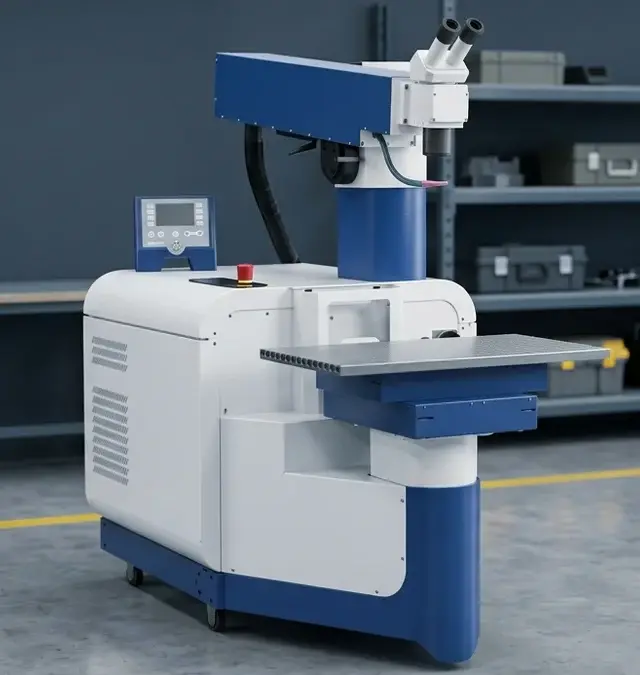
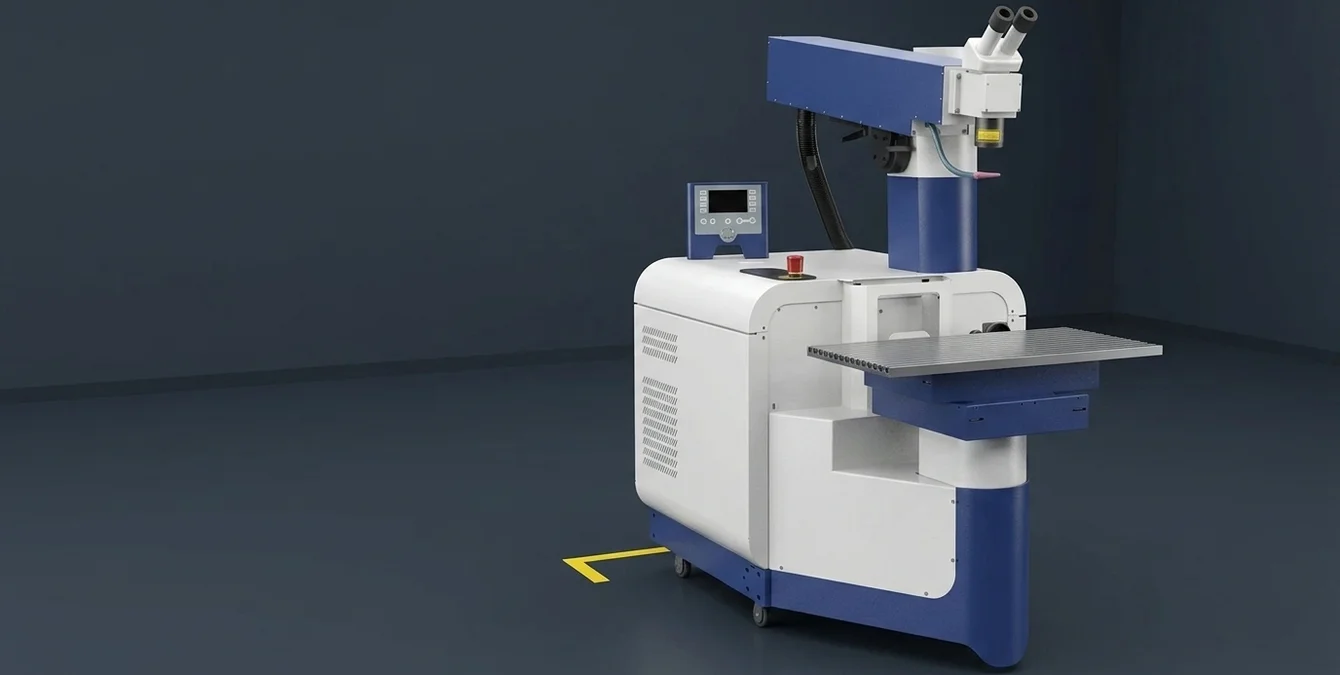
In the context of laser welding machine manufacturers, a “machine” typically refers to a standalone unit designed to perform specific tasks such as welding, cutting, or engraving. These machines are engineered to deliver precision and efficiency, often featuring advanced technologies like Nd:YAG or fiber laser systems. Sigma Laser’s range of mobile and stationary laser welding machines exemplifies this, with systems designed for industrial applications that require high precision and repeatability.
For instance, the Sidanus Light, a stationary Nd:YAG laser machine, offers peak powers ranging from 6 to 13 kW, suitable for applications requiring fine control over heat input and minimal distortion. The industry-standard practice for precision laser welding involves maintaining a small heat-affected zone (HAZ), typically less than 1 mm, to ensure structural integrity and aesthetic quality of the welds.
System
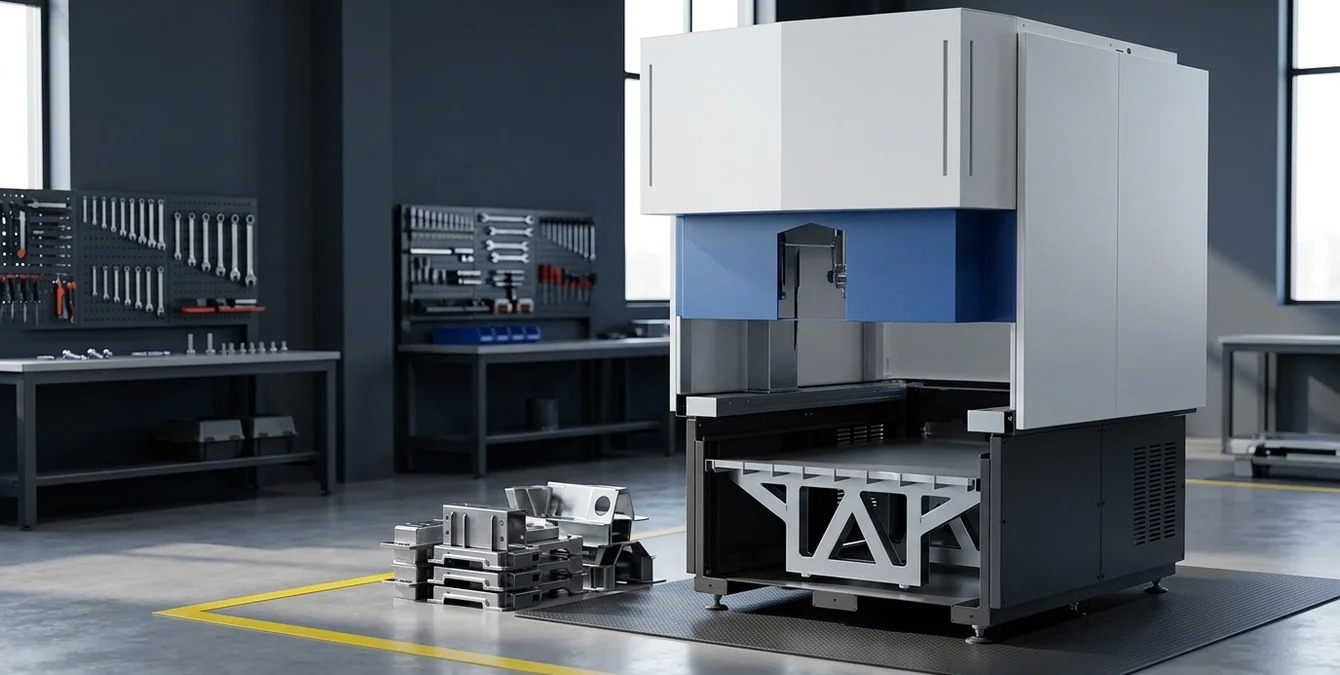
A “system” encompasses a broader scope, often integrating multiple machines and components to achieve a comprehensive manufacturing solution. In industrial laser welding, systems like Sigma Laser’s Simass Base Unit or Simass Rotate provide flexible automation capabilities for high-volume production environments. These systems are ideal for sectors such as automotive and aerospace, where consistent, high-quality welds are critical.
Such systems are designed to comply with rigorous standards, ensuring that welding procedures meet the specifications outlined in standards like ISO 15614-11, which governs the qualification of welding procedures for metallic materials. This ensures that the welds produced are both reliable and repeatable, a necessity in high-stakes industries.
Workstation
A “workstation” typically refers to a designated area within a manufacturing environment where specific tasks are performed. This can include a single machine or a combination of equipment configured to facilitate a particular process. In the realm of fiber laser welding systems, a workstation may integrate Sigma Laser’s stationary models like the Siega Fibre, optimized for tasks that demand minimal heat input and precise control over the welding process.
The Siega Fibre, equipped with Super Pulse Technology, allows for enhanced control over pulse shaping, which is crucial for welding thin materials or delicate components where excessive heat could lead to warping or other defects. This capability is particularly valuable when working with sensitive alloys or thin-gauge materials.
Welder
The term “welder” often describes the entire apparatus that conducts the welding process, including the machine, power source, and control systems. In the industrial context, welding machines like the Sidanus Light use advanced control systems, such as the Sigomatic Pro, to ensure high-quality welds across various materials, including 1.2344 (AISI H13) steel. This holistic approach ensures that each welding task meets stringent industry standards, such as EN ISO 4063 and EN ISO 15614-11.
In addition to meeting these standards, the integration of precise control systems allows for the execution of complex welding patterns and the ability to handle a variety of materials, from common steels to advanced aerospace alloys, ensuring versatility and adaptability in diverse manufacturing settings.
How should you shortlist and test?
Defining Your Requirements Profile
When selecting from the array of laser welding machine manufacturers, it is essential to establish a detailed requirements profile. This involves a comprehensive assessment of your production needs, including material types, weld geometry, and throughput requirements. Consider the specific capabilities of industrial laser welding machines, such as the precision and speed of fiber laser welding systems. Specifications like the machine’s axis configuration, including the 5-axis capability of Sigma Laser’s mobile and stationary units, should align with your operational demands.
In the context of industrial laser welding, typical power levels for precision applications range from a few hundred watts to around 1 kW, with wavelengths commonly around 1064 nm for Nd:YAG lasers and 1070 nm for fibre lasers. The heat-affected zone (HAZ) is minimized in these systems, ensuring high-quality welds with minimal thermal distortion.
For material compatibility, Sigma Laser machines are adept at welding a variety of metals, including stainless steels, aluminum alloys, and special alloys like 1.2344 (AISI H13), which is crucial for applications requiring high wear resistance and thermal stability.
Conducting Sample Welds
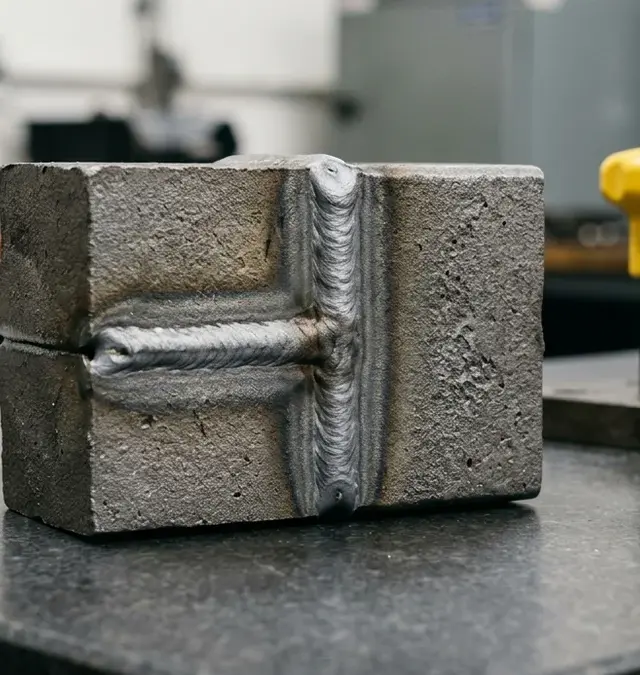
Once you have a clear requirements profile, the next step is to conduct sample welds. This practical approach allows you to verify the machine’s performance with your specific materials and weld types. Sigma Laser’s machines, like the Sineo Fibre with its high-frequency operation up to 1000 Hz, are engineered to deliver consistent quality across demanding applications. Performing sample welds on similar setups can help ensure that the chosen system will meet your production standards.
Sample welds should be evaluated against standards such as ISO 15614-11, which specifies the qualification of welding procedures for metallic materials, ensuring that the process meets stringent quality requirements.
Experience a Live Demonstration
Before making a final decision, witnessing a live demonstration can provide invaluable insights into the machine’s operation. Observing Sigma Laser’s systems in action allows you to evaluate the ease of use, interface functionality, and integration with existing processes. Features like the Swivel Optics with Telescopic Lens enhance flexibility and precision, which can be crucial for complex industrial applications.
To gain firsthand experience and discuss your specific needs, schedule a live demo with Sigma Laser. This opportunity will enable you to see the practical benefits of their advanced laser welding systems and make an informed purchasing decision. Visit our applications page to learn more about how these solutions can be tailored to your industry requirements.
Frequently Asked Questions
What are the leading laser welding machine manufacturers?
Leading manufacturers in the laser welding industry include Sigma Laser, known for its advanced Nd:YAG and ytterbium fibre laser systems. Other notable companies include Trumpf and IPG Photonics, which also specialize in high-precision laser technology. Each offers unique capabilities suited to various industrial applications.
How does laser welding compare to traditional welding methods?
Laser welding provides higher precision and speed compared to traditional methods like MIG or TIG welding. It offers minimal thermal distortion, making it ideal for applications requiring tight tolerances. Additionally, laser welding can join dissimilar materials, offering flexibility in manufacturing processes.
What are the advantages of in-house laser welding capabilities?
In-house laser welding reduces lead times and enhances production flexibility. It allows for immediate quality control and process adjustments, leading to improved product consistency. Investing in laser welding technology can also lead to long-term cost savings by eliminating outsourcing expenses.
How does the ROI of laser welding systems compare to traditional welding equipment?
Although the initial investment in laser welding systems can be higher, the ROI is often favorable due to reduced labor costs, increased production speed, and lower material waste. The precision and versatility of laser welding can lead to enhanced product quality and competitive advantages in the market.
What distinguishes Sigma Laser’s welding systems in the B2B market?
Sigma Laser systems feature 5-axis CNC kinematics for precise, repeatable seams on complex parts and offer unlimited workpiece size and weight—ideal for large or immobile components. All machines utilize Super Pulse Technology (SPT) for low-distortion, high-quality welds, and are developed and built in Hanau, Germany for consistent quality.
What factors should be considered when selecting a laser welding machine?
Consider the material types, thickness, and joint configurations when selecting a laser welding machine. Evaluate the power requirements, beam quality, and integration capabilities with existing systems. Also, assess the machine’s footprint and how it fits within your production environment.
Sources
- ISO 15614-11:2002 – Specification and qualification of welding procedures for metallic materials — This standard specifies the requirements for the qualification of welding procedures for laser welding of metallic materials.
- EN ISO 4063:2009 – Welding and allied processes – Nomenclature of processes and reference numbers — This standard provides a nomenclature for welding and allied processes, including laser welding.
- IEC 60825-1:2014 – Safety of laser products – Part 1: Equipment classification and requirements — This standard outlines safety requirements for laser products, relevant to laser welding machines.
- Fraunhofer Institute for Laser Technology ILT — Fraunhofer ILT conducts research and development in laser technology, including laser welding.
- NIST – Laser Welding Research — The National Institute of Standards and Technology conducts research on laser welding, providing valuable insights and data.
- Journal of Laser Applications — A peer-reviewed journal covering research and development in laser applications, including laser welding.
- Journal of Manufacturing Processes — This journal publishes research on manufacturing processes, including innovations in laser welding technology.