
- How quickly a laser welding machine gets back into production
- Why diagnosis comes before any repair decision
- Why most repairs are module exchanges, not machine returns
- What decides whether a component is exchanged or repaired
- Reducing downtime before it happens
- Frequently Asked Questions
- How fast can Sigma diagnose and address a laser welding machine fault?
- Do I need to return the entire machine for most repairs?
- What role does preventive maintenance play in reducing downtime?
- How does remote diagnosis work on Sigma machines?
- Related Articles
Quick Answer: A Sigma laser welding machine typically returns to production quickly after a fault: if contacted before 2:00 p.m., remote diagnosis is usually performed the same day, with corrective actions initiated no later than the next working day. Most repairs involve on-site module exchanges, minimizing downtime and transport effort.
| Step | Description |
|---|---|
| Customer contacts Sigma (before 2:00 p.m.) | Initial remote diagnosis typically performed the same day |
| Remote diagnosis completed | Corrective actions initiated no later than the next working day |
| Fault identified | Most issues resolved by on-site module/component exchange |
| Complex/non-standard fault | Rarely, complete machine return to Sigma is required |
This process is designed to minimize downtime and avoid unnecessary machine transport.
How quickly a laser welding machine gets back into production
Minimizing downtime is critical for any production environment. When a Sigma laser welding machine experiences a fault, the process to return it to operation is designed for speed and efficiency. If the customer contacts Sigma before 2:00 p.m., an initial remote diagnosis is typically performed the same day. This rapid response ensures that the problem is assessed without unnecessary delay, reducing the time the machine is out of service.
Once the remote diagnosis is complete, corrective measures are initiated no later than the following working day. This approach means that, in most cases, the path to resolution starts within 24 hours of the initial contact. Depending on the nature of the issue, many problems can be resolved remotely or by replacing a specific component, further accelerating the return to production.
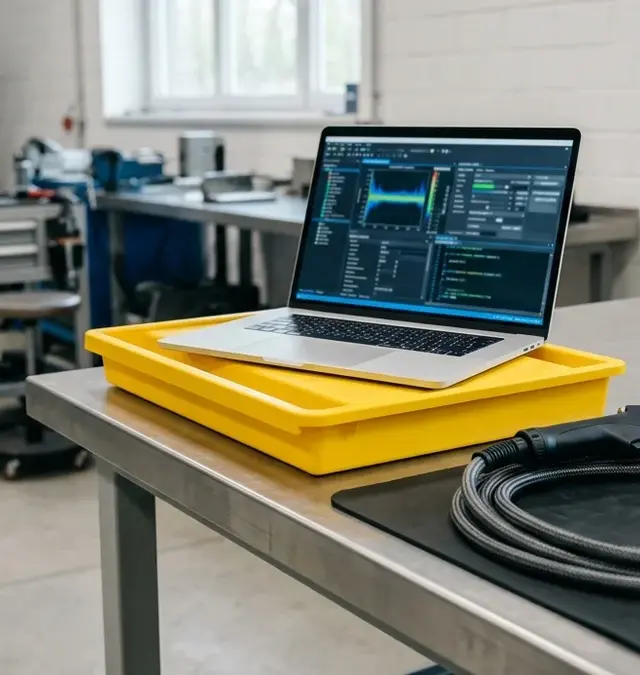
This fast turnaround is made possible by the machine’s integrated USB interface, which allows for remote connection and analysis by Sigma technicians. Supplementary photos or videos provided by the customer can also assist in identifying mechanical or visible faults. This combination of remote diagnostics and clear communication significantly reduces unnecessary site visits and production interruptions.
For maintenance managers and production engineers, this means that unplanned downtime can often be contained to a minimum, supporting reliable production schedules and reducing the risk of extended outages. The system is structured to prioritize rapid fault identification and resolution, ensuring that production can resume as quickly as possible after a disruption.
Why diagnosis comes before any repair decision
Effective repair processes start with a clear, accurate diagnosis. For Sigma laser welding machines, every corrective action is guided by a thorough assessment of the fault. This diagnostic-first approach ensures that the real cause of the issue is identified before any repair or part replacement is attempted. It avoids the risk of unnecessary interventions, which can waste time, increase costs, and potentially introduce new problems.
Remote diagnostics, enabled by the machine’s USB interface and supported by customer-supplied photos or videos, allow Sigma technicians to analyze the machine’s status from a distance. This method provides a detailed understanding of the fault, whether it is electronic, mechanical, or operational. By pinpointing the source of the problem, the technician can recommend the most effective and efficient corrective measure.
For maintenance teams, this means that troubleshooting is not a matter of trial and error. Instead, actions are targeted and justified by evidence, reducing the risk of misdiagnosis and repeated downtime. The process also streamlines communication between the customer and Sigma, as both parties are working from a shared, fact-based understanding of the fault.
In practice, this approach leads to faster, more reliable repairs and helps ensure that the root cause is addressed, not just the symptoms. It also supports better planning for future maintenance and repair needs by building a clear record of machine performance and service history.
Why most repairs are module exchanges, not machine returns
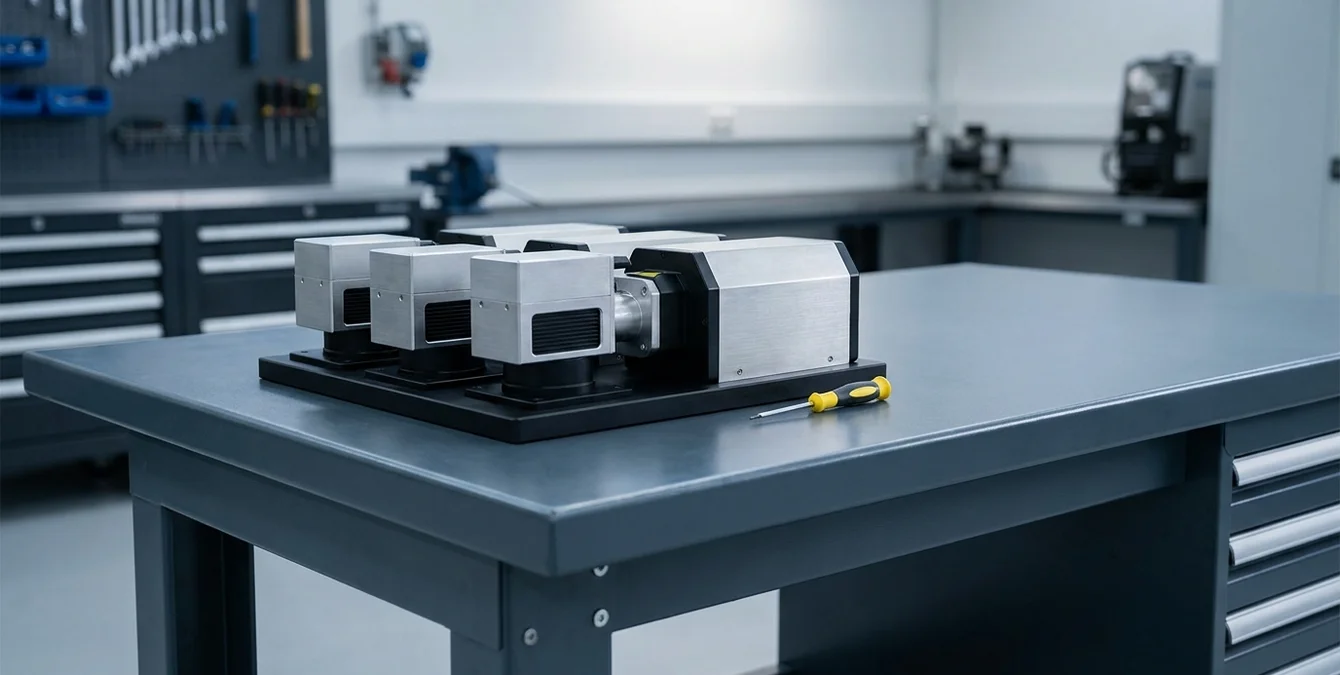
Sigma laser welding systems are engineered with modularity in mind. This design philosophy allows most hardware issues to be resolved by replacing individual components or modules directly at the customer’s site, rather than returning the entire machine to the manufacturer. This approach offers several operational advantages, especially in environments where production uptime is critical.
When a fault is identified, the remote diagnostic process usually isolates the affected module. The replacement part can then be shipped to the customer, or brought by a service technician, and exchanged on-site. This minimizes both the logistical effort and the time the machine is unavailable. Only in rare cases—such as when a complex or non-standard fault is detected—does it become necessary to return the complete system to Sigma for more extensive service.
For maintenance managers, this means planning for downtime can focus on the time required for a module swap, rather than the much longer lead times associated with shipping and returning an entire machine. It also reduces the risk of transport damage and the administrative burden of decommissioning and reinstalling large equipment.
This modular service model supports a leaner spare parts strategy and faster recovery from unexpected faults. It is a key reason why Sigma machines are well-suited for demanding production environments where every hour of downtime matters.
| Decision Factor | Typical Outcome |
|---|---|
| Diagnosis identifies standard module/component fault | Replacement (exchange) is preferred for speed and reliability |
| Diagnosis identifies minor or easily accessible fault | On-site repair may be possible if quick and to standard |
| Complex or non-standard fault | Machine return to Sigma (rare) |
All repair decisions are guided by technical assessment after remote or on-site diagnosis.
What decides whether a component is exchanged or repaired
The decision to exchange or repair a component in a Sigma laser welding machine is driven by the initial diagnosis. Once the fault is identified—often remotely—the technician determines whether the affected part can be repaired on-site or if a direct replacement is more practical. This assessment considers the nature of the fault, the component’s role in the system, and the feasibility of repair versus exchange.
For most standard modules and components, replacement is the preferred solution, as it is typically faster and more reliable. The process is streamlined: after diagnosis, the required part is dispatched or installed, and the machine is brought back online with minimal disruption. In some cases, especially with less critical or easily accessible parts, a repair may be possible if it can be performed quickly and to the required standard.
Maintenance teams should be prepared to support this process by providing clear information and, where possible, assisting with basic component exchanges under Sigma’s guidance. However, the lead time for replacement parts or repairs is not published and will depend on the specific situation and component involved. Planning should therefore focus on maintaining clear communication channels and ensuring that the diagnostic process is initiated promptly whenever a fault occurs.
This approach ensures that every repair decision is justified by a technical assessment, not by guesswork or routine. It helps maintain machine reliability and minimizes unnecessary downtime.
| Action | Purpose |
|---|---|
| Regular inspection and servicing | Identify wear, contamination, or developing issues early |
| Operator training | Enable early fault detection and prompt diagnostics |
| Document welding parameters and repair history | Support faster troubleshooting and reference for service |
| Preventive maintenance schedule (every 1,000 hours or 2 years) | Reduce likelihood of unplanned outages and maintain quality |
Following Sigma’s preventive maintenance schedule helps minimize unexpected downtime.
Reducing downtime before it happens
While rapid response and modular repairs are essential for minimizing downtime, the most effective strategy is to prevent faults from occurring in the first place. Preventive maintenance is a proven best practice in laser welding operations. Regular inspection and servicing of key components help identify wear, contamination, or developing issues before they result in unexpected failures.
Trained operators play a crucial role in early fault detection. By understanding the machine’s normal operation and recognizing early warning signs, they can initiate diagnostics or maintenance before minor issues escalate. Documenting welding parameters and repair histories also supports faster troubleshooting in the event of a fault, as it provides a clear reference for both operators and service technicians.
Implementing a structured preventive maintenance schedule—such as the Sigma recommendation of every 1,000 operating hours or at least every two years—ensures that critical systems are checked and serviced at appropriate intervals. This reduces the likelihood of unplanned outages and helps maintain consistent production quality.
For production engineers and maintenance managers, investing in operator training and robust maintenance processes pays off in fewer disruptions, more predictable production schedules, and a longer service life for the laser welding machine.
Frequently Asked Questions
How fast can Sigma diagnose and address a laser welding machine fault?
If contacted before 2:00 p.m., Sigma typically performs remote diagnosis the same day. Corrective actions are initiated no later than the following working day, minimizing production downtime.
Do I need to return the entire machine for most repairs?
No. Most hardware issues are resolved by replacing individual components or modules directly at your site. Returning the complete machine to Sigma is only necessary in rare cases.
What role does preventive maintenance play in reducing downtime?
Preventive maintenance helps identify and address wear or developing faults before they cause unexpected failures. Regular checks and servicing keep the machine reliable and reduce unplanned downtime.
How does remote diagnosis work on Sigma machines?
The machine connects to your PC via USB, which then links to Sigma for remote analysis. Technicians can often identify faults remotely, and photos or videos from the customer can further support diagnosis.