
- Key Takeaways
- What defines the German industrial laser landscape?
- Segment-Specific Expertise
- Advanced Technologies and Applications
- Quality and Compliance
- Conclusion
- Which laser technology segments exist?
- Laser Welding
- Laser Cutting
- Laser Marking
- Laser Sources
- Systems Integration
- What should international buyers check on a German supplier?
- Export Support and Compliance
- Service and Support Abroad
- Documentation Languages
- References and Case Studies
- Sigma Laser: the laser-welding specialist from Hanau
- Innovative Laser Welding Solutions
- Automation and Advanced Features
- Recognition and Standards
- Engineering Excellence in Laser Technology
- How do you compare manufacturers across segments?
- Establishing Evaluation Criteria
- Technological Capabilities
- Application-Specific Considerations
- Certifications and Compliance
- Conclusion
- Frequently Asked Questions
- Who are the top laser manufacturers in Germany?
- What industries use German laser technology?
- What types of lasers are commonly manufactured in Germany?
- Why choose German laser systems for industrial applications?
- What factors should be considered when investing in a German laser system?
- How does German laser technology contribute to sustainability in manufacturing?
- Welche Vorteile bieten Sigma Laser Systeme für industrielle Schweißanwendungen?
- Related Articles
- Sources
Quick Answer: German laser manufacturers, including Sigma Laser, are renowned for producing advanced industrial laser welding machines. Sigma specializes in 5-axis laser systems, offering precision and versatility for complex welding tasks across various industries. These manufacturers emphasize high-quality engineering, innovative technology, and robust machine design, catering to international clients seeking reliable and efficient laser solutions. Germany’s reputation in industrial laser technology is backed by rigorous standards and a focus on cutting-edge developments, making it a leading choice for businesses investing in laser machinery.
Key Takeaways
Germany is a recognized leader in the laser manufacturing industry, renowned for its precision engineering and innovative technologies. As international buyers explore options among German laser manufacturers, understanding the key differentiators and applications of these advanced systems is crucial for informed decision-making.
- German laser manufacturers are at the forefront of technological innovation, offering state-of-the-art laser welding machines that integrate advanced features such as 5-axis mobility and extensive automation capabilities.
- Applications of German laser technology span across industries including automotive, aerospace, and medical device manufacturing, allowing for high-precision welding and cutting with minimal thermal distortion.
- Germany’s commitment to quality and precision engineering ensures that laser systems from this region deliver consistent performance, reliability, and longevity in demanding industrial environments.
- Innovative developments in German laser manufacturing include integration with Industry 4.0 principles, enabling real-time data monitoring, predictive maintenance, and enhanced operational efficiency.
- Leading German laser manufacturers are continuously investing in research and development to push the boundaries of laser technology, ensuring their systems meet the evolving needs of global industries.
- Buyers can expect comprehensive support and training from German manufacturers, facilitating seamless integration of laser systems into existing operations and maximizing the return on investment.
- Environmental sustainability is a growing focus, with German manufacturers developing energy-efficient laser systems that align with global sustainability goals.
As the article delves deeper into the landscape of German laser manufacturing, it provides valuable insights into the specific capabilities and innovations that set these manufacturers apart. Understanding these elements is key for buyers aiming to leverage advanced laser technology for competitive advantage.
What defines the German industrial laser landscape?
Germany is renowned for its robust industrial laser landscape, characterized by a strong Mittelstand specialization. This specialization spans various applications such as welding, cutting, and marking, as well as diverse laser sources. Buyers in this market navigate by segment rather than size, focusing on specific industrial needs.
Segment-Specific Expertise
The strength of German laser manufacturers lies in their ability to offer segment-specific expertise. Companies like Sigma Laser are known for their precision laser welding systems, which cater to industries such as automotive, aerospace, and medical technology. This specialization ensures that each solution is tailored to meet the stringent demands of high-precision applications. For instance, the Sidanus Light delivers peak powers up to 13 kW, ideal for applications requiring minimal heat input and a small heat-affected zone.
Advanced Technologies and Applications
German manufacturers excel in integrating advanced laser technologies. For instance, Sigma Laser’s Super Pulse Technology (SPT) is available across all six Sigma welding machines, offering high peak power for demanding tasks. The industrial laser technology in Germany is further enhanced by features such as the Swivel Optics with Telescopic Lens, ensuring precise and versatile applications. Typically, industrial laser systems operate at wavelengths around 1064 nm for Nd:YAG lasers and 1070 nm for fibre lasers, providing excellent material compatibility with steels like 1.2344 (AISI H13) and various aluminum alloys.
Quality and Compliance
This commitment to quality and safety ensures reliable performance and compliance with global industrial requirements. The focus on standards helps secure trust among international buyers evaluating German suppliers.
Conclusion
In summary, the German industrial laser landscape is defined by its specialization in segment-specific applications, advanced technological integration, and a steadfast commitment to quality and compliance. These factors make Germany a formidable player in the global laser manufacturing arena. The ability to meet diverse industrial needs with precision and reliability underscores the strength of German laser manufacturers.
Which laser technology segments exist?
In the landscape of German laser manufacturers, several laser technology segments serve distinct industrial purposes. Each segment is tailored to specific applications, providing efficiency and precision across various manufacturing disciplines. Understanding these segments aids in selecting the appropriate technology for industrial needs.
Laser Welding
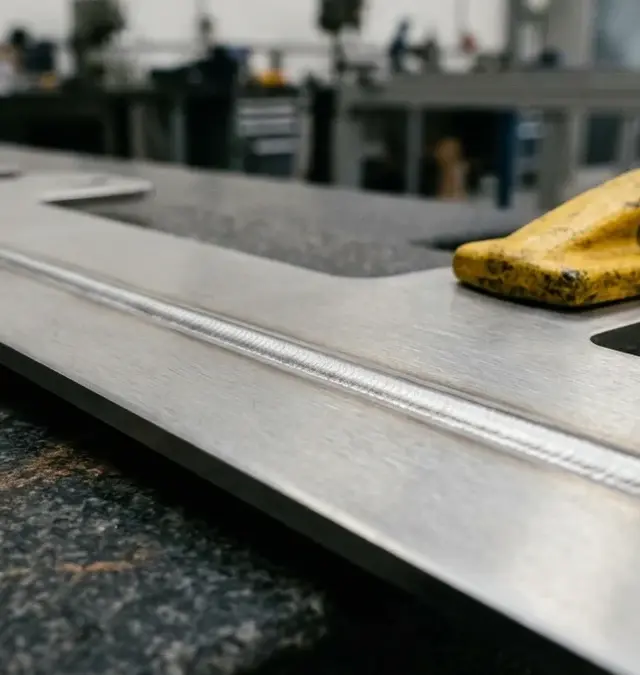
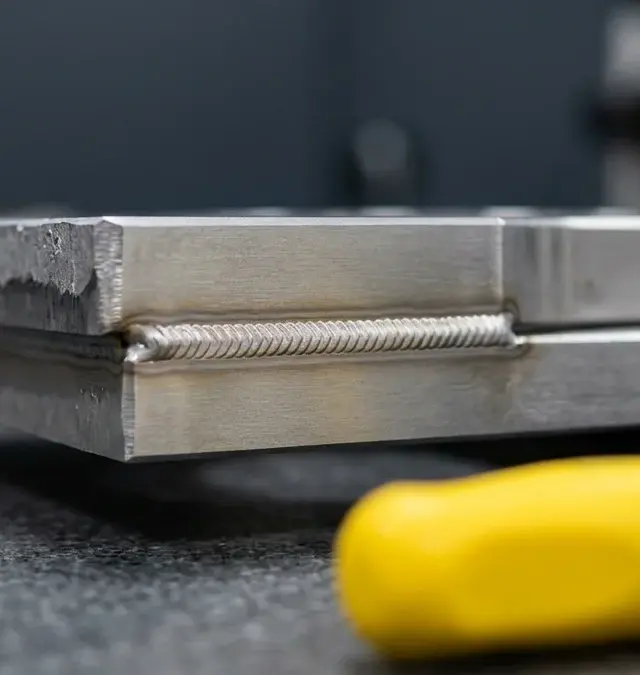
Laser welding is a critical segment for precision applications, offering minimal heat input and small heat-affected zones. This makes it ideal for high-stakes industries such as aerospace and medical device manufacturing. Sigma Laser specializes in this technology, delivering advanced systems like the Sidanus Light and Siega Fibre for superior welding precision. These systems are engineered to handle challenging materials such as 1.2344 (AISI H13) tool steel, which is commonly used in die and mold applications due to its high toughness and wear resistance.
Typical laser welding parameters include power levels ranging from a few hundred watts to several kilowatts, with welding speeds that can reach several meters per minute, depending on the material and thickness. The heat-affected zone is generally kept to a minimum, often less than 1 mm in precision applications, ensuring minimal distortion and high-quality joints.
| Parameter | Typical Value / Range |
|---|---|
| Power Level | Hundreds of watts to several kilowatts |
| Cutting Speed | Up to >10 m/min (material-dependent) |
General values for industrial laser cutting; not attributed to a specific Sigma Laser system.
Laser Cutting
Laser cutting is widely used for its accuracy and clean edges, essential in sectors like automotive and electronics. It facilitates the efficient processing of metal sheets and complex geometries, offering an optimal solution for high-volume production lines. Common cutting parameters include power levels from hundreds of watts to several kilowatts and cutting speeds that can exceed 10 m/min, depending on the material thickness and type.
Laser Marking
This segment is pivotal for traceability and branding, providing permanent marks on various materials. Industries such as pharmaceuticals and consumer goods rely on laser marking for product identification and compliance with regulatory standards. Laser marking systems typically operate at wavelengths around 1064 nm for Nd:YAG lasers, providing high precision and speed.
Laser Sources
Different laser sources like fiber lasers and ytterbium fiber lasers are employed based on material compatibility and required processing speeds. Ytterbium fiber lasers, for instance, are preferred for their high efficiency and reliability in industrial applications. These lasers offer excellent beam quality and are capable of both continuous wave (CW) and pulsed operations, making them versatile for various tasks.
Systems Integration
Systems integration involves the seamless incorporation of laser technology into existing production workflows. This segment ensures that laser systems, such as the Simass Base Unit, are optimally configured to meet specific manufacturing requirements, enhancing productivity and reducing downtime. The integration process often involves compliance with standards such as ISO 11145, which defines the vocabulary and symbols for laser-related equipment, ensuring consistent communication and understanding across industry stakeholders.
By evaluating these segments, buyers can better navigate the array of laser technologies offered by industrial laser technology Germany and select solutions that align with their operational goals.

What should international buyers check on a German supplier?
When evaluating German laser manufacturers, international buyers must consider several critical factors to ensure that the supplier aligns with their operational needs and compliance standards. Germany is renowned for its precision engineering and high-quality industrial laser technology, making it a key player in global manufacturing sectors. Here’s a structured checklist to guide the decision-making process:
Export Support and Compliance
- Customs and Export Documentation: Verify that the supplier provides all necessary documentation to facilitate smooth customs clearance, ensuring compliance with international trade regulations.
Service and Support Abroad
- Technical Support: Assess the availability of technical support in your region, including remote diagnostics and on-site service. The capability to provide rapid response times is crucial to minimize operational disruptions.
- Spare Parts Availability: Confirm that spare parts are readily available to minimize downtime. This is especially important for high-precision systems like the Sidanus Fibre, which require consistent maintenance to ensure optimal performance.
Documentation Languages
- Language Availability: Check that user manuals, service guides, and software interfaces are available in the required languages. This ensures that operators can effectively understand and utilize the equipment.
- Translation Accuracy: Ensure technical documentation is translated accurately to prevent operational misunderstandings, which could lead to inefficiencies or equipment damage.
References and Case Studies
- Proven Track Record: Request references from existing clients to gauge the supplier’s reputation and reliability in delivering high-quality laser systems. This includes systems like the Sineo Light, known for its mobility and precision.
- Case Studies: Review case studies that highlight the supplier’s expertise in industries such as automotive, aerospace, and electronics. These sectors often demand precision welding with minimal heat-affected zones, a characteristic feature of Sigma’s fibre laser systems.
By following this checklist, you can effectively assess potential suppliers and select a partner that meets your industrial laser requirements, ensuring successful integration into your manufacturing processes. Typical laser welding systems operate at wavelengths around 1064 nm for Nd:YAG lasers and 1070 nm for fibre lasers, with power levels commonly ranging from a few hundred watts up to 1 kW for precision applications. The heat-affected zone is typically minimized to ensure high-quality welds, which is critical in sectors like medical technology and electronics. Understanding these industry standards will help in evaluating the technical capabilities of the supplier’s offerings.
Sigma Laser: the laser-welding specialist from Hanau
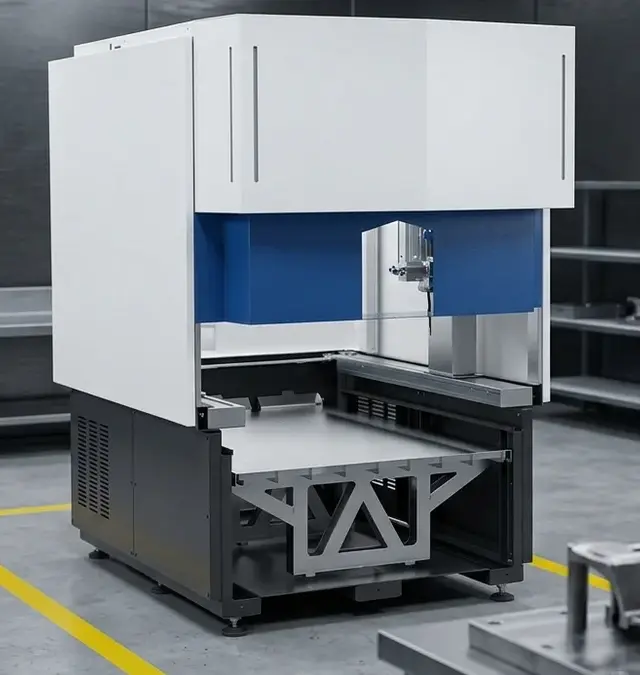
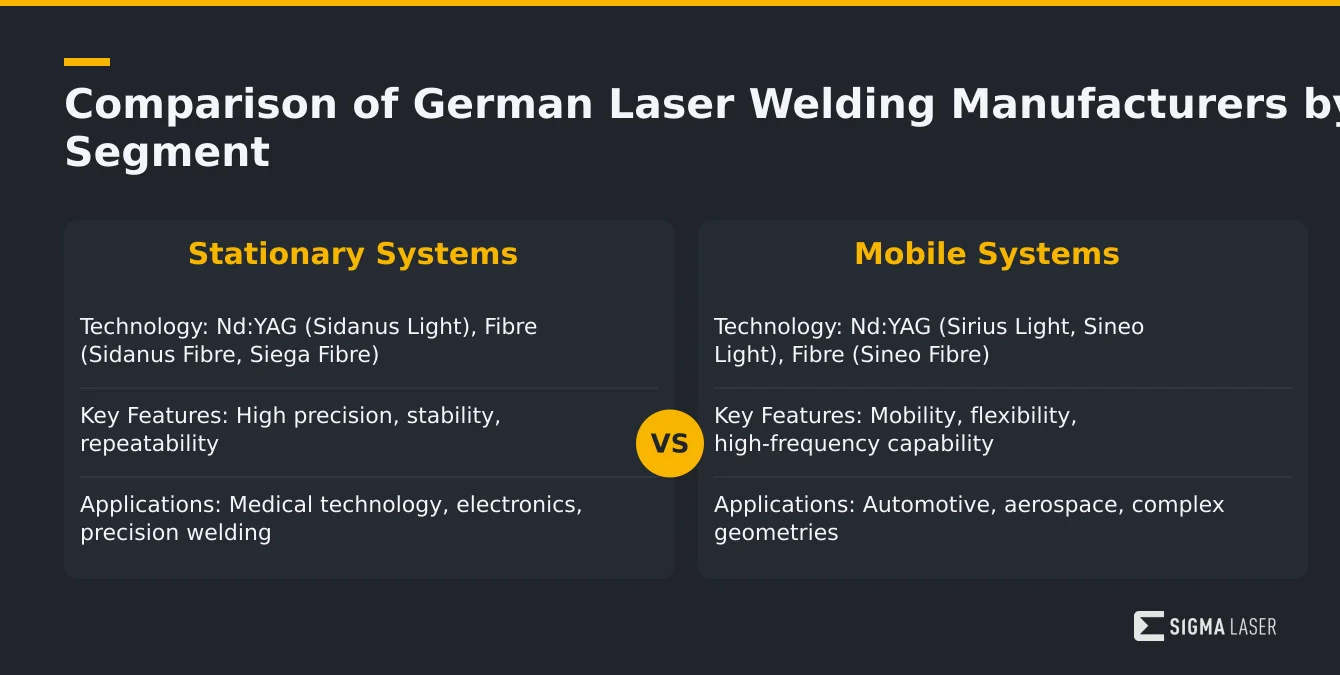
Founded in 2005 in Hanau, Germany, Sigma Laser has established itself as a prominent player among German laser manufacturers. Specializing in precision laser welding systems, Sigma Laser offers a diverse portfolio of six advanced 5-axis laser welding machines. This range includes mobile systems such as the Sineo Light, Sineo Fibre, and Sirius Light, alongside stationary models like the Sidanus Light, Sidanus Fibre, and Siega Fibre.
| Parameter | Typical Value / Range |
|---|---|
| Power Level | Hundreds of watts to several kilowatts |
| Welding Speed | Up to several meters per minute |
| Heat-Affected Zone (HAZ) | < 1 mm (precision applications) |
These are general industry figures for laser welding, not specific to any Sigma Laser product.
Innovative Laser Welding Solutions
Sigma Laser’s commitment to excellence in industrial laser technology is evident in its comprehensive product lineup. Each machine is engineered for precision and reliability, catering to the diverse needs of industries such as aerospace, automotive, electronics, and medical technology. The mobile units are designed for flexibility, allowing the entire machine to move to the workpiece, ensuring efficient and precise welding operations.
Typical industrial laser welding systems operate at wavelengths around 1064 nm for Nd:YAG lasers and 1070 nm for fibre lasers, which are optimal for a variety of materials including 1.2344 (AISI H13) tool steel and aluminum alloys. These systems commonly achieve welding speeds up to several meters per minute, depending on the material and thickness, with penetration depths typically reaching a few millimeters. The heat-affected zone is minimized due to the precision of the laser beam, which is a critical advantage in maintaining material properties.
Automation and Advanced Features
The integration of the Simass automation system further enhances the capability of Sigma Laser’s equipment. This modular system supports high-volume production through flexible automation solutions, offering components like the Simass Base Unit, Slide, and Rotate. These modules ensure high precision and adaptability in complex welding tasks. Additionally, the Sigomatic control system provides intuitive operation and comprehensive process control, enabling optimized performance.
This ensures that operators are safeguarded against potential laser hazards during operation.
Recognition and Standards
Sigma Laser’s dedication to quality and innovation has been recognized with accolades such as the German Design Award 2025 for the Sineo series. This commitment to excellence positions Sigma Laser as a reliable partner for industrial buyers seeking advanced solutions in laser welding.
Engineering Excellence in Laser Technology
Leveraging technologies such as Super Pulse Technology (SPT), available across the full Sigma Laser welding machine range, Sigma Laser systems deliver precise welding with minimal heat-affected zones. The inclusion of features like Swivel Optics and motor-driven turning devices ensures that these systems excel in delivering high-quality welds across a wide range of materials and applications. With a focus on precision and efficiency, Sigma Laser continues to contribute significantly to the landscape of laser manufacturing companies in Germany.
For international buyers evaluating suppliers in the laser welding domain, Sigma Laser stands out as a specialist in delivering innovative and reliable solutions tailored to meet the demands of modern industrial applications.
How do you compare manufacturers across segments?
Evaluating German laser manufacturers is a critical task for procurement managers and technical buyers seeking precision and reliability in laser welding systems. To make informed decisions, it is essential to establish a comprehensive comparison framework that considers a wide range of factors, from technological offerings to industrial certifications and application-specific capabilities.
Establishing Evaluation Criteria
When comparing industrial laser welding machine evaluation criteria, it’s vital to consider the specific requirements of your manufacturing processes. Key factors include the type of laser technology employed, such as ytterbium fibre or Nd:YAG, which are integral to Sigma Laser systems. The choice of technology influences not only the precision and efficiency of welding operations but also the compatibility with different materials and the scalability of the solution.
Technological Capabilities
The industrial laser technology landscape in Germany is diverse. Manufacturers like Sigma Laser offer a range of stationary and mobile systems, such as the Sidanus Light and Sirius Light, each designed to meet specific industrial needs. The laser welding machine manufacturers guide can provide further insight into these technologies and help assess which systems align best with your operational goals.
For instance, the Sineo Light, with its 360° mobility and peak power of 13 kW, is ideal for flexible operations requiring precise welding across complex geometries. Conversely, the stationary Sidanus Fibre offers high precision with its ytterbium fibre laser, making it suitable for applications where stability and repeatability are paramount.
Application-Specific Considerations
In choosing a laser welding system, understanding the application contexts is crucial. For example, Super Pulse Technology (SPT), available on all Sigma Laser welding machines, is particularly suited for applications requiring minimal heat input and fine weld precision, such as in the medical technology and electronics sectors. By contrast, systems like the Sineo Fibre, with its high-frequency capability, excel in rapid manufacturing environments like automotive and aerospace.
The ability to adjust parameters such as pulse duration and frequency is vital for tailoring the welding process to specific materials and thicknesses, ensuring optimal penetration and minimal distortion. Typical industry ranges for laser welding include pulse durations from 0.5 to 20 ms and frequencies up to 1000 Hz, depending on the system configuration.
Certifications and Compliance
Evaluating a manufacturer’s adherence to these standards can be a decisive factor in your selection process, as it guarantees not only the quality of the systems but also their safety in industrial environments.
This standard classifies laser products and outlines the necessary safety requirements to protect operators and maintain safe working environments.
| Laser Source | Typical Wavelength | Key Features |
|---|---|---|
| Nd:YAG | 1064 nm | High precision, used for welding and marking |
| Ytterbium fibre laser | 1070 nm | High efficiency, CW and pulsed operation |
Wavelengths and features are typical for these laser sources in industrial applications.
Conclusion
The process of comparing laser manufacturing companies in Germany should be rooted in a structured evaluation framework that considers both technical specifications and application requirements. By focusing on these critical areas, you can ensure that your choice of manufacturer aligns with your industrial objectives and operational needs.
Frequently Asked Questions
Who are the top laser manufacturers in Germany?
Germany is home to several leading laser manufacturers, including Trumpf, Jenoptik, and Coherent-Rofin. These companies are renowned for their advanced laser technologies and robust engineering capabilities, offering a range of solutions from industrial laser systems to precision optics.
What industries use German laser technology?
German laser technology is utilized across diverse industries such as automotive, aerospace, electronics, and medical device manufacturing. These sectors leverage the precision, efficiency, and reliability of German lasers for applications including cutting, welding, and additive manufacturing.
What types of lasers are commonly manufactured in Germany?
German manufacturers primarily produce solid-state lasers such as Nd:YAG and ytterbium fibre lasers. These types are favored for their stability and precision in industrial applications, including welding and cutting operations.
Why choose German laser systems for industrial applications?
German laser systems are preferred for their high precision, reliability, and advanced engineering. They are designed to meet rigorous industrial standards, ensuring consistent performance in demanding environments, which enhances productivity and reduces downtime.
What factors should be considered when investing in a German laser system?
Considerations include the specific application requirements, system capabilities, integration with existing processes, and potential return on investment. Evaluating these factors helps in selecting a system that aligns with operational goals and maximizes efficiency.
How does German laser technology contribute to sustainability in manufacturing?
German laser technology contributes to sustainability by enabling precise material processing, reducing waste, and improving energy efficiency. The high precision of laser systems ensures minimal material loss, while advanced technologies reduce energy consumption, supporting greener manufacturing practices.
Welche Vorteile bieten Sigma Laser Systeme für industrielle Schweißanwendungen?
Sigma Laser Systeme ermöglichen dank 5-Achs-CNC-Kinematik reproduzierbare Schweißnähte auch an komplexen Geometrien. Die Super Pulse Technology (SPT) sorgt dabei für gleichmäßige, verzugsarme Nähte mit kontrolliertem Wärmeeintrag – ideal für anspruchsvolle Fertigungsprozesse in der Industrie.
Sources
- ISO 11145:2016 – Optics and photonics — Lasers and laser-related equipment — Vocabulary and symbols — Provides standardized terminology and symbols for lasers and laser-related equipment, essential for understanding technical specifications.
- DIN EN 60825-1:2015 – Safety of laser products – Part 1: Equipment classification and requirements — Defines safety requirements and classification for laser products, crucial for compliance and safety assurance.
- Fraunhofer Institute for Laser Technology ILT — A leading research institution in laser technology, providing insights into the latest advancements and applications in the field.
- NIST – Laser Metrology — Provides resources and research on laser metrology, supporting precision measurements and standards.
- CEN-CENELEC – Laser standards — European standards for laser technology, ensuring harmonization and compliance across the EU.
- Journal of Laser Applications — Peer-reviewed journal covering a wide range of laser applications, offering research articles and reviews.
- Optics Express — Publishes high-quality research articles in the field of optics and photonics, including laser technology.