
- Key Takeaways
- What is laser cladding in shipbuilding?
- Advantages of Laser Cladding Technology
- Applications in Marine Engineering
- Integration with Sigma Laser Systems
- Which Ship Components Are Repaired by Laser Cladding?
- Typical Components and Repairs
- Why is low heat input crucial for laser welding in shipbuilding?
- Advantages of Minimal Heat-Affected Zones
- Super Pulse Technology (SPT) for Enhanced Performance
- Mobile 5-axis laser welding systems: How does the machine reach the component?
- Operational Flexibility and Efficiency
- Technology and Optics
- Process Steps for Laser Cladding of Ship Components
- Damage Analysis and Surface Preparation
- Filler Wire Selection
- Multi-Layer Build-Up
- Post-Processing
- Checklist for Effective Laser Cladding
- Documentation and Acceptance: How Does Laser Welding Support Classification?
- Comprehensive Welding Documentation
- Reproducibility and Data Archiving with Sigomatic Control
- Sigma Laser: Technology, References and Industry Experience
- Industry Trust and Technological Advancements
- Frequently Asked Questions
- How does laser cladding improve ship component durability?
- What are the benefits of using laser cladding for marine crankshaft repairs?
- Why choose Sigma Laser systems for shipbuilding applications?
- How does laser cladding compare to traditional welding in marine applications?
- Can Sigma’s mobile systems be used for on-site ship repairs?
- What is the role of Super Pulse Technology in Sigma Laser systems?
- How does laser cladding contribute to cost-effectiveness in ship maintenance?
- Related Articles
- Sources
Quick Answer: Laser cladding in shipbuilding enhances the longevity and performance of critical components such as shafts, bearings, and engines. Utilizing Sigma Laser’s advanced 5-axis machines, shipyards can achieve precise material deposition, restoring worn surfaces with minimal heat input and distortion. Our systems, developed in Hanau and trusted by industry leaders like Airbus and Siemens, offer unlimited workpiece size capability and are equipped with Super Pulse Technology and Leica 10× optics. Sigma’s mobile systems enable on-site repairs, reducing downtime and ensuring efficient maintenance operations.
Key Takeaways
In the demanding marine industry, ensuring the longevity and reliability of ship components is crucial. Laser cladding with Sigma’s mobile 5-axis systems offers a transformative approach to ship maintenance, providing efficient and precise solutions for in-situ repairs and maintenance of critical components like crankshafts.
- Utilize Sigma’s mobile 5-axis machines for on-site repairs, eliminating the need for disassembly and transportation of large components.
- Achieve superior repair quality with robotized laser cladding systems, enhancing the durability and performance of marine components.
- Benefit from unlimited workpiece size capability, accommodating the largest marine components without constraints.
- Experience the precision of Super Pulse Technology, ensuring consistent and high-quality cladding results on a variety of materials.
- Enhance operational efficiency with quick setup and execution, reducing ship downtime and maintenance costs.
- Leverage the expertise of reference customers like Airbus, Siemens, and Continental, showcasing proven success in complex industrial environments.
- Ensure traceability and quality control with certified operator trainings and extended warranty options from Sigma Laser.
These key advantages position Sigma Laser as a pivotal partner in the shipbuilding industry, offering innovative solutions for maintenance challenges. Explore the full article to understand how integrating laser cladding technology can revolutionize your ship repair and maintenance processes.
What is laser cladding in shipbuilding?
Laser cladding in shipbuilding is a precise welding process used for the targeted repair and coating of highly stressed components such as shafts, bearing seats, or valve seats. This technology extends the service life and enhances the performance of marine components, making it a valuable asset in marine engineering. Laser cladding typically employs lasers with wavelengths around 1064 nm for Nd:YAG systems or 1070 nm for fibre systems, providing high precision and control over the deposition process. The penetration depth can be precisely controlled, typically ranging from 0.1 mm to several millimeters, depending on the application and material.
Advantages of Laser Cladding Technology
Laser cladding technology offers significant advantages in shipbuilding applications. The process allows for:
- Minimal heat input, which reduces the heat-affected zone (HAZ) and preserves the integrity of the base material. The HAZ is typically minimized to a few millimeters, maintaining the mechanical properties of the substrate.
- Flexibility in material deposition, supporting alloys such as 1.2344 (AISI H13), which are commonly used in high-stress applications due to their excellent thermal fatigue resistance.
- High precision with robotized laser systems, enabling detailed and accurate repairs. These systems can achieve positioning accuracy within micrometer ranges, ensuring consistent and reliable results.
Applications in Marine Engineering
Within the marine industry, laser cladding plays crucial roles in the repair and restoration of ship components. It is particularly effective for:
- Restoring worn-out shafts and bearing surfaces to their original specifications. This process can significantly extend the life of components by providing a hard, wear-resistant surface.
- Coating valve seats to withstand corrosive marine environments. The cladding layer can be tailored to resist specific environmental challenges, enhancing component longevity.
- Improving the durability of high-wear areas with advanced material layering. This can include the deposition of corrosion-resistant alloys, which are critical in marine environments.
Integration with Sigma Laser Systems
Sigma Laser offers advanced solutions for marine engineering challenges. Systems like the Sidanus Light and Sirius Light are engineered for precision and efficiency. These systems, equipped with Super Pulse Technology (SPT), provide the ideal platform for reliable ship component repair and refurbishment. The Sidanus Light, with its Nd:YAG laser capabilities, offers peak powers ranging from 6 to 13 kW, making it suitable for detailed and controlled cladding operations. Similarly, the Sirius Light’s mobility and precision make it an excellent choice for on-site repairs, reducing downtime and logistical challenges associated with transporting large components.
Which Ship Components Are Repaired by Laser Cladding?
In marine engineering, laser cladding in shipbuilding is a key technology for restoring critical components that experience wear and corrosion. By using robotized laser systems, shipyards can significantly extend the lifespan of various parts, ensuring operational efficiency and minimizing downtime. This technique involves the precise application of material to worn surfaces, resulting in revitalized components with enhanced properties.
Laser cladding typically utilizes laser power levels ranging from several hundred watts to a few kilowatts, with wavelengths around 1064 nm for Nd:YAG lasers and 1070 nm for fibre lasers. The process allows for precise control of heat input, minimizing distortion and maintaining the integrity of the base material. The heat-affected zone (HAZ) is minimized, which is crucial for maintaining the mechanical properties of the substrate.
Typical Components and Repairs
Several ship components benefit from laser cladding technology, addressing specific types of damage:
| Component | Type of Damage | Welding Objective | Typical Materials |
|---|---|---|---|
| Shafts | Wear and corrosion | Restore diameter, improve fatigue resistance | 1.4301/304, 1.4404/316L |
| Bearing Seats | Surface wear | Rebuild surface, enhance hardness | 1.2344 (AISI H13), cast iron |
| Valve Seats | Erosion | Restore sealing surface, improve corrosion resistance | Bronze, stainless steel |
| Injector Bores | Wear and deformation | Reinstate dimensional accuracy | 1.4404/316L, cast iron |
| Pump Housings | Cavitation damage | Reconstruct internal geometry, enhance durability | Stainless steel, bronze |
| Propellers | Corrosion and cavitation | Repair surface, improve hydrodynamic properties | Bronze, cast iron |
| Thruster Components | Wear and tear | Restore geometry, enhance wear resistance | 1.4301/304, stainless steel |
Laser cladding offers unique advantages for ship component repair by minimizing the heat-affected zone (HAZ) and ensuring a high-quality bond between the added material and the substrate. This technology allows for precise application, which is crucial for maintaining the performance standards required by industry certifications such as those from DNV GL and Lloyd’s Register. By integrating robotized laser cladding systems, shipyards can effectively address sector-specific challenges, ensuring the reliability and longevity of marine vessels’ critical components.
Standards such as ISO 11146, which addresses laser beam characterization, can be relevant when assessing the quality and precision of laser cladding applications. These standards help ensure that the laser systems used in shipbuilding meet the necessary criteria for high-quality repairs and refurbishments.
Why is low heat input crucial for laser welding in shipbuilding?
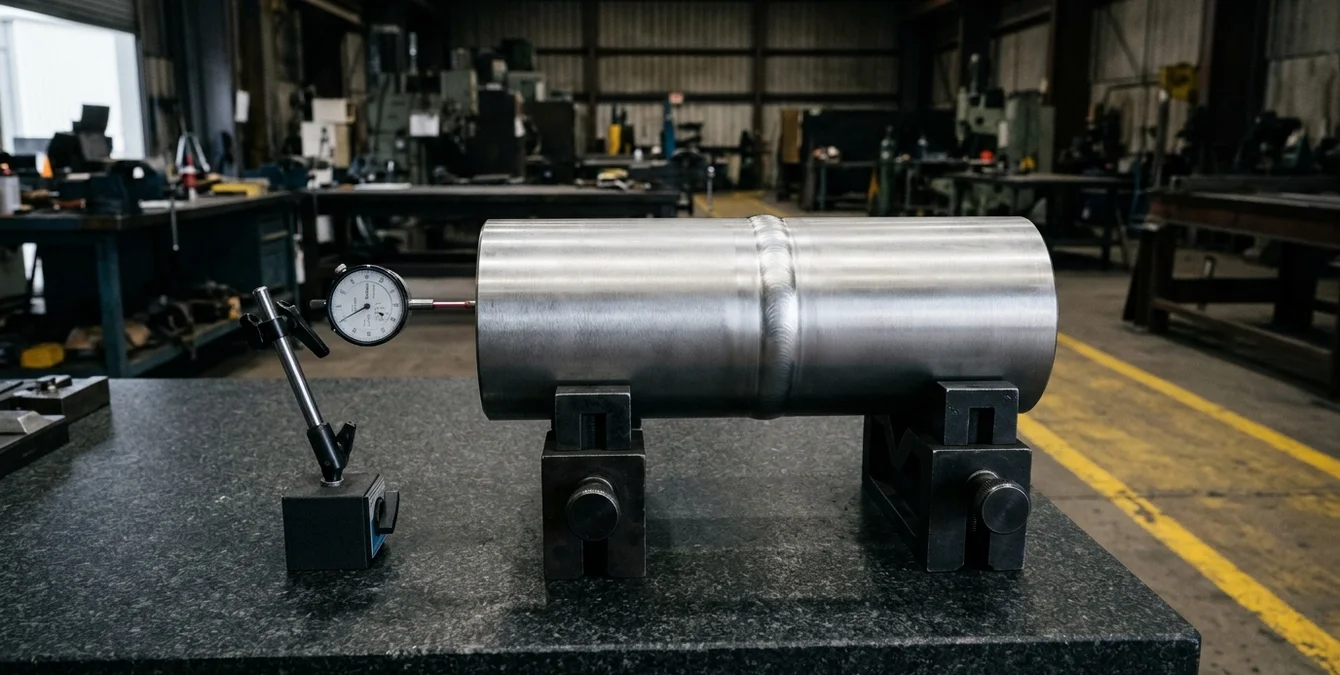
In marine engineering, maintaining the integrity of ship components during repair or modification is vital. Employing laser cladding in shipbuilding offers significant advantages by ensuring a low heat input approach. This technique minimizes the heat-affected zone (HAZ), thereby avoiding microstructural changes and distortion in large cast or forged parts. Such precision is essential in preserving the performance and longevity of critical ship components.
Traditionally, ship component repairs often required disassembly and transport to specialized facilities, a process that is both time-consuming and costly. However, with Sigma Laser’s mobile systems, such as the Sineo Light and Sirius Light, repairs can be performed on-site without the need for removal. This capability not only reduces downtime but also enhances operational efficiency for marine maintenance teams.
Laser cladding typically operates at power levels ranging from several hundred watts to a few kilowatts, with wavelengths commonly around 1064 nm for Nd:YAG lasers and 1070 nm for fibre lasers. The precision and control offered by these systems ensure minimal heat input, with penetration depths generally adjustable to suit specific material requirements. This adaptability is crucial in shipbuilding, where the materials often include high-strength steels and alloys designed for harsh marine environments.
Advantages of Minimal Heat-Affected Zones
The ability to control the heat input precisely ensures that the surrounding material remains unaffected, maintaining its original properties. This is particularly crucial when working with materials like 1.2344 (AISI H13), which are commonly used in shipbuilding for their durability and resistance to wear. By preserving the integrity of these materials, shipyards can ensure compliance with standards such as ISO 9001 and EN ISO 15614-7.
Standards like ISO 11146, which deals with laser beam characterization, are essential for ensuring the precision and quality of laser cladding processes. These standards help in maintaining consistent beam quality, which is critical for achieving uniform cladding layers and minimizing defects.
Super Pulse Technology (SPT) for Enhanced Performance
Sigma Laser’s Super Pulse Technology (SPT) is instrumental in achieving low-distortion weld layers. By delivering even energy distribution across the weld area, SPT facilitates the creation of uniform layers without compromising the structural integrity of the component. This technology is particularly beneficial in robotized laser systems, which require precision and consistency across extensive applications.
In conclusion, the application of laser cladding technology in shipbuilding offers a robust solution for maintaining component integrity while enhancing repair efficiency. By leveraging Sigma Laser’s advanced systems, marine engineers and shipyards can ensure high-quality repairs that meet stringent industry standards.
Mobile 5-axis laser welding systems: How does the machine reach the component?
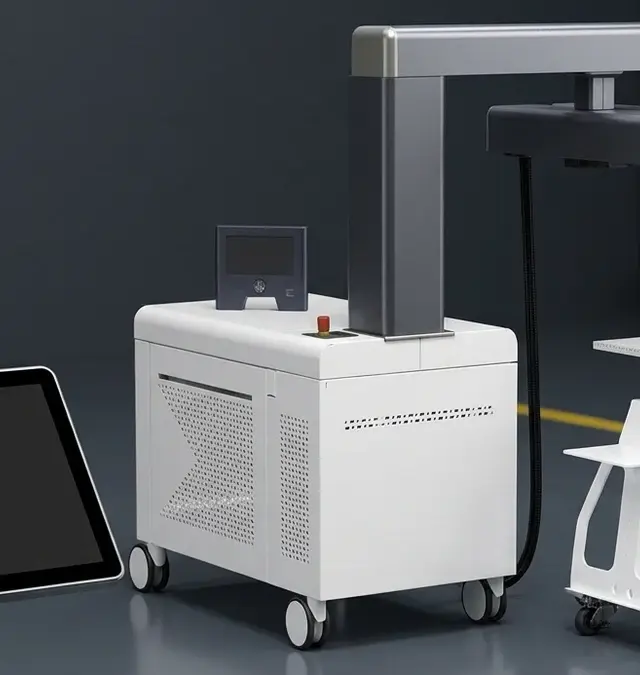
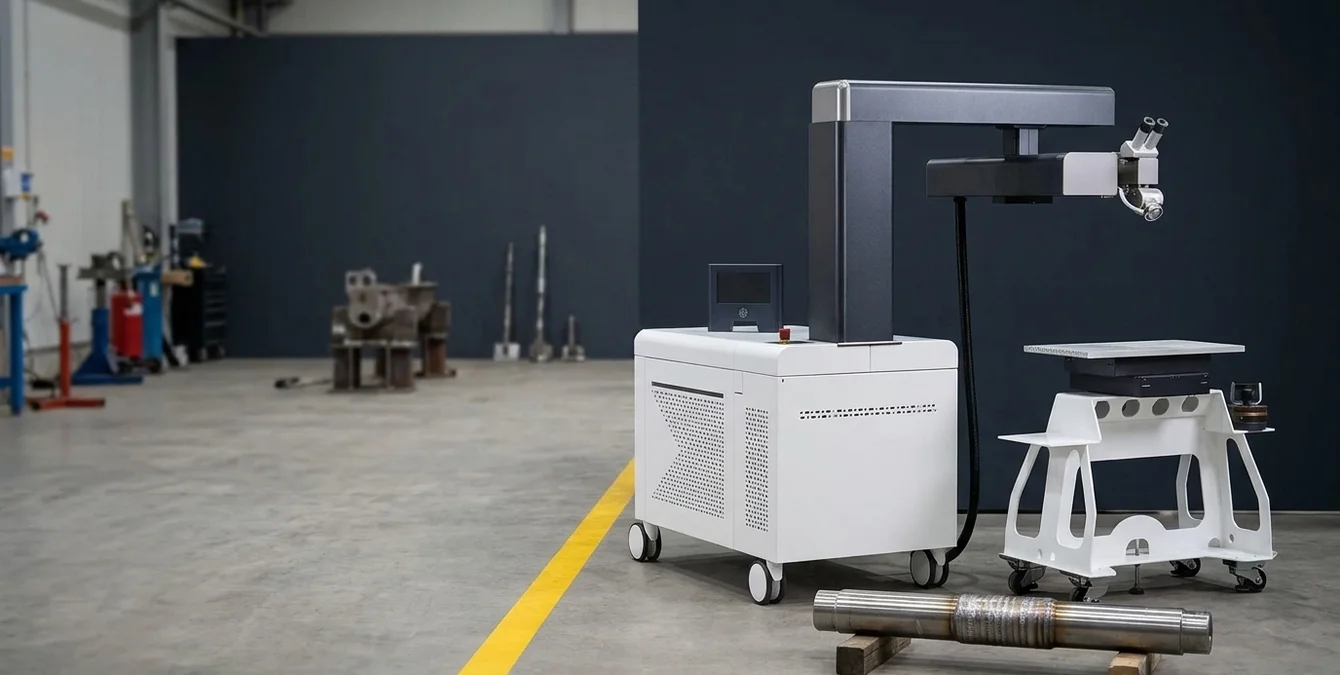
In marine engineering, the repair and maintenance of ship components demand precision and efficiency. Sigma Laser’s mobile 5-axis systems, including Sineo Light, Sineo Fibre, and Sirius Light, are engineered to bring laser cladding technology directly to the ship component, regardless of its size or weight. This capability eliminates the need for disassembly, significantly reducing both time and cost.
Operational Flexibility and Efficiency
These mobile systems are particularly advantageous for ship component repair in situ, either onboard or in the dock. Utilizing 5-axis kinematics, the machine adapts to complex geometries, ensuring precise integration of the laser cladding process. This robotized approach allows the machine to reach the workpiece, enabling seamless and efficient repairs without the logistical challenges of moving large components.
Laser cladding in shipbuilding is typically executed with power levels ranging from several hundred watts to a few kilowatts, depending on the material and application requirements. This process is compatible with a variety of materials, including high-strength steels and corrosion-resistant alloys, which are commonly used in marine environments. The ability to deposit material with minimal heat input reduces the heat-affected zone (HAZ) and potential distortion, which is critical for maintaining the integrity of ship components.
Technology and Optics
Equipped with Leica 10× optics, Sigma’s systems provide exceptional process monitoring during operations. This advanced optical technology ensures detailed oversight of the laser cladding in shipbuilding, leading to optimal results even in challenging marine environments. The benefits are further amplified by the inherent precision of Sigma’s mobile systems, which minimize heat input and maintain a small heat-affected zone (HAZ).
The precision of these systems is further enhanced by their ability to operate with spot sizes as small as 0.2 mm, allowing for fine control over the cladding process. This precision is crucial for applications that require high-quality surface finishes and adherence to stringent dimensional tolerances. The systems’ capability to deliver peak powers of up to 13 kW in the case of the Sineo Light ensures the effective deposition of cladding material even in demanding conditions.
For a more detailed exploration of these systems and their advantages in handling large components, visit our blog post. Additionally, to learn more about our range of mobile laser systems, please visit the mobile laser welding machines page.
- Direct access to ship components without disassembly
- Precision repair and maintenance through 5-axis kinematics
- Enhanced process monitoring with Leica 10× optics
- Cost and time savings in marine engineering applications
- Compatibility with various marine-grade materials, including high-strength steels and corrosion-resistant alloys
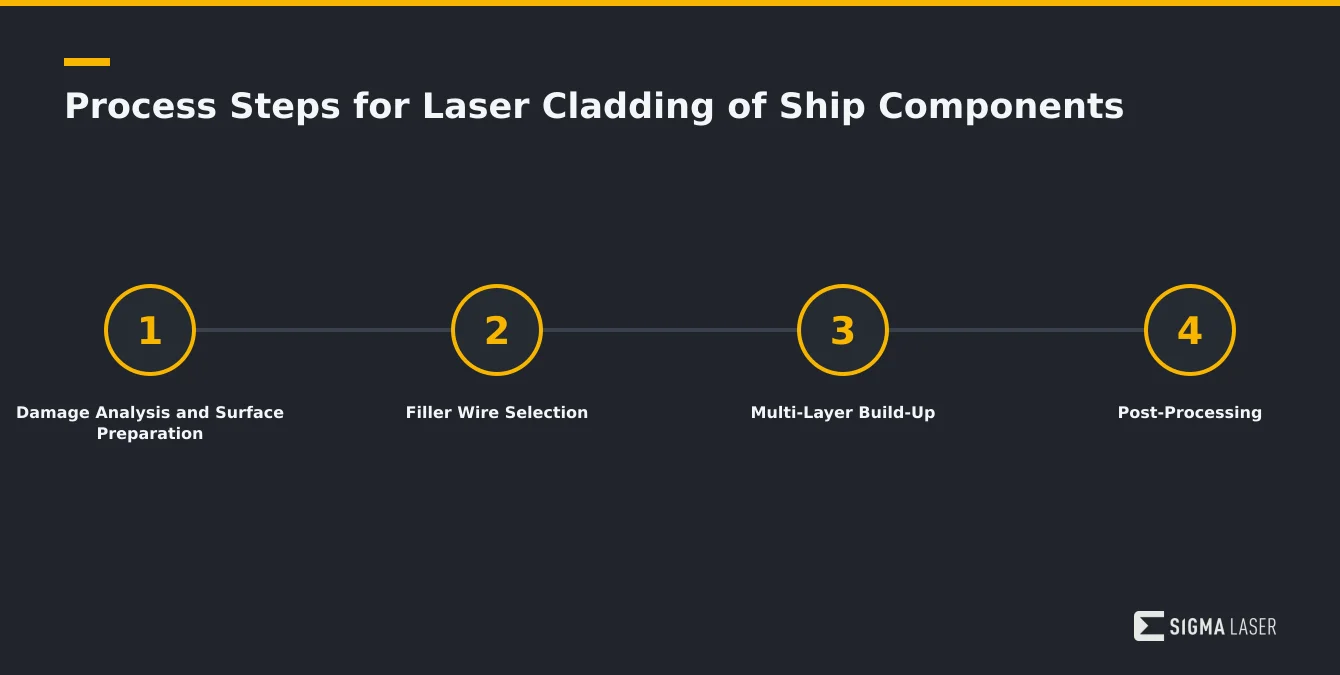
Process Steps for Laser Cladding of Ship Components
Laser cladding in shipbuilding is a critical process used to restore and enhance the performance of maritime components exposed to harsh marine conditions. This technique is particularly valuable for repairing worn or damaged parts, ensuring longevity and reliability in demanding environments. Sigma Laser’s systems offer precision and flexibility, making them ideal for such applications.
Damage Analysis and Surface Preparation
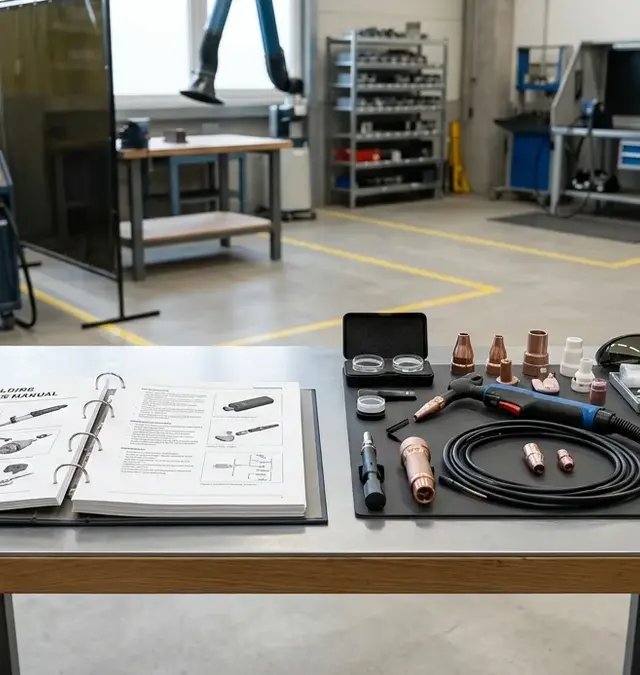
Before beginning the laser cladding process, a thorough damage analysis is essential to assess the extent of wear or damage. This step informs the subsequent surface preparation, which involves cleaning and potentially roughening the surface to ensure proper adhesion of the cladding material. Proper surface preparation is crucial to avoid defects and achieve optimal results. Industry standards such as ISO 11124-1 provide guidelines for preparing steel substrates, which is often necessary for effective cladding.
Filler Wire Selection
The choice of filler wire is pivotal in laser cladding technology. It must be compatible with the base material and the operating conditions of the ship component. While specific parameters are determined by the material properties and the environmental conditions, selecting the appropriate filler wire ensures the durability and performance of the cladded layer. Common materials include nickel-based alloys and stainless steels, which offer excellent corrosion resistance and mechanical strength.
Multi-Layer Build-Up
During the cladding process, multiple layers are built up to attain the desired thickness and mechanical properties. Sigma Laser’s systems, equipped with Super Pulse Technology, enable precise control over each layer’s deposition, minimizing the heat-affected zone and ensuring high-quality outcomes. The use of shielding gases like argon, nitrogen, or helium further enhances the quality of the cladding. Typically, laser cladding systems operate at power levels ranging from several hundred watts to a few kilowatts, with penetration depths of up to a few millimeters, depending on the material and process parameters.
Post-Processing
Post-processing, including turning and grinding, is essential to bring the repaired component to its final specifications. This step ensures that the component meets the tolerance and surface finish requirements necessary for maritime applications. It is at this stage that final quality assurance checks are conducted to comply with standards such as ISO 9001. Additionally, adherence to Journal of Laser Applications guidelines can ensure that the cladding process meets the rigorous demands of the shipbuilding industry.
Checklist for Effective Laser Cladding
- Preparation: Conduct damage analysis and surface preparation.
- Welding Process: Execute the cladding with appropriate filler wire and shielding gases.
- Post-Processing: Perform necessary machining and finishing operations.
- Documentation: Maintain detailed records of all process steps and quality checks.
For a more comprehensive understanding of cast part repair, visit our detailed guide on the subject.
Documentation and Acceptance: How Does Laser Welding Support Classification?
In marine engineering, the precision and reliability of laser cladding in shipbuilding are crucial for maintaining and repairing vital ship components. Accurate documentation of welding parameters and protocols enhances the acceptance of parts by classification societies such as DNV GL, Lloyd’s Register, and Bureau Veritas. This documentation is essential for demonstrating compliance with standards like ISO 9001 and EN ISO 15614-7.
Comprehensive Welding Documentation
Complete documentation involves recording every aspect of the welding process, from initial protocol setup to final sample analysis. This includes detailed records of input parameters, material specifications like 1.2344 (AISI H13), and process conditions. By maintaining thorough records, shipyards can provide evidence of consistent quality, aiding in classification acceptance without explicitly guaranteeing approval.
In the context of laser cladding, typical industry parameters include laser power ranging from several hundred watts to a few kilowatts, with wavelengths around 1064 nm for Nd:YAG lasers and 1070 nm for fibre lasers. The heat-affected zone (HAZ) is minimized due to the precision of the laser beam, which is crucial for maintaining the integrity of ship components. The process allows for the cladding of various materials, including high-performance steels and nickel-based alloys, which are commonly used in shipbuilding due to their corrosion resistance and durability.
Reproducibility and Data Archiving with Sigomatic Control
The Sigomatic control system is integral to achieving reproducible results in robotized laser systems. By automating and documenting every stage of the laser cladding process, Sigomatic ensures that each operation adheres to predefined parameters. This capability supports classification society requirements and facilitates efficient data archiving, making it easier to retrieve process histories for audits or future reference.
Utilizing Sigma Laser’s advanced solutions, such as the Sidanus Light or Sirius Light systems, shipyards can effectively manage the repair and maintenance of ship components. These systems offer robust solutions for ship component repair, ensuring minimal heat-affected zones and precision in application. By integrating Sigma Laser technology, marine maintenance leads can leverage cutting-edge tools to meet the stringent demands of the industry.
Laser cladding in shipbuilding is further supported by standards such as ISO 14917, which provides terminology and classification for thermal spraying processes, offering a framework that can be adapted for laser cladding applications ISO 14917:2017. This ensures that the processes meet the rigorous requirements for maritime applications.
Sigma Laser: Technology, References and Industry Experience
Since its foundation in Hanau in 2005, Sigma Laser has been at the forefront of developing and manufacturing advanced 5-axis laser welding systems, including both mobile and stationary solutions. Known for precision and reliability, Sigma’s systems have been adopted in high-stakes industries, such as aerospace, automotive, and notably, marine engineering.
Sigma’s dedication to excellence is evident in its award-winning designs, like the German Design Award 2025-winning Sineo Light. By leveraging laser cladding in shipbuilding, their technology provides unmatched precision and adaptability for ship component repair and maintenance. The integration of Super Pulse Technology across all systems ensures minimal heat-affected zones, which is crucial for preserving the integrity of ship components.
Laser cladding, as applied in shipbuilding, offers significant advantages over traditional methods such as thermal spraying. According to Journal of Laser Applications, laser cladding achieves superior metallurgical bonding and reduced porosity, which are essential for the durability and longevity of marine components. The process typically involves power levels up to 1 kW, wavelengths around 1070 nm for fibre lasers, and spot sizes ranging from 0.1 to 2.0 mm, offering flexibility and precision in material deposition.
Industry Trust and Technological Advancements
With reference customers such as Airbus, Siemens, and Continental, Sigma Laser has established itself as a trusted partner for companies requiring high precision and reliability. In the shipbuilding sector, the application of laser cladding technology has transformed maintenance procedures. Sigma’s robotized laser cladding systems enable efficient repair of large ship components, reducing downtime and enhancing operational efficiency.
Sigma’s systems, like the Sidanus Light and Siega Fibre, offer adaptability and precision, essential for shipyards and marine maintenance facilities. The mobile capabilities of systems such as the Sirius Light allow for on-site repairs, making them ideal for environments where transporting large components is impractical.
By integrating advanced features like Leica 10× optics and flexible modules, Sigma ensures its machines meet the rigorous demands of marine engineering. This technological edge, combined with certified training and extended warranties, underscores the company’s dedication to quality and customer satisfaction.
Standards such as EN ISO 15614, which governs the qualification of welding procedures, are critical in ensuring the quality and consistency of laser cladding applications in shipbuilding. Compliance with these standards ensures that Sigma’s systems deliver reliable and repeatable results, essential for maintaining the structural integrity of ship components.
Frequently Asked Questions
How does laser cladding improve ship component durability?
Laser cladding enhances ship component durability by applying a metallurgically bonded overlay that resists corrosion, wear, and fatigue. The precise control of the laser allows for minimal dilution and a fine microstructure, resulting in a robust surface layer that extends the life of components such as propeller shafts and rudder stocks.
What are the benefits of using laser cladding for marine crankshaft repairs?
Laser cladding offers significant benefits for marine crankshaft repairs, including reduced downtime and material savings. The process allows for precise restoration of worn areas without the need for complete disassembly. The resulting clad layer is highly resistant to wear and corrosion, ensuring prolonged operational life.
Why choose Sigma Laser systems for shipbuilding applications?
Sigma Laser systems are ideal for shipbuilding due to their advanced 5-axis kinematics, enabling complex geometries and unlimited workpiece size. With options for Nd:YAG and ytterbium fibre lasers, and Super Pulse Technology, these systems deliver superior precision and efficiency. Developed in Hanau, they are trusted by industry leaders such as Airbus and Siemens.
How does laser cladding compare to traditional welding in marine applications?
Compared to traditional welding, laser cladding offers superior precision and control, resulting in lower heat input and reduced thermal distortion. This minimizes the risk of component warping and ensures a higher-quality metallurgical bond, essential for critical marine applications like hull repairs and deck fittings.
Can Sigma’s mobile systems be used for on-site ship repairs?
Yes, Sigma’s mobile laser systems are designed for on-site repairs, allowing shipyards and marine maintenance teams to perform high-quality laser cladding and welding directly at the location. This capability reduces transport costs and downtime, providing a flexible and efficient solution for ship repairs.
What is the role of Super Pulse Technology in Sigma Laser systems?
Super Pulse Technology in Sigma Laser systems enhances the cladding process by delivering high peak power with precise control, allowing for deeper penetration and improved bonding without excessive heat input. This results in superior cladding quality, essential for demanding marine applications.
How does laser cladding contribute to cost-effectiveness in ship maintenance?
Laser cladding contributes to cost-effectiveness by reducing material waste and minimizing downtime. The precise application of material reduces the need for post-processing and extends the service life of components, leading to lower maintenance costs and a higher return on investment.
Sources
- ISO 14917:2017 – Thermal spraying – Terminology, classification — Provides terminology and classification for thermal spraying, relevant to laser cladding processes.
- ISO 11124-1:2018 – Preparation of steel substrates before application of paints and related products — Covers preparation standards for steel substrates, applicable to shipbuilding and laser cladding.
- EN 170:2020 – Personal eye-protection — European standard for personal eye protection, relevant for safety in laser cladding operations.
- Journal of Laser Applications – Laser Cladding for Shipbuilding — Peer-reviewed articles on laser applications, including cladding techniques in shipbuilding.
- Fraunhofer Institute for Laser Technology ILT – Laser Cladding Research — Research publications and findings on laser cladding technologies from Fraunhofer ILT.
- NIST – Additive Manufacturing and Laser Cladding — National Institute of Standards and Technology resources on additive manufacturing, including laser cladding.
- Welding Journal – Advances in Laser Cladding — Articles on the latest advancements in welding and laser cladding technologies.