
- Why Hardenable Steels Crack
- Low Heat by Design: SPT
- Classic Countermeasures Still Apply
- Filler Wire for Tool Steels
- Repair Context
- Checking Your Work
- Frequently Asked Questions
- What is the main advantage of SPT for welding tool steels?
- Do I still need to preheat when using SPT?
- How do I select the right filler wire for tool steel repairs?
- What inspection steps should I follow after welding?
Quick Answer: Welding high-carbon and tool steels with SPT (Super Pulse Technology, microsecond pulse modulation) minimizes heat-affected zone and cracking risk. For best results, combine SPT with classic measures: preheat, controlled interpass temperature, slow cooling, and suitable filler wire. Always verify weld integrity after cooling using appropriate crack testing methods.
Why Hardenable Steels Crack
High-carbon and tool steels, such as those in the 1.2343 (H11) class, are widely used for their wear resistance and strength in tooling and mold applications. However, these same properties make them highly susceptible to cracking during welding. The root cause is their hardenability: when exposed to uncontrolled or excessive heat input, the material can transform rapidly to hard, brittle martensite in the heat-affected zone (HAZ). This transformation is accompanied by significant internal stresses, especially as the weld cools and contracts.
In conventional welding processes, the risk is compounded by the relatively large HAZ and the steep thermal gradients imposed by arc or conventional laser welding. Rapid cooling rates, combined with the steel’s inherent carbon content and alloying elements, create ideal conditions for cold cracking, particularly along the fusion line and adjacent base material. Even minor deviations in process control can result in delayed cracking, which may only become apparent after the part is returned to service.
For operators and engineers, understanding this mechanism is critical. The challenge is to deliver enough energy for a sound weld without triggering the hardening response that leads to cracks. This balancing act underpins the entire approach to welding high-carbon and tool steels and frames the rationale for advanced process controls like SPT.
- Crack risk is highest in the HAZ, not just the weld seam itself.
- Delayed cracking can occur hours or days after welding if stresses are not properly managed.
- Material thickness, geometry, and prior heat treatment all influence crack sensitivity.
| Parameter | SPT (Super Pulse Technology) | Conventional Welding (Arc/Laser) |
|---|---|---|
| Heat-Affected Zone (HAZ) Width | Narrow, minimized by precise pulse control | Relatively large due to uncontrolled heat input |
| Crack Risk | Reduced (suppresses martensite formation and internal stresses) | High (prone to cold and delayed cracking) |
| Thermal Input | Low, tightly controlled | Higher, less controlled |
| Process Flexibility | Adjustable pulse duration, energy, and repetition rate via Sigomatic interface | Limited, less adaptable to material and geometry |
| Post-Weld Heat Treatment | Often reduced or simplified | Frequently required to relieve stresses |
Comparison based on qualitative statements in the article; no numeric values are attributed to Sigma products.
Low Heat by Design: SPT
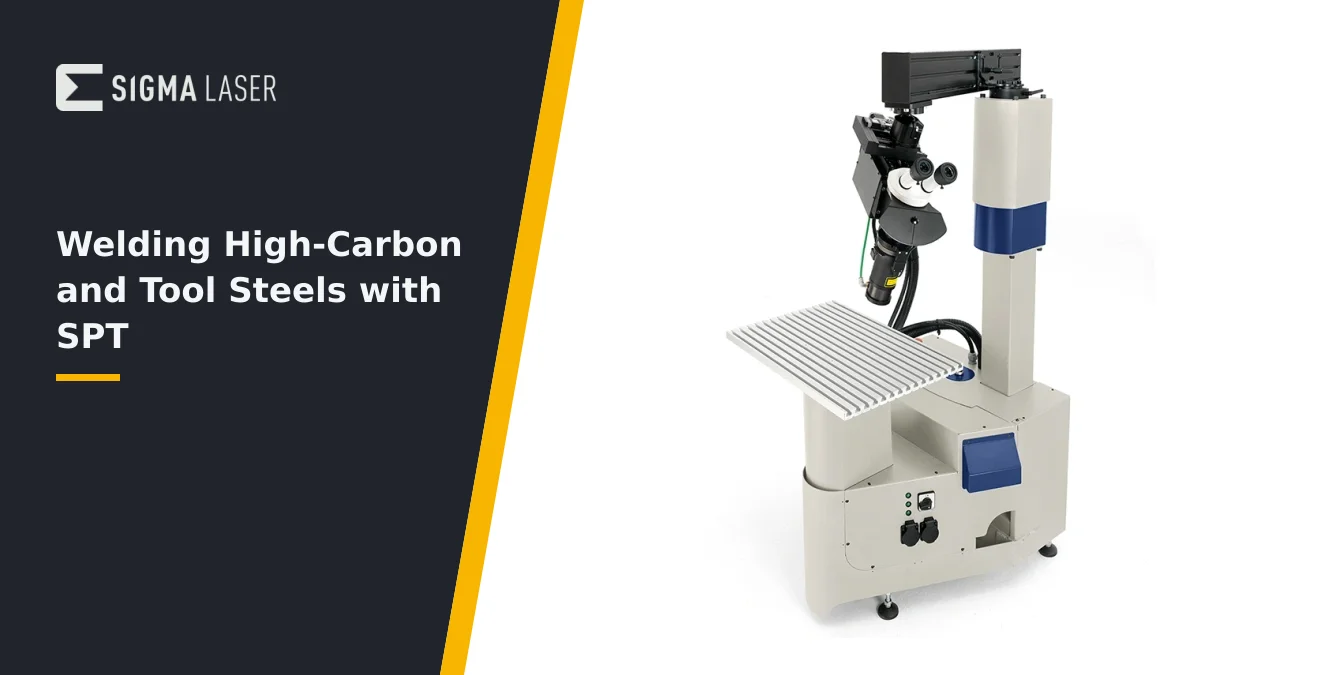
Super Pulse Technology (SPT), Sigma’s microsecond pulse modulation available on all six welding machines, is engineered to address the fundamental crack sensitivity of hardenable steels. SPT enables precise tailoring of pulse duration, energy, and repetition rate on the microsecond scale. This allows operators to deliver just enough heat to achieve full fusion while minimizing the width and severity of the heat-affected zone (HAZ).
By keeping the HAZ narrow and the overall thermal input low, SPT directly suppresses the conditions that promote martensite formation and cracking. The rapid, controlled energy delivery ensures that the surrounding material does not experience the prolonged high temperatures that would otherwise trigger unwanted phase transformations. This is especially advantageous for tool steels, where even small areas of excessive hardness or residual stress can compromise tool life and performance.
Operators can adjust SPT parameters via the Sigomatic interface, matching pulse profiles to material thickness, geometry, and joint configuration. This flexibility is critical for adapting to the wide variety of tool steel grades and repair scenarios encountered in production and maintenance environments. The result is a strong, ductile weld with reduced risk of cold or delayed cracking—without sacrificing productivity or requiring excessive post-weld heat treatment.
- SPT reduces HAZ width, lowering crack risk.
- Enables welding of biocompatible and high-alloy steels with fine control.
- Parameter flexibility supports diverse tool geometries and repair types.
| Measure | Purpose |
|---|---|
| Preheat | Reduces thermal gradients and slows cooling to prevent brittle microstructures |
| Controlled Interpass Temperature | Maintains process consistency and prevents loss of preheat benefits |
| Slow/Controlled Cooling | Minimizes stress and hardness peaks, reduces risk of cracking |
These measures are recommended in addition to SPT for optimal results.
Classic Countermeasures Still Apply
While SPT offers significant advantages in controlling heat input, it should be viewed as a complement—not a replacement—for established best practices in welding high-carbon and tool steels. Preheating the workpiece remains essential for reducing thermal gradients and slowing the cooling rate. This helps prevent the rapid formation of hard, brittle microstructures in the HAZ and reduces residual stresses that drive cracking.
Maintaining an appropriate interpass temperature during multi-pass welds is equally important. If the material cools too much between passes, the benefits of preheating are lost, and crack sensitivity increases. Operators should monitor and maintain interpass temperatures as specified in their material parameter tables or welding procedure specifications.
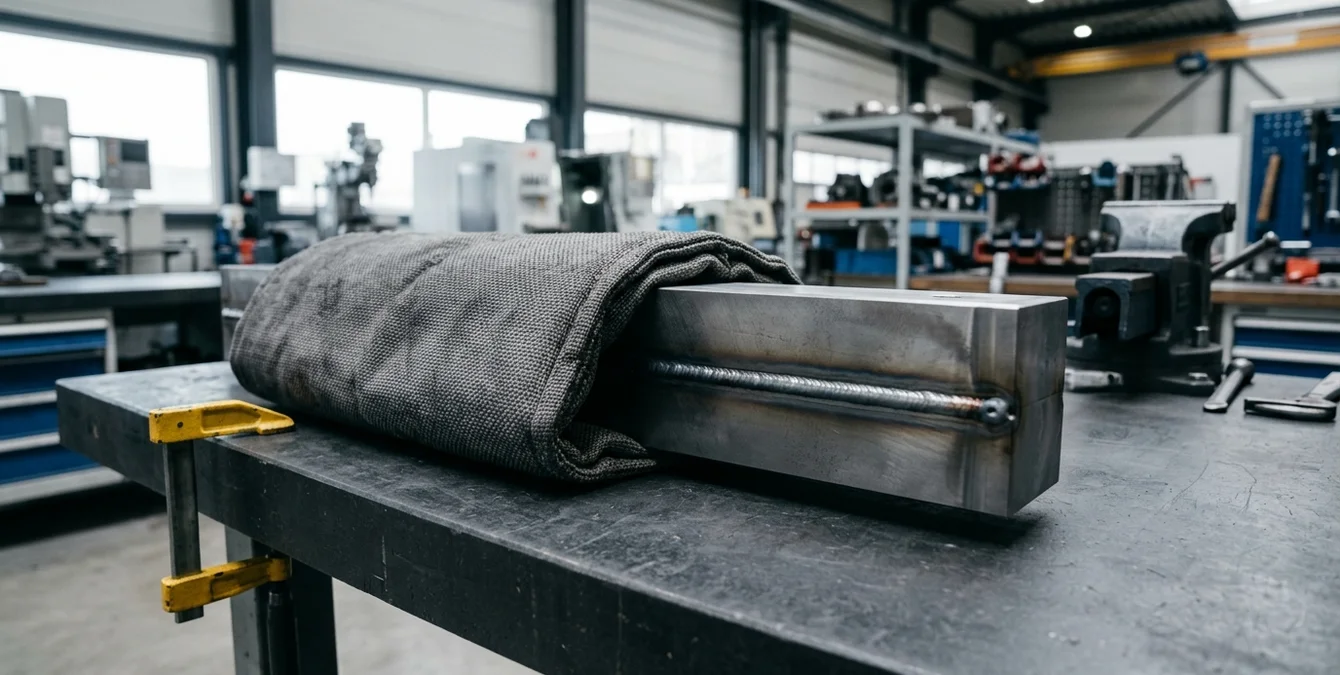
Slow, controlled cooling after welding is another critical measure. This can be achieved by insulating the part or using controlled cooling blankets, allowing the material to transition through critical temperature ranges at a rate that minimizes stress and hardness peaks. When combined with SPT’s low heat input, these classic countermeasures create a robust process window for successful, crack-free welds on hardenable steels.
- Preheat according to steel grade and thickness.
- Monitor interpass temperature to maintain process consistency.
- Use slow or staged cooling to avoid thermal shock and excessive hardness.
| Guideline | Rationale |
|---|---|
| Match filler wire to base steel composition and hardness | Ensures compatibility and avoids excessive hardness or brittleness |
| Use clean, properly stored wire | Minimizes contamination, porosity, and inclusions |
| Maintain wire feed equipment | Ensures consistent delivery and stable heat input |
Wire selection and handling are critical for crack-free, high-quality welds.
Filler Wire for Tool Steels
Selecting the correct filler wire is a key factor in successful laser welding of high-carbon and tool steels. The filler must be compatible with the base material’s composition and hardness requirements, while also accommodating the thermal cycles imposed by the welding process. For tool and die repairs, operators typically choose a wire that closely matches the base steel in alloy content and mechanical properties, or one that is slightly more ductile to absorb residual stresses.
It is important to avoid filler wires that are significantly harder or more brittle than the base material, as this can exacerbate cracking. Conversely, under-matching the filler can lead to soft spots or premature wear in critical tool surfaces. Operators should consult their material parameter tables and supplier recommendations to select the appropriate wire diameter and composition for each job.
Wire cleanliness and feed consistency are also crucial. Contaminants on the wire can introduce porosity or inclusions, while erratic feed can disrupt the controlled heat input of the SPT process. Regular inspection and maintenance of the wire feed mechanism, as recommended by Sigma, help ensure reliable, high-quality welds on demanding tool steels.
- Match filler wire to base steel composition and hardness.
- Use clean, properly stored wire to minimize contamination.
- Maintain wire feed equipment for consistent delivery.
Repair Context
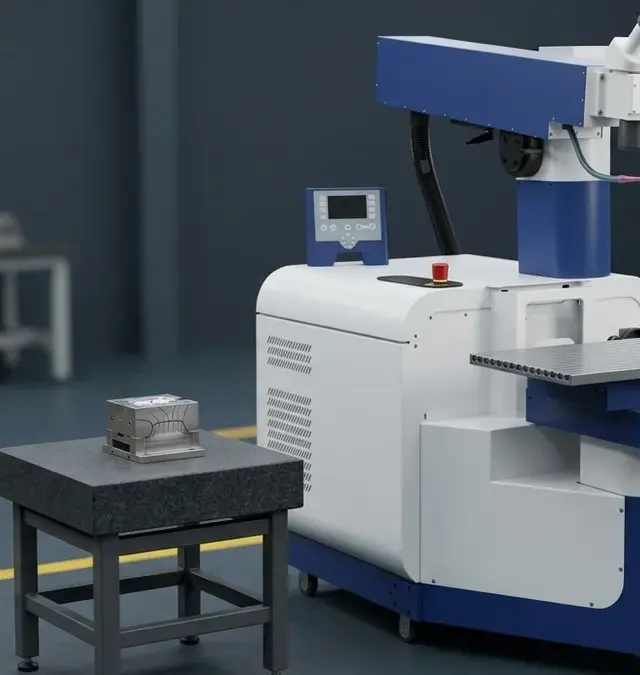
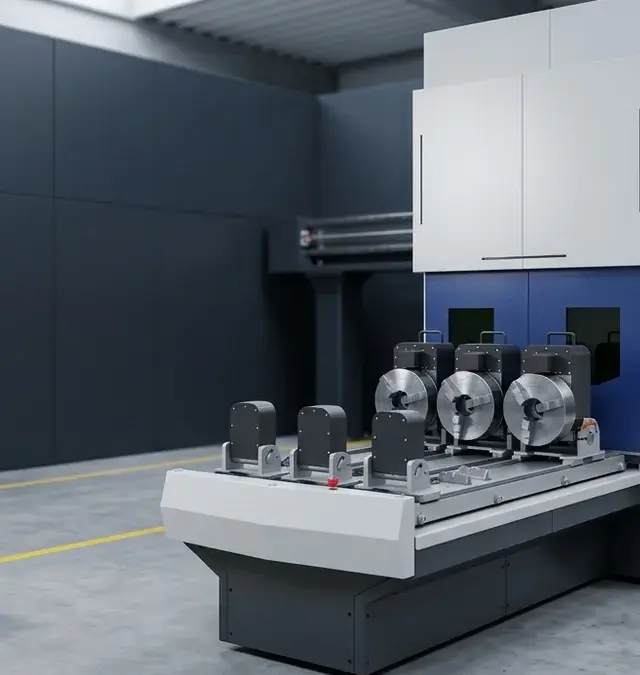
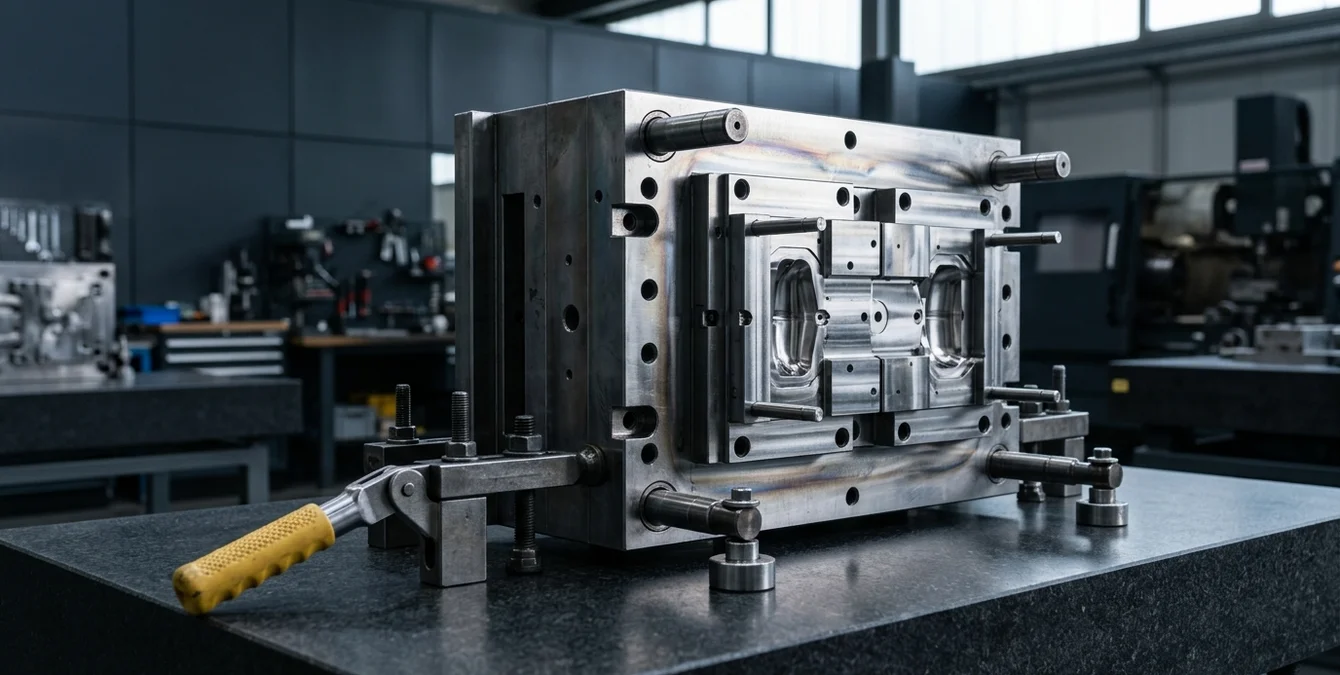
Laser welding with SPT is especially valuable in the repair of tools and injection molds, where the ability to restore worn or damaged surfaces without compromising base material properties is critical. Sigma’s Simass automation systems, including the stationary Slide and Rotate modules, are designed to accommodate large, complex workpieces such as multi-tonne molds and dies. These systems enable precise positioning and handling, ensuring that repairs can be performed efficiently and repeatably, even on intricate geometries.
When repairing tool steels, operators must balance the need for a strong, wear-resistant weld with the requirement to maintain base material toughness and dimensional accuracy. SPT’s fine control over heat input helps preserve the original hardness profile near the weld seam, minimizing the risk of softening or over-hardening adjacent areas. This is particularly important for surfaces subject to high loads or repeated thermal cycling in service.
Hardness expectations near the seam should be verified after welding, as even with optimal process control, some local variation is inevitable. The goal is to achieve a weld zone that matches the functional requirements of the tool or mold, with no significant loss of performance or service life. Sigma’s systems and process recommendations support consistent, high-quality repairs across a wide range of tooling applications.
- Simass modules support large and complex tool repairs.
- SPT minimizes distortion and preserves base material properties.
- Verify hardness and dimensional accuracy after repair.
Checking Your Work
After completing a weld on high-carbon or tool steels, thorough inspection is essential to confirm the absence of cracks and other defects. Once the part has cooled to ambient temperature, operators should perform a visual examination of the weld and adjacent HAZ, looking for any signs of surface cracking, undercut, or porosity. Good lighting and magnification, such as the Leica 10× stereo microscope supplied with Sigma systems, can aid in detecting fine surface indications.
For critical repairs or where crack sensitivity is high, additional non-destructive testing (NDT) methods are recommended. Dye penetrant inspection is a widely used technique for detecting surface-breaking cracks in tool steels. The process involves applying a penetrant liquid to the weld area, allowing time for penetration, then removing excess and applying a developer to draw out indications. Magnetic particle inspection may also be suitable for ferromagnetic tool steels, providing further assurance of weld integrity.
Operators should also check for dimensional accuracy and hardness near the weld seam, as these factors influence long-term tool performance. Any detected cracks or unacceptable defects require remedial action, such as grinding out and re-welding the affected area, followed by repeat inspection. Consistent application of these inspection steps is vital for quality assurance in tool and mold repair operations.
- Visual and magnified inspection for surface cracks.
- Dye penetrant or magnetic particle testing for critical repairs.
- Verify hardness and dimensions post-weld.
Frequently Asked Questions
What is the main advantage of SPT for welding tool steels?
SPT (Super Pulse Technology, microsecond pulse modulation) minimizes heat input and narrows the heat-affected zone, directly reducing the risk of cracking in hardenable tool steels. This precise control enables strong, reliable welds even on sensitive or high-value tooling components.
Do I still need to preheat when using SPT?
Yes. Preheating remains essential when welding high-carbon and tool steels, even with SPT. Preheat reduces thermal gradients and slows cooling, further minimizing crack risk. Combine SPT with classic countermeasures for the best results.
How do I select the right filler wire for tool steel repairs?
Choose a filler wire that closely matches the base steel in alloy content and hardness, or is slightly more ductile. Consult your material parameter tables and supplier recommendations. Clean, consistent wire feed is also critical for weld quality.
What inspection steps should I follow after welding?
After cooling, visually inspect the weld and HAZ for cracks. Use dye penetrant or magnetic particle testing for critical repairs. Also check hardness and dimensions near the weld. Address any defects before returning the tool to service.