
- Key Takeaways
- What are the Cost Differences Between Laser and TIG Welding?
- Initial Investment Costs
- Operational and Maintenance Expenses
- How Does Laser Welding Affect the Heat-Affected Zone Compared to TIG?
- Understanding Heat-Affected Zone
- Impact on Material Properties
- Why Consider ROI When Choosing Between Laser and TIG Welding?
- Importance of ROI in Modernization
- Long-term Business Performance
- Case Studies: Cost Savings with Laser Welding
- Industry Examples
- Financial Impact Analysis
- Which Welding Method Offers Better Precision and Versatility?
- Precision in Welding Methods
- Material Suitability and Versatility
- Frequently Asked Questions
- What are the cost differences between laser and TIG welding?
- How does laser welding affect the heat-affected zone compared to TIG?
- Is laser welding more efficient than TIG welding for high-volume production?
- What materials are best suited for laser welding compared to TIG welding?
- Can laser welding achieve better joint quality than TIG welding?
- What are the maintenance requirements for laser welding systems compared to TIG?
- How does the energy consumption of laser welding compare to TIG welding?
- Related Articles
- Sources
Key Takeaways
As factory owners and CTOs evaluate welding technologies to optimize their production lines, understanding the return on investment (ROI) of laser welding versus traditional TIG welding is crucial. This decision stage analysis focuses on the speed, efficiency, and material compatibility of each method to guide informed choices that drive profitability and innovation.
- Laser welding offers up to 5x faster processing speeds compared to TIG, significantly reducing production time and labor costs.
- With laser welding, precision and minimal heat input lead to less thermal distortion, improving overall product quality and reducing post-processing requirements.
- The versatility of laser welding allows for seamless integration with automation systems, enhancing production line efficiency and scalability.
- Laser welding accommodates a broader range of materials, including high-strength alloys and dissimilar metals, expanding manufacturing capabilities.
- Initial investment in laser welding technology can be offset by long-term savings in labor, material waste, and maintenance costs.
- TIG welding remains advantageous for smaller-scale operations where initial cost and equipment simplicity are priorities.
- For industries requiring high precision and intricate welds, laser welding ensures superior results with minimal rework, maximizing ROI.
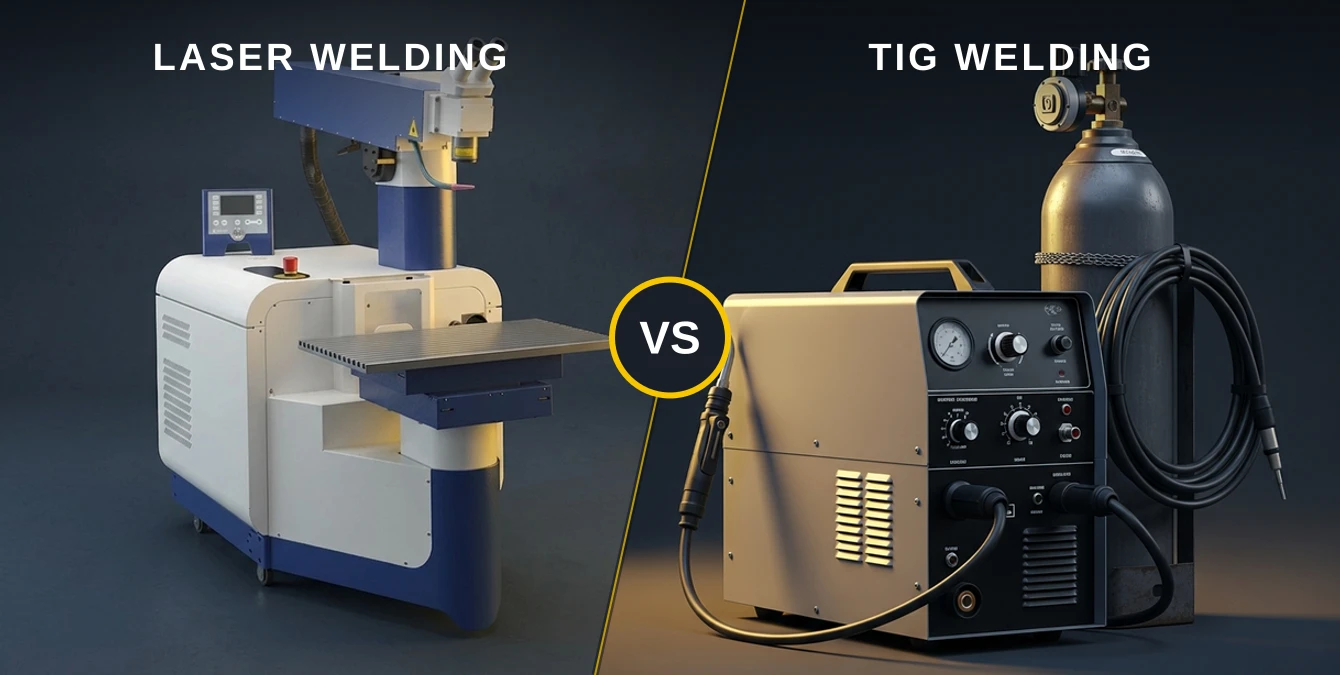
This article delves deeper into the specifics of laser and TIG welding, comparing their operational efficiencies and material compatibilities to help you make the best investment decision for your manufacturing needs.
| Parameter | Laser Welding (General) | TIG Welding (General) |
|---|---|---|
| Power Range | 500 W – 10 kW | Varies (typically lower than laser) |
| Wavelength | Around 1064 nm (fiber lasers) | N/A (electric arc process) |
| Beam Quality (M²) | < 1.2 | N/A |
| Penetration Depth | Material-dependent, deep with minimal HAZ | Up to 10 mm (material/setup dependent) |
| Precision/Tolerance | ±0.1 mm typical | Lower (manual skill dependent) |
| Energy Efficiency | Up to 30% | Lower |
These are general industry values, not specific to any Sigma Laser product. For precise specs, consult product datasheets.
What are the Cost Differences Between Laser and TIG Welding?
In the realm of industrial welding, both laser and TIG welding offer distinct advantages, each catering to specific engineering needs. Understanding the cost implications of each method is essential for maximizing return on investment (ROI), especially when considering high-precision tasks or welding thick materials. This section provides a deep dive into the cost differences, focusing on initial investment, operational expenses, and maintenance requirements.
Initial Investment Costs
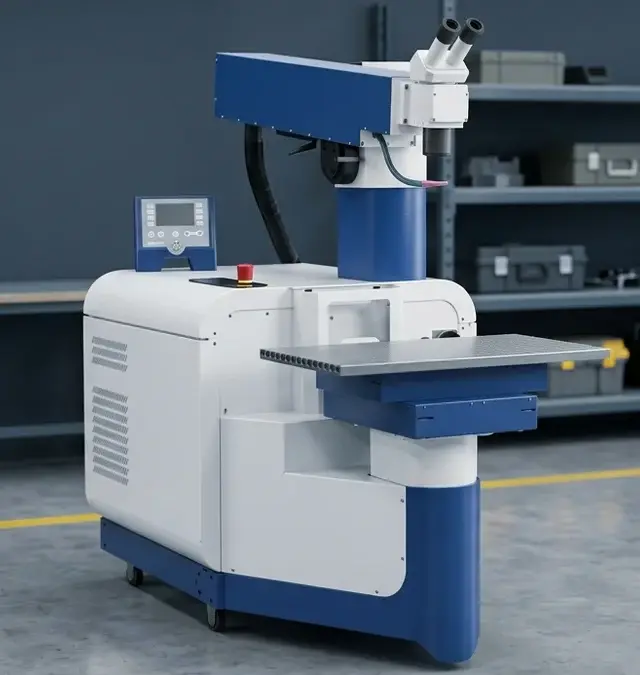
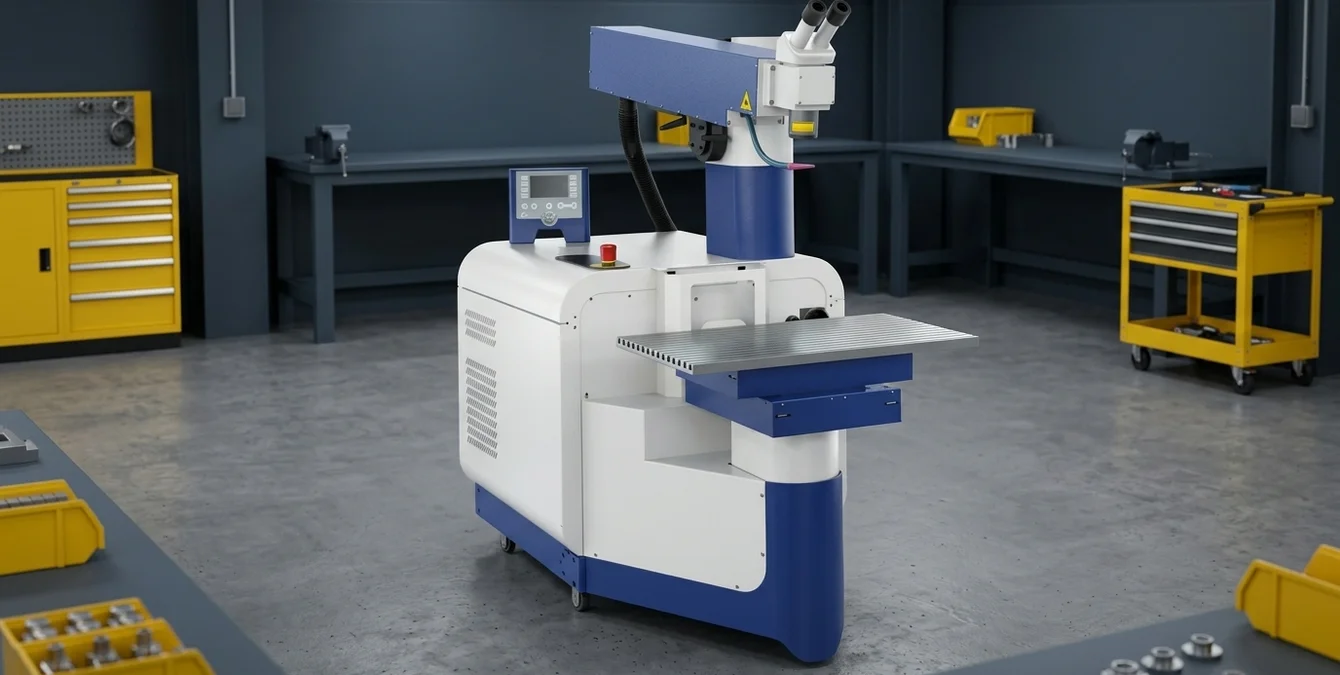
When evaluating the initial investment, laser welding systems, such as those offered by Sigma Laser, typically require a higher upfront cost compared to TIG welding setups. This is due to the advanced technology and precision engineering involved in laser systems. For instance:
- Laser Welding Equipment: Systems like the Sidanus Light and Siega Fibre are engineered for high precision and flexibility, often incorporating advanced features such as Super Pulse Technology (SPT) and Swivel Optics. This technology ensures unparalleled accuracy and speed, justifying the higher initial capital outlay. Typical laser parameters for high-precision laser welding systems include power outputs up to 500 W (Nd:YAG) or 600 W (fibre laser), wavelengths around 1064–1070 nm, and beam quality M² values typically less than 1.2, which are critical for achieving tight tolerances and minimal heat-affected zones (HAZ).
- TIG Welding Equipment: While TIG welding is known for its capability to handle thick materials and complex alloys, the initial cost is generally lower as the technology is less complex and the equipment is more readily available. TIG welding is suitable for materials such as stainless steel (e.g., AISI 304, 316), aluminum alloys (e.g., 6061, 7075), and special alloys, with typical penetration depths up to 10 mm depending on the material and setup.
Ultimately, the choice between laser and TIG welding will depend on the specific application requirements, with laser welding providing superior precision and versatility at a higher initial purchase price.
Operational and Maintenance Expenses
Operational costs and maintenance are crucial factors influencing the long-term ROI of welding technologies. In this regard, laser welding systems often present an advantage in efficiency and reduced downtime.
- Energy Consumption: Laser welding systems, particularly those using fiber lasers, are more energy-efficient compared to TIG welding. The focused energy application translates to lower power consumption and shorter welding cycles, thus reducing operational costs. Fiber lasers typically operate with efficiencies up to 30%, significantly higher than TIG systems.
- Labor Costs: The automation capabilities inherent in laser systems, such as those with the Sigomatic Pro and Motor-driven Turning Device, reduce the need for manual intervention, subsequently lowering labor costs. Automation also enhances repeatability, with typical precision levels of ±0.1 mm, which is critical for industries adhering to standards like ISO 15614-11:2002.
- Maintenance Expenses: While both systems require regular maintenance, laser welding systems generally benefit from longer intervals between servicing due to fewer consumables and wear parts. This results in decreased maintenance expenses over the lifespan of the equipment. For instance, fiber laser sources often have lifespans exceeding 100,000 hours, reducing the frequency of replacements and servicing.
In conclusion, while the initial investment for laser welding is higher, the long-term operational savings and increased precision often result in a more favorable laser welding ROI compared to TIG. This makes laser welding an attractive option for industries requiring high precision and efficiency, such as the automotive and aerospace sectors.
| Aspect | Laser Welding | TIG Welding |
|---|---|---|
| HAZ Width | Narrow, precise | Broader |
| Thermal Distortion | Minimal | More pronounced |
| Material Properties | Better preservation (tensile strength, corrosion resistance) | Greater risk of property alteration |
| Post-Weld Treatment | Less required | More often needed |
HAZ and material property impacts are based on general process characteristics as described in the article.
How Does Laser Welding Affect the Heat-Affected Zone Compared to TIG?
Understanding Heat-Affected Zone
In precision welding, minimizing the heat-affected zone (HAZ) is crucial for maintaining material integrity. The HAZ refers to the portion of the base material that is not melted but whose microstructure and properties are altered by the heat of the welding process. Laser welding, a cornerstone technology in Sigma Laser’s suite of products including the Sidanus Light and Sirius Light, offers significant advantages in this area compared to traditional TIG welding.
Laser welding delivers concentrated energy that results in a narrow and precise weld, thereby reducing the width of the HAZ. This not only preserves the mechanical properties of the material but also enhances the aesthetic quality of the weld seam. In contrast, TIG welding, known for handling thick materials, generates a broader HAZ due to its slower heat input and larger arc, which can adversely affect the surrounding material.
Laser systems typically operate within a power range of 500 W to 10 kW and utilize wavelengths around 1064 nm, which is common for fiber lasers. The beam quality, often characterized by an M² value less than 1.2, ensures high precision and repeatability, with typical tolerances of ±0.1 mm. The focal length of laser optics, usually between 100 mm and 200 mm, allows for deep penetration with minimal distortion, crucial for thin materials and complex geometries.
Impact on Material Properties
The implications of a minimized HAZ are profound in industrial applications where material properties such as tensile strength and corrosion resistance are paramount. For CTOs evaluating laser welding ROI vs TIG, the reduced HAZ translates to fewer post-weld treatments, less material deformation, and a higher quality end product. This is particularly critical in sectors like aerospace and automotive manufacturing, where Sigma Laser’s advanced systems, such as the Siega Fibre and Super Pulse Technology (SPT), deliver unmatched precision and efficiency.
By opting for laser welding, manufacturers can ensure compliance with stringent standards such as ISO 9001 and AWS D1.1, while also achieving cost-effective production. The precision and control provided by Sigma Laser’s technologies, including Swivel Optics and the Z-Axis Module, underscore the importance of selecting the right welding process to meet future production challenges and maintain competitive advantage.
Laser welding is compatible with a wide range of materials, including high-strength steels (e.g., EN 10149), aluminum alloys (e.g., 6061-T6), and exotic materials like titanium and Inconel. The process parameters, such as welding speed (typically 1 to 10 m/min) and penetration depth (up to 25 mm for certain applications), are crucial for optimizing weld quality and efficiency. Adherence to standards like ISO 15614-11:2002 ensures that the welding process meets rigorous quality requirements, making it suitable for critical applications where precision and reliability are non-negotiable.
| Parameter | Laser Welding | TIG Welding |
|---|---|---|
| Initial Investment | Higher (advanced technology, e.g., Sigma Laser Sidanus Light, Siega Fibre; features like SPT, Swivel Optics) | Lower (simpler technology, widely available equipment) |
| Processing Speed | Up to 5x faster than TIG | Slower |
| Precision | Superior; minimal heat input, tight tolerances, less rework | Good, but less precise for intricate welds |
| Material Compatibility | Broad (high-strength alloys, dissimilar metals) | Suitable for stainless steel, aluminum alloys, special alloys |
| Operational Costs | Lower (energy-efficient, automation reduces labor) | Higher (manual labor, longer cycles) |
| Maintenance | Longer intervals, fewer consumables (fiber laser sources >100,000 h lifespan) | Regular servicing, more wear parts |
| Heat-Affected Zone (HAZ) | Narrow, minimal distortion | Broader, more distortion |
| Best Use Case | High-volume, high-precision, automated production | Small-scale, lower initial cost, manual operations |
All values are based on general process characteristics and qualitative comparisons as described in the article. Numeric specs are not attributed to specific Sigma Laser models.
Why Consider ROI When Choosing Between Laser and TIG Welding?
In the competitive landscape of industrial manufacturing, decision-makers like CTOs must prioritize return on investment (ROI) when evaluating welding technologies such as laser welding and TIG welding. While both methods have their merits, understanding the ROI can significantly impact modernization strategies and long-term business outcomes.
Importance of ROI in Modernization
When planning modernization, considering the ROI of adopting laser welding over TIG welding can lead to enhanced operational efficiency. Laser welding, known for its precision, is often preferred for intricate tasks where accuracy is paramount. This precision can reduce material waste and rework time, offering a substantial ROI compared to the traditional TIG welding, which is more suited for thick materials but may involve longer processing times. Additionally, technologies like Sigma Laser’s Swivel Optics and Super Pulse Technology (SPT) enhance the flexibility and speed of laser welding, further boosting ROI by minimizing downtime and optimizing production lines.
Laser welding systems typically operate with power ranges from 500 W to 10 kW, allowing for welding speeds up to 10 m/min, depending on the material and thickness. The beam quality, often characterized by an M² value of less than 1.2, ensures a small focal spot size, which is critical for achieving high precision. The heat-affected zone (HAZ) is minimized due to the concentrated energy delivery, which is particularly advantageous when welding thin materials or components with tight tolerances, typically within ±0.1 mm.
Laser welding is compatible with a wide range of materials, including stainless steels (e.g., AISI 304, 316), aluminum alloys (e.g., 6061, 7075), and high-strength steels, making it versatile for various industrial applications. The process adheres to standards such as ISO 15614-11:2002, ensuring consistency and quality in production.
Long-term Business Performance
Beyond immediate cost savings, ROI influences the sustainability of business performance in the long run. Implementing laser welding systems such as Sigma Laser’s Sidanus Fibre and Sineo Light can lead to improved product quality and consistency, reducing the likelihood of defects and recalls. This not only saves costs but also enhances brand reputation and customer satisfaction. Furthermore, compliance with strict standards like ISO 9001 and AWS D1.1 can be more easily achieved with laser welding’s precision capabilities, thus expanding market opportunities and ensuring regulatory alignment.
- Reduces material waste and rework time
- Enhances production line efficiency with advanced technologies
- Improves product quality and consistency
- Ensures compliance with international welding standards
- Facilitates welding of complex geometries and high-reflectivity materials
- Minimizes distortion in thin sections due to low heat input
In conclusion, while evaluating laser welding ROI vs TIG welding, CTOs should consider not only the upfront costs but also the long-term strategic benefits that laser welding systems from Sigma Laser can deliver to their production processes.
Case Studies: Cost Savings with Laser Welding
In precision manufacturing, adopting laser welding technology marks a significant shift in operational efficiency and cost management. Unlike traditional methods such as TIG welding, often preferred for thick materials, laser welding offers unmatched precision and adaptability, making it an attractive option for various industrial applications. This section explores real-world case studies demonstrating the cost savings and efficiency gains achieved through transitioning to laser welding systems, particularly those engineered by Sigma Laser.
Industry Examples
The aerospace industry has long been a pioneer in adopting cutting-edge technologies. A notable example is a leading European aerospace manufacturer that transitioned from TIG welding to Sigma Laser’s fiber laser systems. This switch enabled them to achieve higher precision in joining lightweight materials, significantly reducing the material wastage associated with TIG welding thick materials. Fiber lasers, typically operating at wavelengths of 1070 nm, offer superior beam quality with M² values often below 1.1, allowing for precise control over the weld seam. Similarly, a prominent automotive company implemented Sigma Laser’s Sidanus Fibre system, optimizing their production lines by reducing cycle times and enhancing weld quality. These examples underscore the precision and versatility of laser welding in demanding industrial environments.
Laser welding systems, such as those from Sigma Laser, are capable of achieving welding speeds up to 10 m/min with penetration depths typically reaching up to 5 mm in stainless steel (ISO 15614-11:2002), depending on the laser power, which can range from 500 W to several kW. The heat-affected zone (HAZ) is minimized, often less than 0.5 mm, which is critical in maintaining the mechanical properties of the workpiece.
Financial Impact Analysis
The financial benefits of adopting laser welding over traditional methods like TIG are substantial. For the aerospace manufacturer, the transition resulted in a 20% reduction in labor costs and a 15% increase in production throughput, directly impacting their bottom line. The automotive company reported a 30% reduction in energy consumption and a significant decrease in maintenance costs due to the high reliability and low wear of Sigma Laser’s systems. These financial metrics exemplify the robust laser welding ROI compared to TIG, where initial investments are quickly offset by long-term savings and operational efficiencies.
Furthermore, implementing Sigma Laser’s advanced technologies such as Super Pulse Technology (SPT) and Swivel Optics has enabled companies to achieve precise welds in complex geometries, previously deemed challenging with TIG welding. This technological edge not only improves product quality but also enhances the overall competitiveness of manufacturers in the global market.
- Reduced labor costs and increased throughput in aerospace applications
- Energy and maintenance savings in automotive manufacturing
- Enhanced precision and adaptability for complex geometries
As industries continue to seek methods to improve efficiency and reduce costs, the case studies presented here highlight the compelling advantages of adopting Sigma Laser’s cutting-edge welding technologies. With a focus on precision, reliability, and cost-effectiveness, laser welding stands out as a transformative solution for modern manufacturing challenges.
Which Welding Method Offers Better Precision and Versatility?
In industrial manufacturing, choosing between laser welding and TIG welding can significantly affect production efficiency and quality. Both methods have distinct advantages in terms of precision and versatility, which are crucial for achieving optimal results. Sigma Laser’s advanced systems, such as the Sidanus Light and Sirius Light, are engineered to deliver exceptional laser welding precision, providing a compelling ROI compared to TIG welding.
Precision in Welding Methods
Laser welding is renowned for its high precision, making it ideal for applications requiring minimal thermal distortion and tight tolerances. The focused laser beam ensures a narrow heat-affected zone, which is particularly advantageous in sectors like electronics, automotive, and aerospace, where precision is paramount. In contrast, TIG welding, while capable of producing quality welds, may struggle with precision in micro-welding applications due to its broader heat-affected zone.
Typically, laser welding systems operate within power ranges of 500W to 6kW, with beam quality M² values often less than 1.2, ensuring high precision and repeatability (±0.01 mm). The penetration depth can reach up to 25 mm in single pass operations, depending on the material and laser power. The process can achieve welding speeds up to 10 m/min, which significantly reduces cycle times compared to traditional methods.
Material Suitability and Versatility
Laser welding’s adaptability to a wide range of materials, including stainless steel (e.g., 304, 316), aluminum alloys (e.g., 6061, 7075), and titanium, enhances its versatility. The technology excels at welding thin materials, where its precision minimizes the risk of warping. TIG welding, however, is often preferred for joining thicker materials due to its ability to handle higher thermal loads. Industries such as shipbuilding and heavy machinery benefit from TIG welding’s capability to manage thick material welds.
- Laser Welding: Best suited for thin materials and precision applications, reducing post-weld processing. It complies with standards such as ISO 15614-11:2002 and EN ISO 4063:2011 for quality assurance.
- TIG Welding: Ideal for thicker materials, providing robust welds in structural applications. It adheres to guidelines like EN 1011-1:2009 for welding thicker sections.
For manufacturing engineers and procurement managers, understanding these differences is crucial for selecting the right welding method. By evaluating laser welding ROI versus TIG, Sigma Laser’s solutions ensure enhanced productivity and quality, aligning with industrial standards such as ISO 9001 and DIN EN ISO 4063.
Frequently Asked Questions
What are the cost differences between laser and TIG welding?
Laser welding systems typically have a higher initial capital cost compared to TIG welding equipment. However, laser welding offers faster processing speeds, reduced labor costs, and lower energy consumption, which can lead to a higher ROI over time. TIG welding, while less expensive upfront, often incurs higher operational costs due to slower weld speeds and increased labor requirements.
How does laser welding affect the heat-affected zone compared to TIG?
Laser welding produces a smaller heat-affected zone (HAZ) than TIG welding due to its concentrated energy delivery. This minimizes thermal distortion and reduces the risk of material degradation, resulting in higher precision and better mechanical properties in the welded joint. TIG welding, with its broader HAZ, can lead to more significant thermal distortion.
Is laser welding more efficient than TIG welding for high-volume production?
For high-volume production, laser welding is generally more efficient due to its rapid processing speeds and automation capabilities. It allows for continuous welding with minimal downtime, increasing throughput. TIG welding is slower and more labor-intensive, making it less suitable for large-scale production runs.
What materials are best suited for laser welding compared to TIG welding?
Laser welding is highly effective for thin materials and components requiring precision, such as stainless steel, aluminum, and certain alloys. It excels in applications where minimal thermal distortion is critical. TIG welding is versatile for a wide range of materials, including thicker sections, but may require more post-processing for precision applications.
Can laser welding achieve better joint quality than TIG welding?
Laser welding can achieve superior joint quality with minimal porosity and excellent surface finish due to its precise control over the welding parameters. It is especially advantageous for applications requiring high-strength, clean welds. TIG welding can also produce high-quality joints but often requires more skill and time to achieve similar results.
What are the maintenance requirements for laser welding systems compared to TIG?
Laser welding systems generally have lower maintenance requirements due to fewer consumables and automated operations. Regular system checks and occasional optical cleaning are typically sufficient. TIG welding requires more frequent electrode replacement and gas supply management, leading to higher ongoing maintenance efforts.
How does the energy consumption of laser welding compare to TIG welding?
Laser welding is more energy-efficient, utilizing focused energy delivery to achieve welds with less power consumption. This efficiency contributes to lower operational costs over time. In contrast, TIG welding consumes more energy due to its prolonged process times and higher thermal input.
Sources
- ISO 15614-11:2002 — Specification and qualification of welding procedures for metallic materials – Part 11: Electron and laser beam welding
- DIN EN ISO 4063:2011 — Welding and allied processes – Nomenclature of processes and reference numbers
- EN 1011-1:2009 — Welding – Recommendations for welding of metallic materials – Part 1: General guidance for arc welding
- Journal of Manufacturing Processes — Covers research on manufacturing processes, including laser and TIG welding technologies.
- Welding Journal — Published by the American Welding Society, this journal includes articles on welding technologies and ROI analysis.
- Journal of Laser Applications — Focuses on the practical applications of laser technology, including welding.