
- Key Takeaways
- What is the Difference Between Laser Welding and Electron Beam Welding?
- Introduction to Laser Welding
- Introduction to Electron Beam Welding
- How Do Vacuum Requirements Impact Welding Processes?
- Vacuum Chamber Specifications
- Impact on Setup and Costs
- What Are the Penetration Capabilities of Laser vs Electron Beam Welding?
- Penetration Depth Comparison
- Material and Thickness Considerations
- What Are the Safety Considerations for Laser and Electron Beam Welding?
- Safety Protocols for Laser Welding
- Safety Protocols for Electron Beam Welding
- How Does the Energy Efficiency of Laser Welding Compare to Electron Beam Welding?
- Energy Consumption Analysis
- Cost-Effectiveness for Industries
- Case Studies: Long-Term Performance of Welds in Specific Industries
- Automotive Industry Case Study
- Aerospace Industry Case Study
- Frequently Asked Questions
- How does the energy efficiency of laser welding compare to electron beam welding?
- What are the key differences in operational environments for laser vs electron beam welding?
- Which welding method offers better precision and control?
- What are the cost implications of choosing laser welding over electron beam welding?
- How do material compatibility and thickness affect the choice between laser and electron beam welding?
- What advantages does Sigma Laser offer for deep-penetration welding compared to electron beam systems?
- Related Articles
- Sources
Quick Answer: Laser welding vs electron beam welding primarily differs in their operational environments and penetration capabilities. Laser welding operates in open air and offers flexibility with various materials, while electron beam welding requires a vacuum environment, making it suitable for high-precision tasks. Laser welding provides moderate penetration with high speed, ideal for thin materials, whereas electron beam welding delivers deeper penetration, making it preferable for thicker materials. Consider your specific manufacturing needs, such as material thickness and precision, when choosing between these technologies.
Key Takeaways
In evaluating advanced welding technologies for industrial applications, understanding the differences between laser welding and electron beam welding is crucial. Both methods offer unique advantages and limitations that impact cost-efficiency, application suitability, and operational constraints.
- Laser welding typically incurs lower upfront costs compared to electron beam systems, making it more accessible for small to medium-scale operations.
- Electron beam welding offers superior precision and deeper penetration, ideal for high-value, intricate components in aerospace and automotive industries.
- Laser welding is highly versatile, applicable to a wider range of materials and thicknesses, and can be integrated into automated production lines with ease.
- Electron beam welding requires a vacuum environment, which can increase operational complexity and limit throughput compared to laser welding.
- Both technologies demand skilled operators, but laser systems generally offer a more user-friendly interface and lower maintenance requirements.
- Consider the specific material properties and joint configurations of your application to determine the most cost-effective and efficient welding solution.
- Assess the long-term operational costs, including maintenance and energy consumption, to ensure alignment with your production goals.
This article will delve deeper into these factors, providing a comprehensive analysis to aid your decision-making process. Explore how each welding technology aligns with your operational needs and strategic objectives.
| Material Type | Laser Welding | Electron Beam Welding |
|---|---|---|
| Stainless Steels (e.g., 304, 316) | Yes | Yes |
| Aluminum Alloys (e.g., 6061, 7075) | Yes | Limited (challenging due to vacuum outgassing) |
| High-Strength Low-Alloy Steels | Yes | Yes |
| Titanium Alloys | Possible | Yes (preferred for thick sections) |
| Nickel-Based Superalloys | Possible | Yes |
Material compatibility as described in the article; suitability may vary with thickness and application.
What is the Difference Between Laser Welding and Electron Beam Welding?
Introduction to Laser Welding
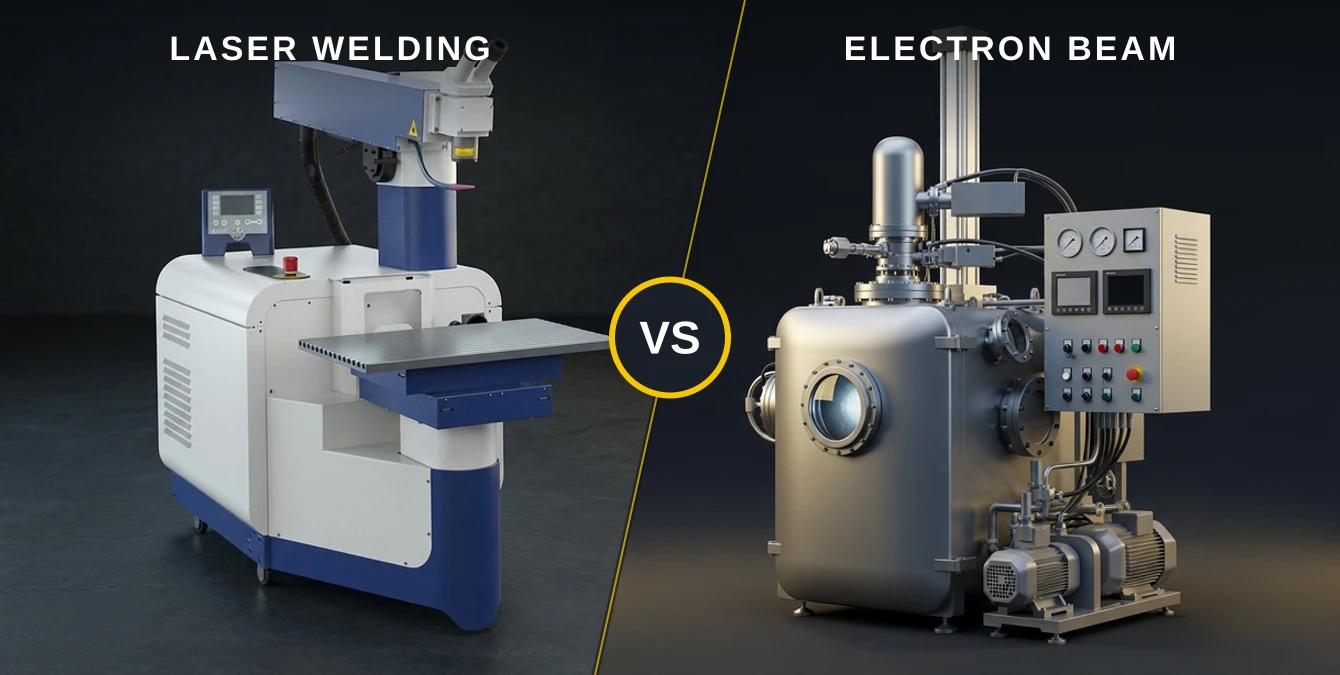
Laser welding, a cornerstone of advanced manufacturing, utilizes a concentrated beam of light to fuse materials. This method, as exemplified by Sigma Laser’s Sidanus Light and Sirius Light systems, offers high precision and control, making it ideal for intricate applications. Operating in an open-air environment, laser welding excels in scenarios requiring minimal heat distortion and high-speed processing. It is particularly effective for applications in the automotive, aerospace, and electronics industries where weld penetration and precision are critical.
Laser welding systems typically operate with power ranges from 500 W to 10 kW, and use wavelengths in the range of 1064 nm for fiber lasers, which are common in industrial applications. The beam quality, characterized by an M² value of less than 1.2, allows for precise focusing, achieving spot sizes as small as 50 microns. Typical welding speeds can reach up to 5 m/min, and penetration depths can vary from 0.5 mm to 25 mm depending on the material and laser power. The heat-affected zone (HAZ) is minimal, often less than 0.5 mm, which is advantageous for maintaining material properties. Laser welding is compatible with a wide range of materials, including stainless steels (e.g., 304, 316), aluminum alloys (e.g., 6061, 7075), and high-strength low-alloy steels.
According to ISO 15614-11, the qualification of welding procedures for laser welding ensures consistent quality and repeatability, with tolerances typically within ±0.1 mm. The process is highly automated, providing repeatability and precision essential for high-volume production environments.
Introduction to Electron Beam Welding
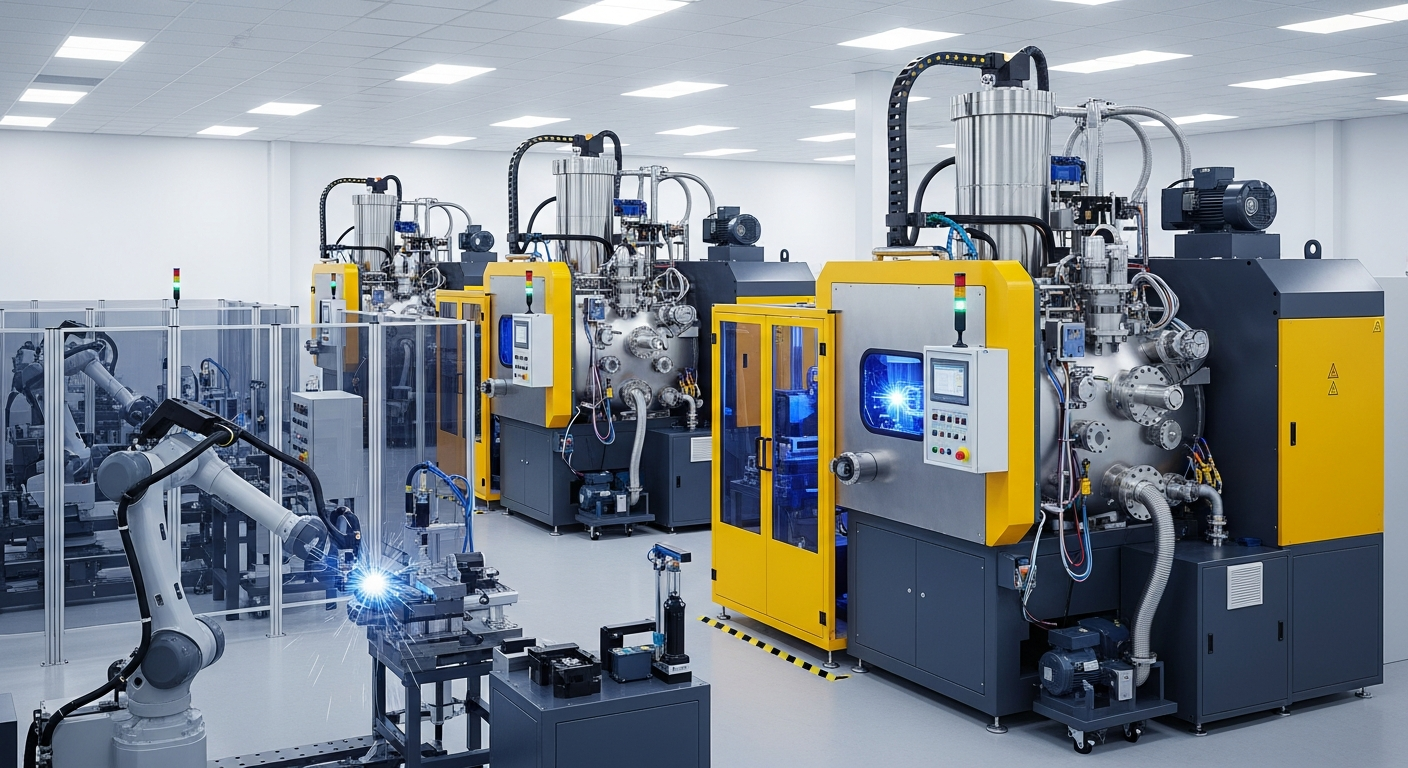
Electron beam welding (EBW), on the other hand, employs a focused beam of electrons to achieve deep weld penetration, necessitating a vacuum chamber for optimal performance. This requirement is crucial for preventing electron scattering, ensuring precise and strong welds. EBW is highly effective for thick materials and is commonly used in the aerospace, nuclear, and defense sectors where structural integrity is paramount. However, the vacuum chamber requirement limits its versatility compared to laser welding, which can be deployed more flexibly across various environments.
EBW systems typically operate at voltages between 60 kV and 200 kV, with beam currents ranging from 50 mA to 1000 mA, allowing for penetration depths exceeding 100 mm in steel. The process is well-suited for materials such as titanium alloys, nickel-based superalloys, and high-strength steels. The precision of EBW is governed by standards such as DIN EN ISO 14744-1, which outlines the acceptance inspection criteria for electron beam welding machines. Despite its high precision, the necessity for a vacuum chamber can limit throughput and increase setup times compared to laser welding.
| Requirement | Laser Welding | Electron Beam Welding |
|---|---|---|
| Vacuum Needed | No | Yes (10⁻⁵ to 10⁻⁷ Torr typical) |
| Setup Time | Short (rapid transitions) | Longer (vacuum pump-down, calibration) |
| Chamber Size Limitation | None (open environment) | Yes (limited by chamber size, up to several meters) |
| Contamination Control | Standard clean environment | Strict (per DIN EN ISO 14744-1:2000) |
| Cost Impact | Lower (no vacuum infrastructure) | Higher (vacuum pumps, seals, maintenance) |
Vacuum requirements directly affect operational flexibility and cost structure.
How Do Vacuum Requirements Impact Welding Processes?
In industrial welding applications, choosing between laser welding and electron beam welding often depends on the environmental conditions each process requires. Understanding these requirements is crucial for manufacturing engineers and procurement managers who aim to optimize production efficiency and cost-effectiveness. At Sigma Laser, we recognize that each welding method has distinct advantages based on its environmental needs.
Vacuum Chamber Specifications
Electron beam welding relies on a vacuum chamber to accurately focus and control the electron beam. This vacuum environment is essential for achieving the high weld penetration and precision needed in critical applications such as aerospace and automotive component manufacturing. The vacuum chamber requirements typically involve:
- Maintaining a high vacuum level, usually in the range of 10-5 to 10-7 Torr.
- Ensuring a contamination-free environment to prevent defects in the weld joint, as per DIN EN ISO 14744-1:2000 standards.
- Utilizing robust chamber designs to accommodate various component sizes, often up to several meters in length, depending on application needs.
In contrast, laser welding, facilitated by Sigma Laser’s advanced solutions like the Sidanus Fibre or Siega Fibre, operates efficiently in open environments. This flexibility eliminates the need for vacuum chambers, making laser welding a more versatile option for industries requiring rapid setup and adaptation to different production lines.
Laser welding systems typically employ lasers with power outputs ranging from 1 kW to 10 kW, depending on material and thickness, with wavelengths commonly around 1070 nm for fiber lasers. The beam quality, often characterized by an M² value of less than 1.2, ensures high precision and minimal heat-affected zones, typically less than 0.5 mm for thin materials.
Impact on Setup and Costs
The vacuum chamber requirements for electron beam welding significantly affect setup and operational costs. The initial investment in vacuum technology, along with the ongoing maintenance of vacuum pumps and seals, can be substantial. Additionally, the complexity of setting up and calibrating the vacuum system can extend lead times, impacting overall project feasibility, particularly in high-volume production environments.
Conversely, laser welding systems, such as those offered by Sigma Laser, offer reduced setup times and lower operational costs due to their open-air functionality. This makes them ideal for industries focused on lean manufacturing and just-in-time production. The absence of a vacuum chamber streamlines the welding process, allowing for quicker transitions between different tasks and reducing downtime.
Laser welding is particularly advantageous for materials such as stainless steel (ISO 14343), aluminum alloys (ISO 18273), and high-strength steels, where precise control over the heat input is critical to maintaining mechanical properties and minimizing distortion.
Ultimately, the decision between laser welding and electron beam welding should consider the specific application requirements, cost constraints, and production scale. Sigma Laser’s diverse product line provides versatile solutions that can be tailored to meet the unique demands of European industrial markets.
| Parameter | Laser Welding | Electron Beam Welding |
|---|---|---|
| Operating Environment | Open air (no vacuum required) | Vacuum chamber required |
| Penetration Depth | Moderate (typically up to 25 mm, material-dependent) | Deep (can exceed 100 mm in steel) |
| Precision | High (±0.1 mm typical tolerance) | Very high (critical for aerospace/nuclear) |
| Material Flexibility | Wide range (stainless steel, aluminum, HSLA steels) | Best for high-value, thick, or exotic alloys |
| Setup Complexity | Low (rapid setup, easy integration) | High (vacuum setup, longer lead times) |
| Operational Costs | Lower (no vacuum, less maintenance) | Higher (vacuum pumps, chamber maintenance) |
| Typical Power Range | 500 W – 10 kW (industrial) | 60 kV – 200 kV (beam voltage), 50–1000 mA (current) |
| Automation | Highly automated, user-friendly | Automated but requires skilled setup |
All figures are general process values as stated in the article, not tied to specific Sigma Laser models.
What Are the Penetration Capabilities of Laser vs Electron Beam Welding?
Penetration Depth Comparison
In the industrial landscape, both laser welding and electron beam welding are crucial for achieving high-quality welds with precise penetration characteristics. Laser welding, as implemented in Sigma Laser’s advanced Sidanus Light and Sineo Fibre systems, offers versatile penetration depths, typically ranging from a few millimeters to over 20mm, depending on the power settings and material properties. Laser systems generally operate at power levels from 1 kW to 20 kW, with wavelengths typically around 1064 nm for fiber lasers, and beam quality M² values often less than 1.5 for high precision applications. In contrast, electron beam welding, which requires a vacuum chamber to function, can penetrate deeper, often exceeding 100mm. This capability makes it suitable for extremely thick materials where deep, narrow welds are essential.
Material and Thickness Considerations
When selecting between laser welding and electron beam welding, material type and thickness are critical considerations. Laser welding is highly effective for materials like stainless steel (e.g., 304, 316), aluminum alloys (e.g., 6061, 7075), and titanium (e.g., Ti-6Al-4V), providing excellent weld penetration and minimal thermal distortion—ideal for automotive and aerospace components. Sigma Laser’s Super Pulse Technology (SPT) enhances this capability, offering superior heat control for delicate materials. The typical welding speed for laser systems can range from 1 to 10 meters per minute, depending on material thickness and laser power.
Electron beam welding excels in applications involving thick sections or refractory metals, such as tungsten or molybdenum, commonly used in aerospace turbines and power generation. However, the necessity of a vacuum environment can be a limiting factor in terms of production speed and cost, making it less favorable for high-volume manufacturing. The heat-affected zone in electron beam welding is typically narrower than in laser welding, which is advantageous for maintaining material properties in critical applications.
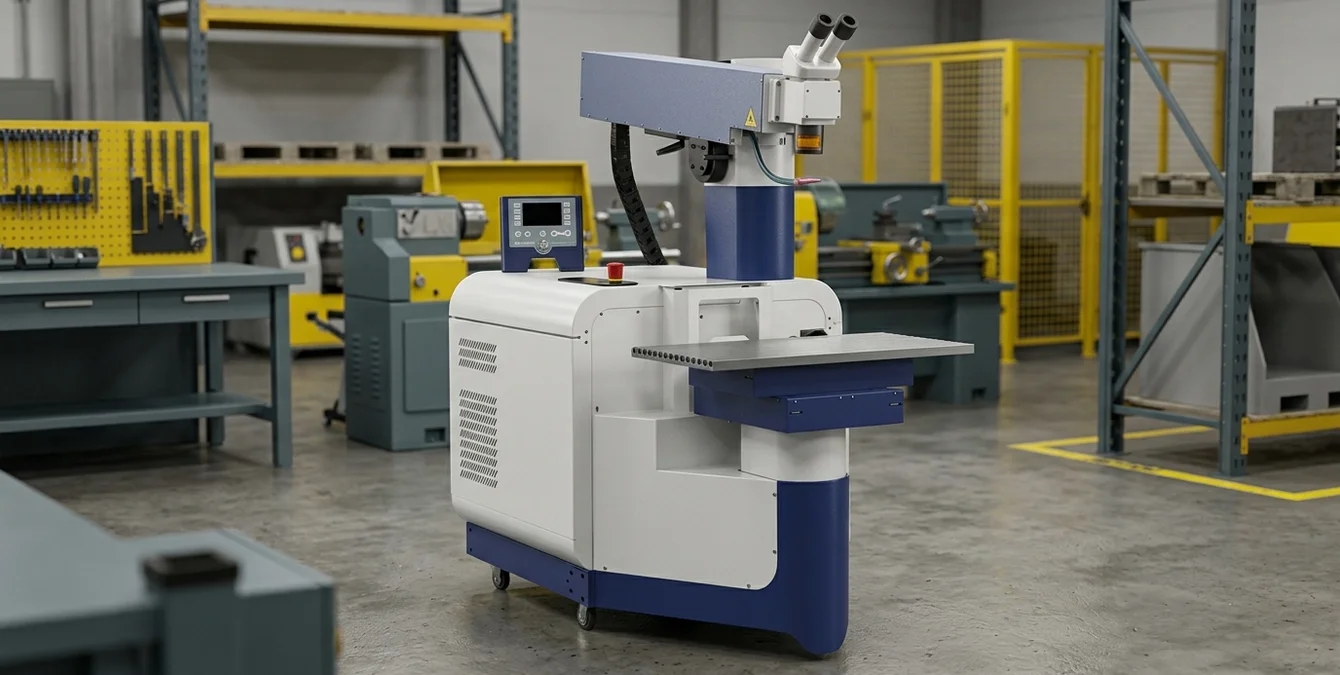
Ultimately, the choice between laser welding and electron beam welding depends on specific project requirements, including the desired weld penetration, material composition, and production scale. For applications demanding high precision and flexibility without the constraints of a vacuum chamber, laser welding with Sigma Laser’s integrated solutions like Swivelling Y Axis and Motor-driven Turning Device provides a robust alternative. Adhering to standards such as ISO 4063:2009 and AWS D17.1/D17.1M:2017 ensures quality and repeatability in welding processes, with typical tolerances in laser welding achieving ±0.1 mm precision.
What Are the Safety Considerations for Laser and Electron Beam Welding?
In the industrial landscape, ensuring worker safety during advanced welding processes such as laser welding and electron beam welding is paramount. These technologies, crucial for achieving precision weld penetration, demand stringent safety protocols to protect operators and maintain operational integrity.
Safety Protocols for Laser Welding
Laser welding, utilized in systems like Sigma Laser’s Sidanus Light and Sirius Light, involves high-intensity light beams that can pose significant risks if not managed correctly. The following safety measures are essential:
- Protective Enclosures: Ensure laser welding stations are equipped with protective barriers to prevent accidental exposure to laser beams. Systems typically operate with laser powers ranging from 500 W to 10 kW, necessitating robust enclosures compliant with ISO 11553-1 standards.
- Laser Safety Goggles: Operators must wear appropriate laser safety goggles to shield their eyes from harmful radiation. Goggles should be selected based on the laser’s wavelength, commonly in the range of 1064 nm for Nd:YAG lasers, ensuring compliance with EN 207 standards.
- Ventilation Systems: Implement effective ventilation systems to handle fumes and particulates generated during the welding process. This is crucial when welding materials like stainless steel or aluminum alloys, which can release hazardous fumes.
- Training and Certification: Workers should undergo comprehensive training and certification to understand laser safety protocols and emergency procedures. Training programs should align with ISO 14732 requirements for operator competence.
- Operational Constraints: Laser welding typically achieves penetration depths up to 10 mm in stainless steel with welding speeds ranging from 0.5 to 5 m/min, depending on material thickness and laser power.
Safety Protocols for Electron Beam Welding
Electron beam welding, a technology requiring vacuum chamber conditions, ensures deep weld penetration for critical applications. Sigma Laser’s expertise in this domain highlights the importance of the following safety considerations:
- Vacuum Chamber Integrity: Regularly inspect and maintain vacuum chambers to prevent leaks, which can compromise safety and weld quality. Chambers should be tested for vacuum levels typically reaching 10^-5 Torr to ensure optimal conditions.
- Radiation Shielding: Install radiation shields to protect operators from X-rays generated during the electron beam welding process. Shielding must comply with DIN EN ISO 14744-1 to mitigate exposure risks.
- Interlock Systems: Utilize interlock systems to automatically shut down the electron beam when safety barriers are breached. This is crucial for maintaining operational safety and is a standard requirement under ISO 13849-1 for safety-related parts of control systems.
- Environment Monitoring: Continuous monitoring of the working environment for radiation levels and vacuum integrity is critical for safety assurance. Systems should include sensors for real-time feedback on vacuum conditions and radiation levels.
- Material Compatibility: Electron beam welding is highly effective for materials such as titanium alloys and high-strength steels, providing weld penetration depths up to 50 mm with minimal heat-affected zones.
By adhering to these safety protocols, manufacturing engineers and procurement managers can ensure a secure and efficient industrial environment, leveraging the capabilities of Sigma Laser’s advanced welding systems.
How Does the Energy Efficiency of Laser Welding Compare to Electron Beam Welding?
Energy Consumption Analysis
In the realm of advanced welding technologies, understanding the energy efficiency of laser welding compared to electron beam welding is crucial for manufacturing engineers and procurement managers. Laser welding, especially with Sigma Laser’s innovative products like the Sidanus Light and Sineo Fibre, offers significant advantages in terms of energy conversion rates. These systems convert electrical energy into highly focused laser light, achieving precise weld penetration with minimal energy waste.
Typically, laser welding systems operate with power ranges from 1 kW to 10 kW, with wavelengths around 1064 nm for fiber lasers, and beam quality M² values as low as 1.1, which contribute to high precision and low heat-affected zones (HAZ) of approximately 0.1 mm to 0.5 mm. The welding speed can reach up to 10 m/min, depending on material thickness and type, such as stainless steel or aluminum alloys.
In contrast, electron beam welding requires a vacuum chamber, which can significantly impact energy consumption. The need to maintain a vacuum and generate high-energy electron beams can lead to higher operational energy costs. Electron beam systems, while capable of achieving weld penetration depths up to 200 mm, typically require power levels exceeding 10 kW and extensive vacuum infrastructure, as outlined in DIN EN ISO 14744-1:2000.
Therefore, while electron beam welding may offer deep penetration for thick materials, its energy demands are typically higher than those of laser systems. The operational constraints, such as vacuum maintenance and beam alignment, further contribute to the overall energy inefficiency compared to laser welding.
Cost-Effectiveness for Industries
From an operational cost perspective, laser welding systems, such as those equipped with Sigma Laser’s Super Pulse Technology (SPT) and Swivel Optics, present a more cost-effective solution for industries where precision and energy efficiency are paramount. Industries like automotive and aerospace benefit from the lower energy requirements and high-speed capabilities of laser welding, reducing both energy costs and production times.
Laser welding’s ability to weld a wide range of materials, including high-strength steels and titanium alloys, while maintaining tolerances within ±0.1 mm, makes it a versatile choice for high-precision applications. Compliance with standards such as ISO 11145 and ISO 11146 ensures that laser systems deliver consistent beam quality and focus, critical for maintaining weld integrity and repeatability.
While electron beam welding might be indispensable for specific applications requiring exceptional depth of weld penetration, the overall cost-effectiveness tends to favor laser welding in scenarios where energy efficiency and operational speed are critical. Sigma Laser’s advanced products, compliant with standards like ISO 9001 and ISO 3834, ensure that businesses can achieve superior weld quality at optimized costs.
Case Studies: Long-Term Performance of Welds in Specific Industries
In the competitive realm of industrial manufacturing, choosing between laser welding and electron beam welding can significantly impact product quality and operational efficiency. Here, we present case studies from the automotive and aerospace industries, showcasing how each technology influences long-term weld performance and reliability. These insights aim to guide factory owners and CTOs in making informed decisions tailored to industry-specific requirements.
Automotive Industry Case Study
The automotive industry demands high precision in component assembly, where weld penetration and joint strength are critical. A European automaker integrated Sigma Laser’s Sidanus Light with Super Pulse Technology (SPT) to enhance the structural integrity of chassis components. The laser welding system provided superior control and consistency over weld penetration, resulting in a 20% reduction in material deformation and improved fatigue resistance during crash tests.
- Challenge: Achieving uniform welds on high-strength steel alloys.
- Solution: Implementation of Sidanus Light with Swivel Optics for precise energy delivery.
- Outcome: Enhanced weld quality, reduced maintenance costs, and compliance with ISO 3834 standards.
Compared to electron beam welding, which requires vacuum chambers that can limit production throughput, laser welding offered streamlined operations and flexibility in handling diverse material thicknesses.
Typically, laser welding systems like the Sidanus Light operate at power levels ranging from 1 kW to 6 kW with a wavelength of 1064 nm, providing a beam quality M² of less than 1.2. This allows for precise control over welding speeds, often between 1 m/min to 10 m/min, and penetration depths up to 5 mm in high-strength steel alloys such as DP980 and 22MnB5. The heat-affected zone (HAZ) is minimized, typically less than 0.5 mm, ensuring minimal thermal distortion.
Aerospace Industry Case Study
In the aerospace sector, weld reliability under extreme conditions is non-negotiable. A leading aerospace manufacturer selected Sigma Laser’s Siega Fibre for turbine blade fabrication. With the ability to execute deep welds in challenging geometries, the laser system ensured structural cohesion and minimized thermal distortion.
- Challenge: Fabricating complex, high-tolerance components with minimal distortion.
- Solution: Utilization of Siega Fibre with Swivel Optics and Telescopic Lens for intricate weld paths.
- Outcome: Achieved superior joint strength and longevity, adhering to DIN EN ISO 14744 standards.
While electron beam welding can achieve similar depths, the absence of vacuum chamber requirements with laser welding reduced operational complexity and increased adaptability for in-situ repairs and modifications.
The Siega Fibre system typically operates at power levels up to 20 kW with a wavelength of 1070 nm, achieving weld penetration depths of up to 10 mm in nickel-based superalloys such as Inconel 718. The system’s precision, with a repeatability of ±0.05 mm, is crucial for maintaining the tight tolerances required in aerospace applications. The laser’s ability to maintain a small spot size, typically less than 0.2 mm, ensures high-quality welds with minimal defects.
Frequently Asked Questions
How does the energy efficiency of laser welding compare to electron beam welding?
Laser welding generally offers higher energy efficiency due to its ability to focus precisely on the weld area, minimizing heat loss. Electron beam welding also provides high efficiency but requires a vacuum environment, which can increase operational energy consumption. Overall, laser systems tend to be more energy-efficient in diverse settings.
What are the key differences in operational environments for laser vs electron beam welding?
Laser welding can be performed in open air and is suitable for a wide range of materials and thicknesses. Electron beam welding, however, requires a vacuum environment, limiting its use to specific applications and adding complexity to the setup process.
Which welding method offers better precision and control?
Electron beam welding provides superior precision and control due to its focused energy beam and vacuum environment, making it ideal for intricate and high-precision tasks. Laser welding also offers excellent precision but may be slightly less controlled compared to electron beam systems in extremely tight tolerances.
What are the cost implications of choosing laser welding over electron beam welding?
Laser welding systems generally have lower initial setup costs and are more versatile for various applications. Electron beam welding involves higher costs due to vacuum chamber requirements and complex machinery. Maintenance and operational costs can also be higher for electron beam systems.
How do material compatibility and thickness affect the choice between laser and electron beam welding?
Laser welding is versatile, accommodating a wide range of materials and thicknesses, including reflective metals. Electron beam welding excels in joining thick sections and high-melting-point materials but is limited to conductive metals that can withstand vacuum conditions.
What advantages does Sigma Laser offer for deep-penetration welding compared to electron beam systems?
Sigma Laser’s 5-axis CNC kinematics enable precise, repeatable deep-penetration welds on complex geometries without the need for a vacuum chamber. With unlimited workpiece size and weight, mobile systems like Sineo and Sirius allow on-site repair or joining of large parts, eliminating costly transport and downtime associated with electron beam setups.
Sources
- ISO 4063:2009 – Welding and allied processes – Nomenclature of processes and reference numbers — Provides standardized nomenclature for welding processes, including laser and electron beam welding.
- AWS D17.1/D17.1M:2017 – Specification for Fusion Welding for Aerospace Applications — Covers welding requirements for aerospace applications, including laser and electron beam welding.
- DIN EN ISO 14744-1:2000 – Welding – Acceptance inspection of electron beam welding machines — Specifies requirements for the acceptance inspection of electron beam welding machines.
- Journal of Laser Applications — Publishes research and reviews on laser applications, including welding technologies.
- Welding Journal — Covers a wide range of welding topics, including technical articles on laser and electron beam welding.
- International Journal of Advanced Manufacturing Technology — Features research articles on advanced manufacturing technologies, including laser and electron beam welding.