
- Why component size and weight decide the machine
- Roughly up to 300 kg: stationary systems
- Substantially above 400 kg: bring the machine to the part
- How are large, heavy components handled during repair?
- Covering a wide application range with both
- Frequently Asked Questions
- What is the main factor in choosing between stationary and mobile laser welding machines?
- Is there a weight limit for parts on Sigma laser welding machines?
- How do mobile laser welding machines improve safety and efficiency?
- Can one workshop use both stationary and mobile laser welding systems?
- Related Articles
Quick Answer: The choice between stationary and mobile laser welding machines depends mainly on the size and weight of your components. For parts up to roughly 300 kg, stationary systems are usually most practical. For substantially heavier components, mobile machines are more efficient, as they can be brought directly to the workpiece.
Why component size and weight decide the machine
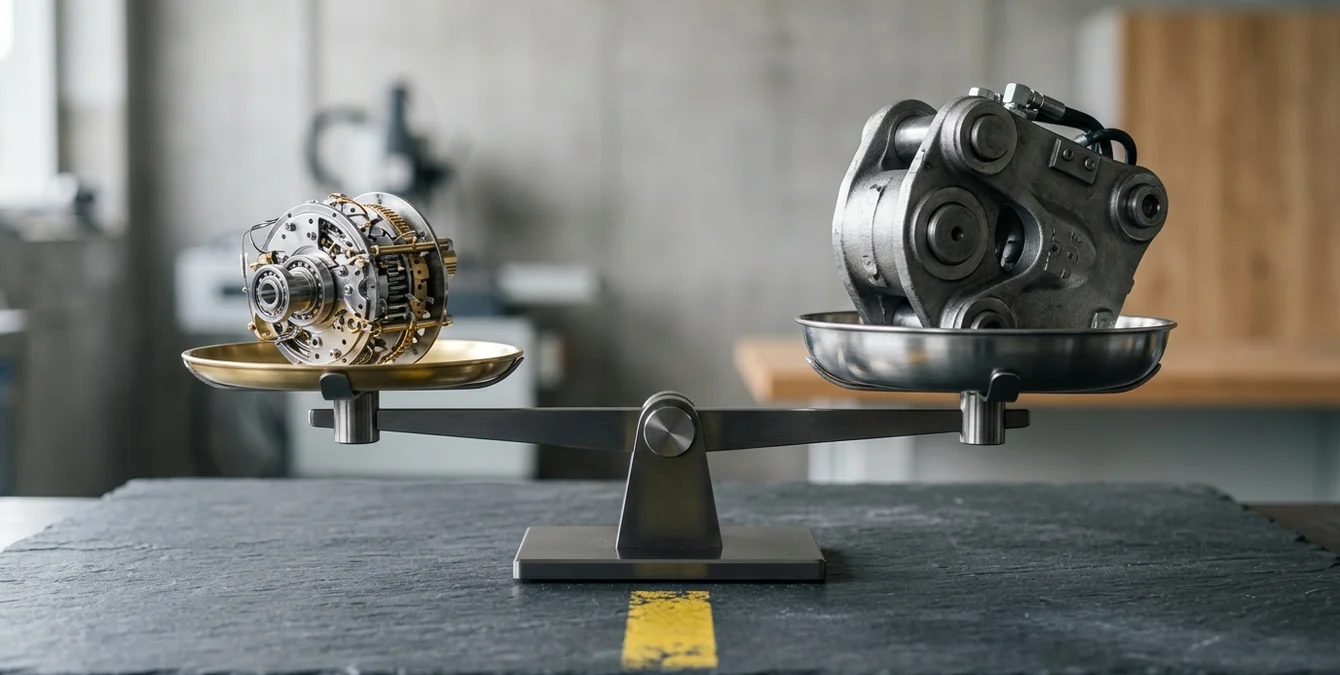
When selecting between a stationary vs mobile laser welding machine, the most decisive factors are the size and weight of the components you intend to repair or manufacture. This is not about the technical capacity of the machine itself—Sigma Laser systems are engineered with an open-frame design, meaning there is no inherent limit to the weight of the workpiece they can accommodate. Instead, the focus is on what is practical and efficient for your daily workflow.
For production managers and toolmakers, the logistics of moving heavy parts can quickly become a bottleneck. The more substantial the component, the more resources—cranes, forklifts, additional personnel—are required to reposition it for repair. This not only increases handling time and risk but can also disrupt production schedules. Therefore, the decision on which type of system to use should be guided by the realities of your shop floor and the typical parts you handle.
Assessing your component portfolio is essential. If your work frequently involves large molds, dies, or industrial parts that are cumbersome to move, a mobile laser welding machine may offer significant operational advantages. Conversely, if most of your repairs are on smaller, more manageable components, a stationary system may streamline your workflow. The right choice ensures minimal disruption, maximizes productivity, and reduces unnecessary handling risks.
Roughly up to 300 kg: stationary systems
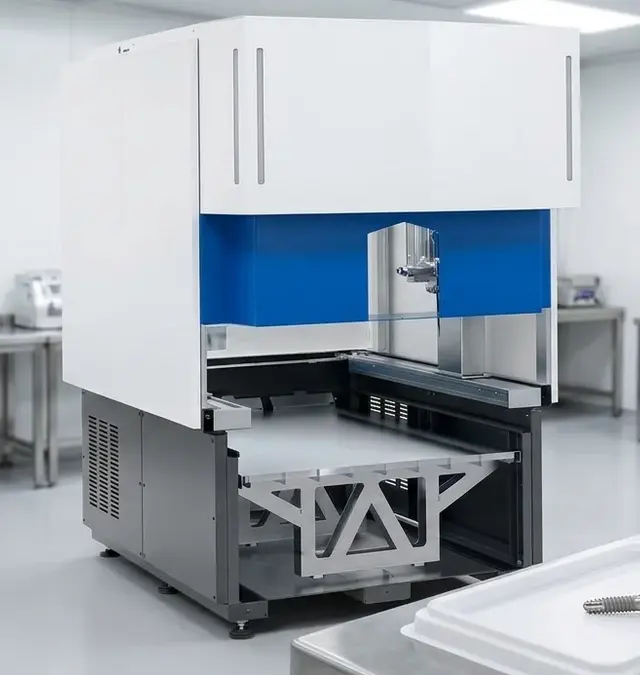
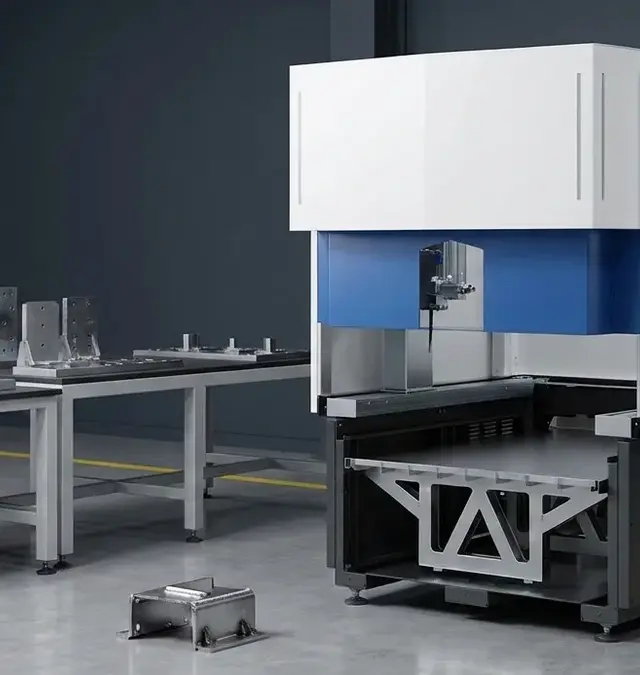
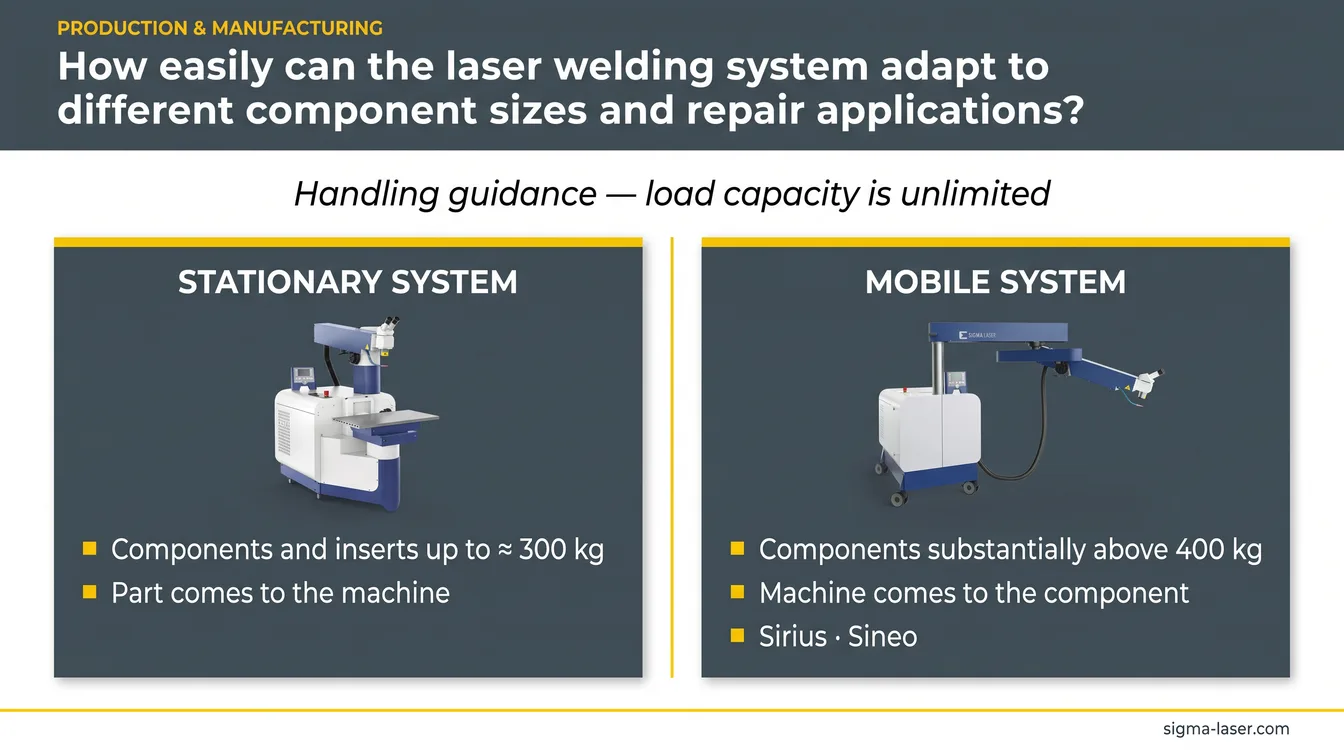
For components and inserts of roughly up to 300 kg, stationary laser welding systems are typically the most practical solution. This threshold is not a technical limitation of the machine’s capacity, but rather a guideline for what is straightforward and safe to move within a typical workshop environment. With parts in this weight range, standard lifting equipment and manual handling processes are usually sufficient, making it efficient to bring the workpiece to the stationary machine.
Stationary systems offer a stable platform for high-precision repairs and are ideal for small to medium-sized molds, dies, and precision components. The fixed installation allows for consistent alignment, repeatable setups, and integration into existing workflows. For toolmakers and mold professionals, this translates into reliable, high-quality repairs with minimal setup time. The open-frame design of Sigma’s stationary machines ensures that even unusually shaped or bulky parts can be accommodated without restriction, as long as they are practical to move.
For those considering investment in a stationary system, it is important to evaluate the typical size and weight of your repair tasks. If most jobs fall within this range, a stationary solution will likely deliver the best balance of efficiency and flexibility. For more details on available options, see Stationary Laser Welding Systems.
| Component Weight | Recommended System Type | Rationale |
|---|---|---|
| Up to ≈ 300 kg | Stationary system | Efficient to bring part to machine; standard lifting equipment and manual handling sufficient |
| Substantially above 400 kg | Mobile system | More efficient to bring machine to part; reduces handling time, risk, and production disruption |
These are handling guidelines only. Sigma Laser systems have unlimited load capacity due to their open-frame design; the thresholds reflect practical workshop logistics, not technical limits.
Substantially above 400 kg: bring the machine to the part
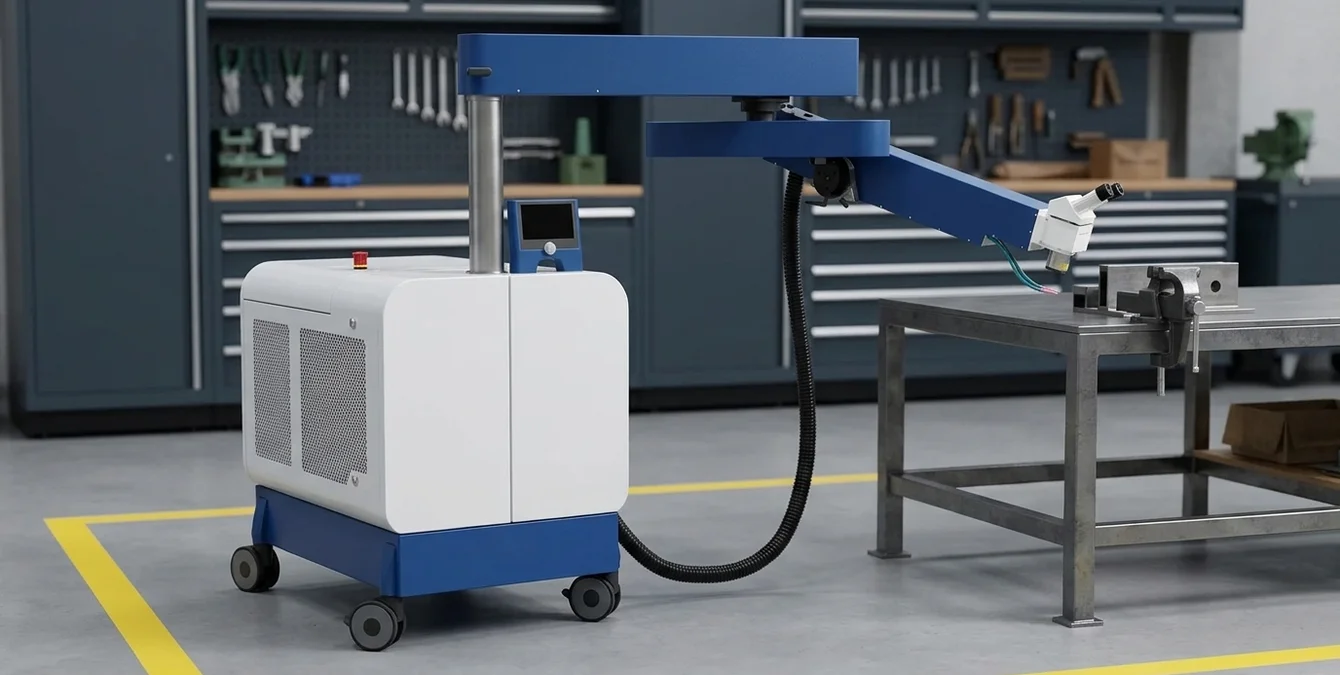
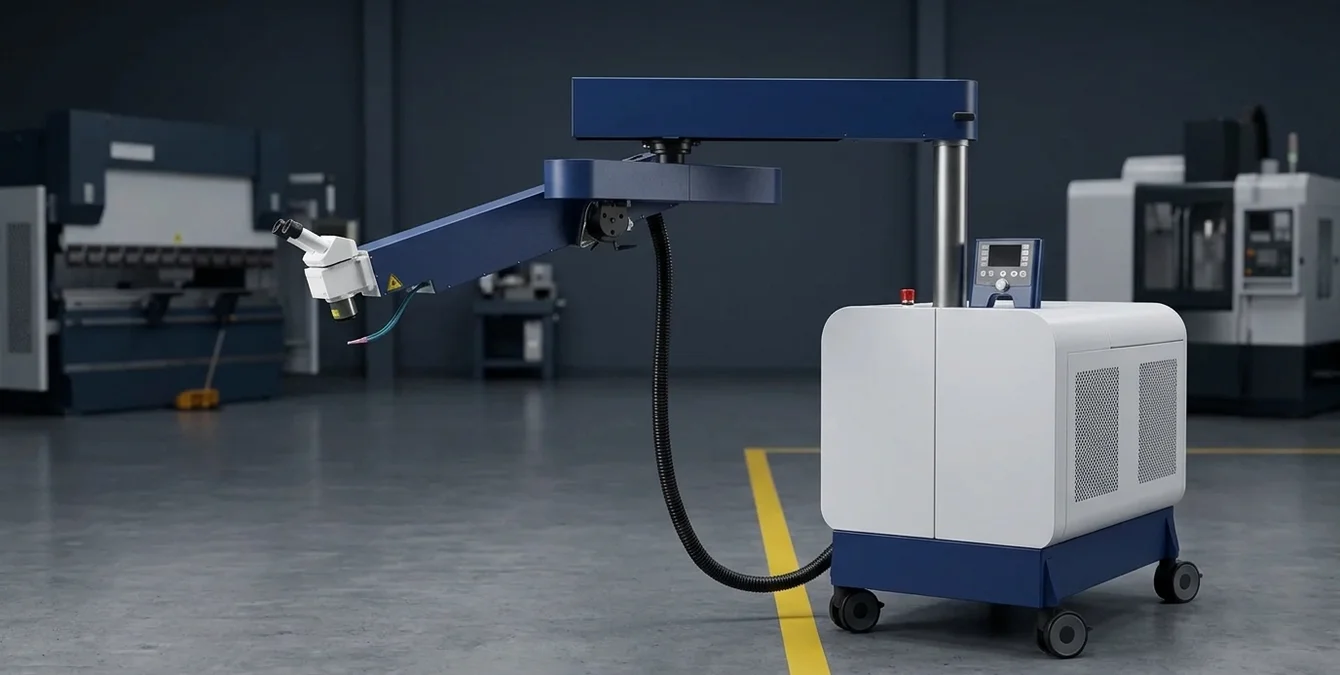
When dealing with components that are substantially more than 400 kg, the operational logic shifts. At this scale, the effort and risk involved in moving the part often outweigh the convenience of a stationary setup. In these cases, it is generally more efficient to bring the laser welding machine directly to the component. Mobile systems, such as the Sigma Sirius Light, Sineo Light, and Sineo Fibre, are specifically designed for this scenario.
Mobile laser welding machines are engineered for flexibility and maneuverability. They can be positioned around large molds, dies, or industrial parts, allowing the welding head to access the repair area without the need to reposition the workpiece itself. This approach minimizes the risk of damage during transport and reduces the time and labor associated with handling heavy equipment. For production environments that regularly handle large or complex components, mobile systems can significantly streamline repair processes and reduce downtime.
It is important to plan your workshop layout and workflows to accommodate mobile welding operations. Ensure there is adequate space for the machine to move and position itself around large parts. For a detailed look at mobile solutions, visit Mobile Laser Welding Machines.
How are large, heavy components handled during repair?
The safest and most practical approach for repairing large, heavy components is often to leave the workpiece in place and bring the mobile laser welding machine to it. This method eliminates the need for unnecessary lifting, transport, and repeated repositioning, which can be both time-consuming and hazardous. Instead, the mobile system is maneuvered around the stationary component, and the welding head is brought directly to the repair location.
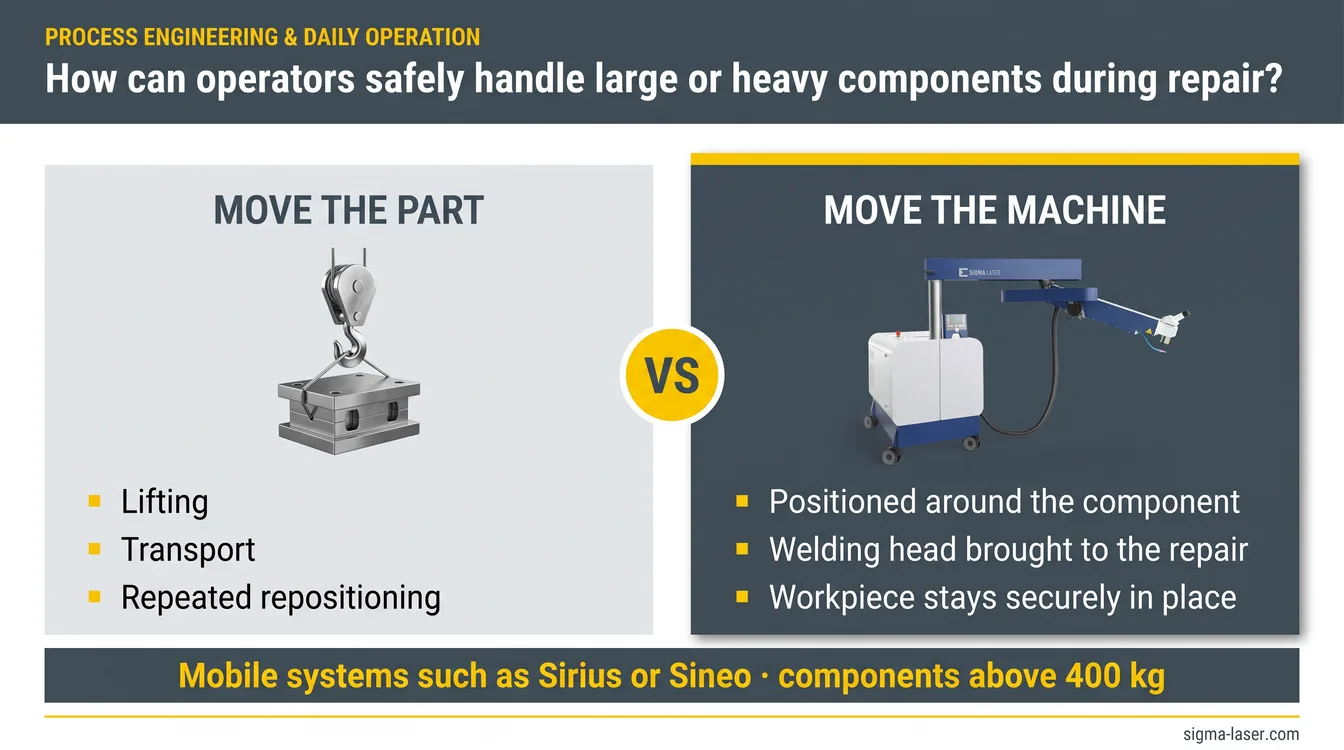
This approach is particularly advantageous for molds, dies, and industrial parts that are installed in fixed positions or integrated into larger assemblies. The large movement range and flexible positioning of the welding optics allow technicians to access different areas of the component without moving the part itself. This not only improves safety but also enhances repair precision, as the risk of misalignment or damage from handling is minimized.
For practical guidance on managing large-scale repairs and the capabilities of mobile systems in such contexts, see How to Weld Molds up to 25 Tons with Laser Technology. Proper planning and the right equipment ensure efficient, safe, and high-quality repairs for even the heaviest industrial components.
| System Type | Key Advantages | Typical Applications |
|---|---|---|
| Stationary | Stable platform, high-precision repairs, repeatable setups, integration into workflows | Small to medium-sized molds, dies, precision components (up to ≈ 300 kg) |
| Mobile | Flexible positioning, access to large/immobile parts, minimizes handling risk | Large molds, dies, industrial parts (substantially above 400 kg), fixed installations |
Covering a wide application range with both
Combining stationary and mobile laser welding machines allows production managers and toolmakers to address a broad spectrum of repair and manufacturing needs. Stationary systems excel in precision work on smaller components, offering stability and repeatable setups for high-volume or recurring tasks. Mobile systems, on the other hand, provide the flexibility to tackle large, immobile, or integrated parts without the need for disassembly or transport.
This dual approach ensures that your workshop is equipped to handle both routine and exceptional repair scenarios. Whether you are dealing with small inserts, medium-sized molds, or massive industrial tools, the right mix of equipment minimizes downtime and maximizes operational efficiency. It also provides strategic flexibility as production demands shift or as the variety of components in your workflow evolves.
When planning capital investment or process improvements, consider the full range of your current and projected repair tasks. A balanced equipment portfolio supports both immediate operational needs and long-term adaptability. For a comprehensive overview of key decision factors and answers to common questions, refer to the full set of customer questions addressed by Sigma Laser.
Frequently Asked Questions
What is the main factor in choosing between stationary and mobile laser welding machines?
The primary factor is the size and weight of your components. Stationary machines are practical for parts up to roughly 300 kg, while mobile systems are more efficient for substantially heavier components.
Is there a weight limit for parts on Sigma laser welding machines?
No, there is no technical weight limit. The open-frame design means load capacity is unlimited. The 300 kg and 400 kg figures are practical guidelines for handling, not machine limits.
How do mobile laser welding machines improve safety and efficiency?
Mobile machines allow repairs to be performed without moving large or heavy components. This reduces handling risks, eliminates unnecessary lifting, and streamlines the repair process.
Can one workshop use both stationary and mobile laser welding systems?
Yes, combining both types covers a wide range of applications. This enables efficient repairs on both small, easily moved parts and large, immobile components within the same facility.
SYN · Sigma Laser appreciation event
You weld. We say thank you.
For everyone who brings great things together every day – on 17 December 2026 the prize wheel turns for you.
One photo at your laser welding machine, a quick verification – and you’re in. Registration is free and takes two minutes. On 17 December every verified participant gets one spin of the prize wheel.
- 1 spin of the prize wheel
- Gifts in 3 tiers
- Free, no purchase needed
Gifts ship free within DE · AT · CH · EU · verification usually within one business day