
- Key Takeaways
- What is Laser Welding Beam Quality?
- Defining Beam Quality
- Importance of Beam Parameter Product (BPP)
- How Does Beam Quality Affect Welding Performance?
- Impact on Weld Consistency
- Effect on Penetration and Quality
- Which Laser Types Offer the Best Beam Quality?
- CO2 vs. Fiber Lasers
- Diode Lasers in Welding
- Can Beam Quality Influence Welding on Different Materials?
- Welding Steel vs. Aluminum
- Challenges with Exotic Materials
- Why is Consistent Beam Quality Crucial for Industrial Applications?
- Consequences of Poor Beam Quality
- Benefits of Consistency in Industrial Settings
- Frequently Asked Questions
- What is the beam parameter product in laser welding?
- How does beam quality affect welding performance?
- Why is beam quality important in laser welding?
- What factors influence laser beam quality?
- How can poor beam quality affect the final weld?
- What are common methods to measure beam quality in laser systems?
- Sources
Key Takeaways
In the realm of laser welding, understanding beam quality is paramount for achieving precision and efficiency. This article explores the intricacies of beam parameter product (BPP) and the M2 factor, both critical metrics in evaluating and optimizing laser beam quality. Welding engineers will gain insights into how these parameters influence welding outcomes and how to leverage them for superior performance.
- Beam Parameter Product (BPP) is a crucial metric that combines the beam’s divergence and waist size, directly impacting focusability and weld precision.
- A lower BPP value indicates a higher beam quality, which enables tighter focus and more precise energy delivery for welding applications.
- The M2 factor is a dimensionless number that quantifies the deviation of a real laser beam from an ideal Gaussian beam, with M2 = 1 being the ideal.
- Understanding and optimizing the M2 factor is essential for minimizing beam divergence and maximizing the depth of field in welding operations.
- High M2 values can lead to increased beam divergence, reducing weld quality and efficiency. Therefore, maintaining a low M2 is critical for high-quality welds.
- Accurate measurement of BPP and M2 factors can significantly enhance process control, leading to improved weld consistency and reduced defects.
- Utilizing advanced laser systems with superior beam quality can result in reduced material wastage and increased productivity in industrial welding environments.
By delving into the nuances of BPP and M2 factors, welding engineers can elevate their understanding of laser beam quality, leading to more informed decisions and optimized welding processes. Continue reading to explore detailed strategies for measuring and improving these parameters in your welding applications.
| Metric | Description | Typical Value / Range |
|---|---|---|
| M² Factor | Measures deviation from ideal Gaussian beam; lower values mean higher beam quality and finer focus. | 1.1 – 1.3 (high-quality industrial lasers); <1.2 (Sigma Laser systems) |
| Beam Parameter Product (BPP) | Product of beam divergence and waist diameter; lower BPP enables tighter focus and higher precision. | Not specified; ‘exceptional’ in Sigma Sineo Fibre systems |
| Spot Size | Minimum focusable diameter of the beam, affecting precision and energy density. | As small as 20 micrometers (with high-quality beams) |
| Power Range | Available laser output power for welding applications. | 500 W – 10 kW (general); up to 600 W average power (Sigma Laser systems), with peak powers up to 6 kW depending on model |
| Wavelength | Laser emission wavelength, affecting material absorption. | 1070 nm (fiber lasers) |
| Welding Speed | Typical linear speed during welding. | Up to 5 m/min (high-quality systems); 1–100 mm/s (practical range) |
| Penetration Depth | Maximum depth achievable in a single pass. | Up to 8 mm (general); up to 10 mm (carbon steels, practical) |
| Precision | Repeatability and accuracy of weld placement. | ±0.1 mm (high-quality systems) |
| Heat-Affected Zone (HAZ) | Width of the thermally altered region adjacent to the weld. | Typically 0.5–1.5 mm |
All values are general or typical ranges for high-quality industrial laser welding; specific Sigma Laser system values are noted where stated in the article.
What is Laser Welding Beam Quality?
Defining Beam Quality
In industrial laser welding, beam quality is a crucial parameter that directly affects the precision and consistency of welds. For manufacturing engineers and welding professionals, understanding beam quality is key to optimizing performance and ensuring the highest standards of weld integrity. Beam quality is often characterized by the M2 factor, a dimensionless parameter that measures how closely a laser beam approximates an ideal Gaussian beam. A lower M2 value indicates higher beam quality, leading to a finer focus and a smaller spot size, which are vital for precision applications.
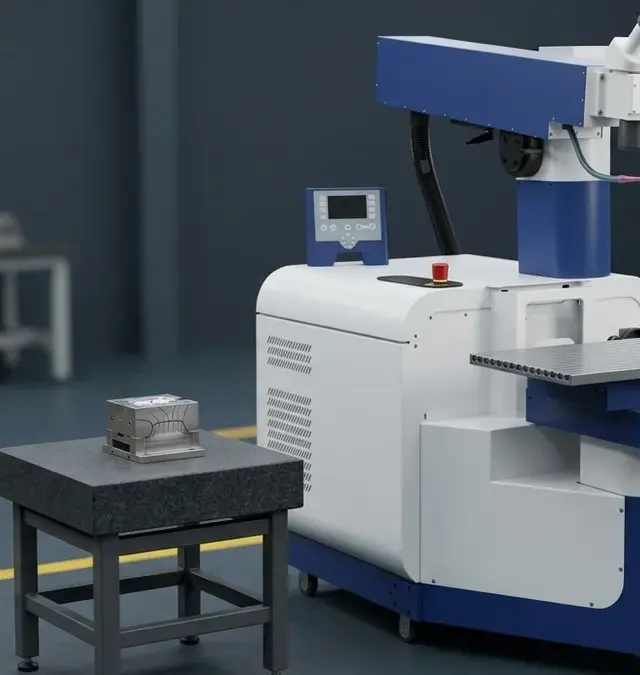
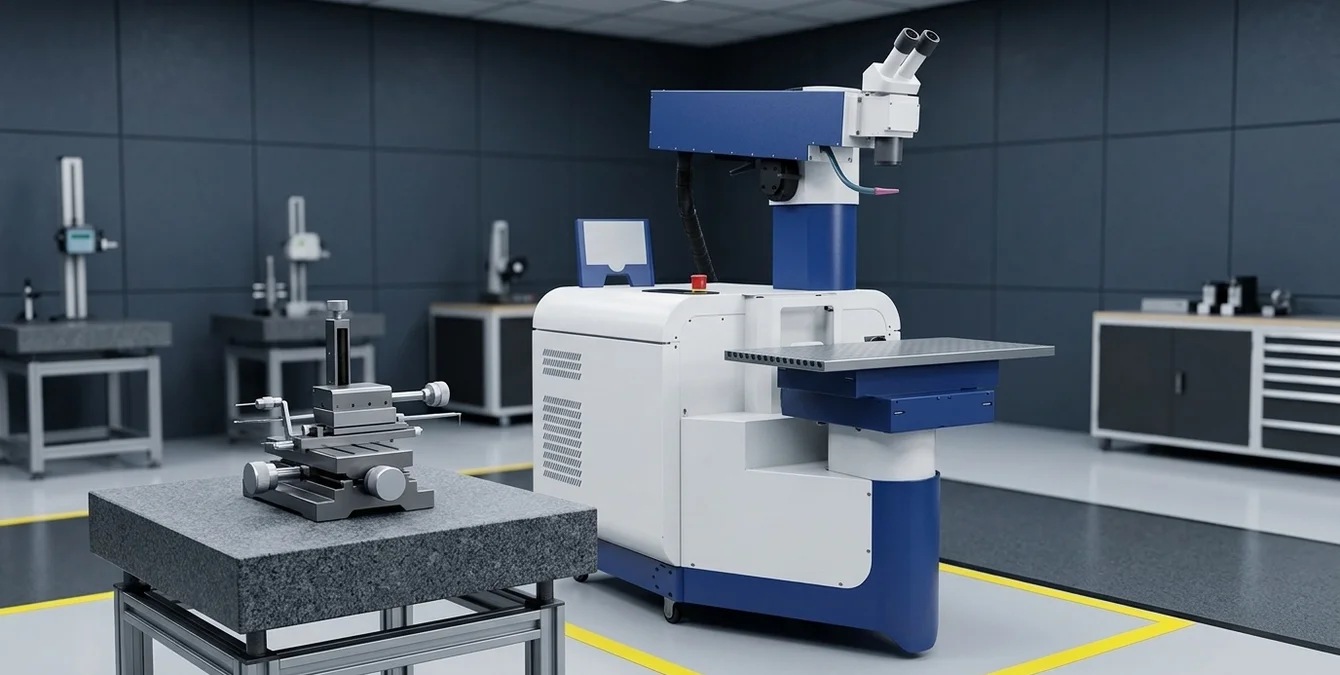
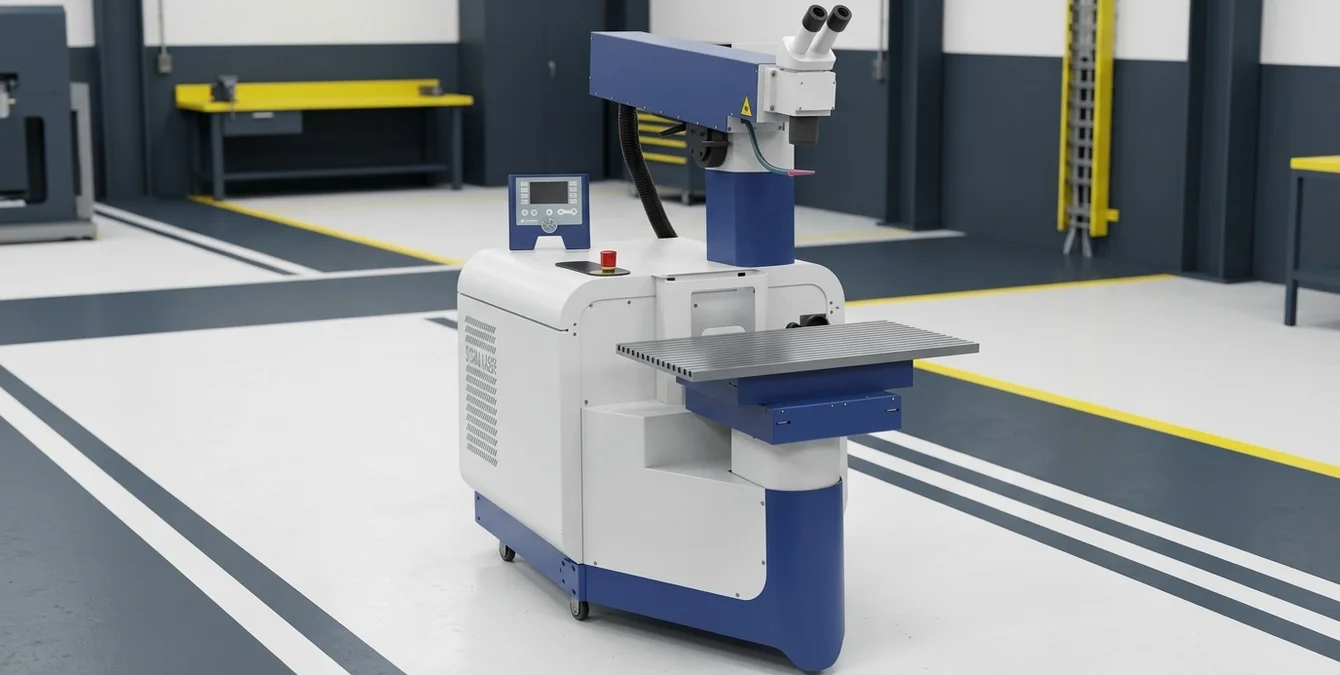
Stationary laser systems like Sigma Laser’s Sidanus Light and Siega Fibre are engineered to deliver superior beam quality, making them ideal for intricate tasks in sectors such as aerospace, automotive, and electronics manufacturing. This high beam quality results in reduced thermal distortion and increased efficiency, both essential for maintaining the structural integrity of advanced materials.
Typical M² values for high-quality industrial lasers range from 1.1 to 1.3, enabling spot sizes as small as 20 micrometers. This is particularly beneficial for welding thin materials like 300-series stainless steel and 6061 aluminum alloys, where precision and minimal heat-affected zones (HAZ) are critical. The reduction in HAZ minimizes microstructural changes, preserving mechanical properties.
Importance of Beam Parameter Product (BPP)
The Beam Parameter Product (BPP) is another vital metric that defines laser welding beam quality. BPP quantifies the beam’s ability to focus to a small spot size over a long distance, calculated as the product of the beam’s divergence angle and its waist diameter. In practical terms, a low BPP value signifies a beam that can be tightly focused, crucial for applications requiring precise energy delivery.
For instance, Sigma Laser’s Sineo Fibre systems achieve exceptional BPP values, facilitating high-speed welding processes while maintaining outstanding precision. This capability is particularly advantageous in the production of medical devices and microelectronics, where stringent quality standards must be met. Moreover, understanding BPP can aid procurement managers and technical buyers in selecting the appropriate laser system tailored to specific industrial needs, ensuring optimal return on investment.
Adhering to industry standards such as ISO 11146 and DIN EN ISO 15614 further underscores the importance of beam quality in laser welding. By integrating advanced technologies like Swivel Optics with Telescopic Lens and Super Pulse Technology (SPT), Sigma Laser systems provide flexible solutions that align with both current and future manufacturing challenges.
Typical welding speeds for high-quality beam systems can reach up to 5 m/min, with penetration depths of up to 8 mm in carbon steels, depending on power levels, which can range from 500 W to 10 kW. The precision of these systems is often within ±0.1 mm, ensuring repeatability and reliability in critical applications.
| Beam Quality Parameter | Effect on Welding Performance |
|---|---|
| Low M² Factor | Enables finer focus, smaller spot size, and higher precision; reduces thermal distortion. |
| Low BPP | Allows tight focusing for precise energy delivery; improves weld consistency and quality. |
| High Power Density | Increases penetration depth and welding speed; reduces risk of defects. |
| Stable Focus | Ensures uniform energy distribution along the weld path; minimizes defects like porosity or undercuts. |
| Advanced Optics (e.g., Swivel Optics with Telescopic Lens) | Enhances control over beam focus and weld quality, especially for intricate or high-strength components. |
Summarizes how key beam quality parameters influence weld consistency, penetration, and overall quality as described in the article.
How Does Beam Quality Affect Welding Performance?
In advanced manufacturing processes, the beam quality of laser welding systems is a pivotal factor influencing overall welding performance. Beam quality, quantified by the Beam Parameter Product (BPP) and the M2 factor, defines the laser’s ability to focus energy into a small spot, achieving optimal welds. At Sigma Laser, our precision-engineered systems like the Sidanus Light and Sineo Fibre ensure superior beam quality, which is crucial for achieving consistent and high-quality welds in industrial applications.
Typically, our systems operate within a power range of 500W to 6kW, with a wavelength of 1070 nm for fiber lasers, which is optimal for welding materials such as stainless steel (e.g., 304, 316), aluminum alloys (e.g., 6061, 7075), and titanium. The M2 value in our systems is typically less than 1.2, indicating a near-Gaussian beam profile, which is ideal for precision applications.
Impact on Weld Consistency
Consistent welds are critical for maintaining structural integrity in manufacturing. Variations in laser welding beam quality can lead to fluctuations in energy density, affecting the uniformity of the weld seam. High beam quality, characterized by a low BPP and optimal M2 value, ensures that the laser energy is evenly distributed along the welding path. This results in uniform heating and melting, reducing the likelihood of defects such as porosity or undercuts. Our Super Pulse Technology (SPT) enhances this consistency, making Sigma Laser systems ideal for industries where precision is non-negotiable.
In practical terms, welding speeds can range from 1 mm/s to 100 mm/s depending on the material and thickness, with penetration depths typically reaching up to 10 mm in a single pass for carbon steels. The heat-affected zone (HAZ) is minimized, typically within 0.5 mm to 1.5 mm, which is crucial for maintaining material properties and reducing post-weld processing.
Effect on Penetration and Quality
The penetration depth and overall quality of a weld are directly influenced by laser beam quality. A superior beam, with focused energy, enables deeper penetration with less power, optimizing energy consumption and reducing thermal distortion. This is particularly beneficial when welding high-strength materials or intricate components, where precision is paramount. Our systems, incorporating Swivel Optics with Telescopic Lens, offer enhanced control over beam focus, ensuring high-quality welds that meet rigorous standards like ISO 11146 and DIN EN ISO 15614.
Our systems are designed to achieve a repeatability of ±0.1 mm in weld placement, ensuring that even complex geometries are welded with precision. The operational constraints typically include maintaining a stable ambient temperature between 15°C to 30°C and ensuring clean optics to prevent beam distortion.
In conclusion, the laser welding beam quality provided by Sigma Laser’s cutting-edge systems plays a crucial role in achieving exceptional weld performance, ensuring that industrial manufacturers can meet the stringent demands of today’s market with confidence and precision.
Which Laser Types Offer the Best Beam Quality?
In the realm of precision manufacturing, beam quality is a critical factor influencing the effectiveness of laser welding applications. Beam quality, often quantified by the Beam Parameter Product (BPP) and M2 factor, determines the focusability and efficiency of laser welding systems. At Sigma Laser, our advanced solutions such as the Sirius Light and Sidanus Fibre are engineered to optimize beam quality for superior welding performance. Below, we provide a comparative analysis of CO2, fiber, and diode lasers, focusing on their beam quality attributes and industrial applications.
CO2 vs. Fiber Lasers
CO2 lasers, traditionally utilized in industrial settings, emit infrared radiation with a wavelength around 10.6 micrometers. This longer wavelength typically results in lower beam quality compared to shorter-wavelength lasers like fiber lasers. The M2 factor of CO2 lasers often ranges higher, indicating less focusable beams, typically between 1.2 to 3.0 as per ISO 11146-1:2005 standards.
- Advantages of CO2 Lasers: Effective for non-metal materials, high power output (up to 20 kW), and established technology.
- Disadvantages Concerning Beam Quality: Lower focusability for fine detail work, limited effectiveness on metals, especially with higher reflectivity such as aluminum and copper alloys.
Fiber lasers, on the other hand, excel in beam quality, with a lower M2 factor typically ranging from 1.0 to 1.2, and superior BPP. They operate at shorter wavelengths (typically around 1.06 micrometers), allowing for tighter focus and enhanced precision. Sigma Laser’s Siega Fibre systems leverage this to deliver exceptional results in metal welding, achieving penetration depths up to 10 mm in stainless steel with welding speeds of 1 to 5 m/min.
- Advantages of Fiber Lasers: High precision and focusability, suitable for cutting and welding metals, lower maintenance costs, and minimal heat-affected zones (HAZ) due to precise energy delivery.
- Disadvantages: Initial investment may be higher, less effective on non-metal materials, and potential for back reflection issues with highly reflective materials unless proper precautions are taken.
Diode Lasers in Welding
Diode lasers, known for their compact design and energy efficiency, offer varying beam quality based on design and application. While they typically have a higher M2 factor than fiber lasers, advancements in diode laser technology have improved their beam focusability for specific industrial applications, achieving M2 values as low as 1.5 to 3.5.
- Advantages of Diode Lasers: Compact, energy-efficient, cost-effective for specific applications like plastic welding and thin metal sheets.
- Disadvantages Concerning Beam Quality: Generally less focusable than fiber lasers, limitations in welding thick metals (greater than 5 mm), and sensitivity to thermal lensing effects.
In conclusion, selecting the optimal laser type for your welding needs involves considering the specific beam quality required for your application. Sigma Laser provides tailored solutions across our laser systems, ensuring that manufacturing engineers achieve precision, efficiency, and quality in their welding operations. Compliance with industry standards such as ISO 11146 and EN ISO 15614 ensures that our systems meet rigorous quality and safety benchmarks.
Can Beam Quality Influence Welding on Different Materials?
In precision manufacturing, the quality of the laser welding beam is a crucial factor that affects the effectiveness of welding across various materials. Beam Parameter Product (BPP) and M2 factor are key metrics that define the laser beam’s focusability and quality, ultimately impacting the weld’s penetration and strength. For welding engineers, understanding these parameters is essential for optimizing welding processes and ensuring high-quality joins across diverse material types.
According to ISO 11146-1:2005, the M² factor should ideally be close to 1 for optimal beam quality, indicating a near-perfect Gaussian beam profile. This is particularly significant in applications where precision and minimal thermal distortion are critical.
Welding Steel vs. Aluminum
When welding steel, a material known for its strength and rigidity, the beam quality must be exceptionally high. High BPP values enable deep penetration and narrow welds, which are vital for maintaining structural integrity in steel components. Sigma Laser’s Sidanus Fibre lasers, with their advanced beam control, are particularly suited for this task, delivering consistent results even in high-volume production environments.
For instance, welding carbon steel (e.g., ASTM A36) typically requires a laser power range of 1-4 kW, with welding speeds up to 2 m/min and penetration depths reaching 10 mm. The heat-affected zone (HAZ) must be minimized to reduce thermal stress, typically maintained within 1-2 mm.
Conversely, aluminum presents unique challenges due to its high thermal conductivity and reflectivity. A lower M2 factor, indicative of a more focused beam, is beneficial for minimizing heat dissipation and achieving precise welds. Technologies like Sigma Laser’s Sineo Fibre, equipped with Super Pulse Technology (SPT), are designed to overcome these challenges, enabling controlled energy input and reduced distortion in aluminum applications.
When welding aluminum alloys such as 6061-T6, it is crucial to use lasers with wavelengths around 1 µm (typical for fiber lasers) to minimize reflectivity issues. The process parameters often include a power range of 2-6 kW and welding speeds of 1-3 m/min, with a focus on reducing porosity and achieving penetration depths of up to 6 mm.
Challenges with Exotic Materials
Exotic materials, such as titanium and certain nickel-based alloys, require specialized handling due to their unique properties. The laser welding beam quality must be meticulously controlled to prevent defects such as cracking or porosity. For instance, titanium’s sensitivity to contamination necessitates a high-quality beam with precise control over the welding environment. Sigma Laser’s Swivel Optics with Telescopic Lens can be instrumental in such scenarios, offering unparalleled precision and adaptability.
Welding titanium alloys like Ti-6Al-4V typically involves laser powers of 1-3 kW and welding speeds of 0.5-1.5 m/min, with a focus on maintaining a clean, inert atmosphere to prevent oxidation. The precision of the beam is crucial, with tolerances often within ±0.1 mm to ensure defect-free welds.
Moreover, the integration of fiber laser technology, as seen in Sigma Laser’s Siega Fibre systems, allows for the customization of beam profiles to match the specific requirements of exotic materials. This flexibility is crucial for industries such as aerospace and medical device manufacturing, where material performance and reliability are paramount.
In conclusion, the laser welding beam quality is not just a technical specification; it’s a pivotal factor that influences the success of welding operations across different materials. By leveraging advanced laser technologies, welding engineers can achieve optimal results, ensuring both efficiency and quality in their manufacturing processes.
Why is Consistent Beam Quality Crucial for Industrial Applications?
In precision manufacturing, consistent laser welding beam quality is not just a preference but a critical necessity. Precision laser welding systems, like those engineered by Sigma Laser, are crafted to deliver exceptional beam consistency, which is vital for achieving optimal results in industrial applications. Ensuring consistent beam quality is essential for maintaining the integrity and reliability of welds, especially in industries where precision is non-negotiable, such as aerospace, automotive, and medical device manufacturing.
Consistent beam quality is defined by parameters such as the Beam Parameter Product (BPP), typically measured in mm*mrad, and the M² factor, which should ideally be close to 1 for high-quality beams. For industrial applications, lasers with an M² value of less than 1.2 are often preferred to ensure precise energy delivery.
Consequences of Poor Beam Quality
Poor beam quality can have significant consequences, undermining the efficiency and effectiveness of industrial processes. A lack of consistency in beam quality can lead to:
- Weakened Weld Strength: Irregular beam quality can cause inconsistent penetration and fusion, resulting in fragile welds that may not withstand operational stresses. This is particularly critical in high-strength steel applications, where weld integrity is paramount.
- Increased Defects: Variations in the Beam Parameter Product (BPP) and the M² factor can lead to defects such as porosity and cracking, which may necessitate costly rework or result in product failure. Standards such as ISO 13919-1 provide guidelines on acceptable defect levels for laser welds.
- Reduced Efficiency: Inconsistent beam performance requires more time for adjustment and quality assurance, slowing down production lines and increasing operational costs. This is especially detrimental in high-throughput environments like automotive manufacturing.
Benefits of Consistency in Industrial Settings
Achieving high consistency in beam quality provides numerous benefits that enhance industrial processes:
- Optimized Performance: Consistent laser welding enables precise control over heat input, ensuring uniform weld penetration and minimizing the risk of thermal distortion. Typical welding speeds can range from 1 to 10 m/min, depending on material thickness and laser power, which can be up to 10 kW for fiber lasers.
- Enhanced Product Quality: With stable beam characteristics, manufacturers can produce components that meet stringent quality standards like ISO 11146 and DIN EN ISO 15614. This is crucial for applications involving high-strength alloys and aerospace-grade materials.
- Cost Efficiency: Reliable beam quality reduces the likelihood of rework and waste, optimizing material usage and decreasing production costs. This is particularly important when working with expensive materials such as titanium or nickel-based superalloys.
- Scalability: Consistent beam quality allows for scalable production without compromising on quality, essential for industries facing high demand. This scalability is supported by the ability to maintain tight tolerances, typically within ±0.1 mm, across large production runs.
In conclusion, maintaining consistent laser welding beam quality is indispensable for industrial applications, ensuring robust performance, high-quality outputs, and operational efficiency. Sigma Laser’s advanced systems, including the Sidanus Light and Sineo Fibre, are engineered to deliver the precision and reliability that today’s industries demand.
Frequently Asked Questions
What is the beam parameter product in laser welding?
The beam parameter product (BPP) is a measure of the focusability of a laser beam, calculated as the product of the beam’s radius at its narrowest point and its divergence angle. In laser welding, a lower BPP indicates a higher beam quality, enabling precise and efficient energy delivery to the weld area.
How does beam quality affect welding performance?
Beam quality directly impacts welding performance by determining the focusability and energy density of the laser. High-quality beams produce narrower, deeper welds with minimal thermal distortion, while poor beam quality can lead to wider, shallower welds and increased spatter.
Why is beam quality important in laser welding?
Beam quality is crucial because it affects the precision, efficiency, and consistency of the weld. High beam quality allows for better focus, which results in deeper penetration and reduced heat-affected zones, essential for high-strength and aesthetically critical applications.
What factors influence laser beam quality?
Several factors influence laser beam quality, including the laser source type, optical components, and alignment. Fiber lasers typically offer superior beam quality compared to CO2 lasers due to their smaller beam parameter product and higher power density.
How can poor beam quality affect the final weld?
Poor beam quality can lead to defects such as porosity, cracking, and incomplete fusion in the final weld. It may also necessitate additional post-processing to correct these issues, increasing production time and costs.
What are common methods to measure beam quality in laser systems?
Common methods to measure beam quality include the use of beam profilers and M2 measurement systems. These tools assess the beam’s spatial profile and divergence, providing a quantitative measure of its quality and performance potential.
Sources
- ISO 11146-1:2005 — Lasers and laser-related equipment – Test methods for laser beam widths, divergence angles and beam propagation ratios – Part 1: Stigmatic and simple astigmatic beams
- Laser Institute of America — Professional society dedicated to fostering lasers, laser applications, and laser safety worldwide
- DIN EN ISO 11146-1 — German standard for test methods for laser beam widths, divergence angles, and beam propagation ratios
- Journal of Laser Applications — Peer-reviewed journal focusing on laser technology and applications
- Optics Express — A highly regarded journal publishing research on optics and photonics, including laser beam quality