
- Key Takeaways
- What is the Difference Between Pulsed and Continuous Wave Laser Welding?
- Principles of Pulsed Laser Welding
- Principles of Continuous Wave Laser Welding
- How Do Pulsed and Continuous Wave Laser Welding Impact Welding Precision and Speed?
- Precision in Pulsed Laser Welding
- Speed in Continuous Wave Laser Welding
- What are the Cost Implications of Using Pulsed vs Continuous Wave Laser Welding?
- Initial Equipment Costs
- Operational and Maintenance Costs
- Can Pulsed and Continuous Wave Laser Welding Be Used Together in One System?
- Technological Integration
- Applications of Combined Systems
- Which Industries Benefit Most from Pulsed vs Continuous Wave Laser Welding?
- Industries Favoring Pulsed Laser Welding
- Industries Favoring Continuous Wave Laser Welding
- Why Choose One Laser Welding Method Over the Other?
- Advantages of Pulsed Laser Welding
- Advantages of Continuous Wave Laser Welding
- Frequently Asked Questions
- What are the cost implications of using pulsed vs continuous wave laser welding?
- Can pulsed and continuous wave laser welding be used together in one system?
- What are the main differences in application between pulsed and continuous wave laser welding?
- How does the choice between pulsed and continuous wave laser welding affect weld quality?
- What are the maintenance requirements for pulsed vs continuous wave laser systems?
- Are there specific industries where pulsed laser welding is preferred over continuous wave?
- Related Articles
- Sources
Key Takeaways
In the realm of laser welding, understanding the differences between pulsed and continuous wave (CW) laser technologies is crucial for optimizing welding operations. Each mode offers distinct advantages that can significantly impact the precision, speed, and overall quality of welding projects.
- Pulsed laser welding excels in delivering precise energy control, making it ideal for intricate welding tasks requiring minimal heat input and reduced thermal distortion.
- The ability to adjust pulse duration and energy in pulsed lasers allows for superior control over weld penetration and heat-affected zones, crucial for delicate materials.
- Continuous wave laser welding is optimal for high-speed operations, offering consistent energy delivery that enhances productivity for large-scale and repetitive tasks.
- In applications demanding high throughput, CW lasers provide the efficiency needed to maintain rapid production lines without sacrificing weld integrity.
- Material thickness and joint configuration are critical factors in selecting between pulsed and CW laser modes, influencing weld quality and operational efficiency.
- Pulsed lasers are particularly advantageous for welding heat-sensitive components, as they allow for precise thermal management to avoid damage.
- For applications requiring deep penetration with minimal downtime, CW lasers provide a continuous energy source that supports robust and durable welds.
Understanding the strengths of pulsed versus continuous wave laser welding is essential for making informed decisions in mode-based qualification. This article delves deeper into these aspects, providing insights to enhance your laser welding operations.
| Parameter | Pulsed Laser Welding | Continuous Wave (CW) Laser Welding |
|---|---|---|
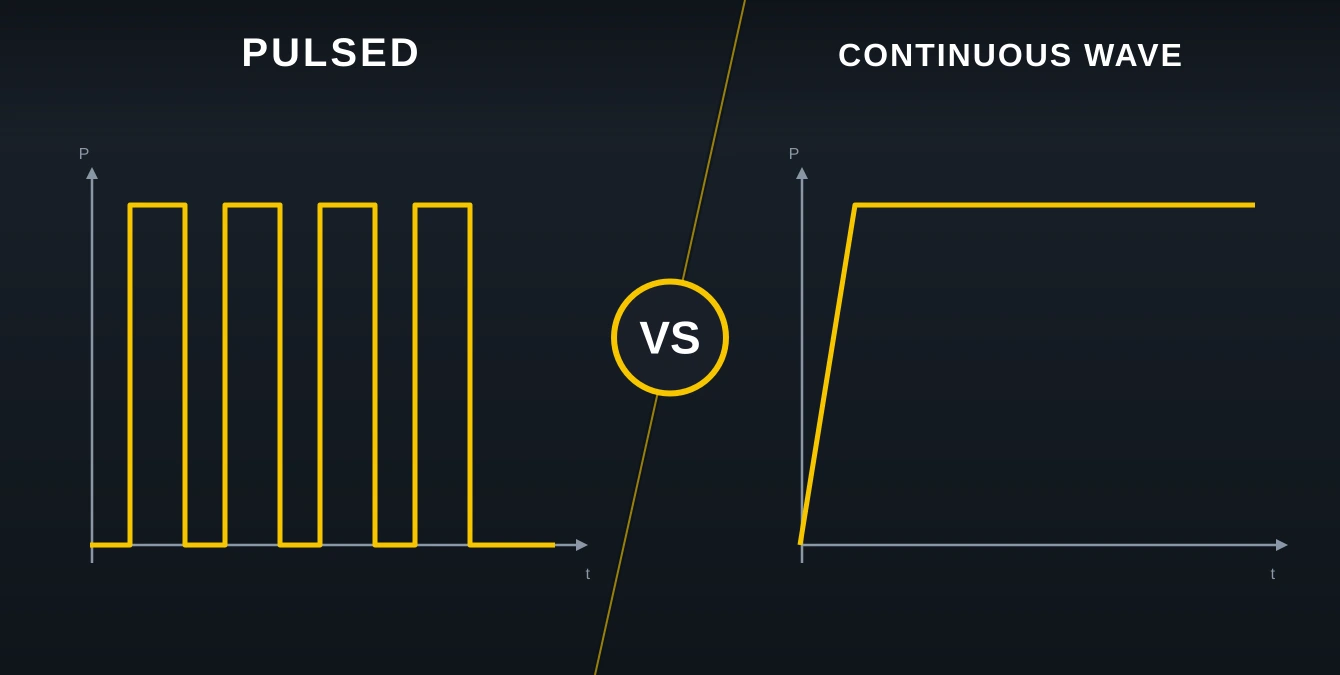
| Energy Delivery | Short, high-intensity bursts | Constant, uninterrupted beam |
| Best For | Precision tasks, thin/delicate materials, minimal heat-affected zone | High-speed applications, thicker materials, deep penetration |
| Thermal Input Control | Superior control, minimizes thermal distortion | Less control, larger heat-affected zone |
| Typical Power Range | 60W to 500W (Sidanus Light power options) | 500W to several kW (general industry figure) |
| Pulse Duration / Mode | 0.1–10 ms (typical); pulsed | Continuous |
| Welding Speed | 5–50 mm/s (example from article) | Can exceed 10 m/min (general industry figure) |
| Penetration Depth | Up to 2 mm (example from article) | Up to 10 mm in a single pass (general industry figure) |
| Typical Applications | Microelectronics, medical devices, sensor assembly | Automotive, aerospace, large-scale production |
| Heat-Affected Zone (HAZ) | Minimized (<0.5 mm, example from article) | Generally larger |
| Precision/Repeatability | ±0.05 mm (example from article) | High, but less than pulsed for delicate tasks |
All figures are general or example values from the article, not attributed to specific Sigma Laser models unless stated.
What is the Difference Between Pulsed and Continuous Wave Laser Welding?
In the realm of precision welding, understanding the distinction between pulsed and continuous wave laser welding is crucial for manufacturing engineers and technical buyers. Both techniques are integral to industrial applications, offering unique advantages depending on specific engineering requirements. This article delves into the principles of each welding type, highlighting their operational modes and typical applications in industrial settings.
Principles of Pulsed Laser Welding
Pulsed laser welding involves the use of laser energy delivered in short, high-intensity bursts. This method is highly effective for precision welding tasks that require minimal heat input, reducing the risk of thermal distortion. Pulsed laser systems, such as Sigma Laser’s Sidanus Light and Sineo Light, employ advanced Nd:YAG laser technology to achieve superior weld quality.
- Precision Welding: Ideal for delicate components, such as in the medical device and electronics industries.
- Heat-Sensitive Materials: Suitable for materials prone to warping or melting.
- Super Pulse Technology (SPT): Enhances control over welding parameters, improving weld accuracy and repeatability.
Pulsed laser welding is particularly advantageous in applications requiring high precision, such as micro welding and the joining of thin materials with minimal thermal impact.
Typical parameters for pulsed laser welding include pulse durations ranging from 0.1 to 10 milliseconds, and peak powers that can reach several kilowatts, depending on the material and thickness. The beam quality, often characterized by an M² value of less than 1.5, ensures tight focus and high precision. According to ISO 15614-11:2002, pulsed laser welding is well-suited for materials like stainless steel (e.g., AISI 304) and aluminum alloys (e.g., 6061-T6), where control over heat input is critical.
Principles of Continuous Wave Laser Welding
Continuous wave laser welding, on the other hand, utilizes a constant laser beam to enable high-speed welding of thicker materials. This method is characterized by its ability to produce deep weld penetrations in a single pass. Sigma Laser’s Siega Fibre system is engineered to deliver robust performance in continuous wave operations.
- High-Speed Welding: Efficient for automotive and aerospace industries where speed and penetration are critical.
- Thick Materials: Optimal for welding components that require substantial penetration depth.
- Swivelling Y Axis: Enhances the flexibility and adaptability of the welding process across various geometries.
Continuous wave laser welding is best suited for applications that demand high throughput and the ability to handle robust materials, making it a preferred choice in sectors like automotive manufacturing where efficiency and strength are paramount.
For continuous wave laser welding, power levels typically range from 500 watts to several kilowatts, with welding speeds that can exceed 10 meters per minute, depending on the material and thickness. The achievable penetration depth can be up to 10 mm in a single pass for materials like carbon steel (e.g., ASTM A36) and titanium alloys (e.g., Ti-6Al-4V). The heat-affected zone (HAZ) is generally larger compared to pulsed welding, which is a consideration in applications where material properties must be preserved. Compliance with standards such as DIN EN ISO 4063:2010 ensures process reliability and safety.
In summary, the choice between pulsed and continuous wave laser welding ultimately hinges on the specific requirements of the welding task, with each offering distinct advantages in precision and high-speed industrial applications.
How Do Pulsed and Continuous Wave Laser Welding Impact Welding Precision and Speed?
In industrial applications, choosing between pulsed laser welding and continuous wave laser welding can significantly affect the precision and speed of the welding process. Understanding the nuances of each method is crucial for achieving optimal results in various manufacturing environments. At Sigma Laser, we leverage advanced technologies such as our Super Pulse Technology (SPT) and Swivel Optics with Telescopic Lens to enhance these processes.
Precision in Pulsed Laser Welding
Pulsed laser welding excels in precision welding tasks due to its ability to deliver controlled energy bursts. This method is particularly effective for welding thin materials and delicate components where precision is paramount. For instance, in the electronics industry, pulsed laser welding is used to join thin copper and aluminum sheets without risking thermal distortion. Our systems, such as the Sidanus Light, are engineered to provide superior control, making them ideal for applications requiring exacting precision.
- Material Example: Thin stainless steel sheets (0.1mm to 1mm)
- Application: Microelectronics and medical device manufacturing
- Typical Laser Specifications: Power options from 60W to 500W (Sidanus Light), wavelength of 1064 nm, beam quality M² < 1.2
- Process Parameters: Welding speed typically between 5 mm/s to 50 mm/s, penetration depth up to 2 mm
- Tolerance and Precision: Repeatability within ±0.05 mm, heat-affected zone (HAZ) minimized to less than 0.5 mm
Case studies have shown that automotive manufacturers using pulsed laser welding for sensor assembly have achieved higher accuracy and reduced defect rates, highlighting its importance in precision-critical industries. This aligns with the guidelines set forth in ISO 15614-11:2002, which specifies the qualification of welding procedures for metallic materials.
Speed in Continuous Wave Laser Welding
Continuous wave laser welding is the method of choice for high-speed welding applications. It offers uninterrupted energy delivery, which is beneficial for welding thicker materials where speed is a critical factor. In industries such as aerospace and automotive, continuous wave laser welding systems like the Siega Fibre facilitate rapid production without sacrificing weld integrity.
- Material Example: Thick carbon steel plates (up to 10mm)
- Application: Automotive chassis and aerospace structural components
- Typical Laser Specifications: Power range from 500W to 10kW, wavelength of 1070 nm, beam quality M² < 1.5
- Process Parameters: Welding speeds up to 200 mm/s, penetration depths up to 10 mm
- Material Compatibility: Commonly used with steel grades like S355 and aluminum alloys such as 6061-T6
In a recent collaboration with an aerospace manufacturer, the implementation of continuous wave laser welding led to a 30% increase in production rates by efficiently welding large-scale aluminum components.
By selecting the appropriate laser welding technology, manufacturers can optimize both precision and speed, ensuring high-quality outputs that meet stringent industry standards. Sigma Laser continues to innovate in this domain, providing solutions that meet the varied demands of modern industrial applications.
What are the Cost Implications of Using Pulsed vs Continuous Wave Laser Welding?
In industrial welding applications, the choice between pulsed and continuous wave laser welding systems can significantly affect both capital and operational expenditures. Understanding these cost implications is crucial for welding engineers and procurement managers who prioritize precision and efficiency in manufacturing processes. At Sigma Laser, we offer advanced solutions like the Sidanus Light and Sirius Light systems, designed to meet a variety of industrial needs.
Initial Equipment Costs
When assessing initial equipment costs, pulsed laser welding systems often demand a higher upfront investment compared to continuous wave systems. This is due to the sophisticated technology required to generate and control laser pulses. For example, our Sineo Fibre uses advanced pulse modulation to achieve high precision welding, a feature that can increase initial costs. In contrast, continuous wave systems, such as the Siega Fibre, generally have a simpler design, making them more cost-effective initially. Decision-makers should weigh these upfront expenses against the long-term benefits and specific application requirements.
Pulsed laser systems typically operate with peak power outputs ranging from 500 W to several kilowatts, with pulse durations in the microsecond to millisecond range, allowing for precise energy control. Continuous wave systems, on the other hand, may operate at power levels from 100 W to over 10 kW, suitable for high-speed applications where deep penetration is required. The choice between these systems should consider the specific material and thickness, with pulsed systems often preferred for thin sections and heat-sensitive materials.
Operational and Maintenance Costs
Operational costs can vary significantly between pulsed and continuous wave laser welding systems. Pulsed systems often provide higher precision, which can reduce material waste and lower operational costs over time. Our Super Pulse Technology (SPT) enhances this precision, making it ideal for high-speed welding applications. However, the complexity of pulsed systems might increase maintenance needs and associated costs, requiring specialized personnel for routine upkeep.
Conversely, continuous wave systems generally have lower maintenance requirements due to their straightforward design. This can lead to reduced downtime and lower maintenance expenses. The choice between these systems should consider not only cost but also the specific welding requirements and expected production volume, ensuring optimal return on investment.
In terms of process parameters, pulsed laser welding offers advantages in controlling the heat-affected zone (HAZ), typically maintaining it within a few millimeters, which is crucial for materials like aluminum alloys and high-strength steels. Continuous wave systems, while providing deeper penetration, might result in a larger HAZ, requiring careful consideration in applications where material properties are critical. Compliance with standards such as ISO 15614-11:2002 for welding procedure qualification is essential to ensure process reliability and quality.
Can Pulsed and Continuous Wave Laser Welding Be Used Together in One System?
In the realm of precision welding, integrating pulsed and continuous wave laser welding within a single system marks a significant advancement poised to transform industrial applications. Sigma Laser’s innovations in this area offer enhanced flexibility and adaptability, allowing manufacturers to tailor welding processes to specific material and production needs. Understanding how these two techniques can work together is crucial for welding engineers aiming to optimize operational efficiency.
Technological Integration
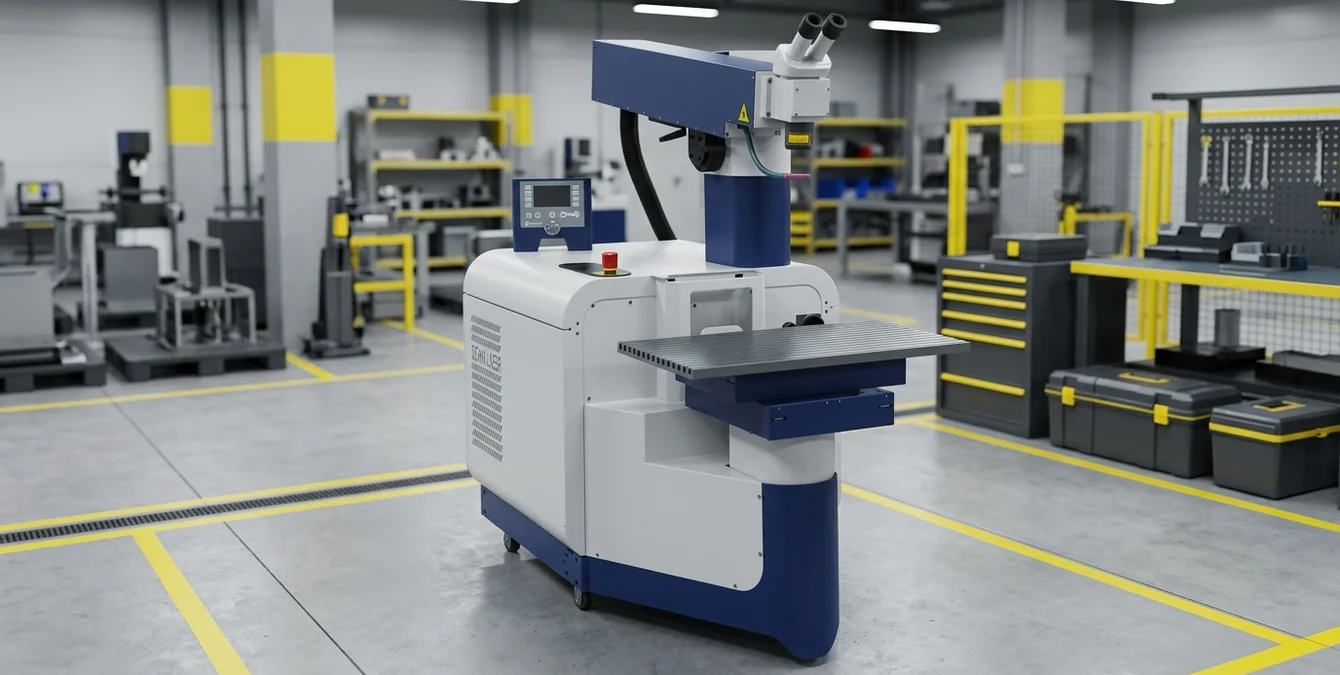
The fusion of pulsed and continuous wave laser welding technologies is made possible by advancements in laser control systems and optics. At Sigma Laser, the Fibre series — such as the Sineo Fibre — combines ytterbium fibre sources with Swivel Optics with Telescopic Lens and supports both pulsed and continuous-wave operation. This dual capability is designed to accommodate diverse welding tasks, from intricate precision welding to high-speed applications. The integration is further supported by our motor-driven turning devices and swivelling Y-Axis modules, which enhance the system’s adaptability and efficiency.
Typically, pulsed lasers operate at peak powers ranging from 100 W to several kilowatts, with pulse durations from microseconds to milliseconds, allowing for precise control over heat input and minimal distortion. Continuous wave lasers, on the other hand, can deliver consistent power outputs from 500 W to over 10 kW, suitable for deeper penetration and faster welding speeds. The beam quality, often characterized by an M² value of less than 1.5, ensures high precision and focusability, critical for applications requiring tight tolerances and repeatability.
Applications of Combined Systems
The ability to employ both pulsed and continuous wave laser welding within one system opens up a range of industrial applications. For instance, in the automotive sector, where precision and speed are crucial, manufacturers can use the pulsed mode for welding thin materials and intricate components, while the continuous wave mode excels in high-speed welding of thicker sections. Similarly, in the aerospace industry, where material integrity is critical, the dual capability allows for precise thermal management, reducing distortion and ensuring high-quality welds.
Moreover, in electronics manufacturing, where the need for delicate and precise welding of components is matched by the demand for rapid production cycles, the combined system offers a compelling advantage. By leveraging the strengths of both welding methods, manufacturers can achieve superior weld quality and throughput, aligning with stringent industry standards such as ISO 9001 and DIN EN ISO 4063.
When considering materials, pulsed laser welding is particularly effective for high-reflectivity metals such as aluminum alloys (e.g., 6061, 7075) and stainless steels (e.g., 304, 316), due to its ability to control heat input and reduce thermal distortion. Continuous wave lasers are often preferred for carbon steels and titanium alloys, where deeper penetration and higher throughput are required. Adherence to standards like ISO 15614-11:2002 ensures that welding procedures meet industry benchmarks for quality and performance.
Which Industries Benefit Most from Pulsed vs Continuous Wave Laser Welding?
In the realm of precision welding, choosing the right laser welding method—pulsed or continuous wave—can greatly influence production efficiency and product quality. The decision between pulsed laser welding and continuous wave laser welding is often guided by specific industry needs, including material type, weld depth, and the demand for high-speed welding.
Industries Favoring Pulsed Laser Welding
Pulsed laser welding is especially beneficial for industries where precision, minimal heat input, and effective thermal management are essential. The automotive and electronics sectors are prime examples:
- Automotive Industry: This sector benefits from pulsed laser welding in applications like airbag sensors and battery pack assembly, where precision and minimal thermal distortion are crucial. Pulsed lasers typically operate at power levels of 50W to 500W with pulse durations ranging from 0.1 to 10 milliseconds, allowing for precise energy control and minimal heat-affected zones (HAZ).
- Electronics Manufacturing: The capability to weld small, delicate components without damaging heat-sensitive parts makes pulsed laser welding ideal for circuit board assemblies and microelectronics. Beam quality (M²) values of less than 1.5 are common, ensuring tight focus and high precision, essential for welding thin materials like copper and aluminum alloys.
Current trends show a growing preference for pulsed laser welding in these sectors due to its superior control and adaptability in complex welding scenarios. According to ISO 15614-11:2002, the process is particularly suited for materials with high thermal conductivity and low thickness.
Industries Favoring Continuous Wave Laser Welding
Continuous wave laser welding is preferred in industries that require deep, high-speed welds for strong structural integrity. Key industries include:
- Aerospace Industry: Continuous wave technology is essential for welding large components, such as fuselage panels, where consistent, deep penetration is necessary. Typical power levels range from 1kW to 10kW, with welding speeds up to 10 meters per minute, enabling efficient processing of titanium and high-strength steel alloys.
- Heavy Machinery Manufacturing: The ability to perform high-speed welding on thick materials makes continuous wave laser welding indispensable for constructing durable, load-bearing machinery parts. With focal lengths typically between 100mm and 300mm, the process achieves penetration depths of up to 25mm in steel, as referenced in DIN EN ISO 4063:2010.
With advancements in fiber laser technology, such as Sigma Laser’s Sineo Fibre, continuous wave laser welding is increasingly favored for its efficiency and depth capabilities in these industries. The repeatability of the process is typically within ±0.1mm, ensuring consistent quality across large production runs.
Why Choose One Laser Welding Method Over the Other?
In the realm of precision welding, selecting the correct laser welding method is critical for achieving optimal results. Sigma Laser’s advanced systems, including the Sidanus Light and Siega Fibre, offer pulsed and continuous wave laser welding capabilities respectively, each suitable for specific industrial applications. Understanding the advantages and trade-offs of each method will guide manufacturing engineers in making informed decisions for their projects.
Advantages of Pulsed Laser Welding
Pulsed laser welding is ideal for applications requiring high precision and minimal thermal distortion. This method is particularly effective for welding intricate parts and thin materials, where heat management is crucial. Sigma Laser’s Super Pulse Technology (SPT) enhances pulsed laser welding by delivering controlled energy bursts, ensuring consistent quality.
- Minimized heat-affected zone, reducing the risk of material warping. Typically, the heat-affected zone can be limited to less than 0.5 mm, depending on material thickness and type.
- Superior control over weld penetration depth, advantageous for delicate components. Penetration depth can be finely controlled, typically ranging from 0.1 mm to 2 mm for thin materials such as stainless steel (ISO 15614-11:2002).
- Effective for spot welding and seam welding in precision-oriented sectors such as electronics and medical devices. Commonly used for materials like 300 series stainless steels and titanium alloys, where precision and minimal thermal impact are critical.
- Typically operates at peak powers ranging from 100 W to 500 W with pulse durations from 0.1 ms to 10 ms, allowing for precise energy delivery.
Advantages of Continuous Wave Laser Welding
For high-speed welding applications, continuous wave laser welding offers distinct benefits. This method excels in scenarios demanding uninterrupted welding seams and is highly efficient for thicker materials. Sigma Laser’s Sineo Fibre system is engineered for continuous operation, ensuring robust and reliable performance.
- High welding speeds, increasing productivity in automotive and aerospace manufacturing. Welding speeds can reach up to 10 m/min, depending on the material and thickness.
- Deep penetration capabilities, suitable for demanding structural applications. Capable of achieving penetration depths of up to 10 mm in materials such as carbon steels and aluminum alloys (DIN EN ISO 4063:2010).
- Consistent weld quality over long seams, essential for pipeline and heavy machinery construction. Beam quality (M²) typically remains under 1.2, ensuring a stable and focused beam over extended distances.
- Operates at power levels ranging from 500 W to 10 kW, suitable for welding thicker sections and high-reflectivity materials.
When deciding between pulsed and continuous wave laser welding, consider the material type, desired welding speed, and the precision required. Sigma Laser’s innovative solutions are designed to meet the diverse needs of European industrial markets, providing the flexibility and performance essential for cutting-edge manufacturing.
| Parameter | Typical Value (General Example) |
|---|---|
| Pulse Duration | 0.1–10 ms |
| Peak Power | Several kW |
| Beam Quality (M²) | <1.5 |
| Wavelength | 1064 nm |
| Welding Speed | 5–50 mm/s |
| Penetration Depth | Up to 2 mm |
| Repeatability | ±0.05 mm |
| Heat-Affected Zone (HAZ) | <0.5 mm |
Values are general industry examples and not attributed to a specific Sigma Laser model.
Frequently Asked Questions
What are the cost implications of using pulsed vs continuous wave laser welding?
Pulsed laser welding systems generally have lower initial costs due to simpler power requirements and less need for extensive cooling systems. However, continuous wave (CW) lasers can offer higher throughput and efficiency, potentially reducing long-term operational costs. The choice depends on specific application requirements, including material thickness and production volume.
Can pulsed and continuous wave laser welding be used together in one system?
Combining pulsed and continuous wave laser welding in a single system is feasible and can offer versatility in processing different materials and thicknesses. Hybrid systems allow for precise control, enabling engineers to switch between modes to optimize weld quality and efficiency for varied applications.
What are the main differences in application between pulsed and continuous wave laser welding?
Pulsed laser welding is ideal for thin materials and applications requiring minimal heat input, such as micro-welding. Continuous wave laser welding is better suited for thicker materials and high-speed welding processes, where consistent energy delivery is crucial for deep penetration and high throughput.
How does the choice between pulsed and continuous wave laser welding affect weld quality?
Weld quality is influenced by the material and thickness being welded. Pulsed lasers can minimize thermal distortion and improve precision in delicate applications, while continuous wave lasers provide consistent energy for robust welds in thicker materials, ensuring strong joint integrity.
What are the maintenance requirements for pulsed vs continuous wave laser systems?
Pulsed laser systems typically require less frequent maintenance due to lower thermal load and power usage. Continuous wave systems may need more regular maintenance to manage heat dissipation and ensure consistent performance, particularly in high-power applications.
Are there specific industries where pulsed laser welding is preferred over continuous wave?
Pulsed laser welding is often preferred in industries such as electronics and medical device manufacturing, where precision and minimal heat-affected zones are critical. Continuous wave laser welding is favored in automotive and aerospace industries for its ability to handle high-strength materials and thick sections efficiently.
Sources
- ISO 15614-11:2002 — Specification and qualification of welding procedures for metallic materials – Welding procedure test – Part 11: Electron and laser beam welding
- DIN EN ISO 4063:2010 — Welding and allied processes – Nomenclature of processes and reference numbers
- EN ISO 14744-1:2000 — Welding – Acceptance inspection of electron beam welds – Part 1: Principles and acceptance conditions
- Journal of Laser Applications — A peer-reviewed journal covering the latest advancements in laser technology and applications.
- Optics and Lasers in Engineering — An international journal that publishes research on the applications of optics and lasers in engineering.
- Welding Journal — A publication by the American Welding Society featuring research and developments in welding technology.