
- A Method, Not a Recipe
- Titanium: Shielding Is Everything
- Aluminum: Reflectivity and Porosity
- The Knobs You Actually Have
- Reading the Result
- Frequently Asked Questions
- What shielding gas is best for titanium laser welding?
- How do I reduce porosity in aluminum laser welds?
- Which Sigma machines are best for welding aluminum?
- How does SPT improve titanium laser welding?
- Related Articles
Quick Answer: Optimizing laser weld parameters for titanium and aluminum requires a methodical approach: adjust one variable at a time, prioritize shielding for titanium, address reflectivity and porosity for aluminum, and use your Sigma system’s full control over pulse, energy, and spot size. Always verify results with visual and structural cues before production.
| Step | Purpose |
|---|---|
| Bead-on-plate trials | Observe weld response on representative material |
| Change one parameter at a time | Isolate effects and build a reference library |
| Document settings and outcomes | Enable repeatability and troubleshooting |
| Start with conservative parameters | Reduce risk of defects on critical parts |
| Maintain logbook/digital record | Ensure traceability and process stability |
A systematic approach is essential for optimizing laser welds on demanding materials.
A Method, Not a Recipe
Effective laser welding—especially with demanding materials like titanium and aluminum—relies on a systematic, iterative approach to parameter development. There is no universal recipe: each application, alloy, and joint configuration requires tailored settings. Operators should begin with bead-on-plate trials, using representative samples of the production material. This allows you to observe weld morphology and response without risking critical parts.
Change only one parameter at a time to isolate its effect. For example, if you are evaluating pulse duration, keep energy, spot size, and travel speed constant. Document each setting and result meticulously. This builds a reference library of proven programs, enabling repeatability and easier troubleshooting.
Record not only the Sigma machine settings (pulse duration, energy, spot size) but also environmental factors (shielding gas flow, workpiece temperature, surface condition). For each test, note visible outcomes: bead shape, color, penetration, and any signs of defects. This process is essential for both initial process development and ongoing production optimization.
- Start with conservative parameters from your material supplier or prior jobs.
- Use bead-on-plate to establish a baseline before attempting actual joint geometries.
- Maintain a logbook or digital record of all parameter sets and outcomes.
By following this methodical ladder, you ensure each parameter change is purposeful and traceable, reducing the risk of defects and wasted material. This approach is especially important when working with high-value or sensitive alloys, where process stability and documentation are critical for quality assurance.
| Material | Key Challenge(s) | Optimization Focus |
|---|---|---|
| Titanium | Reactivity with oxygen (oxidation, embrittlement) | Maximize shielding gas coverage; monitor weld color; minimize heat input |
| Aluminum | High reflectivity, porosity, surface oxides | Thorough surface cleaning; adjust pulse energy/duration; monitor for porosity |
Summarizes the main process challenges and optimization strategies for titanium and aluminum laser welding.
Titanium: Shielding Is Everything
Titanium’s exceptional reactivity with oxygen at elevated temperatures makes shielding gas coverage the single most critical factor in laser welding this material. Even brief exposure to air during or immediately after welding can cause severe oxidation, embrittlement, and unacceptable weld color. Always use high-purity argon as the primary shielding gas, and ensure both primary and trailing coverage. Trailing shields or custom gas nozzles are recommended for larger weld pools or longer seams.
Monitor the weld color carefully: a bright silver or light straw hue indicates proper shielding and minimal oxidation, while blue, purple, or gray colors signal inadequate protection and possible mechanical property loss. Adjust gas flow rates and nozzle positioning as needed to eliminate color changes beyond light straw. Document the optimal configuration for each part geometry.
Keep heat input as low as possible to minimize the heat-affected zone (HAZ) and preserve base material properties. On Sigma Fibre and Siega Fibre systems, the SPT (microsecond pulse control) option provides ultra-fine adjustment of pulse parameters, enabling even lower HAZ and improved weld quality on biocompatible titanium alloys. Use this feature to tailor the energy delivery precisely, especially for thin sections or medical-grade joints.
- Inspect gas lines and nozzles for leaks or blockages before every job.
- Use argon flow meters and trailing shields for consistent coverage.
- Maintain a non-reflective, clean work area to prevent secondary contamination.
By prioritizing shielding and leveraging advanced pulse control, you significantly reduce oxidation risk and ensure the mechanical integrity of titanium welds. Always verify the result visually and, where required, with destructive or non-destructive testing.
Aluminum: Reflectivity and Porosity
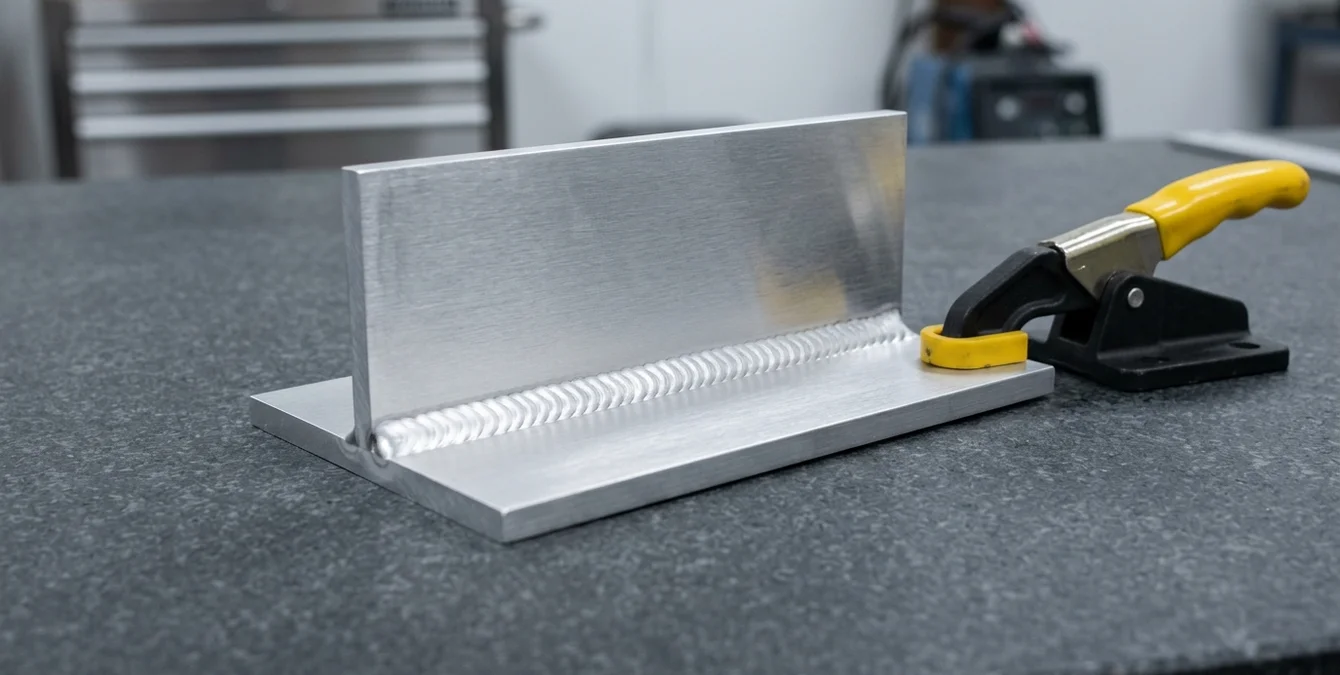
Aluminum presents a different set of challenges in laser welding, primarily due to its high reflectivity at near-infrared wavelengths and its tendency to form surface oxides and porosity. Surface preparation is essential: remove all visible oxides and contaminants using mechanical abrasion or chemical cleaning immediately before welding. This reduces the risk of incomplete fusion and gas entrapment.
Fibre lasers at 1070 nm, as used in Sigma’s Fibre series, are well-suited for aluminum alloys, offering better absorption and process stability than older Nd:YAG systems. However, even with optimal wavelength, initial welds may exhibit porosity or inconsistent penetration if surface prep is inadequate or parameters are not tuned. Start with conservative pulse energy and duration, then incrementally adjust to achieve full fusion without excessive keyholing or spatter.
Porosity is often linked to hydrogen pickup from moisture or residual hydrocarbons. Ensure workpieces are dry and degreased, and minimize the time between cleaning and welding. Shielding gas (typically argon) helps, but cannot compensate for poor surface condition. Monitor for visible pinholes, irregular bead shape, or excessive spatter as cues to adjust parameters or improve preparation.
- Use dedicated brushes and solvents for pre-weld cleaning.
- Store aluminum stock in a dry environment to prevent moisture absorption.
- Test welds on scrap sections before moving to production parts.
By addressing reflectivity and porosity methodically, and leveraging the advantages of fibre laser technology, you can achieve sound, high-quality aluminum welds suitable for demanding tooling, automotive, or aerospace applications.
| Parameter | Fibre Series (Sidanus Fibre, Sineo Fibre, Siega Fibre) | Light Series (Nd:YAG) |
|---|---|---|
| Pulse duration | 0.05–50 ms | 0.5–20 ms |
| Pulse energy (max) | up to 60 J | up to 170 J |
| Spot size | 0.1–2.0 mm | 0.1–2.0 mm |
Values reflect the adjustable ranges available on Sigma Laser systems as described in the article.
The Knobs You Actually Have
Optimizing weld quality on Sigma Laser systems requires understanding the specific parameters you can control. On Fibre series machines (Sidanus Fibre, Sineo Fibre, Siega Fibre), pulse duration is adjustable from 0.05 to 50 ms, offering fine control over heat input and penetration. Nd:YAG Light series machines provide pulse durations from 0.5 to 20 ms. Adjusting pulse duration allows you to tailor the weld pool size and cooling rate for each material and joint type.
Pulsed energy is another key variable: Sigma’s fibre lasers deliver up to 60 J per pulse, while Nd:YAG systems can reach 170 J. Higher pulse energy increases penetration but may also raise the risk of porosity or excessive HAZ, especially on thin or sensitive materials. Start with moderate energy settings and incrementally adjust based on observed weld quality.
Spot size is continuously adjustable from 0.1 to 2.0 mm across the Sigma range. A smaller spot increases energy density and penetration, while a larger spot distributes heat more broadly, reducing the risk of burn-through or cracking. Match the spot size to your joint geometry and material thickness for optimal results.
- Pulse duration: 0.05–50 ms (fibre), 0.5–20 ms (Nd:YAG)
- Pulse energy: up to 60 J (fibre), 170 J (Nd:YAG)
- Spot size: 0.1–2.0 mm
Use the Sigomatic or Sigomatic Pro panel to set and store these parameters for each job. Document every adjustment and result, building a reliable library of proven settings for titanium, aluminum, and other alloys.
Reading the Result
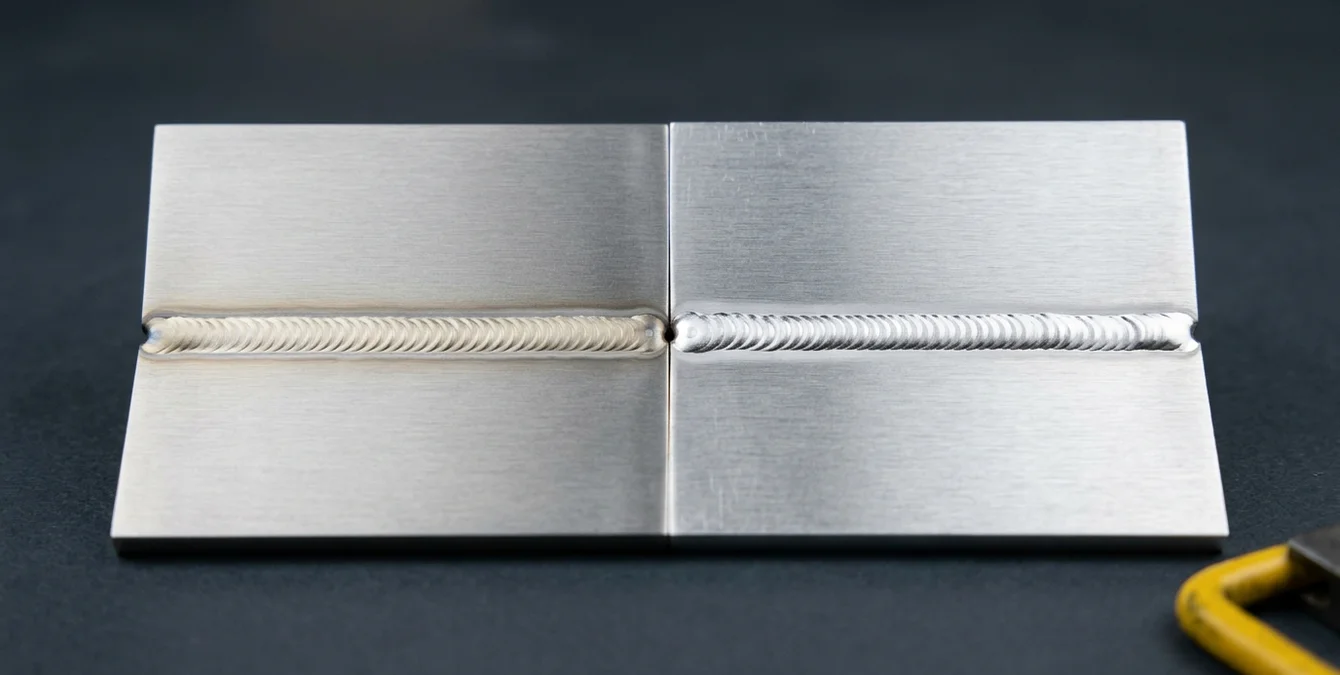
After each parameter adjustment, carefully evaluate the weld for visual and structural cues. For titanium, inspect the color of the bead: light straw or silver indicates proper shielding and minimal oxidation, while blue, purple, or gray suggest inadequate gas coverage or excessive heat input. For aluminum, look for uniform bead shape, absence of pinholes, and minimal spatter. Porosity often appears as small surface craters or internal voids revealed by cross-sectioning.
Cracking is a critical defect in both materials, often linked to excessive heat input, rapid cooling, or improper joint preparation. If cracks appear, review your parameter log and consider reducing pulse energy, increasing spot size, or improving pre-weld cleaning. For both titanium and aluminum, joint fit-up and cleanliness are essential: gaps, burrs, or contamination can undermine even the best parameter set.
When defects are observed, re-tune parameters systematically. Return to bead-on-plate trials if necessary, and adjust only one variable at a time. Document every change and outcome. For production work, periodically cut and inspect sample welds to confirm internal quality, not just surface appearance.
- Color (titanium): straw/silver = good; blue/purple/gray = re-tune shielding or heat input.
- Porosity (aluminum): pinholes or craters = improve surface prep, adjust pulse energy.
- Cracking: reduce heat input, improve joint cleanliness and fit-up.
By reading the weld result critically and responding with targeted parameter adjustments, you ensure robust, repeatable joints for high-value tooling, medical, or structural applications.
Frequently Asked Questions
What shielding gas is best for titanium laser welding?
High-purity argon is the industry standard for titanium laser welding. Ensure full coverage over the weld pool and trailing area to prevent oxidation. Always verify gas purity and flow before each job for consistent, defect-free results.
How do I reduce porosity in aluminum laser welds?
Thoroughly clean and degrease the aluminum surface immediately before welding to remove oxides and moisture. Use fibre laser systems for better absorption, and fine-tune pulse energy and duration to avoid excessive keyholing or spatter.
Which Sigma machines are best for welding aluminum?
Sigma’s Fibre series (Sidanus Fibre, Sineo Fibre, Siega Fibre) use a 1070 nm wavelength suited to aluminum alloys. Their adjustable pulse and spot controls help address reflectivity and porosity challenges common in aluminum welding.
How does SPT improve titanium laser welding?
SPT (microsecond fibre-laser pulse control) enables ultra-fine adjustment of pulse parameters, reducing the heat-affected zone (HAZ) and oxidation risk. This is especially valuable for biocompatible titanium welds, such as in medical or aerospace applications.