
- Key Takeaways
- What is an Nd:YAG laser welding machine?
- Nd:YAG Laser Welding Applications
- Nd:YAG Laser Welding Advantages
- Why does Pulse Energy Matter More Than Average Power?
- Pulse Energy in Nd:YAG Lasers
- Peak Power Versus Average Power
- Industrial Applications and Advantages
- Where does Nd:YAG beat fibre?
- Deep Single-Pulse Repair Welds
- Tolerance to Reflective Setups
- Fibre’s Frequency and Maintenance Advantages
- The Sigma Light series at a glance
- Sidanus Light: Stationary Precision
- Sirius Light: Heavy-Duty Mobility
- Sineo Light: Award-Winning Mobility
- What Maintenance Does a Lamp-Pumped System Need?
- Lamp Life and Reality
- Understanding Lamp-Breakage Cover
- Establishing a Maintenance Rhythm
- Which Applications Still Choose Nd:YAG Today?
- Mold and Tool Repair
- Thick-Section Repair
- Jewelry and Dental Fine Work
- Frequently Asked Questions
- What materials can be welded with Nd:YAG lasers?
- How does Nd:YAG laser welding compare to TIG welding?
- What are the advantages of using Nd:YAG lasers in repair welding?
- Can Nd:YAG laser welding be integrated into existing production lines?
- How does the energy efficiency of Nd:YAG lasers impact operational costs?
- What makes Sigma Laser’s Nd:YAG welding machines suitable for complex geometries?
- Related Articles
- Sources
Quick Answer: Nd:YAG laser welding machines, such as those manufactured by Sigma Laser, excel in precision welding tasks due to their pulsed solid-state laser capabilities. These machines are ideal for applications requiring high control over heat input, minimizing thermal distortion in complex assemblies. The Nd:YAG technology offers superior weld quality and consistency, making it perfect for intricate welding tasks in industries like aerospace, automotive, and electronics. Sigma’s innovative 5-axis systems provide enhanced flexibility and precision, ensuring optimal performance for demanding industrial applications.
Key Takeaways
As advancements in laser technology continue to evolve, Nd:YAG laser welding machines remain a cornerstone in industries requiring high precision and reliability. Known for their versatility and precision, these machines are particularly valuable in sectors such as medical device manufacturing and aerospace engineering.
- Nd:YAG lasers offer exceptional control over weld quality, making them ideal for intricate components in the medical and aerospace industries.
- The ability to weld a wide range of materials, including metals and thermoplastics, enhances their application versatility.
- Nd:YAG laser systems provide precise energy delivery, which reduces heat-affected zones and minimizes material distortion.
- These machines support complex geometries and fine detail work, crucial for parts with tight tolerances.
- The robust design of Nd:YAG systems allows for consistent performance, even in demanding industrial environments.
- With a long operational life and lower maintenance requirements, Nd:YAG lasers offer a cost-effective solution over time.
- Proven track record in critical applications underscores their reliability for high-stakes manufacturing processes.
Understanding the specific advantages of Nd:YAG laser welding machines can significantly impact decision-making processes for procurement and engineering teams. Delve deeper into how these systems can enhance your manufacturing capabilities in the following sections.
| Model | Laser Type | Wavelength | Max Pulse Energy | Peak Power | Axes | Mobility |
|---|---|---|---|---|---|---|
| Sidanus Light | Nd:YAG (flash-lamp pumped) | 1064 nm | 170 J | 13 kW | 5-axis | Stationary |
| Sineo Light | Nd:YAG (flash-lamp, dual-lamp TLC) | 1070 nm | 170 J | 13 kW | 5-axis | Mobile |
| Sirius Light | Nd:YAG (flash-lamp pumped) | 1064 nm | 170 J | 13 kW | 5-axis | Heavy-duty Mobile |
All values are as stated in the article and match Sigma Laser’s published specifications.
What is an Nd:YAG laser welding machine?
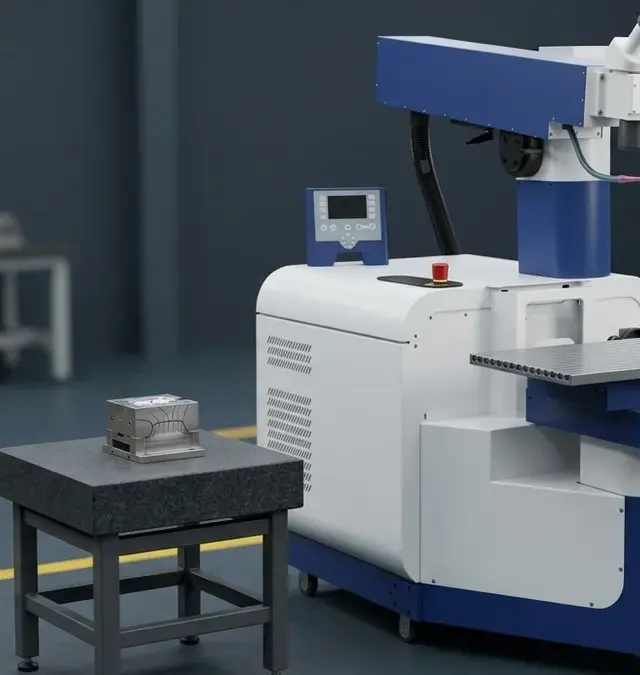
An Nd:YAG laser welding machine is a lamp-pumped solid-state laser operating at 1064 nm, using pulsed operation to deliver high pulse energy. This capability enables precise and controlled deep welds, making it a classic choice for repair-welding applications. Sigma Laser’s mobile systems, such as the Sineo Light, capitalize on these capabilities to offer flexibility in industrial settings.
Typically, Nd:YAG lasers operate with pulse energies up to 170 J and peak powers reaching 13 kW, as seen in systems like the Sineo Light. The wavelength of 1064 nm is particularly effective for metals, allowing for deep penetration and high-quality welds. These lasers are known for their ability to maintain a small heat-affected zone, crucial for applications requiring minimal thermal distortion.
Nd:YAG Laser Welding Applications
Nd:YAG laser welding machines are widely used in industries that demand high precision and minimal heat input, such as automotive mold repair and aerospace component refurbishment. These machines are particularly valued for their ability to weld complex geometries without causing significant thermal distortion.
Industries frequently employ Nd:YAG lasers for welding materials like 1.2344 (AISI H13) due to their excellent thermal stability and wear resistance. The automotive sector, for instance, benefits from the laser’s capability to precisely weld components with intricate designs, while the aerospace industry relies on its ability to join high-strength alloys without compromising structural integrity.
Nd:YAG Laser Welding Advantages
- High Precision: The fine 5-axis positioning ensures accurate welds even in intricate applications.
- Versatility: Suitable for a range of materials including 1.2344 (AISI H13), enabling diverse industrial applications.
- Controlled Heat Input: The pulsed operation minimizes the heat-affected zone, preserving material integrity.
For more insights into the practical applications and benefits of Nd:YAG laser welding, explore our detailed guide on laser welding basics.
Compliance with standards such as ISO 15614-11, which covers the specification and qualification of welding procedures for metallic materials, ensures that Nd:YAG laser welding processes meet stringent industrial requirements.
Why does Pulse Energy Matter More Than Average Power?
In precision laser welding, the Nd:YAG laser welding machine is essential, especially for high-precision welds on delicate components. A key factor affecting the performance of these machines is pulse energy, which often holds more importance than average power in many industrial applications. Understanding the combination of sub-kilowatt average power with high-peak power is crucial for optimizing welding outcomes.
| Parameter | Typical Value (Sigma Nd:YAG) | Application Benefit |
|---|---|---|
| Pulse Energy | up to 170 J | Enables high-intensity bursts for effective penetration and minimal thermal distortion. |
| Peak Power | up to 13 kW | Achieves high energy density for rapid energy deposition, crucial for precision welding. |
Values are as stated in the article and reflect Sigma Laser’s Nd:YAG system capabilities.
Pulse Energy in Nd:YAG Lasers
Pulse energy, typically measured in joules, refers to the total energy delivered in a single laser pulse. Sigma Laser’s Nd:YAG systems, such as the Sineo Light and Sidanus Light, offer pulse energies up to 170 J, enabling them to produce the high-intensity bursts needed for effective penetration and minimal thermal distortion. This capability is especially beneficial in applications involving sensitive materials like 1.2344 (AISI H13), where precision and control are essential.
In typical industrial applications, pulse energies for Nd:YAG lasers can range from a few joules to over 100 joules, depending on the specific requirements of the task. This flexibility allows for the precise tailoring of welding parameters to suit a wide variety of materials and thicknesses.
Peak Power Versus Average Power
The peak power, reaching up to 13 kW in some Sigma Laser models, such as the Sineo Light, underscores the ability to achieve high-energy density, crucial for tasks requiring rapid energy deposition. While the average power remains moderate, this setup maintains a fine balance between energy input and material integrity. This balance is vital in sectors like aerospace and medical technology, where material integrity cannot be compromised.
Industry standards such as EN ISO 15614-11 provide guidelines for the specification and qualification of welding procedures, ensuring that the welding processes meet stringent quality requirements ISO 15614-11:2002. This ensures that the high peak power capabilities of Sigma’s Nd:YAG lasers are effectively utilized within the bounds of established welding procedures.
Industrial Applications and Advantages
Using Nd:YAG laser welding machines in industrial settings offers several advantages. These systems are ideal for creating robust and precise welds in complex assemblies. Their precise energy focus reduces the size of the heat-affected zone, preserving the structural integrity of components. Such features make them indispensable in industries from automotive to packaging, where precision and reliability are crucial.
For a deeper understanding of how pulse parameters affect welding performance, explore our comprehensive guide on Nd:YAG laser pulse parameters. This resource provides valuable insights into optimizing laser settings for diverse welding applications, enhancing both efficiency and quality.
| Advantage | Description |
|---|---|
| High Precision | Fine 5-axis positioning ensures accurate welds in intricate applications. |
| Versatility | Suitable for a range of materials including 1.2344 (AISI H13), enabling diverse industrial applications. |
| Controlled Heat Input | Pulsed operation minimizes the heat-affected zone, preserving material integrity. |
These advantages are described in the article as key benefits of Nd:YAG laser welding.
Where does Nd:YAG beat fibre?
In the realm of precision laser welding, selecting the appropriate system depends on specific application requirements. The Nd:YAG laser welding machine offers distinct advantages in certain industrial scenarios, particularly when it comes to deep, single-pulse repair welds. Unlike fibre lasers, Nd:YAG systems excel in handling reflective materials and complex repair setups, making them a valuable asset in the repair welding sector.
Deep Single-Pulse Repair Welds
For applications requiring deep penetration in a single pulse, the Nd:YAG laser is often preferable. Its capability to deliver intense energy in short bursts allows for effective welding of thick materials with minimal heat input. This feature is particularly beneficial in industries such as aerospace and automotive, where precision and structural integrity are paramount. The Sineo Light, for instance, performs exceptionally well in these scenarios, thanks to its ability to operate at 40 Hz, ensuring consistent performance in demanding environments.
Nd:YAG lasers typically operate at wavelengths around 1064 nm, which is effective for welding a variety of metals, including steel alloys like 1.2344 (AISI H13) and aluminum. This wavelength allows for deep penetration and efficient energy absorption, crucial for achieving high-quality welds with minimal heat-affected zones.
Tolerance to Reflective Setups
Nd:YAG lasers are inherently more tolerant of reflective surfaces, which can pose challenges during welding operations. This tolerance is crucial in repair practices involving materials like 1.2344 (AISI H13), commonly used in mould making and tooling. The Sirius Light leverages this advantage with its robust design, accommodating reflective setups without compromising weld quality.
Reflective materials, such as aluminum and copper, often require specialized laser parameters to prevent back reflections from damaging the laser system. Nd:YAG lasers are designed to mitigate these risks, enhancing their suitability for such applications.
Fibre’s Frequency and Maintenance Advantages
While Nd:YAG lasers have their niche, fibre lasers offer significant advantages in terms of frequency range and maintenance. With a higher operational frequency, such as the 1000 Hz capability of the Sineo Fibre, fibre lasers provide increased welding speeds and finer control over the welding process. Additionally, fibre lasers often require less maintenance, reducing downtime and operational costs over time. For a more detailed exploration of these differences, visit our dedicated comparison page.
Fibre lasers, operating at similar wavelengths around 1070 nm, are known for their high beam quality and efficiency, which translates to faster processing speeds and reduced thermal distortion in the workpiece. This makes them ideal for high-volume production environments where precision and speed are critical.
For an in-depth understanding of how continuous wave (CW) and pulsed laser welding differ, explore our CW vs. pulsed laser welding article.
The Sigma Light series at a glance
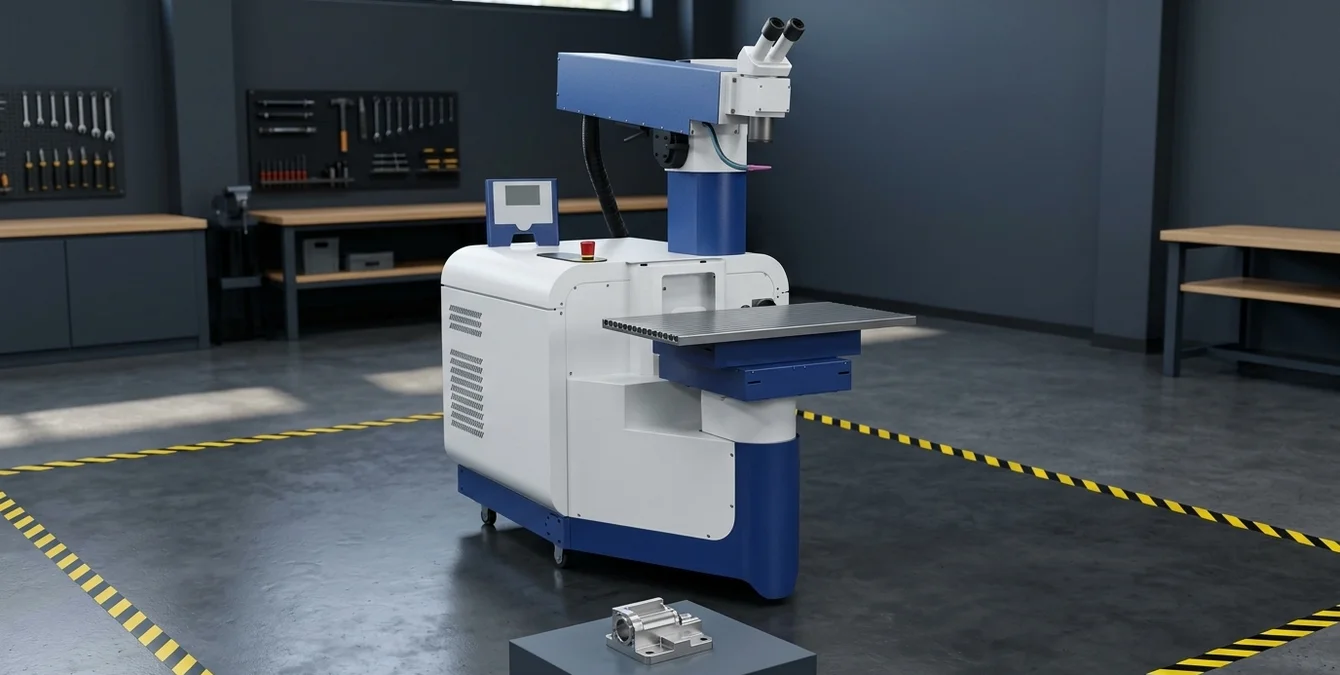
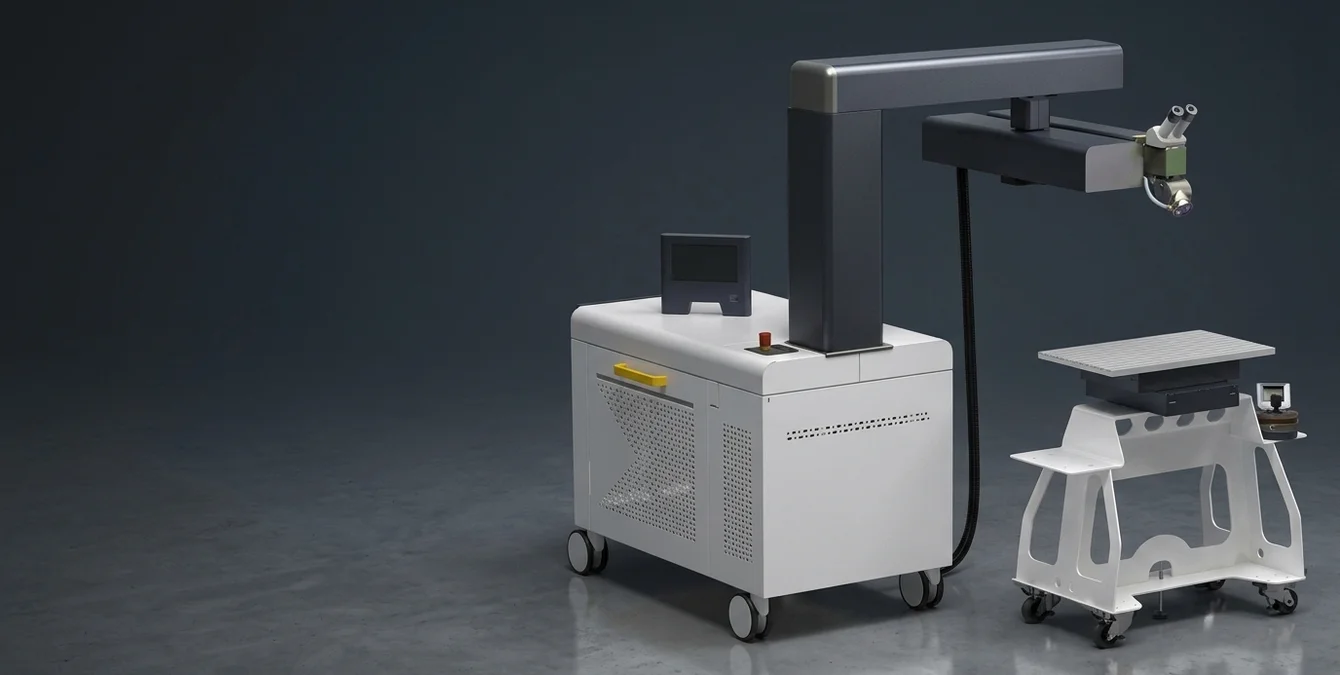
Engineered for precision and reliability, the Sigma Light series offers a versatile range of Nd:YAG laser welding machine solutions tailored for diverse industrial applications. This series includes the stationary Sidanus Light, the heavy-duty mobile Sirius Light, and the 360°-mobile Sineo Light, the latter of which has been recognized with the German Design Award 2025.
Sidanus Light: Stationary Precision
The Sidanus Light is a stationary Nd:YAG laser welding machine, ideal for environments that demand high stability and accuracy. With its robust construction, it is particularly suited for tasks requiring minimal heat input and fine 5-axis positioning, ensuring precise welds on materials such as 1.2344 (AISI H13). Its applications extend to delicate repair welding and high-precision component manufacturing.
Operating at wavelengths around 1064 nm, the Sidanus Light is designed to maintain beam quality suitable for intricate welding tasks. The machine’s pulse duration ranges from 0.5 to 20 ms, enabling it to handle a variety of material thicknesses and types. The precision of the Sidanus Light aligns with industry standards for welding procedure qualification, such as ISO 15614-11, ensuring reliable performance across applications.
Sirius Light: Heavy-Duty Mobility
The Sirius Light provides the robust capabilities of a heavy-duty mobile welding system, making it suitable for large-scale industrial settings where moving the machine to the workpiece is advantageous. Its ability to handle tasks requiring up to 20 Hz pulse frequency ensures consistent performance in demanding scenarios, such as the automotive and aerospace sectors.
This system is optimized for environments where welding speed and penetration depth are critical. Typically, Nd:YAG lasers can achieve penetration depths of several millimeters depending on the material and process parameters. The Sirius Light’s capability to traverse up to 1830 mm allows it to access hard-to-reach areas, enhancing its utility in complex assemblies.
Sineo Light: Award-Winning Mobility
Featuring a 360°-mobile design, the Sineo Light excels in adaptability and ease of use across various industrial contexts. Awarded the German Design Award 2025, this system is particularly effective in complex Nd:YAG laser welding applications where accessibility and maneuverability are paramount. Its capability to achieve precise welds in challenging environments highlights the advantages of Nd:YAG laser welding in modern manufacturing.
With a pulse frequency range of 0.05 to 40 Hz, the Sineo Light offers flexibility in welding speed and energy input, accommodating a wide range of industrial materials.
For more detailed specifications and applications of these systems, visit the Nd:YAG laser welding machine applications page.

What Maintenance Does a Lamp-Pumped System Need?
The maintenance of an Nd:YAG laser welding machine is crucial for ensuring its optimal performance and longevity in industrial applications. These systems, such as the Sidanus Light by Sigma Laser, are engineered for precision in demanding environments. However, maintaining their efficiency requires understanding key aspects of their upkeep, such as lamp life, breakage coverage, and regular maintenance cycles.
Lamp Life and Reality
Lamp life is a critical factor in the operation of Nd:YAG laser systems. Typically, lamp-pumped systems like the Sidanus Light require periodic replacement of the flash lamps, which are subject to wear over time. The real-world operational lifespan of these lamps can vary based on usage intensity and environmental conditions, necessitating proactive monitoring to avoid unexpected downtimes. Regular replacement ensures consistent performance in applications ranging from precision tool repair to high-strength alloy welding.
In industrial settings, Nd:YAG lasers are often used for welding materials such as 1.2344 (AISI H13) tool steel and aluminum alloys, where precision and minimal heat-affected zones are critical. The wavelength of 1064 nm is particularly effective for these applications Journal of Laser Applications.
Understanding Lamp-Breakage Cover
Unexpected lamp failures can interrupt production schedules, making coverage for lamp breakage a vital consideration. Sigma Laser offers comprehensive service plans that can include lamp-breakage cover, reducing financial risk and ensuring rapid recovery from potential disruptions. This coverage is particularly beneficial in high-volume manufacturing settings where unplanned stoppages can significantly impact operational efficiency.
Establishing a Maintenance Rhythm
Developing a routine maintenance schedule is essential for sustaining the performance of Nd:YAG laser welding applications. Regular check-ups should include cleaning optical components, inspecting electrical connections, and verifying system calibration. For detailed guidance on maintaining a Sidanus Light system, consider referring to the Sidanus Light maintenance checklist. Adhering to a structured maintenance plan can significantly enhance the operational lifespan of the machine and ensure that it continues to meet the rigorous demands of industrial environments.
Maintaining compliance with standards such as EN ISO 15614, which specifies the qualification of welding procedures for metallic materials, is also essential to ensure that welding processes remain consistent and meet industry requirements ISO 15614-11.
For a comprehensive comparison of warranty services and maintenance strategies, including those for Sigma’s other systems, explore the detailed insights available in the laser welding machine warranty service comparison.
Which Applications Still Choose Nd:YAG Today?
The Nd:YAG laser welding machine remains a key technology in several specialized industrial applications, offering distinct advantages for precision welding tasks. Its adaptability and precision make it an ideal choice for intricate work such as mold and tool repair, thick-section repairs, and delicate tasks in the jewelry and dental industries.
Mold and Tool Repair
In the realm of mold and tool repair, the Nd:YAG laser excels due to its ability to deliver controlled energy precisely where needed. This precision is crucial for maintaining the integrity of complex geometries found in molds and tools, such as those made from 1.2344 (AISI H13). The Sigma Laser Nd:YAG laser welding applications in this sector highlight its capability to repair without compromising the material’s inherent properties.
Typical Nd:YAG laser systems in this application can achieve penetration depths of up to several millimeters, depending on the material and thickness, with a heat-affected zone (HAZ) that is minimized to prevent thermal distortion. This aligns with the industry standards for welding procedure qualification, such as those outlined in ISO 15614-11.
Thick-Section Repair
For thick-section repairs, Nd:YAG laser welding machines provide focused energy delivery that reduces the heat-affected zone, minimizing thermal distortion. This attribute is particularly beneficial in applications where maintaining dimensional stability is critical. The Sidanus Light and Sirius Light models are exemplary in offering robust solutions for such demanding tasks, ensuring high-quality welds with minimal post-processing.
These systems typically operate with pulse energies up to 170 J, as seen in the Sidanus Light, allowing for effective energy concentration on thicker sections without excessive heat input. This precision is crucial for maintaining the mechanical properties of the base material.
Jewelry and Dental Fine Work
The fine precision of Nd:YAG lasers is indispensable in the jewelry and dental industries for tasks that require minute attention to detail. In these sectors, the ability to work on small-scale components without causing damage is a significant advantage. The Sigma Laser systems provide the precision necessary for creating intricate designs and performing repairs, making them a preferred choice for professionals in these fields.
For such delicate applications, the Nd:YAG laser’s ability to produce small spot sizes, typically ranging from 0.2 to 2.0 mm, is particularly advantageous. This allows for precise control over the weld area, ensuring that adjacent components remain unaffected.
Overall, the Nd:YAG laser welding machine continues to be a versatile tool in industries where precision and control are paramount. Its applications in mold and tool repair, thick-section repairs, and fine work in jewelry and dentistry underscore its enduring relevance and capability in meeting specific industrial needs.
Frequently Asked Questions
What materials can be welded with Nd:YAG lasers?
Nd:YAG lasers are versatile and can weld a wide range of materials, including carbon steel, stainless steel, aluminum, titanium, and nickel alloys. Their capability to deliver high peak power makes them suitable for welding reflective and high-conductivity materials, which are often challenging for other welding methods.
How does Nd:YAG laser welding compare to TIG welding?
Nd:YAG laser welding offers higher precision and faster welding speeds compared to TIG welding. It produces minimal heat-affected zones, reducing thermal distortion and post-processing needs. While TIG welding is more accessible for manual operations, Nd:YAG lasers excel in automated, high-volume production environments.
What are the advantages of using Nd:YAG lasers in repair welding?
Nd:YAG lasers provide excellent control over energy input, allowing precise repair welding of delicate components without causing damage. Their ability to focus on small areas makes them ideal for intricate repairs, reducing the risk of heat-induced warping and maintaining the integrity of the original material.
Can Nd:YAG laser welding be integrated into existing production lines?
Nd:YAG laser welding systems can be seamlessly integrated into existing production lines, enhancing automation and efficiency. Their compatibility with CNC systems and robotic arms allows for precise, repeatable welds, making them suitable for high-volume manufacturing environments.
How does the energy efficiency of Nd:YAG lasers impact operational costs?
While Nd:YAG lasers may have higher initial energy consumption compared to some alternatives, their precision and reduced need for post-processing can lower overall operational costs. Efficient energy use and minimal material waste contribute to a favorable return on investment over time.
What makes Sigma Laser’s Nd:YAG welding machines suitable for complex geometries?
Sigma Laser’s Nd:YAG systems feature 5-axis CNC kinematics (X·Y·Z·C·D), enabling precise, repeatable welds on intricate or three-dimensional parts. This flexibility allows for high-quality seams even on challenging contours, making them ideal for demanding applications in toolmaking, aerospace, and automotive industries.
Sources
- ISO 15614-11:2002 – Specification and qualification of welding procedures for metallic materials — This standard specifies the requirements for the qualification of welding procedures for metallic materials, including laser welding.
- EN ISO 4063:2009 – Welding and allied processes – Nomenclature of processes and reference numbers — This standard provides a nomenclature for welding and allied processes, including laser welding processes.
- NIST – Laser Welding — The National Institute of Standards and Technology provides resources and research on laser welding technologies.
- Fraunhofer Institute for Material and Beam Technology IWS — Fraunhofer IWS conducts research on laser welding technologies, including Nd:YAG laser applications.
- IEC 60825-1:2014 – Safety of laser products – Part 1: Equipment classification and requirements — This standard provides safety requirements for laser products, including those used in welding applications.
- Journal of Laser Applications — A peer-reviewed journal that publishes research on laser applications, including Nd:YAG laser welding.
- Welding Journal — Published by the American Welding Society, this journal covers advancements in welding technologies, including laser welding.
- US Patent 5,656,816 – Nd:YAG laser welding method — A patent describing a method for Nd:YAG laser welding, providing technical insights into the process.