
- Key Takeaways
- What counts as an industrial laser welding system?
- Core Characteristics of Industrial Laser Welding Systems
- Applications in Industrial Contexts
- What does series production demand from a welding system?
- Cycle Time and Efficiency
- Repeat Accuracy
- Program Management
- Documentation and Traceability
- Scaling Path: From Manual Station to Automated Cell
- Initial Setup with Manual Stationary Systems
- Advancing to the Simass Base Unit
- Full Automation with Slide and Rotate Modules
- How does software carry the scaling?
- Program Memory and Parameter Control
- Application-Specific Benefits
- Where do automated laser cells pay off first?
- Medical Devices
- Electronics
- Automotive Suppliers
- How do you calculate the business case?
- Assessing Initial Investment
- Evaluating Operational Efficiency
- Estimating Cost Savings and Payback Period
- Case Study Insights
- Frequently Asked Questions
- What are the advantages of laser welding over TIG welding?
- How does laser welding work in the aerospace industry?
- What types of lasers are used in Sigma Laser welding systems?
- Can Sigma Laser systems weld dissimilar metals?
- What factors influence the cost of investing in a Sigma Laser welding system?
- How does laser welding improve production efficiency?
- Which Sigma Laser systems are best suited for high-cycle series production?
- Related Articles
- Sources
Quick Answer: An industrial laser welding system, such as those manufactured by Sigma Laser, is engineered for high-precision series production, offering superior control and repeatability. These systems utilize advanced 5-axis technology to handle complex geometries, ensuring consistent weld quality across various materials. Designed for integration into automated production lines, Sigma’s laser welding machines enhance efficiency and reduce downtime, making them ideal for industries demanding high throughput and precision, such as automotive and aerospace manufacturing.
Key Takeaways
Industrial laser welding systems are rapidly transforming manufacturing processes, offering precision, efficiency, and flexibility across various sectors. For CTOs and production planners evaluating advanced welding technologies, understanding the advantages and applications of laser welding is crucial to making informed decisions.
- Laser welding provides unparalleled precision, making it ideal for industries such as aerospace, automotive, and medical devices, where accuracy is critical.
- Compared to traditional welding methods, laser welding significantly reduces heat-affected zones, minimizing distortion and post-process requirements.
- The automation capabilities of laser welding systems enhance production speed and consistency, leading to increased throughput and reduced labor costs.
- Laser welding systems offer versatility in material compatibility, enabling seamless joining of dissimilar metals and advanced alloys.
- With advancements in 5-axis technology, complex geometries and intricate weld paths are easily achievable, expanding design possibilities.
- Integrating laser welding into existing production lines can streamline operations and improve overall equipment effectiveness (OEE).
- Investing in a laser welding system aligns with Industry 4.0 trends, supporting digital manufacturing and data-driven decision-making.
Understanding the transformative potential of industrial laser welding systems is essential for leaders aiming to enhance operational efficiency and product quality. The following sections delve deeper into the specific applications and comparative advantages of laser welding over traditional methods.
| Characteristic | Industrial System Feature |
|---|---|
| Repeatability | NC-controlled; typically achieves ±0.1 mm (depends on configuration) |
| Integration | Seamless with production lines; MES interface capability |
| Documentation | Comprehensive parameter records for quality assurance (e.g., power, pulse duration) |
| Standards Compliance | Meets ISO 15614-11 for welding procedure qualification |
Repeatability value is a general range, not a Sigma product spec.
What counts as an industrial laser welding system?
An industrial laser welding system is a production-grade machine designed for repeatable, NC-controlled welding processes. It offers comprehensive documentation capabilities and seamless integration options within manufacturing environments. Unlike setups intended for workshop repair use, these systems prioritize precision, consistency, and efficiency in high-volume production settings.
Core Characteristics of Industrial Laser Welding Systems
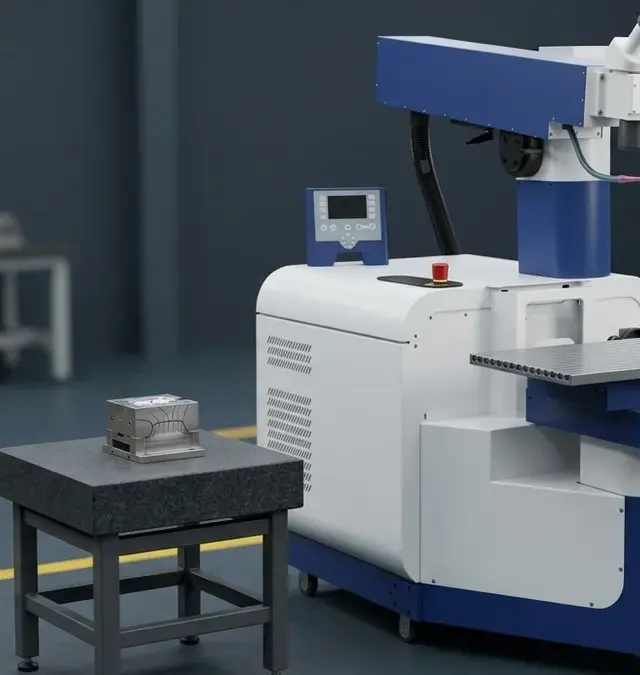
Industrial laser welding machines, such as those offered by Sigma Laser, are known for delivering precise welds through advanced technologies. For instance, Sigma’s stationary solutions like the Sidanus Light and Siega Fibre are engineered with features tailored to demanding manufacturing processes.
- Repeatability: NC-controlled systems ensure consistent weld quality across batches, which is essential for maintaining tight tolerances. Industrial systems typically achieve repeatability in the range of ±0.1 mm, though exact values depend on specific machine configurations.
- Integration: These systems seamlessly integrate with existing production lines, enhancing operational efficiency. The ability to interface with modern manufacturing execution systems (MES) is a key feature.
- Documentation: Comprehensive documentation of welding parameters is crucial for quality assurance and compliance with standards like ISO 9001. This includes maintaining records of power settings, pulse duration, and other critical parameters.
- Standards Compliance: Compliance with standards such as ISO 15614-11 for welding procedure qualification ensures that processes meet industry benchmarks for quality and safety.
Applications in Industrial Contexts
In sectors such as automotive, aerospace, and electronics, fiber laser welding technology plays a critical role. The Sidanus Fibre and Sineo Fibre systems, using ytterbium fiber lasers, are particularly suited to applications requiring minimal heat-affected zones and superior weld strength. Such systems are indispensable for tasks requiring the welding of materials like 1.2344 (AISI H13), where precision and durability are paramount.
These systems are capable of achieving weld penetration depths typically ranging from 0.1 mm to several millimeters, depending on the material and specific application. The ability to produce minimal heat-affected zones is critical in maintaining the mechanical properties of sensitive materials.
| Requirement | Description |
|---|---|
| Cycle Time | Rapid processing to minimize delays; systems operate with power outputs from a few hundred watts to several kilowatts, enabling welding speeds that can exceed 10 m/min (material/thickness dependent) |
| Repeat Accuracy | Fine 5-axis positioning and minimal heat input maintain tight tolerances and minimize heat-affected zones (typically a few millimeters) |
| Program Management | Sigomatic Pro control system enables easy programming updates; memory for 50 programs, expandable to over 100 |
| Traceability | Automatic documentation of each weld’s parameters for compliance with ISO 9001 and EN ISO 15614-11 |
All descriptions are based on article content; numeric values are general/industry figures, not attributed to a specific Sigma model.
What does series production demand from a welding system?
In the fast-paced environment of industrial manufacturing, the need for a robust industrial laser welding system is paramount. These systems must meet stringent requirements to ensure efficiency, consistency, and quality in series production. A precise understanding of cycle time, repeatability, program management, and traceability is essential for optimizing production lines.
Cycle Time and Efficiency
Reducing cycle time is crucial in maintaining a competitive edge. An industrial laser welding machine should facilitate rapid processing without compromising weld quality. Systems like the Sidanus Light and Sineo Fibre offer advanced features that streamline operations and minimize downtime, ensuring that each weld is completed in the shortest possible time frame. Typically, industrial laser systems operate with power outputs ranging from a few hundred watts to several kilowatts, allowing for welding speeds that can exceed 10 m/min, depending on the material and thickness.
Repeat Accuracy
Consistency in production is achieved through precise repeatability. Sigma Laser’s systems utilize fine 5-axis positioning and minimal heat input to maintain the integrity of materials like 1.2344 (AISI H13). This precision is critical for applications requiring tight tolerances and minimal heat-affected zones. The heat-affected zone is typically minimized to a few millimeters, preserving the mechanical properties of the base material.
Program Management
Effective program management enables quick adjustments and adaptation to varying production requirements. Sigma Laser’s Sigomatic Pro control system allows for seamless integration and easy programming updates, ensuring that production lines remain flexible and responsive to change. With a memory capacity of 50 programs, expandable to over 100, these systems provide the versatility needed for complex production scenarios.
Documentation and Traceability
Traceability is integral to quality assurance and compliance with standards such as ISO 9001 and EN ISO 15614-11. Sigma Laser systems are designed to document each weld’s parameters automatically, facilitating comprehensive traceability. This capability is essential for industries like aerospace and automotive, where rigorous documentation is mandatory. The ability to trace each weld back to its specific parameters ensures compliance with industry standards and enhances quality control.
- Cycle Time: Optimize with features that reduce processing delays.
- Repeat Accuracy: Ensure precision with advanced positioning and minimal heat input.
- Program Management: Adapt quickly with intuitive control systems.
- Traceability: Maintain comprehensive records for compliance and quality assurance.
By addressing these demands, Sigma Laser’s solutions provide a reliable foundation for efficient and high-quality series production in various industrial sectors. The integration of standards such as ISO 15614-11 ensures that welding procedures are qualified to meet the rigorous demands of modern manufacturing environments.
Scaling Path: From Manual Station to Automated Cell
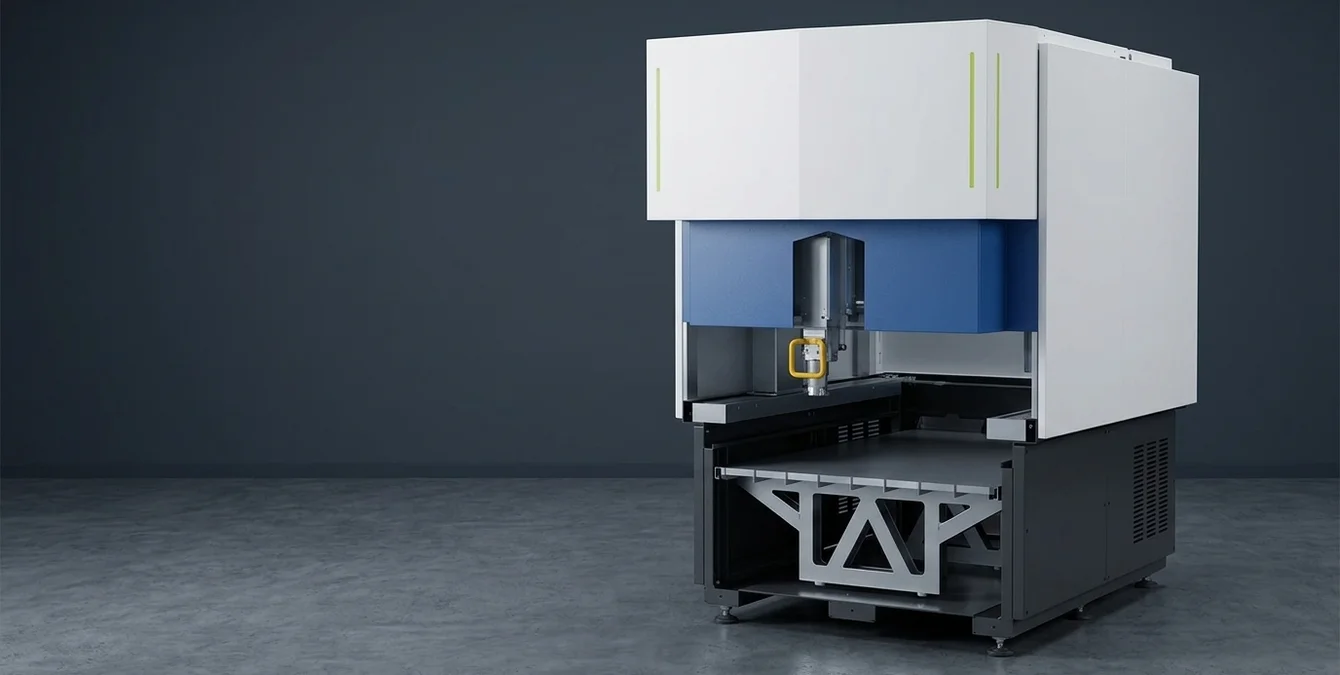
Transitioning from a manual operation to a fully automated laser welding setup is a strategic move for manufacturers aiming to enhance efficiency and precision. Sigma Laser offers a scalable solution starting with a manual stationary system and evolving into a sophisticated automated cell through the integration of the industrial laser welding system known as the Simass Base Unit, followed by the Slide and Rotate modules.
Initial Setup with Manual Stationary Systems
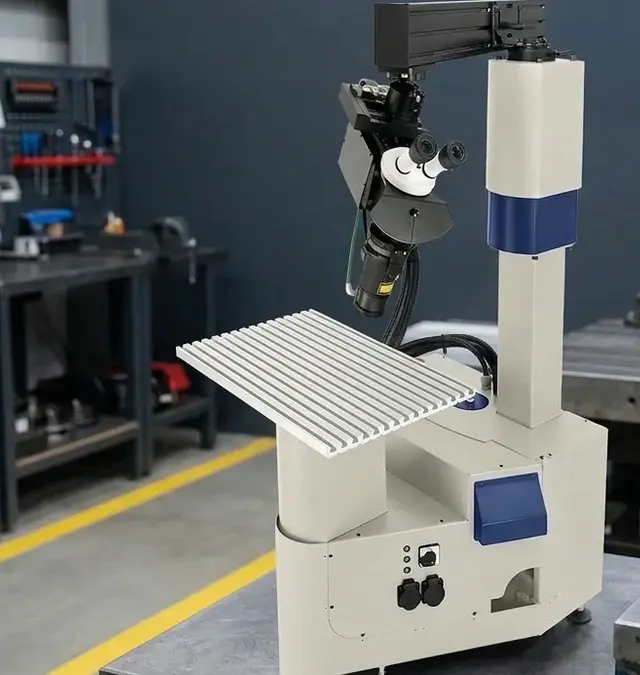
Beginning with a manual stationary system provides manufacturers with a robust entry point into laser welding. These systems, such as the Sidanus Light or Sineo Light, offer the precision necessary for detailed work but require manual operation. They are ideal for low-volume production or custom projects where flexibility and hands-on control are paramount.
Manual systems typically operate with laser powers ranging from 60 W to 500 W, as seen in the Sidanus Light, which can achieve peak powers up to 13 kW. These systems are suitable for welding a variety of materials, including stainless steel, aluminum alloys, and tool steels like 1.2344 (AISI H13), due to their precise control over heat input and minimal heat-affected zone (HAZ). The ability to finely adjust pulse durations from 0.5 to 20 ms enhances the versatility of these systems for intricate applications.
Advancing to the Simass Base Unit
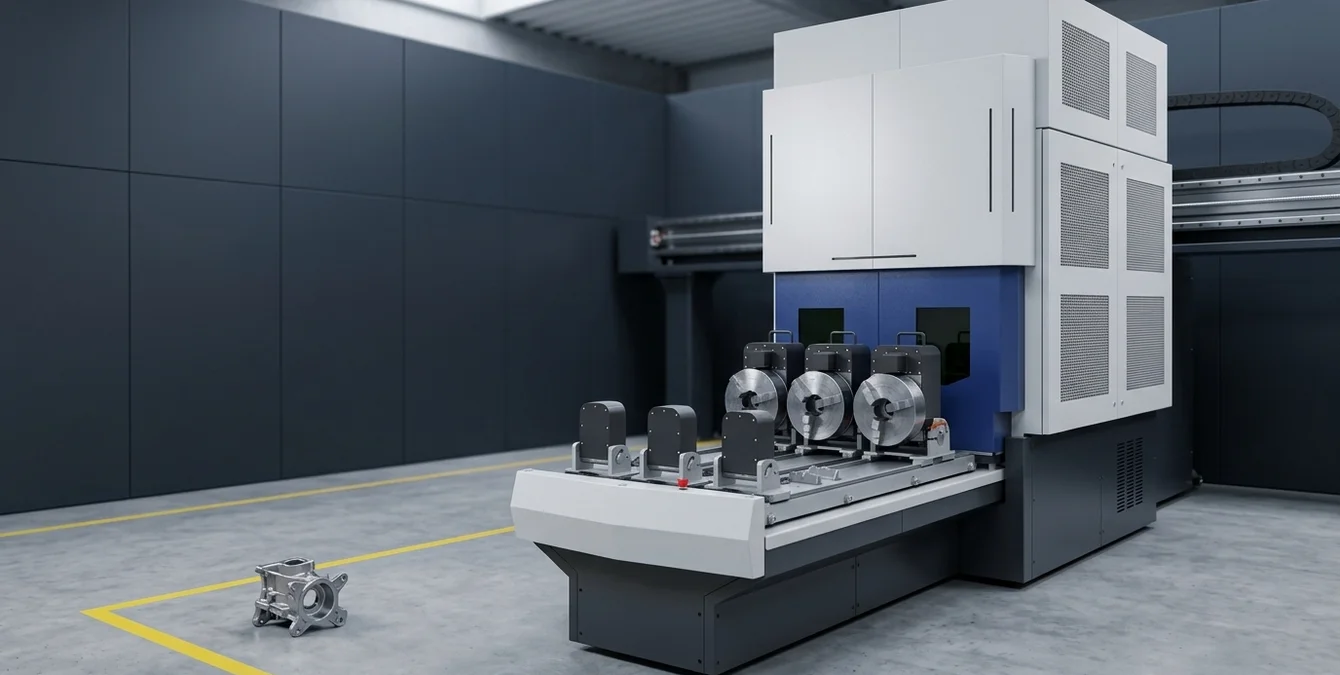
The next stage in scaling involves the integration of the Simass Base Unit. This transition marks the shift towards automation, offering a more consistent and efficient production process. The Simass Base Unit serves as a foundational platform that supports higher production volumes while maintaining precision and quality. It is particularly advantageous in industries such as automotive, medical technology, and electronics, where consistency and precision are critical.
By leveraging numerically controlled axes, the Simass Base Unit facilitates a seamless transition to automated processes, adhering to standards such as EN ISO 15614 for welding procedure qualification, ensuring reliable and repeatable weld quality. This system is engineered to handle the demands of high-cycle production environments, optimizing throughput without compromising on the precision required for complex assemblies.
Full Automation with Slide and Rotate Modules
For manufacturers ready to embrace full automation, the addition of the Slide and Rotate modules to the Simass system represents the pinnacle of industrial laser welding machines. These modules enable the handling of complex geometries and larger workpieces with ease, significantly enhancing production capabilities. Detailed insights into these modules can be found in our articles on large workpiece laser welding and how Simass benches outshine conventional tables.
This staged approach not only optimizes production but also allows for gradual investment, minimizing risk while maximizing the return on technological advancements in laser welding.
How does software carry the scaling?
In the realm of industrial laser welding systems, software plays a crucial role in efficiently scaling operations. Sigma Laser’s control solutions, Sigomatic and Sigomatic Pro, are designed to optimize the performance of their automated laser welding systems. These control systems ensure that complex welding tasks are executed with precision and repeatability, which is vital for industries requiring high-volume production.
Program Memory and Parameter Control
Both Sigomatic and Sigomatic Pro offer extensive program memory capacities, enabling the storage of numerous welding parameters and sequences. This feature is indispensable for production environments where consistent quality is critical. The Sigomatic Pro, however, enhances this capability with advanced parameter control, allowing engineers to fine-tune welding operations with greater detail. This is particularly advantageous in applications that demand high precision, such as in the medical technology and automotive sectors.
Typically, industrial laser welding systems operate within power ranges of 100 to 500 watts for precision applications, with wavelengths around 1064 nm for Nd:YAG lasers and 1070 nm for fibre lasers. The ability to control parameters such as pulse duration and frequency is crucial for minimizing the heat-affected zone, which is essential for maintaining the integrity of delicate components.
Application-Specific Benefits
Utilizing these control systems, industrial laser welding machines can be adapted to various applications, from the intricate demands of electronics manufacturing to the rigorous standards of aerospace component welding. The integration of Sigomatic vs. Sigomatic Pro provides insights into choosing the right system based on specific operational needs.
- Medical Technology: High precision for welding intricate components.
- Automotive: Scalability for high-volume production with repeatable accuracy.
- Aerospace: Precision and reliability in welding critical components.
Through the sophisticated software offerings of Sigomatic and Sigomatic Pro, Sigma Laser ensures that their welding systems meet the diverse and demanding needs of modern industrial applications. These control systems not only facilitate efficient scaling but also maintain the stringent quality standards required across different sectors.
This ensures a safe working environment while maintaining operational efficiency.
Where do automated laser cells pay off first?
Medical Devices
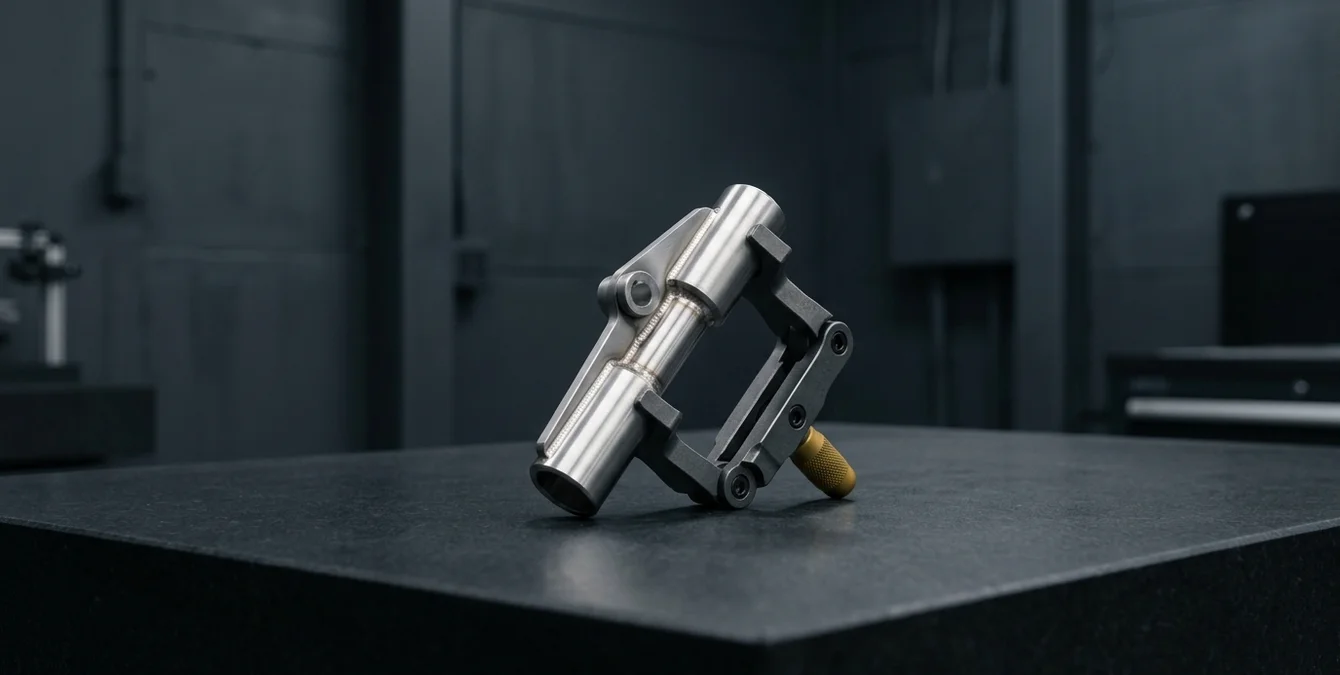
In the medical device sector, precision and repeatability are paramount. Automated laser welding systems, such as the Sigma Laser Simass Base Unit, play a crucial role in meeting these requirements. They enable the production of intricate components like surgical instruments and implants, where maintaining minimal heat-affected zones is essential for preserving material integrity. The fiber laser welding used in these systems ensures consistent weld quality, vital for complying with stringent industry standards such as ISO 9001 and EN ISO 15614-11. For more details on applications, visit our medical devices laser welding page.
In the context of medical devices, materials such as stainless steel, titanium, and certain biocompatible alloys are commonly used. The ability to create precise welds with minimal thermal distortion is crucial for maintaining the functionality and longevity of these components. The Simass systems are designed to handle such materials with high precision, ensuring compliance with industry standards.
Electronics
The electronics industry greatly benefits from the precision and control provided by industrial laser welding machines. Sigma Laser’s Sidanus Fibre, featuring advanced Swivel Optics, enables precise alignment and welding of delicate electronic components. This precision is crucial in the fabrication of microelectronic devices, where space is limited and accuracy is critical. The precise beam guidance ensures the welding process does not damage adjacent components, a key factor in maintaining the functionality of complex circuits. More information can be found on our electronics industry laser welding page.
Typical laser parameters for electronics applications include power levels up to 600 W and spot sizes as small as 0.1 mm, which are ideal for fine-feature welding. The Sidanus Fibre’s capability to maintain a small heat-affected zone is particularly beneficial in preventing thermal damage to sensitive components.
Automotive Suppliers
Automotive suppliers often operate in high-volume production environments where efficiency and reliability are essential. The Sigma Laser Sineo Light, with its capability to deliver consistent results at a frequency of 40 Hz, is particularly suited for tasks such as welding gearbox components and structural parts. The adaptability of the Simass Slide and Rotate modules allows for seamless integration into existing production lines, enhancing throughput while maintaining quality. The use of fiber laser technology ensures robust bonds and reduces post-weld processing, which is ideal for the demanding conditions of automotive manufacturing.
In automotive applications, materials such as 1.2344 (AISI H13) and other high-strength steels are commonly used due to their durability and performance under stress. The Sineo Light’s ability to deliver peak powers of up to 13 kW ensures deep penetration and strong welds, which are critical for structural integrity in automotive components.
How do you calculate the business case?
When considering the implementation of an industrial laser welding system, understanding the financial implications is crucial. Calculating the business case involves assessing both the upfront costs and the long-term benefits, such as improved efficiency and reduced labor expenses. By examining these factors, companies can make informed decisions about integrating advanced technologies like fiber laser welding into their production processes.
Assessing Initial Investment
The initial investment in industrial laser welding machines, such as those offered by Sigma Laser, typically includes the cost of the equipment itself, installation, and necessary safety measures. It’s important to compare these costs with existing processes. For instance, transitioning from traditional welding methods to laser welding requires a comprehensive analysis of the capital expenses and potential reduction in material waste. Typically, industrial laser systems operate with power levels ranging from a few hundred watts to several kilowatts, depending on the application, with wavelengths commonly around 1064 nm for Nd:YAG lasers and 1070 nm for fibre lasers.
Evaluating Operational Efficiency
Operational efficiency is a key indicator of the return on investment (ROI) for laser welding systems. Fiber laser welding technology, known for its precision and minimal heat-affected zone, can enhance productivity by reducing rework and downtime. This efficiency gain often translates into increased throughput and higher-quality outputs, justifying the initial expenditure. In precision applications, the heat-affected zone is typically minimal, which is crucial for maintaining the integrity of materials such as 1.2344 (AISI H13) tool steel and various aluminum alloys.
Estimating Cost Savings and Payback Period
Cost savings from using laser welding systems can be significant. Factors like reduced material costs, lower energy consumption, and decreased labor requirements contribute to an attractive payback period. Companies often find that the transition to advanced welding solutions offers a competitive advantage, particularly in high-volume sectors like automotive and aerospace. The precision of systems like the Sidanus Fibre, with its ytterbium fibre laser, ensures high-quality welds with minimal post-processing, further enhancing cost efficiency.
| Advantage | Impact |
|---|---|
| Precision | Ideal for aerospace, automotive, and medical devices where accuracy is critical |
| Reduced Heat-Affected Zone | Minimizes distortion and post-process requirements |
| Automation | Enhances production speed and consistency; increases throughput and reduces labor costs |
| Material Versatility | Enables joining of dissimilar metals and advanced alloys |
| Complex Geometries | 5-axis technology allows intricate weld paths and expanded design possibilities |
All advantages are described in general terms, not as specific Sigma product claims.
Case Study Insights
To further understand the cost-effectiveness of laser welding, consider examining automation cost efficiency insights and ROI comparisons with TIG welding. These resources provide detailed analyses and real-world examples of how companies have successfully integrated laser welding systems into their production lines, yielding substantial financial benefits.
Ultimately, the decision to invest in an industrial laser welding system should be based on a thorough financial analysis and a clear understanding of the long-term benefits. By carefully considering the factors outlined above, businesses can develop a strong business case for adopting this advanced technology. Standards such as ISO 15614-11 are essential for the qualification of welding procedures, ensuring that the processes meet industry requirements for quality and safety.
Frequently Asked Questions
What are the advantages of laser welding over TIG welding?
Laser welding offers higher precision, faster processing speeds, and lower heat input compared to TIG welding. This results in minimal distortion and superior weld quality, essential for high-specification industries like aerospace and automotive. Additionally, laser welding can be automated for increased efficiency and consistency in large-scale production environments.
How does laser welding work in the aerospace industry?
In the aerospace industry, laser welding is employed for its ability to produce high-strength, lightweight joints with minimal thermal distortion. It is particularly useful for welding complex geometries and dissimilar metals, crucial for manufacturing components like turbine blades and fuel tanks. The precision and repeatability of laser welding meet the stringent quality standards required in aerospace applications.
What types of lasers are used in Sigma Laser welding systems?
Sigma Laser welding systems utilize Nd:YAG and ytterbium fibre lasers. These lasers are chosen for their high beam quality and efficiency, making them suitable for precision welding tasks across various industrial applications, including automotive and aerospace sectors.
Can Sigma Laser systems weld dissimilar metals?
Sigma Laser systems are capable of welding dissimilar metals, thanks to their precise control over heat input and advanced beam quality. This capability is particularly advantageous in industries where joining different materials is necessary to achieve specific mechanical properties or weight reductions.
What factors influence the cost of investing in a Sigma Laser welding system?
The cost of investing in a Sigma Laser welding system is influenced by factors such as system configuration, automation level, and specific application requirements. Evaluating return on investment (ROI) based on increased production efficiency and reduced material waste is crucial for determining the economic benefits of the system.
How does laser welding improve production efficiency?
Laser welding improves production efficiency through its high-speed processing and ability to automate complex welding tasks. This reduces cycle times and increases throughput, making it an ideal solution for high-volume manufacturing environments seeking to optimize productivity and maintain consistent quality.
Which Sigma Laser systems are best suited for high-cycle series production?
For high-cycle series production, Sigma Laser offers the Simass Base Unit, Simass Slide, and Simass Rotate automatic welding systems. These feature 5-axis CNC kinematics for precise, repeatable seams on complex parts, and can be equipped with either pulsed Nd:YAG or fibre laser sources to match specific production requirements.
Sources
- ISO 15614-11:2002 — Specification and qualification of welding procedures for metallic materials – Welding procedure test – Part 11: Electron and laser beam welding
- ISO 11145:2016 — Lasers and laser-related equipment – Vocabulary and symbols
- EN 60825-1:2014 — Safety of laser products – Part 1: Equipment classification and requirements
- Fraunhofer Institute for Laser Technology ILT — Research and development in laser technology and laser welding systems
- NIST – Laser Welding — National Institute of Standards and Technology’s research on laser welding
- Journal of Laser Applications — Peer-reviewed journal covering laser applications in industry
- Welding Journal — Publication by the American Welding Society covering welding technologies