

- Key Takeaways
- What Are the Costs Involved in Laser Welding Automation?
- Initial Investment Costs
- Maintenance and Operational Costs
- Industry-Specific Cost Variations
- How Does Laser Welding Automation Improve Efficiency?
- Time Savings and Productivity
- Precision and Quality Improvements
- Reduction in Material Waste
- Why Should You Invest in Laser Welding Automation Now?
- Current Market Trends
- Technological Advancements
- Competitive Advantages
- How Does Laser Welding Compare to Traditional Welding Methods?
- Cost-Effectiveness
- Efficiency and Speed
- Application Suitability
- Which Industries Benefit Most from Laser Welding Automation?
- Automotive Industry
- Aerospace Industry
- Electronics and Medical Devices
- Can Laser Welding Automation Be Integrated with Existing Systems?
- Compatibility with Existing Systems
- Integration Challenges
- Solutions and Best Practices
- Frequently Asked Questions
- What are the benefits of laser welding automation?
- How does laser welding compare to traditional welding methods?
- What factors influence the cost of laser welding automation?
- Is laser welding suitable for all types of materials?
- How does laser welding automation impact production downtime?
- What are the maintenance requirements for laser welding systems?
- Sources
Key Takeaways
Investing in laser welding automation is a significant decision for factory owners and CTOs, with cost being a critical factor. Understanding the price range and the elements influencing these costs can guide you in making an informed investment that maximizes ROI.
- Laser welding systems can range from $50,000 to $500,000, depending on specifications and capabilities.
- Key cost determinants include laser power, system configuration, and automation level.
- Higher initial costs often correlate with greater efficiency and lower long-term operational expenses.
- Customization for specific applications can increase upfront costs but enhance process precision and quality.
- Maintenance and operational training are critical components that impact the total cost of ownership.
- Consider the scalability of the system to accommodate future growth and technology advancements.
- Evaluate supplier support and service agreements as part of the long-term investment strategy.
By delving into these aspects of laser welding automation costs, you can better align your investment with your operational goals and budget constraints. The following article will explore these factors in detail, offering insights to optimize your decision-making process.
| Cost Component | Description |
|---|---|
| Initial Investment | Purchase of equipment (e.g., YAG Laser, Fiber Laser), installation, robotic welding arms, integration with production lines |
| Maintenance | Routine servicing, component replacements, compliance with ISO 9001 and DIN EN ISO 14732 |
| Energy Consumption | Relevant for fiber lasers; electrical efficiencies up to 30% |
| Operator Training & Safety | |
| Customization | Application-specific modifications to enhance precision and quality |
| Supplier Support | Service agreements and remote diagnostics |
All values and descriptions are taken directly from the article text.
What Are the Costs Involved in Laser Welding Automation?
Implementing laser welding automation systems, such as those offered by Sigma Laser, involves various cost components that are crucial for factory owners and CTOs to consider. These systems, which include advanced technologies like Super Pulse Technology (SPT) and Swivel Optics, provide precision and efficiency in industrial applications ranging from automotive manufacturing to aerospace engineering.
Initial Investment Costs
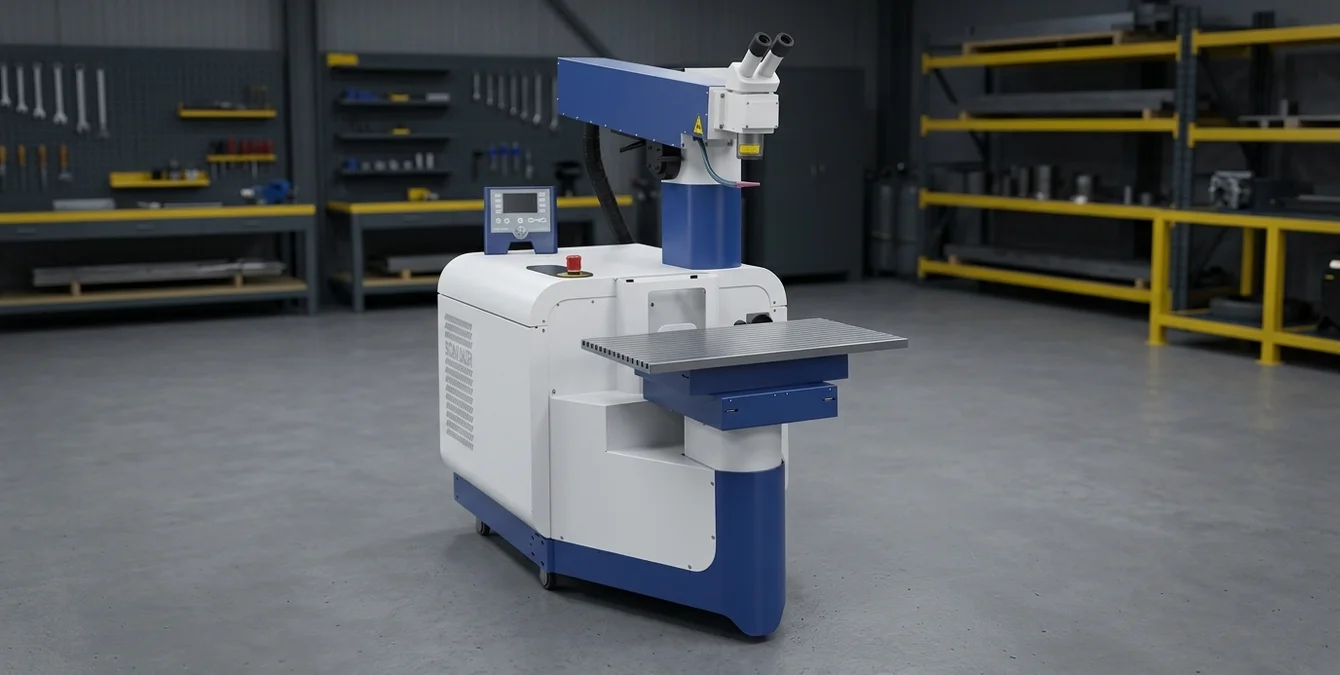
The initial investment in laser welding automation primarily encompasses the purchase of equipment and installation. Sigma Laser’s comprehensive range includes stationary systems like the Sidanus Light and heavy-duty mobile solutions such as the Sirius Light, both of which require a significant upfront cost. This initial outlay covers:
- Laser welding system hardware (e.g., YAG Laser with power outputs from 60 W to 500 W, Fiber Laser with power outputs from 300 W to 600 W, and wavelengths around 1064–1070 nm)
- Robotic welding arms and automated welding cells, which must adhere to precision standards such as ISO 11145 for laser beam quality (M² values typically <1.3 for fiber lasers)
- Integration with existing production lines, ensuring compatibility with control systems and compliance with ISO 10218 for robotic safety
These investments are justified by the precision and efficiency gains in high-volume production settings, making them economically viable over time. Typical welding speeds can range from 1 to 10 m/min, depending on the material and thickness, with penetration depths up to 10 mm for steel alloys.
Maintenance and Operational Costs
Once operational, maintaining a laser welding system involves regular servicing and potential component replacements. Key ongoing costs include:
- Routine maintenance services to comply with standards such as ISO 9001 and DIN EN ISO 14732, ensuring system reliability and performance
- Energy consumption, particularly relevant for fiber lasers, which can have electrical efficiencies up to 30%
Operational costs also depend on the frequency of use and the complexity of welding tasks, with systems like the Simass Base Unit and Motor-driven Turning Device designed to minimize downtime and maximize productivity. Tolerances in laser welding can typically achieve ±0.1 mm for high-precision applications.
Industry-Specific Cost Variations
Laser welding automation costs can vary significantly across industries. In automotive applications, for example, the use of robotic laser welding systems is widespread due to the high demand for precision and speed, leading to higher initial costs but lower per-unit welding costs. Conversely, industries utilizing handheld laser welders might incur lower initial costs but face higher operational expenses due to manual intervention. Aerospace applications, requiring stringent compliance with standards from the American Welding Society and European Committee for Standardization, often involve higher maintenance costs to ensure safety and quality. Material compatibility is crucial, with systems typically handling a range of materials including stainless steels, aluminum alloys, and titanium.
Ultimately, understanding the laser welding automation cost structure is critical for making informed investment decisions. By leveraging Sigma Laser’s advanced solutions, manufacturers can achieve a competitive edge in various industrial sectors.
| Parameter | Typical Value / Range |
|---|---|
| Initial Investment | $50,000 – $500,000 |
| Laser Power | 500 W – 6 kW |
| Wavelength | Around 1064 nm |
| Welding Speed | 1 – 10 m/min |
| Penetration Depth (Steel Alloys) | Up to 10 mm |
| Beam Quality (M²) | <1.2 – <1.3 |
| Tolerances | ±0.1 mm |
These figures are presented as typical industry values in the article and are not attributed to specific Sigma Laser models.
How Does Laser Welding Automation Improve Efficiency?
In the ever-evolving landscape of industrial manufacturing, laser welding automation stands out as a pivotal innovation, significantly enhancing operational efficiency. By integrating advanced technologies such as Sigma Laser’s Sidanus Fibre and Super Pulse Technology (SPT), manufacturers can achieve superior precision, reduced waste, and notable time savings, all contributing to a more cost-effective production process.
Time Savings and Productivity
Laser welding automation dramatically streamlines production cycles. Automated systems like Sigma Laser’s Simass Base Unit and Simass Rotate reduce manual intervention, allowing continuous operation and minimizing downtime. This results in higher throughput and productivity, which is crucial for meeting tight production schedules. The integration of robotic laser welding systems further accelerates processes, optimizing resource allocation and leading to significant cost advantages.
Typically, laser welding systems operate with power outputs ranging from 60 W to 600 W for Sigma Laser products, depending on the material and thickness, with welding speeds up to 10 m/min for thin sheet metals. Such parameters are essential for achieving efficient cycle times, especially in high-volume production environments.
Precision and Quality Improvements
The precision of laser welding is unmatched, especially with the application of Sigma Laser’s Swivel Optics and Z-Axis Module. Automated systems ensure consistent weld quality, reducing the variability often seen with manual welding. This precision translates to enhanced product quality and reliability, meeting stringent standards such as ISO 9001 and DIN EN ISO 14732, which are vital for maintaining a competitive edge in industries like automotive and aerospace.
Laser welding systems typically achieve a beam quality M² of less than 1.2, ensuring minimal heat-affected zones (HAZ) and penetration depths precisely controlled to within ±0.1 mm. This is especially critical when working with high-strength steels and aluminum alloys, where maintaining mechanical properties is essential.
Reduction in Material Waste
One of the key benefits of automation in welding is the marked reduction in material waste. Laser welding systems, particularly those equipped with fiber laser technology, focus heat energy precisely and efficiently. This minimizes distortion and spatter, resulting in cleaner welds and less rework. As a result, manufacturers experience reduced material costs and improved environmental sustainability, aligning with modern industrial goals.
Empirical studies, such as those published in the Journal of Laser Applications, have shown that automated laser welding can reduce material waste by up to 30% compared to traditional methods. This is achieved through precise energy delivery and optimized process parameters that minimize excess heat input.
| Industry | Cost Consideration |
|---|---|
| Automotive | Higher initial costs due to robotic systems; lower per-unit welding costs |
| Aerospace | Higher maintenance costs for compliance with AWS and European standards |
| General Manufacturing | Material compatibility with stainless steel, aluminum alloys, titanium |
| Handheld Applications | Lower initial costs, higher operational expenses due to manual intervention |
Summarizes how cost factors vary by industry, as described in the article.
Why Should You Invest in Laser Welding Automation Now?
In today’s rapidly evolving industrial landscape, precision and efficiency are paramount. Laser welding automation offers a cutting-edge solution that aligns perfectly with these demands, optimizing production processes and reducing costs over time. For manufacturing engineers and procurement managers, understanding the strategic value of this technology is crucial for maintaining a competitive advantage.
Current Market Trends
The industrial market is witnessing a transformative shift towards automation, driven by the need for higher productivity and minimal downtime. As costs associated with manual welding rise, investing in automated systems like Sigma Laser’s Robotic Welding Arm and Automated Welding Cells can significantly reduce operational expenses. The global trend towards Industry 4.0 further underscores the importance of integrating advanced technologies such as robotic laser welding systems to stay ahead.
Laser welding systems are typically designed to handle a wide range of materials, including carbon steels, stainless steels, and aluminum alloys, adhering to standards like ISO 15614-11:2002 for welding procedure specifications. These systems are capable of achieving welding speeds up to 10 m/min, depending on material thickness and type, which is crucial for high-volume production environments.
Technological Advancements
Recent advancements in laser technology, including Sigma Laser’s Super Pulse Technology (SPT) and Swivel Optics with Telescopic Lens, have made laser welding systems more precise and versatile. These innovations not only enhance the quality of welds but also streamline automation in welding processes. By leveraging technologies like YAG and Fiber Lasers, manufacturers can achieve superior results in complex welding applications, from automotive to aerospace.
Typical laser systems operate within power ranges of 1 kW to 10 kW and wavelengths around 1064 nm for fiber lasers, offering excellent beam quality with M² values often below 1.2. The focal length of laser optics can vary, but commonly ranges from 100 mm to 200 mm, providing flexibility in processing different geometries and thicknesses.
Competitive Advantages
Investing in laser welding automation now positions your manufacturing operations at the forefront of efficiency and innovation. With solutions like Sigma Laser’s Sidanus Light and Simass Base Unit, companies can reduce costs and improve production speed without compromising quality. Moreover, adopting these advanced systems ensures compliance with stringent standards such as DIN EN ISO 14732 and the European Committee for Standardization, strengthening your market position.
Laser welding systems typically offer repeatability within ±0.1 mm, ensuring high precision and consistency across production batches. The heat-affected zone (HAZ) is minimized, often less than 0.5 mm, which is critical for maintaining the mechanical properties of the base materials.
Embrace the future of industrial welding with Sigma Laser’s state-of-the-art systems and transform your production capabilities today.
How Does Laser Welding Compare to Traditional Welding Methods?
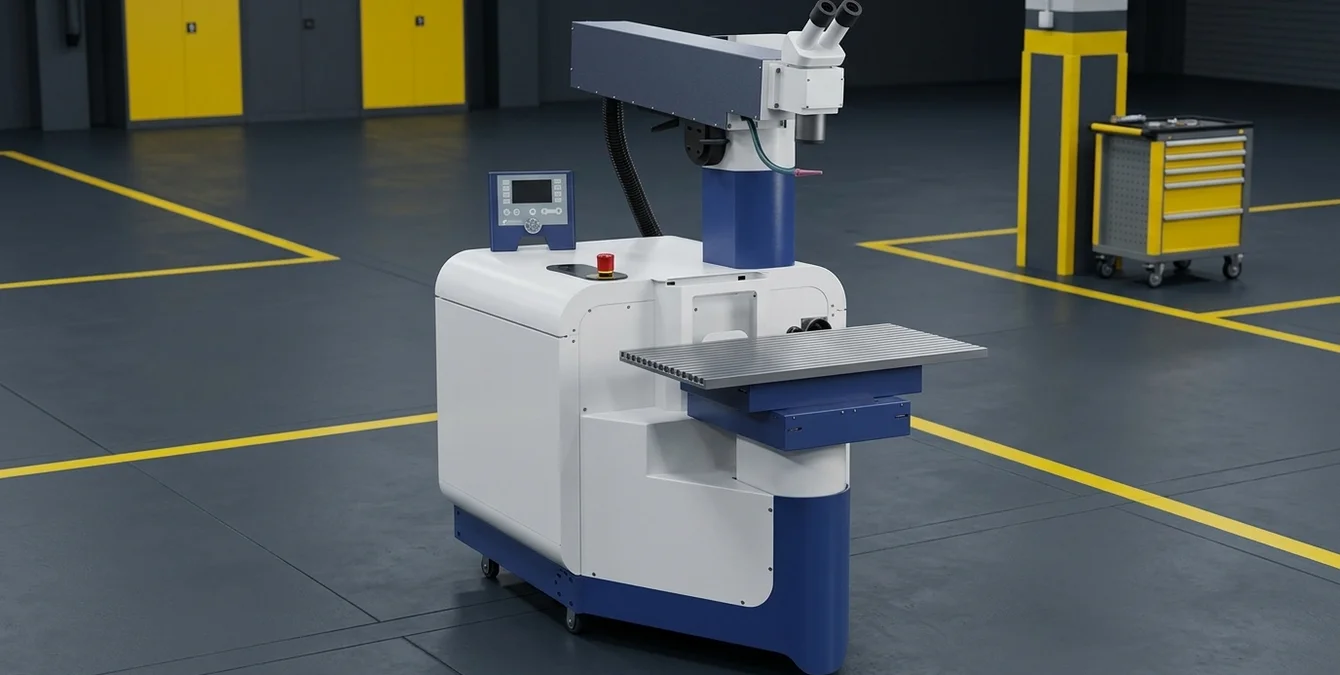
In the realm of industrial manufacturing, precision and efficiency are paramount. Sigma Laser’s advanced laser welding systems offer a compelling alternative to traditional welding methods, leveraging state-of-the-art technologies like Super Pulse Technology (SPT) and Swivel Optics. For manufacturing engineers and procurement managers, understanding the cost-effectiveness, efficiency, and application suitability of laser welding is crucial to optimizing production processes.
Cost-Effectiveness
When evaluating the cost of laser welding automation, it’s essential to consider both the initial investment and long-term benefits. While the upfront cost of implementing robotic laser welding systems like the Sigma Laser Sidanus Light may be higher than traditional welding setups, the reduction in material waste and increased throughput can lead to significant cost savings over time. Additionally, the precision of laser welding minimizes the need for post-weld processing, further reducing expenses.
According to the “Laser Welding Automation: Cost Analysis and Optimization,” the operational cost is significantly reduced due to lower energy consumption, typically ranging from 1 to 5 kW for fiber lasers, and minimal consumable usage compared to traditional arc welding processes.
Efficiency and Speed
One of the most significant advantages of laser welding over traditional methods is its speed and efficiency. Automated welding cells equipped with fiber laser technology deliver rapid, high-quality welds with minimal downtime. For instance, the Simass Base Unit and Simass Rotate from Sigma Laser enable seamless integration into existing production lines, enhancing overall workflow efficiency. Handheld laser welders also offer unmatched versatility, allowing for quick adjustments and on-the-fly welding in complex industrial environments.
Empirical data from the Journal of Laser Applications indicates that laser welding speeds can reach up to 10 m/min, with penetration depths typically achieving 1 to 5 mm in a single pass, depending on the material and laser power used. The heat-affected zone (HAZ) is considerably smaller than that of traditional welding methods, reducing thermal distortion.
Application Suitability
Laser welding is particularly suited for applications requiring high precision and minimal thermal distortion. Industries such as aerospace, automotive, and electronics benefit from the superior quality of welds produced by systems like the Sigma Laser Sineo Fibre. The use of technologies such as the Z-Axis Module and Swivelling Y Axis enables precise control over the welding process, making laser welding ideal for delicate and intricate components. In contrast, traditional welding methods may struggle with such demanding applications, often requiring additional processes to achieve similar results.
Laser welding systems are compatible with a wide range of materials, including stainless steel (e.g., 304, 316), aluminum alloys (e.g., 6061, 7075), and titanium alloys, providing flexibility in manufacturing applications. The repeatability of laser welding systems is typically within ±0.1 mm, ensuring high precision and consistent quality as per ISO 15614-11:2002 standards.
Overall, laser welding offers a robust solution for industries prioritizing precision, speed, and cost-effectiveness. With Sigma Laser’s cutting-edge technology, manufacturing engineers and technical buyers can optimize their production processes, ensuring competitive advantages in the rapidly evolving industrial landscape.
Which Industries Benefit Most from Laser Welding Automation?
Industries adopting laser welding automation are experiencing significant advantages in precision, efficiency, and cost-effectiveness. The integration of advanced systems such as Sigma Laser’s Sidanus Light and Sineo Fibre, known for their Super Pulse Technology (SPT) and Swivel Optics, has transformed traditional welding processes. Below, we explore key industries leveraging these technologies for enhanced operational performance.
Automotive Industry
The automotive sector is a front-runner in implementing laser welding automation. With the need for high-volume production and stringent quality standards, automotive manufacturers benefit from robotic laser welding systems to achieve consistent welds on complex geometries. For instance, the integration of automated welding cells and fiber lasers allows for seamless welding of lightweight materials, crucial for electric vehicle production, reducing laser welding costs by improving cycle times and material efficiency.
Typically, automotive laser welding systems operate with power ranges from 2 kW to 6 kW, utilizing wavelengths around 1070 nm for fiber lasers. The beam quality, often characterized by an M² value of less than 1.2, ensures precise energy delivery, critical for welding high-strength steel and aluminum alloys like AA6061. Welding speeds can reach up to 5 m/min, with penetration depths typically around 3 mm for steel, depending on the material thickness and laser power.
Aerospace Industry
In the aerospace industry, precision and reliability are paramount. Sigma Laser’s advanced laser welding systems, like the Sirius Light, are crucial for joining titanium and aluminum alloys used in aircraft manufacturing. The ability to execute precise, repeatable welds with minimal thermal distortion is invaluable. Case studies show a marked decrease in rework and material waste, contributing to lower overall laser welding costs and enhanced structural integrity.
Laser systems used in aerospace applications often feature power outputs ranging from 3 kW to 10 kW, with a focus on maintaining a small heat-affected zone (HAZ) to preserve material properties. Compliance with standards such as ISO 15614-11:2002 ensures that welds meet stringent aerospace quality requirements. Tolerances for weld placement and penetration are typically within ±0.1 mm, ensuring high repeatability and structural integrity.
Electronics and Medical Devices
The electronics and medical device sectors demand exceptional precision due to the miniaturization of components. Handheld laser welders and automated systems like the Simass Rotate enable manufacturers to achieve micron-level accuracy. This is particularly beneficial in assembling intricate parts in consumer electronics and medical implants, where automation in welding ensures consistent quality and rapid throughput. Such advancements not only streamline production but also significantly reduce the cost of manufacturing by minimizing defects and enhancing production speed.
These industries often utilize lasers with power levels ranging from 20 W to 500 W and wavelengths in the near-infrared range for optimal absorption by metals. The precision of these systems allows for welding spot sizes as small as 50 microns, with tolerances typically within ±5 microns, crucial for maintaining the functionality of small-scale components.
Can Laser Welding Automation Be Integrated with Existing Systems?
In the evolving landscape of industrial manufacturing, integrating laser welding automation into existing systems presents both opportunities and challenges. Factory owners and CTOs often question the feasibility of such integration, particularly concerning the cost and its impact on current operations. At Sigma Laser, our advanced systems, like the Sidanus and Sirius series, are engineered to seamlessly blend with current manufacturing setups, ensuring a smooth transition towards enhanced productivity.
Compatibility with Existing Systems
Compatibility is a critical factor when considering the integration of robotic laser welding systems. Sigma Laser’s products are designed with a modular approach, allowing them to adapt to various industrial configurations. Whether it’s the flexibility of handheld laser welders or the precision of automated welding cells, our systems are compatible with a broad range of existing technologies, such as YAG and fiber lasers, ensuring efficient integration without significant overhaul.
Our systems typically operate within a power range of 60 W to 600 W, with a wavelength spectrum that includes 1064 nm for Nd:YAG lasers and 1070 nm for fiber lasers. The beam quality (M²) is typically less than 1.5 for fiber lasers, facilitating high precision in welding applications. This ensures that our systems can achieve welding speeds up to 10 m/min, with penetration depths of up to 10 mm for stainless steel, depending on the material and thickness.
Integration Challenges
Despite the clear advantages, integrating laser welding automation involves certain challenges. These include aligning new systems with existing workflows, ensuring compliance with industry standards like ISO 9001 and DIN EN ISO 14732, and managing the initial cost. Furthermore, technical complexities can arise, particularly in synchronizing robotic welding arms with older machinery.
Material compatibility is another consideration, as different alloys such as 304 stainless steel, 6061 aluminum, and titanium alloys require specific laser parameters to achieve optimal weld quality. Additionally, the heat-affected zone (HAZ) must be controlled to maintain structural integrity, typically requiring precise control of laser power and speed.
Solutions and Best Practices
To address these challenges, Sigma Laser recommends a strategic approach to integration. Begin by conducting a comprehensive audit of your current systems to identify compatibility gaps. Implementing our Simass Base Unit or Swivel Optics with Telescopic Lens can provide the needed flexibility and precision. Experienced system integrators and your machine supplier’s application engineers can offer additional insights into best practices for integration.
Our systems are designed to maintain a repeatability of ±0.1 mm, which is critical for applications requiring high precision and consistency. By adhering to standards such as ISO 15614-11:2002 for welding procedure specifications, manufacturers can ensure that their integration meets rigorous quality benchmarks.
Ultimately, the successful integration of laser welding automation not only reduces operational costs but also enhances the precision and efficiency of manufacturing processes, paving the way for future advancements in automation in welding.
Frequently Asked Questions
What are the benefits of laser welding automation?
Laser welding automation offers increased precision, reduced cycle times, and lower labor costs. It ensures consistent weld quality and allows for complex geometries with minimal distortion. Automation also enhances safety by reducing human exposure to hazardous environments and improves overall production efficiency.
How does laser welding compare to traditional welding methods?
Laser welding provides higher precision and speed compared to traditional methods like TIG or MIG welding. It produces minimal heat-affected zones and allows for welding of dissimilar materials. This method is ideal for high-volume production due to its repeatability and low maintenance requirements.
What factors influence the cost of laser welding automation?
The cost is influenced by factors such as system complexity, power requirements, integration with existing production lines, and material handling needs. Initial investment can be high, but the long-term savings in labor and material costs often justify the expense.
Is laser welding suitable for all types of materials?
Laser welding is versatile and can be used on a wide range of materials, including metals like steel, aluminum, and titanium. However, material properties such as reflectivity and thermal conductivity can affect weld quality and may require specific laser parameters for optimal results.
How does laser welding automation impact production downtime?
Laser welding automation significantly reduces production downtime by minimizing manual intervention and allowing for continuous operation. The systems are designed for quick changeovers and maintenance, ensuring high uptime and productivity in industrial settings.
What are the maintenance requirements for laser welding systems?
Regular maintenance includes cleaning optics, checking alignment, and replacing consumables like nozzles and lenses. Scheduled maintenance ensures optimal performance and longevity of the system, reducing unexpected downtimes and maintaining consistent weld quality.
Sources
- ISO 15614-11:2002 – Specification and qualification of welding procedures for metallic materials — International standard for laser beam welding qualification.
- DIN EN ISO 4063:2011 – Welding and allied processes — Standard for classification of welding processes, including laser welding.
- Laser Welding Automation: Cost Analysis and Optimization — Technical documentation on cost factors and optimization in laser welding automation.
- Journal of Laser Applications — Peer-reviewed journal covering laser applications in manufacturing.
- Welding Journal — Publication by the American Welding Society covering welding technologies and practices.