
- Key Takeaways
- What is a stationary laser welding machine?
- Applications and Benefits
- Technological Features
- When does stationary beat mobile?
- Part Flow and Facility Layout
- Series Work and Production Volume
- Repeatability and Precision
- Footprint Considerations
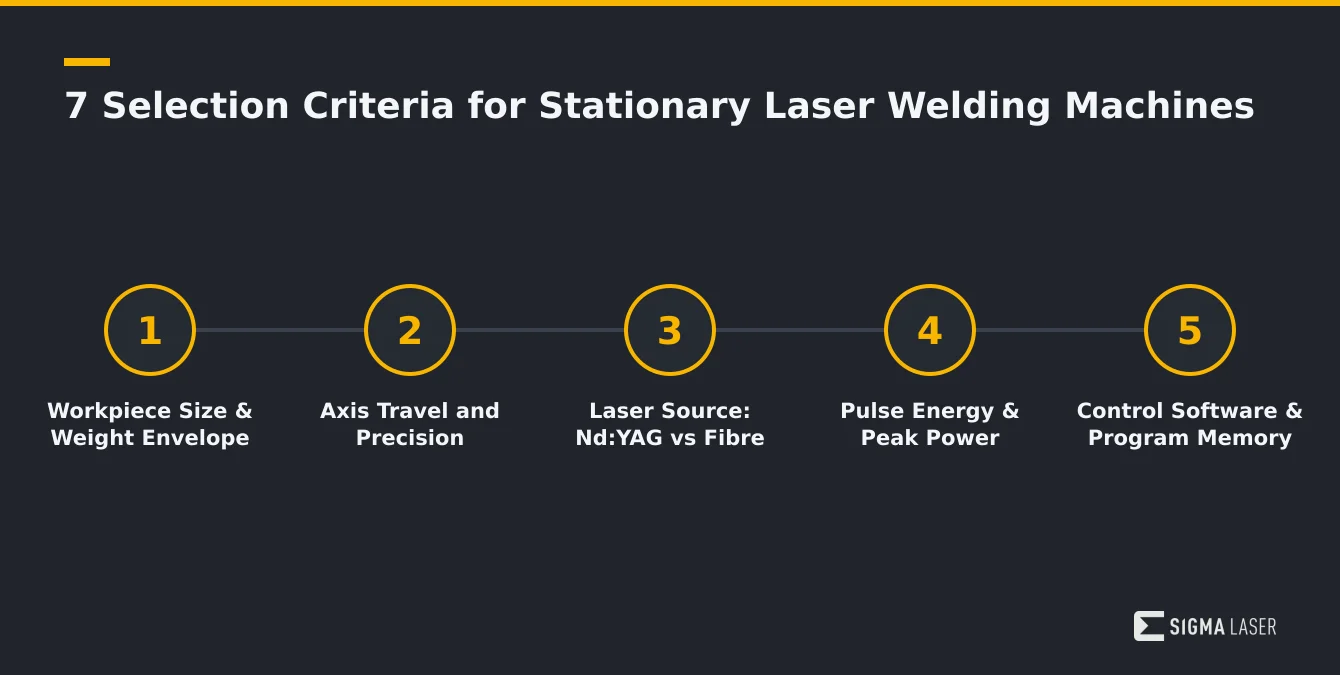
- The 7 Selection Criteria
- 1. Workpiece Size & Weight Envelope
- 2. Axis Travel
- 3. Laser Source
- 4. Pulse Energy/Peak Power
- 5. Control Software & Program Memory
- 6. Service & Spare Parts
- 7. Training, Documentation and Workplace Integration
- Which Sigma Stationary System Fits Which Job?
- Sidanus Light
- Sidanus Fibre
- Siega Fibre
- How Much Does a Stationary System Cost?
- Primary Cost Drivers
- Maximizing Return on Investment
- What about safety and installation?
- Frequently Asked Questions
- What are the advantages of stationary laser welding machines?
- How do stationary laser welding machines integrate into production lines?
- What materials are compatible with stationary laser welding machines?
- How does the cost of stationary laser welding machines compare to other welding technologies?
- Can stationary laser welding machines handle high-volume production?
- What are the maintenance requirements for stationary laser welding machines?
- What distinguishes Sigma Laser’s stationary welding systems from mobile solutions?
- Related Articles
- Sources
Quick Answer: A stationary laser welding machine is pivotal for precision welding in industrial applications. Key selection criteria include laser power output, beam quality, axis configuration (e.g., 5-axis flexibility), material compatibility, automation integration, cooling systems, and safety features. Evaluate the machine’s ability to handle specific materials and thicknesses, ensuring it aligns with production requirements. Consider the manufacturer’s reputation and support services to optimize investment and operational efficiency.
Key Takeaways
When considering the acquisition of a stationary laser welding machine, understanding the nuances of Nd:YAG and fiber laser welding systems is crucial. These systems offer distinct advantages that can greatly impact production efficiency and quality, making them a strategic investment for manufacturing operations.
- Nd:YAG systems are renowned for their ability to weld a variety of materials, including reflective metals, with high precision and minimal thermal distortion.
- Fiber laser welding machines provide high energy efficiency and low maintenance requirements, leading to reduced operational costs over time.
- The compact design of stationary laser welding machines optimizes floor space utilization, allowing for seamless integration into existing production lines.
- Advanced beam quality in fiber lasers ensures superior weld consistency, enhancing product quality and reducing rework rates.
- The versatility of stationary laser systems supports diverse applications, from small-scale precision tasks to large-scale industrial projects.
- Both Nd:YAG and fiber laser systems offer programmable control features, enabling precise automation and repeatability in complex welding tasks.
- Investing in stationary laser welding technology positions your operation at the forefront of innovation, driving competitive advantage in manufacturing processes.
Understanding the specific benefits and applications of Nd:YAG and fiber laser systems will guide your decision-making process. Explore further to learn how Sigma Laser’s Sidanus and Siega models can align with your production goals.
What is a stationary laser welding machine?
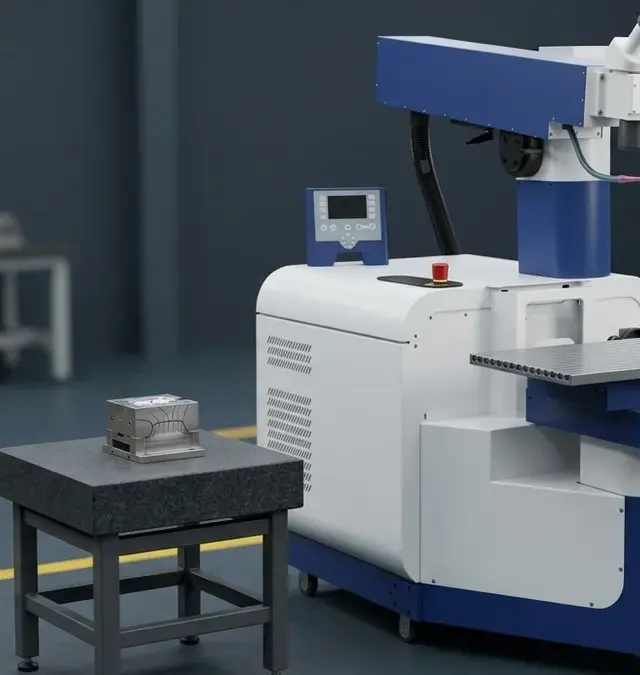
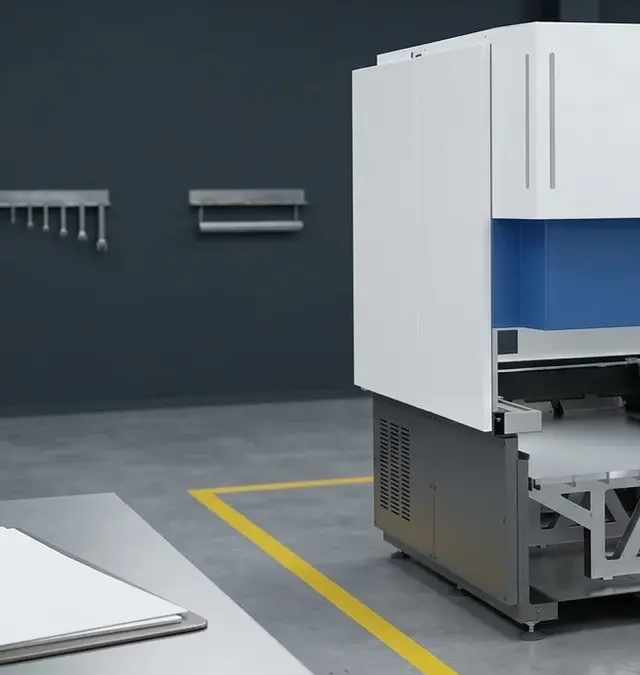
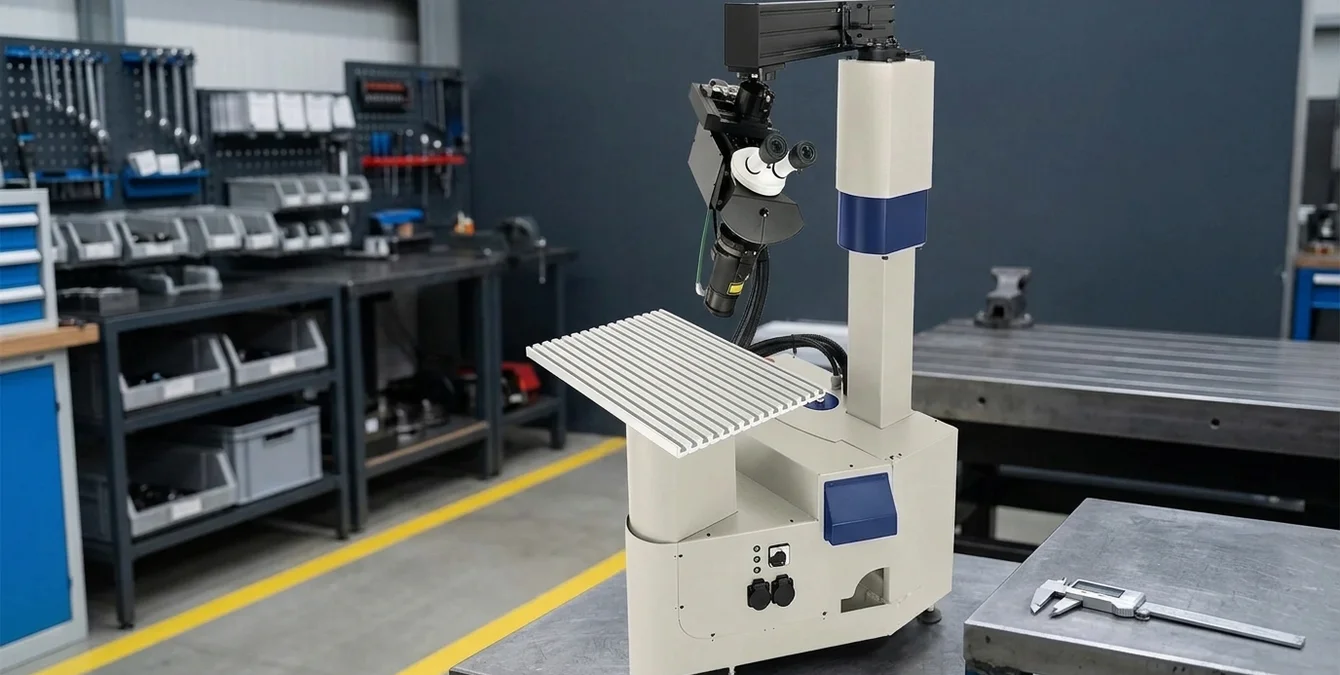
A stationary laser welding machine is an enclosed, fixed-position 5-axis precision welding system designed for industrial applications where parts are brought to the machine for processing. These machines offer high accuracy and repeatability, making them suitable for complex welding tasks in sectors such as aerospace, automotive, and medical device manufacturing. In contrast to mobile systems that bring the machine to the workpiece, stationary systems require the parts to be positioned within the machine’s controlled environment.
Applications and Benefits
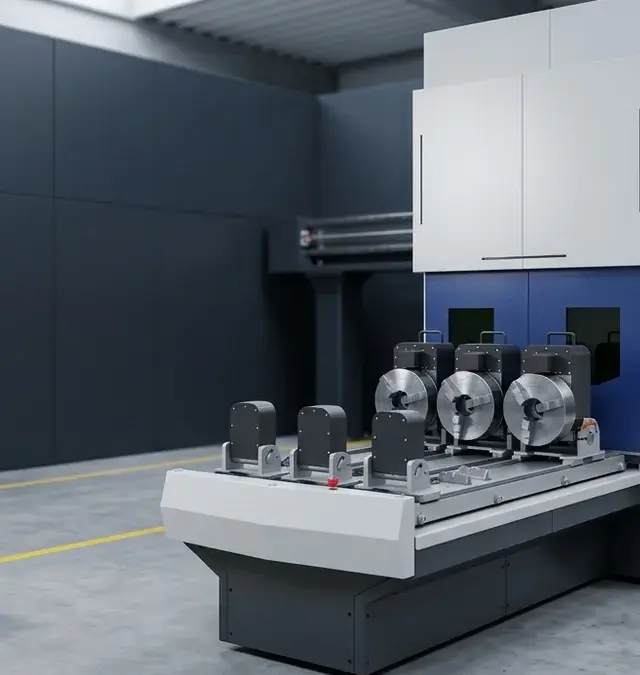
Stationary laser welders, such as the Sigma Laser Sidanus Light or Siega Fibre, are engineered for environments where precision and stability are paramount. These machines are equipped with advanced features like Swivel Optics with a Telescopic Lens and a Motor-driven Turning Device, enhancing their capability to perform intricate welds on materials like 1.2344 (AISI H13) and other specialized alloys.
- High precision with minimal heat input, reducing the heat-affected zone.
- Suitable for high-volume production runs, ensuring consistent weld quality.
- Versatile application across diverse industries, including electronics and packaging.
- Compliance with ISO 15614-11 ensures that welding procedures are qualified for metallic materials, enhancing reliability and quality assurance in production environments.
Technological Features
Stationary laser welding machines leverage both Nd:YAG and fiber laser technologies, depending on the specific requirements of the application. For instance, the Sidanus Fibre utilizes ytterbium fiber laser technology, which is ideal for tasks requiring high-frequency welding capabilities. Additionally, the integration of Sigma Laser’s Sigomatic Pro control system allows for precise automation and process monitoring, enhancing operational efficiency.
In compliance with ISO standards, these machines support industrial laser welding with high reliability and safety.
Typical industrial laser welding parameters for stationary systems can include power outputs up to several hundred watts, with penetration depths varying based on material and thickness, commonly achieving depths of up to a few millimeters in steel alloys. These systems are designed to maintain tight tolerances and minimal distortion, crucial for applications requiring high precision.
When does stationary beat mobile?
In industrial settings, choosing between a stationary laser welding machine and a mobile one can significantly impact production efficiency and quality. This decision depends on several critical factors, including part flow, series work, repeatability, and facility footprint.
Part Flow and Facility Layout
For operations where workpieces are consistently brought to the welding station, such as in assembly lines or fixed production processes, a stationary laser welder like the Sidanus Light or Siega Fibre offers clear advantages. These machines are designed to handle fixed setups, providing stable and reliable welding conditions.
Stationary systems typically feature robust construction, which allows for precise alignment and consistent weld quality. For instance, the Sidanus Light, with its Nd:YAG laser source, offers peak power levels up to 13 kW, ensuring strong penetration capabilities for a variety of materials, including steels like 1.2344 (AISI H13) and aluminum alloys.
Series Work and Production Volume
High-volume production environments benefit from stationary systems due to their ability to handle repetitive tasks with minimal setup changes. The Sidanus Fibre and Siega Fibre are particularly effective in these scenarios, offering precision and consistent quality for batch production.
These systems are well-suited for industries requiring stringent adherence to welding procedure specifications, such as those outlined in ISO 15614-11, which governs the qualification of welding procedures for metallic materials. This ensures that the welds meet the necessary quality and safety standards.
Repeatability and Precision
For applications requiring high precision, such as aerospace or medical device manufacturing, stationary welding systems excel. Their stable design ensures minimal deviation, achieving excellent repeatability in complex welding tasks. This is crucial when welding intricate designs or materials that require precise control.
The Sidanus Fibre, for example, with its ytterbium fibre laser, provides a spot size as small as 0.1 mm, allowing for fine control over the weld bead and minimizing the heat-affected zone. This precision is essential for maintaining the integrity of sensitive components.
Footprint Considerations
Stationary systems typically require a dedicated space within a facility. While this might initially seem like a limitation, the fixed location can actually streamline workflow processes by reducing the need for frequent equipment relocation and recalibration.
To further explore the factors influencing the choice of welding systems, visit our laser welding buying guide.
| Criterion | Stationary | Mobile |
|---|---|---|
| Part Flow | Parts to machine | Machine to parts |
| Series Work | Ideal for high volume | Flexible for diverse tasks |
| Repeatability | High precision | Varies by environment |
| Footprint | Dedicated space | Compact, movable |
The 7 Selection Criteria
When evaluating a stationary laser welding machine for industrial applications, several critical factors must guide the selection process. These criteria ensure that the equipment aligns with production requirements, operational efficiency, and long-term serviceability.
1. Workpiece Size & Weight Envelope
The dimensions and mass of the workpieces are fundamental in selecting the appropriate system. Machines like the Sidanus Light and Siega Fibre are designed to handle various sizes and weights, making them suitable for diverse industrial laser welding tasks. These machines are engineered to accommodate a wide range of materials, including 1.2344 (AISI H13) tool steel, which is commonly used in high-stress applications.
2. Axis Travel
Consider the axis travel capabilities of the machine. Sigma Laser’s stationary systems, such as the Sidanus Fibre, offer precise 5-axis positioning, which is crucial for complex welding tasks requiring high accuracy and minimal heat input. The ability to maintain precision in multi-axis movements is essential for achieving consistent weld quality, particularly in applications involving intricate geometries.
3. Laser Source
The choice between Nd:YAG and ytterbium fibre laser sources impacts both performance and operational cost. Nd:YAG lasers, such as those used in the Sidanus Light, provide high peak power suitable for welding reflective materials like aluminum. Ytterbium fibre lasers, as seen in the Sidanus Fibre, offer excellent beam quality and efficiency, making them ideal for high-speed welding applications.
4. Pulse Energy/Peak Power
Published figures for pulse energy and peak power are vital in determining the machine’s capability. For instance, the Siega Fibre, with its Super Pulse Technology (SPT), offers peak power necessary for demanding applications while maintaining precision. This capability is particularly beneficial for welding applications requiring deep penetration with minimal heat-affected zones, which is crucial in maintaining the integrity of heat-sensitive components.
5. Control Software & Program Memory
An advanced control system like the Sigomatic Pro is essential for efficient operation and program management. Consider machines with robust software solutions that support complex welding sequences and offer extensive program memory for varied project demands. The integration of such control systems ensures repeatability and precision, which are critical in high-volume production environments.
6. Service & Spare Parts
Reliable service support and the availability of spare parts are crucial for minimizing downtime. Sigma Laser provides comprehensive service agreements and ensures parts availability to keep operations running smoothly. This support is vital for maintaining the operational efficiency of laser systems, particularly in industries where production continuity is critical.
7. Training, Documentation and Workplace Integration
Integrating a stationary laser welding machine into your workplace is mostly a question of people and paperwork: who operates it, how quickly they become productive, and how the qualified parameters are documented. Sigma Laser supplies certified operator trainings and the complete technical documentation, and the Sigomatic control stores qualified parameter sets as programs — so results stay reproducible from the first shift. Follow the safety guidelines supplied with your system; Sigma offers certified operator trainings.
By meticulously analyzing these criteria, industries can select the ideal stationary laser welder that meets their specific production needs and ensures optimal performance.
Which Sigma Stationary System Fits Which Job?
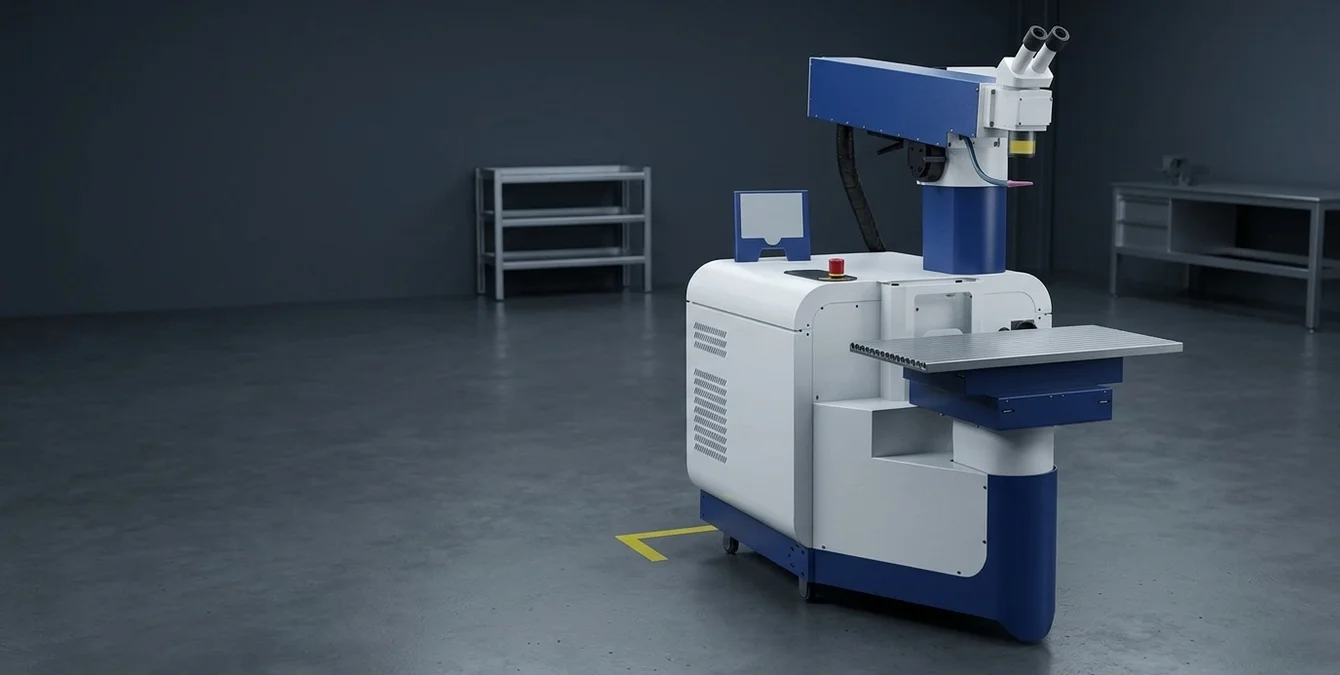
In the realm of stationary laser welding machine solutions, Sigma Laser offers a range of systems tailored to specific industrial applications. Each machine is engineered to meet unique welding requirements, ensuring precision and efficiency in manufacturing environments. Below, we outline the key features and applications of Sigma’s stationary systems.
Sidanus Light
The Sidanus Light system, equipped with Nd:YAG technology, is designed for deep repair welds where durability and depth are essential. This machine excels in environments requiring robust weld penetration, making it suitable for heavy-duty applications in industries such as mold repair and tooling. For more details, explore the industrial mold repair applications of the Sidanus Light.
Typical industrial applications for the Sidanus Light include welding of tool steels such as 1.2344 (AISI H13), which demands high thermal stability and wear resistance. The machine’s peak power range of 6–13 kW allows for effective penetration in thick sections, while maintaining a minimal heat-affected zone, crucial for preserving the integrity of the workpiece.
Sidanus Fibre
With its ytterbium fibre laser source, the Sidanus Fibre provides high precision welding capabilities, offering both continuous wave (CW) and pulsed operation modes. This versatility makes it an ideal choice for tasks demanding meticulous detail and accuracy, such as in electronics assembly and medical device manufacturing. Learn more about its high-precision capabilities on the electronics manufacturing page.
The Sidanus Fibre’s ability to operate at a maximum frequency of 100 Hz facilitates rapid processing speeds, essential for high-volume production environments. Its spot size, adjustable between 0.1 and 2.0 mm, enables precise control over the weld seam, which is vital for applications involving delicate components. The machine’s compatibility with materials like stainless steel and titanium alloys further enhances its applicability in precision industries.
Siega Fibre
The compact Siega Fibre system integrates Super Pulse Technology (SPT), delivering peak power for demanding applications requiring fine control over heat input and minimal thermal distortion. This feature is particularly advantageous in aerospace and automotive sectors where material integrity and precision are paramount. Discover the benefits of SPT within the aerospace industry.
Incorporating SPT allows the Siega Fibre to achieve superior weld quality, especially in thin-walled components where excessive heat input could lead to warping or other defects. The system’s peak power capability of up to 4.5 kW ensures it can handle a variety of challenging materials, including high-strength aluminum alloys commonly used in aerospace applications.
Each of these stationary laser welders is engineered to support the rigorous standards of modern manufacturing, providing reliable performance across various industrial sectors. The machines comply with safety and performance standards such as ISO 15614-11 for welding procedure qualification, ensuring consistent quality and adherence to industry requirements.
How Much Does a Stationary System Cost?
Investing in a stationary laser welding machine is a strategic decision to enhance precision and efficiency in industrial processes. These systems, engineered for robust applications such as automotive and aerospace manufacturing, have various cost drivers that influence their overall price. Understanding these factors is crucial for making informed procurement decisions.
Primary Cost Drivers
The cost of a stationary laser welder is primarily influenced by its core components and capabilities:
- Laser Source: The type of laser source, such as Nd:YAG or fiber, significantly impacts cost. Fiber laser welding machines, like Sigma Laser’s Sidanus Fibre, offer high efficiency and low maintenance, while Nd:YAG systems provide versatility for different applications. Fiber lasers, operating at 1070 nm, are particularly known for their ability to weld reflective materials like aluminum and copper with minimal spatter.
- Power Class: The power level of the laser determines the machine’s capability to handle various materials and thicknesses, also affecting pricing. Systems with higher peak power levels, such as the Siega Fibre with up to 4.5 kW peak power, accommodate a wider range of industrial applications, including welding of high-strength steels like 1.2344 (AISI H13).
- Axes and Automation: The number of axes and the degree of automation enhance the machine’s flexibility and precision. For instance, Sigma Laser’s Simass Base Unit can integrate modules like the Swivel Optics and Motor-driven Turning Device, allowing for complex welding operations. The inclusion of five-axis movement (X·Y·Z·C·D) in these systems ensures precise positioning and repeatability, crucial for high-precision tasks.
These factors combine to create a tailored solution that meets specific industrial needs, reflected in the cost structure of these systems. For a comprehensive understanding of price components, explore the detailed price breakdown.
Maximizing Return on Investment
While the initial investment in a stationary laser welding machine can be substantial, the long-term benefits in terms of quality, efficiency, and reduced operational costs can lead to a significant return on investment. Strategic deployment and optimal utilization are key to maximizing these returns. For insights on enhancing investment payback, consider reading about maximizing ROI in laser welding systems.
Adhering to industry standards such as ISO 15614-11 for the specification and qualification of welding procedures ensures that the welding processes meet rigorous quality requirements, further enhancing the reliability and performance of the investment.
What about safety and installation?
In industrial manufacturing, getting a stationary laser welding machine productive quickly matters as much as the machine itself. Sigma Laser’s systems, including the Sidanus Light, Sidanus Fibre, and Siega Fibre, are delivered with certified operator trainings, full technical documentation and a control that stores qualified parameter sets as programs. Follow the safety guidelines supplied with your system; Sigma offers certified operator trainings.
Regarding installation and commissioning, Sigma Laser provides a seamless process to integrate these advanced systems into your production line. Our team of engineers ensures that each stationary laser welder is calibrated for optimal performance and tailored to specific industrial applications. The installation process is engineered to minimize downtime, allowing your operations to quickly benefit from the precision and efficiency of Sigma Laser’s technology.
The commissioning phase includes not only the physical installation but also the setup of the Sigomatic control system to ensure precise operation across all axes. By choosing Sigma Laser, you invest in a robust solution that enhances productivity while adhering to stringent safety and quality standards. For more details on integrating Sigma Laser’s advanced technology into your workflow, consider our comprehensive support services that accompany every installation.
Typical industrial laser welding applications involve materials such as 1.2344 (AISI H13) tool steel and aluminum alloys, which benefit from the precision and minimal heat-affected zones offered by Sigma’s systems. The Sidanus Fibre, with its ytterbium fibre laser, provides high-precision welding capabilities, ideal for applications requiring fine control over weld penetration and minimal thermal distortion. These systems are designed to handle complex geometries and tight tolerances, which are critical in sectors like electronics and aerospace.
In terms of process parameters, industry-standard laser welding systems typically operate at wavelengths around 1064 nm for Nd:YAG lasers and 1070 nm for fibre lasers. These systems can achieve welding speeds that vary depending on material and thickness but are generally optimized to balance speed with weld quality. The heat-affected zone is minimized, which is crucial for maintaining the integrity of precision components.
Frequently Asked Questions
What are the advantages of stationary laser welding machines?
Stationary laser welding machines offer high precision, repeatability, and efficiency in welding operations. They provide consistent weld quality and are ideal for automated production environments. Their integration into production lines can streamline processes, reduce waste, and enhance throughput. Additionally, they support complex geometries and difficult-to-weld materials, providing versatility across various applications.
How do stationary laser welding machines integrate into production lines?
Stationary laser welding machines can be seamlessly integrated into production lines through automation interfaces and robotic systems. They support Industry 4.0 standards, allowing for real-time data exchange and monitoring. Integration involves configuring the machine to align with existing workflows, ensuring synchronized operation with other equipment, and optimizing cycle times for maximum efficiency.
What materials are compatible with stationary laser welding machines?
Stationary laser welding machines are compatible with a wide range of materials, including stainless steel, aluminum, titanium, and various alloys. The machines utilize Nd:YAG and ytterbium fibre lasers, which are effective for welding metals with high reflectivity and thermal conductivity. Their adaptability makes them suitable for diverse industrial applications.
How does the cost of stationary laser welding machines compare to other welding technologies?
While initial investment costs for stationary laser welding machines can be higher than traditional welding technologies, they offer superior long-term value through increased efficiency, reduced material waste, and lower maintenance costs. Evaluating cost factors such as production volume, material savings, and operational efficiency can provide a clearer understanding of the return on investment.
Can stationary laser welding machines handle high-volume production?
Stationary laser welding machines are well-suited for high-volume production due to their automated capabilities and consistent performance. They can operate continuously with minimal downtime, providing reliable output for large-scale manufacturing operations. Their precision and speed contribute to higher throughput and reduced cycle times.
What are the maintenance requirements for stationary laser welding machines?
Maintenance for stationary laser welding machines involves regular inspections, cleaning of optical components, and software updates. Preventive maintenance schedules help ensure optimal performance and longevity. It is crucial to follow manufacturer guidelines and employ trained personnel for maintenance tasks to minimize downtime and maintain machine efficiency.
What distinguishes Sigma Laser’s stationary welding systems from mobile solutions?
Sigma Laser’s stationary systems, such as Sidanus Light and Sidanus Fibre, feature 5-axis CNC kinematics for precise, repeatable seams on complex parts. They are ideal for high-precision, fixed-location applications and support unlimited workpiece size and weight, making them suitable for demanding industrial environments where consistent quality and process control are critical.
Sources
- ISO 15614-11:2002 – Specification and qualification of welding procedures for metallic materials — This standard specifies the requirements for the qualification of welding procedures for laser welding of metallic materials.
- EN ISO 4063:2009 – Welding and allied processes – Nomenclature of processes and reference numbers — This standard provides a nomenclature for welding and allied processes, including laser welding.
- IEC 60825-1:2014 – Safety of laser products – Part 1: Equipment classification and requirements — This standard covers the safety requirements for laser products, including stationary laser welding machines.
- Fraunhofer Institute for Laser Technology ILT — A leading research institute in laser technology, providing insights and developments in laser welding.
- NIST – Laser Welding Research — The National Institute of Standards and Technology conducts research on laser welding, offering valuable data and findings.
- Journal of Laser Applications — A peer-reviewed journal that publishes research on laser applications, including laser welding technologies.
- Welding Journal — A publication by the American Welding Society covering advancements in welding technology, including laser welding.
- US Patent 8,278,554 – Laser welding apparatus and method — A patent describing a laser welding apparatus and method, relevant to stationary laser welding machines.