
- Key Takeaways
- What Are the Benefits of Laser Welding Titanium?
- Precision and Speed
- Quality and Strength of Welds
- How Does Laser Welding Compare to Electron Beam Welding for Titanium?
- Efficiency and Cost
- Heat-Affected Zone and Oxidation Control
- Mastering Oxidation: How to Prevent Oxidation in Titanium Laser Welding?
- Importance of Gas Protection
- Reactive Metal Handling Techniques
- Which Parameters Are Crucial for Successful Titanium Laser Welding?
- Power and Speed Settings
- Focus and Beam Quality
- Case Studies: Applications of Titanium Laser Welding Across Industries
- Aerospace Industry
- Medical Device Manufacturing
- Cost Comparison: Laser Welding vs Traditional Welding Methods for Titanium
- Initial Setup and Equipment Costs
- Operational and Maintenance Costs
- Frequently Asked Questions
- What are the benefits of laser welding titanium?
- How does laser welding compare to electron beam welding for titanium?
- What are the challenges of laser welding titanium?
- What laser types are best for welding titanium?
- How does the thickness of titanium affect laser welding parameters?
- What safety precautions are necessary when laser welding titanium?
- Can laser welding be automated for titanium applications?
- Related Articles
Quick Answer: Titanium laser welding is a precise process that requires careful control of oxidation and parameters to ensure optimal results. Key factors include maintaining a clean, inert gas environment to prevent oxidation, and adjusting laser power, speed, and focus to suit titanium’s reflective properties. Proper parameter settings help achieve strong, defect-free welds, crucial for titanium’s applications in aerospace and medical industries. Understanding the interplay of these elements is essential for welding engineers aiming to master titanium laser welding.
Key Takeaways
In the realm of modern manufacturing, titanium laser welding stands out as a pivotal technique, particularly for industries demanding high-strength and lightweight solutions. Understanding the nuances of laser welding techniques and the specific properties of titanium alloys is crucial for welding engineers aiming to optimize their processes and ensure superior joint integrity.
- Laser welding offers precise control over heat input, reducing the risk of thermal distortion in titanium components.
- Titanium’s high melting point and thermal conductivity require laser systems with sufficient power and beam quality to achieve optimal weld penetration and fusion.
- Proper shielding with inert gases like argon or helium is essential to prevent oxidation and contamination during titanium welding.
- The choice of titanium alloy significantly impacts weldability, with CP (Commercially Pure) titanium being easier to weld than certain titanium alloys like Ti-6Al-4V.
- Laser welding techniques such as keyhole welding are effective for deep penetration welds, while conduction mode welding is suitable for finer, cosmetic welds on titanium surfaces.
- Pre-weld surface preparation, including thorough cleaning, is critical to avoid porosity and ensure high-quality welds in titanium materials.
- Advanced monitoring and control systems in laser welding equipment can enhance repeatability and accuracy, crucial for high-precision applications in aerospace and medical industries.
These key insights into titanium laser welding techniques and alloy properties provide a foundational understanding essential for making informed decisions during the welding process. Dive deeper into each aspect to fully leverage the advantages and overcome the challenges of titanium laser welding in industrial applications.
| Benefit | Description |
|---|---|
| Precision | Minimal heat-affected zone, high repeatability (±0.1 mm) |
| Speed | Rapid processing, up to 5 m/min |
| Strength | Deep penetration, strong weld seams, minimal porosity |
| Oxidation Control | Inert gas shielding, controlled environment |
| Automation | Motor-driven Turning Device, seamless integration |
| Quality Standards | Meets AWS D17.1, DIN EN ISO 3834 |
| Efficiency | Reduced thermal distortion, high throughput |
All benefits are as described for Sigma Laser systems in titanium welding applications.
What Are the Benefits of Laser Welding Titanium?
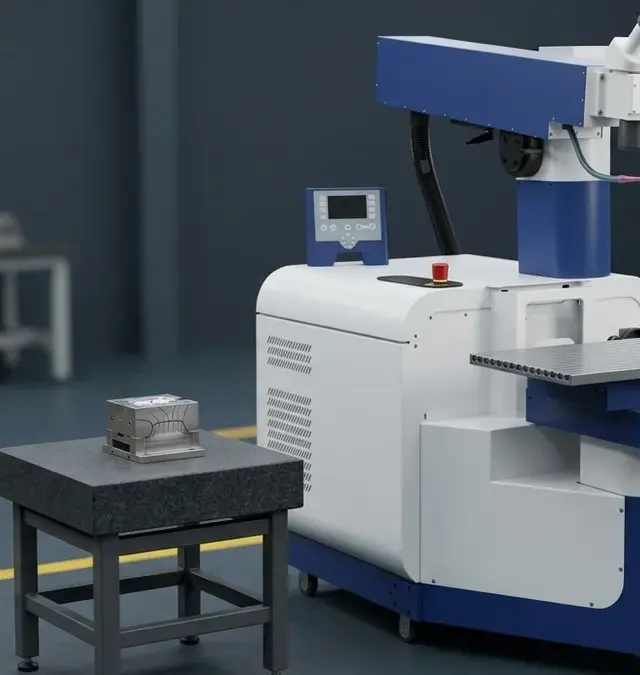
In the realm of industrial manufacturing, laser welding titanium has become a pivotal technology for precision-driven sectors such as aerospace, automotive, and medical device manufacturing. Sigma Laser’s advanced systems, including the Sidanus Light (Nd:YAG) and Sineo Fibre (fibre laser), offer unmatched precision and efficiency, making them indispensable for engineering applications involving titanium alloys like Ti-6Al-4V.
Precision and Speed
One of the foremost advantages of laser welding titanium is its exceptional precision. Using fiber laser technology, our Swivel Optics and Super Pulse Technology (SPT) ensure minimal heat-affected zones, which is crucial for maintaining the material properties of titanium. Compared to traditional methods such as TIG or MIG welding, laser welding significantly reduces thermal distortion and residual stresses on titanium parts.
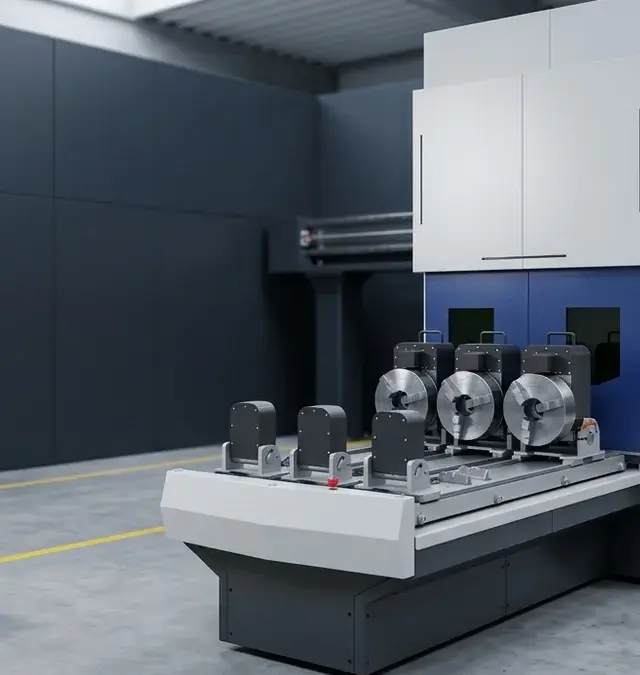
The speed of laser welding is unparalleled, offering rapid processing times without compromising quality. This is particularly beneficial in high-volume production environments where efficiency and productivity are critical. The integration of Sigma Laser’s Motor-driven Turning Device allows for seamless automation, further enhancing throughput and reducing cycle times.
Sigma Laser systems offer average power outputs up to 600 W (fibre) or 500 W (Nd:YAG), with peak pulse powers reaching up to 13 kW depending on the model, with a beam quality M² factor of less than 1.2, ensuring high precision and repeatability. The focal length of our optics is generally between 100mm and 300mm, allowing for optimal focus control and penetration depths of up to 5mm in titanium alloys, depending on specific application requirements.
Quality and Strength of Welds
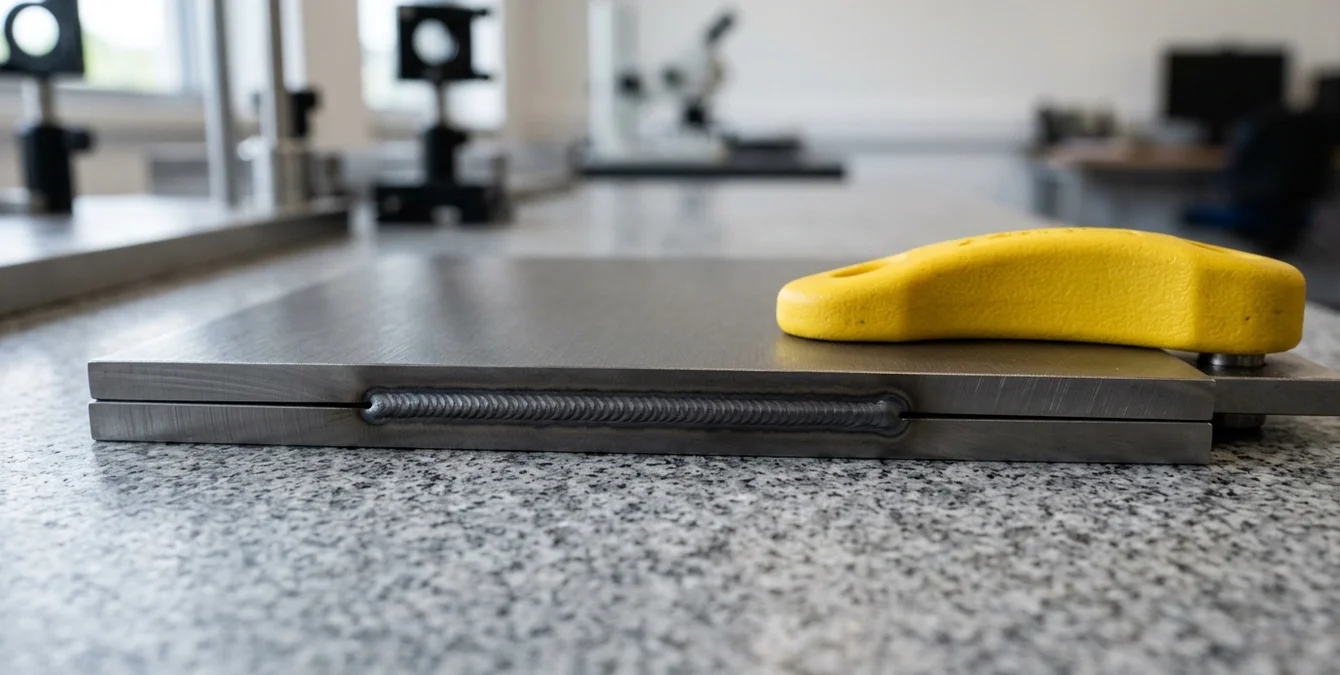
When it comes to the quality and strength of welds, laser welding titanium provides superior outcomes. The focused laser beam ensures deep penetration and strong weld seams that are free from porosity and inclusions, common issues in other welding techniques like electron beam welding. The ability to control parameters such as power density and beam focus precisely means that the welds are consistent and reliable, meeting stringent industry standards such as AWS D17.1 and DIN EN ISO 3834.
Moreover, the inherent properties of laser welding help in oxidation prevention, a significant concern when working with reactive materials like titanium. Our systems are designed to operate in controlled environments, ensuring the integrity of the welds and extending the service life of the components.
Typically, the welding speed for titanium alloys can range from 1m/min to 5m/min, with heat-affected zones minimized to less than 0.5mm, which is critical for maintaining the mechanical properties of the material. The repeatability of our systems is within ±0.1mm, ensuring consistent quality across production runs.
Overall, the adoption of laser welding technology by Sigma Laser for titanium applications not only enhances manufacturing precision but also drives cost efficiency and product quality, setting new benchmarks in industrial engineering.
| Aspect | Laser Welding | Electron Beam Welding |
|---|---|---|
| Processing Speed | Up to 5 m/min | Not specified |
| Power Range | 1–10 kW | Not specified |
| Wavelength | 1070 nm (fiber) | Not applicable |
| Beam Quality (M²) | < 1.5 | Not specified |
| Penetration Depth | Up to 6 mm (single pass) | Deep penetration possible |
| Heat-Affected Zone (HAZ) | < 1 mm | Not specified |
| Shielding Requirement | Inert gas (argon/helium) | Vacuum environment required |
| Setup Complexity | Low (no vacuum) | High (vacuum required) |
| Cost Efficiency | High (less setup, rapid processing) | Lower (complex setup, higher cost) |
Comparative values as stated in the article; electron beam welding values are qualitative where not specified.
How Does Laser Welding Compare to Electron Beam Welding for Titanium?
In the realm of precision welding for titanium and its alloys, both laser welding and electron beam welding are renowned for their ability to create high-quality joints. However, understanding the comparative advantages of each method is crucial for manufacturing engineers aiming to optimize production efficiency and cost-effectiveness.
Efficiency and Cost
Laser welding, particularly with Sigma Laser’s advanced systems like the Sidanus Light (Nd:YAG) and Siega Fibre (fibre laser), offers significant benefits in terms of speed and flexibility. The non-contact nature of laser welding allows for rapid processing, which is essential for high-throughput environments. Additionally, lasers provide precise control over the welding process, reducing waste and minimizing post-processing requirements for titanium components.
Typical laser systems used for titanium welding operate within the 1 to 10 kW power range, with wavelengths around 1070 nm for fiber lasers, ensuring high absorption efficiency in titanium. Beam quality (M²) is typically less than 1.5, allowing for fine focus and high precision. Welding speeds can reach up to 5 m/min, depending on the thickness and alloy type, with penetration depths of up to 6 mm for single-pass welds.
Conversely, electron beam welding, while offering deep penetration and high-quality welds, requires a vacuum environment, adding complexity and cost. For titanium applications, where the material’s high value and sensitivity to impurities are critical considerations, the additional setup time and equipment costs of electron beam systems may outweigh their benefits.
Heat-Affected Zone and Oxidation Control
Managing the heat-affected zone (HAZ) is a critical factor in welding titanium. Laser welding systems, especially those equipped with Super Pulse Technology (SPT), excel in minimizing the HAZ due to their ability to concentrate energy precisely and maintain lower overall heat input. This precision is vital in preserving the mechanical properties of titanium alloys such as Ti-6Al-4V.
The HAZ for laser welding titanium is typically less than 1 mm, which helps maintain the inherent properties of the base material. This is crucial for applications conforming to standards like ISO 15614-11:2002, which specifies the qualification of welding procedures for titanium alloys.
In comparison, electron beam welding also produces a narrow HAZ but requires stringent vacuum conditions to prevent oxidation. This necessity complicates operations, especially when welding complex geometries. Sigma Laser systems, with features like Swivel Optics and Motor-driven Turning Device, facilitate precise and efficient welding in atmospheric conditions, offering substantial advantages in oxidation prevention without the need for a vacuum.
Real-world applications in aerospace and medical device manufacturing highlight the importance of choosing the right welding technology. For instance, laser welding titanium for aircraft components can significantly reduce production time and costs while maintaining the high strength-to-weight ratio essential for performance. The choice between laser and electron beam welding ultimately depends on specific application needs, but for many, the versatility and efficiency of laser welding systems make them the preferred option.
| Parameter | Typical Value / Range | Notes |
|---|---|---|
| Laser Power (fibre) | up to 600 W | Sigma Laser systems |
| Laser Power (Nd:YAG) | up to 500 W | Sigma Laser systems |
| Peak Pulse Power | up to 13 kW | Model-dependent |
| Beam Quality (M²) | < 1.2 | High precision, Sigma Laser |
| Focal Length | 100–300 mm | Sigma Laser optics |
| Welding Speed | 1–5 m/min | Titanium alloys |
| Penetration Depth | up to 5 mm | Titanium alloys, application-dependent |
| Heat-Affected Zone (HAZ) | < 0.5 mm | Minimized for titanium |
| Repeatability | ±0.1 mm | Sigma Laser systems |
| Shielding Gas | Argon or Helium | Prevents oxidation |
| Wavelength (fibre) | 1070 nm | High absorption in titanium |
All values are as stated in the article and refer to typical ranges or Sigma Laser system capabilities for titanium welding.
Mastering Oxidation: How to Prevent Oxidation in Titanium Laser Welding?
In the realm of laser welding titanium, particularly with applications involving titanium alloys such as Ti-6Al-4V, oxidation poses a significant challenge. This is primarily due to titanium’s high affinity for oxygen, which can lead to embrittlement and compromised mechanical properties in the heat-affected zone. Leveraging advanced welding systems like those engineered by Sigma Laser, such as the Sidanus Light (stationary) or Sirius Light (mobile), can significantly mitigate these challenges through precision gas control and cutting-edge technology.
Importance of Gas Protection
Effective gas protection is paramount in titanium laser welding to prevent oxidation. Argon, often the gas of choice, is utilized to create an inert atmosphere around the weld pool. This is crucial to avoid the formation of titanium dioxide, which can degrade weld quality. Employing precise control systems, such as the Simass Base Unit with Super Pulse Technology (SPT), ensures continuous argon flow and shields the weld from atmospheric contamination. Engineers must ensure that the gas enclosure is adequately sealed and that flow rates are optimized to maintain a protective barrier during the welding process.
Typically, argon flow rates are maintained between 10-20 L/min, depending on the weld geometry and environmental conditions. According to ISO 15614-11:2002, maintaining a consistent inert atmosphere is critical for preventing discoloration and maintaining mechanical properties. The welding speed should be adjusted to balance penetration depth and heat input, typically ranging from 0.5 to 2 meters per minute for titanium alloys.
Reactive Metal Handling Techniques
Handling reactive metals like titanium requires stringent procedures to avoid oxidation and contamination. Prior to welding, surfaces must be meticulously cleaned to remove any oxides or contaminants that could interfere with the welding process. Utilizing advanced fibre laser systems, such as the Siega Fibre, provides enhanced control over energy input, reducing the risk of overheating and subsequent oxidation. In addition, integrating Swivel Optics with a Z-Axis Module can offer enhanced precision and flexibility, ensuring consistent weld quality across complex geometries.
For laser parameters, a typical fibre laser used for titanium welding operates at a wavelength of 1070 nm with power outputs ranging from 500 W to 4 kW, depending on the thickness of the material and desired penetration. Beam quality, often characterized by an M² value, should be less than 1.5 to ensure a focused and efficient energy delivery.
For manufacturing engineers and procurement managers, understanding these strategies is crucial to ensure the integrity and performance of titanium welds in industrial applications, ranging from aerospace to medical device manufacturing. By incorporating such advanced laser welding techniques and systems from Sigma Laser, companies can achieve superior weld quality, enhanced durability, and compliance with stringent industry standards like ISO 9001 and AWS D17.1.
Which Parameters Are Crucial for Successful Titanium Laser Welding?
In the realm of precision engineering, achieving optimal results in titanium laser welding depends on fine-tuning several critical parameters. Titanium, known for its high strength-to-weight ratio and resistance to corrosion, is prevalent in aerospace and biomedical sectors. Ensuring high-quality welds in titanium alloys, such as Ti-6Al-4V, requires careful consideration of laser power, speed, and focus. Engineers and technical buyers must understand these factors to mitigate defects and enhance joint integrity.
Power and Speed Settings
Power and speed are pivotal in determining the heat input during titanium laser welding. The power setting must be sufficient to penetrate the titanium alloy without causing excessive melting or distortion. Excessive power can lead to an enlarged heat-affected zone, adversely affecting the structural properties. Conversely, inadequate power may result in incomplete fusion. Speed must complement the power setting; higher speeds minimize heat input, reducing the risk of oxidation and maintaining weld quality.
Typically, laser power settings for titanium welding range from 1 kW to 6 kW, with a welding speed of 1 to 5 m/min, depending on the thickness of the material and the specific application. The penetration depth can vary, but for Ti-6Al-4V, a depth of 2 to 3 mm is common for precision applications.
At Sigma Laser, our Super Pulse Technology (SPT) allows for precise control over power and speed, ensuring optimal penetration and minimizing defects across diverse titanium applications.
Focus and Beam Quality
The focus of the laser beam is crucial in concentrating energy onto the weld zone. A narrow focus results in a high-intensity beam, essential for welding thin sections or intricate titanium components. Incorrect focus can lead to defects such as undercutting or inconsistent weld seams. Beam quality is equally vital; a high beam quality ensures uniform energy distribution, crucial for consistent welds in titanium alloys.
The beam quality, often described by the M² value, should ideally be less than 1.2 for high precision welding applications. The focal length of the lens typically ranges from 100 mm to 200 mm, depending on the specific setup and requirements.
Implementing advanced technologies like Sigma Laser’s Swivel Optics with Telescopic Lens enhances beam focus and quality, allowing for precision welding in complex geometries and reducing the likelihood of oxidation.
By optimizing these parameters, manufacturing engineers can significantly enhance the quality and efficiency of titanium laser welding processes, ensuring robust and reliable joints tailored to high-performance industrial applications.
Compliance with standards such as ISO 15614-11:2002 and AWS D17.1/D17.1M:2017 ensures that welding procedures meet the stringent requirements necessary for aerospace and other critical applications.
Case Studies: Applications of Titanium Laser Welding Across Industries
The precision and efficiency of titanium laser welding have set new standards in industrial manufacturing. At Sigma Laser, our advanced systems, like the Sidanus Light (stationary) and Sirius Light (mobile), excel at managing the complexities of laser welding titanium, making them invaluable across various sectors. This section explores specific applications in aerospace and medical device manufacturing, highlighting both successes and challenges encountered.
Aerospace Industry
The aerospace sector demands high-performance materials and impeccable joint integrity. Titanium alloys, such as Ti-6Al-4V, are often preferred for their strength-to-weight ratio. However, welding these materials poses challenges due to the risk of oxidation and the need for minimal heat-affected zones. Sigma Laser’s Super Pulse Technology (SPT) has been instrumental in overcoming these hurdles by providing precise control over the welding process.
In one case study, a leading aerospace manufacturer adopted our Sineo Fibre system for fabricating aircraft components. The results were remarkable: welds exhibited enhanced mechanical properties and reduced microstructural changes, achieving compliance with stringent aerospace standards like AWS D17.1. The use of fiber laser technology also minimized the heat-affected zone, ensuring superior joint quality.
- Improved fatigue resistance and longevity of welded joints.
- Reduced manufacturing time by 30% compared to traditional methods.
- Enhanced oxidation prevention through controlled environment welding.
Typically, the Sineo Fibre system operates within a power range of 1 to 6 kW, with a beam quality M² of less than 1.2, ensuring high precision and repeatability. The focal length is commonly set between 150 to 300 mm, allowing for optimal focus on complex geometries. Welding speeds can range from 1 to 10 m/min, depending on the material thickness and desired penetration depth, which is typically controlled within ±0.1 mm tolerance.
To maintain the integrity of the titanium welds, the process is conducted in an inert gas environment, often utilizing argon or helium, to prevent contamination and ensure compliance with ISO 15614-11:2002 specifications.
Medical Device Manufacturing
In the medical industry, the precision of titanium laser welding is crucial, especially in the production of implants and surgical instruments. The requirement for biocompatibility and corrosion resistance in titanium components necessitates exacting welding techniques.
A European medical device manufacturer utilized our Siega Fibre system to weld intricate titanium components for orthopedic implants. The challenge was to ensure weld strength and surface finish without compromising biocompatibility. With our advanced Swivel Optics and Z-Axis Module, the manufacturer achieved consistent weld penetration and surface quality, meeting ISO 13485 standards.
- Achieved superior weld aesthetics critical for medical device applications.
- Ensured compliance with international biocompatibility standards.
- Enhanced production efficiency by integrating a motor-driven turning device for complex geometries.
The Siega Fibre system typically operates at wavelengths around 1070 nm, which is optimal for titanium absorption, and can achieve penetration depths of up to 3 mm with a precision of ±0.05 mm. The system’s ability to maintain a stable laser output is crucial for meeting the stringent requirements of medical device manufacturing.
These examples underscore the versatility and effectiveness of Sigma Laser systems in titanium laser welding applications across diverse industries. Our commitment to innovation and quality continues to drive advancements in precision welding solutions, meeting the evolving needs of industrial markets.
Cost Comparison: Laser Welding vs Traditional Welding Methods for Titanium
Titanium laser welding, particularly using precision systems like Sigma Laser’s Sidanus Light and Sirius Light, presents a compelling alternative to traditional welding methods, such as tungsten inert gas (TIG) and electron beam welding. For welding engineers, understanding the cost dynamics between these methods is crucial for optimizing both performance and budget in industrial applications involving titanium alloys.
Initial Setup and Equipment Costs
When examining the initial setup costs, laser welding systems may require a higher initial investment compared to traditional equipment. However, systems like Sigma Laser’s Sineo Fibre and Siega Fibre are engineered with advanced technologies such as Super Pulse Technology (SPT) and Swivel Optics, providing exceptional precision and repeatability. These features are particularly beneficial when working with titanium alloys, as they help minimize the heat-affected zone (HAZ) and reduce the risk of oxidation during the welding process. The upfront cost is often justified by the enhanced capabilities and the long-term operational efficiencies gained.
For titanium laser welding, systems typically operate within a power range of 1 to 10 kW, with a wavelength around 1064 nm, which is optimal for titanium’s absorption characteristics. The beam quality, often characterized by an M² value close to 1.1, ensures high precision and control over the weld pool. Focal lengths are usually in the range of 100 to 200 mm to achieve the desired spot size and energy density.
Operational and Maintenance Costs
Operational costs for laser welding titanium are generally lower over time. Laser systems require fewer consumable materials and exhibit higher energy efficiency compared to traditional methods. For example, the fiber laser technology integrated into Sigma Laser’s systems offers robust performance with minimal downtime, reducing maintenance costs and increasing throughput. The need for frequent maintenance is further diminished due to the non-contact nature of laser welding, which reduces wear and tear on equipment components.
Moreover, the precision of laser welding systems significantly reduces the need for post-weld processing, such as grinding or additional heat treatments, which are often necessary with traditional methods. This benefit translates into reduced labor costs and shorter production cycles, providing a clear advantage for industries prioritizing high-volume, high-quality titanium alloy fabrication.
Typical welding speeds for titanium laser welding range from 1 to 3 m/min, depending on the thickness and alloy composition, with penetration depths achievable up to 6 mm in a single pass. The heat-affected zone is typically less than 1 mm, which is advantageous for maintaining the mechanical properties of the titanium alloy.
In conclusion, while the initial investment in laser welding technology may be higher, the operational efficiencies, precision, and reduced maintenance demands present a cost-effective solution for industrial applications involving titanium. For procurement managers and technical buyers, the long-term benefits of adopting Sigma Laser’s advanced systems outweigh the upfront costs, offering a strategic advantage in the competitive manufacturing landscape.
Frequently Asked Questions
What are the benefits of laser welding titanium?
Laser welding titanium offers high precision and minimal heat-affected zones, reducing the risk of distortion and maintaining the metal’s mechanical properties. It provides deep penetration and high welding speeds, which are essential for titanium’s reactive nature, ensuring strong and clean welds with minimal contamination.
How does laser welding compare to electron beam welding for titanium?
Laser welding offers greater flexibility and is more suited for complex geometries and on-site applications due to its non-vacuum environment. While electron beam welding provides deeper penetration and less thermal distortion, it requires a vacuum chamber, making it less versatile for large or complex assemblies.
What are the challenges of laser welding titanium?
Challenges include controlling the weld pool to prevent oxidation and contamination, as titanium is highly reactive at elevated temperatures. Proper shielding with inert gases like argon is crucial, and precise control over laser parameters is necessary to avoid defects such as porosity and cracking.
What laser types are best for welding titanium?
Fiber lasers and Nd:YAG lasers are commonly used for welding titanium due to their high power density and precision. Fiber lasers offer excellent beam quality and efficiency, making them suitable for high-speed welding, while Nd:YAG lasers provide flexibility with pulsed and continuous modes.
How does the thickness of titanium affect laser welding parameters?
The thickness of titanium significantly influences laser parameters such as power, speed, and focus. Thicker sections require higher power and slower speeds to ensure full penetration, while thinner sections need precise control to prevent burn-through and excessive heat input.
What safety precautions are necessary when laser welding titanium?
Safety precautions include using appropriate eye protection to guard against laser radiation, ensuring proper ventilation to avoid inhaling fumes, and using protective clothing to prevent burns. Additionally, maintaining a clean work environment is essential to minimize contamination risks.
Can laser welding be automated for titanium applications?
Laser welding can be highly automated for titanium, enhancing consistency and efficiency. Automation systems can integrate robotic arms and CNC controls, allowing precise and repeatable welds, crucial for industries like aerospace and medical devices where titanium is frequently used.