
- Key Takeaways
- What is the Difference Between Laser Welding and Resistance Welding?
- Principles of Laser Welding
- Principles of Resistance Welding
- How Do Laser Welding and Resistance Welding Compare in Terms of Precision?
- Precision in Laser Welding
- Precision in Resistance Welding
- What are the Cost Differences Between Laser and Resistance Welding?
- Initial Setup Costs
- Operational and Maintenance Costs
- How Does Laser Welding Affect Heat-Sensitive Materials Compared to Resistance Welding?
- Heat Input in Laser Welding
- Heat Effects in Resistance Welding
- Environmental Impact of Laser Welding vs Resistance Welding
- Energy Consumption
- Emissions and Waste
- Which Welding Method is Better Suited for Your Manufacturing Needs?
- Factors to Consider
- Future Trends in Welding Technology
- Frequently Asked Questions
- What are the cost differences between laser and resistance welding?
- How does laser welding affect heat-sensitive materials compared to resistance welding?
- What are the productivity differences between laser and resistance welding?
- Which welding method is more suitable for thin materials?
- How do the maintenance requirements compare between laser and resistance welding systems?
- Can laser welding be integrated into existing production lines?
- Related Articles
- Sources
Quick Answer: Laser welding vs resistance welding presents distinct advantages for production managers. Laser welding offers precision, minimal thermal distortion, and the ability to weld complex geometries, making it ideal for high-precision industries such as aerospace and automotive. Resistance welding, on the other hand, excels in speed and cost-effectiveness for simpler, high-volume applications like sheet metal fabrication. Choosing between the two depends on specific production needs, material types, and desired outcomes. Understanding these differences ensures optimal welding process selection for enhanced productivity and quality.
Key Takeaways
In the highly competitive automotive industry, choosing the right welding technique is crucial for optimizing production efficiency and product quality. Laser welding and resistance welding are two prominent methods, each with distinct advantages and implications for automotive manufacturing.
- Laser welding offers superior precision, making it ideal for applications requiring exacting tolerances and minimal distortion, such as in lightweight automotive components.
- Resistance welding, while effective for thicker materials, can lead to greater heat-affected zones, potentially compromising material integrity near the weld.
- The concentrated heat source of laser welding reduces thermal distortion, enhancing the dimensional stability of assemblies.
- Laser welding is better suited for joining dissimilar materials, a growing need in modern automotive design for weight reduction and performance enhancement.
- While resistance welding offers cost-effective solutions for high-volume production, laser welding provides greater flexibility in automated and robotic systems.
- Laser welding’s non-contact process minimizes wear and tear on equipment, potentially lowering maintenance costs and downtime.
- Consider the specific material properties and production requirements of your automotive components to determine the most suitable welding method.
Understanding the nuances between laser and resistance welding can significantly impact your production decisions. Delve deeper into each method’s capabilities to identify which best aligns with your automotive manufacturing goals.
| Parameter | Laser Welding | Resistance Welding |
|---|---|---|
| Principle | Concentrated laser beam melts and joins materials (non-contact) | Heat generated by electrical resistance and pressure (contact) |
| Typical Power Output | 500 W – 10 kW | Varies (typically lower than laser welding) |
| Wavelength | 1064 nm (Nd:YAG), 1070 nm (fibre) | Not applicable |
| Welding Speed | Up to 10 m/min | Cycle times as short as a few milliseconds |
| Material Thickness | Thin materials, small components; penetration up to 5 mm (single pass) | 0.5 mm – 3 mm typical |
| Precision (Tolerance) | ±0.1 mm | ±0.5 mm |
| Heat-Affected Zone (HAZ) | <0.5 mm | Larger than laser welding |
| Best Suited For | Complex geometries, dissimilar materials, high-precision assemblies | High-volume, simple geometries, sheet metal fabrication |
| Standards | ISO 15614-11:2002 |
All figures are general process values, not attributed to specific Sigma Laser models.
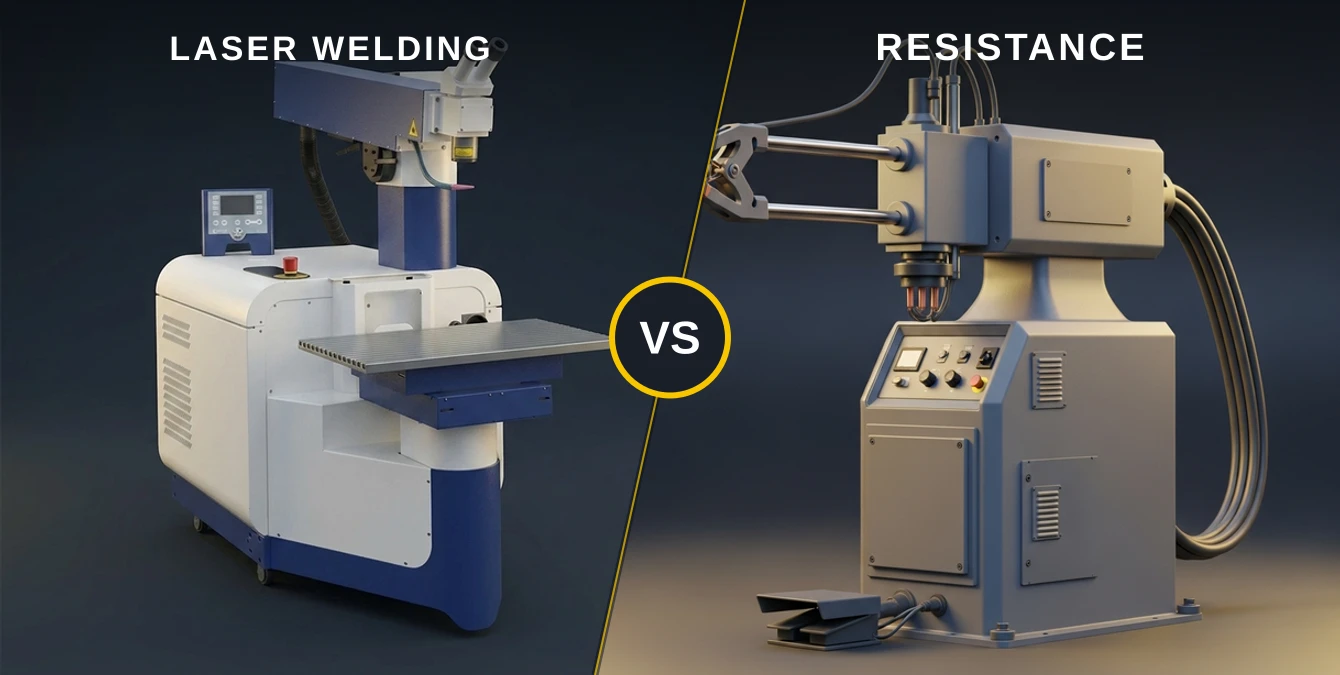
What is the Difference Between Laser Welding and Resistance Welding?
In the realm of industrial manufacturing, selecting the appropriate welding technique is crucial for ensuring optimal efficiency and product quality. Two prevalent methods, laser welding and resistance welding, stand out due to their unique technological principles and application scopes. Understanding the differences between these methods can aid production managers in making informed decisions tailored to specific industrial needs.
Principles of Laser Welding
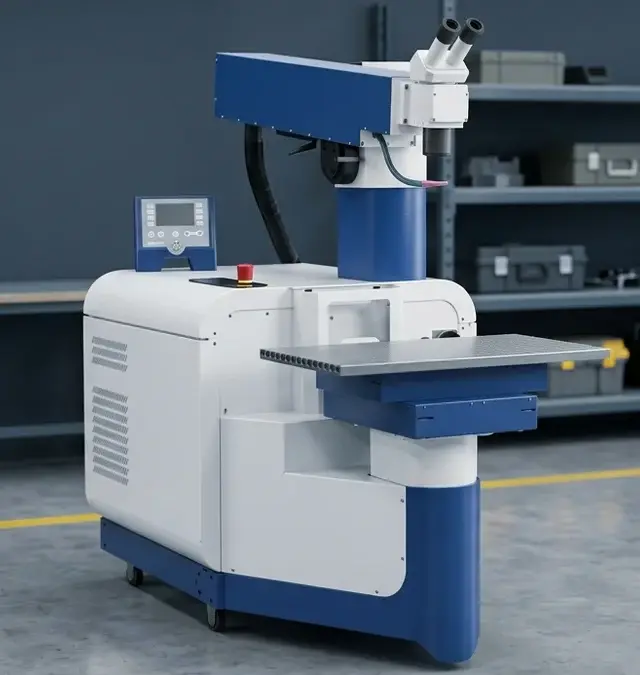
Laser welding is a precision-focused technique that employs a concentrated laser beam to join materials. This method is renowned for its ability to produce high-quality welds with minimal distortion, making it ideal for applications requiring tight tolerances and intricate geometries. The process involves the absorption of laser energy by the material, leading to localized melting and subsequent solidification.
Laser welding is particularly advantageous in industries such as aerospace, automotive, and electronics, where precision and speed are paramount. Sigma Laser’s advanced systems, such as the Sidanus Light and Sineo Fibre, leverage cutting-edge technologies like Super Pulse Technology (SPT) to enhance control and efficiency in welding operations. This method is especially effective for welding thin materials and small components where traditional methods might falter.
Typical laser welding parameters include power outputs ranging from 500 watts to 10 kilowatts, with beam qualities (M²) often less than 1.2 for high precision applications. The wavelength commonly used is around 1064 nm for Nd:YAG lasers and 1070 nm for fibre lasers. Welding speeds can reach up to 10 meters per minute, depending on the material and thickness, with penetration depths typically up to 5 mm for single-pass welds. The heat-affected zone (HAZ) is minimal, often less than 0.5 mm, which is crucial for maintaining material properties in sensitive alloys such as Ti-6Al-4V or 6061 aluminum.
The precision of laser welding allows for tolerances typically within ±0.1 mm, making it suitable for high-precision assemblies.
Principles of Resistance Welding
Resistance welding, on the other hand, is a method where heat is generated through the resistance of the material to the flow of electric current. This heat, coupled with pressure, facilitates the joining of materials. It is a robust technique widely utilized in mass production environments, particularly for sheet metal fabrications such as in automotive body assembly.
The heat effects in resistance welding allow for rapid cycle times, making it suitable for high-volume production lines. However, this method may exhibit limitations in precision compared to laser welding, particularly when dealing with complex geometries or sensitive materials. Despite its limitations, resistance welding remains a staple in industries where speed and material thickness compatibility are critical factors.
Resistance welding is typically governed by standards such as ISO 15614-11:2002, which outlines the procedure qualification requirements. The process is effective for materials like low-carbon steels and certain stainless steels, with thicknesses ranging from 0.5 mm to 3 mm. The cycle times can be as short as a few milliseconds, allowing for production rates of hundreds of parts per hour. However, the precision is generally lower, with tolerances around ±0.5 mm, which may not be suitable for applications requiring high accuracy.
By understanding the fundamental differences between laser welding and resistance welding, production managers can better align their manufacturing strategies with the specific demands of their projects. Whether prioritizing the laser welding precision offered by Sigma Laser’s solutions or the high throughput of resistance welding, the right choice can significantly impact the efficiency and quality of industrial manufacturing processes.
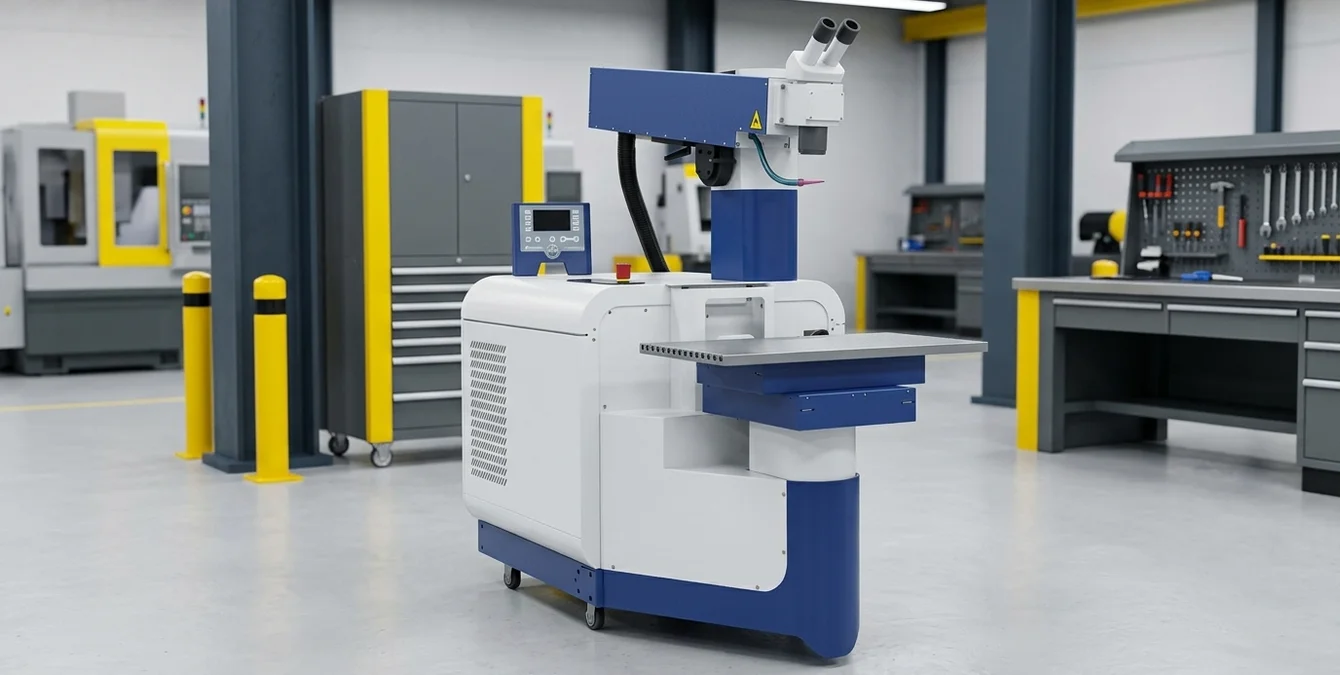
| Aspect | Laser Welding | Resistance Welding |
|---|---|---|
| Typical Tolerance | ±0.1 mm | ±0.5 mm |
| Thermal Distortion | Minimal | Greater |
| Repeatability | High | Moderate |
| Suitability for Complex Geometries | Excellent | Limited |
| Heat-Affected Zone | Minimal (<0.5 mm) | Larger |
Precision values are general for each process and not specific to any Sigma Laser product.
How Do Laser Welding and Resistance Welding Compare in Terms of Precision?
In the realm of advanced manufacturing, precision is paramount, particularly when it comes to joining metal components. Laser welding and resistance welding are two prevalent techniques, each offering distinct advantages in terms of accuracy and application. Understanding the precision capabilities of these methods is crucial for production managers aiming to optimize manufacturing processes.
Precision in Laser Welding
Laser welding, especially when using Sigma Laser’s innovative systems like the Sidanus Light and Sineo Fibre, provides unmatched precision due to its concentrated energy delivery and controlled heat input. This method excels in applications requiring intricate welds on complex geometries, such as in the automotive and aerospace industries. The precise focus of laser beams ensures minimal thermal distortion and high repeatability, essential for components that must meet stringent quality standards.
- High beam focus allows for welding of micro-components and thin materials.
- Super Pulse Technology (SPT) enhances control over heat input, reducing the risk of material deformation.
- Swivel Optics with Telescopic Lens further refines precision, enabling accurate targeting in challenging weld positions.
- Typical laser power ranges from 500 W to 6 kW, with wavelengths commonly in the range of 1064 nm for Nd:YAG lasers and 1070 nm for fibre lasers, ensuring versatility across different materials.
- Beam quality, often characterized by an M² value less than 1.5, allows for fine focus and minimal heat-affected zones, typically less than 0.5 mm for thin materials.
- Welding speeds can reach up to 10 m/min, with penetration depths varying from 0.1 mm to 10 mm depending on material thickness and type.
- Laser welding is compatible with a wide range of materials, including stainless steels (e.g., 304, 316), aluminum alloys (e.g., 6061, 7075), and titanium alloys, adhering to standards like ISO 11145 for laser optics and ISO 11146 for beam measurement.
Precision in Resistance Welding
Resistance welding, while widely used for its efficiency and speed, offers different precision characteristics. This method is highly effective for mass production settings, particularly in the automotive industry, where weld speed and lower operating costs are critical. However, precision is often influenced by factors like electrode alignment and material conductivity.
- Resistance welding is suitable for thicker materials and simpler joint designs.
- The heat effects are more extensive, which can impact precision for intricate designs.
- Control over pressure and current is essential to achieve consistent weld quality.
- Typical welding currents range from 1 kA to 100 kA, with electrode forces between 1 kN and 10 kN, depending on material thickness and type.
- Material compatibility includes low carbon steels, some stainless steels, and certain aluminum alloys, with process constraints outlined in standards like ISO 15614-11:2002.
- Precision is generally within ±1 mm for complex assemblies, with repeatability influenced by electrode wear and alignment.
While both laser welding and resistance welding have their place in industrial manufacturing, laser welding offers superior precision for applications requiring meticulous attention to detail. Integrating advanced technologies from Sigma Laser can significantly enhance production outcomes, meeting the highest industry standards like ISO 3834 and DIN EN ISO 4063.
What are the Cost Differences Between Laser and Resistance Welding?
In today’s competitive manufacturing environment, grasping the cost implications of various welding technologies is essential for production managers. Both laser welding and resistance welding present distinct advantages, yet their cost structures vary significantly, influencing decision-making processes.
Initial Setup Costs
Laser welding systems, such as those from Sigma Laser, generally entail higher initial setup costs compared to resistance welding. This includes the expense of advanced equipment like the Sidanus Light and Sirius Light systems, designed for precision and versatility. The investment in laser technology is justified by its high-precision applications and ability to join materials with minimal distortion, crucial in high-spec industries like aerospace.
Typically, industrial laser welding systems operate with power ranges from 1 kW to 10 kW, wavelengths around 1064 nm for Nd:YAG lasers and 1070 nm for fibre lasers, and beam quality M² values less than 1.5, ensuring high precision. Focal lengths vary depending on the application, but are often between 100 mm to 200 mm to achieve desired penetration depths and minimal heat-affected zones (HAZ).
On the other hand, resistance welding equipment often requires a lower initial investment. Its setup is relatively straightforward, suited for applications where heat effects on materials are manageable, such as in the automotive sector. However, this lower entry cost may be offset by limitations in precision and material versatility.
Operational and Maintenance Costs
Operational costs for laser welding can be higher due to the need for skilled technicians and regular system calibration to maintain optimal performance. However, systems like Simass Base Unit and Super Pulse Technology (SPT) provide efficiency gains that can reduce cycle times and material wastage, ultimately lowering long-term operational expenses.
Laser welding offers high repeatability with tolerances typically within ±0.1 mm, suitable for critical components in industries like medical devices and electronics. The process can achieve welding speeds up to 10 m/min depending on material and thickness, with penetration depths reaching several millimeters in stainless steel (e.g., AISI 304) and aluminum alloys (e.g., 6061).
Resistance welding generally incurs lower operational costs because of its simplicity and reduced need for specialized skills. However, maintenance can be frequent due to electrode wear and the impact of continuous high-current usage, leading to increased downtime and potential production delays. The process is typically governed by standards such as DIN EN ISO 4063, which outlines the classification of welding processes.
The choice between laser welding and resistance welding should weigh these cost factors alongside production requirements. For industries requiring high precision and material integrity, investing in laser technology can offer significant returns. Meanwhile, resistance welding remains a cost-effective option for high-volume, less precision-critical applications.
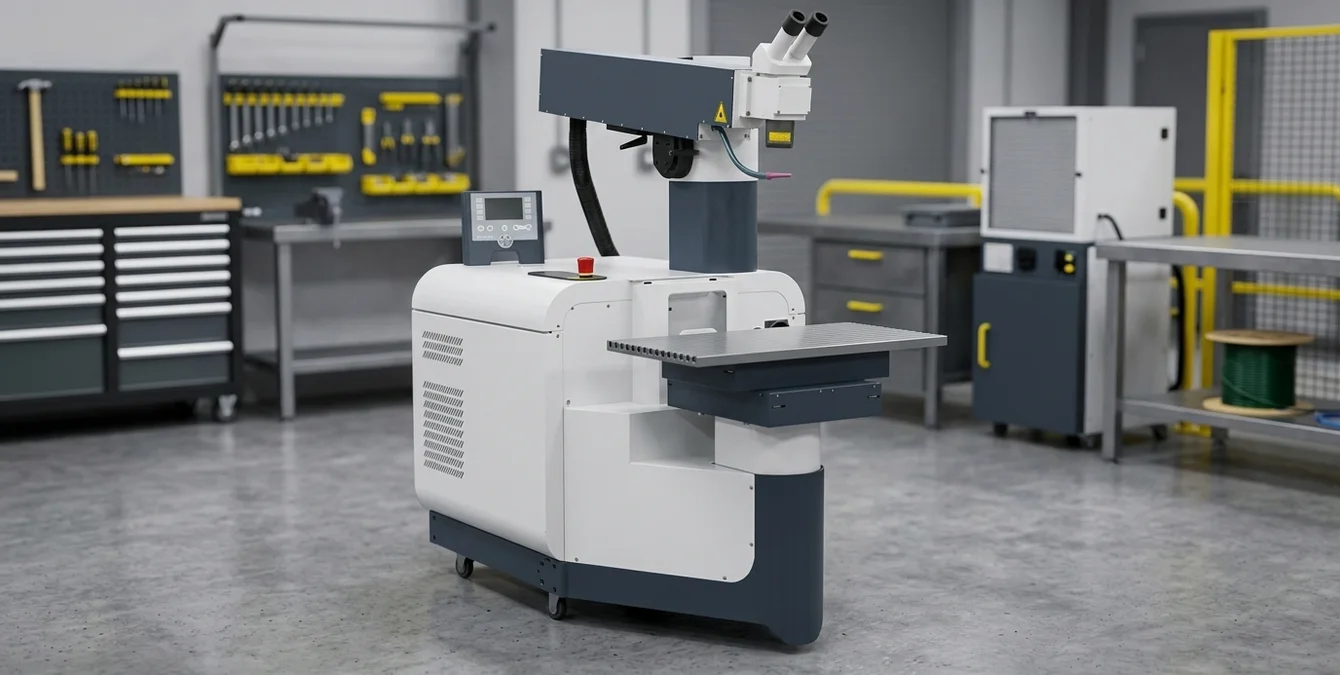
How Does Laser Welding Affect Heat-Sensitive Materials Compared to Resistance Welding?
In industrial applications where heat-sensitive materials are involved, selecting the appropriate welding method is crucial to maintaining material integrity and ensuring quality. Laser welding offers precision and controlled heat input, making it an optimal choice for such materials. In contrast, resistance welding, while effective for certain applications, can introduce higher heat effects that may compromise the properties of delicate materials.
Heat Input in Laser Welding
Laser welding, employed in systems like Sigma Laser’s Sidanus Fibre and Siega Fibre, utilizes focused light beams to achieve high precision with minimal thermal distortion. This method allows for targeted heat application, minimizing the heat-affected zone (HAZ) and preserving the microstructure of heat-sensitive materials. By leveraging features like Super Pulse Technology (SPT) and Swivel Optics, engineers can fine-tune the energy input, ensuring that only the necessary amount of heat is applied. This precise control is vital in industries such as aerospace and medical device manufacturing, where maintaining material properties is paramount.
Typical laser welding parameters include power ranges from 500 W to 6 kW, with wavelengths commonly around 1064 nm for Nd:YAG lasers and 1070 nm for fibre lasers, as specified in ISO 11145. The beam quality, often characterized by an M² value of less than 1.5, ensures high focusability, allowing for penetration depths of up to 10 mm in stainless steel and aluminum alloys. The welding speed can range from 1 mm/s to 50 mm/s, depending on the material and thickness, with a heat-affected zone typically less than 1 mm, minimizing thermal distortion. Laser systems are compatible with a wide range of materials, including high-strength steels, titanium alloys, and nickel-based superalloys, adhering to standards like ISO 15614-11:2002 for process qualification.
Heat Effects in Resistance Welding
Resistance welding, while widely used in automotive and heavy machinery sectors, introduces heat through electrical resistance at the joint interface. This process can generate significant thermal effects due to the bulk heating of materials. The inherent nature of resistance welding leads to larger heat-affected zones, which may alter the microstructure and mechanical properties of heat-sensitive materials. For production managers evaluating laser welding vs resistance welding, it is crucial to consider these heat effects, especially when working with materials prone to thermal degradation.
Resistance welding typically operates with currents ranging from 1 kA to 100 kA, depending on the material thickness and type, as outlined in DIN EN ISO 4063:2011. The process can result in heat-affected zones extending several millimeters from the weld interface, which can be detrimental to materials like thin-gauge aluminum or advanced composites. This method may require additional post-weld heat treatments to restore mechanical properties, particularly in applications governed by stringent standards such as those in the automotive industry.
- Laser welding provides precision and minimal thermal impact, ensuring quality in heat-sensitive applications.
- Resistance welding may introduce higher heat effects, potentially affecting material integrity.
By understanding the distinctions in heat input and control between laser and resistance welding, manufacturers can make informed decisions that align with their quality and performance objectives. Sigma Laser’s cutting-edge technology is engineered to meet these needs, providing solutions that enhance productivity while safeguarding material properties.
Environmental Impact of Laser Welding vs Resistance Welding
In the realm of industrial manufacturing, understanding the environmental implications of different welding technologies is crucial for meeting sustainability goals. Laser welding and resistance welding are two prevalent methods, each with distinct effects on energy consumption, emissions, and waste generation. This section delves into these aspects, providing a nuanced comparison for production managers aiming to align with eco-friendly practices.
Energy Consumption
Laser welding, known for its precision and efficiency, typically requires less energy to achieve high-quality welds compared to resistance welding. By utilizing focused laser beams, systems such as Sigma Laser’s Sidanus Light and Siega Fibre reduce unnecessary heat dissipation, leading to significant energy savings. In contrast, resistance welding relies on the heat generated from electrical resistance to bond materials, often resulting in higher energy consumption due to the need for sustained heat application across larger surface areas.
Typical laser welding systems operate within power ranges of 1 kW to 10 kW, with wavelengths commonly around 1064 nm for Nd:YAG lasers and 1070 nm for fibre lasers. The beam quality, often characterized by an M² value of less than 1.2, ensures precise energy delivery with minimal heat-affected zones (HAZ). This precision allows for welding speeds up to 10 m/min and penetration depths of up to 10 mm in steel, significantly reducing energy consumption compared to the prolonged heating cycles in resistance welding.
Emissions and Waste
When considering emissions and waste, laser welding offers a more sustainable profile. The precision of laser welding minimizes the production of fumes and reduces the need for post-process cleaning, significantly lowering the environmental footprint. Sigma Laser’s Super Pulse Technology (SPT) further enhances this by optimizing energy delivery, thereby reducing thermal distortion and associated emissions. On the other hand, resistance welding’s heat effects may lead to increased metal oxidation, producing more waste in the form of slag and necessitating additional disposal processes.
Laser welding is compatible with a wide range of materials, including stainless steels (e.g., 304, 316), aluminum alloys (e.g., 6061, 7075), and even titanium, with high repeatability and precision typically within ±0.1 mm. Compliance with standards such as ISO 15614-11:2002 ensures that these processes meet rigorous quality and environmental benchmarks.
For industries committed to environmental stewardship, the choice between laser welding and resistance welding must consider these factors. By opting for laser welding solutions like those offered by Sigma Laser, manufacturers can better meet stringent environmental regulations while maintaining high production standards.
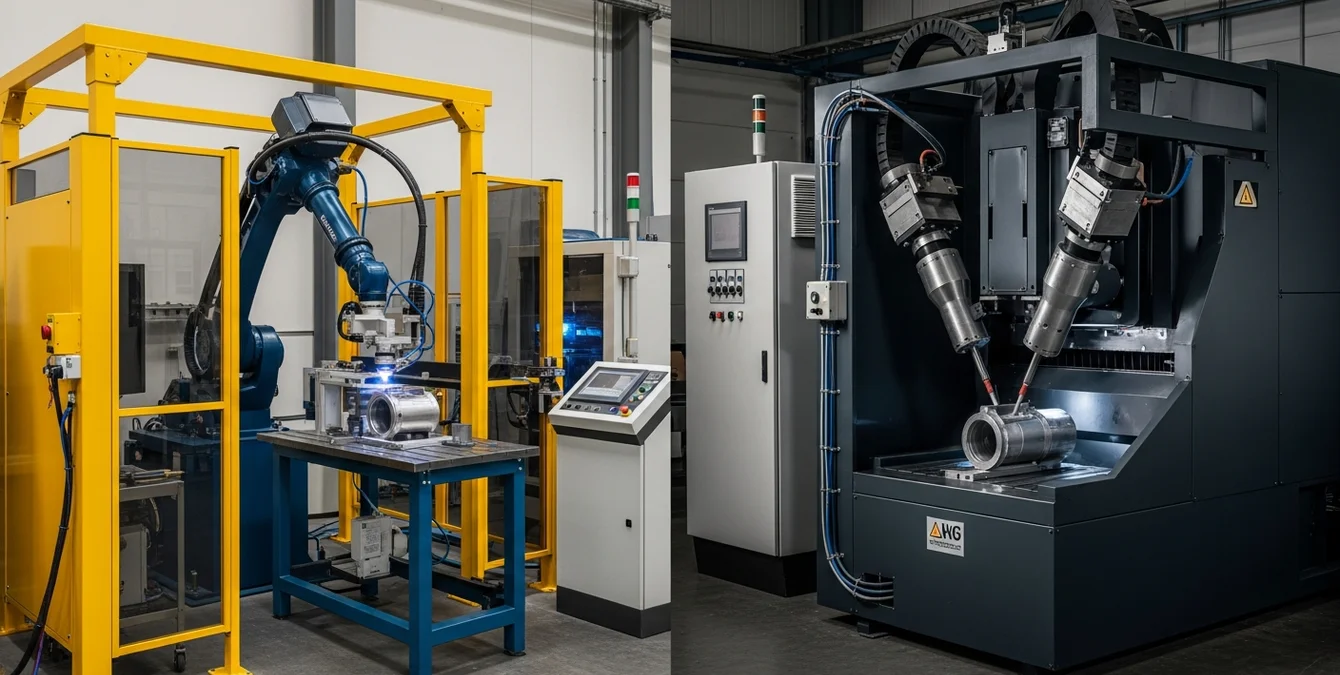
Which Welding Method is Better Suited for Your Manufacturing Needs?
In the realm of industrial manufacturing, selecting the right welding method is crucial for achieving optimal production efficiency and product quality. Two commonly compared methods are laser welding and resistance welding. Understanding the nuanced differences between these technologies can guide production managers in making informed decisions.
Factors to Consider
When evaluating laser welding vs resistance welding, several key factors should be considered:
- Material Type: Laser welding offers high precision and is ideal for materials requiring minimal heat distortion, such as thin metals or intricate components. It is particularly effective for high-reflectivity materials like aluminum alloys (e.g., 6061, 7075) and stainless steels (e.g., 304, 316), where beam quality (M² < 1.2) and wavelength (typically 1064 nm for Nd:YAG lasers) are critical. Resistance welding, while robust, can introduce significant heat effects, impacting certain materials, especially those with high thermal conductivity.
- Production Volume: For high-volume production, resistance welding provides a faster cycle time, with typical weld times in the range of milliseconds. Conversely, laser welding, with systems like Sigma Laser’s Sidanus Light or Sirius Light, excels in applications demanding high precision and consistency, even at lower volumes. Laser systems can achieve welding speeds up to 10 m/min, depending on material and thickness.
- Desired Weld Quality: Laser welding ensures superior weld quality with minimal post-processing, leveraging technologies like Super Pulse Technology (SPT) for refined control. Typical penetration depths can reach up to 10 mm for steels, with a heat-affected zone (HAZ) as narrow as 0.1 mm, crucial for maintaining material properties. Resistance welding can meet high-strength requirements but may require additional finishing, particularly in applications demanding tight tolerances (±0.1 mm).
Future Trends in Welding Technology
The future of welding technology is marked by advancements in automation and precision. Laser welding systems, such as those offered by Sigma Laser, are increasingly integrating features like Swivel Optics with Telescopic Lens and Motor-driven Turning Device for enhanced flexibility and accuracy. These innovations are driving a shift towards more adaptable and precise welding solutions.
Furthermore, as industrial standards continue to evolve, staying aligned with certifications like ISO 9001 and DIN EN ISO 4063 ensures that manufacturing processes meet stringent quality and safety benchmarks. Collaborations with leading entities such as Fronius and IPG Photonics further underscore the importance of leveraging cutting-edge technologies to remain competitive in the European industrial markets.
Ultimately, the choice between laser and resistance welding should be guided by specific manufacturing requirements, with a keen eye on future technological developments that promise to enhance production capabilities.
Frequently Asked Questions
What are the cost differences between laser and resistance welding?
Laser welding systems generally have a higher initial capital investment compared to resistance welding machines. However, laser welding offers lower operational costs due to reduced maintenance, faster processing speeds, and less consumable usage. Over time, the precision and efficiency of laser welding can lead to cost savings in high-volume production environments.
How does laser welding affect heat-sensitive materials compared to resistance welding?
Laser welding is ideal for heat-sensitive materials as it provides localized heating with minimal thermal distortion. This precision reduces the heat-affected zone (HAZ), preserving the integrity of surrounding materials. In contrast, resistance welding applies heat more broadly, potentially affecting the material properties of heat-sensitive components.
What are the productivity differences between laser and resistance welding?
Laser welding offers higher productivity due to its faster processing speeds and ability to automate complex welding tasks. It allows for continuous operation with minimal downtime. Resistance welding, while effective for certain applications, typically requires more setup time and may not match the speed of laser systems for intricate welds.
Which welding method is more suitable for thin materials?
Laser welding is particularly advantageous for thin materials due to its precision and ability to produce narrow weld seams with minimal distortion. Resistance welding can also be used for thin materials but may require more careful control to prevent burn-through or warping.
How do the maintenance requirements compare between laser and resistance welding systems?
Laser welding systems generally require less frequent maintenance due to fewer moving parts and the absence of electrodes that degrade over time. Resistance welding systems often need regular maintenance and electrode replacement, which can increase downtime and operational costs.
Can laser welding be integrated into existing production lines?
Yes, laser welding systems can be seamlessly integrated into existing production lines. Their compact size and flexibility allow for easy incorporation into automated processes, enhancing overall production efficiency. Customizable configurations make them adaptable to various industrial applications.
Sources
- ISO 15614-11:2002 — Specification and qualification of welding procedures for metallic materials – Part 11: Electron and laser beam welding.
- DIN EN ISO 4063:2011 — Welding and allied processes – Nomenclature of processes and reference numbers.
- ASM Handbook Volume 6A: Welding Fundamentals and Processes — Comprehensive guide on welding processes, including laser and resistance welding.
- Journal of Manufacturing Processes — A peer-reviewed journal covering research on manufacturing processes, including welding technologies.
- Welding Journal — A publication by the American Welding Society focusing on welding research and technology.