
- Key Takeaways
- What are the advantages of laser welding over brazing?
- Precision and Speed
- Strength and Durability
- How do laser welding and brazing differ in metallurgical properties?
- Heat Impact on Materials
- Material Compatibility
- Detailed Cost Analysis: Laser Welding vs Brazing
- Upfront Equipment Costs
- Operational and Maintenance Costs
- In which industries is brazing more commonly used than laser welding?
- Automotive and Aerospace
- HVAC and Plumbing
- Case Studies: Laser Welding and Brazing in Different Industries
- Case Study 1: Automotive Industry
- Case Study 2: Electronics Manufacturing
- Frequently Asked Questions
- What are the advantages of laser welding over brazing?
- In which industries is brazing more commonly used than laser welding?
- How does the thermal input of laser welding compare to brazing?
- What materials are best suited for laser welding versus brazing?
- Can laser welding and brazing be used together in manufacturing processes?
- What are the cost implications of choosing laser welding over brazing?
- Related Articles
- Sources
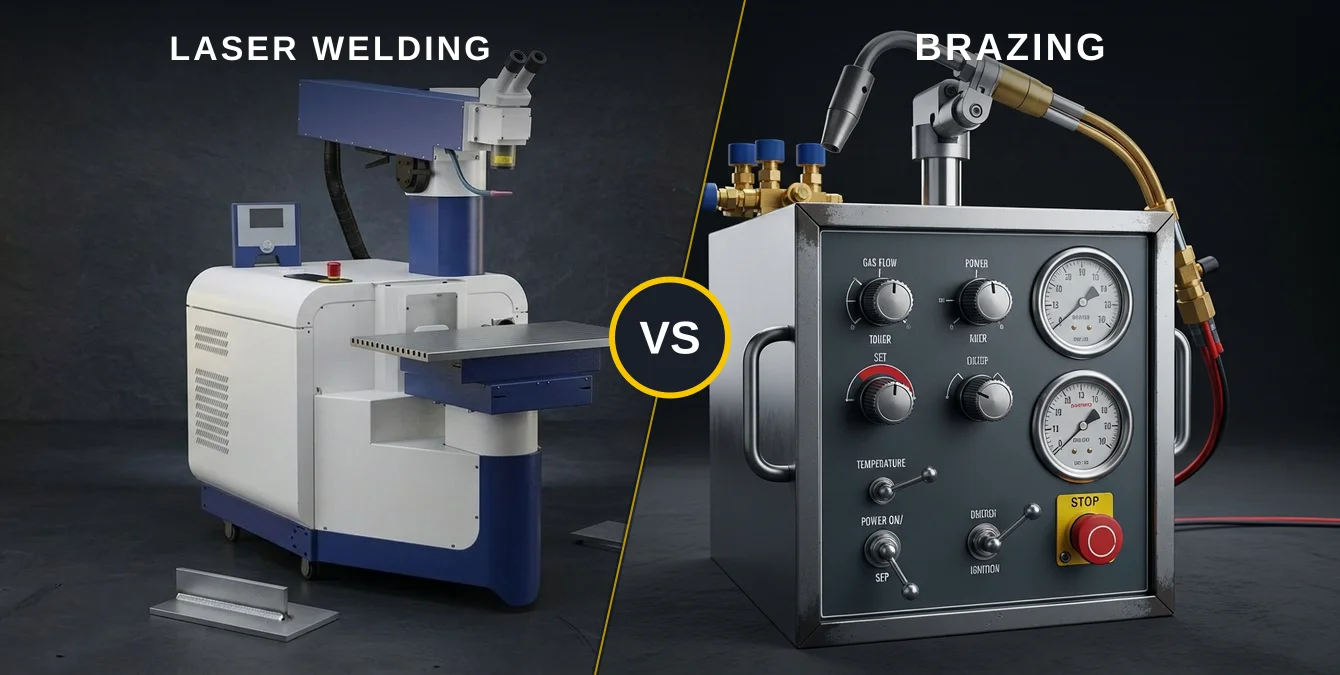
Quick Answer: Laser welding vs brazing involves key differences in technique and application. Laser welding uses concentrated laser beams to melt and fuse metals, offering precision and minimal thermal distortion, ideal for high-strength applications. In contrast, brazing joins metals by melting a filler metal at lower temperatures than the base metals, providing flexibility and ease for joining dissimilar metals. While laser welding is preferred for its speed and strength in industrial settings, brazing is often chosen for its cost-effectiveness and ability to join complex assemblies.
Key Takeaways
In the realm of metal joining, laser welding and brazing stand out as two prominent techniques, each offering unique benefits and applications. Understanding their distinct advantages and suitable applications helps welding engineers make informed decisions tailored to specific industrial needs.
- Laser welding provides high precision and strength, making it ideal for applications requiring minimal thermal distortion and strong joints.
- Brazing offers versatility in joining dissimilar metals and is excellent for applications where maintaining the integrity of delicate components is crucial.
- Laser welding is typically faster than brazing, enhancing productivity in high-volume manufacturing environments.
- Brazing is cost-effective for large-scale production where tight joint tolerances are not critical, reducing overall manufacturing costs.
- Laser welding is particularly advantageous in the aerospace and automotive industries due to its ability to produce lightweight, high-strength structures.
- Brazing finds widespread use in HVAC and plumbing applications, where leak-proof joints and corrosion resistance are essential.
- When comparing laser welding to brazing, consider the trade-offs between speed, joint strength, material compatibility, and thermal impact on components.
As you delve deeper into the article, you’ll gain a comprehensive understanding of how laser welding and brazing can be strategically applied to optimize performance and cost-effectiveness in your projects.
What are the advantages of laser welding over brazing?
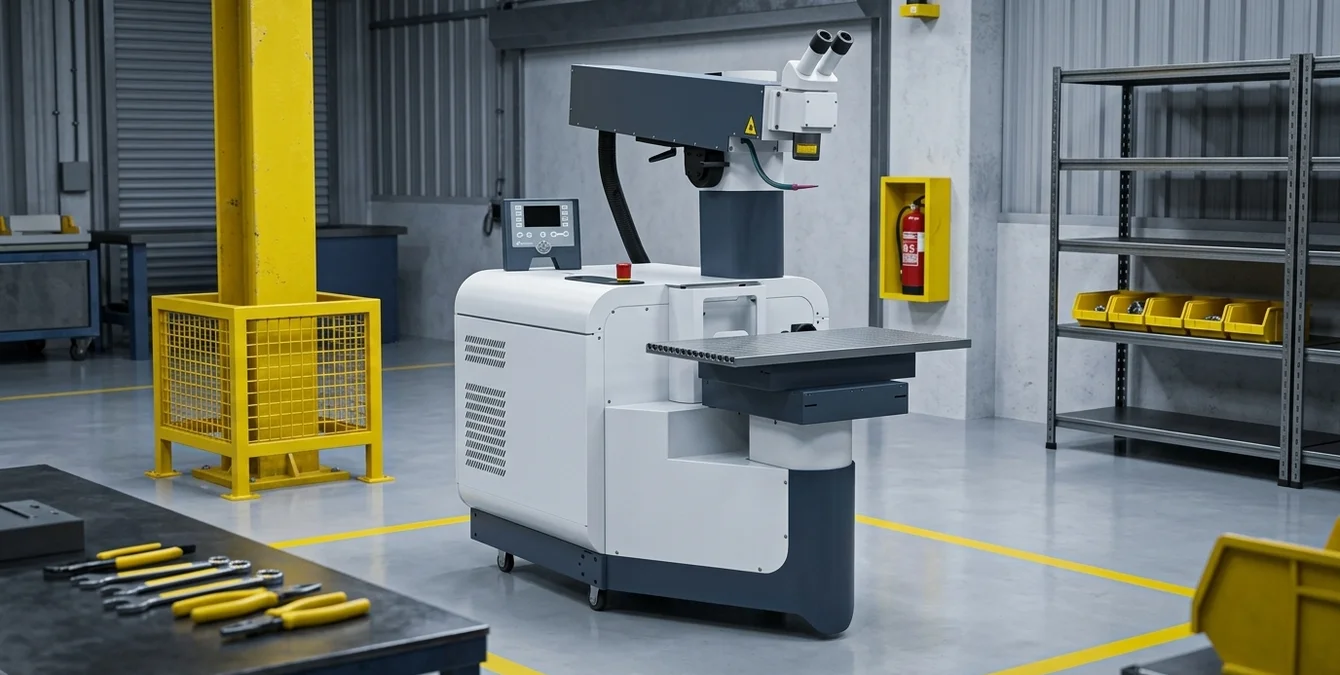
In the realm of metal joining, laser welding has emerged as a superior technique compared to traditional brazing, particularly in precision-demanding industrial applications. Sigma Laser’s precision laser welding systems, such as the Sidanus Light and Siega Fibre, exemplify the cutting-edge capabilities of this technology. Below, we explore the core advantages of laser welding over brazing, focusing on key factors such as precision, speed, and strength.
| Parameter | Laser Welding | Brazing |
|---|---|---|
| Power Range | 500W – 6kW (typical for precision systems) | Typically below 1kW (for heating filler metal) |
| Wavelength | 1070 nm (fibre); 1064 nm (Nd:YAG) | Not applicable (thermal process) |
| Beam Quality (M²) | <1.2 (high-quality welds) | Not applicable |
| Heat-Affected Zone (HAZ) | <0.5 mm (typical) | Broader; varies by method |
| Welding Speed | Up to 10 m/min (material-dependent) | Slower; depends on assembly complexity |
| Penetration Depth | Up to 10 mm (single pass, e.g., stainless steel) | Filler metal only; no base metal penetration |
| Repeatability/Precision | ±0.1 mm (high-precision) | Lower; depends on operator skill |
Figures are general-industry values as stated in the article; not attributed to specific Sigma Laser models.
Precision and Speed
Laser welding offers unparalleled precision, thanks to its ability to focus a concentrated beam of light onto a small area, producing welds with minimal distortion. This precision is critical in industries such as aerospace and automotive manufacturing, where tight tolerances are non-negotiable. For instance, Sigma Laser’s Swivel Optics with Telescopic Lens can be employed in automotive component assembly, ensuring exact alignment and joining of intricate parts.
Typical laser systems used in precision applications operate with power ranges from 500W to 6kW, with beam quality M² values typically less than 1.2, ensuring high-quality welds. Wavelengths commonly used include 1070 nm for fibre lasers and 1064 nm for Nd:YAG lasers, offering deep penetration with minimal heat-affected zones, typically less than 0.5 mm.
In terms of speed, laser welding outpaces brazing significantly. The high energy density of laser beams allows for rapid heating and cooling cycles, reducing the overall processing time. This is particularly advantageous in high-volume production environments, where efficiency is paramount. By integrating Sigma Laser’s Super Pulse Technology (SPT), manufacturers can achieve faster cycle times without sacrificing quality, making laser welding a preferred choice over brazing for time-sensitive projects.
Welding speeds can reach up to 10 m/min depending on material thickness and type, with penetration depths of up to 10 mm achievable in single-pass operations on materials such as stainless steel (AISI 304) and aluminum alloys (e.g., 6061-T6), adhering to standards like ISO 4063:2009.
Strength and Durability
When comparing laser welding and brazing, the strength and durability of the joint are critical considerations. Laser-welded joints typically offer superior tensile strength due to the deep penetration and strong metallurgical bonds formed during the welding process. This makes laser welding ideal for applications where joint integrity is crucial, such as in the construction of pressure vessels and heavy machinery components.
Furthermore, laser welding minimizes the risk of defects like porosity and inclusions, which can compromise joint integrity in brazed connections. This ensures long-term reliability and performance, particularly in harsh environments. For example, the aerospace industry benefits from laser welding’s ability to produce robust, defect-free joints in critical assemblies, ensuring safety and longevity under extreme conditions.
Laser welding’s repeatability and precision, often within ±0.1 mm, make it suitable for high-precision applications, as outlined in standards such as AWS D17.1/D17.1M:2017, which governs aerospace fusion welding requirements.
In conclusion, laser welding provides distinct advantages over brazing in terms of precision, speed, and strength. With advanced technologies like those offered by Sigma Laser, manufacturing engineers can achieve superior results, driving efficiency and quality in industrial applications.
How do laser welding and brazing differ in metallurgical properties?
Heat Impact on Materials
In industrial applications, understanding the heat impact is crucial when choosing between laser welding and brazing. Laser welding, especially with Sigma Laser’s advanced systems like Sidanus Light and Sineo Fibre, uses concentrated heat that is rapidly applied and localized. This results in minimal thermal distortion and heat-affected zones (HAZ), which is vital for precision metal joining in aerospace and automotive industries. On the other hand, brazing involves heating the filler metal above its melting point without melting the base materials, leading to broader heat distribution. This characteristic ensures less stress in parts prone to deformation, making it suitable for joining different metals without altering their intrinsic properties.
Laser welding typically operates within power ranges of 1 kW to 10 kW, with wavelengths around 1.06 µm for fiber lasers, which are well-suited for high-reflectivity materials like aluminum alloys. The beam quality, often characterized by an M² value of less than 1.5, allows for precise focus and minimal HAZ, typically less than 1 mm in width. According to ISO 11146, the beam’s focal length and spot size can be adjusted to optimize the welding speed, which can reach up to 10 m/min, depending on the material and thickness.
| Parameter | Laser Welding | Brazing |
|---|---|---|
| Joining Method | Melts and fuses base metals using a concentrated laser beam | Joins metals by melting a filler metal at lower temperatures than the base metals |
| Precision | High; minimal thermal distortion | Moderate; broader heat distribution |
| Speed | Typically faster; suitable for high-volume manufacturing | Slower; suitable for complex assemblies |
| Joint Strength | High; strong metallurgical bonds | Moderate; depends on filler metal |
| Material Compatibility | Best for similar metals; some dissimilar with advanced control | Excellent for dissimilar metals |
| Thermal Impact | Minimal heat-affected zone (HAZ) | Wider HAZ; less stress on delicate parts |
| Typical Applications | Aerospace, automotive, high-strength structures | HVAC, plumbing, electronics |
| Cost | Higher equipment cost; lower per-joint cost in volume | Lower equipment cost; cost-effective for large-scale, less critical joints |
Table summarizes process, performance, and application differences based on article content.
Material Compatibility
The choice between laser welding and brazing also depends on material compatibility. Laser welding excels in joining similar and some dissimilar materials, such as various steels and aluminum alloys, when precise control is necessary. The use of our Swivel Optics with Telescopic Lens and Super Pulse Technology (SPT) enhances this capability, providing flexibility in handling complex assemblies. In contrast, brazing shows superior performance in joining dissimilar metals and materials that are challenging to weld due to thermal expansion differences. Its ability to fill gaps and create robust joints is valuable in electronics and HVAC systems where joint integrity is crucial.
Commonly welded materials include stainless steels like 304 and 316, as well as aluminum alloys such as 6061 and 7075, which require careful consideration of thermal expansion coefficients and melting points. Laser welding’s precision allows for tolerances typically within ±0.1 mm, ensuring high repeatability and quality in production environments. Brazing, governed by standards such as AWS D17.1/D17.1M:2017, is often used for copper to steel joints or aluminum to titanium, where the filler metal’s melting point and flow characteristics are critical for joint strength and integrity.
Detailed Cost Analysis: Laser Welding vs Brazing
In the realm of industrial metal joining, choosing between laser welding and brazing can significantly affect both the immediate and long-term financial landscape of a manufacturing operation. With applications ranging from automotive to aerospace, understanding the cost implications of each welding technique is crucial for informed decision-making.
Upfront Equipment Costs
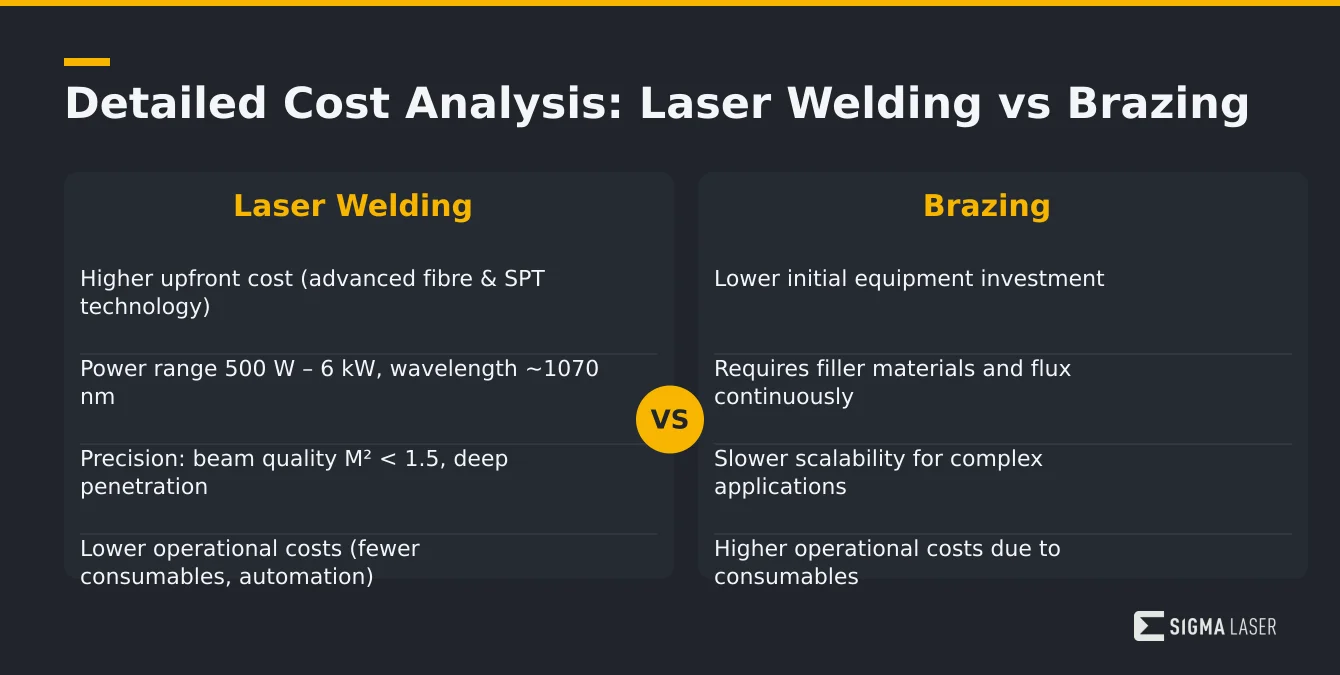
The initial investment in laser welding systems, such as Sigma Laser’s Sidanus Light and Sineo Fibre, often involves higher capital expenditure compared to brazing setups. Laser systems incorporate advanced technology like Fiber Laser and Super Pulse Technology (SPT), contributing to their upfront cost. However, these systems offer precision and versatility unmatched by traditional brazing equipment.
Laser welding systems typically operate within power ranges from 500W to 6kW, with beam quality M² values often less than 1.5, allowing for high precision and deep penetration capabilities. The wavelength is usually around 1070 nm for fiber lasers, ensuring compatibility with a broad range of materials, including stainless steel (e.g., 304, 316), aluminum alloys (e.g., 6061, 7075), and titanium alloys (e.g., Ti-6Al-4V).
Brazing, on the other hand, typically requires less sophisticated equipment, resulting in lower immediate expenses. While this might be attractive for small-scale operations, it lacks the efficiency and scalability found in laser welding, which can handle more complex industrial applications.
Operational and Maintenance Costs
Operational expenses for laser welding systems are generally lower due to reduced consumable usage and increased automation capabilities. Products like the Sineo Fibre incorporate Swivel Optics and motor-driven components, minimizing manual intervention and enhancing productivity. Furthermore, the precision of laser welding reduces material wastage, contributing to cost savings over time.
Laser welding processes can achieve welding speeds up to 10 m/min with penetration depths typically ranging from 0.5 mm to 10 mm, depending on the material and thickness. The heat-affected zone (HAZ) is minimized, often less than 1 mm, which is crucial for maintaining the mechanical properties of the base material.
In contrast, brazing requires a continuous supply of filler materials and flux, which can add up quickly in high-volume production settings. Maintenance for brazing equipment is often more frequent due to wear and tear from thermal cycling, thus increasing long-term operational costs.
When considering long-term financial implications, investing in laser welding offers substantial benefits. Despite higher initial costs, the efficiency, durability, and scalability of systems like the Sidanus Fibre provide a more cost-effective solution in industries such as automotive and aerospace, where precision and consistency are critical.
According to ISO 4063:2009, laser welding processes are classified under process numbers 52 and 53, which highlight their suitability for high-precision applications. The repeatability of laser welding systems is typically within ±0.1 mm, ensuring consistent joint quality and reducing rework costs.
In which industries is brazing more commonly used than laser welding?
In the realm of metal joining, both brazing and laser welding offer distinct advantages tailored to specific industrial applications. While laser welding is celebrated for its precision and minimal heat-affected zones, brazing remains a preferred technique in certain industries due to its unique benefits. In this section, we explore the industries where brazing is more prevalent than laser welding, focusing on the specific requirements and reasons for this preference.
| Application Area | Laser Welding | Brazing |
|---|---|---|
| Aerospace | Ideal for high-strength, defect-free joints | Used for joining dissimilar metals in non-critical assemblies |
| Automotive | Preferred for lightweight, high-strength structures | Applied in heat exchangers and complex assemblies |
| HVAC/Plumbing | Used for precision components | Widely used for leak-proof, corrosion-resistant joints |
| Electronics | Precision joining of small components | Joining delicate, dissimilar materials |
| Heavy Machinery | Strong, durable welds for structural parts | Less common; used for non-load-bearing joints |
Table reflects application trends and suitability as described in the article.
Automotive and Aerospace
The automotive and aerospace sectors often opt for brazing over laser welding due to the need for joining dissimilar metals and complex assemblies. Brazing is particularly advantageous in these industries because it allows the joining of metals with varying melting points without affecting their structural integrity. This is crucial for components like heat exchangers and turbine blades where high thermal and mechanical stresses are common. Furthermore, brazing offers excellent fatigue and vibration resistance, essential for the longevity and reliability of automotive and aerospace components.
Laser welding in these sectors is typically implemented for applications requiring high precision and minimal distortion, with parameters such as power levels ranging from 1 to 10 kW and beam quality M² values typically less than 1.2 for optimal focusability. However, the need to maintain tight tolerances and the ability to handle complex geometries often make brazing a more suitable choice, especially when dealing with alloys like Inconel or titanium, which are common in aerospace applications.
HVAC and Plumbing
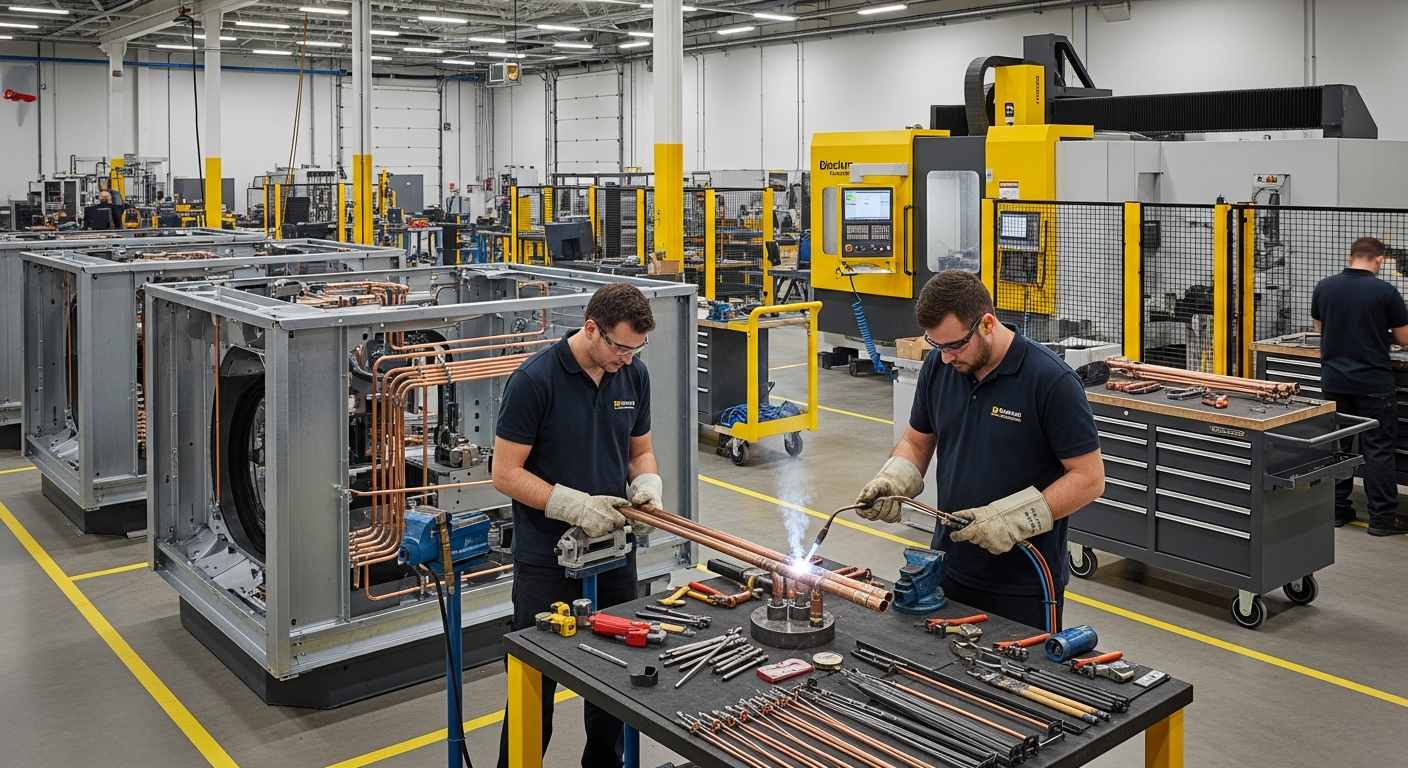
In the HVAC and plumbing industries, brazing is the preferred method over laser welding primarily because of its ability to create leak-proof joints in systems exposed to various pressures and temperatures. The capability of brazing to effectively join copper and brass, materials commonly used in HVAC and plumbing, makes it indispensable. Moreover, brazing is ideal for applications where large surface areas need to be joined, providing a strong bond that withstands the cyclical thermal expansion and contraction typical in these systems.
While laser welding offers unparalleled precision and speed, brazing remains a crucial technique in these industries due to its versatility and effectiveness in specific applications. Understanding the strengths of each method allows engineers to select the most suitable welding technique for their specific industrial needs, ensuring optimal performance and durability.
Laser welding, though less common in these sectors, can be advantageous for tasks requiring high-speed production and minimal thermal distortion. Typical welding speeds can reach up to 10 m/min with penetration depths of up to 5 mm, depending on the material and laser parameters. However, the requirement for specialized equipment and stringent alignment tolerances often makes brazing a more practical choice for widespread applications in HVAC and plumbing.
Case Studies: Laser Welding and Brazing in Different Industries
In the realm of precision manufacturing, laser welding and brazing are pivotal techniques for metal joining, offering distinct advantages across various industrial applications. When employed correctly, these methodologies enhance product durability and manufacturing efficiency. Below, we explore two case studies demonstrating successful implementations of laser welding and brazing in the automotive and electronics industries.
Case Study 1: Automotive Industry
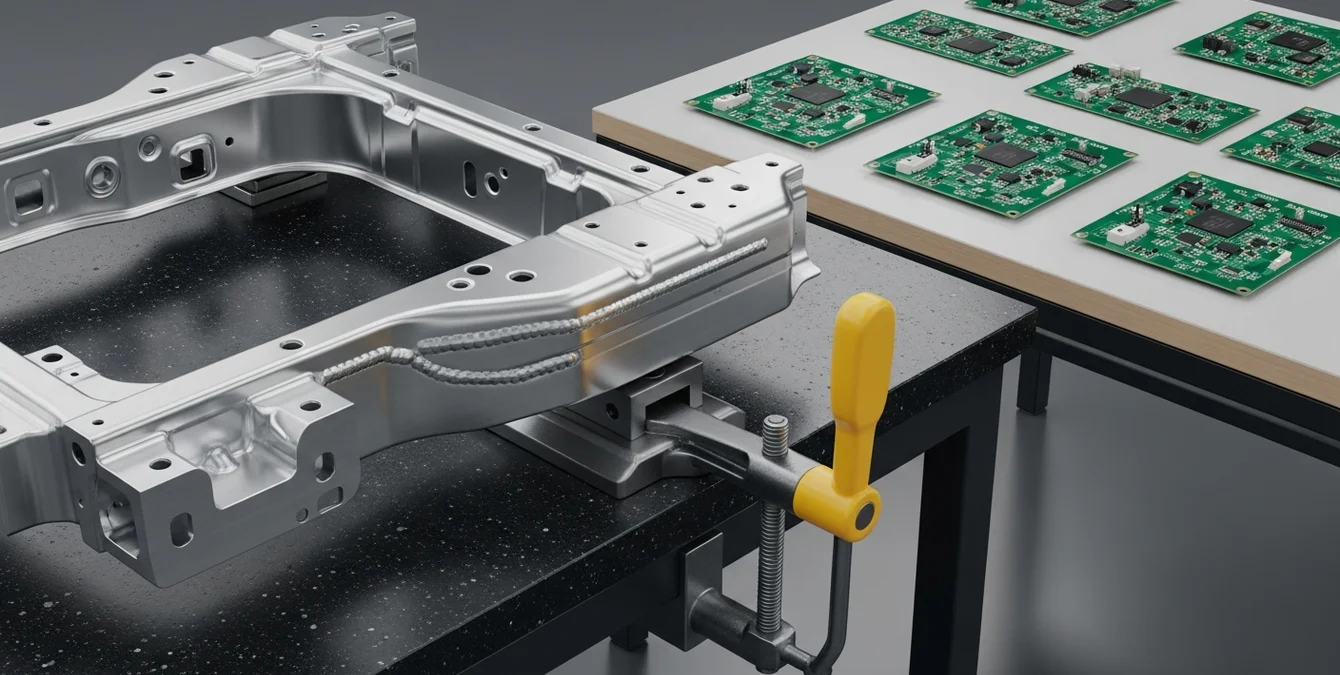
The automotive industry demands high precision and strength in metal joining to ensure vehicle safety and performance. A leading European car manufacturer recently adopted Sigma Laser’s Sidanus Light and Sirius Light systems for their laser welding needs. This transition was part of an initiative to improve the structural integrity of vehicle chassis while reducing overall production time.
By integrating laser welding, the manufacturer achieved a significant reduction in weld seam width, enhancing the aesthetic quality and aerodynamic performance of the vehicles. Additionally, the use of Super Pulse Technology (SPT) allowed for precise heat input control, minimizing thermal distortion and maintaining the integrity of high-strength steel materials.
- Challenge: Improve weld quality and reduce cycle time.
- Solution: Implemented laser welding with Sidanus Light and Sirius Light systems.
- Result: Enhanced weld strength and reduced production lead time by 20%.
The Sidanus Light system operates at a wavelength of 1064 nm, with average power up to 500 W and peak power in the kilowatt range, suitable for welding high-strength steels such as DP980 and boron steels. The beam quality is characterized by an M² value typically less than 1.2, ensuring high precision and deep penetration up to 10 mm, depending on material thickness. Welding speeds can reach up to 5 m/min, with a heat-affected zone (HAZ) generally limited to less than 1 mm, crucial for maintaining material properties. The systems comply with ISO 15614-11:2002 standards for laser welding qualifications, ensuring repeatability and quality consistency.
Case Study 2: Electronics Manufacturing
In the electronics sector, the precision required for joining delicate components is paramount. A renowned electronics firm sought to refine their production of microelectronic circuits, turning to Sigma Laser’s Sineo Fibre for brazing applications. The firm faced challenges in achieving consistent quality in solder joints due to the intricate nature of their products.
Laser brazing provided a non-contact solution, reducing the risk of contamination and ensuring a uniform bond. The Swivel Optics with Telescopic Lens offered by Sigma Laser enabled precise targeting of the laser beam, crucial for working with small-scale components. This approach not only improved the reliability of the circuits but also increased throughput by reducing rework rates.
- Challenge: Consistently achieve high-quality solder joints in microelectronics.
- Solution: Adopted laser brazing with Sineo Fibre and Swivel Optics.
- Result: Reduced defect rates by 30% and increased production efficiency.
The Sineo Fibre system operates with a fiber laser source, offering power levels of 300 W, 450 W, or 600 W, which is optimal for precision brazing applications in electronics. The beam can be focused to a spot size as small as 50 microns, allowing for tight tolerances and repeatability within ±0.01 mm. The system is compatible with various solder materials, including Sn-Ag-Cu alloys, and meets the requirements of EN 14610:2005 for brazing standards, ensuring high-quality joints with minimal thermal impact on sensitive components.
These case studies underscore the transformative potential of laser welding and brazing when tailored to specific industrial applications. By leveraging advanced systems like those offered by Sigma Laser, companies can achieve superior precision and efficiency, meeting the rigorous demands of modern manufacturing.

Frequently Asked Questions
What are the advantages of laser welding over brazing?
Laser welding offers higher precision and minimal thermal distortion compared to brazing. It achieves deeper penetration and stronger joints with a faster processing time, making it ideal for high-volume production. Additionally, laser welding provides cleaner results with less post-processing required, which is crucial for industries demanding high-quality finishes.
In which industries is brazing more commonly used than laser welding?
Brazing is more commonly used in industries such as HVAC, plumbing, and aerospace where joining dissimilar metals or intricate assemblies is required. Its ability to join metals without melting the base materials makes it ideal for applications where thermal distortion must be minimized.
How does the thermal input of laser welding compare to brazing?
Laser welding uses a concentrated beam of light to deliver high energy to a small area, resulting in low overall thermal input. This contrasts with brazing, which requires a broader heat application, potentially affecting surrounding materials and leading to greater thermal distortion.
What materials are best suited for laser welding versus brazing?
Laser welding excels with materials like stainless steel, titanium, and certain aluminum alloys due to its precision and control. Brazing is better suited for joining dissimilar metals, such as copper and nickel, where melting the base materials is undesirable.
Can laser welding and brazing be used together in manufacturing processes?
Yes, integrating both processes can be beneficial. Laser welding can be used for high-strength joints requiring precision, while brazing can join complex assemblies or dissimilar materials. This combination can optimize manufacturing workflows, leveraging the strengths of each process.
What are the cost implications of choosing laser welding over brazing?
Laser welding typically involves higher initial equipment costs but can lead to savings in labor and post-processing due to its speed and precision. Brazing may have lower upfront costs but can incur higher operational expenses due to longer processing times and additional finishing requirements.
Sources
- ISO 4063:2009 — Welding and allied processes – Nomenclature of processes and reference numbers
- AWS D17.1/D17.1M:2017 — Specification for Fusion Welding for Aerospace Applications
- DIN EN ISO 15614-11:2002 — Specification and qualification of welding procedures for metallic materials – Welding procedure test – Part 11: Electron and laser beam welding
- EN 14610:2005 — Brazing – Terms and definitions
- Journal of Laser Applications — A peer-reviewed journal covering the latest research in laser applications, including welding and brazing
- Welding Journal — A publication by the American Welding Society featuring research and developments in welding technology
- Laser Welding and Brazing: A Review — A comprehensive review article on laser welding and brazing techniques