
- Why welding time is not repair time
- What happens after the weld
- Can repaired surfaces meet cosmetic and functional standards?
- What really drives total turnaround
- Planning a mold repair realistically
- Frequently Asked Questions
- How long does laser welding itself take during mold repair?
- Why is finishing necessary after laser welding a mold?
- Can laser-welded repairs match the original mold surface quality?
- What factors most affect the total turnaround time for mold repair?
Quick Answer: The turnaround time for mold repair with laser welding depends mainly on the extent of the repair and the required finishing work, not the welding duration itself. While laser welding is fast and precise, post-weld finishing—such as grinding and polishing—determines when the mold is truly ready for production.
| Step | Description |
|---|---|
| Initial Assessment | Evaluate damage and plan repair workflow. |
| Laser Welding | Localized, fast process to add or repair material. |
| Post-Weld Finishing | Mechanical processing (grinding, milling, polishing) to restore surface quality and dimensional accuracy. |
| Inspection & Quality Assurance | Verify cosmetic and functional standards; may include trial runs or validation. |
| Release to Production | Mold is returned to manufacturing after all standards are met. |
Each step can influence total turnaround time; welding is typically the fastest stage.
Why welding time is not repair time
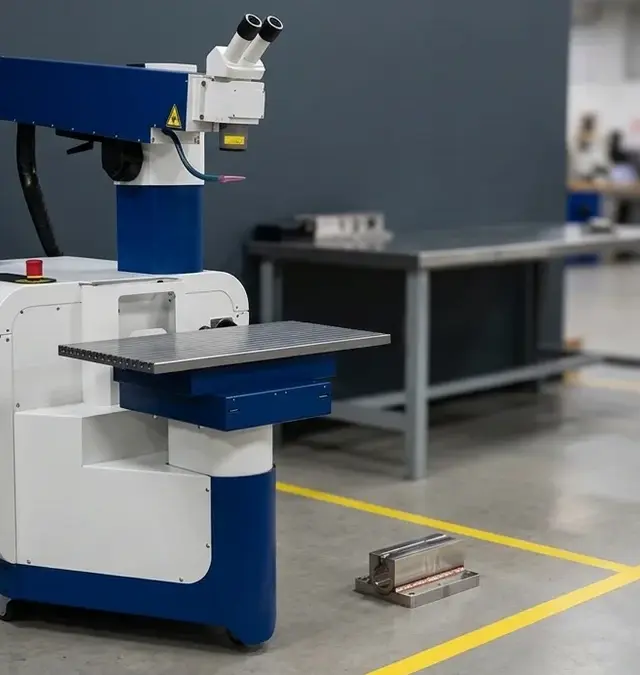
Laser welding is renowned for its speed and precision, especially in mold repair applications. However, it is important to recognize that the actual welding process is only one stage in the overall repair workflow. The localized heat input of laser welding means that the area affected by the process is minimal, which is a significant advantage over conventional welding methods. This minimizes the risk of thermal distortion and allows for targeted repairs, often making laser welding the preferred method for sensitive or high-value molds.
Despite these benefits, the welding step itself is usually completed quickly—sometimes within minutes or a few hours, depending on the size and complexity of the repair. Yet, this speed can be misleading when estimating total turnaround time. The real duration from initial damage to production-ready status involves several additional steps, with welding representing just one link in the chain.
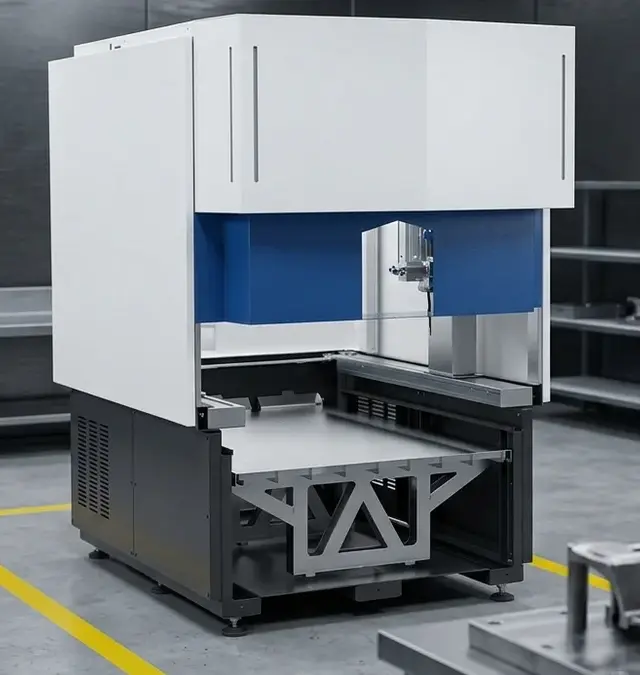
Production managers and toolmakers should therefore avoid equating welding time with total repair time. Instead, it is essential to consider the entire process, from initial assessment through to final finishing and inspection. For a detailed look at the technical aspects and capabilities of laser welding for large molds, see How to Weld Molds up to 25 Tons with Laser Technology.
Understanding this distinction is critical for accurate planning and for setting realistic expectations with stakeholders. The efficiency of the welding process is a key enabler, but it is not the sole determinant of when a mold will be back in production.
| Finishing Operation | Purpose |
|---|---|
| Grinding | Removes excess material and smooths the surface. |
| Milling | Restores dimensional accuracy and geometry. |
| Polishing | Achieves required surface finish, especially for cosmetic areas. |
| Reworking | Addresses imperfections revealed during finishing. |
| Inspection | Ensures the repaired area meets all specifications. |
The choice and extent of finishing depend on the weld size, surface requirements, and mold function.
What happens after the weld
Once the laser welding process is complete, the focus shifts to post-weld finishing. The repaired area almost always requires additional mechanical processing to restore the mold to its required surface quality and dimensional accuracy. This finishing stage may involve a combination of grinding, milling, polishing, or other machining techniques, depending on the specific geometry of the component and the standards it must meet.
The choice and extent of finishing operations are influenced by several factors: the size of the weld, the original surface finish, the material involved, and the intended function of the mold. For example, a repair on a highly polished cavity will require meticulous polishing to match the original surface, while a less visible or functional area may only need basic grinding.
It is also common for the finishing process to reveal minor imperfections or areas that need further attention, which may require additional localized welding or reworking. This iterative aspect can extend the total turnaround time, especially for complex or critical surfaces.
In practice, the finishing stage is often the most time-consuming part of the repair process. Efficient coordination between welding and finishing teams, as well as clear communication of the required surface standards, is essential to minimize delays and ensure the mold is truly ready for production use.
Can repaired surfaces meet cosmetic and functional standards?
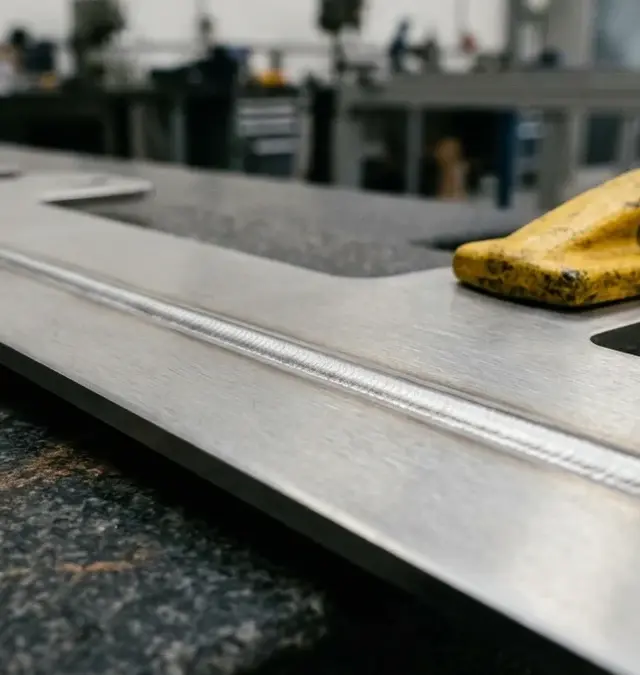
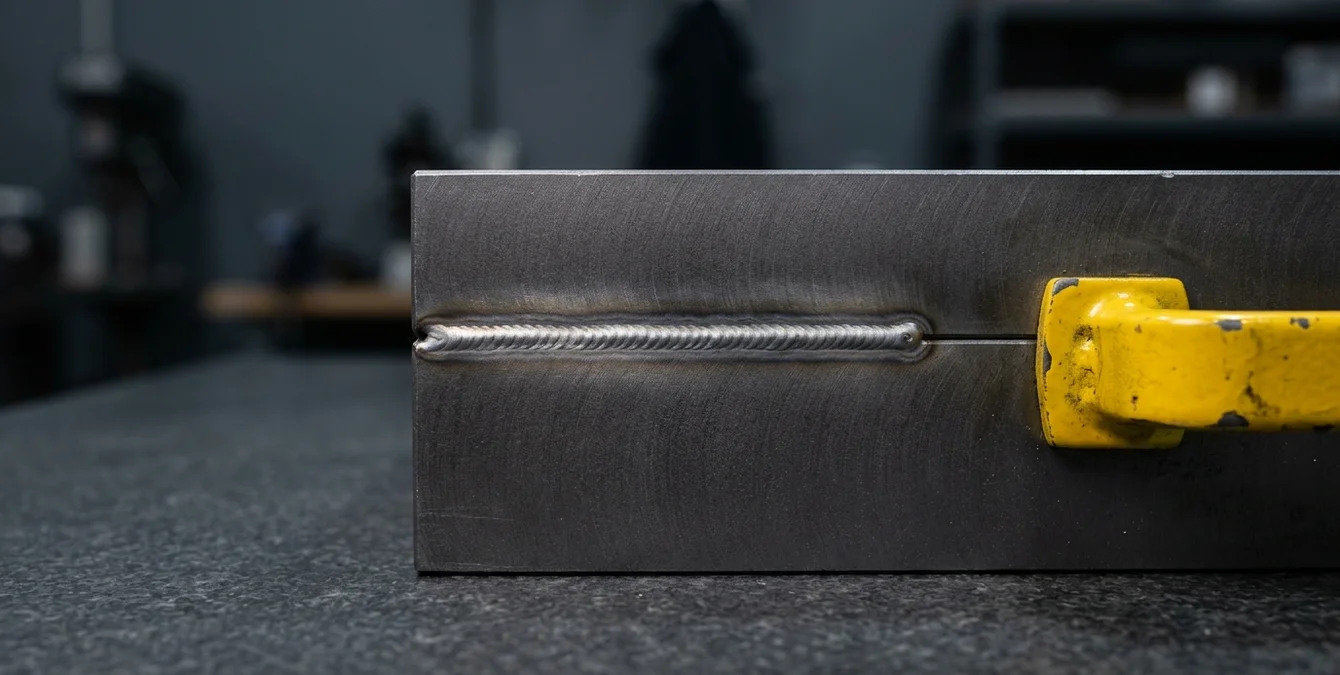
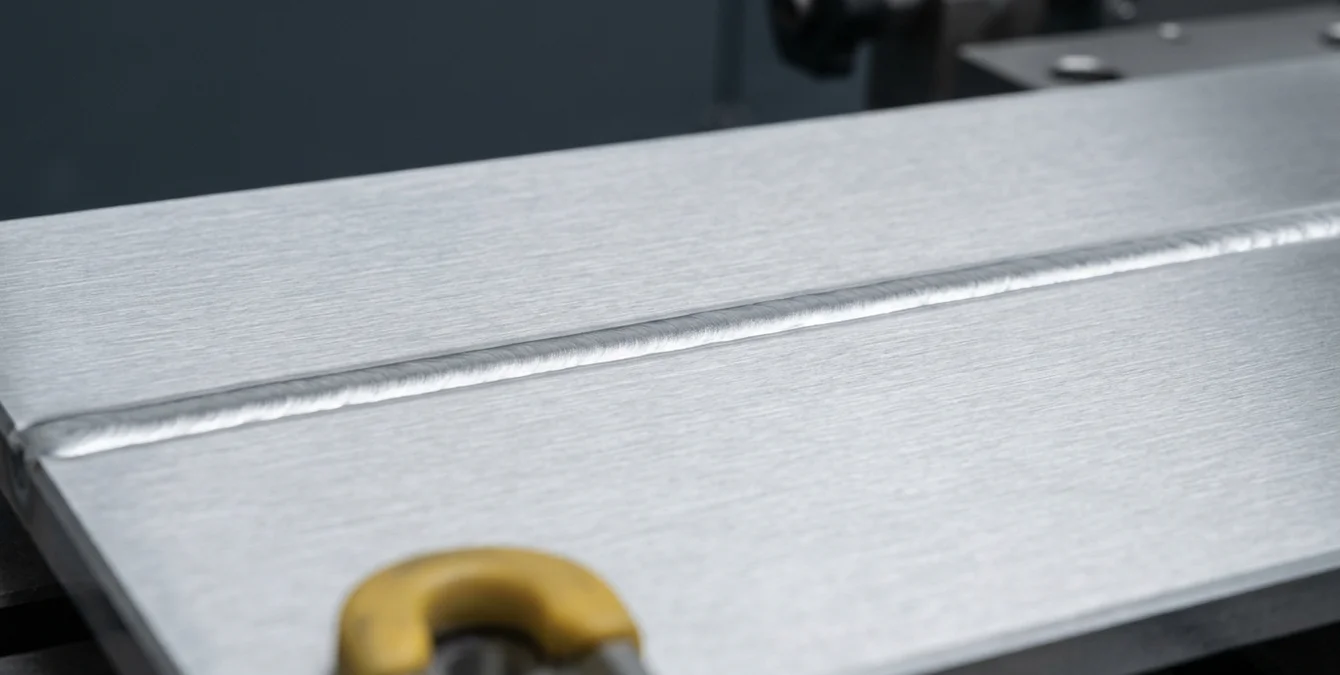
Achieving the required cosmetic and functional standards on a repaired mold surface is entirely feasible with laser welding, provided that both the welding and finishing steps are executed correctly. High-quality welding forms the essential foundation for successful repair: precise control of energy input, proper selection of welding parameters, and skilled manual technique all contribute to a strong, clean weld with minimal excess material and distortion.
If the welding is performed with unsuitable parameters or by an inexperienced operator, the resulting weld may be uneven, porous, or excessively large, complicating the subsequent finishing work. This can lead to increased time and effort for grinding and polishing, and in some cases, may compromise the final surface quality or dimensional accuracy.
Conversely, when the initial weld is well-executed, finishing becomes more straightforward. The area can be machined, ground, or polished to match the original mold surface, restoring both appearance and function. This is especially important for molds used in applications where surface finish directly affects product quality, such as in plastic injection molding or die casting.
Ultimately, the combination of skilled welding and appropriate finishing enables repaired molds to meet or exceed the original cosmetic and functional standards, supporting reliable production and minimizing the risk of future defects.
| Factor | Impact on Turnaround |
|---|---|
| Extent of Damage | Larger or more complex repairs require more time. |
| Finishing Requirements | High-gloss or intricate surfaces need extensive polishing and machining. |
| Operator Skill | Experienced welders and finishers reduce rework and delays. |
| Scheduling & Resource Availability | Machine and personnel availability can cause bottlenecks. |
| Inspection & Validation | Additional time may be needed for quality checks or trial runs. |
Finishing and inspection often take longer than the welding itself.
What really drives total turnaround
The total turnaround time for a mold repair is governed far more by the extent of the damage and the complexity of finishing than by the duration of the welding itself. While laser welding is fast and efficient, the real bottleneck often lies in the steps that follow: preparing the area, performing precise finishing, and conducting thorough inspection and quality assurance.
If the repair is minor and the required surface finish is basic, the entire process can be completed rapidly. However, for larger repairs, intricate geometries, or surfaces requiring high-gloss finishes, post-weld processing can be significantly more involved. Each additional step—whether it is detailed polishing, dimensional verification, or iterative touch-ups—adds to the overall timeline.
Other factors influencing turnaround include the availability of skilled finishing personnel, the scheduling of machine time for post-weld operations, and the need for any specialized tools or fixtures. In some cases, the repaired mold may also need to undergo trial runs or validation before being released back to production.
For production managers, understanding these drivers is essential for realistic scheduling and for communicating accurate timelines to downstream teams. Focusing solely on welding speed risks underestimating the true time required to return a mold to service.
Planning a mold repair realistically
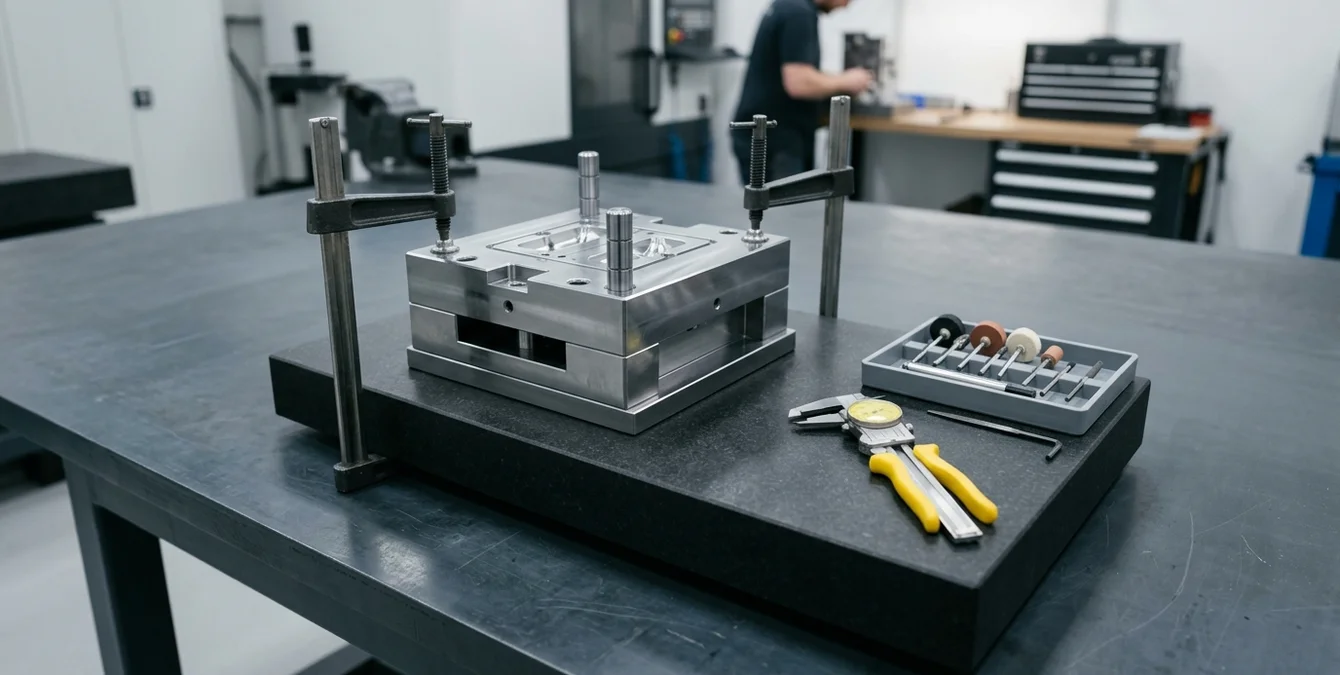
Effective planning for mold repair requires a holistic approach that goes beyond the welding process. Before committing to a repair schedule, it is best practice to scope the necessary finishing operations in detail. This includes assessing the type and extent of machining, grinding, or polishing required, as well as any potential rework that may be needed after initial finishing.
Agreeing on the target surface specification with all stakeholders up front is equally important. Clear definitions of cosmetic and functional requirements help prevent misunderstandings and ensure that the repair meets production needs. This may involve specifying surface roughness, dimensional tolerances, or visual appearance standards, depending on the application.
Involving both welding and finishing teams early in the planning process can help identify potential challenges and optimize the workflow. For complex repairs, it may be beneficial to conduct a trial weld and finishing sequence on a scrap or sample component to validate the process and estimate the required time more accurately.
Ultimately, realistic planning and clear communication are key to minimizing downtime and ensuring a successful repair outcome. For a comprehensive overview of common questions and best practices in laser welding for mold repair, refer to the full set of customer questions.
Frequently Asked Questions
How long does laser welding itself take during mold repair?
Laser welding is typically fast, often completed within minutes to a few hours depending on the repair size. However, this is only one part of the total repair process; finishing and inspection usually take longer.
Why is finishing necessary after laser welding a mold?
Finishing—such as grinding, milling, or polishing—is needed to restore the repaired area to its required surface quality and dimensional accuracy, ensuring the mold functions correctly and meets production standards.
Can laser-welded repairs match the original mold surface quality?
Yes, provided the welding and finishing are performed correctly. High-quality welding followed by appropriate finishing restores both cosmetic and functional standards, making the repair virtually indistinguishable from the original.
What factors most affect the total turnaround time for mold repair?
The main factors are the extent of the repair and the complexity of the required finishing work. Welding is fast, but detailed finishing and quality checks often determine when the mold is ready for production.
SYN · Sigma Laser appreciation event
You weld. We say thank you.
For everyone who brings great things together every day – on 17 November 2026 the prize wheel turns for you.
One photo at your laser welding machine, a quick verification – and you’re in. Registration is free and takes two minutes. On 17 November every verified participant gets one spin of the prize wheel.
- 1 spin of the prize wheel
- Gifts in 3 tiers
- Free, no purchase needed
Gifts ship free within DE · AT · CH · EU · verification usually within one business day