
- What a single machine covers
- Why the filler material is the decisive variable
- High-carbon materials and the cracking risk
- How Super Pulse Technology extends the range
- Qualifying a new material in your own shop
- Frequently Asked Questions
- Can one Sigma laser welding machine handle both tool steel and titanium?
- What role does filler material play in laser welding quality?
- How does Super Pulse Technology help with difficult materials?
- How should new materials be qualified for laser welding?
Quick Answer: A single Sigma laser welding machine can reliably weld tool steels, stainless steels, titanium, and many specialty alloys—provided the correct filler material is chosen for each application. For high-carbon materials, advanced features like Super Pulse Technology (SPT) further expand the process window and reduce cracking risk.
| Material Type | Suitability | Key Considerations |
|---|---|---|
| Tool steels | Well suited | Correct filler selection; SPT reduces cracking risk, especially for high-carbon (>1.2%) |
| Stainless steels | Well suited | Match filler to base material; document parameter sets |
| Titanium | Well suited | Parameter adjustment and filler selection critical; SPT improves results |
| Specialty alloys | Well suited | Verify compatibility and process parameters |
| High-carbon steels (>1.2% C) | Demanding | Increased cracking risk; SPT and specialized fillers recommended |
All materials require correct filler selection and process setup for reliable results.
What a single machine covers
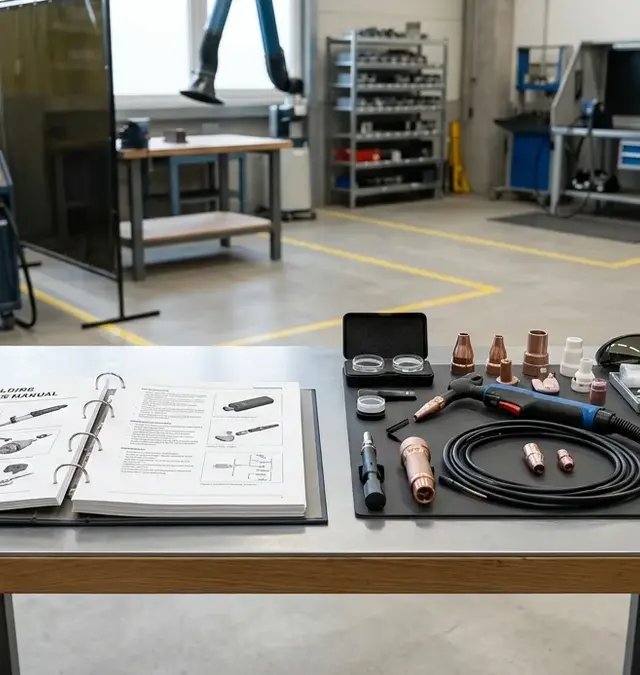
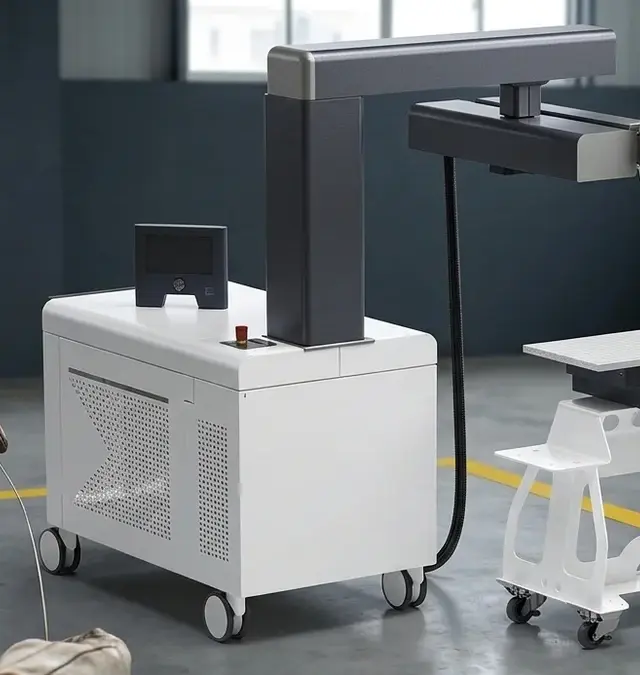
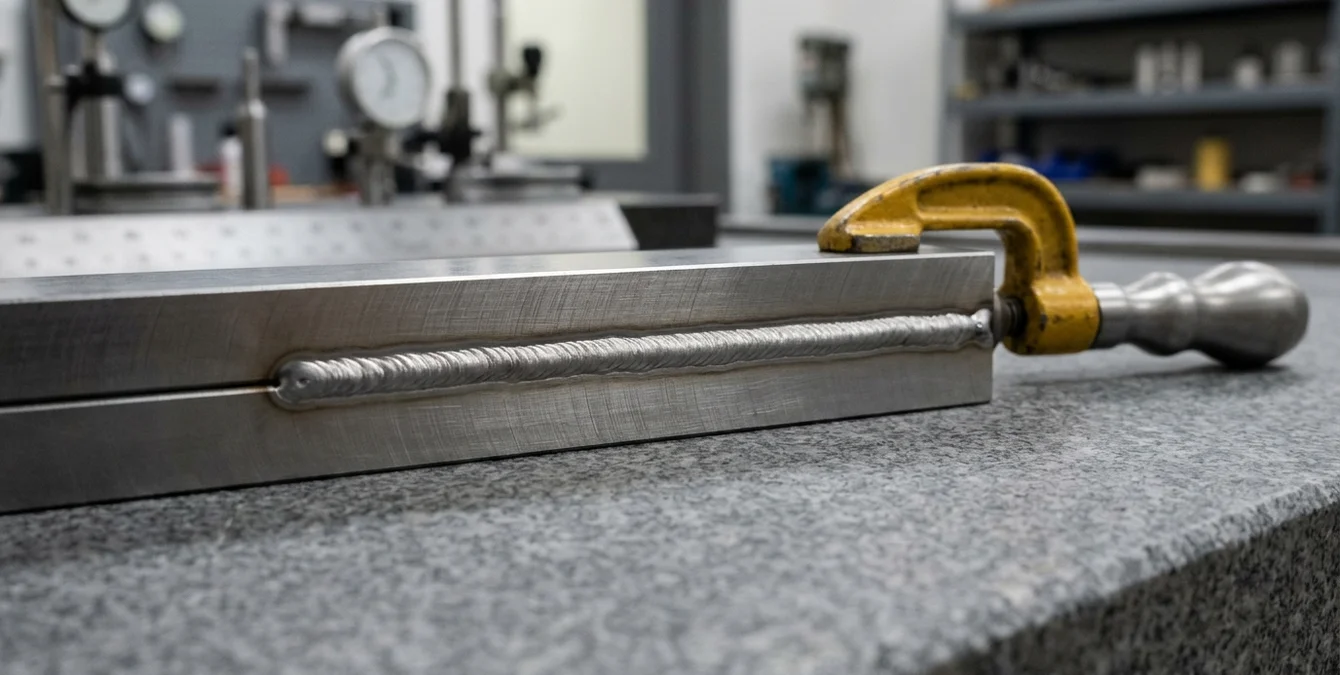
A single Sigma laser welding machine is engineered to handle a broad spectrum of materials commonly encountered in toolmaking, mold repair, and precision component manufacturing. This includes tool steels, stainless steels, titanium, and a wide range of specialty alloys. The versatility of the system means that most repair and joining tasks in industrial environments can be addressed with one machine, provided proper preparation and process setup are followed.
For quality managers and toolmakers, this capability translates directly into operational flexibility: a single investment supports diverse production requirements without the need for multiple dedicated systems. Whether the application involves repairing a hardened tool steel insert, joining stainless steel components, or working with titanium parts, the same machine platform can be adapted through parameter adjustment and appropriate filler selection.
It is important to note that while the machine provides the necessary power and control, successful welding across this material range also depends on operator training and process discipline. Each material type may require specific parameter sets, which can be stored and recalled for repeatability. For further insights on optimizing welds for demanding materials like titanium and aluminum, see Optimizing Laser Weld Parameters for Titanium and Aluminum.
This material flexibility is a key reason why laser welding is widely adopted in industries where downtime, precision, and surface integrity are critical. The ability to address most material challenges with a single, robust platform streamlines both maintenance and production workflows.
| Factor | Impact on Weld Reliability |
|---|---|
| Filler material selection | Most decisive; must match base material and application |
| Parameter adjustment | Ensures process is tailored to each material/filler combination |
| Operator training | Essential for consistent, high-quality results |
| Process documentation | Supports repeatability and quality assurance |
| Use of SPT (Super Pulse Technology) | Expands process window, especially for sensitive/high-carbon materials |
Reliable welding depends on both machine capability and process discipline.
Why the filler material is the decisive variable
While the laser welding machine provides the essential process control and energy delivery, the choice of filler material is often the most decisive factor in achieving a reliable, high-quality weld. The filler must be carefully matched to both the base material and the functional requirements of the repair or joint. This is particularly true for applications involving tool steels, stainless steels, and titanium, where differences in alloy composition can have a significant impact on weld integrity and post-weld properties.
In practice, this means that for each repair or production task, the operator or process engineer must identify the correct filler wire or rod. Factors to consider include the chemical compatibility with the base material, the required mechanical properties, corrosion resistance, and any post-weld heat treatment plans. Using an incompatible filler can lead to issues such as cracking, porosity, or reduced service life of the component.
The flexibility of Sigma machines allows for rapid parameter adjustment to accommodate different fillers and base materials. However, the responsibility for correct filler selection remains with the operator or quality team. It is best practice to document successful filler/base material combinations and store them as part of the process recipe for future reference. This approach supports consistent results and simplifies training for new operators.
High-carbon materials and the cracking risk
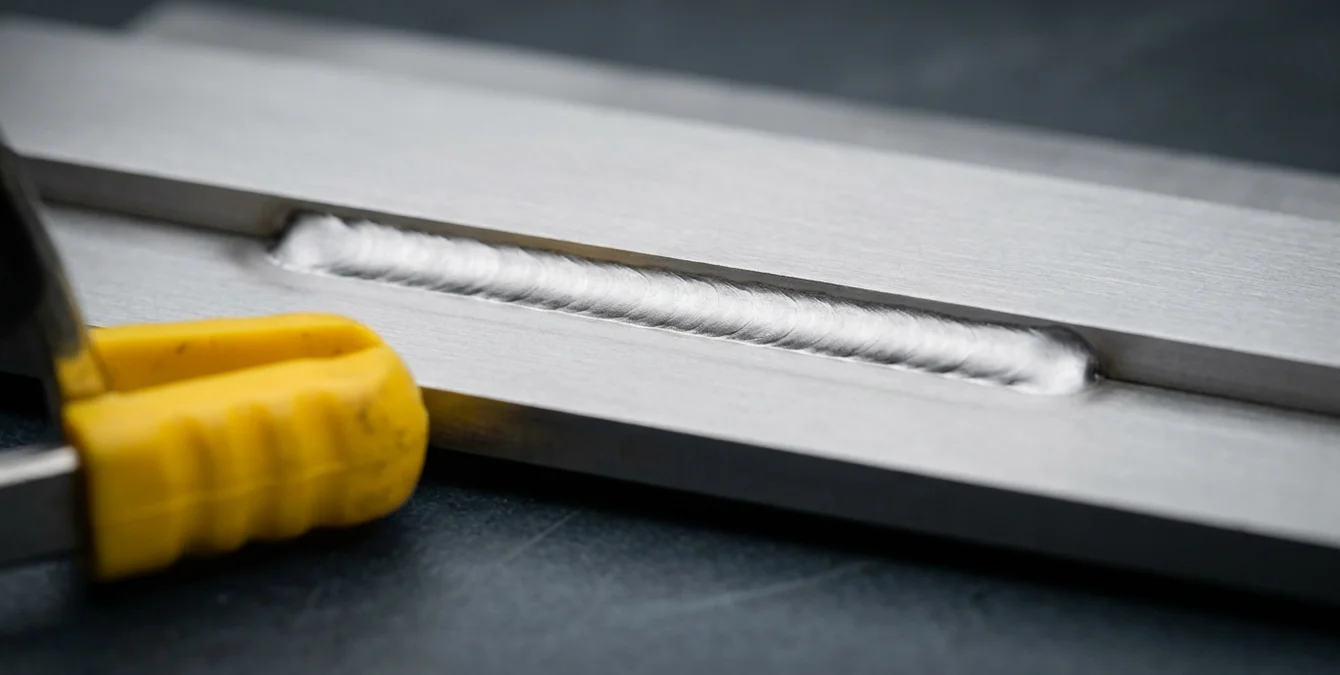
Welding high-carbon tool steels presents a unique set of challenges due to the increased risk of cracking. When the carbon content of a steel exceeds approximately 1.2%, the material becomes significantly more sensitive to the thermal cycles introduced by welding. Rapid heating and cooling can lead to the formation of brittle microstructures or induce residual stresses that cause cracks either immediately or during subsequent use.
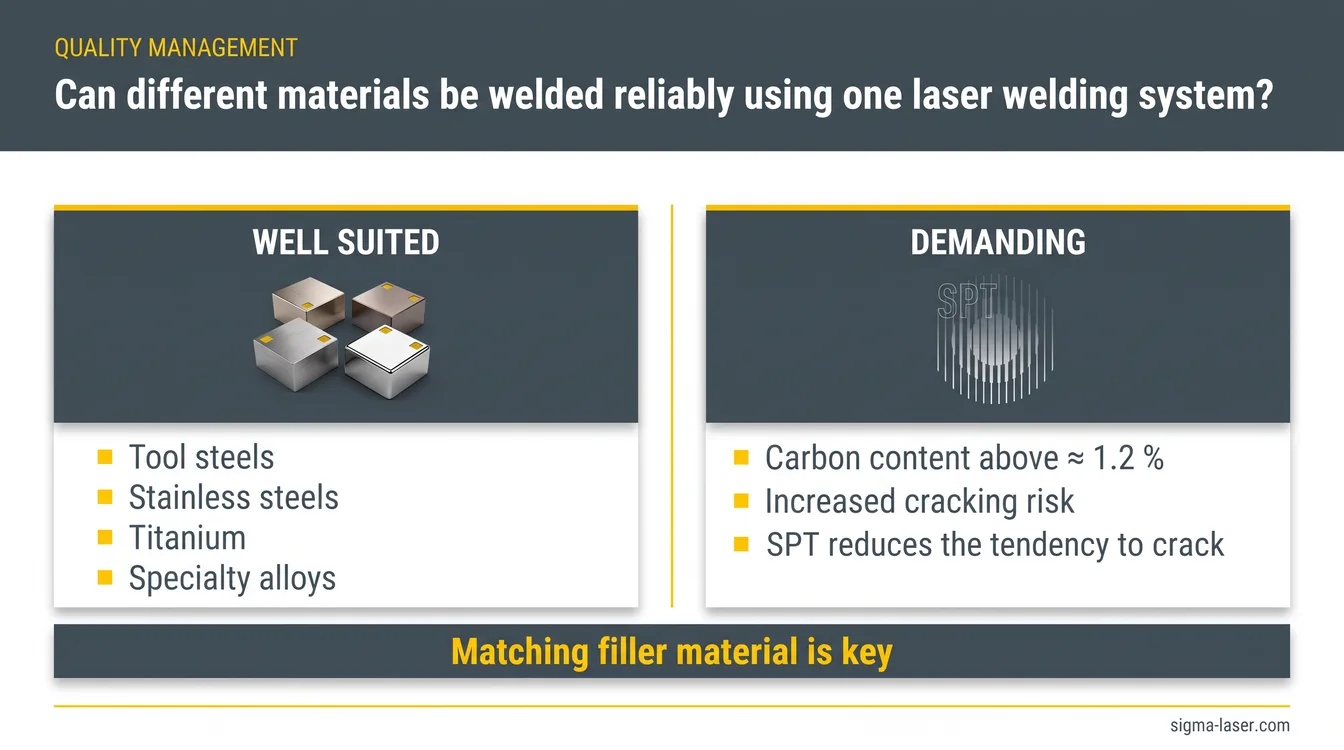
For quality assurance teams and toolmakers, this means that standard laser welding parameters may not be sufficient for reliable repairs on high-carbon steels. Special attention must be paid to pre-weld preparation, filler selection, and process control. Often, the use of specialized filler materials with tailored alloying elements can help mitigate the risk, but the process window is generally narrower than with lower-carbon alloys.
Sigma’s Super Pulse Technology (SPT) is designed to address these challenges by enabling precise control over heat input and pulse duration, reducing the tendency for cracking in high-carbon and other sensitive materials. For a deeper technical discussion, see Welding High-Carbon and Tool Steels with SPT.
In summary, while high-carbon steels can be welded with a Sigma system, success depends on a combination of advanced process technology, correct filler selection, and strict adherence to best practices in joint preparation and post-weld inspection.
How Super Pulse Technology extends the range
Super Pulse Technology (SPT) is a key innovation that extends the range of materials which can be reliably welded using a Sigma laser system. SPT works by precisely controlling the energy input and pulse characteristics of the laser, allowing for highly localized heating and rapid cooling. This minimizes the size of the heat-affected zone and reduces thermal stresses—critical factors when working with materials prone to distortion or cracking.
For tool steels, stainless steels, titanium, and especially high-carbon or reactive alloys, SPT enables process parameters to be fine-tuned for each application. This not only improves weld quality but also expands the practical range of materials that can be processed without risk of thermal damage or microstructural degradation. The result is greater confidence in tackling challenging repairs and new material types as production requirements evolve.
SPT is particularly valuable in applications where conventional welding would be impractical or risky due to the sensitivity of the material. For more information, see Super Pulse Technology (SPT) and Welding Titanium and Reactive Metals Using SPT. These resources provide detailed technical guidance on leveraging SPT for demanding welding tasks.
In summary, SPT not only improves process reliability for standard materials but also opens up new possibilities for advanced alloys, supporting both operational flexibility and long-term machine utilization.
| Step | Purpose |
|---|---|
| Test welds on scrap material | Systematically adjust variables and assess weld quality |
| Document successful settings | Enable repeatability and consistent results |
| Store process recipes | Streamlines setup for recurring jobs |
| Involve operators and quality personnel | Ensures practical handling and quality standards are met |
| Continuous improvement | Reduces risk of unforeseen issues in production |
Qualification and documentation are essential for reliable introduction of new materials.
Qualifying a new material in your own shop
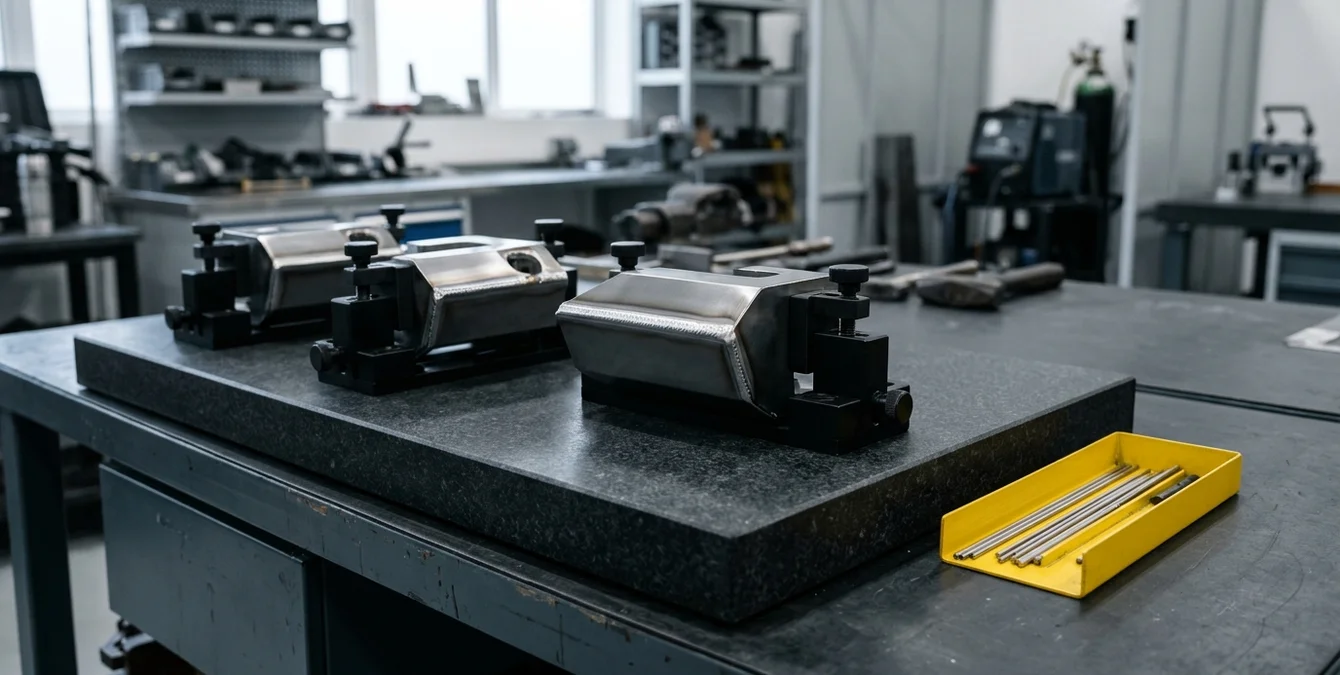
Before introducing a new material or repair application into production, it is best practice to qualify the process in-house using test welds on scrap pieces of the same alloy. This approach allows the team to systematically adjust one variable at a time—such as filler material, pulse parameters, or shielding gas—and assess the resulting weld quality through inspection and testing.
Documenting the successful combination of machine settings and filler material is essential for repeatability and quality assurance. Once a process recipe is established, it can be stored in the machine’s parameter library for future use. This not only streamlines setup for recurring jobs but also supports consistent results across different operators and shifts.
Involving both operators and quality personnel in the qualification process ensures that practical handling considerations and quality standards are both addressed. This collaborative approach reduces the risk of unforeseen issues during production and supports continuous improvement of welding procedures.
For further guidance on maintaining consistent weld quality between operators and across different materials, see How Do You Keep Laser Weld Quality Consistent Between Operators?. For a comprehensive overview of common customer questions on laser welding machine operation and material compatibility, refer to the full set of customer questions.
Frequently Asked Questions
Can one Sigma laser welding machine handle both tool steel and titanium?
Yes, a single Sigma laser welding machine can reliably weld tool steels, titanium, stainless steels, and many specialty alloys. The key is selecting the correct filler material and adjusting process parameters for each base material.
What role does filler material play in laser welding quality?
Filler material is critical—choosing the right filler for the base material and application determines weld integrity, mechanical properties, and long-term performance. Incompatible fillers can cause cracking or reduced service life.
How does Super Pulse Technology help with difficult materials?
Super Pulse Technology (SPT) allows precise control of energy input and pulse timing. This reduces cracking risk and enables reliable welding of high-carbon steels, titanium, and other sensitive or reactive alloys.
How should new materials be qualified for laser welding?
Best practice is to perform test welds on scrap pieces of the same alloy, adjusting one variable at a time. Successful parameter and filler combinations should be documented and stored for repeatable results.
SYN · Sigma Laser appreciation event
You weld. We say thank you.
For everyone who brings great things together every day – on 17 December 2026 the prize wheel turns for you.
One photo at your laser welding machine, a quick verification – and you’re in. Registration is free and takes two minutes. On 17 December every verified participant gets one spin of the prize wheel.
- 1 spin of the prize wheel
- Gifts in 3 tiers
- Free, no purchase needed
Gifts ship free within DE · AT · CH · EU · verification usually within one business day