
- What you actually outsource when you outsource a repair
- The handling that disappears with an in-house machine
- Prioritizing repairs against your own production
- Keeping control of the repair itself
- When regular repair demand makes independence decisive
- Frequently Asked Questions
- How does in-house laser welding affect repair turnaround time?
- What risks are reduced by bringing laser welding in-house?
- Is in-house laser welding always more cost-effective than outsourcing?
- How does in-house capability impact production flexibility?
- Related Articles
Quick Answer: Switching from external service providers to in-house laser welding fundamentally changes how repairs are managed: you gain direct control over repair timing, execution, and quality, while eliminating the delays and handling overhead of outsourcing. For companies with regular repair needs, this shift can streamline production and reduce dependence on external schedules.
| Aspect | External Service Provider | In-House Laser Welding |
|---|---|---|
| Repair Scheduling | Dependent on provider’s workload and priorities; possible delays | Controlled by your own team; immediate scheduling possible |
| Repair Execution | Limited oversight; relies on provider’s interpretation of requirements | Direct control; your team executes and monitors repairs |
| Logistics & Handling | Requires packing, shipping, and paperwork; risk of transit damage | No shipping; repairs performed on-site, reducing handling effort |
| Communication | Must clearly convey requirements to external party; risk of miscommunication | Internal team understands part history and context; direct communication |
| Downtime | Potentially extended due to provider’s queue and transport | Minimized; repairs can be integrated into production workflow |
| Quality Control | Limited to provider’s QA processes; less transparency | Full internal oversight; can implement own QA protocols |
Table summarizes operational and logistical differences based on article content.
What you actually outsource when you outsource a repair
When you send a damaged mold, tool, or precision component to an external laser welding service provider, you are not just outsourcing the physical repair. You are also relinquishing control over the repair schedule and process. The timing of the repair is dictated by the provider’s workload, priorities, and availability — not your own production requirements. This can introduce unpredictable delays, especially if the provider has a backlog or if your repair is not considered urgent compared to their other customers.
Furthermore, you must communicate your repair requirements clearly and hope they are fully understood and followed. Any miscommunication or lack of detail can lead to rework or results that do not meet your expectations. This indirect control can be particularly challenging for complex or critical repairs, where nuances in execution may significantly affect the outcome.
For organizations with high-value or time-sensitive components, this loss of control can translate into extended downtime, missed deadlines, and increased operational risk. The decision to outsource should therefore be weighed not just on cost, but on the impact to your production flexibility and responsiveness.
The handling that disappears with an in-house machine
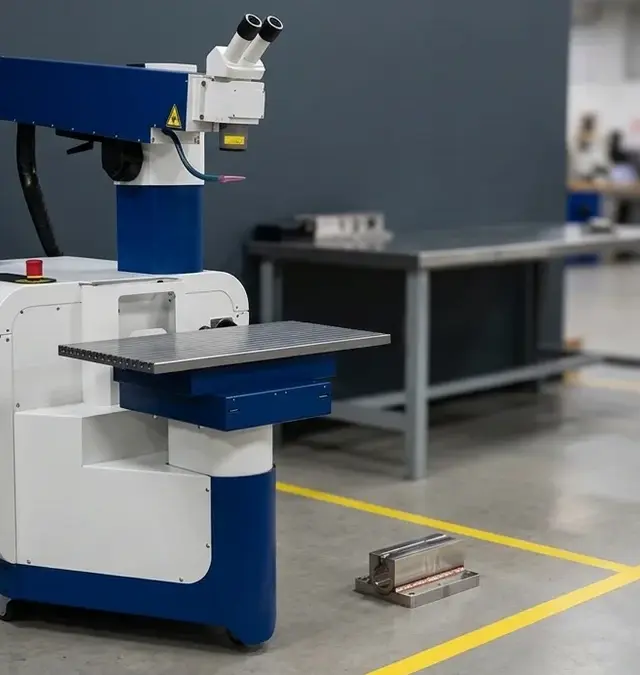
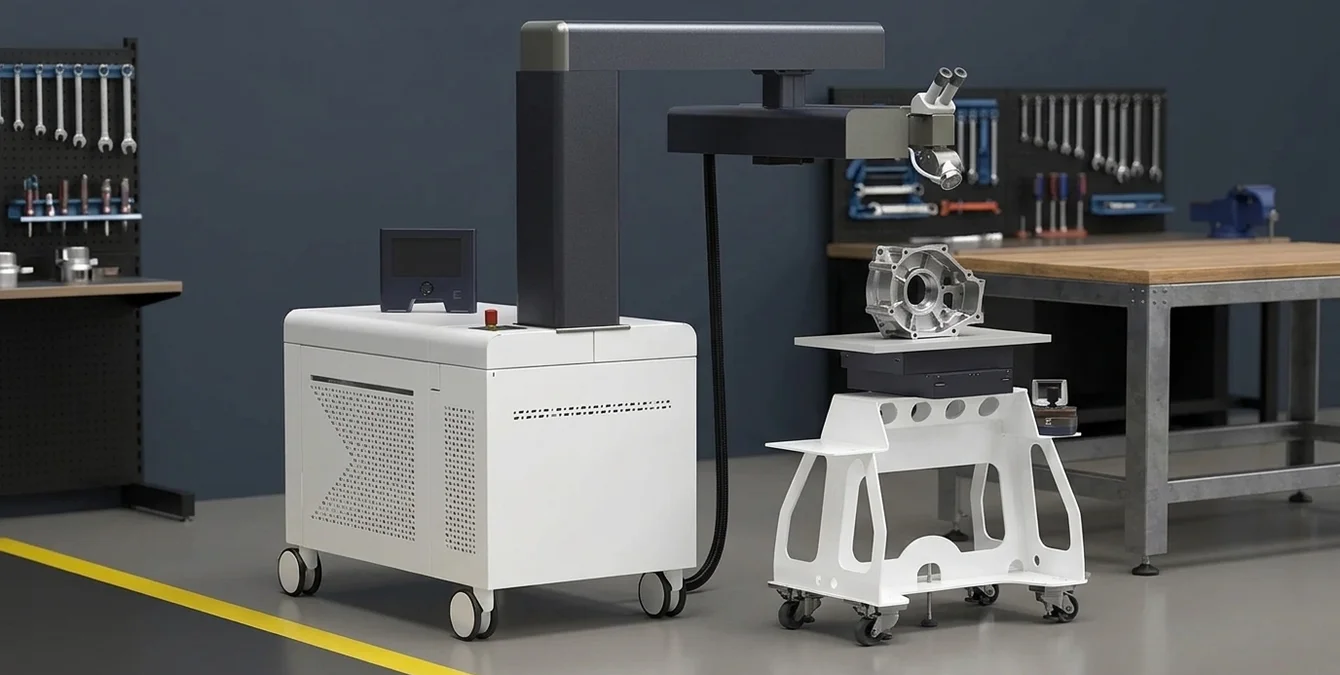
Bringing laser welding in-house eliminates a substantial amount of logistical handling and administrative effort. Parts no longer need to be carefully packed, shipped, or transported to an external provider. This alone removes the risk of damage during transit and saves time that would otherwise be spent organizing shipments and handling paperwork.
Additionally, the need to explain repair requirements to an external supplier is removed. Your own team, familiar with the part’s history and the production context, can directly assess and execute the repair. This reduces the risk of misunderstandings and ensures that the repair is performed exactly as needed for your application.
Perhaps most significantly, the waiting time associated with external scheduling and transport is eliminated. Repairs can be performed on-site and integrated seamlessly into your workflow, often resulting in a much shorter overall repair cycle. For a deeper look at how this impacts turnaround, see how fast a mold is back in production after a laser welding repair.
In practice, these changes free up internal resources, reduce the risk of delays, and enable more agile production planning.
| Advantage | Description |
|---|---|
| Production Flexibility | Repairs scheduled according to actual production needs, not external availability |
| Reduced Downtime | Immediate response to failures; repairs can start without delay |
| Agile Decision-Making | Real-time prioritization of urgent repairs to maintain delivery performance |
| Integrated Planning | Repairs coordinated with maintenance windows or shift changes |
| Improved Resource Allocation | Internal teams can align repairs with production schedules |
Highlights strategic benefits for manufacturers managing their own repair capacity.
Prioritizing repairs against your own production
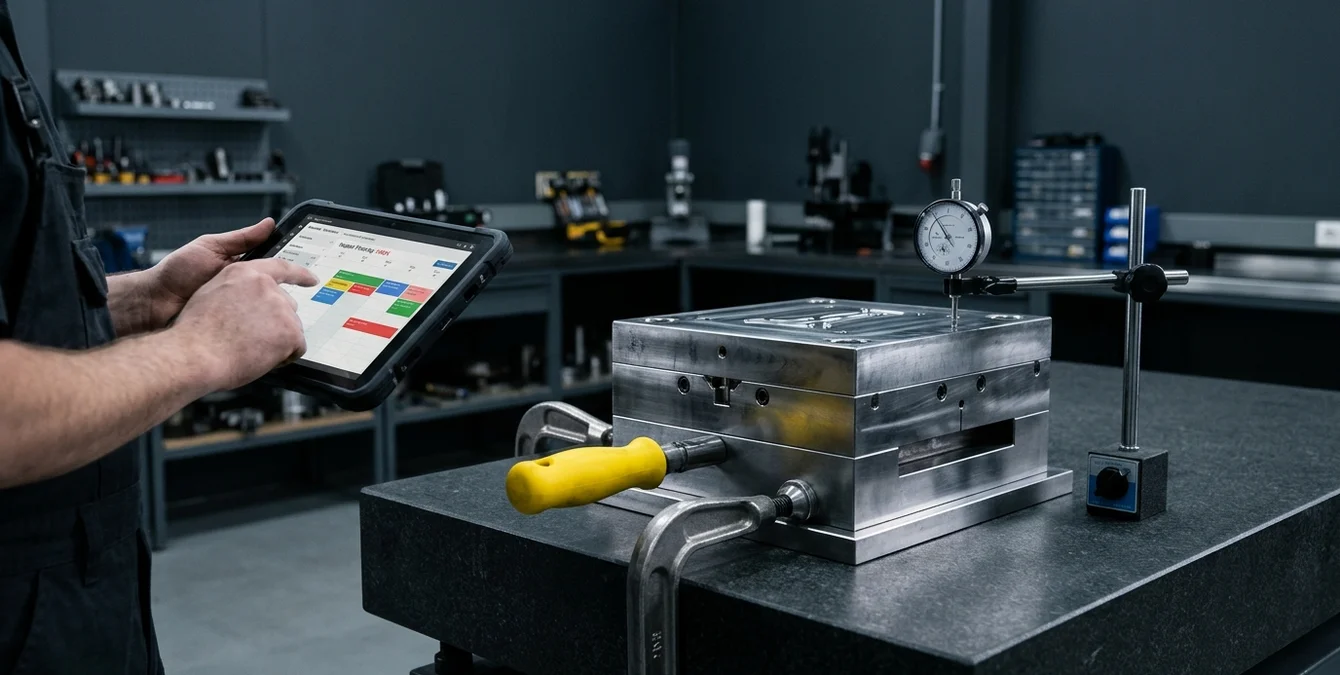
Prioritizing repairs according to your own production requirements is a fundamental shift that comes with in-house laser welding. Instead of waiting for an external provider’s availability, your team can immediately assess the urgency of a repair and schedule it based on the actual impact on production. This means that when a critical mold or tool fails, you are not competing with other customers for attention—your priorities dictate the repair sequence.
This autonomy enables dynamic, real-time decision-making. For example, if a failure threatens to halt a key production line or delay a customer delivery, you can start the repair process without delay. This reduces unplanned downtime and helps maintain on-time delivery performance, which is especially important in industries with tight schedules or just-in-time manufacturing models.
From a planning perspective, integrating repair capacity into your workflow allows for more accurate scheduling and resource allocation. Production managers can coordinate repairs with planned maintenance windows or shift changes, minimizing disruption. This flexibility is difficult to achieve when relying on external providers, where lead times and queue positions are outside your control.
However, to fully realize these benefits, it is important to assess your internal processes. Ensure that your team is trained to recognize urgent repair needs and that communication between production and maintenance is clear. A common pitfall is underestimating the coordination required to prioritize effectively—without clear protocols, even in-house capability can suffer from internal bottlenecks or misaligned priorities.
Ultimately, the ability to prioritize repairs internally not only reduces downtime and cost but also strengthens your control over quality and delivery commitments. It is a strategic advantage for manufacturers seeking to minimize risk and maintain flexibility in their operations.
| Pitfall | Impact |
|---|---|
| Underestimating Coordination Needs | Internal bottlenecks or misaligned priorities can reduce effectiveness |
| Informal Instructions | Leads to inconsistent repairs and potential quality issues |
| Lack of Standardized Procedures | Increases risk of non-conforming repairs and rework |
| Insufficient Operator Training | Undermines control and quality of in-house repairs |
Table lists organizational challenges to address for successful in-house implementation.
Keeping control of the repair itself
Maintaining direct control over the repair process is a decisive operational advantage when laser welding is brought in-house. Your team, with detailed knowledge of each component’s function and production context, can specify, monitor, and adjust every step of the repair to meet internal standards and unique requirements. This hands-on approach ensures that critical details—such as material selection, weld geometry, and finishing needs—are addressed precisely as intended, not merely as interpreted by an external provider.
For planning, this means fewer communication gaps and less risk of misalignment between what is needed and what is delivered. If unexpected issues arise during the repair, your team can respond immediately, making real-time decisions or adjustments without waiting for external feedback cycles. This agility can be crucial for complex or time-sensitive repairs, where even minor misunderstandings can lead to costly delays or rework.
From a cost and quality perspective, direct oversight reduces the likelihood of non-conforming repairs or the need for secondary corrections. Companies can implement their own quality assurance protocols, document procedures, and track results for continuous improvement—capabilities that are often limited or less transparent when relying on external partners. This is particularly important in regulated industries or where traceability and compliance are required.
To fully realize these benefits, companies should assess their internal communication and documentation practices, ensuring that repair requirements are clearly defined and that feedback loops between production, maintenance, and quality teams are robust. Common pitfalls include informal instructions, lack of standardized repair procedures, or insufficient operator training—issues that can undermine the very control in-house capability is meant to deliver. Recognizing and addressing these areas is key to maximizing the value of direct process ownership.

When regular repair demand makes independence decisive
For companies with ongoing or high-frequency laser welding repair needs, the decision to bring the process in-house fundamentally changes operational dynamics. Instead of being bound to the schedules and priorities of external service providers, your production becomes more agile—repairs can be initiated as soon as an issue is identified, without waiting for external availability. This is particularly critical in sectors where downtime directly impacts output or delivery commitments.
From a planning perspective, in-house capability means that repair work can be integrated into your existing workflows and scheduled around production peaks, maintenance windows, or urgent requirements. This flexibility reduces the risk of unplanned production stoppages caused by external delays. It also enables faster turnaround for recurring maintenance tasks, supporting higher overall equipment effectiveness.
Cost control is another important factor. While the direct cost of outsourcing is often visible, hidden costs—such as lost production time, emergency logistics, and the administrative burden of coordinating with external providers—can quickly accumulate. By managing repairs internally, these indirect costs are minimized, and resources can be allocated more predictably.
However, the shift to in-house laser welding requires careful evaluation. Companies should assess the consistency and volume of their repair demand, the availability of skilled personnel, and the potential for integrating the process into existing quality management systems. Pitfalls can arise if the internal workload is overestimated or if operator training is insufficient. Reviewing actual repair records and forecasting future needs helps ensure the investment delivers its intended operational independence and resilience.
Frequently Asked Questions
How does in-house laser welding affect repair turnaround time?
In-house laser welding eliminates the need for transport and external scheduling, allowing repairs to be performed immediately according to your production priorities. This can significantly shorten the overall repair cycle compared to outsourcing.
What risks are reduced by bringing laser welding in-house?
You reduce risks related to transport damage, miscommunication, and unpredictable lead times. Direct control over the repair process also lowers the chance of non-conformance and ensures quality standards are met.
Is in-house laser welding always more cost-effective than outsourcing?
Cost-effectiveness depends on your repair volume and operational needs. For companies with regular repair demand, the reduction in downtime and handling often justifies in-house investment. The true break-even point varies by company.
How does in-house capability impact production flexibility?
Having an in-house system allows you to prioritize and schedule repairs according to your own workflow, making production planning more agile and less dependent on external provider availability.