
- What makes a component heat-sensitive
- How localized energy keeps the heat-affected zone small
- What Super Pulse Technology adds
- Typical heat-sensitive repair situations
- Working towards the lowest thermal impact
- Frequently Asked Questions
- Why is Super Pulse Technology important for welding heat-sensitive components?
- What types of components benefit most from SPT in laser welding?
- How does SPT differ from standard laser welding?
- What is the recommended approach to welding heat-sensitive parts?
Quick Answer: Super Pulse Technology enables precise, low-thermal-impact welding of heat-sensitive components by tightly controlling the laser’s energy input. This minimizes the heat-affected zone, reduces distortion risk, and allows reliable repair of thin, treated, or delicate parts that would otherwise be at risk with conventional welding methods.
What makes a component heat-sensitive
Heat-sensitive components are those that can be damaged, distorted, or have their functional properties altered by excessive or poorly controlled heat input during welding. This sensitivity can arise from several factors that are common in mold, tool, and precision manufacturing environments.
Thin-walled parts, for example, have limited mass to absorb and dissipate heat, making them prone to warping or melting if the thermal input is not tightly controlled. Components that have undergone prior heat treatment—such as hardening or tempering—can lose their engineered properties if exposed to temperatures above critical thresholds, resulting in loss of hardness, dimensional instability, or unwanted microstructural changes.
Another frequent scenario involves repairs near finished sealing or bearing surfaces. Excess heat can cause distortion, surface degradation, or changes in fit and function, jeopardizing the entire component’s performance. Some materials, such as certain tool steels, titanium alloys, or specialty metals, are particularly sensitive to sustained heat and may undergo phase transformations, grain growth, or embrittlement if not handled correctly.
Understanding the specific reasons for a component’s heat sensitivity is essential for planning the repair approach. Identifying these factors early allows production managers and toolmakers to select appropriate welding technologies and process parameters, minimizing the risk of costly rework or scrap.
How localized energy keeps the heat-affected zone small
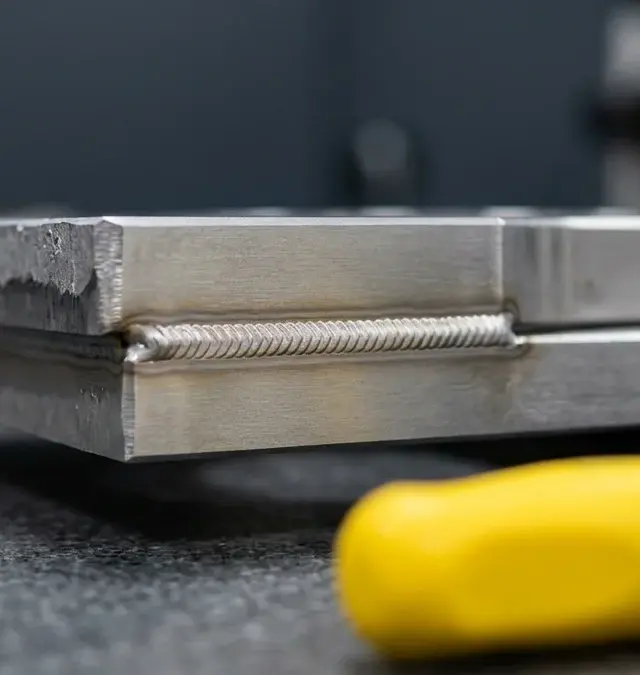
One of the defining advantages of laser welding—especially for sensitive components—is the ability to apply energy with extreme precision. Unlike conventional arc or torch welding, where heat spreads broadly through the workpiece, laser welding focuses energy into a small, controlled area. This localized application means that only the immediate weld zone is heated to the melting point, while surrounding material remains largely unaffected.
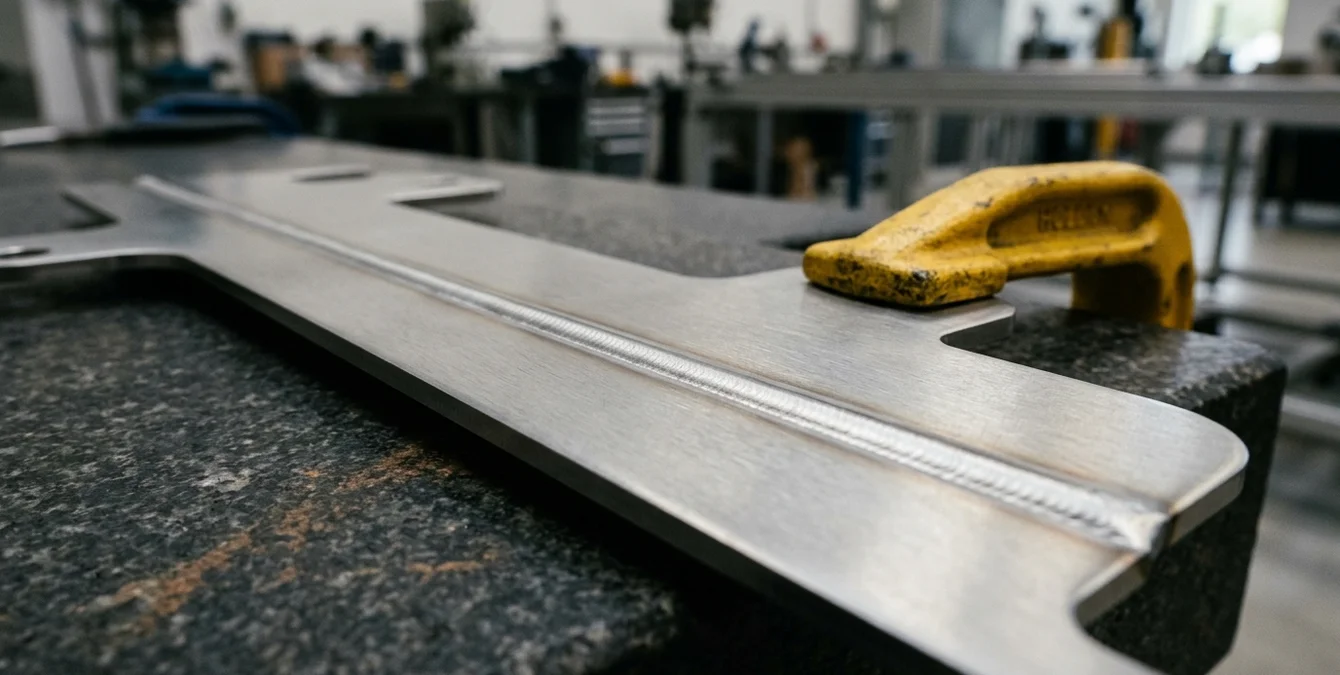
This precise targeting keeps the heat-affected zone (HAZ) remarkably small. For production managers and toolmakers, this translates to a dramatic reduction in the risk of thermal distortion, dimensional changes, or unintended alteration of adjacent features. For example, when repairing a mold insert near a critical sealing surface, the localized energy input ensures that the surrounding geometry and surface finish remain intact.
Minimizing the HAZ is also crucial for maintaining the properties of heat-treated or high-performance alloys. By limiting thermal exposure, the original microstructure and mechanical properties are preserved, reducing the need for post-repair heat treatment or corrective machining. In practice, this enables faster turnaround, higher first-pass yield, and greater confidence in the integrity of repaired parts.
Laser welding’s inherent precision is thus a foundational tool for any application where thermal impact must be tightly controlled, setting the stage for even more advanced control with Super Pulse Technology.
| Feature | Conventional Laser Welding | Super Pulse Technology (SPT) |
|---|---|---|
| Energy Input Control | Precise but limited pulse adjustment | Highly refined pulse duration, intensity, and frequency control |
| Heat-Affected Zone (HAZ) | Small compared to arc/torch welding | Minimized further—extremely localized |
| Distortion Risk | Reduced vs. traditional methods | Virtually eliminated |
| Suitability for Thin/Delicate Parts | Good | Excellent—enables reliable repair of even the most sensitive features |
What Super Pulse Technology adds
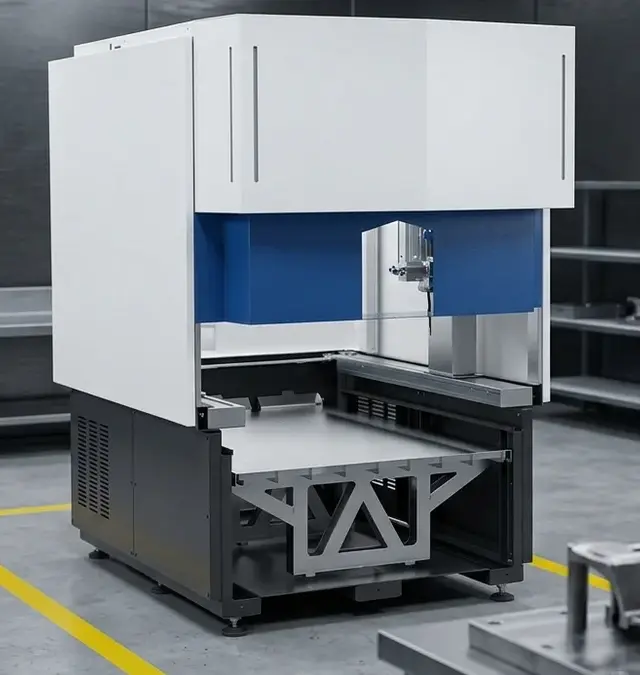
Super Pulse Technology (SPT) is Sigma Laser’s advanced solution for further minimizing thermal impact during welding. While standard laser welding already offers precise, localized energy input, SPT takes this control to the next level by enabling highly refined adjustment of the laser pulse—its duration, intensity, and frequency—tailored to the specific needs of heat-sensitive repairs.
By precisely controlling each laser pulse, SPT allows operators to deliver just enough energy to achieve proper fusion, without overheating the surrounding material. This is particularly valuable for demanding applications such as thin edges, intricate geometries, or materials with a high risk of cracking or structural change. The result is a repair with extremely low thermal input, virtually eliminating distortion and preserving both the geometry and the material properties of the component.
SPT is available on all six Sigma Laser welding machines, making it a standard capability across the product range. This means that whether the application is mold repair, tool refurbishment, or precision component restoration, users can rely on SPT to handle even the most challenging heat-sensitive tasks.
For a deeper technical overview of Super Pulse Technology (SPT) and its impact on process control, as well as practical insights from real-world applications, see the article on Thermal Behavior in Metal Welding with SPT.
| Scenario | Risk if Thermal Input Is Not Controlled |
|---|---|
| Fine edges and thin sections | Warping, burn-through, loss of dimensional accuracy |
| Repairs near finished functional surfaces (sealing faces, bearing seats, polished cavities) | Distortion, surface degradation, need for re-machining or polishing |
| Components that cannot be re-heat-treated (hardened or surface-treated parts) | Loss of engineered properties, compromised hardness or structure |
| Materials such as titanium and reactive metals | Heat and oxidation sensitivity, risk of structural change |
Typical heat-sensitive repair situations
In daily production and maintenance, several common scenarios demand the lowest possible thermal impact during welding. Fine edges and thin sections are especially vulnerable; even a slight excess of heat can cause warping, burn-through, or loss of dimensional accuracy. These features are often found in injection mold inserts, precision dies, or small-format tooling components.
Repairs close to finished functional surfaces—such as sealing faces, bearing seats, or polished cavities—require absolute control over heat input to avoid post-weld distortion or surface degradation. In these cases, the ability to weld without affecting adjacent areas is critical to maintaining the component’s performance and minimizing the need for extensive re-machining or polishing.
Another key situation involves components that cannot be re-heat-treated after repair. This is common with hardened or surface-treated parts where re-heating would compromise the engineered properties, or where the logistics and cost of post-repair heat treatment are prohibitive. Here, precise welding with minimal thermal input is the only viable solution.
Materials such as titanium and reactive metals present their own challenges due to their sensitivity to heat and oxidation. For further guidance on these applications, see Welding Titanium and Reactive Metals Using SPT.
| Step | Purpose |
|---|---|
| Start with conservative laser parameters (lower power, shorter pulses) | Reduce risk of overheating or damaging the component |
| Perform a small test weld and inspect results | Assess effect on material and geometry before full repair |
| Iteratively adjust parameters in small increments | Fine-tune for optimal fusion with minimal heat spread |
| Document final parameter set for each material/repair type | Enable repeatable, high-quality results on future jobs |
Working towards the lowest thermal impact
Achieving the lowest possible thermal impact in heat-sensitive welding is a process of careful planning, conservative execution, and continuous learning. The best practice is to start with conservative laser parameters—lower power, shorter pulses, and reduced energy input—then inspect the results after a small test weld. This initial step allows the operator to assess the effect on the material, geometry, and surrounding features without risking damage to the actual component.
Iterative adjustment is key: based on inspection, parameters can be fine-tuned in small increments to achieve optimal fusion with minimal heat spread. Documenting the final parameter set for each material and repair type builds a valuable knowledge base, enabling repeatable, high-quality results on future jobs. This approach not only safeguards sensitive components but also increases process reliability and operator confidence.
In practice, collaboration between operators, production managers, and quality teams ensures that every repair is approached with the right balance of caution and efficiency. By following this methodical process, companies can consistently deliver repairs that meet both functional and cosmetic standards, even on the most demanding heat-sensitive parts.
For more on best practices and answers to common operational questions, refer to the complete set of customer questions on laser welding machines.
Frequently Asked Questions
Why is Super Pulse Technology important for welding heat-sensitive components?
Super Pulse Technology enables extremely precise control over the laser’s energy input, minimizing the heat-affected zone and reducing the risk of distortion or material changes. This is essential for reliably repairing thin, treated, or delicate parts without damaging adjacent areas.
What types of components benefit most from SPT in laser welding?
Components with thin walls, fine edges, or those located near finished functional surfaces benefit greatly from SPT. It’s also critical for repairing parts that have undergone heat treatment or are made from heat-sensitive materials like titanium or specialty alloys.
How does SPT differ from standard laser welding?
While standard laser welding already offers localized energy input, SPT allows even finer control of the laser pulse’s duration, intensity, and frequency. This further reduces thermal impact, making it ideal for the most demanding heat-sensitive applications.
What is the recommended approach to welding heat-sensitive parts?
Start with conservative parameters, perform a test weld, inspect the results, and adjust in small steps. Document the optimal settings for future use. This iterative, careful approach ensures minimal thermal impact and consistent repair quality.