
- Key Takeaways
- Can casting defects be repaired by laser welding?
- Advantages of Laser Welding for Cast Part Repair
- Considerations for Cast Iron Welding Techniques
- The Casting-Defect Catalog
- How does the repair process work step by step?
- Defect Preparation and Excavation
- Cleaning
- Filler Selection
- Controlled Build-Up
- Finishing
- Which cast materials respond well?
- Cast Steel
- Aluminum Castings
- Cast Iron
- Repair the part or recast it?
- Lead Time Considerations
- Cost Implications
- Single-Part Logic
- Mobile at the Large Casting or Stationary in the Cab?
- Considerations for Large Castings
- Advantages of Stationary Systems
- Frequently Asked Questions
- How do you prevent cracking when welding cast iron?
- Can you weld cast iron without preheating?
- What are the challenges of welding cast iron?
- How does laser welding improve cast part repair?
- Why choose in-house laser welding for cast repairs?
- What advantages does Sigma Laser offer for repairing porosity in cast components?
- What is the best way to weld cast iron?
- Related Articles
- Sources
Quick Answer: Cast part repair welding using laser technology effectively addresses defects such as porosity, cavities, and cold shuts. Sigma Laser’s advanced 5-axis laser welding systems enable precise material deposition, ensuring minimal heat input and distortion. This method is ideal for intricate geometries and high-value components, providing superior control over the welding process. Additionally, the non-contact nature of laser welding minimizes contamination risks, making it a preferred choice for restoring the integrity of cast parts in foundries and machine shops worldwide.
Key Takeaways
When considering cast part repair welding, it’s crucial to understand the specific techniques and materials involved to achieve optimal results. This section provides key insights into effective welding practices for cast iron components, which are commonly encountered in foundries and machine shops.
- Preheating Techniques: Proper preheating of cast iron is essential to minimize thermal gradients that lead to cracking. Recommended preheat temperatures typically range from 260°C to 315°C, depending on the cast iron type.
- Welding Methods: Techniques such as laser welding offer precision and control, making them ideal for intricate cast iron repairs. Ensure compatibility of the chosen method with the specific cast iron grade.
- Cooling Strategies: Controlled cooling is crucial to prevent stress and distortion. Slow cooling in a furnace or using insulating materials can help maintain uniform temperature changes.
- Types of Cast Iron: Not all cast iron types are equally weldable. Gray cast iron, ductile iron, and malleable iron each require tailored approaches, with ductile iron being more amenable to welding.
- Material Considerations: Selecting the appropriate filler material is vital. Nickel-based fillers are commonly used for their compatibility with different cast iron alloys.
- Post-Weld Heat Treatment: Implementing a post-weld heat treatment can relieve residual stresses and improve the mechanical properties of the repaired area.
- Quality Assurance: Conduct thorough inspections using non-destructive testing methods such as dye penetrant or ultrasonic testing to ensure the integrity of the weld.
Understanding these critical aspects of cast part repair welding can significantly enhance the quality and durability of your repairs. Dive deeper into each topic to explore the specific methodologies and technologies that can be applied in your operations.
Can casting defects be repaired by laser welding?
Yes, most steel and aluminum castings with defects such as porosity, shrinkage cavities, cold shuts, and machining errors can be effectively repaired using laser welding. This process offers minimal heat input, preserving the integrity of the surrounding material. However, limitations exist for certain cast irons.
For instance, the Sidanus Light, a stationary Nd:YAG laser system, offers a peak power range of 6–13 kW, allowing it to address a variety of defect sizes and material types with precision. The system’s ability to operate at pulse frequencies up to 40 Hz ensures efficient energy delivery to the repair site, minimizing the heat-affected zone and preserving the mechanical properties of the base material.
Advantages of Laser Welding for Cast Part Repair
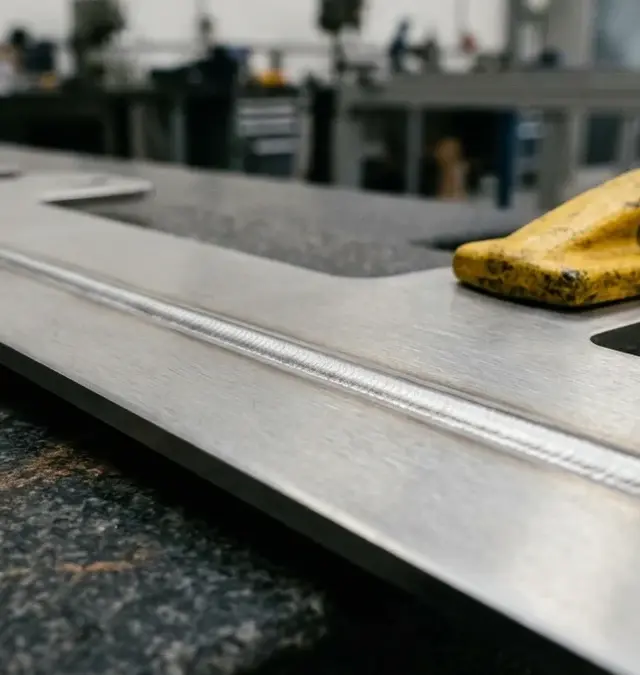
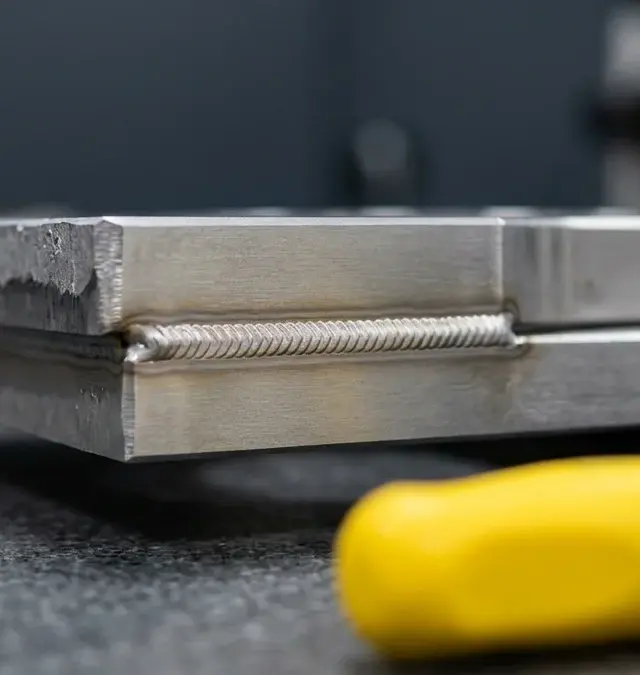
Laser welding is a precise technique that provides significant benefits in the repair of cast parts. By utilizing a highly focused beam, it delivers concentrated energy to the defect area, reducing the heat-affected zone (HAZ). This minimizes the risk of distortion or additional stress in the repaired component.
- Minimal heat input preserves mechanical properties.
- Reduced thermal distortion, suitable for intricate geometries.
- Capability to repair complex alloys such as 1.2344 (AISI H13) and aluminum alloys.
- Compliance with standards such as EN 1011-8, which provides guidelines for welding metallic materials, ensuring quality and consistency in repair processes.
Considerations for Cast Iron Welding Techniques
When addressing defects in cast iron, specific techniques must be considered to achieve successful repair outcomes. Preheating cast iron is crucial to reduce thermal gradients, which can lead to cracking. Additionally, understanding the cooling rates in cast iron welding helps in mitigating residual stresses.
- Preheating: Essential to prevent thermal shock and cracking.
- Controlled cooling: Slow cooling rates are preferable to avoid hardening.
- Appropriate filler material selection: Nickel-based fillers often recommended.
While laser welding is a versatile solution for many casting defects, it is important to assess the specific material properties and defect characteristics to determine the most effective repair strategy. In some instances, traditional methods such as stick welding or TIG welding may complement laser-based approaches for optimal results.
For example, the Sineo Fibre, a mobile ytterbium fibre laser system, offers up to 1000 Hz pulse frequency, making it ideal for high-speed repairs where rapid energy deposition is critical. The system’s 1070 nm wavelength is particularly effective for deep penetration in aluminum alloys, ensuring robust and durable repairs.
The Casting-Defect Catalog
In metal casting, defects can arise from various factors, affecting the structural integrity and functionality of finished components. Understanding the root causes and employing effective repair techniques are crucial for maintaining quality and performance. Laser welding, as part of cast part repair, offers a precise and efficient solution for addressing common casting defects. Below, we explore typical defects encountered in cast parts, their causes, and how laser welding can effectively resolve these issues.
| Defect | Typical Cause | Laser Repair Route |
|---|---|---|
| Gas Porosity | Trapped gas during solidification | Laser welding can seal surface porosity by melting and re-solidifying the affected area, ensuring a dense and compact structure. |
| Shrinkage Cavity | Inadequate feed metal during solidification | Utilizes controlled laser weld deposits to fill cavities, restoring the part’s dimensional integrity. |
| Cold Shut | Improper fusion between molten streams | Laser welding provides localized heat, promoting fusion and eliminating discontinuities. |
| Crack | Thermal contraction or stress concentration | Crack repair by laser welding involves precise heat control, minimizing residual stress and preventing further crack propagation. |
| Dimensional Error | Pattern or mold inaccuracies | Laser welding is applied for dimension correction by adding or removing material with high precision. |
| Corrosion Damage | Environmental exposure leading to material degradation | Laser welding repairs corroded areas by applying protective overlays, enhancing corrosion resistance. |
Effective repair of cast iron components, such as those made from EN-GJL-250 or EN-GJS-400-15, often requires understanding specific welding techniques, including preheating cast iron to manage cooling rates. Incorporating advanced laser systems like the Sidanus Light, which offers Nd:YAG laser technology with peak powers of up to 13 kW, or the Siega Fibre with its Super Pulse Technology, can optimize repair processes through precision and control, addressing defects while maintaining the mechanical integrity of the cast parts.
Laser welding systems typically operate in the sub-kilowatt range for precision applications, with beam spot sizes ranging from 0.1 to 2.0 mm, allowing for detailed work on small features. The heat-affected zone (HAZ) is minimized due to the localized energy input, reducing the risk of thermal distortion. Standards such as EN 1011-8 provide guidelines for welding processes, including laser welding, ensuring consistency and quality in repair applications.
For further insights into laser welding applications, explore the basics of laser welding.
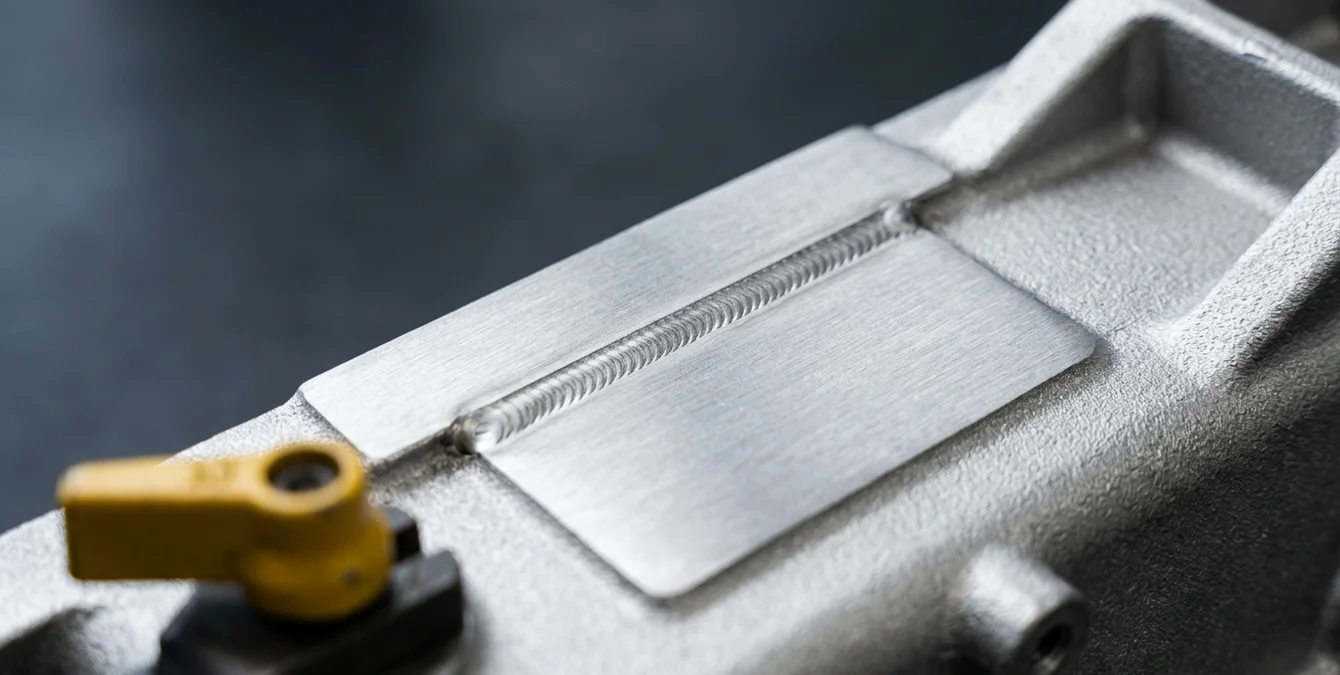
How does the repair process work step by step?
Defect Preparation and Excavation
In cast part repair welding, the initial step is the meticulous preparation of the defect area. This involves identifying the extent of the damage and carefully excavating the affected section. The aim is to create a clean and accessible area for effective repair using advanced laser welding techniques. In foundries and machine shops, precise removal of the defective material is critical to ensure optimal weld integrity. The process typically adheres to standards such as EN 1011-8, which provides guidelines for welding of cast irons.
Cleaning
Once the defect is prepared, thorough cleaning of the surrounding area is essential. This step eliminates contaminants such as oxides, oils, and other residues that could compromise the welding process. Effective cleaning enhances the adhesion of the filler material and ensures a strong bond in subsequent steps. Techniques may include mechanical or chemical cleaning methods suitable for the specific cast iron grade. The cleaning process is critical to achieving the quality requirements outlined in ISO 3834-2, which focuses on quality management in welding companies.
Filler Selection
Choosing the appropriate filler material is crucial for successful repair. For cast iron, options include nickel-based fillers that offer compatibility with the base material. The selection is guided by factors such as the cast iron’s composition and the intended function of the repaired component. This step is integral to maintaining the component’s mechanical properties and ensuring a durable repair. The process typically follows the guidelines set by AWS D11.2/D11.2M.
Controlled Build-Up
The controlled build-up phase of the repair involves the precise application of weld material. Using Sigma Laser’s systems, such as the stationary Siega Fibre with its Super Pulse Technology (SPT), allows for minimal heat input and a small heat-affected zone (HAZ). This precision minimizes thermal distortion and preserves the integrity of the cast part. Advanced features like Swivel Optics ensure optimal positioning and alignment during the process. Typical industry parameters for laser welding include power levels up to several kilowatts and pulse durations ranging from milliseconds to microseconds, depending on the material and thickness.
Finishing
After the weld build-up, finishing operations are performed to restore the part’s original dimensions and surface finish. Techniques may include machining, grinding, or polishing, depending on the application requirements. The final step ensures that the component meets the necessary specifications and standards, such as EN ISO 15614-7, guaranteeing reliability and performance in industrial settings.
Which cast materials respond well?
Cast Steel
Cast steel often benefits from cast part repair welding due to its robust mechanical properties, making it suitable for various laser welding applications. The high precision of Sigma Laser systems, such as the Sidanus Light and Siega Fibre, ensures minimal heat-affected zones, preserving the integrity of the surrounding material. This capability is crucial in sectors like automotive and aerospace, where maintaining material strength is essential. The ability to achieve fine 5-axis positioning allows for accurate repairs and enhancements, making cast steel an ideal candidate for laser welding.
In laser welding of cast steel, typical process parameters include laser powers up to 500 W for precision applications, with penetration depths generally around 1–2 mm depending on the specific alloy and thickness. The heat-affected zone is typically minimized to a few millimeters, ensuring the mechanical properties of the cast steel remain intact. Standards such as EN 1011-8 provide guidelines on welding of steel materials, ensuring optimal process parameters are adhered to.
Aluminum Castings
Aluminum castings can also be effectively repaired using laser welding techniques, provided the appropriate filler material is selected. Utilizing nickel-based fillers, for example, helps achieve a strong bond. The controlled heat input from systems like the Sineo Light and Sineo Fibre minimizes distortion, a common concern with aluminum. This precise control is essential in industries such as electronics and packaging, where dimensional accuracy is critical. As with cast steel, the minimal heat input ensures that the properties of the aluminum casting remain largely unaffected.
When working with aluminum castings, laser welding typically involves power levels around 300–500 W with spot sizes ranging from 0.2 to 2.0 mm. The use of appropriate standards, such as ISO 3834-2, ensures that quality requirements for fusion welding are met, facilitating reliable and repeatable welding processes.
Cast Iron
Welding cast iron presents more challenges due to its brittle nature and high carbon content. Techniques such as preheating cast iron and managing cooling rates are crucial to mitigate issues like cracking. Although laser welding can be applied, it requires careful consideration of these factors and may not always be the most suitable approach. For more detailed insights into cast iron welding techniques, including stick welding cast iron, consider exploring our dedicated article on cast iron welding. This resource covers essential practices and considerations for those working with this complex material.
Preheating and controlled cooling are essential for minimizing thermal stresses and preventing cracking in cast iron. Standards such as AWS D11.2/D11.2M provide guidelines on welding techniques specific to cast iron, emphasizing the importance of managing thermal inputs effectively.
Repair the part or recast it?
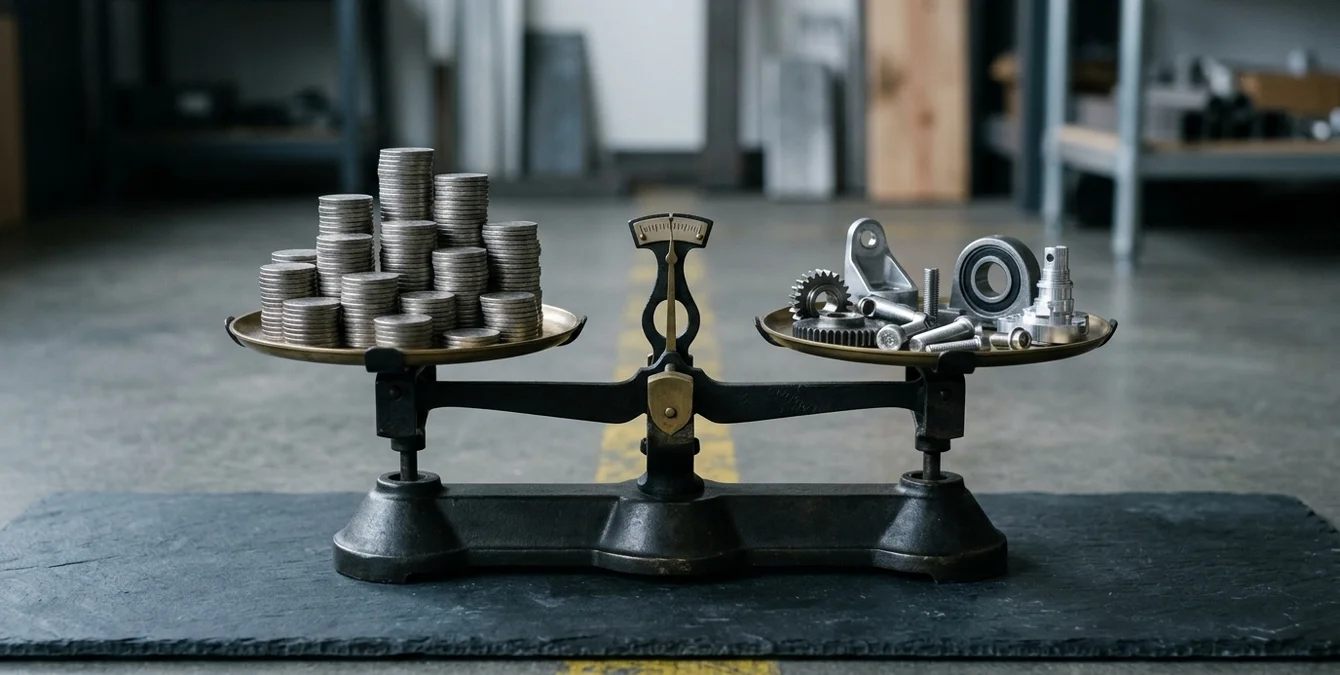
In industrial manufacturing, deciding whether to repair a damaged cast part or recast it entirely depends on several critical factors, including lead time, cost implications, and the part’s complexity. When considering cast part repair welding, manufacturers evaluate these factors to determine the most efficient and cost-effective solution.
Lead Time Considerations
Lead time is crucial in the decision-making process. Repairing a cast part generally offers a quicker turnaround compared to recasting, which involves pattern making, mold creation, and the casting process itself. Advanced laser welding techniques, such as those used by Sigma Laser systems, can significantly reduce downtime and expedite the return to operational capability.
Laser welding systems like the Sineo Light, with its 360° mobility and peak power of 13 kW, are particularly effective in rapidly addressing complex repairs without the need for extensive setup changes. This flexibility is crucial in minimizing lead times and maintaining production schedules.
Cost Implications
The economic aspect of repairing versus recasting is complex. Recasting a part incurs costs related to new pattern creation, material procurement, and production time. In contrast, repair welding, especially with precise laser methods, minimizes these expenses and effectively utilizes existing resources. This approach is particularly beneficial when dealing with expensive or complex castings.
For example, the Sidanus Fibre, with its ytterbium fibre laser and high precision capabilities, allows for cost-effective repairs by reducing material waste and ensuring high-quality welds. This is particularly advantageous when working with high-value materials such as 1.2344 (AISI H13) tool steel, where material conservation is critical.
Single-Part Logic
For single or low-volume parts, repair welding is a logical choice. The application of laser welding in cast iron, for instance, involves specific techniques such as controlled preheating and managing cooling rates to ensure structural integrity. These methods, supported by technologies like Sigma Laser’s systems, are well-suited for maintaining the quality of repaired cast iron components.
Standards such as EN 1011-8 provide guidelines for welding cast iron, emphasizing the importance of preheat and post-weld heat treatment to avoid cracking. This is essential for achieving reliable repairs, especially in applications where mechanical properties are critical.
Ultimately, the decision to repair or recast should consider the unique requirements of each application, leveraging modern laser welding technologies to optimize both time and cost efficiencies.
Mobile at the Large Casting or Stationary in the Cab?
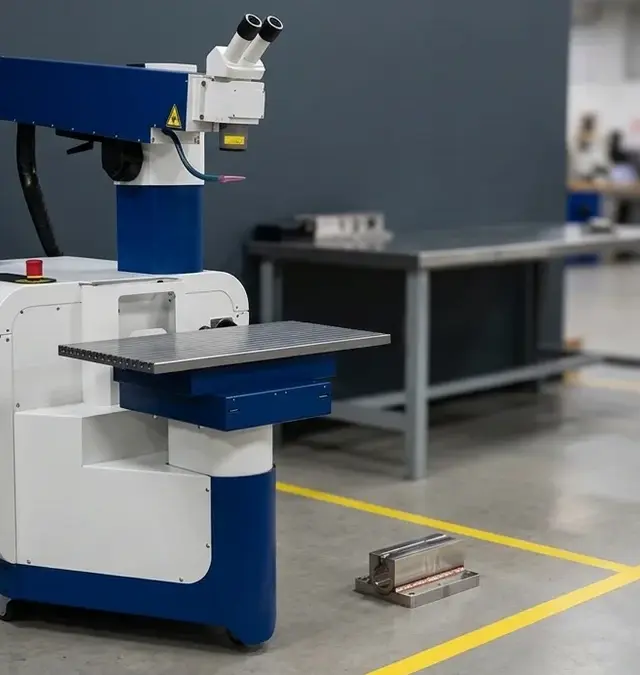
In the realm of precision welding, selecting between a mobile or stationary laser welding system can significantly impact operational efficiency and product quality. When dealing with cast part repair welding, the decision depends on workpiece size and mobility needs. Mobile laser systems, such as Sigma Laser’s Sineo Light and Sirius Light, are designed to be transported to the workpiece, offering a practical solution for large castings that are immobile or challenging to move. These systems provide flexibility in environments where the component size is unrestricted, allowing for the welding of massive cast iron components directly on-site.
Mobile systems like the Sineo Light, with its 360° mobility and a peak power of 13 kW, are particularly suited for on-site repairs, ensuring that even intricate geometries can be addressed without relocating the workpiece. The Sirius Light, with its heavy-duty mobile design, offers a reach of up to 1830 mm, making it ideal for large-scale applications where accessibility is a challenge.
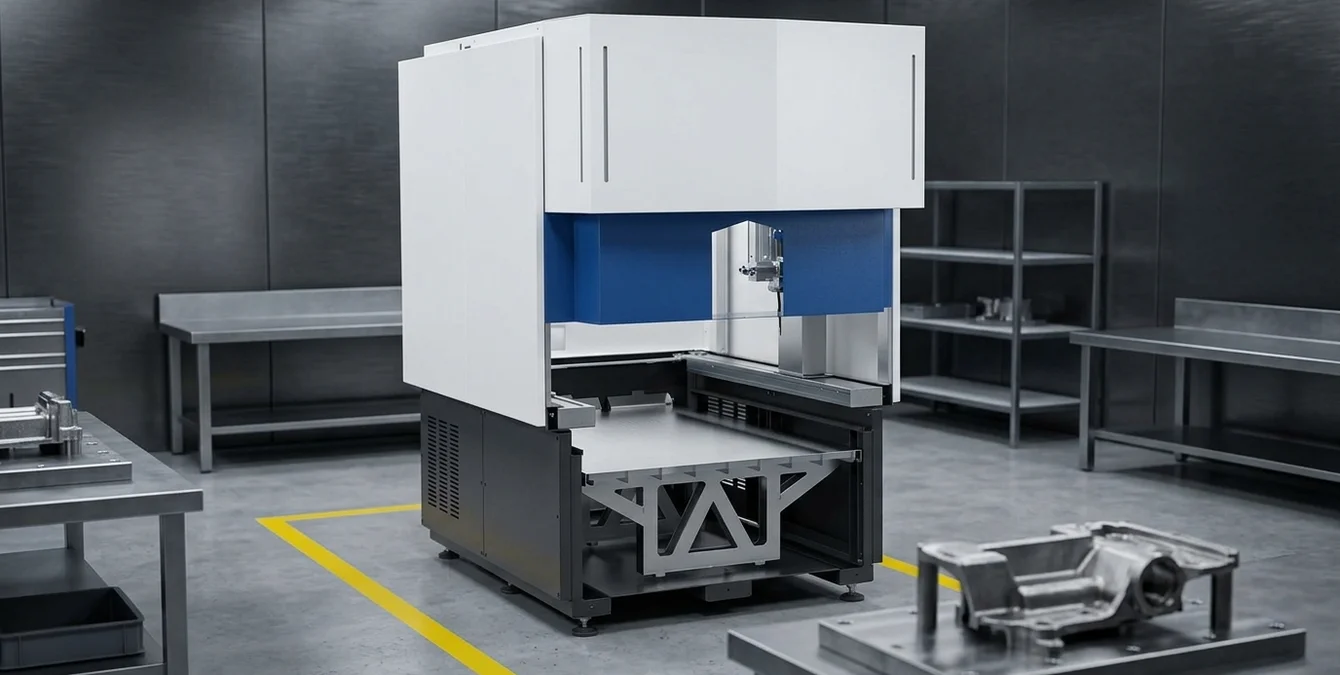
Conversely, stationary systems like the Sidanus Light and Siega Fibre are ideal when parts can be brought into a controlled welding environment. These systems are housed within a cab, providing a stable platform for high-precision welding tasks on transportable parts. The controlled environment ensures optimal conditions for laser welding, crucial for maintaining consistent welding quality and minimizing the heat-affected zone (HAZ). The Sidanus Light, with its Nd:YAG laser source, offers peak power up to 13 kW, making it suitable for detailed work on smaller components.
Considerations for Large Castings
For foundries and machine shops focusing on cast iron welding techniques, mobile systems offer strategic advantages. They eliminate the need for preheating cast iron in a centralized location, allowing for localized preheating and efficient cooling rates in cast iron welding. Mobile systems are particularly advantageous for repair tasks on oversized components or when handling complex geometries where stick welding cast iron may not be feasible.
When welding cast iron, maintaining a controlled cooling rate is crucial to prevent cracking. Mobile systems facilitate this by allowing the operator to manage the heat input and cooling at the site, which is particularly beneficial for materials like EN-GJL-250 and EN-GJS-400-15, known for their sensitivity to thermal gradients.
Advantages of Stationary Systems
Stationary laser welding setups are preferred in scenarios where parts are regularly moved into the cab for processing. These systems offer enhanced control over welding parameters, making them suitable for intricate welding tasks and reducing variability associated with manual methods. Sigma Laser’s stationary systems are equipped with advanced technologies such as Super Pulse Technology (SPT) for precise control over heat input, ensuring minimal distortion and high-quality welds on materials like EN-GJL-250 and EN-GJS-400-15.
The Siega Fibre, with its Super Pulse Technology, provides exceptional control over the thermal input, reducing the risk of thermal distortion and ensuring the integrity of the weld. This is particularly important when working with high-strength alloys that require precise thermal management to avoid microstructural changes.
Ultimately, the choice between mobile and stationary systems should be guided by the specific requirements of the application, the size and mobility of the workpieces, and the desired welding precision. Standards such as EN 1011-8 provide guidelines for welding cast irons, ensuring that the process parameters are optimized for the material characteristics.
Frequently Asked Questions
How do you prevent cracking when welding cast iron?
Preventing cracking in cast iron welding requires managing thermal stresses. Preheating the part to 260-315°C (500-600°F) and maintaining a controlled cooling process can significantly reduce the risk. Laser welding offers precise heat control, further minimizing thermal gradients that lead to cracking.
Can you weld cast iron without preheating?
While preheating is generally recommended to avoid thermal shock and cracking, laser welding systems can sometimes mitigate the need for extensive preheating due to their precise heat application. However, for thicker sections or critical repairs, preheating remains advisable to ensure structural integrity.
What are the challenges of welding cast iron?
Welding cast iron presents challenges such as high carbon content leading to brittleness, the risk of cracking from thermal stresses, and difficulty in achieving a strong bond. Laser welding can address these issues by providing controlled heat input and reducing thermal distortion.
How does laser welding improve cast part repair?
Laser welding enhances cast part repair by offering precise heat control, reducing the heat-affected zone, and minimizing the risk of cracking. Sigma’s laser systems facilitate complex repairs with high accuracy, improving the longevity and performance of the repaired part.
Why choose in-house laser welding for cast repairs?
In-house laser welding provides greater control over repair quality, reduces lead times, and enhances flexibility in production scheduling. Sigma’s systems enable foundries and machine shops to perform high-precision repairs, improving overall operational efficiency and return on investment.
What advantages does Sigma Laser offer for repairing porosity in cast components?
Sigma Laser systems feature Super Pulse Technology (SPT), enabling precise, low-distortion welds that effectively seal porosity and cavities in cast parts. Combined with 5-axis CNC kinematics, these machines deliver repeatable, high-quality repairs on complex geometries—minimizing heat input and reducing the risk of further defects during restoration.
What is the best way to weld cast iron?
The optimal method for welding cast iron involves using a laser welding system, such as Sigma’s Nd:YAG or ytterbium fibre lasers. These systems provide precise control over heat input, minimizing thermal distortion and reducing the risk of cracking. This approach allows for accurate and efficient joining of cast iron components.
Sources
- ISO 3834-2:2005 — Quality requirements for fusion welding of metallic materials – Part 2: Comprehensive quality requirements.
- EN 1011-8:2004 — Welding – Recommendations for welding of metallic materials – Part 8: Welding of cast irons.
- AWS D11.2/D11.2M:2020 — Guide for Welding Iron Castings.
- Fraunhofer Institute for Material and Beam Technology IWS — Research institute providing insights into advanced welding technologies and repair methods for cast parts.
- NIST Welding Research — The National Institute of Standards and Technology’s research on welding, including repair techniques for cast materials.
- Journal of Materials Processing Technology — A peer-reviewed journal covering research on the processing of materials, including welding techniques for cast parts.
- Welding Journal — A publication by the American Welding Society featuring articles on welding processes, including repair welding of cast parts.