
- Key Takeaways
- What are the Main Differences Between Laser Welding and Spot Welding?
- Principles of Laser Welding
- Principles of Spot Welding
- Key Differences in Techniques
- How Do Laser and Spot Welding Compare in Automotive Applications?
- Laser Welding in Automotive Manufacturing
- Spot Welding in Automotive Manufacturing
- Case Studies and Examples
- Which Industries Benefit Most from Laser Welding?
- Aerospace Industry Applications
- Electronics and Medical Devices
- Other Beneficial Sectors
- Can Laser Welding Offer Cost Advantages Over Spot Welding?
- Initial Investment Costs
- Operational and Maintenance Costs
- Long-term Savings and ROI
- Why Choose Laser Welding for Sheet Metal Production?
- Precision and Quality
- Speed and Efficiency
- Thermal Distortion and Material Integrity
- What are the Challenges and Limitations of Laser and Spot Welding?
- Technical Limitations of Laser Welding
- Challenges in Spot Welding
- Overcoming Welding Challenges
- Frequently Asked Questions
- What are the main differences between laser welding and spot welding?
- Which industries benefit most from laser welding?
- What are the advantages of laser welding over spot welding in automotive manufacturing?
- Can laser welding be used for all types of metals?
- How does the cost of laser welding compare to spot welding?
- How does Sigma Laser technology improve sheet metal welding compared to spot welding?
- Related Articles
- Sources
Quick Answer: Laser welding vs spot welding for sheet metal primarily hinges on precision, speed, and material thickness. Laser welding offers high precision and minimal distortion, ideal for thin metals and complex geometries. It provides clean, strong welds with minimal heat-affected zones. Spot welding, on the other hand, is cost-effective for thicker materials and high-volume production but can lead to distortion and requires accessible joint areas. Choose laser welding for precision and aesthetics, while spot welding is suitable for robust, straightforward applications.
Key Takeaways
In the evolving landscape of manufacturing, understanding the differences between laser welding and spot welding can significantly impact production efficiency and quality. As production managers consider optimizing their welding processes, evaluating the advantages and applications of each method is crucial.
- Laser welding provides higher precision and cleaner welds compared to traditional spot welding, reducing the need for post-processing.
- Spot welding is generally more cost-effective for thicker materials and high-volume production due to its simplicity and speed.
- Laser welding offers greater flexibility in welding complex geometries and materials, including dissimilar metals.
- Unlike spot welding, laser welding minimizes thermal distortion, preserving the integrity of heat-sensitive components.
- For applications requiring minimal downtime, laser welding systems can be automated more easily, enhancing production throughput.
- Spot welding remains advantageous for applications where joint strength is critical and material thickness is substantial.
- Evaluating the specific requirements of your production line will determine whether laser or spot welding is the optimal choice.
With a clear understanding of these welding techniques, production managers can make informed decisions that align with their operational goals. Dive deeper into the article to explore detailed comparisons and insights that will guide your welding strategy.
What are the Main Differences Between Laser Welding and Spot Welding?
In the realm of advanced manufacturing processes, understanding the nuances between laser welding and spot welding is essential for production managers aiming to optimize their operations. Sigma Laser, known for its precision-engineered solutions like the Nd:YAG Sidanus Light and the fibre-laser Siega Fibre, offers insights into these distinct welding techniques, emphasizing their application in industries such as automotive and aerospace.
Principles of Laser Welding
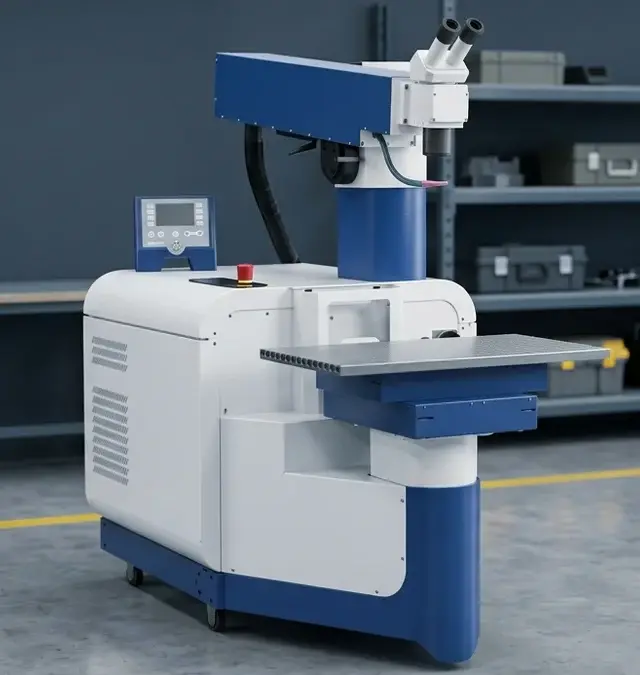
Laser welding is a highly precise process that employs a concentrated beam of light to join materials. This technique is characterized by its ability to produce deep welds with minimal distortion, making it ideal for intricate and sensitive components. The use of advanced technologies such as Sigma Laser’s Super Pulse Technology (SPT) enhances precision and control, making it suitable for welding thin sheet metals and complex geometries. Sigma Laser systems — controlled by Sigomatic Pro software and equipped with accessories such as Swivel Optics — offer unparalleled flexibility, allowing for automated production lines and robotic integration.
Typically, laser welding systems operate with power ranges that, industry-wide, can reach roughly 10 kW, using wavelengths around 1064 nm for Nd:YAG lasers and 1070 nm for fibre lasers. The beam quality, often denoted by M², is crucial for precision, with values typically below 1.5 indicating high beam quality. Focal lengths can vary, but common ranges are between 100 mm to 200 mm, allowing for precise energy delivery and minimal heat-affected zones (HAZ) as small as 0.1 mm to 0.5 mm, depending on the material.
Laser welding is compatible with a wide range of materials, including stainless steels (e.g., 304, 316), aluminum alloys (e.g., 6061, 7075), and titanium alloys, adhering to standards such as ISO 11145 and ISO 11146 for laser optics and beam parameters.
Principles of Spot Welding
Spot welding, a more traditional approach, involves the use of electric current to heat and fuse metals at specific points. This method is widely used in applications where high strength and rapid production are key, such as in the automotive industry for assembling car bodies. Unlike laser welding, spot welding relies on physical electrodes to apply pressure and heat, which can limit its applicability to thicker materials and simpler geometries.
Spot welding typically operates with currents ranging from 1000 A to 10,000 A, with electrode forces up to 600 N, making it suitable for joining low carbon steels and some aluminum alloys. The process is governed by standards such as DIN EN ISO 4063:2011, which classifies welding processes and provides guidelines for their application.
Key Differences in Techniques
While both welding techniques serve critical roles in manufacturing, their differences are stark:
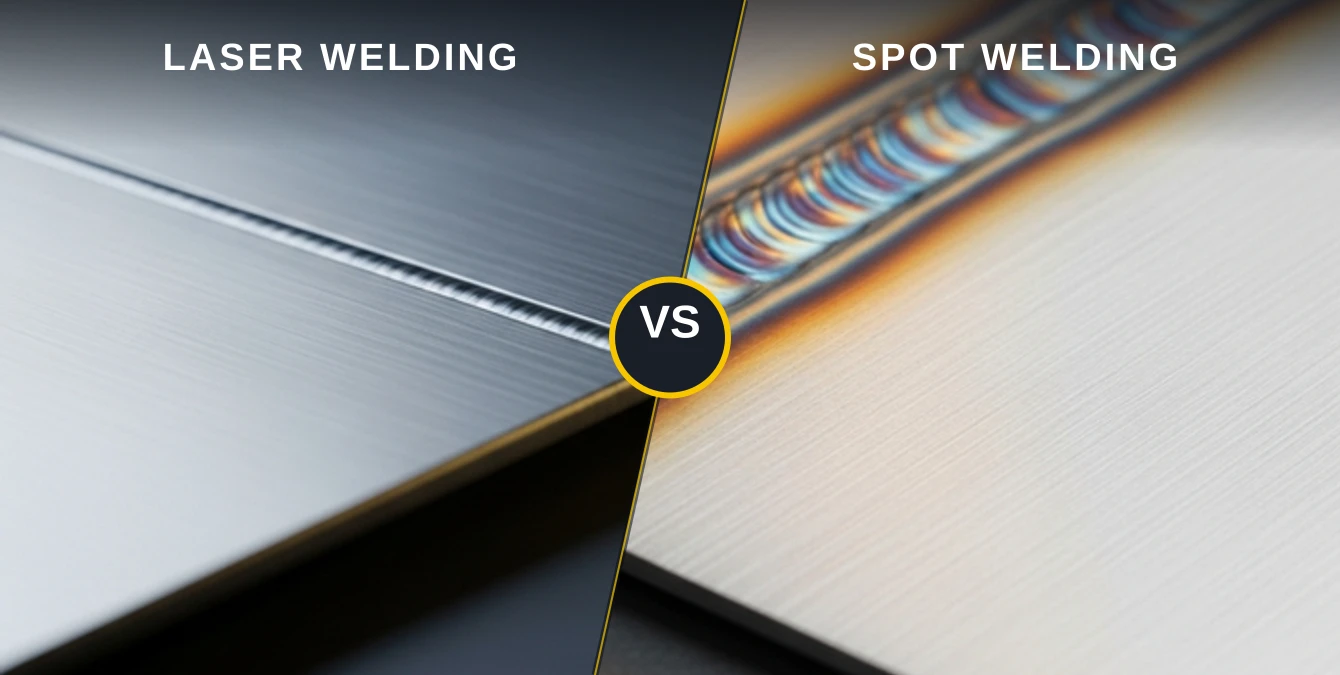
- Precision and Control: Laser welding offers superior precision due to its focused energy delivery, allowing for clean and controlled welds, making it ideal for high-tolerance industries like aerospace. Typical tolerances for laser welding can be within ±0.1 mm, depending on the system and material.
- Speed and Efficiency: Laser systems, such as those integrated with Swivelling Y Axis and Motor-driven Turning Devices, enable faster processing times, significantly reducing cycle times compared to the intermittent nature of spot welding. Typical welding speeds can range from 0.5 m/min to 10 m/min, depending on material thickness and power settings.
- Flexibility: Laser welding is highly adaptable, capable of joining a variety of materials and thicknesses, whereas spot welding is generally restricted to ferrous metals and specific configurations.
For production managers and procurement specialists, the choice between laser welding and spot welding hinges on the specific requirements of their production line, including precision needs, material type, and production volume. Leveraging Sigma Laser’s state-of-the-art technologies can provide a competitive edge in achieving optimal manufacturing efficiency and product quality.
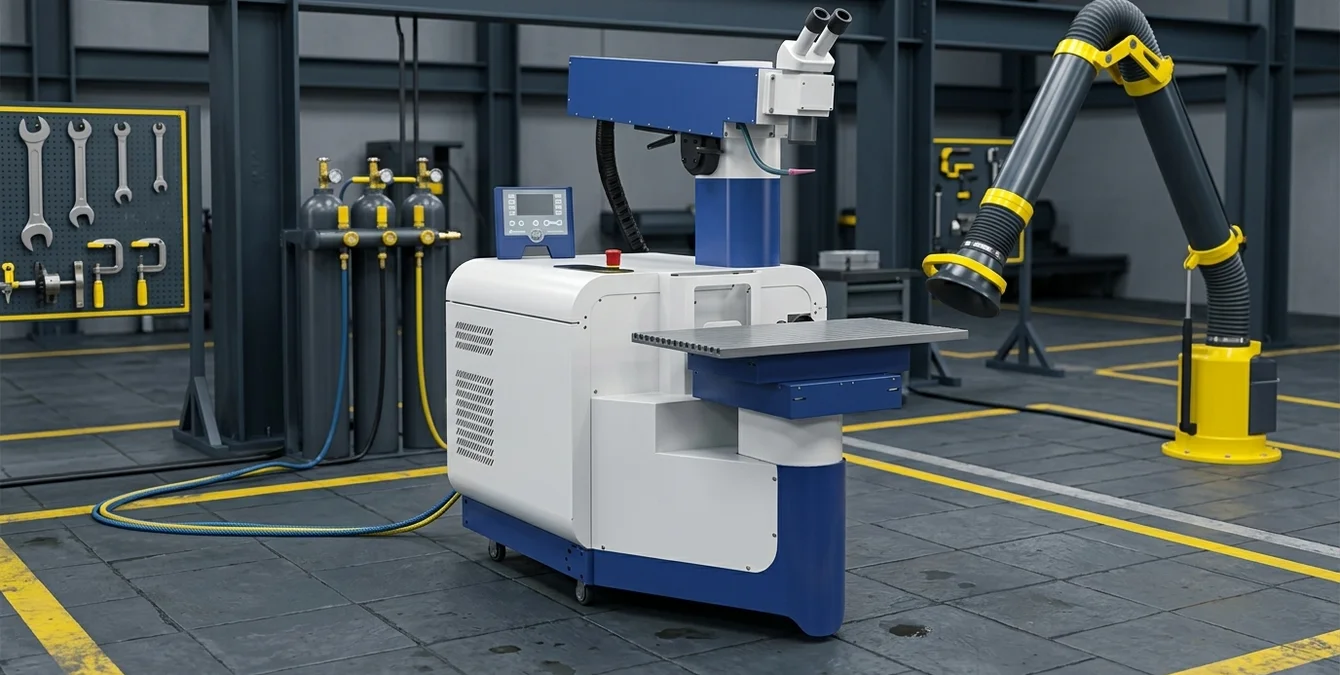
| Aspect | Laser welding | Spot welding |
|---|---|---|
| Joining method | Concentrated light beam | Electric current via electrodes |
| Precision / tolerance | High, ±0.1 mm | Lower |
| Best material thickness | Thin sheet, complex geometry | Thicker sections, simple joints |
| Heat-affected zone (HAZ) | Minimal (< 1 mm) | Large (up to 5 mm) |
| Thermal distortion | Minimal | Noticeable |
| Speed | Continuous, 0.5–10 m/min | Fast per spot (ms), intermittent |
| Material range | Wide (steel, Al, Ti, dissimilar) | Mostly ferrous / low-carbon |
| Joint access | Single-side, flexible | Needs two-side electrode access |
| Initial cost | Higher | Lower |
| Operating / maintenance | Lower (non-contact) | Higher (electrode wear) |
| Best suited for | Precision, thin & complex, aesthetics | Robust, thick, high-volume structural |
How Do Laser and Spot Welding Compare in Automotive Applications?
In the ever-evolving landscape of automotive manufacturing, selecting the right welding techniques is crucial for optimizing production efficiency, ensuring quality, and managing costs. This section explores the specific roles of laser welding and spot welding in automotive applications, providing insights into their suitability for different components and production scenarios.
Laser Welding in Automotive Manufacturing
Laser welding, as demonstrated by Sigma Laser’s Sidanus Light and Siega Fibre systems, offers unmatched precision and speed, making it ideal for complex assemblies and high-volume production lines. This technique is particularly beneficial for welding thin sheet metal and intricate components like battery housings and airbag inflators. The use of Super Pulse Technology (SPT) and Swivel Optics enhances flexibility and control, ensuring minimal thermal distortion and superior seam quality. As automotive designs become more intricate, laser welding’s ability to deliver consistent, high-quality joints becomes increasingly essential.
Laser systems typically operate with power ranges from 1 kW to 10 kW, with wavelengths around 1064 nm for Nd:YAG lasers and 1070 nm for fibre lasers, ensuring deep penetration and minimal heat-affected zones. The beam quality, often characterized by an M² value of less than 1.5, allows for precise control over the welding process. Optimal welding speeds can reach up to 5 m/min, depending on the material and thickness, with penetration depths typically ranging from 0.1 mm to 10 mm. These parameters are crucial for maintaining the structural integrity of high-strength steels (e.g., DP600, DP800) and aluminum alloys (e.g., 6061, 7075), commonly used in automotive applications.
According to ISO 15614-11:2002, laser welding processes must adhere to strict qualification standards to ensure repeatability and quality, with typical tolerances in the range of ±0.1 mm for critical components. The precision of laser welding makes it especially suitable for applications requiring high repeatability and minimal post-processing.
Spot Welding in Automotive Manufacturing
Spot welding remains a staple in the automotive industry, especially for joining thicker sections of sheet metal such as car frames and door panels. Known for its robustness and simplicity, spot welding is favored for its speed and cost-effectiveness in producing high-strength joints. Despite its limitations in precision compared to laser welding, spot welding continues to be a reliable choice for structural applications where weld aesthetics are less critical and joint strength is paramount.
Typical spot welding parameters include electrode forces ranging from 1 kN to 10 kN and current levels between 5 kA and 30 kA, depending on the material thickness and type. The process is particularly effective for low-carbon steels and some stainless steels, with weld times measured in milliseconds to ensure rapid cycle times. According to DIN EN ISO 4063:2011, spot welding is classified under process number 21, indicating its widespread acceptance and standardization in the industry.
Case Studies and Examples
In practical automotive applications, laser welding is often employed for lightweight structures and electronics integration, where precision and minimal heat input are essential. For instance, Sigma Laser’s Simass Slide and Z-Axis Module systems have been instrumental in the efficient production of EV battery packs. Conversely, spot welding is typically used in scenarios requiring quick, repetitive welding of thick metal parts, such as in the assembly of automotive body-in-white structures.
The strategic choice between laser welding and spot welding ultimately depends on the specific requirements of each automotive component, balancing factors such as material type, desired strength, and production throughput. By leveraging the strengths of each technique, manufacturers can optimize their welding processes to meet the stringent demands of the modern automotive industry.
Which Industries Benefit Most from Laser Welding?
Laser welding is a high-precision technique that employs a focused beam of light to join materials with exceptional accuracy and efficiency. This technology, often compared to spot welding, is especially beneficial in industries where precision, speed, and minimal thermal distortion are crucial. Sigma Laser’s advanced systems, such as the Sidanus Light and Sirius Light, provide superior solutions tailored to the unique demands of various sectors.
Laser welding systems typically operate within a power range that, industry-wide, can reach roughly 10 kW, with wavelengths commonly around 1064 nm for Nd:YAG lasers and 1070 nm for fibre lasers, ensuring deep penetration and minimal heat-affected zones (HAZ). The beam quality, often characterized by an M² value of less than 1.2, allows for precise control over the weld pool. Focal lengths are generally adjustable, ranging from 100 mm to 300 mm, to accommodate various material thicknesses and joint configurations.
Aerospace Industry Applications
The aerospace industry requires precision and reliability, making laser welding an ideal choice. Components like turbine blades and structural assemblies gain from the high-strength, low-distortion welds that laser welding delivers. Sigma Laser’s Super Pulse Technology (SPT) ensures that even the most stringent aerospace specifications, adhering to standards like ISO 9001 and DIN EN ISO 4063, are met with precision and repeatability.
In aerospace applications, laser welding is often used for materials such as titanium alloys (e.g., Ti-6Al-4V) and high-strength steels, where the process can achieve penetration depths up to 5 mm with welding speeds typically ranging from 1 to 10 m/min. The precision of laser welding allows for tolerances as tight as ±0.1 mm, critical for maintaining the integrity of aerospace components.
Electronics and Medical Devices
In the electronics sector, laser welding provides the fine control necessary to join delicate components without damaging sensitive circuits. This capability is vital for manufacturing microelectronics where precision is essential. Similarly, the medical device industry benefits from laser welding’s ability to produce clean, precise welds required for medical-grade components. The Sineo Fibre and SiegA Fibre systems are exemplary in delivering consistent performance in these applications, where adherence to ISO 3834 ensures compliance with stringent quality standards.
For electronics and medical devices, laser welding is compatible with materials such as stainless steels (e.g., 316L), nickel-titanium alloys, and various precious metals, with repeatability typically within ±0.05 mm. The process parameters are finely tuned to minimize the HAZ, often limited to less than 0.5 mm, ensuring the integrity of sensitive components.
Other Beneficial Sectors
Beyond aerospace and electronics, industries such as automotive and sheet metal fabrication also benefit from laser welding. Automotive manufacturers, for instance, use Sigma Laser’s Swivel Optics and Motor-driven Turning Device to achieve complex welds on chassis and body components, enhancing vehicle performance and safety. These advanced welding techniques enable rapid production cycles and increased structural integrity, setting a benchmark against traditional spot welding methods.
In automotive applications, laser welding is typically used for high-strength low-alloy (HSLA) steels and aluminum alloys (e.g., 6061-T6), with welding speeds that can exceed 5 m/min and penetration depths up to 3 mm. The process’s precision and speed contribute to reduced cycle times and improved assembly line efficiency.
As industries continue to evolve, integrating laser welding into manufacturing processes offers a cutting-edge advantage in efficiency and precision. Sigma Laser remains at the forefront, providing state-of-the-art solutions that meet the diverse and challenging demands of modern industrial applications.
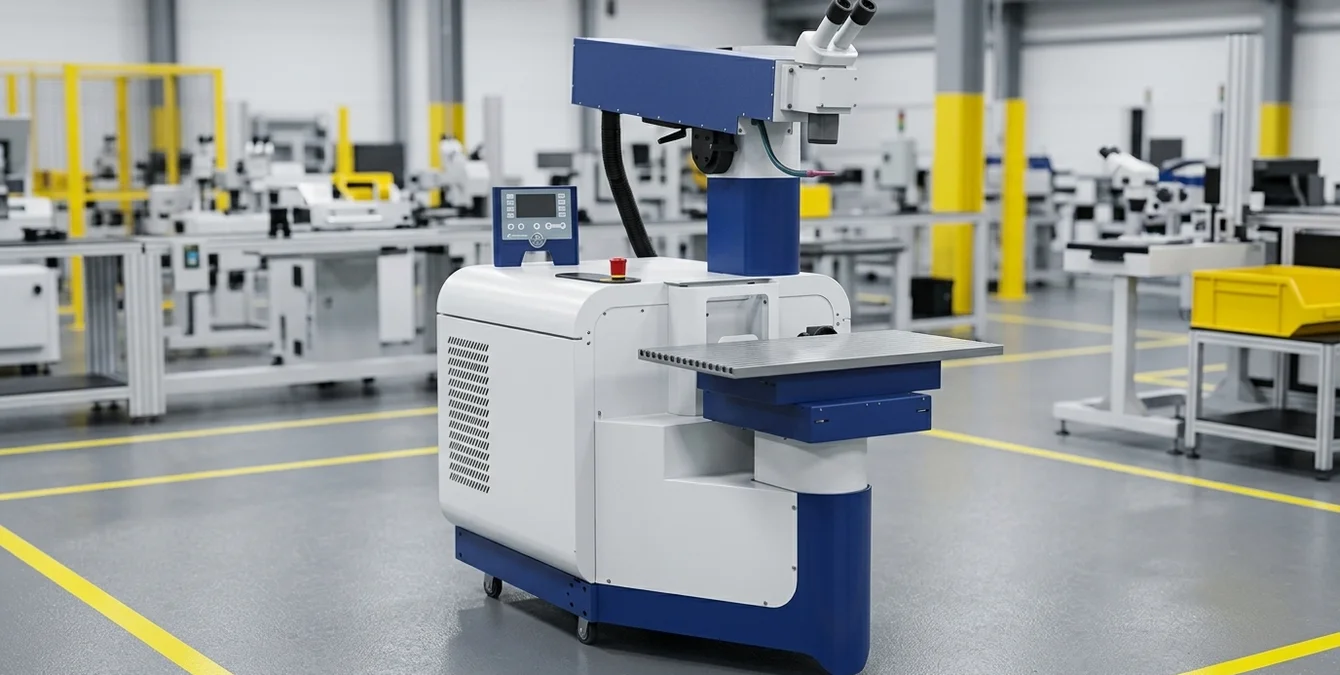
| Industry | Typical use | Common materials |
|---|---|---|
| Automotive | Battery housings, airbag inflators, body panels | HSLA / DP steels, Al 6061 / 7075 |
| Aerospace | Turbine blades, structural assemblies | Ti-6Al-4V, high-strength steels |
| Electronics | Microelectronics, connectors | SS 316L, Ni-Ti alloys |
| Medical devices | Medical-grade components | SS 316L, precious metals |
Can Laser Welding Offer Cost Advantages Over Spot Welding?
In the realm of industrial manufacturing, choosing the right welding technique significantly impacts both production efficiency and cost-effectiveness. Laser welding and spot welding are two prominent methods employed across various industries, each offering unique benefits. When evaluating laser welding versus spot welding, understanding the cost implications is crucial for informed decision-making.
Initial Investment Costs
Laser welding systems, such as Sigma Laser’s Sidanus Light and Sirius Light, require a higher initial investment compared to traditional spot welding machines. This is primarily due to the advanced technology and precision engineering involved, including components like Swivel Optics and Super Pulse Technology (SPT). However, the precision and flexibility offered by laser welding systems can often justify the upfront expenditure, especially in industries where high-quality joints and reduced distortion are paramount, such as the automotive and aerospace sectors.
Laser systems typically operate in the power range of 1 kW to 6 kW, with wavelengths around 1064 nm for Nd:YAG lasers and 1070 nm for fibre lasers. The beam quality, often denoted by M², is typically less than 1.5, allowing for precise focus and minimal heat-affected zones. This precision is crucial for applications requiring tight tolerances, often within ±0.1 mm, as specified in ISO 15614-11:2002 for laser welding qualifications.
Operational and Maintenance Costs
While laser welding systems may have higher initial costs, their operational efficiency can lead to lower running costs over time. The non-contact nature of laser welding reduces wear and tear on equipment, minimizing maintenance requirements. Additionally, technologies like the Motor-driven Turning Device and Swivel Optics contribute to enhanced operational precision, reducing material waste and rework. In contrast, spot welding, though initially cheaper, often incurs higher maintenance costs due to electrode wear and frequent replacements, especially when working with thick sheet metal.
Laser welding offers a high welding speed, typically ranging from 1 to 10 m/min, depending on material thickness and type. This speed, combined with penetration depths of up to 10 mm in single-pass operations, makes it suitable for materials like stainless steel (e.g., AISI 304, 316) and aluminum alloys (e.g., 6061, 7075), as outlined in the ASM Handbook, Volume 6.
Long-term Savings and ROI
Over the long term, laser welding can offer substantial cost savings and an attractive return on investment (ROI). The precision of laser welding reduces the risk of defects, leading to fewer production halts and higher output quality. This is particularly beneficial in high-stakes industries such as aerospace, where adherence to standards like ISO 3834 and DIN EN 15085 is critical. Moreover, the flexibility of laser welding systems allows for quick adaptation to different manufacturing processes, further enhancing production efficiency. By investing in advanced systems like the Simass Base Unit and Swivelling Y Axis, manufacturers can achieve significant savings in material costs and production time.
Laser welding’s ability to produce minimal heat-affected zones (HAZ), typically less than 1 mm, ensures structural integrity and reduces post-weld heat treatment requirements. This capability is crucial in maintaining the mechanical properties of high-strength steels and titanium alloys, commonly used in aerospace applications.
In conclusion, while the initial costs of laser welding systems may be higher, the long-term benefits in terms of operational efficiency, reduced maintenance, and superior product quality make it a cost-effective choice over spot welding in many industrial applications.
Why Choose Laser Welding for Sheet Metal Production?
In today’s manufacturing landscape, laser welding emerges as a highly efficient and precise technique, particularly for sheet metal production. Unlike traditional spot welding, laser welding offers numerous advantages that greatly enhance production outcomes. Sigma Laser’s advanced systems, such as the Sidanus Light and Siega Fibre, showcase the superior capabilities of laser welding in industrial applications.
Precision and Quality
Laser welding is renowned for its exceptional precision, which is critical in applications demanding high-quality outcomes. The focused laser beam allows for intricate welds, essential in the automotive and aerospace industries where precision is paramount. Sigma Laser’s Swivel Optics technology further enhances this precision, ensuring minimal deviation and consistent weld quality across the production line.
Typical laser systems operate with a beam quality M² of less than 1.5, allowing for a small spot size and high power density. This results in a welding precision with tolerances often within ±0.1 mm, suitable for high-specification components. The systems can handle a range of materials, including stainless steels (e.g., 304, 316), aluminum alloys (e.g., 6061, 7075), and titanium, adhering to standards like ISO 15614-11:2002 for welding procedure qualification.
Speed and Efficiency
One of the most compelling benefits of laser welding over spot welding is its speed. The rapid processing time not only boosts production rates but also reduces operational costs. Sigma Laser’s Super Pulse Technology (SPT) accelerates the welding process without compromising quality, making it an ideal choice for high-volume production environments. This efficiency leads to quicker turnaround times, facilitating just-in-time manufacturing strategies.
Laser welding speeds can reach up to 100 mm/s, depending on material thickness and type, with penetration depths typically ranging from 0.1 mm to 10 mm. The heat-affected zone (HAZ) is significantly reduced compared to conventional methods, often less than 1 mm, which is crucial for maintaining the mechanical properties of the base material.
Thermal Distortion and Material Integrity
Minimizing thermal distortion is crucial for preserving the material integrity of sheet metal. Laser welding offers a focused heat input, resulting in less thermal distortion compared to traditional welding techniques. This precision ensures that the structural properties of the metal are maintained, which is vital for applications governed by stringent standards such as ISO 9001 and DIN EN ISO 4063. Sigma Laser’s systems, featuring the Z-Axis Module, provide controlled heat application, ensuring the highest level of material integrity.
The controlled heat input typically results in distortion levels of less than 0.5%, which is particularly beneficial for thin-gauge materials. This is critical in industries where dimensional accuracy is essential, such as electronics and medical device manufacturing.
In conclusion, adopting laser welding in sheet metal production offers unparalleled advantages in terms of precision, speed, and material integrity. By choosing Sigma Laser’s cutting-edge technology, production managers can significantly enhance their manufacturing processes, ensuring superior product quality and operational efficiency.
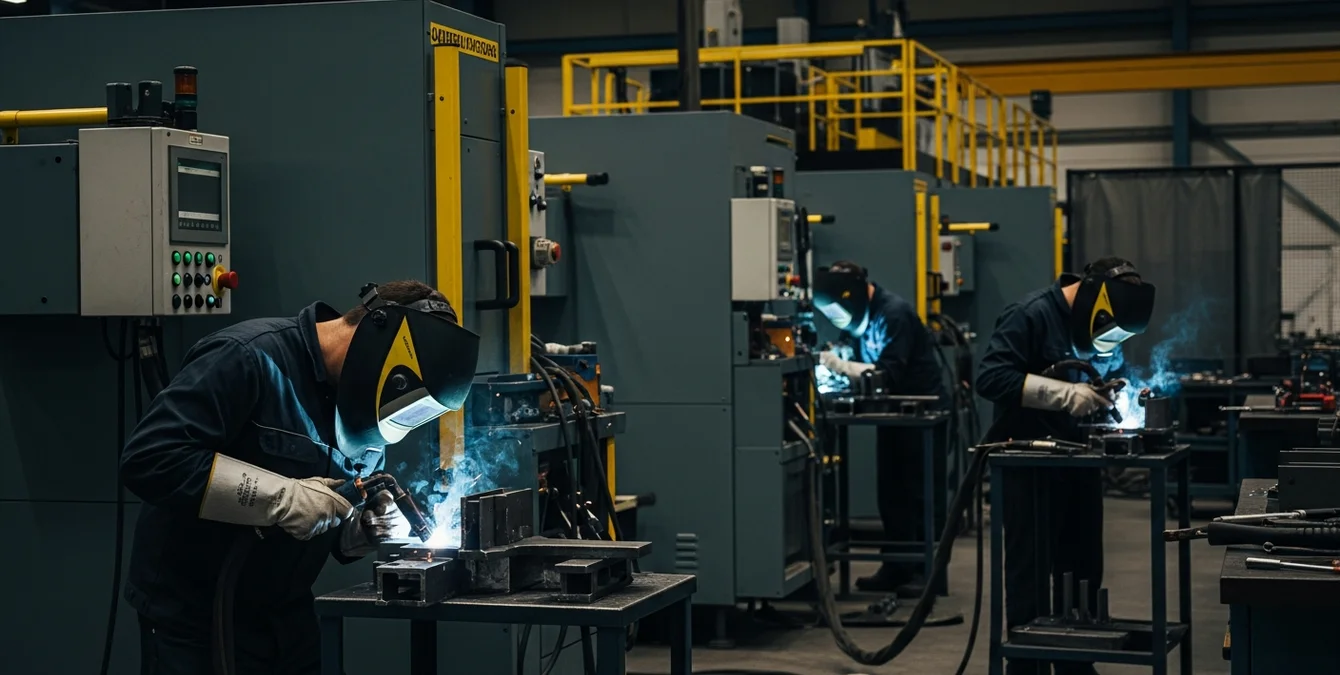
| Parameter | Laser welding | Spot welding |
|---|---|---|
| Power / current | up to ~10 kW* | 1–30 kA |
| Electrode force | — | 1–10 kN |
| Wavelength | 1064 nm (Nd:YAG) / 1070 nm (fibre) | — |
| Beam quality M² | < 1.2–1.5 | — |
| Speed / weld time | 0.5–10 m/min | milliseconds per spot |
| Penetration / thickness | 0.1–10 mm | 0.5–3 mm |
| Heat-affected zone | < 0.5–1 mm | up to 5 mm |
| Tolerance | ±0.1 mm (±0.05 mm fine work) | — |
* Typical general industrial laser-welding values, not Sigma-specific machine ratings.
What are the Challenges and Limitations of Laser and Spot Welding?
In the realm of advanced manufacturing processes, the choice between laser welding and spot welding is crucial for production managers seeking precision and efficiency. Both welding techniques offer distinct advantages and potential limitations that must be considered when engineering high-performance components, especially in industries such as automotive and aerospace.
Technical Limitations of Laser Welding
Laser welding is renowned for its precision and minimal thermal distortion, making it ideal for intricate designs and thin sheet metal applications. However, it presents challenges, particularly in terms of material compatibility. Certain reflective metals like aluminum can hinder laser efficiency, necessitating the use of specialized coatings or surface treatments. Moreover, the initial investment in laser systems, such as Sigma Laser’s Sidanus and Sirius series, can be substantial, though this is often offset by reduced downtime and increased throughput.
Laser welding systems typically operate within a broad, industry-wide power range up to roughly 10 kW, with wavelengths commonly around 1064 nm for Nd:YAG lasers or 1070 nm for fiber lasers. The beam quality, often characterized by an M² value of less than 1.2, is crucial for achieving high precision and deep penetration, up to 10 mm in steel alloys. However, maintaining a consistent focal length, typically between 100 mm and 200 mm, is essential to ensure repeatability and precision, with tolerances often within ±0.1 mm.
Industries often adhere to standards such as ISO 15614-11:2002 for qualification of welding procedures, which ensures that laser welding processes meet stringent quality and safety criteria.
Challenges in Spot Welding
Spot welding, a staple in mass production environments, is highly effective for joining overlapping metal sheets. Yet, its applicability is limited by material thickness and conductivity. For instance, achieving a consistent weld on high-strength steel requires precise control of electric current and pressure. Additionally, spot welding can struggle with non-ferrous metals and creates significant heat-affected zones, potentially compromising material integrity.
Typical parameters for spot welding include current ranges from 3 kA to 30 kA and electrode force from 1 kN to 5 kN, depending on the material and thickness, which can range from 0.5 mm to 3 mm. The heat-affected zone (HAZ) can extend up to 5 mm from the weld center, necessitating careful process control to maintain material properties.
Overcoming Welding Challenges
To mitigate these challenges, manufacturers can adopt a multi-faceted approach. For laser welding, integrating technologies like Sigma Laser’s Super Pulse Technology (SPT) enhances weld quality on challenging materials. Utilizing Swivel Optics can further refine focus and adaptability. For spot welding, implementing advanced control systems and regular equipment calibration can ensure optimal performance and longevity.
- Consider alternative welding techniques for materials with poor laser absorption.
- Leverage Sigma Laser’s innovative features to enhance welding precision.
- Regularly update and maintain welding equipment to meet ISO 9001 and DIN EN standards.
- Conduct regular inspections and adhere to the European Welding Federation (EWF) Guidelines for process optimization and safety compliance.
Understanding the technical constraints and operational requirements of laser welding vs spot welding enables production managers to make informed decisions, optimizing manufacturing processes for efficiency, quality, and cost-effectiveness.
Frequently Asked Questions
What are the main differences between laser welding and spot welding?
Laser welding uses a concentrated light beam to join materials, offering high precision and minimal heat-affected zones. Spot welding, on the other hand, uses electrical current through electrodes to fuse metal surfaces. Laser welding is ideal for thin materials and complex geometries, while spot welding is more suited for thicker metals and high-volume production.
Which industries benefit most from laser welding?
Industries such as automotive, aerospace, electronics, and medical devices benefit significantly from laser welding. The precision and control of laser systems are ideal for intricate components and materials that require minimal distortion and high-quality joints.
What are the advantages of laser welding over spot welding in automotive manufacturing?
Laser welding provides superior joint strength and precision, which is crucial for modern automotive designs. It allows for welding of dissimilar materials and complex geometries, reducing the vehicle weight and improving fuel efficiency. Additionally, laser systems offer higher automation potential, increasing production efficiency.
Can laser welding be used for all types of metals?
Laser welding is versatile and can be used for a variety of metals, including steel, aluminum, titanium, and certain alloys. However, the specific laser type and parameters must be optimized for each material to ensure proper penetration and joint quality.
How does the cost of laser welding compare to spot welding?
While the initial investment for laser welding equipment is higher than for spot welding, the long-term benefits such as reduced material waste, lower energy consumption, and enhanced production speed can lead to cost savings. Additionally, the precision of laser welding reduces the need for post-processing.
How does Sigma Laser technology improve sheet metal welding compared to spot welding?
Sigma Laser systems use 5-axis CNC kinematics and Super Pulse Technology (SPT) to deliver precise, low-distortion seams on complex sheet metal geometries. Unlike spot welding, which is limited to overlapping joints, Sigma Laser enables continuous, high-quality welds—even on large or heavy workpieces—without the need for dismantling or transport.
Sources
- ISO 15614-11:2002 — Specification and qualification of welding procedures for metallic materials – Welding procedure test – Part 11: Electron and laser beam welding
- DIN EN ISO 4063:2011 — Welding and allied processes – Nomenclature of processes and reference numbers
- European Welding Federation (EWF) Guidelines — Guidelines and standards for welding processes in Europe, including laser and spot welding.
- ASM Handbook, Volume 6: Welding, Brazing, and Soldering — Comprehensive resource on welding processes, including laser and spot welding.
- Journal of Manufacturing Processes — Peer-reviewed journal covering research on manufacturing processes, including laser and spot welding techniques.
- Welding Journal — Publication by the American Welding Society, providing insights and research on welding technologies.