
- Do you need a spare-parts inventory?
- The consumables and wear parts worth keeping on site
- How the required part is identified in a failure
- Budgeting for parts without over-stocking
- Wear parts and weld quality
- Frequently Asked Questions
- Do I need to keep expensive spare parts in stock for a Sigma laser welding machine?
- Which wear parts should I keep available for daily operation?
- How do I know which part to replace if something fails?
- How does wear part condition affect weld quality?
- Related Articles
Quick Answer: A Sigma laser welding machine does not require customers to stock expensive spare parts. Only a small number of inexpensive consumable and wear parts are worth keeping on site, and these are replaced as part of normal maintenance. Any capital component is identified for replacement only after diagnosis, so overstocking is unnecessary.
| Approach | Spare Parts Stocked | Inventory Complexity | Replacement Trigger |
|---|---|---|---|
| Sigma Laser | Only inexpensive consumables | Low | Diagnosis-driven (replace only confirmed faulty parts) |
| Traditional Systems | Expensive modules, electronics, consumables | High | Often pre-emptive or based on guesswork |
Sigma Laser’s design philosophy minimizes capital tied up in spares and reduces administrative effort.
Do you need a spare-parts inventory?
For most maintenance managers and service technicians, the question of spare parts inventory is central to ensuring production continuity. With Sigma laser welding machines, the design philosophy is clear: there is no need to stock expensive spare parts. All major components are engineered for long-term reliability and industrial use, minimizing the risk of unexpected failures that would require immediate replacement from on-site inventory.
This approach significantly simplifies inventory management. Unlike systems that demand a shelf of costly modules or proprietary electronics, Sigma’s modular construction and robust engineering mean that capital components are only replaced when a specific fault is identified. The result is lower capital tied up in spares, less administrative effort, and reduced risk of obsolete inventory.
For production engineers, this translates into predictable maintenance planning. There is no hidden expectation to pre-purchase critical assemblies or to maintain a complex parts store. Instead, the focus can remain on scheduled preventive maintenance and the routine replacement of minor wear items. This operational model is especially valuable for companies looking to optimize both cash flow and workshop space.
In summary, the only parts you need to keep on hand are a few inexpensive consumables. Any significant component replacement is handled as needed, based on real diagnostic evidence—not guesswork or over-preparation.
| Part Type | Typical Examples | Replacement Frequency | Notes |
|---|---|---|---|
| Consumables | Protective lenses, nozzles, seals, filters | Routine maintenance | Inexpensive; replaced as part of normal operation |
| Capital components | Major modules, proprietary electronics | Only after diagnosis | Do not stock; replaced only when a specific fault is identified |
Only a small quantity of inexpensive consumables is needed on site; capital components are not pre-stocked.
The consumables and wear parts worth keeping on site
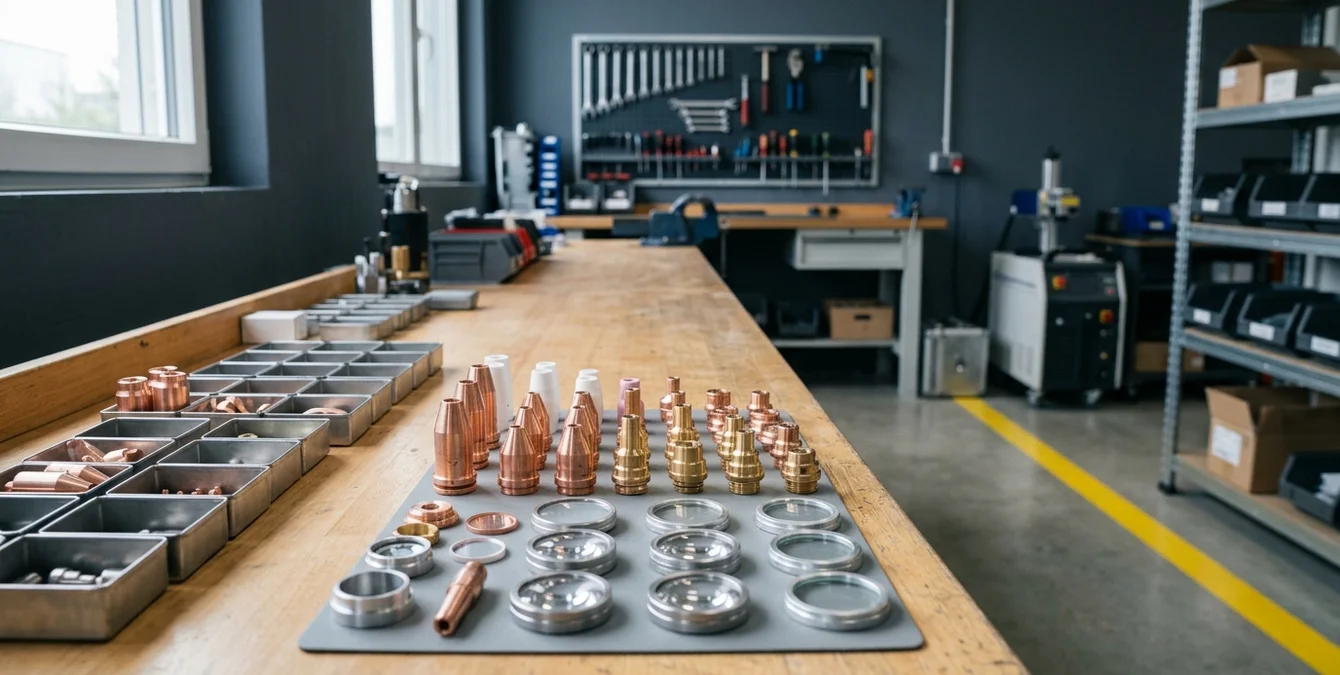
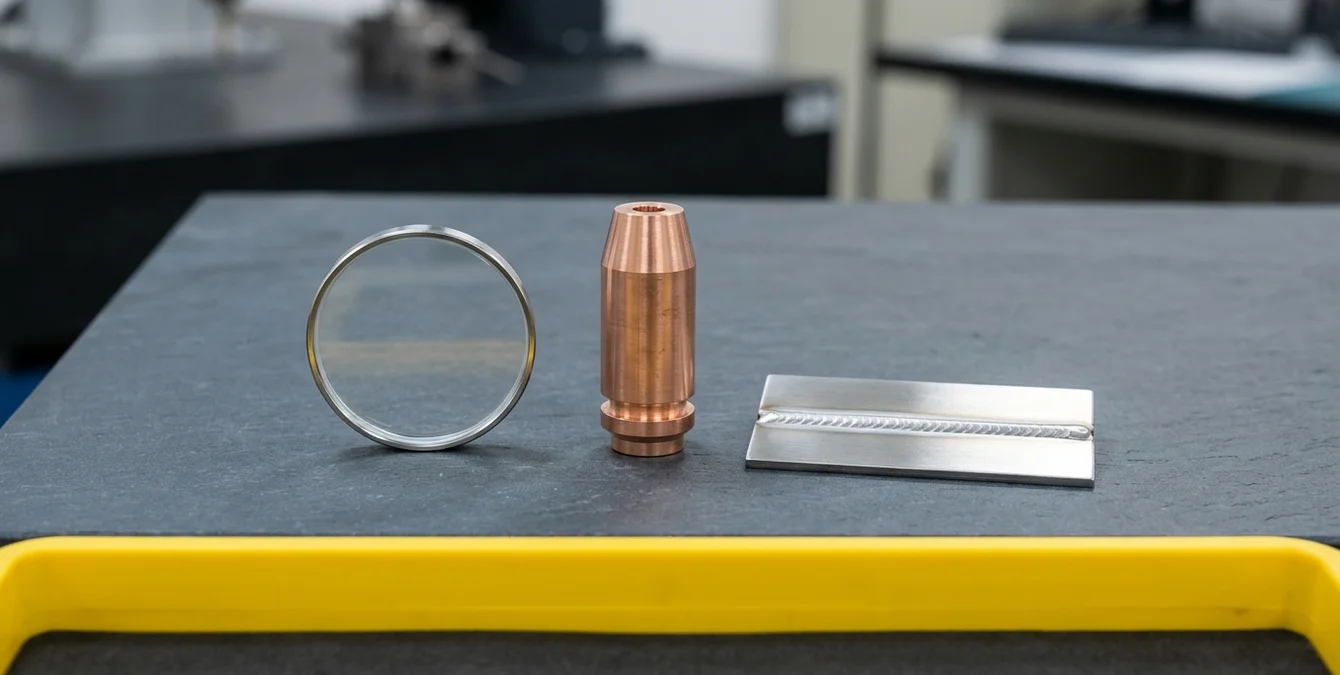
While there is no need for a comprehensive spare parts inventory, there are a few consumable and wear parts that every operator should keep available. These parts are inexpensive and their replacement is considered part of normal operation and routine maintenance, not an emergency repair. Typical examples in the laser welding context—without naming specific Sigma part numbers—include protective lenses, nozzles, and certain types of seals or filters that experience gradual wear during daily use.
The rationale is practical: these items are subject to predictable wear from regular welding operations and can be replaced quickly by in-house staff. Stocking a small quantity ensures that minor maintenance does not cause unnecessary downtime. Importantly, these are not high-value items; their cost is marginal compared to the operational risk of running out during a critical job.
It is also worth noting that the replacement of these consumables is straightforward and does not require advanced technical skills. Most maintenance teams will already have procedures in place for tracking and replenishing such items as part of their regular workshop routines. This keeps the focus on productive welding rather than on parts logistics.
In practice, maintaining a modest supply of these wear parts is sufficient to ensure uninterrupted operation. There is no need for a detailed or costly inventory—just a practical buffer to cover normal usage and occasional unexpected replacements.

How the required part is identified in a failure
When a fault or unexpected issue arises, the first step is always diagnosis—not blanket replacement. Sigma laser welding machines are designed so that the required part is identified through a structured diagnostic process before any service measure is initiated. This approach prevents unnecessary parts usage and ensures that only the genuinely faulty component is addressed.
Remote diagnostics play a key role in this process. By connecting the machine to a customer PC via the integrated USB interface and establishing an internet connection, Sigma technicians can analyze the system remotely. This enables rapid and accurate identification of the affected component, often without the need for an immediate site visit. Supplementing this with photos or videos of the machine’s condition can further clarify mechanical or visible issues.
This methodical approach means that capital components or modules are only replaced when a specific fault is confirmed. The customer does not need to guess which part might fail next or maintain a broad inventory “just in case.” Instead, service actions are targeted and efficient, minimizing both downtime and unnecessary expenditure.
For a detailed look at remote diagnostic workflows, see How Does Remote Diagnostics Work on a Laser Welding Machine?. This process is central to Sigma’s maintenance strategy and a key reason why overstocking parts is unnecessary.
| Part Category | Budgeting Approach | Stocking Recommendation | Cost Impact |
|---|---|---|---|
| Consumables | Running cost; predictable usage | Order in modest quantities | Low, steady expense |
| Capital components | Contingency cost; only after failure | Do not pre-purchase | Rare, only when needed |
Consumables are a manageable expense; capital components are only ordered when a specific failure is identified.
Budgeting for parts without over-stocking
Effective budgeting for spare and wear parts in laser welding operations means distinguishing between consumables and capital components. Consumables—such as protective lenses or nozzles—should be treated as a running cost. Their usage is predictable, and their replacement is part of routine maintenance. These items are inexpensive and can be ordered in modest quantities to avoid both shortages and excess stock.
Capital components, on the other hand, should not be pre-purchased or stocked without a clear diagnostic need. Since Sigma’s approach is diagnosis-driven, these parts are only ordered when a specific failure is identified. This avoids tying up capital in rarely used inventory and reduces the risk of parts becoming obsolete before they are ever needed.
For maintenance managers, this means that the parts budget can be kept lean and focused. Consumables are a steady, manageable expense, while capital parts are a contingency cost triggered by actual failures. There is no published price list or recommended stocking level for major components, so planning should be based on actual usage patterns and the company’s own risk tolerance.
This strategy ensures that maintenance budgets are allocated efficiently, with minimal waste and maximum operational readiness. The result is a streamlined, cost-effective approach to parts management that supports both uptime and financial control.
Wear parts and weld quality
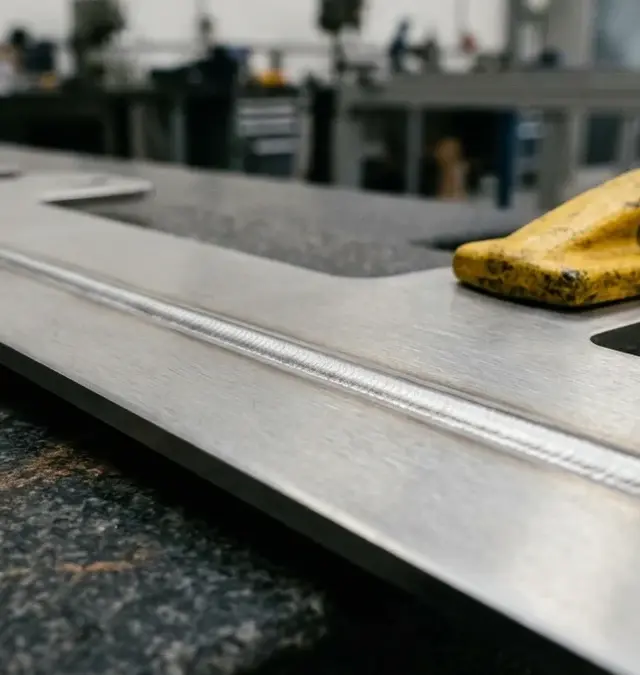
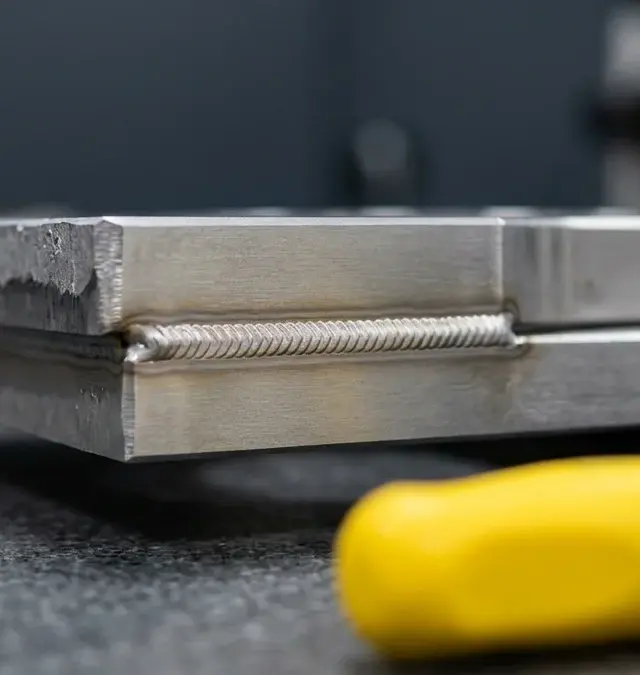
The condition of wear parts has a direct impact on weld quality. In practice, worn consumables such as protective lenses or nozzles will often manifest as a decline in weld appearance or consistency before causing a machine fault. Operators may notice changes in bead shape, spatter, or surface finish—these are early indicators that a consumable needs replacement.
Routine inspection and replacement of these wear parts is therefore not just a maintenance task, but a quality assurance measure. By integrating consumable checks into regular workflows, maintenance teams can ensure that welding performance remains consistent and meets production standards. This proactive approach helps avoid both minor defects and the risk of rework or customer complaints.
It is important to treat wear part replacement as routine maintenance, not as a sign of equipment failure. This mindset supports a culture of preventive care, where small, inexpensive actions protect both machine health and end-product quality. For production engineers and technicians, this means that monitoring wear parts is an integral part of delivering reliable, high-quality welds.
Ultimately, managing wear parts effectively is about sustaining process stability. Well-maintained consumables support optimal welding results and minimize the risk of unexpected interruptions.
Frequently Asked Questions
Do I need to keep expensive spare parts in stock for a Sigma laser welding machine?
No. The system is designed for long-term operation, and there is no need to stock expensive spare parts. Only a small number of inexpensive consumable and wear parts are worth keeping on site.
Which wear parts should I keep available for daily operation?
Only a few inexpensive consumable and wear parts—such as protective lenses or nozzles—should be kept in stock. These are replaced as part of routine maintenance and are not costly.
How do I know which part to replace if something fails?
Required parts are identified through a diagnostic process, often supported by remote diagnostics via USB and customer-provided photos or videos. Only the confirmed faulty component is replaced.
How does wear part condition affect weld quality?
Worn consumables can reduce weld quality before causing a machine fault. Regular inspection and timely replacement of wear parts are essential for maintaining consistent, high-quality welding results.
SYN · Sigma Laser appreciation event
You weld. We say thank you.
For everyone who brings great things together every day – on 17 November 2026 the prize wheel turns for you.
One photo at your laser welding machine, a quick verification – and you’re in. Registration is free and takes two minutes. On 17 November every verified participant gets one spin of the prize wheel.
- 1 spin of the prize wheel
- Gifts in 3 tiers
- Free, no purchase needed
Gifts ship free within DE · AT · CH · EU · verification usually within one business day