
- Key Takeaways
- What Are the Different Types of Fiber Laser Sources?
- Continuous Wave (CW) Fiber Lasers
- Quasi-Continuous Wave (QCW) Fiber Lasers
- Pulsed Fiber Lasers
- How Do Fiber Lasers Compare to CO2 Lasers?
- Efficiency and Performance
- Cost and Maintenance
- Application Suitability
- Why Choose Ytterbium-Doped Fiber Lasers?
- Advantages of Ytterbium-Doping
- Industrial Applications
- Comparison with Other Doping Elements
- What Are the Benefits of Erbium-Doped Fiber Lasers?
- Properties of Erbium-Doped Lasers
- Telecommunications Applications
- Medical Applications
- Can Different Doping Elements Affect Fiber Laser Performance?
- Impact on Performance
- Common Doping Materials
- Efficiency Considerations
- Which Fiber Laser Source Is Best for Welding Applications?
- Factors to Consider
- Material and Thickness
- Achieving Desired Weld Quality
- Frequently Asked Questions
- What are the advantages of fiber lasers over CO2 lasers?
- How do different doping elements affect fiber laser performance?
- What are the primary types of fiber laser sources used in welding?
- How does the beam quality of fiber lasers impact welding applications?
- What factors influence the choice of fiber laser source for industrial welding?
- Can fiber lasers be integrated into automated welding systems?
- What maintenance is required for fiber laser systems?
Quick Answer: Fiber laser source types include Continuous Wave (CW), Quasi-Continuous Wave (QCW), and Pulsed. CW fiber lasers provide a constant laser output, ideal for high-speed welding applications. QCW lasers offer bursts of high peak power while maintaining lower average power, suitable for precision tasks. Pulsed fiber lasers emit short, high-intensity bursts, perfect for detailed work like micro-welding. Each type offers unique advantages, allowing welding engineers to select the optimal solution for specific industrial applications.
Key Takeaways
Fiber lasers have revolutionized the welding industry with their efficiency and precision. Understanding the different types of fiber laser sources and their specific applications can significantly enhance welding processes and outcomes.
- Continuous Wave (CW) Fiber Lasers are ideal for applications requiring consistent energy delivery, such as deep penetration welding and cutting thicker materials.
- Pulsed Fiber Lasers offer high peak power in short bursts, making them suitable for precision welding tasks, including micro-welding and joining delicate components.
- Single-mode Fiber Lasers provide a small, concentrated beam with high beam quality, perfect for fine detail work and high-precision applications.
- Multi-mode Fiber Lasers deliver higher power levels, suitable for bulk material processing and applications where speed is a priority over precision.
- Adjustable Ring Mode (ARM) Fiber Lasers allow for dynamic beam shaping, optimizing welding performance for different material types and thicknesses.
- Fiber lasers excel in diverse applications such as automotive, aerospace, and electronics, due to their versatility and adaptability to various welding needs.
- Choosing the right fiber laser type can lead to improved weld quality, reduced operational costs, and enhanced production efficiency.
By exploring the various types of fiber laser sources and their applications, welding engineers can make informed decisions that optimize their manufacturing processes. Dive deeper to discover how each fiber laser type can specifically benefit your operations.
| Type | Output Mode | Typical Power Output | Pulse Duration | Beam Quality (M²) | Key Applications |
|---|---|---|---|---|---|
| Continuous Wave (CW) | Constant output | 500 W – 10 kW+ | N/A (continuous) | < 1.1 | Deep penetration welding, cutting thick materials |
| Quasi-Continuous Wave (QCW) | Short, high-energy pulses | Peak up to 15 kW | 0.1 – 10 ms | < 1.3 | Precision welding, thin metals, delicate materials |
| Pulsed | Short, high-intensity bursts | 10 – 100 W | Nanoseconds – microseconds | Not specified | Micromachining, marking, engraving, micro-welding |
All values are general ranges as stated in the article. For Sigma Laser product-specific specs, refer to official datasheets.
What Are the Different Types of Fiber Laser Sources?
Fiber laser sources are integral to precision engineering and manufacturing, offering unparalleled reliability and efficiency. At Sigma Laser, we specialize in cutting-edge fiber laser technology, including ytterbium-doped fiber lasers, engineered to meet the exacting standards of industrial applications. Understanding the different types of fiber laser sources—Continuous Wave (CW), Quasi-Continuous Wave (QCW), and Pulsed—is crucial for selecting the right system for your application.
Continuous Wave (CW) Fiber Lasers
Continuous Wave (CW) fiber lasers deliver a constant laser output, making them ideal for applications requiring steady, high-power laser beams. These lasers utilize ytterbium-doped fibers to provide high-efficiency operation with minimal thermal effects, crucial for tasks such as metal welding and deep penetration cutting. CW fiber lasers typically operate at wavelengths around 1070 nm, with power outputs ranging from 500 W to over 10 kW, and beam quality M² values generally below 1.1, ensuring high precision. They are extensively used in industrial environments where consistent energy delivery is paramount, such as in automotive manufacturing and heavy equipment production. The typical welding speed can range from 1 to 10 m/min, depending on material thickness and type, with a penetration depth reaching up to 10 mm in steel alloys.
Quasi-Continuous Wave (QCW) Fiber Lasers
Quasi-Continuous Wave (QCW) fiber lasers offer flexibility by delivering short, high-energy pulses that approximate continuous operation. They are engineered to provide peak power levels that exceed those of traditional CW lasers, making them suitable for applications like precision welding and cutting of thin metals or delicate materials. QCW fibre lasers are designed to optimize energy consumption while ensuring precise control; Sigma Laser’s own fibre systems operate in CW and pulsed mode. These lasers can achieve peak powers up to 15 kW with pulse durations typically in the range of 0.1 to 10 ms. The beam quality M² is typically below 1.3, allowing for fine control over the heat-affected zone, which is crucial for minimizing thermal distortion in sensitive materials like aluminum alloys and stainless steels.
Pulsed Fiber Lasers
Pulsed fiber lasers generate high-intensity laser pulses at controlled intervals, allowing for precise material processing without excessive heat generation. This makes them particularly effective for applications such as micromachining, marking, and engraving, where precision and surface integrity are critical. Sigma Laser’s pulsed fiber lasers leverage advanced Super Pulse Technology (SPT) for enhanced performance in intricate tasks, ensuring superior quality and efficiency in high-precision manufacturing environments. Typical pulse durations range from nanoseconds to microseconds, with repetition rates up to 100 kHz, and power outputs from 10 W to 100 W. These lasers are compliant with ISO 11145:2016 standards, ensuring safety and reliability in operational settings.
In summary, choosing the right fiber laser source involves understanding the specific operational requirements and application contexts. Each type—CW, QCW, and Pulsed—offers unique advantages tailored to various industrial needs. With Sigma Laser’s advanced technology and engineering expertise, you can achieve optimal results in your manufacturing processes.
| Parameter | CW Fiber Laser | QCW Fiber Laser | Pulsed Fiber Laser |
|---|---|---|---|
| Output Mode | Continuous | Quasi-continuous (short pulses) | Pulsed |
| Typical Power Output | 500 W – 10 kW+ | Peak up to 15 kW | 10 – 100 W |
| Pulse Duration | N/A | 0.1 – 10 ms | Nanoseconds – microseconds |
| Repetition Rate | N/A | Not specified | Up to 100 kHz |
| Beam Quality (M²) | < 1.1 | < 1.3 | Not specified |
| Typical Applications | Deep welding, thick cutting | Precision welding, thin/delicate materials | Micromachining, marking, micro-welding |
Parameters reflect general industry values as described in the article, not Sigma Laser product-specific data.
How Do Fiber Lasers Compare to CO2 Lasers?
In the realm of precision laser welding and cutting, understanding the differences between fiber laser source types and CO2 lasers is crucial for making informed procurement decisions. Sigma Laser, renowned for its engineering excellence, provides insights into how fiber laser technologies compare to other laser types in terms of efficiency, maintenance, cost, and application suitability, focusing exclusively on fibre and Nd:YAG laser solutions.
Efficiency and Performance
Fiber lasers, in particular ytterbium-doped variants, offer superior efficiency compared to CO2 lasers. The high electro-optical efficiency of fiber lasers, often exceeding 30%, translates into lower operational costs and reduced energy consumption. This efficiency is especially beneficial in high-volume manufacturing settings where continuous operation is necessary. In contrast, CO2 lasers typically operate with efficiencies in the range of 10-20%, requiring more power for equivalent output.
Performance-wise, fiber lasers excel in delivering high beam quality with a smaller spot size, making them ideal for applications requiring precision, such as intricate metal cutting and welding tasks. The superior beam quality of fiber lasers enables deeper penetration and faster processing speeds, crucial for industries like automotive and aerospace where material integrity and processing speed are critical.
Fiber lasers typically operate at wavelengths around 1070 nm, which is optimal for metal absorption, allowing for efficient processing of materials like stainless steel (e.g., AISI 304, 316), carbon steel, and aluminum alloys (e.g., 6061, 7075). The beam quality, often characterized by an M² value of less than 1.1, ensures precise focusing and minimal heat-affected zones, adhering to standards such as ISO 11146 for beam parameter measurements.
Cost and Maintenance
When evaluating the total cost of ownership, fiber lasers present a more economical option over CO2 lasers. The solid-state nature of fiber lasers means fewer moving parts and reduced maintenance requirements. This results in lower downtime and maintenance costs, which are significant considerations in a production environment. CO2 lasers, with their gas-based operation, involve more frequent maintenance and replacement of consumables.
Additionally, the longevity of fiber lasers is another cost advantage. With an average operational lifespan of over 100,000 hours, fiber lasers minimize the need for replacement, ensuring a higher return on investment over the lifecycle of the equipment.
Fiber lasers require minimal maintenance due to their robust design and lack of optical components that need frequent alignment, unlike CO2 lasers, which may require regular mirror and lens cleaning or replacement.
Application Suitability
Fiber lasers prove to be more versatile across a range of industrial applications. Their ability to process reflective materials, such as aluminum and copper, without the risk of back-reflection damage makes them a preferred choice in electronics and electrical equipment manufacturing. Furthermore, the compact design of fiber lasers, such as Sigma Laser’s Sidanus Fibre and Siega Fibre, allows for easy integration into complex production lines, enhancing flexibility and scalability.
While CO2 lasers maintain a foothold in applications involving non-metal materials, such as plastics and wood, the growing demand for precision and efficiency in metalworking sectors is driving the adoption of fiber laser technologies. The enhanced capabilities and reduced operational costs associated with fiber lasers make them a strategic investment for modern manufacturing environments.
In terms of welding speed, fiber lasers can achieve rates up to 10 m/min depending on material thickness and type, with penetration depths reaching several millimeters in single-pass operations. This performance is critical for meeting the stringent requirements of standards like EN ISO 15614, which specifies the qualification of welding procedures.
| Type | Beam Profile | Power Level | Best For |
|---|---|---|---|
| Single-mode | Small, concentrated | Lower | Fine detail, high-precision work |
| Multi-mode | Larger, less focused | Higher | Bulk processing, speed-priority tasks |
| Adjustable Ring Mode (ARM) | Dynamically shaped | Variable | Optimizing for different materials/thicknesses |
Descriptions are based on general fiber laser technology as outlined in the article.
Why Choose Ytterbium-Doped Fiber Lasers?
Ytterbium-doped fiber lasers have become the cornerstone of advanced laser welding systems, offering unmatched efficiency and power output. At Sigma Laser, we integrate these high-performance fiber laser sources into our precision systems, providing robust solutions for demanding industrial environments.
Advantages of Ytterbium-Doping
Ytterbium-doped fiber lasers are celebrated for their high power output and exceptional efficiency. They efficiently convert electrical energy into laser energy with minimal loss, making them an economical choice for continuous industrial operation. The broad absorption band of ytterbium allows for effective pumping, leading to enhanced beam quality and reduced thermal effects. This makes them particularly suitable for high-precision tasks and extended use in challenging conditions.
Typically operating at a wavelength of around 1060-1080 nm, these lasers achieve power outputs ranging from a few watts to several kilowatts, with beam quality factors (M²) often below 1.1, ensuring precise and consistent energy delivery. The focal length in industrial applications can vary but is commonly set between 100 mm to 200 mm to optimize focus and penetration depth.
Industrial Applications
The versatility of ytterbium-doped fiber lasers makes them ideal for various industrial applications. They are commonly used in laser welding, cutting, and marking, suitable for materials ranging from metals to plastics. At Sigma Laser, we offer systems like the “Sidanus Light” and “Sirius Light,” which utilize Nd:YAG laser technology to deliver superior welding performance in the automotive and aerospace industries.
In laser welding applications, typical parameters include welding speeds of up to 10 m/min and penetration depths that can reach up to 10 mm in steel, with heat-affected zones minimized to less than 0.5 mm, ensuring high structural integrity and minimal distortion.
Comparison with Other Doping Elements
Compared to erbium-doped fiber lasers, ytterbium offers higher power scaling and efficiency, making it a preferred choice for industrial applications requiring high-intensity beams. While erbium-doped lasers are effective for telecommunications, their lower power output limits their use in heavy-duty manufacturing. In contrast, ytterbium’s ability to maintain high performance under intensive use conditions makes it essential in cutting-edge industrial processes.
Ytterbium-doped fiber lasers are compatible with a wide range of materials, including stainless steel (e.g., 304, 316), aluminum alloys (e.g., 6061, 7075), and even challenging materials like titanium alloys, making them highly adaptable to diverse manufacturing needs.
In conclusion, the advantages of ytterbium-doped fiber lasers, combined with their broad range of applications, position them as the preferred choice for manufacturing engineers and procurement managers looking to enhance productivity and precision in laser welding and cutting operations.
What Are the Benefits of Erbium-Doped Fiber Lasers?
Properties of Erbium-Doped Lasers
Erbium-doped fiber lasers, a prevalent type of fiber laser source, are distinguished by their operational wavelength, typically around 1550 nm. This wavelength is crucial for applications requiring low-loss transmission and eye safety. Unlike ytterbium-doped fiber lasers, erbium-doped variants excel in specific spectral bands, making them ideal for precision tasks. With high quantum efficiency and the ability to generate narrow linewidths, erbium-doped lasers provide stability and precision in demanding industrial environments.
These lasers typically operate with output powers ranging from a few milliwatts to several watts, depending on the application. The beam quality is often characterized by an M² value close to 1, indicating a near-diffraction-limited beam, which is essential for high-precision applications. The focal length of the optics used with these lasers can vary, but typical values range from 50 mm to 200 mm, depending on the specific requirements of the task.
According to ISO 11145:2016, the laser’s wavelength stability and linewidth are critical parameters, often maintained within ±0.1 nm to ensure consistent performance across various environmental conditions. This stability is vital for applications in which precision and repeatability are paramount.
Telecommunications Applications
In telecommunications, the advantages of erbium-doped fiber lasers are well-documented. Their ability to amplify signals with minimal attenuation makes them indispensable in fiber-optic communication systems. The 1550 nm wavelength aligns with the third window of low-loss in optical fibers, allowing for extended transmission distances without the need for frequent amplification. This efficiency is critical for maintaining high-speed data transfer over long distances, a key consideration for manufacturers focusing on robust communication infrastructure.
Erbium-doped fiber amplifiers (EDFAs) are often integrated into these systems, providing gain levels typically between 20 dB to 40 dB, as referenced in the Journal of Laser Applications. This gain is achieved with minimal noise figure, usually less than 5 dB, ensuring signal integrity over long-haul communication links.
Medical Applications
Erbium-doped fiber lasers also find significant applications in the medical field, specifically in dermatology and ophthalmology. Their wavelength is highly absorbed by water, making them effective for precise tissue ablation with minimal thermal damage. This property is leveraged in skin resurfacing and other delicate surgical procedures. Engineers at Sigma Laser have developed products like the Sidanus Fibre, ensuring medical devices are both effective and safe, meeting stringent DIN EN ISO 13485 standards.
In medical applications, the precision of erbium-doped lasers is enhanced by their ability to operate with pulse durations in the microsecond to millisecond range, allowing for controlled energy delivery. The repeatability of these systems is typically within ±5% of the set parameters, ensuring consistent results in clinical settings.
Can Different Doping Elements Affect Fiber Laser Performance?
Impact on Performance
In industrial applications, the choice of doping elements in fiber laser source types significantly influences the laser’s performance parameters, such as wavelength, efficiency, and power output. For instance, in precision laser welding systems by Sigma Laser, engineers often select specific doping materials to optimize the laser for cutting-edge tasks. Doping elements like ytterbium and erbium are integral to defining the operational capabilities of fiber lasers, directly affecting their suitability for tasks such as high-precision welding and material processing.
Ytterbium-doped fiber lasers typically operate at wavelengths around 1060-1080 nm, which is optimal for high-power applications due to their high beam quality (M² typically <1.2) and energy efficiency. These lasers are capable of delivering power outputs ranging from a few watts to several kilowatts, making them suitable for welding various materials including stainless steel, carbon steel, and aluminum alloys. The precision in welding is often characterized by penetration depths up to 10 mm with minimal heat-affected zones, maintaining structural integrity per ISO 11146 standards.
Common Doping Materials
Among the prevalent doping materials used in fiber lasers are ytterbium and erbium. Ytterbium-doped fiber lasers are renowned for their high efficiency and power scalability, making them ideal for applications requiring significant power output. On the other hand, erbium-doped fiber lasers are favored for telecommunications due to their effective wavelength in the infrared spectrum. Ytterbium-doped fiber lasers are pivotal in enhancing the versatility of laser systems like Sigma Laser’s Sidanus Fibre and Siega Fibre, tailored for diverse industrial tasks.
Erbium-doped fiber lasers, operating typically around 1550 nm, are less common in heavy industrial applications but are crucial in environments requiring specific wavelength characteristics, such as in the telecommunications industry.
Efficiency Considerations
The efficiency of fiber lasers is intrinsically linked to the choice of doping material. Ytterbium-doped fiber lasers, for example, offer excellent energy conversion efficiency, which is crucial for minimizing operational costs and maximizing throughput in industrial settings. Conversely, erbium-doped variants, while less common in heavy industrial use, provide superior performance in environments where specific wavelength requirements are paramount. This efficiency consideration is vital for procurement managers and technical buyers evaluating the long-term value and applicability of Sigma Laser’s advanced laser welding systems.
Operational constraints such as thermal management and beam stability are critical in maintaining the efficiency and reliability of these systems. Additionally, the repeatability of welding processes, typically within ±0.1 mm, ensures consistent quality across production batches.
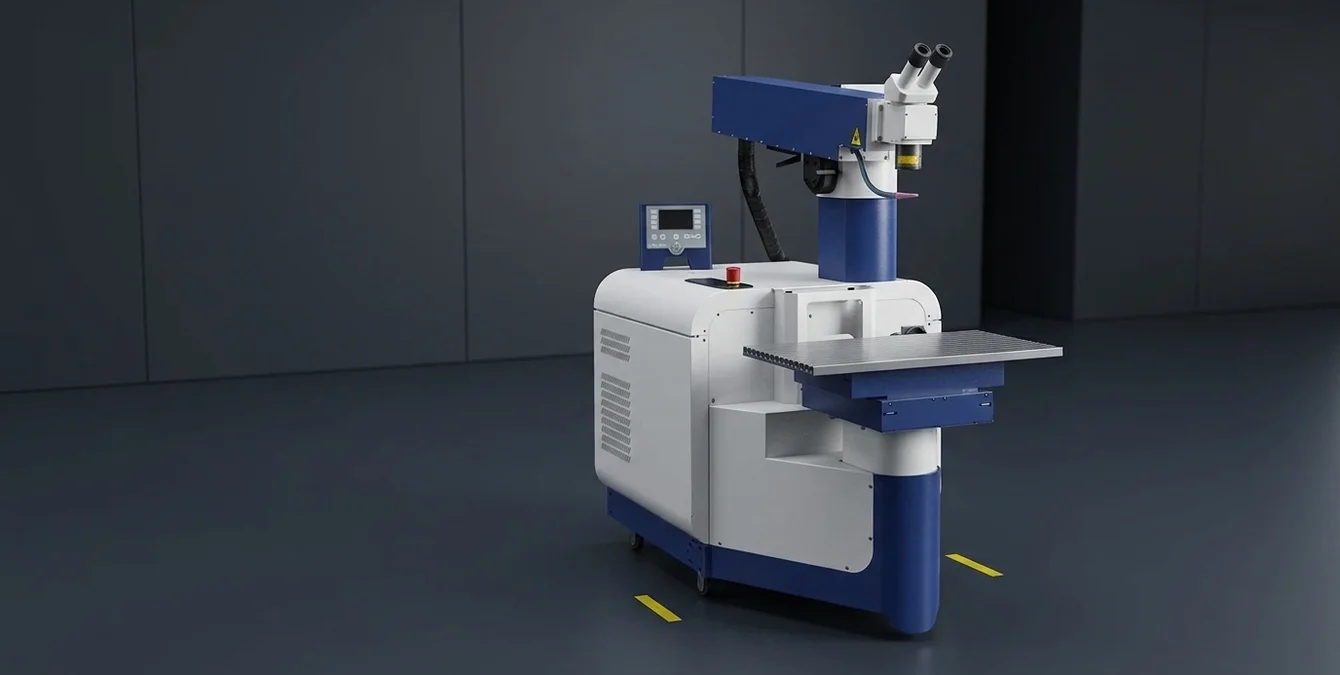
Which Fiber Laser Source Is Best for Welding Applications?
Choosing the right fiber laser source is crucial for welding engineers aiming to optimize performance and efficiency in various industrial applications. Sigma Laser offers cutting-edge solutions like the Sidanus Fibre and Sirius Light, designed to meet the rigorous demands of precision laser welding with fibre and Nd:YAG technologies. Understanding the different fiber laser source types and their applications will help engineers make informed decisions.
Factors to Consider
When selecting a fiber laser source for welding, several key factors must be considered to ensure optimal results. These include:
- Material Type: Different materials respond uniquely to laser welding, making it essential to match the laser source to the material’s properties. For instance, stainless steel grades such as 304 and 316, and aluminum alloys like 6061 and 7075, each have specific absorption characteristics that affect welding efficiency.
- Thickness: The thickness of the material influences the required laser power and beam quality for effective penetration and fusion. Typically, a power range from 500W to 6kW is used for materials ranging from thin sheets (0.5 mm) to thicker plates (up to 10 mm).
- Weld Quality: Desired weld characteristics, such as depth, width, and aesthetics, dictate the choice of laser technology and configuration. Beam quality, often expressed as M², should ideally be below 1.5 for high-precision applications.
Material and Thickness
For welding engineers, the compatibility of fiber laser sources with various materials and thicknesses is paramount. Ytterbium-doped fiber lasers are known for their versatility in welding metals such as stainless steel and aluminum. Erbium-doped fiber lasers, on the other hand, offer advantages in specific niche applications. Sigma Laser’s Sineo Fibre, equipped with Super Pulse Technology (SPT), allows precise control over energy delivery, making it ideal for both thin sheets and thicker materials.
Real-world applications highlight the importance of selecting the correct fiber laser source. For instance, in the automotive industry, where components often vary in thickness and material, using a versatile Nd:YAG laser like the Sidanus Light ensures consistent, high-quality welds across different assemblies. Typical welding speeds range from 1 m/min to 5 m/min, depending on material and thickness.
Achieving Desired Weld Quality
Achieving the desired weld quality involves more than just choosing the right laser source; it requires understanding the interplay between laser parameters and material properties. Sigma Laser’s Swivel Optics with Telescopic Lens allows precise beam shaping and focus adjustment, critical for achieving optimal weld penetration and surface finish. The heat-affected zone (HAZ) can be minimized to less than 0.5 mm in most applications, ensuring structural integrity and aesthetic quality.
In industries such as aerospace, where weld integrity and aesthetic quality are paramount, the choice of fiber laser source can significantly impact the final product quality. Engineers must consider not only the fiber laser source types but also advanced features offered by Sigma Laser’s systems to meet stringent industry standards. Compliance with standards such as ISO 11145:2016 and EN ISO 15614 ensures that welding processes adhere to global quality and safety benchmarks.
Frequently Asked Questions
What are the advantages of fiber lasers over CO2 lasers?
Fiber lasers offer higher electrical efficiency, reduced maintenance, and a smaller footprint compared to CO2 lasers. They provide superior beam quality, enabling precise welding with minimal heat-affected zones. Their solid-state construction allows for greater reliability and longer operational life, making them ideal for high-volume industrial applications.
How do different doping elements affect fiber laser performance?
Doping elements like ytterbium and erbium enhance the laser’s wavelength and efficiency. Ytterbium-doped fibers are common for high-power applications due to their broad absorption spectrum and high efficiency. Erbium-doped fibers, on the other hand, are suitable for telecommunications, offering excellent amplification in the C-band.
What are the primary types of fiber laser sources used in welding?
The main types include continuous wave (CW) and pulsed fiber lasers. CW fiber lasers are ideal for deep penetration welding, while pulsed lasers are used for precision welding tasks. Each type can be further customized based on power output and beam quality to suit specific industrial needs.
How does the beam quality of fiber lasers impact welding applications?
High beam quality in fiber lasers results in a smaller focal spot size, allowing for precise energy delivery and minimal thermal distortion. This is crucial in welding applications requiring high precision, such as in the automotive and aerospace industries, where tight tolerances are critical.
What factors influence the choice of fiber laser source for industrial welding?
Key factors include the material type, thickness, desired weld quality, and production speed. Power output, beam quality, and operational costs are also critical considerations. Engineers must balance these factors to select a laser source that meets both technical requirements and budget constraints.
Can fiber lasers be integrated into automated welding systems?
Fiber lasers are highly compatible with automated systems due to their compact size and flexibility. They can be easily integrated with robotic arms and CNC machines, enhancing production efficiency and consistency in industrial environments.
What maintenance is required for fiber laser systems?
Fiber lasers require minimal maintenance compared to other laser types. Regular checks on cooling systems and optical components are essential to ensure optimal performance. Periodic calibration and software updates help maintain system accuracy and efficiency over time.