
- Key Takeaways
- What Are the Best Practices for Laser Welding Tool Steel?
- Preparation and Setup
- Optimizing Laser Parameters
- Preventing Defects
- How Does Laser Welding Affect the Properties of Tool Steel?
- Changes in Mechanical Properties
- Impact on Microstructure
- Managing Distortion
- Why Choose Laser Welding Over Traditional Methods for Tool Steel?
- Precision and Efficiency
- Quality and Consistency
- Application Scenarios
- Can Laser Welding Prevent Cracks in Tool Steel?
- Understanding Thermal Stress
- Preheating and Post-Weld Treatment
- Controlling Cooling Rates
- Case Studies: Laser Welding in Tool and Die Industries
- Automotive Industry Applications
- Aerospace Industry Successes
- Challenges and Solutions
- Frequently Asked Questions
- What are the best practices for laser welding tool steel?
- How does laser welding affect the properties of tool steel?
- What types of tool steel are most suitable for laser welding?
- What are common challenges in laser welding tool steel?
- Can laser welding be used for repairing tool steel components?
- What are the advantages of laser welding over traditional welding methods for tool steel?
- How can laser welding improve the efficiency of tool steel manufacturing?
- Sources
Quick Answer: Tool steel laser welding requires precise control to prevent cracks and manage heat effectively. To avoid cracking, preheat the tool steel to a temperature between 300-600°F, depending on the alloy. Maintain a consistent, moderate welding speed to control heat input and reduce thermal stress. Use a low-carbon filler material that matches the base metal’s properties to ensure compatibility. Post-weld heat treatment is crucial to relieve residual stresses and restore the material’s hardness and toughness. Implementing these strategies will enhance weld quality and longevity.
Key Takeaways
Laser welding has emerged as a pivotal technique in the mold industry, particularly for tool steel applications. Understanding the nuances of laser welding can significantly enhance the quality and efficiency of manufacturing processes.
- Laser welding offers precise control over heat input, minimizing thermal distortion in tool steel components.
- The technique provides superior weld quality with minimal post-processing, reducing overall production time.
- Laser welding enables joining of complex geometries and intricate mold features that are challenging with traditional methods.
- Tool steel’s high thermal conductivity is effectively managed through laser welding, enhancing joint strength and durability.
- The process supports automation, leading to consistent weld results and improved throughput in mold manufacturing.
- Laser welding reduces material waste and consumable costs compared to conventional welding techniques.
- Adopting laser welding for tool steel can extend mold life by producing high-integrity joints that withstand operational stresses.
These insights into laser welding techniques and their advantages can inform strategic decisions in mold manufacturing. Dive deeper into the article to explore specific applications and case studies that highlight the transformative potential of laser welding in the mold industry.
What Are the Best Practices for Laser Welding Tool Steel?
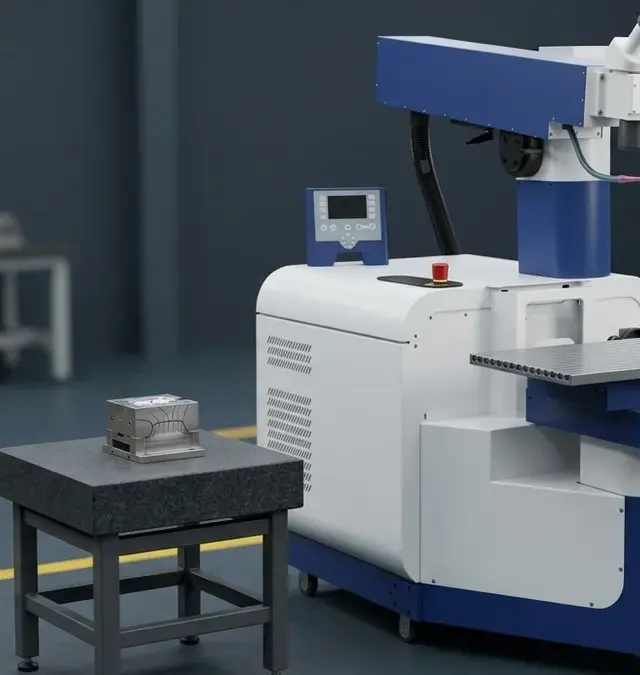
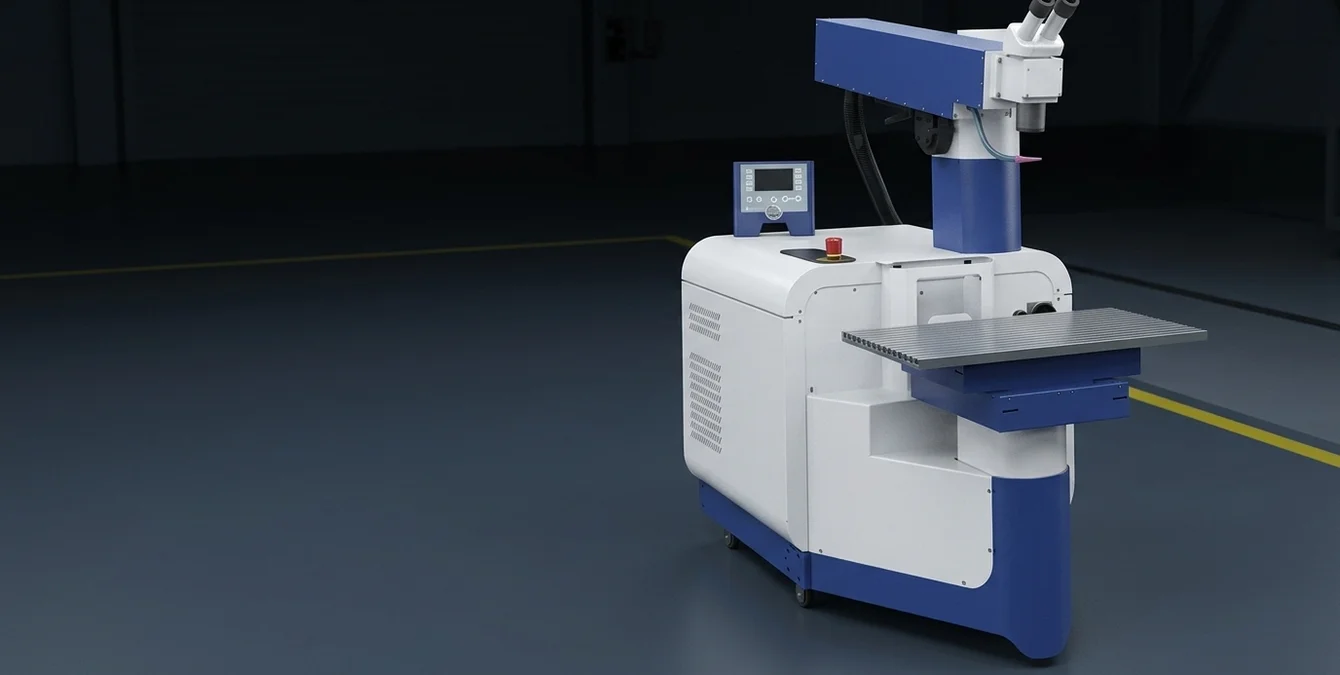
In the realm of precision manufacturing, tool steel laser welding is a critical process, particularly for crafting high-durability components. Tool steel, known for its toughness and wear resistance, requires meticulous handling to ensure robust and defect-free welds. At Sigma Laser, our advanced systems, such as the Sidanus Fibre and Sineo Light, offer unparalleled precision in laser welding applications. This section outlines the best practices for laser welding tool steel, focusing on preparation, equipment settings, and defect prevention.
| Tool Steel Grade | Key Properties | Laser Welding Considerations |
|---|---|---|
| AISI D2 | High hardness, wear resistance | Requires preheat, responds well to rapid cooling |
| AISI H13 | Thermal fatigue resistance, toughness | Good for laser welding, fine-grained martensite achievable |
Selection of tool steel grade affects preheat requirements and weldability; both D2 and H13 are widely used in mold and tool repair.
Preparation and Setup
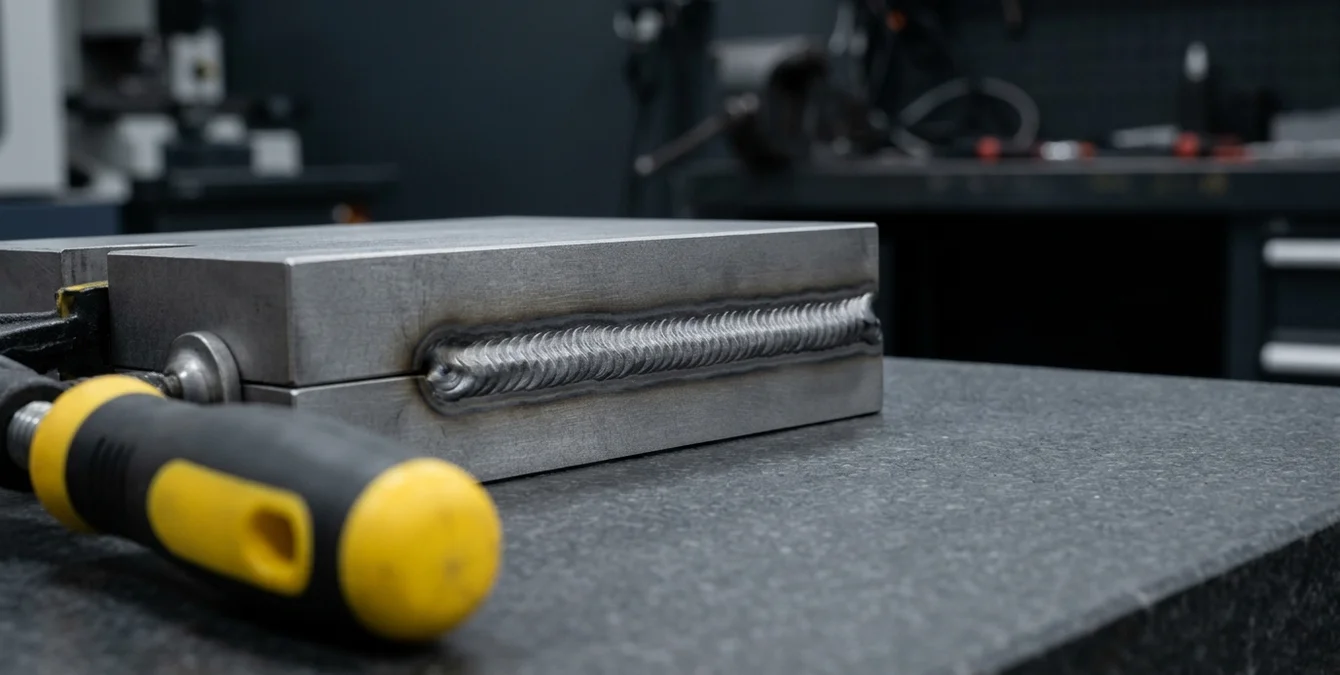
A successful laser welding operation starts with proper preparation and setup. Tool steel surfaces must be meticulously cleaned to remove contaminants like oils, oxides, and debris that could affect weld quality. Using industrial-grade cleaning solvents and abrasive methods can help achieve a pristine surface. The workpiece should be securely clamped to prevent movement during welding, ensuring consistent results.
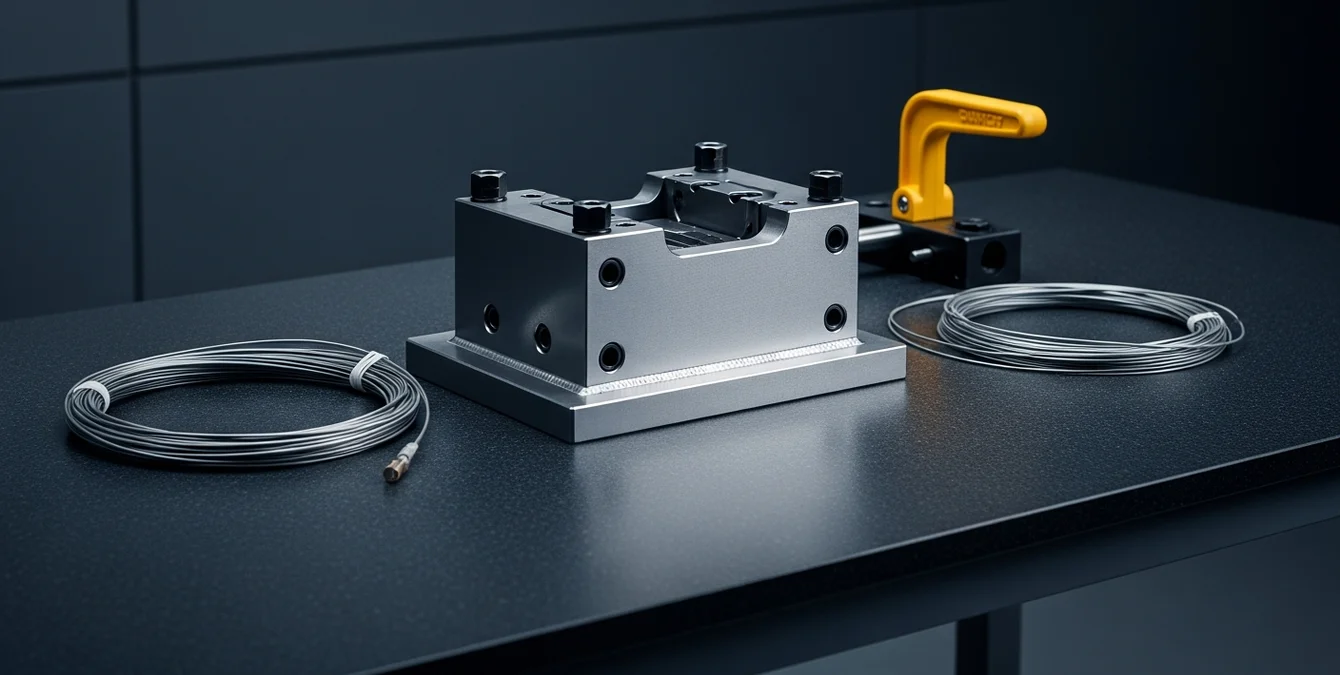
The selection of appropriate tool steel welding wire is crucial. This wire should match the composition of the base material to enhance compatibility and strength. Our Sigomatic Pro system facilitates seamless integration with different wire types, optimizing the welding process for varied tool steel grades.
It is also essential to consider the thermal conductivity and expansion coefficients of the tool steel being welded. Grades like AISI D2 and H13 are commonly used in industrial applications due to their high hardness and resistance to thermal fatigue, which are critical for maintaining weld integrity.
Optimizing Laser Parameters
Controlling laser parameters is vital for tool steel laser welding. The key parameters include laser power, welding speed, and focal position. For instance, our Super Pulse Technology (SPT) allows for precise power modulation, providing the flexibility needed to handle different tool steel thicknesses and compositions.
- Laser Power: Adjust the power to ensure sufficient penetration without overheating. Excessive power can lead to defects like cracking. Typically, laser power for welding tool steels ranges from 200 W to 1 kW, depending on the material thickness and desired penetration depth.
- Welding Speed: Maintain a balanced speed to prevent undercutting or excessive heat input, which can compromise the weld’s integrity. Typical welding speeds range from 0.5 to 2.5 m/min.
- Focus: Ensure the laser beam is precisely focused on the welding joint for maximum efficiency. Our Swivel Optics with Telescopic Lens provide the necessary adjustments for optimal focus, ensuring a minimal heat-affected zone (HAZ), typically around 0.1 to 0.5 mm.
Preventing Defects
Defect prevention is essential for maintaining the quality of tool steel components. Common issues such as porosity, cracking, and incomplete fusion can be minimized through meticulous control of welding conditions. The integration of Swivel Optics and a Motor-driven Turning Device in our systems offers enhanced control over the welding environment, reducing the risk of defects.
Moreover, adherence to standards such as DIN EN ISO 4063 ensures that the welding process meets the stringent requirements of the industry. By following these best practices, manufacturing engineers can achieve superior results in tool steel laser welding, paving the way for enhanced component performance and longevity.
Additionally, compliance with ISO 15614-11:2002 for welding procedure qualification provides a framework for ensuring that the welding process parameters are within acceptable limits, thereby minimizing the risk of defects and ensuring consistent weld quality ISO 15614-11:2002.
| Parameter | Typical Range / Value |
|---|---|
| Preheat Temperature | 300–600°F (depending on alloy) |
| Laser Power | 200 W – 1 kW (typical for tool steel welding) |
| Welding Speed | 0.5 – 2.5 m/min (typical) |
| Focus Spot Size | Typically 0.1 – 0.5 mm (HAZ width) |
| Filler Material | Low-carbon, matched to base metal |
| Post-Weld Heat Treatment | Required to relieve residual stresses |
All values are general industry ranges for tool steel laser welding; actual settings depend on alloy, thickness, and application.
How Does Laser Welding Affect the Properties of Tool Steel?
In the precision-driven world of manufacturing, tool steel laser welding plays a crucial role in enhancing the durability and functionality of cutting and forming tools. At Sigma Laser, our advanced systems like the Sidanus Fibre and Swivel Optics provide precise control over this intricate process, optimizing the mechanical and metallurgical properties of tool steel.
Changes in Mechanical Properties
Laser welding tool steel alters its mechanical properties by introducing localized heat, impacting hardness and tensile strength. The focused nature of laser beams, particularly with fiber lasers, such as our Sidanus Fibre or Sineo Fibre, or Nd:YAG systems like our Sirius Light, minimizes the heat-affected zone (HAZ), preserving the bulk material’s inherent toughness. By adjusting parameters such as laser power and welding speed, these properties can be tailored to specific industrial applications, ensuring optimal tool performance and longevity.
Typically, laser welding systems in industrial applications operate within power ranges of 500 W to 10 kW, with beam qualities (M²) around 1.1 to 1.5, allowing for precise energy delivery and minimal thermal distortion. The welding speed can vary from 0.5 to 5 m/min, depending on the material thickness and desired penetration depth, which can reach up to 5 mm for tool steels EN 1011-1:2009.
Impact on Microstructure
The microstructural changes induced by laser welding are crucial in determining tool steel’s performance. The rapid cooling rates associated with techniques such as Super Pulse Technology (SPT) from Sigma Laser can refine grain structures, enhancing wear resistance. However, improper control can lead to undesirable phases like martensite, which may compromise ductility. Understanding these transformations is essential for welding engineers aiming to maximize the benefits of laser welding tool steel.
Common tool steels such as AISI D2 and H13 are often used in laser welding due to their favorable response to rapid thermal cycles, which can be optimized to achieve a fine-grained martensitic structure, enhancing hardness while maintaining adequate toughness Laser Welding of Tool Steels.
Managing Distortion
Distortion remains a significant challenge in laser welding tool steel, potentially causing misalignments in precision tools. Our advanced Swivel Optics with Telescopic Lens offer exceptional focus control, reducing thermal distortion risks. By employing a staggered welding sequence and using appropriate tool steel welding wire, engineers can mitigate distortional effects, ensuring that the final product meets stringent ISO 9001 standards.
In addition to optical control, utilizing a pre-heating strategy and post-weld heat treatments can further minimize residual stresses and distortion, which are critical in maintaining the dimensional accuracy of welded assemblies Journal of Manufacturing Processes.
In summary, when expertly applied, laser welding techniques enhance tool steel properties while maintaining structural integrity. By leveraging Sigma Laser’s cutting-edge technologies, manufacturers can achieve superior product quality, essential for a competitive edge in European industrial markets.
| Advantage | Benefit for Tool Steel Applications |
|---|---|
| Precise Heat Input | Minimizes thermal distortion and HAZ |
| Superior Weld Quality | Reduces post-processing and rework |
| Complex Geometry Capability | Enables joining of intricate mold features |
| Automation Support | Consistent results and improved throughput |
| Material Efficiency | Reduces waste and consumable costs |
| Extended Mold Life | Produces high-integrity, durable joints |
Why Choose Laser Welding Over Traditional Methods for Tool Steel?
In the demanding world of tool steel fabrication, precision, efficiency, and quality are paramount. Laser welding, especially when performed with Sigma Laser’s advanced Sidanus Light or Sineo Fibre systems, offers a superior alternative to traditional welding techniques for tool steel applications. This article explores why laser welding is the preferred choice for welding engineers striving for excellence in tool steel projects.
Precision and Efficiency
Laser welding provides unmatched precision, a crucial feature when dealing with tool steel’s complex geometries and tight tolerances. The pinpoint accuracy of laser beams, enhanced by technologies such as Sigma Laser’s Swivel Optics with Telescopic Lens, ensures minimal distortion and superior weld seam profiles. In contrast, traditional welding methods often struggle with heat-induced warping and require extensive finishing work. With laser welding, engineers can achieve high-speed processing and minimal heat-affected zones, leading to increased throughput and reduced cycle times.
Typically, laser welding systems can achieve welding speeds of up to 10 m/min, with penetration depths around 0.5 to 5 mm depending on the material and laser parameters. The heat-affected zone is significantly smaller compared to arc welding methods, often less than 1 mm, which is crucial for maintaining the mechanical properties of tool steels such as AISI D2 and H13.
Quality and Consistency
One of the key advantages of tool steel laser welding is the consistency it offers. Laser welding techniques ensure uniform weld penetration and metallurgical integrity, which are critical for maintaining the properties of tool steel. Sigma Laser’s Super Pulse Technology (SPT) allows for precise control over energy input, eliminating the inconsistencies often encountered with traditional methods using tool steel welding wire. This precision results in high-quality joints essential for applications requiring high strength and resilience.
Laser welding of tool steels typically adheres to standards such as ISO 15614-11:2002, which outlines the qualification of welding procedures for metallic materials ISO 15614-11:2002. The repeatability and precision of laser welding systems are generally within ±0.1 mm, ensuring consistent quality across production batches.
Application Scenarios
Laser welding is particularly advantageous in scenarios where tool steel components are subject to high mechanical loads or require intricate welds. For example:
- Manufacturing of high-precision molds and dies where dimensional accuracy is critical.
- Production of cutting tools that demand enhanced durability and resistance to wear.
- Repair and refurbishment of tool steel components, where maintaining original dimensions and properties is crucial.
In these applications, the flexibility and precision of Sigma Laser’s systems, such as the Simass Base Unit with Swivelling Y Axis, allow for complex weld paths that are difficult to achieve with traditional methods.
In conclusion, adopting laser welding for tool steel projects not only enhances the efficiency and quality of manufacturing processes but also expands the possibilities for engineering innovation. For welding engineers committed to excellence, Sigma Laser’s state-of-the-art solutions provide the tools needed to stay ahead in a competitive industrial landscape.
Can Laser Welding Prevent Cracks in Tool Steel?
In the realm of precision engineering, tool steel laser welding has emerged as a reliable technique to tackle the common issue of cracking during the welding process. The unique properties of tool steel, known for its high hardness and strength, make it prone to thermal stress, which can lead to cracks. By leveraging advanced laser welding techniques, such as those offered by Sigma Laser systems, this risk can be significantly minimized.
Tool steels, including grades like AISI D2 and AISI H13, are commonly used in industrial applications due to their wear resistance and toughness. However, these properties also make them susceptible to cracking under thermal stress during welding. The use of laser welding, with its high precision and controlled heat input, is particularly advantageous for these materials.
Understanding Thermal Stress
Thermal stress occurs when there is a rapid temperature change in the material, causing it to expand and contract. In tool steel, this phenomenon is critical as it can lead to structural changes and cracking. Utilizing Sigma Laser’s Super Pulse Technology (SPT) helps manage these thermal gradients by delivering controlled energy bursts, ensuring a stable welding process.
Typical laser welding parameters, such as power levels ranging from 100 W to 10 kW and wavelengths around 1064 nm for Nd:YAG lasers and 1070 nm for fibre lasers, are employed to achieve optimal penetration and minimal heat-affected zones (HAZ) ISO 15614-11:2002. The HAZ in laser welding is typically narrow, often less than 1 mm, which helps in reducing thermal distortion and stress.
Preheating and Post-Weld Treatment
Implementing preheating and post-weld heat treatment is crucial in laser welding tool steel to mitigate cracking. Preheating the tool steel to an appropriate temperature, often between 150°C to 300°C, reduces thermal gradients, lowering the risk of stress-induced fractures EN 1011-1:2009. Post-weld heat treatment further alleviates residual stresses, stabilizing the microstructure of the welded joint. Systems like the Sineo Fibre and Sidanus Light from Sigma Laser provide precise control over these thermal processes.
Controlling Cooling Rates
The rate at which a weld cools is pivotal in influencing the integrity of the weld joint. Rapid cooling can lead to the formation of martensite, a brittle phase that exacerbates cracking. By controlling the cooling rates through tailored welding parameters and the use of specialized tool steel welding wire, manufacturers can ensure a robust weld. Sigma Laser’s Simass Rotate and Swivelling Y Axis modules offer enhanced control, facilitating optimal cooling conditions.
In conclusion, tool steel laser welding, when executed with precision and the right parameters, is a potent solution to prevent cracking. Sigma Laser’s cutting-edge technology and systems are designed to address these challenges, delivering high-quality, durable welds in demanding industrial applications.
Case Studies: Laser Welding in Tool and Die Industries
In the competitive landscape of the tool and die industries, precision and durability are essential. Laser welding, especially when working with tool steel, has become a crucial process in upholding these standards. Sigma Laser’s advanced solutions, such as the Sidanus Light and Sirius Light systems, lead the way in facilitating these applications. This section presents real-world examples demonstrating the effectiveness of laser welding in the automotive and aerospace sectors, highlighting both successes and challenges.
Automotive Industry Applications
The automotive industry demands precision and reliability, making laser welding indispensable in the manufacture and repair of dies. One notable case involves the implementation of Sigma Laser’s Sineo Fibre system in a leading European automotive plant. By utilizing laser welding techniques, the plant successfully enhanced the durability of their stamping dies made from high-performance tool steel. This approach not only reduced downtime but also significantly extended the lifespan of the dies, showcasing the direct impact on productivity and cost efficiency. The use of tool steel welding wire was integral to achieving optimal weld integrity, demonstrating the synergy between material and technology.
Typically, laser welding in the automotive sector involves power ranges from 500 W to 6 kW, with penetration depths up to 5 mm, depending on the material thickness and type. The heat-affected zone (HAZ) is kept minimal, often less than 0.5 mm, to preserve the mechanical properties of the tool steel Journal of Manufacturing Processes. The process adheres to standards such as DIN EN ISO 4063 for welding processes DIN EN ISO 4063:2011.
Aerospace Industry Successes
In aerospace manufacturing, precision welding is critical to ensure safety and performance. A prominent aerospace supplier integrated Sigma Laser’s Sidanus Fibre system into their manufacturing processes to address the challenges of welding complex geometries often encountered in aerospace tool steel components. The implementation of Super Pulse Technology (SPT) allowed for precise control over the welding process, ensuring minimal distortion and superior weld quality. This adoption not only improved the structural integrity of the components but also streamlined production timelines, illustrating the transformative potential of laser welding in high-stakes environments.
In aerospace applications, laser welding systems typically operate at wavelengths around 1070 nm, providing excellent beam quality for precision applications. The welding speed can reach up to 10 m/min, depending on the complexity of the component and the material used. Common tool steels such as H13 and D2 are frequently used due to their high wear resistance and toughness Laser Welding of Tool Steels. Compliance with standards like EN 1011-1 ensures the integrity and quality of the welds EN 1011-1:2009.
Challenges and Solutions
Despite the advantages, laser welding tool steel presents challenges. Issues such as thermal distortion and micro-cracking can arise, especially when working with high-carbon tool steels. Sigma Laser’s solutions, including the Swivel Optics with Telescopic Lens, address these challenges by enabling precise positioning and control over the laser beam, thereby minimizing heat input and reducing distortion. Furthermore, by adhering to international standards such as ISO 9001 and DIN EN ISO 4063, Sigma Laser ensures that its technologies meet rigorous quality benchmarks, providing peace of mind to manufacturers in the tool and die sectors.
In conclusion, the integration of laser welding technology, particularly in tool steel applications, continues to drive innovation and efficiency in the tool and die industries. By leveraging advanced systems and adhering to stringent quality standards, Sigma Laser remains a pivotal partner in overcoming the challenges and reaping the benefits of laser welding.
Frequently Asked Questions
What are the best practices for laser welding tool steel?
Best practices include preheating the tool steel to reduce thermal shock, selecting the appropriate laser parameters (such as power and speed), and ensuring a clean, oxide-free surface. Using a shielding gas like argon can prevent oxidation and porosity. Post-weld heat treatment may be necessary to relieve stresses and restore hardness.
How does laser welding affect the properties of tool steel?
Laser welding can alter tool steel’s microstructure, potentially affecting hardness and toughness. The process introduces localized heat, which can lead to changes in grain size and distribution. Proper control of welding parameters and post-weld heat treatments can mitigate adverse effects on mechanical properties.
What types of tool steel are most suitable for laser welding?
Tool steels with good thermal conductivity and moderate carbon content, such as A2 and D2, are generally more suitable for laser welding. These types reduce the risk of cracking and distortion. High-carbon tool steels require careful parameter control to avoid brittleness.
What are common challenges in laser welding tool steel?
Challenges include managing heat input to prevent cracking and distortion, controlling weld penetration, and ensuring consistent weld quality. Variations in alloy composition can affect weldability. Proper parameter optimization and surface preparation are essential to overcoming these challenges.
Can laser welding be used for repairing tool steel components?
Laser welding is highly effective for repairing tool steel components due to its precision and minimal heat input, which reduces distortion. It is ideal for repairing small cracks or adding material to worn areas, provided that the welding parameters are carefully controlled to match the original properties.
What are the advantages of laser welding over traditional welding methods for tool steel?
Laser welding offers higher precision, lower heat input, and faster processing speeds compared to traditional methods. This results in minimal distortion, reduced thermal stresses, and the ability to weld complex geometries. It is especially beneficial for applications requiring high accuracy and minimal post-weld machining.
How can laser welding improve the efficiency of tool steel manufacturing?
Laser welding enhances efficiency by reducing cycle times and minimizing the need for additional machining or finishing processes. Its precision allows for the joining of intricate parts with minimal material waste, leading to cost savings and improved production throughput in tool steel manufacturing.
Sources
- ISO 15614-11:2002 — Specification and qualification of welding procedures for metallic materials — Welding procedure test — Part 11: Electron and laser beam welding
- DIN EN ISO 4063:2011 — Welding and allied processes – Nomenclature of processes and reference numbers
- EN 1011-1:2009 — Welding – Recommendations for welding of metallic materials – Part 1: General guidance for arc welding
- Journal of Manufacturing Processes — A journal focusing on research in manufacturing processes, including laser welding techniques.
- Welding Journal — Published by the American Welding Society, covering advancements in welding technology.
- Laser Welding of Tool Steels — Research article on the laser welding of tool steels and its effects on material properties.