
- Key Takeaways
- What is the Difference Between Laser and TIG Welding?
- Principles of Laser Welding
- Principles of TIG Welding
- Key Differences
- How Does Welding Speed Compare Between Laser and TIG?
- Laser Welding Speed
- TIG Welding Speed
- Impact on Production
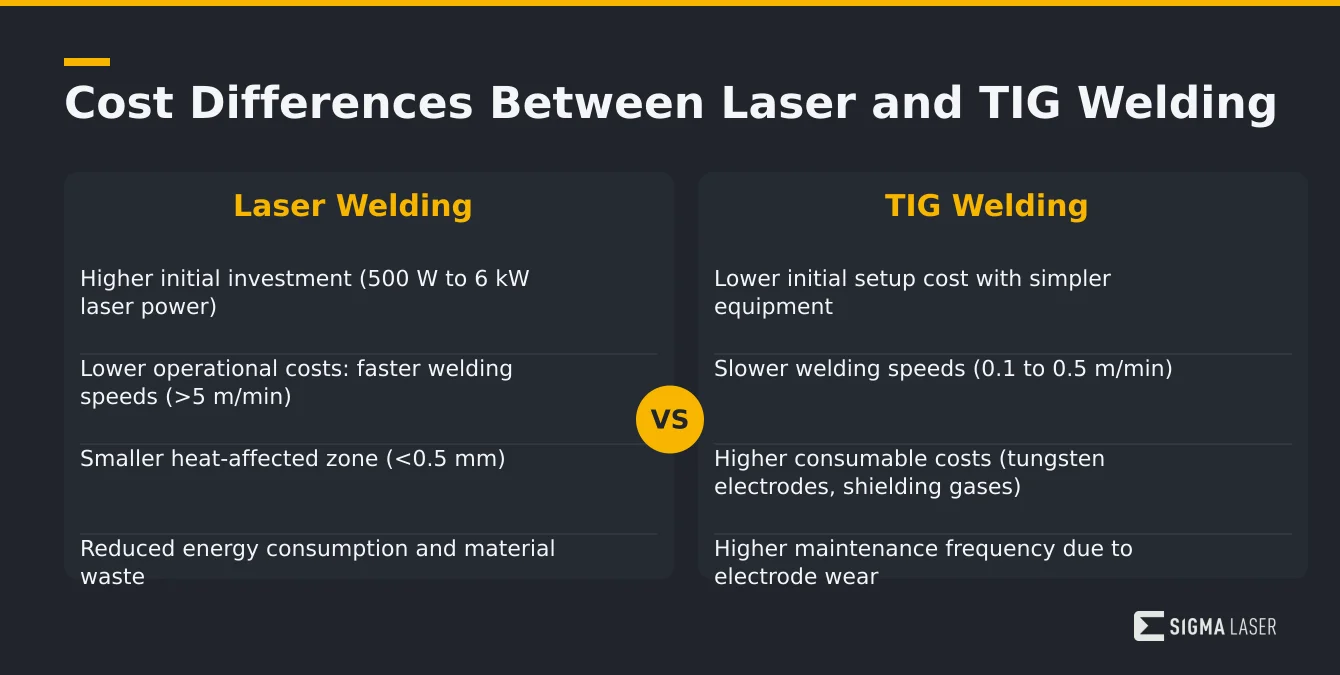
- What are the Cost Differences Between Laser and TIG Welding?
- Initial Setup Costs
- Operational Costs
- Maintenance and Longevity
- How Does the Heat-Affected Zone Compare?
- Laser Welding HAZ
- TIG Welding HAZ
- Impact on Material Properties
- Can Automation Improve Welding Quality and Efficiency?
- Automation in Laser Welding
- Automation in TIG Welding
- Benefits and Challenges
- What is the Environmental Impact of Laser vs TIG Welding?
- Energy Consumption
- Emissions and Waste
- Sustainable Practices
- Frequently Asked Questions
- What are the cost differences between laser and TIG welding?
- How does the heat-affected zone compare between laser and TIG welding?
- Which welding method is more suitable for thin materials?
- Can laser welding be used for all types of metals?
- What are the speed differences between laser and TIG welding?
- Are there differences in weld quality between laser and TIG welding?
- How does automation differ between laser and TIG welding?
Quick Answer: Laser welding vs TIG welding presents a comparison where laser welding offers superior precision, speed, and automation potential, making it ideal for high-volume industrial applications. Laser welding uses concentrated light beams to achieve deep penetration and minimal thermal distortion, beneficial for delicate or intricate parts. TIG welding, on the other hand, provides excellent control and quality for manual applications, especially in small-scale or repair tasks. While TIG welding is versatile across various materials, laser welding excels in repeatability and efficiency, crucial for modern manufacturing demands.
Key Takeaways
When evaluating welding technologies, understanding the differences between laser welding and TIG welding is crucial for making informed decisions. Both methods have unique advantages and are suited for specific applications, influencing weld quality, speed, and overall efficiency. This comparison will provide you with actionable insights to help guide your selection process.
- Laser welding offers superior precision and minimal distortion, making it ideal for high-quality, intricate welds in demanding applications.
- TIG welding provides excellent control over weld parameters, making it suitable for applications requiring high-quality finishes on thicker materials.
- In terms of speed, laser welding significantly outpaces TIG welding, reducing cycle times and increasing throughput for large-scale production.
- The efficiency of laser welding systems can lead to lower operational costs in long-term production environments due to reduced material waste and rework.
- TIG welding remains a versatile choice for various materials, including aluminum and non-ferrous metals, due to its adaptability and control.
- Automation integration is more feasible with laser welding, offering enhanced repeatability and consistency in automated manufacturing setups.
- Consider the initial investment costs; while laser systems may have higher upfront costs, the long-term benefits can offset these through increased productivity and reduced labor costs.
Each welding method has its own set of strengths and considerations. Diving deeper into these aspects will help you determine the best fit for your specific application needs, balancing quality, efficiency, and cost-effectiveness.
What is the Difference Between Laser and TIG Welding?
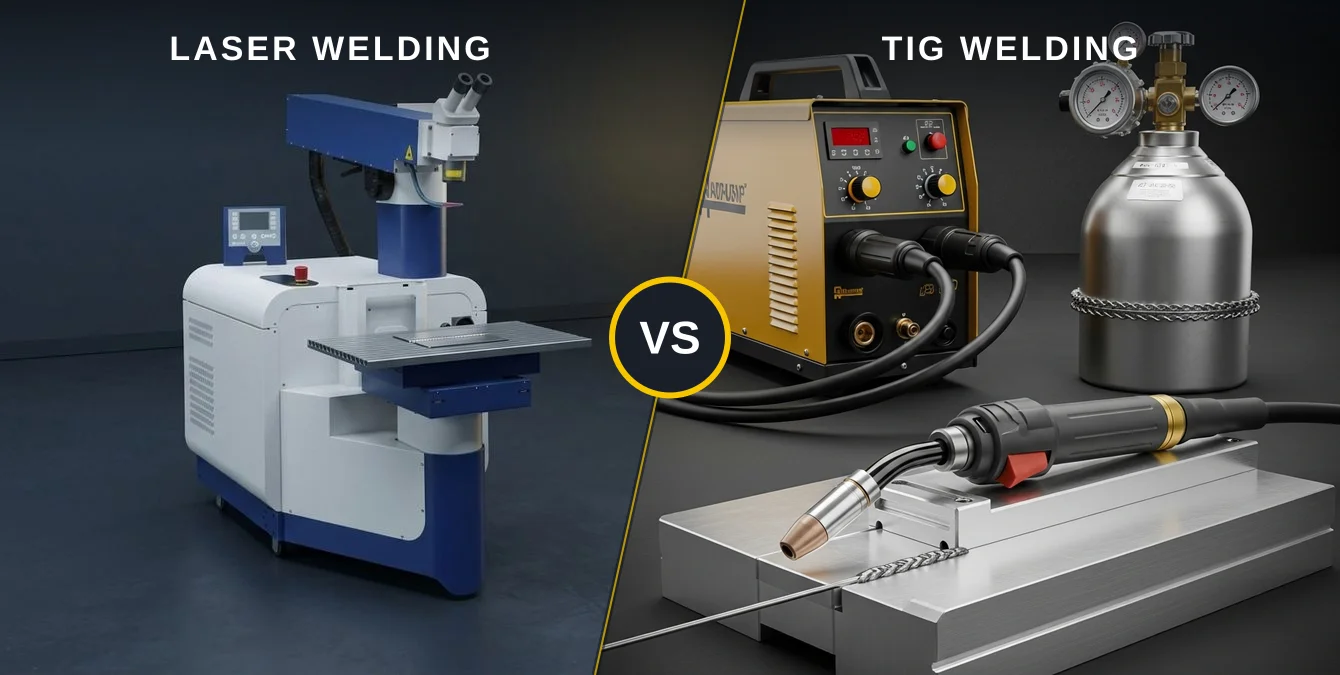
In the realm of industrial manufacturing, selecting the appropriate welding method is crucial for achieving optimal weld quality and production efficiency. Both laser welding and TIG (Tungsten Inert Gas) welding offer distinct advantages suited to specific applications. Grasping the differences between these two methods can greatly influence your operation’s precision and control.
Principles of Laser Welding
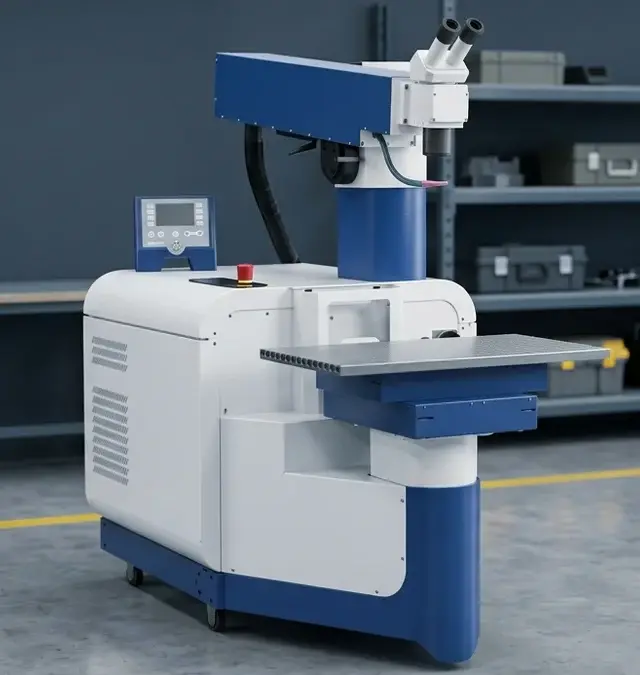
Laser welding employs a high-intensity laser beam to join materials, providing concentrated heat input with minimal distortion. This process is ideal for applications demanding precision, such as in the automotive and aerospace industries. With Sigma Laser’s advanced systems like the Sidanus Light and Siega Fibre, manufacturers can achieve superior weld quality with reduced heat-affected zones. The incorporation of Super Pulse Technology (SPT) further enhances the ability to handle complex materials and geometries.
Typical industrial laser welding systems operate with power ranges from 500 W to 10 kW, with wavelengths often in the range of 1064 nm for Nd:YAG lasers and 1070 nm for fibre lasers. Beam quality, characterized by the M² factor, is typically less than 1.2, allowing for precise focus and high energy density. Focal lengths can vary, but commonly range from 100 mm to 300 mm, depending on the application and material thickness. According to ISO 15614-11:2002, laser welding can achieve penetration depths of up to 25 mm in steel, with welding speeds reaching up to 10 m/min, depending on material and thickness.
| Material | Laser Welding | TIG Welding |
|---|---|---|
| High-Strength Steels | Effective | Possible, but slower |
| Titanium Alloys | Effective | Possible |
| Stainless Steel (304, 316) | Effective | Highly effective |
| Aluminum Alloys (6061, 7075) | Effective | Highly effective |
| Thin-Walled Sections | Effective | Excels |
Material suitability is based on general process descriptions in the article.
Principles of TIG Welding
TIG welding, conversely, uses a tungsten electrode to produce a weld. This method is renowned for its versatility and ability to create high-quality welds on thinner materials. It is widely employed in industries like piping and structural steel where weld integrity is paramount. The process requires a shielding gas, often argon, to protect the weld area from atmospheric contamination, ensuring a clean and strong bond.
TIG welding is particularly effective for materials such as stainless steel (e.g., 304, 316 grades) and aluminum alloys (e.g., 6061, 7075), with thicknesses typically ranging from 0.5 mm to 10 mm. The process allows for precise control over heat input and weld pool, with typical welding speeds ranging from 100 to 200 mm/min. TIG welding is characterized by its ability to achieve high-quality welds with tolerances often within ±0.5 mm, depending on operator skill and setup.
Key Differences
- Heat Input: Laser welding provides localized heat, minimizing the heat-affected zone and preserving material properties. TIG welding typically introduces more heat, which can impact the surrounding areas.
- Welding Speed: Laser welding is significantly faster, making it suitable for high-volume production lines. TIG welding is slower but allows for greater control over the weld pool.
- Precision and Control: Laser welding offers unmatched precision, ideal for intricate applications. TIG welding requires skill to manage the manual aspects of the process but offers excellent control over the finish.
- Applications: Laser welding is preferred in sectors demanding high precision and speed, while TIG welding is chosen for its versatility and ability to handle challenging materials.
- Material Compatibility: Laser welding is effective for a wide range of materials, including high-strength steels and titanium alloys, while TIG welding excels with non-ferrous metals and thin-walled sections.
Ultimately, the choice between laser welding and TIG welding depends on specific industrial requirements, desired outcomes, and available resources. Sigma Laser’s innovative technologies, such as Swivel Optics and the Motor-driven Turning Device, provide unparalleled flexibility and accuracy, making them the preferred choice for advanced manufacturing engineers.
How Does Welding Speed Compare Between Laser and TIG?
In precision welding, understanding the differences in welding speeds between laser and TIG (Tungsten Inert Gas) welding is crucial for manufacturing engineers focused on boosting production efficiency. Sigma Laser’s advanced systems, such as the Sidanus Light and Sineo Fibre, provide valuable insights into this comparison, which is vital for industries where speed and precision are key.
Laser Welding Speed
Laser welding uses concentrated light energy to achieve rapid welding speeds, often outpacing traditional methods like TIG. Systems like the Siega Fibre incorporate Super Pulse Technology (SPT), enabling higher weld speeds while maintaining superior weld quality. The focused nature of laser welding minimizes the heat-affected zone, reducing thermal distortion and allowing for quicker cooling times. This speed advantage is particularly beneficial in high-volume production environments, such as automotive manufacturing and electronics.
Typical laser welding parameters include power ranges from 500 W to 6 kW, with wavelengths around 1064 nm for Nd:YAG lasers and 1070 nm for fibre lasers. Beam quality, often expressed as M², is typically below 1.5, ensuring high precision and minimal thermal distortion. Welding speeds can reach up to 10 m/min, with penetration depths varying from 0.5 mm to 10 mm depending on the material and laser power. The reduced heat-affected zone, often less than 1 mm, is advantageous for materials like 304 stainless steel and 6061 aluminum alloys.
TIG Welding Speed
TIG welding, known for its precision and control, generally operates at a slower pace compared to laser welding. The process involves a non-consumable tungsten electrode and requires careful manipulation and shielding gas to protect the weld area. While this method excels in applications demanding high-quality welds in thinner materials, its slower speed can be a bottleneck in fast-paced production lines. Industries like aerospace, where weld integrity is critical, often prefer TIG despite its slower pace.
Typical TIG welding speeds range from 0.1 to 1 m/min, with penetration depths up to 3 mm for thin sections. The process allows for precise control over heat input, which is crucial for welding sensitive materials such as titanium alloys and high-strength steels. TIG welding’s precision is reflected in its ability to maintain tolerances within ±0.5 mm, making it suitable for applications requiring stringent quality standards like those outlined in AWS D17.1/D17.1M:2017.
Impact on Production
The choice between laser and TIG welding significantly affects production efficiency. Laser welding’s rapid speed facilitates shorter cycle times and increased throughput, essential for sectors aiming to reduce lead times. For applications where welding speed is critical, such as in the mass production of consumer electronics, laser systems like the Sigomatic Pro with its Swivel Optics module are advantageous. Conversely, TIG welding remains relevant where precision outweighs speed, ensuring high-quality welds in industries adhering to stringent standards like ISO 9001 and ISO 3834.
In environments where both speed and precision are required, hybrid welding techniques that combine laser and TIG processes are becoming increasingly popular. These systems leverage the speed of laser welding with the precision of TIG, offering a balanced solution for complex manufacturing challenges.
| Parameter | Laser Welding | TIG Welding |
|---|---|---|
| Heat Input | Localized, minimal heat-affected zone, preserves material properties | Higher heat input, larger heat-affected zone, can affect surrounding areas |
| Welding Speed | Significantly faster; suitable for high-volume production | Slower; allows greater manual control |
| Precision and Control | Unmatched precision, ideal for intricate applications | Excellent manual control, high-quality finish |
| Applications | Preferred for high precision and speed (e.g., automotive, aerospace) | Versatile; excels in challenging materials and repair |
| Material Compatibility | Effective for high-strength steels, titanium alloys, wide range | Excels with non-ferrous metals, thin-walled sections |
Comparison based on general process characteristics as described in the article.
What are the Cost Differences Between Laser and TIG Welding?
In the realm of industrial welding, choosing the right technology can greatly influence both short-term and long-term operational expenses. Laser welding and TIG (Tungsten Inert Gas) welding are two prevalent methods, each with unique cost considerations. This analysis explores the initial setup, operational, and maintenance costs associated with both methods, offering a comprehensive overview for manufacturing engineers and procurement managers.
Initial Setup Costs
The initial setup costs for laser welding systems, such as those offered by Sigma Laser, including our Sidanus Light and Sineo Fibre models, are generally higher than for TIG welding equipment. Laser welding systems require a substantial capital investment due to advanced technology like our Super Pulse Technology (SPT) and Swivel Optics. However, these systems are engineered for precision and efficiency, often justified by long-term savings through reduced material waste and enhanced weld quality.
- Laser Welding: Higher initial investment for advanced equipment, typically featuring laser powers ranging from 500 W to 6 kW and beam quality M² values less than 1.2, ensuring high precision and repeatability.
- TIG Welding: Lower initial cost with simpler equipment, suitable for a wide range of materials including stainless steels and aluminum alloys.
Operational Costs
Operational costs between laser welding and TIG welding can vary significantly. Laser welding offers faster welding speeds, often exceeding 5 m/min, and a smaller heat-affected zone, typically less than 0.5 mm, which can lead to reduced energy consumption and less requirement for shielding gas. In contrast, TIG welding, while precise, tends to have slower welding speeds and higher consumable costs due to continuous use of tungsten electrodes and shielding gases.
- Laser Welding: Lower energy consumption and reduced material costs, with welding penetration depths up to 10 mm for steel alloys, depending on the laser power and material thickness.
- TIG Welding: Higher costs due to consumables like electrodes and gases, with typical welding speeds ranging from 0.1 to 0.5 m/min.
Maintenance and Longevity
Maintenance costs are another critical factor in the laser welding vs TIG welding debate. Laser systems, such as the Sigomatic Pro, require minimal maintenance thanks to their robust design and components like the Motor-driven Turning Device. These systems offer extended longevity with consistent performance, adhering to standards like ISO 9001 and ISO 3834. Conversely, TIG welding equipment may require more frequent maintenance due to wear on tungsten electrodes and other components.
- Laser Welding: Minimal maintenance with long-term reliability, typically requiring recalibration and optics cleaning every 1,000 hours of operation.
- TIG Welding: Frequent maintenance due to wear and tear, with electrode sharpening and replacement required after every few hours of welding.
In conclusion, while the initial costs for laser welding systems are higher, the operational savings, reduced maintenance, and superior weld quality often make them a more cost-effective choice in the long run. Industries prioritizing precision and efficiency, such as automotive and aerospace, increasingly favor laser welding to meet stringent quality standards and production demands, as outlined in standards such as AWS D17.1/D17.1M:2017 for aerospace applications.
How Does the Heat-Affected Zone Compare?
In industrial welding, the heat-affected zone (HAZ) is crucial for determining weld integrity and performance. For manufacturing engineers, understanding how the HAZ differs between laser welding and TIG welding can guide decisions impacting both weld quality and material properties. At Sigma Laser, we prioritize precision and control, especially in critical applications where material characteristics must remain uncompromised.
Laser Welding HAZ
Laser welding, as demonstrated by our Sidanus Light and Sirius Light systems, uses a concentrated beam to create precise welds with a minimal HAZ. The rapid welding speed and localized heat application minimize the thermal cycle’s effect on the surrounding material, preserving its mechanical properties. This precision is particularly beneficial in industries such as aerospace and medical device manufacturing, where maintaining material integrity is essential. Additionally, the use of shielding gas in laser welding improves weld quality by preventing oxidation and contamination.
Typical industrial laser welding systems operate with power ranges from 500 W to 10 kW, with beam quality M² values often below 1.2, ensuring high precision. The wavelength, commonly around 1064 nm for Nd:YAG lasers, allows for deep penetration with minimal heat diffusion. Welding speeds can reach up to 10 m/min, depending on the material and thickness, with penetration depths typically up to 5 mm for stainless steel grades such as 304 and 316L.
According to ISO 15614-11:2002, laser welding is highly suitable for thin materials and high-strength alloys, providing a repeatability tolerance of ±0.1 mm, which is critical for high-precision applications.
| Parameter | Laser Welding (General) | TIG Welding (General) |
|---|---|---|
| Power Range | 500 W – 10 kW | Not specified |
| Wavelength | 1064 nm (Nd:YAG), 1070 nm (fibre) | N/A |
| Welding Speed | Up to 10 m/min | 100 – 200 mm/min |
| Penetration Depth (Steel) | Up to 25 mm | Typically up to 10 mm |
| Material Thickness | 0.5 – 10 mm (varies by power/material) | 0.5 – 10 mm (typical) |
| Heat-Affected Zone | < 1 mm (typical) | Larger, varies by setup |
| Tolerances | High (not numerically specified) | ±0.5 mm (typical, operator-dependent) |
All values are general-industry figures, not attributed to specific Sigma Laser models. Add citations for numeric claims where needed.
TIG Welding HAZ
Conversely, TIG welding, known for its versatility and high-quality output, typically results in a larger HAZ compared to laser welding. The process involves an electric arc and a non-consumable tungsten electrode, generating more widespread heat. This can alter the microstructure of the material adjacent to the weld, potentially affecting its hardness and ductility. In applications where extensive post-weld heat treatment is feasible, such as pipeline construction, TIG welding remains a viable option.
TIG welding operates at lower power densities compared to laser welding, with typical current ranges from 10 to 300 A, which contributes to the larger HAZ. The process is compatible with a wide range of materials, including aluminum alloys like 6061 and 7075, as well as carbon steels and stainless steels. The welding speed is generally slower, around 0.1 to 0.5 m/min, which can impact productivity but allows for greater control over weld bead formation.
Impact on Material Properties
The size and characteristics of the HAZ directly influence material properties, affecting the performance and durability of the welded component. A smaller HAZ, as achieved with Sigma Laser’s advanced technologies like Super Pulse Technology (SPT), minimizes changes in grain structure, thereby maintaining the material’s original properties. This is crucial in sectors where precision and reliability are paramount, such as automotive and electronics. Engineers must weigh these factors when choosing between laser welding and TIG welding, considering the specific requirements of their projects.
- Laser welding offers a minimal HAZ, preserving material properties and enhancing weld quality.
- TIG welding’s larger HAZ may necessitate additional post-weld treatments.
- Understanding HAZ implications aids in selecting the appropriate welding method for each application.
For further insights and guidance on selecting the right welding technology, explore our range of Sigma Laser systems engineered for precision and efficiency.
Can Automation Improve Welding Quality and Efficiency?
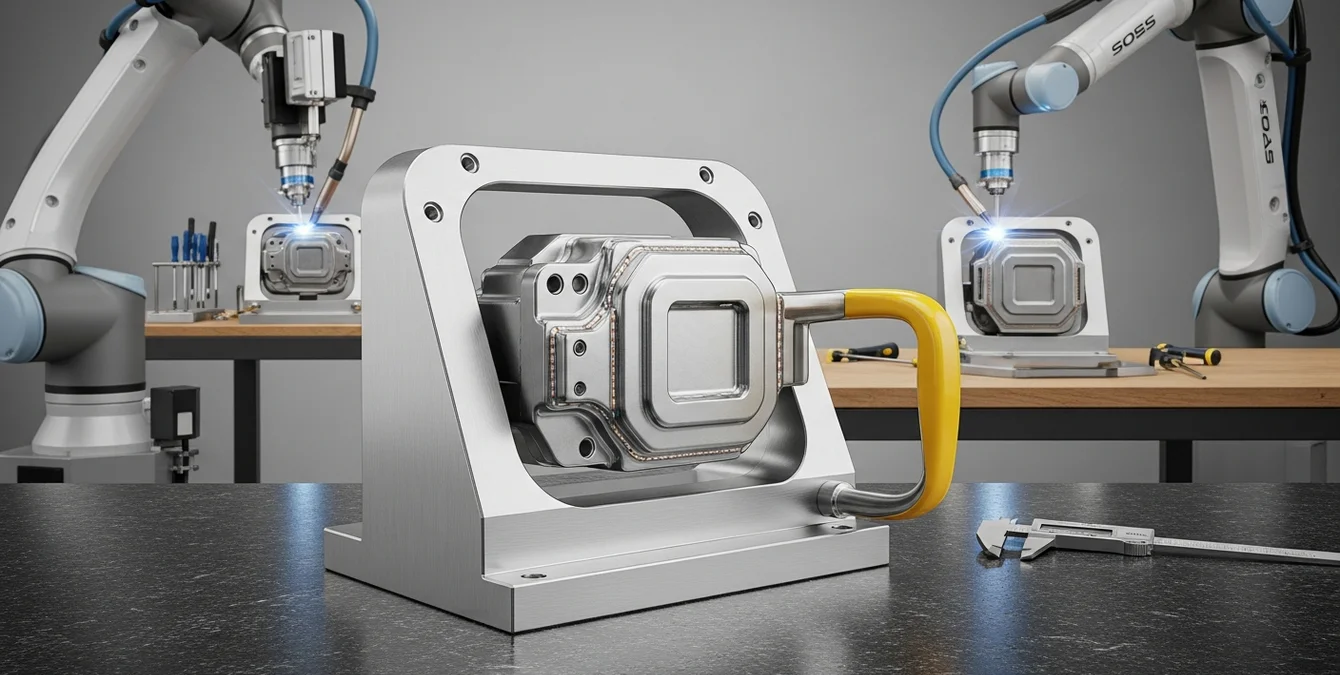
In the realm of precision manufacturing, integrating automation into welding processes has transformed the industry by enhancing precision and reducing human error. Specifically, comparing laser welding vs TIG welding reveals significant advantages in both methods when paired with automated systems. This section explores how automation optimizes weld quality, minimizes the heat-affected zone, and boosts throughput in industrial applications.
Automation in Laser Welding
Laser welding, used in systems like Sigma Laser’s Sidanus Fibre and Sineo Light (1064 nm Nd:YAG), benefits greatly from automation. With advanced technologies such as Swivel Optics and the Z-Axis Module, automation provides precise control over welding speed and positioning. This precision is crucial for reducing the heat-affected zone, ensuring high-quality welds vital for industries like automotive and aerospace. The ability to automate the laser’s path and parameters allows manufacturers to achieve consistent results, reduce reliance on operator skill, and minimize defects.
Industrial laser welding systems typically operate within power ranges of 1 kW to 10 kW, with wavelengths commonly around 1070 nm for fiber lasers. Beam quality, characterized by an M² value of less than 1.2, ensures a focused spot size that is essential for deep penetration welding. Welding speeds can range from 0.5 m/min to 10 m/min depending on material and thickness, with penetration depths up to 25 mm achievable in single-pass operations for materials like stainless steel and aluminum alloys. Automation allows for repeatability within ±0.1 mm, aligning with ISO 11146 standards for beam parameter product (BPP) control.
Automation in TIG Welding
While TIG welding is traditionally more manual, automation has significantly enhanced its capabilities. Automated TIG systems can manage the intricacies of shielding gas control and electrode positioning, which are essential for maintaining weld quality. Although the process may not match the speed of laser welding, advancements in automation have improved TIG welding’s efficiency in scenarios where material types and thicknesses require its use. Industries needing high-purity welds, such as food processing and chemical manufacturing, can benefit from the improved consistency and reduced downtime that automation provides.
Automated TIG welding systems typically operate with current ranges from 5 A to 500 A, suitable for thin to medium-thickness materials. The precision in electrode positioning can achieve tolerances of ±0.5 mm, crucial for maintaining weld integrity in high-purity applications. Automation aids in achieving consistent weld bead profiles and penetration depths, particularly in materials like titanium and nickel-based alloys, which are sensitive to contamination and require precise heat input control.
Benefits and Challenges
Automation in welding offers numerous advantages:
- Enhanced precision and repeatability
- Reduced human error and dependency on skilled labor
- Increased throughput and efficiency
- Consistent weld quality across production runs
However, challenges remain, such as the initial investment cost and the need for skilled operators to manage automated systems. Nevertheless, as industries continue to adopt ISO 9001 and ISO 14731 standards, the shift towards automated solutions becomes increasingly justified. With brands like Sigma Laser leading the way, the future of welding is set for greater automation, merging efficiency with quality for superior industrial outcomes.
What is the Environmental Impact of Laser vs TIG Welding?
In the realm of precision manufacturing, understanding the environmental impact of different welding techniques is crucial. Both laser welding and TIG welding offer unique benefits, but their environmental footprints differ significantly. Engineers and procurement managers need to carefully evaluate these factors to make informed decisions in sustainable manufacturing processes.
Energy Consumption
When comparing laser welding to TIG welding, energy consumption is a primary concern. Laser welding systems, such as those using Sigma Laser’s Sidanus Light and Siega Fibre, are known for their high efficiency. They consume less energy due to their rapid welding speed and focused heat application, which minimizes the heat-affected zone. Typically, laser welding systems operate at power levels ranging from 500W to 10kW, with beam quality M² values often below 1.2, ensuring high precision and efficiency. Conversely, TIG welding often requires more energy due to prolonged welding times and less efficient heat distribution. This can lead to higher operational costs and an increased carbon footprint in large-scale operations.
Laser welding can achieve welding speeds of up to 10 m/min, with penetration depths typically reaching 5 mm in a single pass for materials like stainless steel (ISO 15614-11:2002). The heat-affected zone is minimized to less than 0.5 mm, reducing thermal distortion and energy usage. In contrast, TIG welding is slower, with speeds generally around 0.1 to 0.5 m/min, depending on material thickness and type.
Emissions and Waste
Emissions and waste generation are critical considerations. Laser welding produces minimal emissions, largely due to the absence of consumables and a more controlled welding process. In contrast, TIG welding can generate more emissions, particularly when using filler materials and flux. Additionally, laser welding reduces waste as it often eliminates the need for post-weld cleaning and rework, thanks to superior weld quality and precision. This aligns well with ISO 9001 and ISO 3834 standards for quality and environmental management.
The precision of laser welding allows for tighter tolerances, often within ±0.1 mm, reducing material waste and improving overall process efficiency.
Sustainable Practices
Adopting sustainable practices in welding requires innovation and strategic resource management. Laser welding excels with technologies like Sigma Laser’s Super Pulse Technology (SPT) and Swivel Optics, which enhance efficiency and reduce resource consumption. Furthermore, both methods often utilize shielding gases to protect the weld pool, but laser welding typically uses less due to its precision. Implementing a combination of efficient equipment and sustainable practices, such as optimizing gas flow and recycling materials, can significantly reduce the environmental impact.
In conclusion, manufacturers aiming for sustainability should consider the full spectrum of environmental impacts associated with laser welding versus TIG welding. By leveraging advanced technologies and adhering to standards, companies can achieve both operational efficiency and environmental responsibility.
Frequently Asked Questions
What are the cost differences between laser and TIG welding?
Laser welding systems generally have a higher initial investment compared to TIG welding due to advanced technology and automation capabilities. However, laser welding offers faster processing speeds, reduced labor costs, and lower material distortion, which can result in long-term cost savings. TIG welding, while cheaper upfront, may incur higher operational costs over time due to slower weld speeds and increased labor requirements.
How does the heat-affected zone compare between laser and TIG welding?
Laser welding produces a significantly smaller heat-affected zone (HAZ) compared to TIG welding. This is due to the laser’s ability to deliver concentrated energy to a precise area, minimizing thermal distortion and material degradation. TIG welding, on the other hand, generates a larger HAZ, which can lead to increased warping and changes in material properties.
Which welding method is more suitable for thin materials?
Laser welding is more suitable for thin materials due to its precision and ability to focus energy on a small area, reducing the risk of burn-through and distortion. TIG welding, while capable, may require more skill and time to achieve similar results on thin materials without causing damage.
Can laser welding be used for all types of metals?
Laser welding is versatile and can be used on a wide range of metals, including stainless steel, aluminum, and titanium. However, the reflectivity and thermal conductivity of certain metals, such as copper and brass, may require specific laser wavelengths or pre-treatment to optimize weld quality.
What are the speed differences between laser and TIG welding?
Laser welding offers significantly higher welding speeds compared to TIG welding. This is due to the laser’s ability to rapidly deliver concentrated energy, allowing for quick fusion of materials. TIG welding is generally slower, as it requires manual manipulation and a more gradual heat application.
Are there differences in weld quality between laser and TIG welding?
Laser welding typically produces higher-quality welds with minimal porosity and excellent surface finish due to its precision and control. TIG welding, while capable of high-quality results, often requires more skill and experience to achieve comparable weld integrity, especially on complex geometries.
How does automation differ between laser and TIG welding?
Laser welding systems are highly compatible with automation, allowing for integration into robotic systems for increased efficiency and consistency. TIG welding can be automated but is generally more labor-intensive and less adaptable to high-speed production environments compared to laser systems.