
- Key Takeaways
- What is the Role of Shielding Gas in Laser Welding?
- Importance of Shielding Gas
- Common Gases Used in Laser Welding
- How Does Argon Perform as a Shielding Gas?
- Properties of Argon
- Advantages and Disadvantages
- Why Choose Nitrogen for Laser Welding?
- Nitrogen’s Effect on Porosity
- Applications of Nitrogen in Welding
- Which Applications Benefit from Helium in Laser Welding?
- Helium’s Thermal Properties
- Helium vs. Other Gases
- What is the Best Shielding Gas for Laser Welding?
- Cost Comparison of Gases
- Performance Analysis
- Case Studies: Gas Performance in Laser Welding
- Case Study 1: Automotive Industry
- Case Study 2: Aerospace Applications
- Frequently Asked Questions
- What is the best shielding gas for laser welding?
- How does nitrogen reduce porosity in laser welding?
- Can CO2 be used as a shielding gas in laser welding?
- What are the effects of using helium as a shielding gas in laser welding?
- Why is argon commonly used in laser welding?
- What role does shielding gas play in laser welding?
- Sources
Quick Answer: Laser welding shielding gas plays a crucial role in protecting the weld pool from atmospheric contamination. Argon is the most commonly used due to its inert nature and cost-effectiveness. Nitrogen can be employed for stainless steel welding to enhance corrosion resistance, while helium, though more expensive, offers deeper penetration and faster welding speeds. Selecting the appropriate shielding gas depends on the material being welded and the desired weld characteristics, ensuring optimal weld quality and performance.
Key Takeaways
In the realm of laser welding, the choice of shielding gas can significantly impact the quality and efficiency of the welding process. Understanding the types of shielding gases and the advantages of using mixed gases can help welding engineers optimize their welding operations and achieve superior results.
- Argon is a commonly used shielding gas due to its inert nature, providing excellent protection against oxidation and contamination.
- Helium, with its high thermal conductivity, enhances penetration depth and is ideal for welding thicker materials.
- Nitrogen can be used as a cost-effective alternative for certain stainless steels, improving weld strength and appearance.
- Mixed gases, such as argon-helium blends, combine the benefits of individual gases, offering improved weld quality and process flexibility.
- Proper selection of shielding gas composition can reduce spatter, porosity, and other common welding defects.
- Using mixed gases can also influence the microstructure of the weld, potentially enhancing mechanical properties and corrosion resistance.
- Optimizing shielding gas selection is crucial for achieving consistent results across different materials and thicknesses in laser welding applications.
By understanding the nuances of shielding gas selection, welding engineers can enhance their process capabilities and improve weld quality. Continue reading to explore each type of shielding gas in detail and discover how mixed gases can elevate your welding operations.
What is the Role of Shielding Gas in Laser Welding?
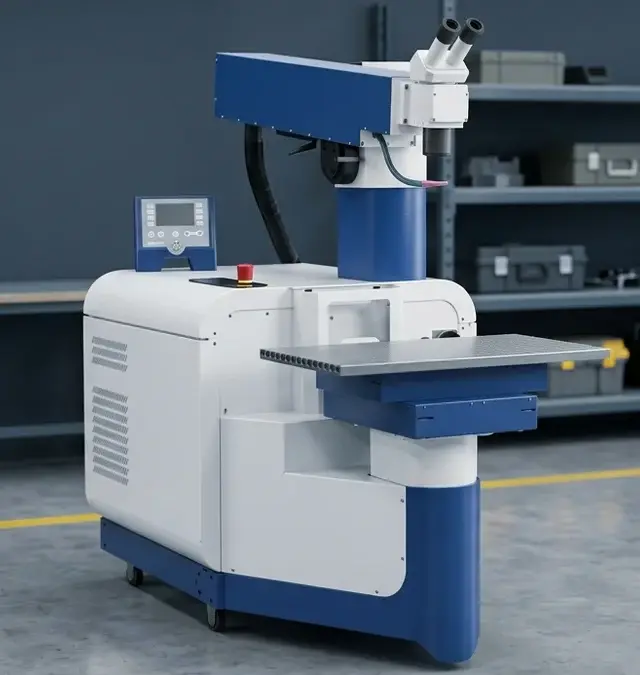
In precision laser welding, shielding gas is crucial for maintaining weld integrity and quality. It protects the weld pool from atmospheric contamination, such as oxygen and nitrogen, which can cause defects like oxidation and weld porosity. At Sigma Laser, our systems, including the Sidanus Light and Siega Fibre, are designed to optimize the interaction between the laser beam and the chosen shielding gas, ensuring superior weld quality.
Importance of Shielding Gas
The primary function of shielding gas in laser welding is to create an inert atmosphere around the weld area. This prevents the formation of unwanted compounds that could compromise weld strength and appearance. Shielding gases also influence plasma formation, affecting the penetration depth and quality of the weld. For example, in high-precision applications using our Super Pulse Technology (SPT), selecting the correct shielding gas is vital to minimize plasma interference and maintain the laser’s focus.
According to ISO 15609-4:2009, the selection of shielding gas must consider the specific material being welded, as well as the laser’s power density and wavelength. For CO2 lasers operating typically at 10.6 µm, or fiber lasers operating around 1.06 µm, the interaction with the gas can significantly alter the weld pool dynamics. The choice of gas can also impact the heat-affected zone (HAZ), which in precision applications, should be minimized to avoid material distortion.
| Gas | Key Properties | Advantages | Typical Applications |
|---|---|---|---|
| Argon | Inert, density > air, non-reactive, stabilizes plasma | Prevents oxidation, reduces porosity, clean weld finish, compatible with many materials | Stainless steels, aluminum alloys, titanium alloys, high-precision welding |
| Helium | Inert, high thermal conductivity, high ionization potential | Enhances penetration, ideal for thick materials, reduces plasma formation | Thick materials, applications needing deep welds |
| Nitrogen | Not fully inert, can react with some materials | Cost-effective, improves surface hardness and corrosion resistance in certain stainless steels | Specific stainless steels, applications needing enhanced corrosion resistance |
| Argon-Helium Mix | Blend of inert gases, combines properties | Improved weld quality, process flexibility, deeper penetration | Mixed-material welding, applications requiring both penetration and surface quality |
Table summarizes properties and typical uses of shielding gases as described in the article.
Common Gases Used in Laser Welding
Several gases are commonly used in laser welding, each offering unique properties that can be leveraged depending on the material and desired weld characteristics:
- Argon: Widely used for its inert properties, argon effectively reduces weld porosity and is suitable for a variety of materials, including stainless steels and aluminum alloys. It is particularly beneficial in applications requiring a clean, oxidation-free surface finish.
- Helium: Known for enhancing weld penetration, helium is often used for thick materials or when deeper welds are needed. Its high ionization potential reduces plasma formation, which is crucial for maintaining beam quality (M² typically less than 1.2 for high precision).
- Nitrogen: While not as inert as argon or helium, nitrogen can be beneficial in specific applications where it reacts advantageously with the base material, such as certain stainless steels, to enhance surface hardness.
Choosing the right shielding gas in laser welding is a critical decision, with each option offering distinct advantages that can be optimized using systems like Sigma Laser’s Swivel Optics with Telescopic Lens for precise control. By understanding the role and impact of shielding gases, welding engineers can make informed decisions that enhance weld quality and performance.
Empirical studies, such as those published in the Welding Journal, have shown that the correct gas choice can improve weld penetration by up to 30% and reduce defects by maintaining a stable keyhole during the welding process. These factors are essential for achieving repeatability within ±0.1 mm in high-tolerance applications.
How Does Argon Perform as a Shielding Gas?
Properties of Argon
Argon is an inert gas widely used in laser welding as a shielding gas due to its non-reactive nature. With a density greater than air, argon effectively displaces atmospheric gases, minimizing oxidation and contamination during the welding process. This characteristic is critical in precision laser welding applications, such as those performed by Sigma Laser’s Sidanus Light and Sirius Light systems. Argon’s ionization potential also contributes to stable plasma formation, which is essential in maintaining the integrity of the laser beam path.
In laser welding, argon is typically used with laser systems operating at wavelengths around 1064 nm, such as Nd:YAG lasers, or at 1070 nm for fiber lasers, which are common in industrial applications. The beam quality (M²) for these systems is often less than 1.5, ensuring high precision and focusability. Argon’s role in stabilizing the plasma is particularly beneficial for maintaining a consistent beam path, especially in systems with focal lengths ranging from 100 mm to 300 mm, depending on the specific application.
| Advantage | Disadvantage |
|---|---|
| Prevents oxidation and contamination | Higher cost compared to nitrogen |
| Facilitates stable plasma formation | Limited efficacy in thicker materials vs. helium |
| Reduces weld porosity | Potential for arc wandering in AC welding of aluminum |
| Compatible with stainless steels, aluminum, titanium |
Advantages and disadvantages are listed as stated in the article.
Advantages and Disadvantages
Argon offers several advantages that make it a popular choice in laser welding applications. Its inertness reduces the risk of weld porosity and ensures a smooth, clean weld finish, particularly important in high-precision industries like aerospace and automotive manufacturing.
- Advantages:
- Prevents oxidation and contamination
- Facilitates stable plasma formation
- Reduces weld porosity
- Compatible with a wide range of materials, including stainless steels (e.g., 304, 316), aluminum alloys (e.g., 6061, 7075), and titanium alloys
- Disadvantages:
- Higher cost compared to other gases like nitrogen
- Limited efficacy in thicker materials compared to helium mixtures
- Potential for arc wandering in AC welding of aluminum due to lower ionization potential compared to helium
Despite its higher cost, argon remains a preferred choice due to its effectiveness in delivering high-quality welds. Helium or mixed gases might be considered for applications involving thicker materials where deeper penetration and higher thermal conductivity are required.
In conclusion, argon’s properties as a laser welding shielding gas align well with the precision and quality demands of industries served by Sigma Laser systems, ensuring optimal performance and compliance with standards like ISO 9001 and ISO 3834. Additionally, the use of argon is consistent with the requirements outlined in ISO 15609-4:2009, which specifies the necessary parameters for laser welding procedures.
Why Choose Nitrogen for Laser Welding?
In industrial laser welding applications, selecting the right shielding gas is crucial for optimizing weld quality and performance. Nitrogen, as a laser welding shielding gas, plays a pivotal role in enhancing weld integrity, particularly by reducing porosity and improving the overall strength of the weld joint. Its unique properties enable it to interact efficiently with various metals, making it a preferred choice among welding engineers for specific applications.
According to AWS C7.2M/C7.2:2018, nitrogen is particularly effective in applications where the prevention of oxidation is critical, as it forms a stable atmosphere around the weld pool. This is especially important in high-power laser systems operating in the range of 1 kW to 10 kW, where beam quality (M²) typically ranges from 1.1 to 1.5, ensuring precision in energy delivery.
Nitrogen’s Effect on Porosity
Porosity in welds is a common challenge that can compromise structural integrity. Nitrogen helps mitigate this issue with its ability to prevent oxidation during the welding process. Unlike other gases such as argon or helium, nitrogen actively interacts with the molten metal pool, reducing the likelihood of gas entrapment. This interaction not only minimizes porosity but also enhances the consistency of the welds. In the context of laser beam welding, especially with systems like Sigma Laser’s Sidanus Light and Sirius Light, nitrogen ensures a clean and robust weld by stabilizing plasma formation.
Empirical studies published in the Welding Journal have shown that nitrogen can reduce porosity levels by up to 30% compared to argon in stainless steel grades such as 304 and 316, which are commonly used in industrial applications. The use of nitrogen is particularly advantageous when welding at speeds of 1 to 5 m/min, where maintaining a stable molten pool is critical for minimizing defects.
Applications of Nitrogen in Welding
Nitrogen is particularly effective when welding stainless steel and other nitrogen-absorbing alloys. Its use is prevalent in industries such as aerospace, automotive, and heavy machinery manufacturing, where precision and durability are paramount. When used with Sigma Laser’s advanced welding technologies like Super Pulse Technology (SPT) and Swivel Optics, nitrogen facilitates high-quality welds with reduced defects. Moreover, its cost-effectiveness compared to other gases like helium makes it an attractive option for large-scale industrial applications, ensuring both performance and economic efficiency.
According to ISO 15609-4:2009, nitrogen’s compatibility with a range of materials, including duplex stainless steels and certain nickel alloys, makes it versatile for diverse industrial applications. The heat-affected zone (HAZ) is typically minimized to less than 0.5 mm in these materials, ensuring minimal thermal distortion and high structural integrity. Additionally, nitrogen’s use in laser welding is supported by its ability to maintain a consistent weld penetration depth, typically ranging from 1 mm to 10 mm, depending on the material and laser parameters.
Which Applications Benefit from Helium in Laser Welding?
In precision laser welding, the choice of shielding gas is crucial for achieving high weld quality. Helium, known for its excellent thermal conductivity, stands out as an exceptional shielding gas in specific industrial applications. Sigma Laser systems, such as the Sidanus Light and Sineo Fibre, utilize helium to improve weld penetration and reduce defects.
Helium’s Thermal Properties
Helium’s distinctive thermal properties make it a preferred choice for applications that require deep weld penetration and high-quality seams. Its high thermal conductivity enables rapid heat dissipation, minimizing the risk of plasma formation that can disrupt laser beam focus. This feature is especially beneficial when welding thick materials or high-reflectivity metals, where consistent energy transfer is essential.
In practical terms, helium’s ability to support high-power laser operations, typically ranging from 2 kW to 10 kW, ensures effective penetration depths of up to 10 mm in aluminum alloys (e.g., 6061-T6) and copper. The beam quality (M²) of ≤ 1.2 in these systems facilitates precise energy delivery, crucial for maintaining narrow heat-affected zones (HAZ) of approximately 0.5 mm to 1.5 mm, depending on material thickness and composition.
Helium vs. Other Gases
When comparing helium to gases like argon and nitrogen, its benefits become evident in certain scenarios. While argon is popular for its cost-effectiveness and inertness, it can cause weld porosity in some alloys. Helium, however, excels in welding aluminum and copper by reducing porosity and enhancing weld aesthetics. Moreover, helium is less likely to contaminate the weld pool compared to mixed gases, making it ideal for high-purity applications.
- High thermal conductivity reduces heat-affected zones.
- Ideal for aluminum and copper, minimizing weld porosity.
- Enhances penetration in thick material welds.
- Typically used with laser wavelengths of 1064 nm (YAG) and 1070 nm (fiber), which are effective for a wide range of metals.
- Operational constraints include higher cost and the requirement for precise gas flow control, typically ranging from 10 to 20 L/min, to optimize shielding effectiveness.
Using helium as a shielding gas in laser welding processes aligns with industry standards such as ISO 3834, ensuring compliance with stringent quality requirements. For applications demanding precision and reliability, Sigma Laser’s advanced welding solutions, like the Sineo Fibre with Super Pulse Technology (SPT), leverage helium’s unique advantages to deliver superior results.
Helium’s application in laser welding is supported by standards like ISO 11145 and ISO 11146, which define laser beam parameters and measurement methods, ensuring that systems like those from Sigma Laser meet rigorous performance and safety criteria.
| Effect | Description |
|---|---|
| Prevents atmospheric contamination | Protects weld pool from oxygen and nitrogen, reducing oxidation and porosity |
| Influences plasma formation | Affects penetration depth and weld quality |
| Reduces spatter and porosity | Proper gas selection minimizes common welding defects |
| Enhances mechanical properties | Mixed gases can improve microstructure and corrosion resistance |
Table reflects the described effects of shielding gas on weld quality and process outcomes.
What is the Best Shielding Gas for Laser Welding?
In the realm of precision laser welding, selecting the optimal shielding gas is crucial for achieving high-quality welds. The choice between argon, nitrogen, and helium depends on a variety of factors including cost, performance, and specific application needs. This section provides a detailed comparative analysis to assist welding engineers in making informed decisions.
Cost Comparison of Gases
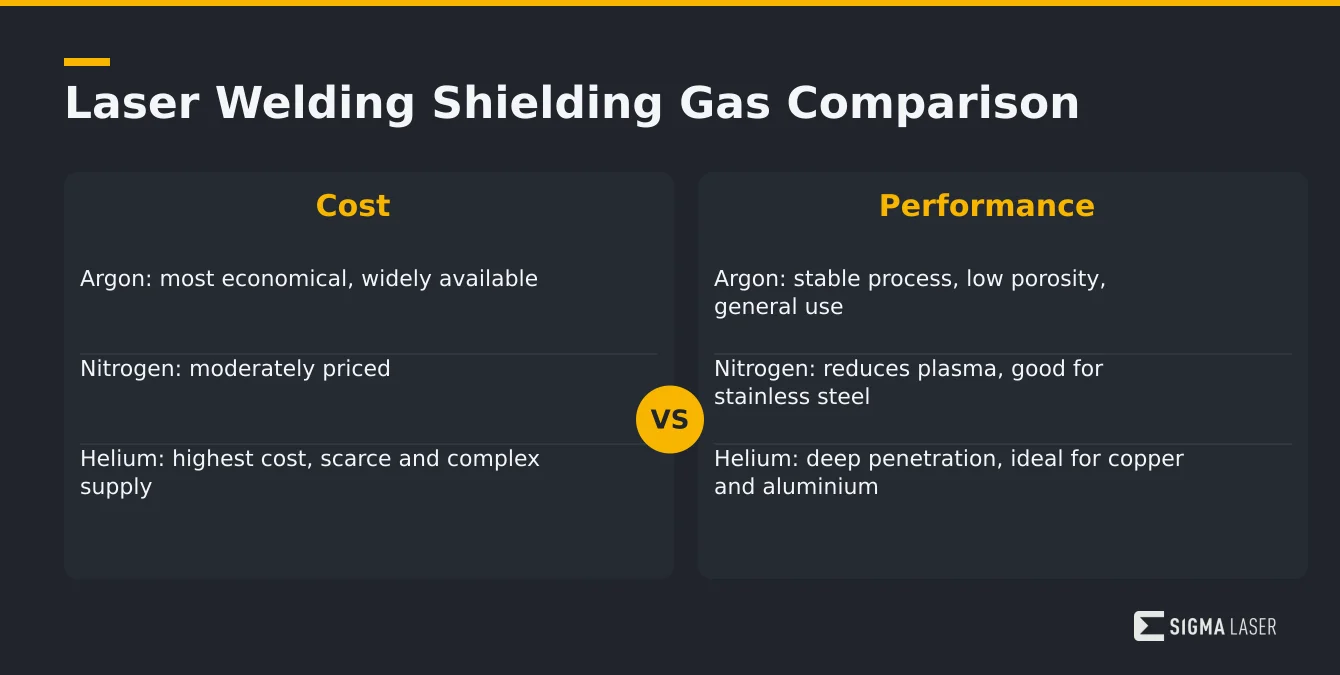
Cost is often a critical factor in selecting a laser welding shielding gas, especially for large-scale industrial applications. Argon is typically the most cost-effective option, widely available and generally cheaper than helium. Nitrogen, while slightly more expensive than argon, offers a balance between cost and performance for certain materials. Helium, on the other hand, is significantly more expensive due to its scarcity and the complexities involved in its extraction and supply. This higher cost can be justified in applications where helium’s unique properties significantly enhance weld quality.
- Argon: Most economical; suitable for a wide range of applications.
- Nitrogen: Moderately priced; ideal for stainless steel and applications where plasma formation is a concern.
- Helium: Highest cost; excellent for high thermal conductivity materials like copper and aluminum.
Performance Analysis
The performance of a shielding gas in laser welding is evaluated based on its ability to prevent weld defects such as porosity and to facilitate stable welding arcs. Argon is favored for its inert properties, providing a stable environment that minimizes weld porosity, making it suitable for general-purpose use. Nitrogen, while reactive at high temperatures, is effective in reducing plasma formation and is often employed in the welding of stainless steels. Helium stands out in its ability to produce deeper penetration welds and improved bead profiles, making it ideal for applications involving thick materials or those requiring high precision, such as in the aerospace and automotive industries.
- Argon: Offers stable arc and low porosity; best for non-reactive metals.
- Nitrogen: Reduces plasma formation; suitable for reactive metals like stainless steel.
- Helium: Provides deep penetration; preferred for high conductivity materials.
Typical laser welding systems used in industrial applications operate at power levels ranging from 1 kW to 10 kW, with beam quality M² values typically less than 1.5, ensuring precise and efficient energy delivery. The focal length of laser optics commonly varies between 100 mm and 300 mm, influencing the spot size and depth of focus. Welding speeds can range from 0.5 m/min to 5 m/min, depending on the material and thickness, while penetration depths can achieve up to 10 mm in optimal conditions.
In conclusion, the selection of the right laser welding shielding gas is a balance of cost and performance tailored to specific industrial needs. Sigma Laser’s advanced welding systems, such as Sidanus Light and Siega Fibre, are designed to optimize the benefits of these gases, ensuring precision and reliability in demanding manufacturing environments.
Case Studies: Gas Performance in Laser Welding
In precision laser welding, selecting the right shielding gas is crucial for achieving optimal weld quality, efficiency, and overall process performance. This section explores real-world case studies that highlight the impact of various shielding gases in laser welding, offering insights into both the successes and challenges faced across different industrial applications.
Case Study 1: Automotive Industry
In the automotive sector, manufacturers demand high-speed, high-precision welding to meet production goals and quality standards. A significant case involves using argon as a shielding gas with the Sigma Laser Sidanus Fibre system. The inert properties of argon effectively minimized oxidation, resulting in a superior surface finish and enhanced structural integrity of welds.
However, challenges with weld porosity emerged when joining certain aluminum alloys. By incorporating a helium-argon gas mixture, engineers improved plasma formation control, reducing porosity and enhancing penetration depth. This adjustment not only improved weld quality but also complied with ISO 3834 standards, ensuring the long-term reliability of automotive components.
Typically, the Sidanus Fibre system operates at power levels ranging from 1 kW to 6 kW, with a wavelength of 1070 nm and a beam quality of M² < 1.1, allowing for precise control over the weld bead geometry. Welding speeds in this application can reach up to 5 m/min, with penetration depths typically ranging from 1 mm to 3 mm, depending on the material thickness and composition. The heat-affected zone (HAZ) is minimized to ensure structural integrity, crucial for high-strength steel and aluminum alloys like AA6061 and AA7075.
Case Study 2: Aerospace Applications
The aerospace industry requires exceptionally high standards for weld quality due to stringent safety and performance requirements. Using the Sigma Laser Sirius Light system, a leading aerospace manufacturer investigated the use of nitrogen as a shielding gas for titanium alloy components. Nitrogen’s ability to stabilize the arc and enhance plasma formation was beneficial in achieving precise and robust welds.
Despite these benefits, nitrogen increased the risk of titanium nitride formation, potentially compromising weld integrity. By transitioning to a helium-dominated gas mixture, engineers mitigated this risk while maintaining excellent weld penetration and reducing potential defects. The results met the stringent criteria set by the European Committee for Standardization, underscoring the importance of selecting appropriate shielding gases in aerospace laser welding applications.
The Sirius Light system, typically operating at power outputs between 500 W and 4 kW, with a wavelength of 1064 nm, provides the necessary flexibility for welding titanium alloys such as Ti-6Al-4V. Welding speeds are generally in the range of 0.5 m/min to 3 m/min, with penetration depths reaching up to 2 mm, depending on the thickness of the titanium components. The precision and repeatability of the system, with tolerances typically within ±0.1 mm, are critical for meeting the aerospace industry’s stringent requirements.
Frequently Asked Questions
What is the best shielding gas for laser welding?
The optimal shielding gas for laser welding depends on the material being welded. Argon is commonly used for its inert properties, while helium can be used to increase penetration and reduce porosity. For materials like stainless steel, nitrogen is often preferred due to its ability to reduce oxidation and improve weld quality.
How does nitrogen reduce porosity in laser welding?
Nitrogen reduces porosity by acting as a stabilizing agent that prevents oxidation and helps control the weld pool dynamics. Its presence minimizes the formation of gas pockets within the weld, leading to a denser and more uniform weld structure, especially in stainless steel and certain nickel alloys.
Can CO2 be used as a shielding gas in laser welding?
CO2 is generally not recommended as a shielding gas for laser welding due to its reactive nature, which can lead to oxidation and increased porosity. However, it can be used in combination with other gases like argon for specific applications where deeper penetration is required.
What are the effects of using helium as a shielding gas in laser welding?
Helium, being a lighter and more thermally conductive gas, enhances the penetration depth and weld speed in laser welding. It also reduces plasma formation, improving laser beam focus. However, its high cost and the need for higher flow rates can be a disadvantage compared to other gases.
Why is argon commonly used in laser welding?
Argon is widely used due to its inert properties, which prevent chemical reactions during welding. It provides a stable arc and good weld quality with minimal spatter. Argon is particularly effective for welding non-ferrous metals and is often used in combination with other gases to optimize weld characteristics.
What role does shielding gas play in laser welding?
Shielding gas in laser welding protects the molten weld pool from atmospheric contamination, stabilizes the arc, and influences the cooling rate and penetration profile. It also affects the mechanical properties and appearance of the weld, making the choice of gas crucial for achieving desired weld quality.
Sources
- ISO 15609-4:2009 — Specification and qualification of welding procedures for metallic materials – Welding procedure specification – Part 4: Laser beam welding
- DIN EN ISO 15614-11:2002 — Specification and qualification of welding procedures for metallic materials – Welding procedure test – Part 11: Electron and laser beam welding
- Journal of Laser Applications — A peer-reviewed journal covering research and development in laser applications, including welding.
- Welding Journal — A monthly publication by the American Welding Society covering advancements in welding technology.
- Laser Technik Journal — A journal focusing on laser technology and applications, including welding.