
- Key Takeaways
- What are the Benefits of Customizing a Laser Welding Machine?
- Increased Efficiency and Precision
- Cost-Effectiveness and ROI
- How Does Automation Enhance Laser Welding Processes?
- Improved Accuracy and Consistency
- Integration with Advanced Technologies
- Detailed Case Studies of Custom Laser Welding Solutions
- Case Study 1: Automotive Industry
- Case Study 2: Aerospace Applications
- Which Customization Options Are Available Across Different Brands?
- Brand A: Customization Features
- Brand B: Flexibility and Support
- Can Custom Laser Welding Machines Improve Your Production Line?
- Increased Throughput and Efficiency
- Enhanced Product Quality
- Frequently Asked Questions
- What are the benefits of customizing a laser welding machine?
- How does automation enhance laser welding processes?
- Can customized laser welding systems improve energy efficiency?
- What factors should be considered when customizing a laser welding machine?
- How does laser welding customization impact maintenance and downtime?
- Is it possible to integrate customized laser welding machines with existing production lines?
- Related Articles
- Sources
Key Takeaways
In today’s competitive manufacturing landscape, the ability to tailor laser welding machines to specific production needs can significantly enhance operational efficiency and product quality. Custom laser welding systems, when combined with automation, offer factory owners and CTOs unparalleled opportunities to optimize their welding processes, reduce downtime, and increase throughput.
- Custom laser welding systems can be designed to meet specific material and thickness requirements, ensuring optimal welding performance and minimizing defects.
- Integrating automation with laser welding machines allows for consistent weld quality and repeatability, crucial for high-volume production environments.
- Automated laser welding setups can significantly reduce labor costs by minimizing the need for manual intervention and enabling continuous operation.
- Customization of laser welding equipment can include advanced control systems that provide real-time monitoring and adjustments, enhancing process reliability.
- Tailored laser welding solutions can incorporate specialized fixtures and tooling, reducing setup times and improving overall efficiency.
- By investing in custom laser welding systems, factories can future-proof their operations, allowing for easy upgrades and scalability as production demands evolve.
- Collaborating with experienced providers ensures that the custom solutions not only meet current needs but also align with long-term strategic goals.
For factory owners and CTOs ready to make informed decisions, understanding the profound impact of customized and automated laser welding solutions is crucial. Dive deeper into how these innovations can transform your production capabilities in the full article below.
What are the Benefits of Customizing a Laser Welding Machine?
In advanced manufacturing, customizing laser welding machines offers a crucial opportunity for factory owners and CTOs to boost operational efficiency and performance. Tailoring machines to specific industrial needs not only maximizes weld precision but also integrates smoothly with existing workflows, providing strategic advantages. Sigma Laser, known for its engineering excellence, offers custom laser welding solutions that address diverse industry requirements, ensuring each system is finely tuned for optimal performance.
Increased Efficiency and Precision
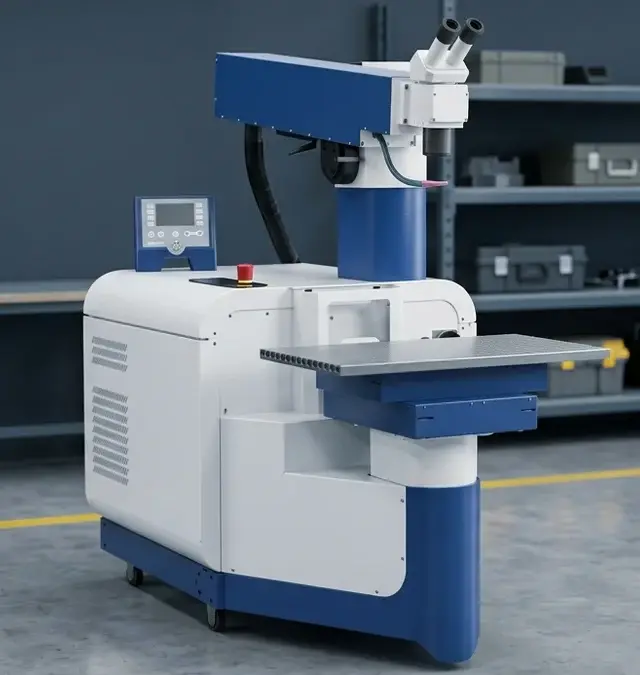
Customized laser welding machines like Sigma Laser’s Sidanus Light and Sineo Fibre are designed to enhance production capabilities by integrating specialized features that meet precise engineering demands. Customization allows for the incorporation of automation in laser welding processes, significantly reducing cycle times and minimizing human error. By embedding technologies such as Sigma Laser’s Super Pulse Technology (SPT) and incorporating advanced Swivel Optics with Telescopic Lens, these systems achieve superior weld quality and consistency. This precision is especially advantageous in industries like automotive and aerospace, where exactitude is critical.
Cost-Effectiveness and ROI
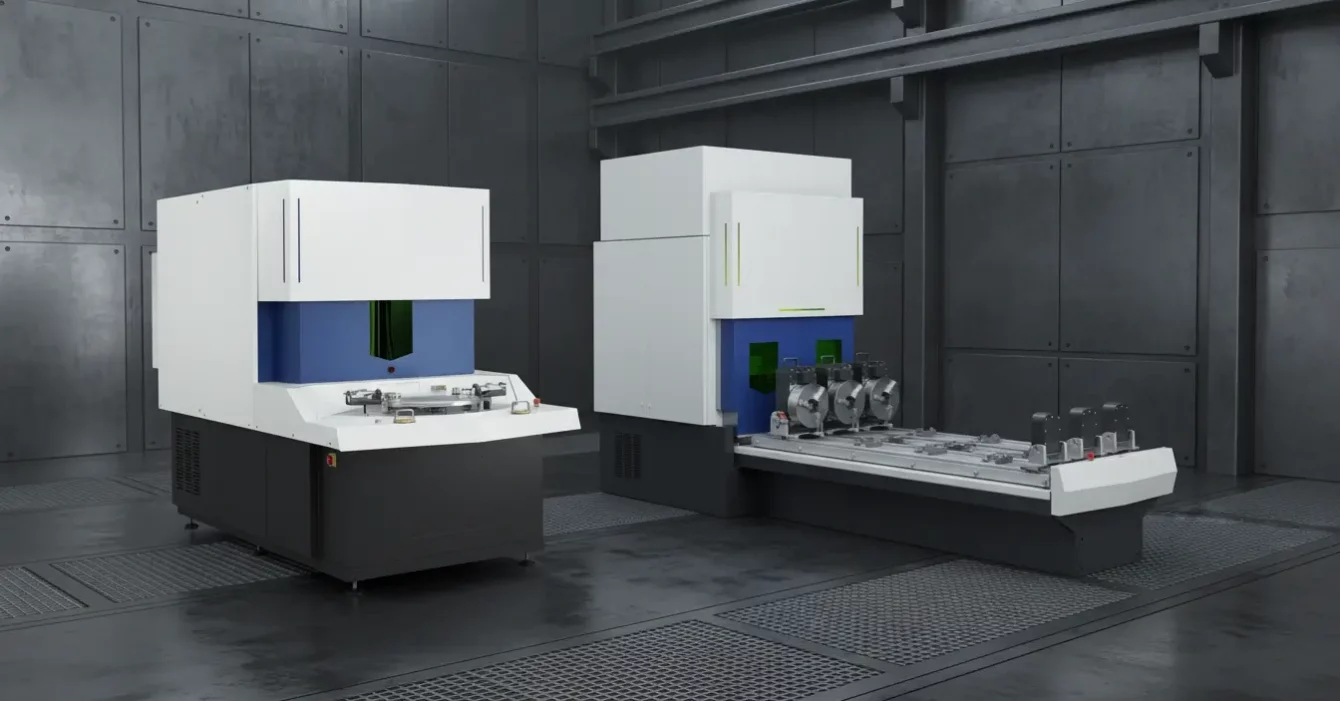
The initial investment in custom laser welding systems is balanced by long-term savings and increased return on investment (ROI). Tailored systems like the Simass Rotate and Simass Slide can be configured to perform complex tasks more efficiently, reducing material waste and energy consumption. By leveraging Sigma Laser’s expertise in laser welding technologies, businesses gain a competitive edge through reduced maintenance costs and extended machine lifespans. Moreover, the adaptability of these machines ensures they remain relevant as production needs evolve, offering a scalable solution that aligns with growth objectives.
The precision and adaptability of these machines allow for welding speeds of up to 5 m/min, depending on the material and thickness, which significantly enhances throughput.
In conclusion, partnering with Sigma Laser for laser welding machine customization not only enhances operational efficiency but also ensures that industrial processes are cost-effective and future-proof. By aligning technology with specific production requirements, businesses can achieve significant improvements in both productivity and quality, reinforcing their position in the competitive European market.
How Does Automation Enhance Laser Welding Processes?
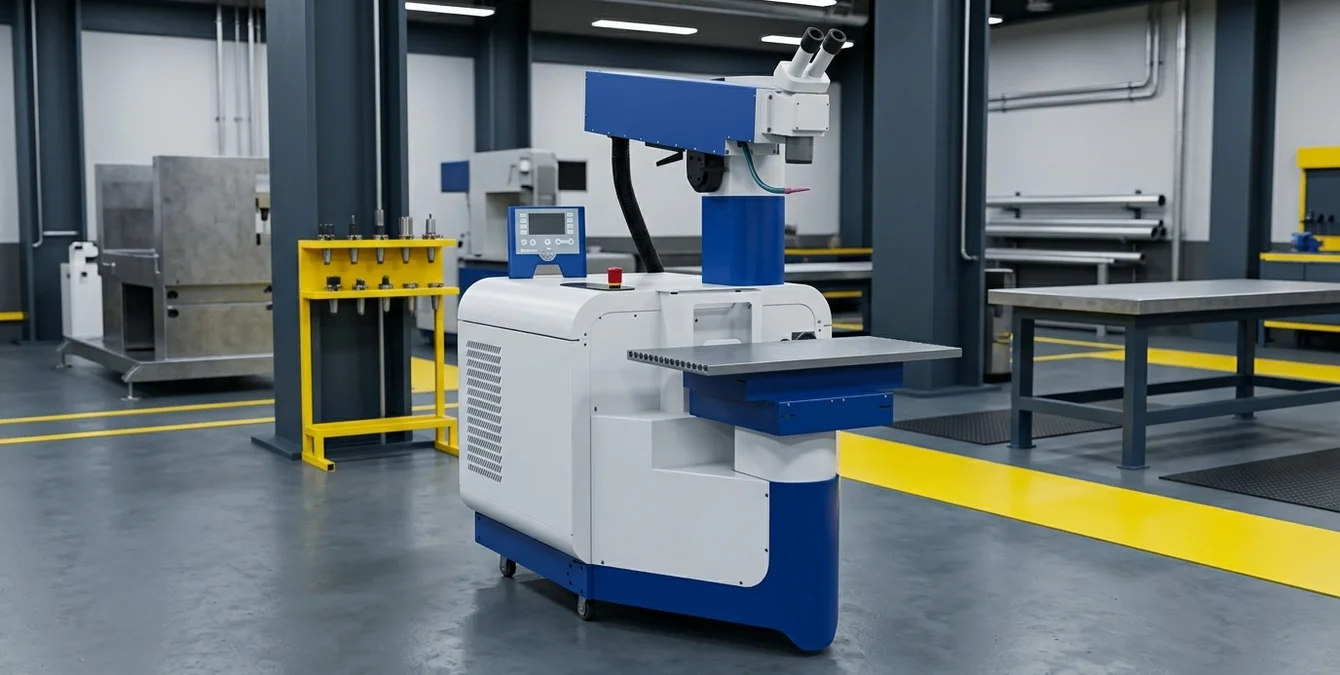
Automation in laser welding has transformed the manufacturing landscape by introducing precision-driven processes that reduce manual involvement and boost efficiency. At Sigma Laser, our custom laser welding systems, including the Sidanus Light and Sirius Light, are designed to integrate seamlessly with automated solutions, delivering unmatched accuracy and consistency. This section explores how automation enhances laser welding processes, providing valuable insights for factory owners and CTOs aiming to optimize production workflows.
Improved Accuracy and Consistency
The implementation of automation in laser welding significantly enhances accuracy and consistency, which are critical in high-precision industries such as automotive and aerospace. Automated systems ensure that each weld is executed with exacting precision, reducing human error and variability. Our Simass Base Unit, integrated with Swivel Optics, allows for precise control over the welding path, ensuring uniformity across all joints.
By utilizing advanced sensors and feedback mechanisms, automated laser welding machines adjust parameters in real-time to accommodate material inconsistencies, further enhancing precision. This capability is essential for maintaining stringent quality standards, such as ISO 9001 and DIN EN ISO 14732, which are crucial for compliance in European industrial markets.
For instance, the integration of real-time monitoring systems allows for the regulation of laser power, typically ranging from 500 W to 6 kW, and welding speeds of up to 10 m/min, depending on the material and thickness. The beam quality, often characterized by an M² value of less than 1.2, ensures high precision, especially in applications requiring a minimal heat-affected zone (HAZ), which is critical for thin materials and sensitive alloys.
Integration with Advanced Technologies
The integration of advanced technologies within automated laser welding systems, such as fiber laser technology and robotic laser welding, elevates the capabilities of our solutions. For instance, the Sineo Fibre system offers superior beam quality and energy efficiency, making it ideal for complex welding tasks.
Automation also facilitates the incorporation of cutting-edge features like the Motor-driven Turning Device and Swivelling Y Axis, which enhance the flexibility and productivity of the welding process. These technologies enable seamless transitions between different welding tasks, allowing for rapid customization and adaptability in production lines.
Incorporating automation with custom laser welding solutions empowers manufacturers to meet diverse production requirements efficiently. This capability is particularly beneficial in sectors demanding rapid prototyping and small-batch production, where quick adjustments and high precision are paramount.
Our systems are compatible with a wide range of materials, including stainless steel (e.g., 304, 316), aluminum alloys (e.g., 6061, 7075), and high-strength steels, adhering to standards such as ISO 15614-11:2002 for welding procedure qualification. This versatility is crucial for industries with stringent requirements for weld integrity and mechanical properties.
As the industry continues to evolve, automation in laser welding remains a cornerstone for achieving operational excellence. With Sigma Laser’s cutting-edge solutions, manufacturers are well-equipped to harness the full potential of laser welding machine customization, achieving greater productivity and superior quality outcomes.
Detailed Case Studies of Custom Laser Welding Solutions
In the ever-evolving landscape of manufacturing, integrating custom laser welding solutions has become a pivotal strategy for enhancing productivity and precision. Sigma Laser’s laser welding machine customization capabilities are at the forefront of this technological advancement, offering bespoke solutions tailored to specific industrial needs. Let’s explore how two distinct industries have successfully implemented these solutions to overcome their unique challenges.
Case Study 1: Automotive Industry
The automotive sector, known for its rigorous demands on precision and efficiency, presents a perfect case for custom laser welding. A leading European automotive manufacturer faced challenges with traditional welding methods, which were affecting the integrity and strength of their vehicle chassis. They turned to Sigma Laser for a solution that would enhance both quality and production speed.
By deploying the Sidanus Fibre system integrated with Sigma Laser’s Super Pulse Technology (SPT), the manufacturer achieved significant improvements in weld consistency and penetration. The laser welding automation process, facilitated by the Swivel Optics with Telescopic Lens, enabled precise control over the welding parameters, adapting seamlessly to various metal thicknesses and compositions.
- Challenge: Inconsistent weld quality and slow production speeds.
- Solution: Deployment of Sigma Laser’s customized Sidanus Fibre with SPT.
- Outcome: Enhanced weld quality, increased production speed by 30%, and reduced material wastage.
- Specifications: The Sidanus Fibre system operates typically at power levels ranging from 1 kW to 6 kW, with a wavelength of 1070 nm, and a beam quality M² typically less than 1.1, which is ideal for high-precision automotive applications.
- Process Parameters: Welding speeds can reach up to 6 meters per minute, with penetration depths typically varying from 1 mm to 5 mm, depending on the material thickness and type.
- Material Compatibility: Successfully used on high-strength steels such as DP980 and aluminum alloys like 6061, adhering to the standards outlined in DIN EN ISO 4063:2011.
Case Study 2: Aerospace Applications
Aerospace applications demand unparalleled precision and reliability, where even minor defects can lead to significant safety risks. A prominent aerospace manufacturer sought to improve their welding processes for high-strength alloy components. Traditional methods were inadequate for meeting the stringent standards required by the European Committee for Standardization.
Utilizing Sigma Laser’s Sineo Fibre system, equipped with the Simass Rotate module, the manufacturer could perform complex welds with high precision. The system’s advanced Robotic Laser Welding capabilities ensured that each weld met the exacting standards of aerospace engineering, providing unmatched repeatability and strength.
- Challenge: Precision welding of high-strength alloys to meet rigorous aerospace standards.
- Solution: Adoption of Sigma Laser’s Sineo Fibre with Simass Rotate module.
- Outcome: Achieved compliance with ISO 9001 standards, improved weld precision by 25%, and reduced cycle times.
- Specifications: The Sineo Fibre system typically operates at power levels from 2 kW to 8 kW, with a wavelength of 1070 nm, and a beam quality M² typically less than 1.2, suitable for aerospace-grade materials.
- Process Parameters: Capable of welding speeds up to 4 meters per minute with penetration depths up to 8 mm, critical for high-strength alloys like Inconel 718 and titanium alloys.
- Engineering Constraints: The system maintains a repeatability of ±0.05 mm, meeting the stringent requirements of ISO 15614-11:2002 for aerospace applications.
These case studies exemplify how Sigma Laser’s custom laser welding solutions are not just about technology but about engineering excellence tailored to specific industrial challenges. By leveraging advanced fiber laser technology and automation in laser welding, industries can achieve superior outcomes, aligning with their strategic goals for innovation and efficiency.
Which Customization Options Are Available Across Different Brands?
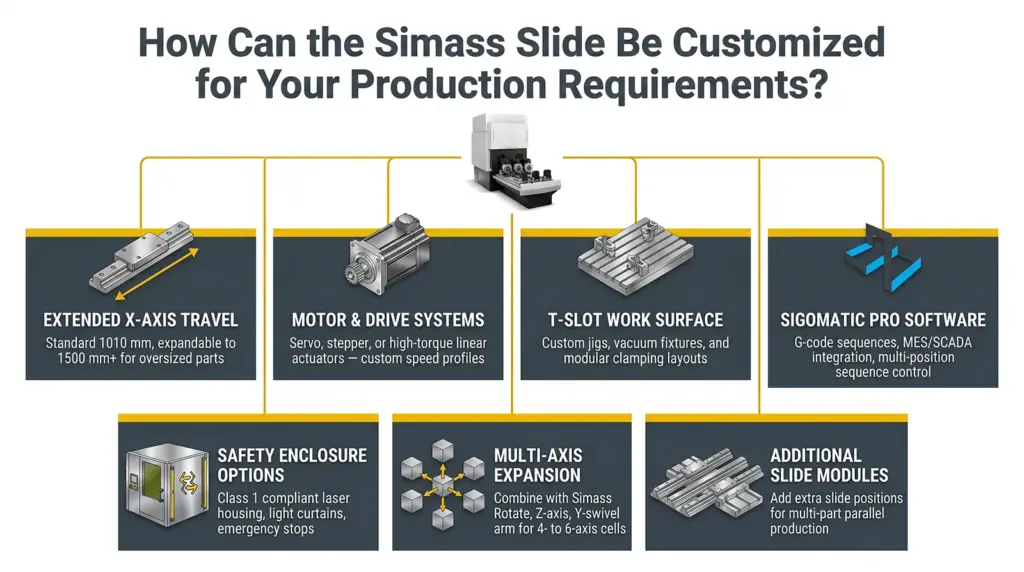
In precision engineering, laser welding machines play a crucial role in boosting production efficiency and ensuring top-notch quality. Customization in these machines is essential for tailoring solutions to specific industrial needs, from automotive to aerospace applications. The comparison of leading manufacturers below highlights the customization features, flexibility, and support services available, focusing on their implications for manufacturing engineers and procurement managers.
Brand A: Customization Features
Brand A is well-known for its wide range of customization options, especially in laser welding automation. Their systems are designed to handle various welding tasks with adaptable configurations that suit specific production environments. Key customization features offered by Brand A include:
- Modular Components: Their laser welding systems can be configured with modular components like the Swivel Optics and Z-Axis Module, enabling precise and versatile welding operations. These components typically support beam quality (M²) values of less than 1.2, ensuring high precision and minimal beam divergence.
- Advanced Software Integration: Seamless integration with existing manufacturing execution systems (MES) ensures real-time data exchange and enhances process control. This integration is crucial for maintaining compliance with ISO 15614-11:2002 standards for laser welding process qualification.
- Super Pulse Technology (SPT): This feature provides high peak power pulses for welding reflective materials, expanding material compatibility and application scope. Typical peak powers can reach up to 10 kW, allowing effective welding of materials such as aluminum alloys (e.g., AA6061) and stainless steels (e.g., 304, 316).
These features allow manufacturers to optimize their welding processes, reduce downtime, and increase throughput, making Brand A a compelling choice for factories looking to enhance their production capabilities. The systems typically achieve penetration depths of up to 5 mm in steel, with heat-affected zones (HAZ) minimized to less than 0.5 mm, ensuring structural integrity and compliance with EN 1011-7:2004 guidelines.
Brand B: Flexibility and Support
Brand B focuses on flexibility and robust support services, offering custom laser welding solutions that adapt to evolving industrial demands. Their emphasis on flexibility is evident in their product lineup, which includes the Sidanus Fibre and Simass Rotate, engineered for diverse applications. Key aspects include:
- Flexible Integration: The systems are designed for easy integration with robotic laser welding setups, enhancing automation capabilities across production lines. Typical integration supports laser power ranges from 500 W to 6 kW, accommodating various material thicknesses and welding speeds up to 10 m/min.
- Comprehensive Support Services: Brand B provides extensive post-purchase support, including on-site training and maintenance services, ensuring seamless operations and minimal disruption.
- Tailored Solutions: Their engineering teams work closely with clients to develop bespoke laser welding solutions, addressing unique production challenges. This customization often includes adjustments to focal lengths, typically ranging from 100 mm to 300 mm, to optimize beam focus and welding precision.
For manufacturing engineers and procurement managers, the flexibility and support provided by Brand B can significantly contribute to maintaining a competitive edge, especially in fast-paced industries like electronics and medical device manufacturing. The systems typically offer repeatability within ±0.05 mm, ensuring high precision and consistent quality in production runs.
Can Custom Laser Welding Machines Improve Your Production Line?
In the realm of modern manufacturing, the precision and adaptability of custom laser welding machines are crucial for optimizing production lines. Tailored specifically to meet the unique demands of your operations, these systems offer significant advantages in terms of efficiency and product quality.
Increased Throughput and Efficiency
The implementation of laser welding machine customization can lead to substantially increased throughput. By integrating advanced automation in laser welding, such as Sigma Laser’s Simass Base Unit and Swivel Optics, manufacturers can achieve faster cycle times while maintaining exceptional accuracy. This results in higher output without compromising precision, allowing production lines to meet growing market demands efficiently. Additionally, the reduction in manual intervention and the incorporation of fiber laser technology ensure consistent performance and minimize human error, leading to reduced downtime.
Custom laser welding machines typically operate within a power range of 500W to 6kW, with wavelengths around 1064 nm for fiber lasers, which are optimal for welding a variety of materials, including stainless steel, aluminum alloys, and titanium. The beam quality, often characterized by an M² value less than 1.5, ensures high precision and minimal heat-affected zones (HAZ), typically less than 0.5 mm, which is crucial for maintaining material properties.
Welding speeds can reach up to 10 m/min, depending on the material and thickness, with penetration depths commonly ranging from 0.1 mm to 10 mm. These parameters must be carefully controlled to comply with ISO 15614-11:2002, which governs the qualification of welding procedures for metallic materials.
Enhanced Product Quality
Custom laser welding systems not only optimize efficiency but also significantly enhance product quality. With the ability to configure systems like the Sidanus Light and Sineo Fibre to specific material and welding requirements, manufacturers can achieve superior weld integrity. Precise control over parameters such as energy output and beam focus, facilitated by features like the Swivelling Y Axis and Z-Axis Module, ensures uniform welds across complex geometries. This level of customization supports adherence to stringent standards such as ISO 9001 and DIN EN ISO 14732, reinforcing the reliability and durability of the final product.
In terms of tolerance and precision, these systems can achieve repeatability within ±0.1 mm, which is critical for applications requiring high precision, such as in the aerospace and automotive industries. The ability to maintain consistent weld quality across various production runs is a testament to the robust design and engineering of these custom systems.
In conclusion, custom laser welding machines are not just an upgrade but a strategic investment in the future of manufacturing efficiency and quality. By adopting these systems, factory owners and CTOs can position their production lines at the forefront of industrial innovation, ensuring competitiveness and adaptability in ever-evolving markets.

Frequently Asked Questions
What are the benefits of customizing a laser welding machine?
Customizing a laser welding machine allows for tailored solutions that meet specific production requirements, enhancing efficiency and product quality. Customization can include adjustments in power output, beam delivery, and integration with existing automation systems, resulting in improved precision, reduced waste, and optimized throughput.
How does automation enhance laser welding processes?
Automation in laser welding processes increases consistency, speed, and accuracy, reducing human error and labor costs. It enables real-time monitoring and adjustments, ensuring optimal welding parameters are maintained. Automated systems can also facilitate complex welding tasks and integrate seamlessly with production lines.
Can customized laser welding systems improve energy efficiency?
Customized laser welding systems can significantly enhance energy efficiency by optimizing laser parameters to match specific materials and thicknesses. This reduces unnecessary energy consumption and minimizes heat input, leading to lower operating costs and a smaller environmental footprint.
What factors should be considered when customizing a laser welding machine?
Key factors include the material type, thickness, desired weld quality, production speed, and integration with existing systems. Understanding these parameters helps in selecting appropriate laser sources, optics, and control systems to achieve optimal performance and cost-effectiveness.
How does laser welding customization impact maintenance and downtime?
Customization can streamline maintenance by incorporating features that facilitate easier diagnostics and repairs, reducing downtime. Tailored systems can include predictive maintenance capabilities, allowing for proactive interventions and minimizing unexpected breakdowns.
Is it possible to integrate customized laser welding machines with existing production lines?
Customized laser welding machines can be designed for seamless integration with existing production lines. This involves aligning control systems, ensuring compatibility with current automation protocols, and configuring the machine layout to fit within the production environment, thereby enhancing overall operational efficiency.
Sources
- ISO 15614-11:2002 — Specification and qualification of welding procedures for metallic materials – Part 11: Electron and laser beam welding.
- DIN EN ISO 4063:2011 — Welding and allied processes – Nomenclature of processes and reference numbers.
- EN 1011-7:2004 — Welding – Recommendations for welding of metallic materials – Part 7: Electron and laser beam welding.
- Journal of Laser Applications — Peer-reviewed journal covering laser applications in manufacturing and materials processing.
- Optics and Lasers in Engineering — International journal focusing on the research and development of laser technology in engineering.
- Welding Journal — Monthly publication by the American Welding Society covering welding technology and applications.