
- Built for Both Worlds
- The Automation Recipe
- Even Energy Around the Circumference
- Fast Changeover Without Custom Fixtures
- Quality and Uptime Routines
- Frequently Asked Questions
- How do I synchronize rotation speed and laser pulses on Simass Rotate?
- Can I switch between manual and automated operation easily?
- What maintenance does the rotary chuck require?
- How do I store and recall batch programs for different part sizes?
Quick Answer: Automating Simass Rotate with Sigomatic Pro enables precise, repeatable rotary welding by integrating programmable table control with laser parameters. Operators can synchronize rotation speed and pulse timing, automate weld cycles, and quickly adapt to different part sizes, maximizing quality and throughput in tooling and mold applications.
| Operation Mode | Description | Key Features |
|---|---|---|
| Automated (Sigomatic/Sigomatic Pro) | Programmable rotary table and laser control via software | Fixed-clock or freely programmable rotation; teach-in geometry (Line, Circle, Spline); coordinated axis/rotation; program storage; live feedback |
| Manual | Direct human control for prototype, troubleshooting, or unique repairs | Rapid mode switching; supports flexible production needs; maintains precision and repeatability |
Both modes maintain rotary table precision with closed-loop feedback.
Built for Both Worlds
The Simass Rotate module is engineered to accommodate both automated and manual operation modes, providing maximum flexibility for production environments. Operators can select between fixed-clock (pre-set indexing) and freely programmable rotary table modes, depending on the complexity and precision required for the welding task. This dual capability allows the system to handle everything from simple repetitive welds to intricate, custom patterns on demanding geometries.
Automation is achieved through direct integration with Sigomatic or Sigomatic Pro software, which issues commands to control both the rotary table and the laser welding process. The software interprets teach-in geometry primitives—such as Line, Circle, or Spline—and translates them into coordinated axis and rotation movements. This enables operators to program complex welding paths without advanced programming skills, streamlining setup and reducing the risk of operator error.
Manual operation remains available for prototype work, troubleshooting, or unique repair tasks where direct human control is advantageous. The transition between manual and automated modes is supported by the system’s interface, allowing for rapid switching as production needs evolve. This flexibility is particularly valuable in tooling and mold shops, where batch sizes and part geometries can vary significantly.
In both modes, the rotary table’s precision and repeatability are maintained by closed-loop feedback, ensuring that each indexed position or continuous rotation is executed according to the programmed parameters. This foundation is critical for achieving consistent weld quality and minimizing rework, especially in high-value or safety-critical applications.
| Parameter | Role in Process | Programmable in Sigomatic Pro? |
|---|---|---|
| Rotation speed | Determines circumferential weld uniformity and thermal input | Yes |
| Pulse frequency & duration | Controls weld penetration and bead consistency | Yes |
| Start/stop points | Defines weld segment boundaries | Yes |
| Overlap/fade-out zones | Eliminates weak points and minimizes distortion | Yes |
Operators can store and recall parameter sets for repeat jobs.
The Automation Recipe
Effective automation of the Simass Rotate module with Sigomatic Pro centers on the careful synchronization of rotary table motion and laser welding parameters. Operators begin by defining the required rotation speed, which is selected based on the material, weld geometry, and desired thermal input. This speed must be matched with the laser’s pulse frequency and duration to ensure uniform weld penetration and bead consistency around the entire circumference.
Sigomatic Pro allows operators to program the start and stop points of the rotation, as well as any required overlaps or fade-out zones at the end of the weld. Overlap programming is particularly important for circumferential welds, as it eliminates weak points at the junction where the weld begins and ends. Fade-out routines can be used to gradually reduce power or pulse duration at the weld termination, minimizing the risk of crater formation or thermal distortion.
The software supports teach-in routines where operators can jog the rotary table to specific positions, test-weld short segments, and then store these sequences for automated execution. This approach reduces trial-and-error during setup and ensures that the programmed cycle matches the actual part geometry and fixturing. For repeat jobs, stored programs can be recalled and adjusted for minor variations, further reducing setup time.
Throughout the automation process, the operator monitors live feedback from the Sigomatic interface, including axis positions, rotation status, and process alarms. This real-time data enables rapid intervention if deviations occur, supporting both process reliability and operator safety. The combination of programmable control and live monitoring forms the backbone of efficient, high-quality automated rotary welding.
Even Energy Around the Circumference
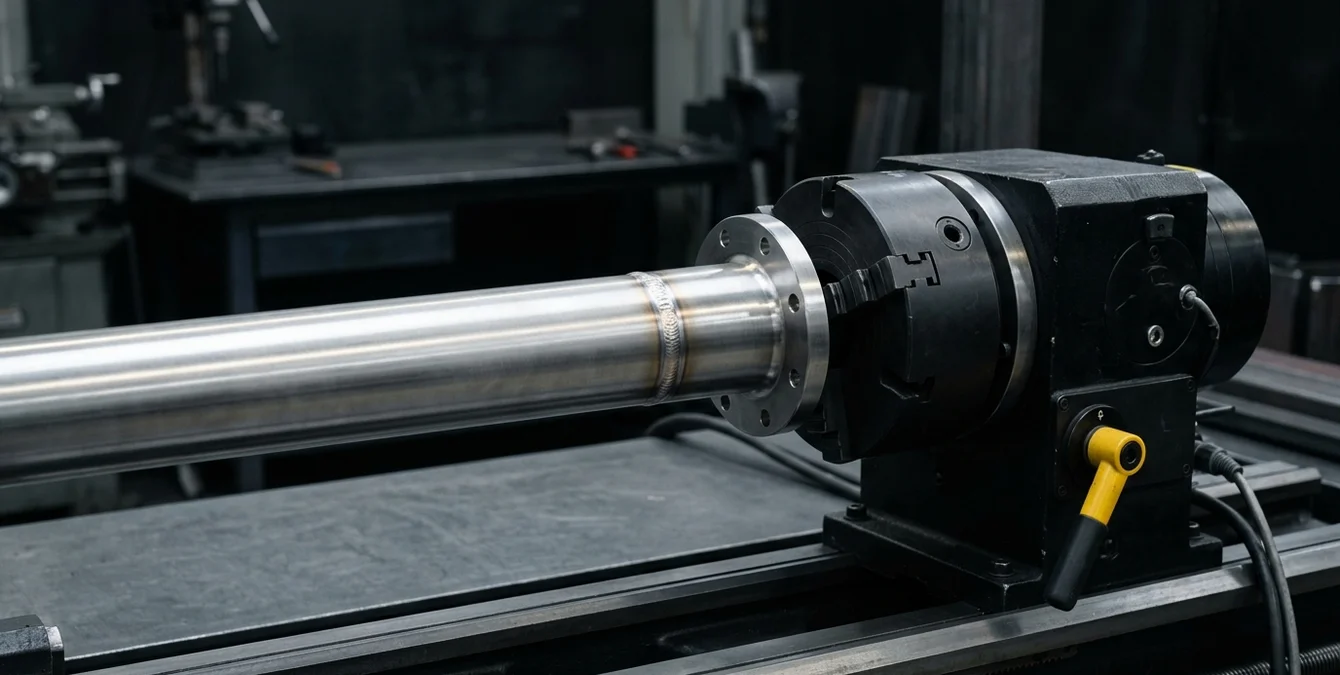
Achieving even energy distribution during circumferential welding is critical for joint integrity, especially in applications such as mold repair, shaft welding, or sealing rings. The Simass Rotate module, when automated via Sigomatic Pro, enables continuous rotation of the workpiece under the laser beam. This approach contrasts with step-indexed or manual rotation, where energy input can be uneven and result in inconsistent weld quality.
Continuous rotation ensures that the laser’s energy is applied uniformly as the part turns, preventing local overheating, undercut, or incomplete fusion. Operators set the rotation speed in conjunction with laser pulse rate and duration, creating a synchronized process where each pulse overlaps slightly with the previous one. This overlap is essential for forming a smooth, defect-free weld bead without gaps or excessive buildup.
Sigomatic Pro’s programmable control allows for fine-tuning of these parameters based on part diameter, material type, and desired weld characteristics. For example, larger diameters may require slower rotation or higher pulse frequency to maintain consistent energy density. The system’s live feedback enables operators to verify that rotation remains steady and that the weld pool behaves as expected throughout the cycle.
Uniform energy input also contributes to better metallurgical properties, reducing the risk of heat-affected zone (HAZ) issues and minimizing post-weld distortion. In high-precision sectors such as tooling, medical device manufacturing, or aerospace, this level of control is essential for meeting stringent quality requirements and ensuring long-term part performance.
| Feature | Description | Capacity/Range |
|---|---|---|
| Three-jaw chuck | Secures round parts without custom fixtures | Up to 1500 mm diameter (Simass Rotate); up to 500 mm diameter × 1500 mm length (Simass Slide) |
| Batch programming | Parameter sets for diameter families; rapid adaptation | Stored and editable in Sigomatic Pro |
| Changeover time | Switch between jobs without fixture fabrication | Minimized for productivity |
Standard chuck supports a wide range of cylindrical components.
Fast Changeover Without Custom Fixtures
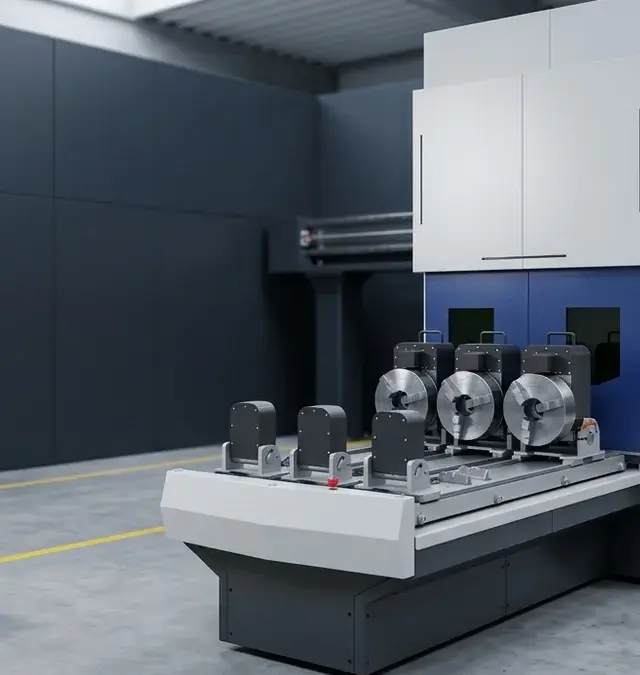
One of the key operational advantages of the Simass Rotate module is its ability to secure round parts directly in the standard three-jaw chuck, eliminating the need for custom fixtures for most cylindrical components. This feature significantly reduces setup time and enhances flexibility, particularly in environments with frequent part changeovers or small-batch production.
Operators can quickly load parts of varying diameters by adjusting the chuck, which accommodates a wide range of sizes up to the module’s capacity (e.g., up to 500 mm diameter and 1500 mm length on Simass Slide; Simass Rotate uses the same robust chuck, with a maximum diameter of 1500 mm). Once the part is secured, batch programs tailored to specific diameter families can be selected or modified via Sigomatic Pro. This allows for rapid adaptation to new jobs without the delays associated with fixture fabrication or adjustment.
Batch programming is especially beneficial for production runs involving similar parts with minor dimensional differences. Operators can create parameter sets for each diameter family, ensuring optimal rotation speed, pulse synchronization, and weld overlap for every variant. These programs can be stored, recalled, and edited as needed, streamlining workflow and reducing the risk of setup errors.
This fast changeover capability not only improves productivity but also supports lean manufacturing initiatives by minimizing non-value-added time. In sectors such as mold repair or automotive component welding, where downtime directly impacts throughput, the ability to switch between jobs quickly and reliably is a significant competitive advantage.
Quality and Uptime Routines
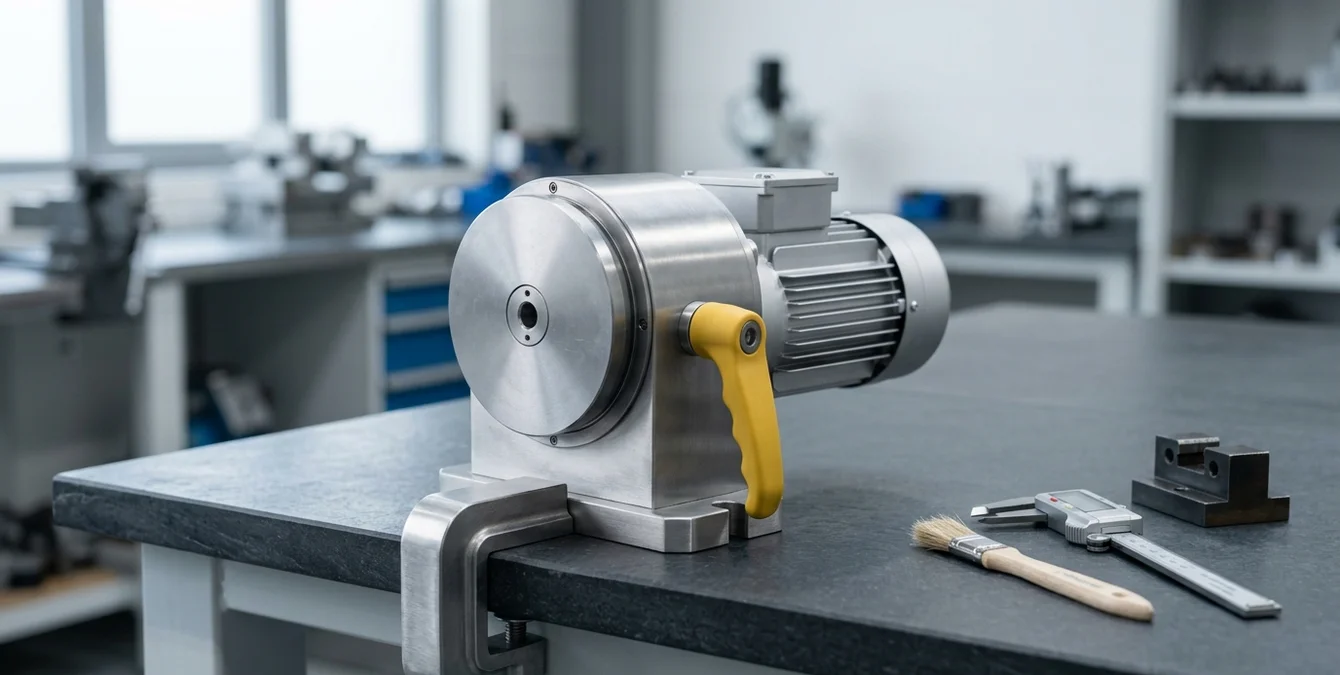
Maintaining consistent weld quality and maximizing system uptime requires a disciplined approach to routine checks and preventive maintenance. For every batch, operators should begin with a visual inspection of the part and weld zone, looking for surface contaminants, oxidation, or geometric irregularities that could affect weld integrity. Cleanliness is essential, as even minor debris can disrupt the laser process and lead to defects.
The chuck and rotary device itself require regular inspection for wear, dust accumulation, and alignment. Operators should check for smooth jaw movement, secure clamping, and absence of slippage during rotation. Any signs of wear or contamination should be addressed immediately to prevent part movement or misalignment during welding, which can compromise both quality and safety.
Before starting a new batch or after maintenance, it is best practice to power-cycle the rotary device and observe its startup behavior. A smooth, vibration-free startup indicates that the system is ready for precise operation. Any unusual noises, hesitation, or error messages should be investigated and resolved before proceeding with production.
Throughout production, operators should monitor process feedback via the Sigomatic interface, watching for alarms, axis errors, or deviations in rotation speed. Prompt response to these cues minimizes downtime and avoids scrap. By integrating these quality and uptime routines into daily practice, operators ensure that the Simass Rotate module delivers reliable, high-quality results batch after batch.
Frequently Asked Questions
How do I synchronize rotation speed and laser pulses on Simass Rotate?
Set the rotary table speed and laser pulse parameters in Sigomatic Pro so that each pulse overlaps slightly as the part rotates. Adjust speed and pulse rate according to part diameter and material, then verify synchronization with a test weld before running the full cycle.
Can I switch between manual and automated operation easily?
Yes, Simass Rotate supports both manual and automated modes. Operators can transition between them via the system interface, allowing for quick changes based on production needs, prototyping, or troubleshooting tasks.
What maintenance does the rotary chuck require?
Regularly inspect the chuck for dust, debris, and wear. Ensure jaws move smoothly and clamp securely. Clean as needed and check alignment before each batch. Power-cycle the device to confirm smooth startup and address any issues before production.
How do I store and recall batch programs for different part sizes?
Use Sigomatic Pro to create and save parameter sets for each diameter family or part type. These programs can be recalled and edited as needed, enabling fast changeover and consistent results across multiple production runs.