
- Key Takeaways
- How Do Laser Welding Parameters Affect Weld Quality?
- Impact of Speed on Weld Quality
- Role of Power in Weld Integrity
- Focus and Its Effect on Weld Precision
- What Are the Optimal Laser Welding Settings for Aluminum?
- Recommended Speed and Power for Aluminum
- Material-Specific Considerations
- Common Challenges and Solutions
- Which Laser Welding Parameters Are Crucial for Different Materials?
- Steel: Parameter Settings and Considerations
- Titanium: Adjustments for Optimal Welding
- Copper: Unique Challenges and Solutions
- Can Environmental Conditions Affect Laser Welding Performance?
- Temperature and Its Influence on Welding
- Humidity: Effects and Precautions
- Importance of a Clean Environment
- Why Is It Important to Optimize Welding Speed and Power?
- Benefits of Optimizing Welding Speed
- Power Optimization for Cost Efficiency
- Impact on Production Rates
- How to Adjust Laser Welding Parameters for Maximum Efficiency?
- Step-by-Step Parameter Adjustment
- Practical Tips for Efficiency
- Common Mistakes and How to Avoid Them
- Frequently Asked Questions
- How do laser welding parameters affect weld quality?
- What are the optimal laser welding settings for aluminum?
- What role does focus position play in laser welding?
- How does travel speed impact laser welds?
- Why is shielding gas important in laser welding?
- How do material properties influence laser welding parameters?
Key Takeaways
Understanding the intricacies of laser welding parameters is crucial for optimizing welding operations and ensuring high-quality outcomes. By mastering factors such as beam diameter, heat application, and the interaction of power, speed, and focus, engineering and procurement professionals can significantly enhance process efficiency and product quality.
- Beam diameter directly influences the concentration of heat application; smaller diameters result in deeper penetration, essential for thick material welding.
- Adjusting laser power is crucial for controlling weld penetration and minimizing defects; higher power increases penetration but may increase spatter if not managed properly.
- Welding speed must be optimized in conjunction with power settings to balance penetration depth and heat input, reducing the risk of thermal distortion.
- The focus position of the laser beam affects the energy density on the material surface; precise focus control is essential for achieving consistent weld quality.
- Interaction of power, speed, and focus determines the weld pool dynamics; a synergistic approach to these parameters can enhance joint strength and uniformity.
- Real-time monitoring and adaptive control of laser parameters can lead to significant improvements in process stability and repeatability.
- Understanding material-specific responses to laser parameters helps in selecting the optimal settings for different alloys, improving weld integrity.
By delving deeper into the nuances of laser welding parameters, professionals can make informed decisions that enhance their operational capabilities. The following article explores these parameters in detail, providing insights to optimize your welding processes.
How Do Laser Welding Parameters Affect Weld Quality?
In precision manufacturing, the quality of a weld significantly depends on the laser welding parameters. For engineers using Sigma Laser systems like the Sidanus Light or Sirius Light, understanding how variables such as speed, power, and focus interact is crucial for optimizing weld strength and appearance. These parameters not only affect the immediate quality but also the long-term durability of the weld.
Impact of Speed on Weld Quality
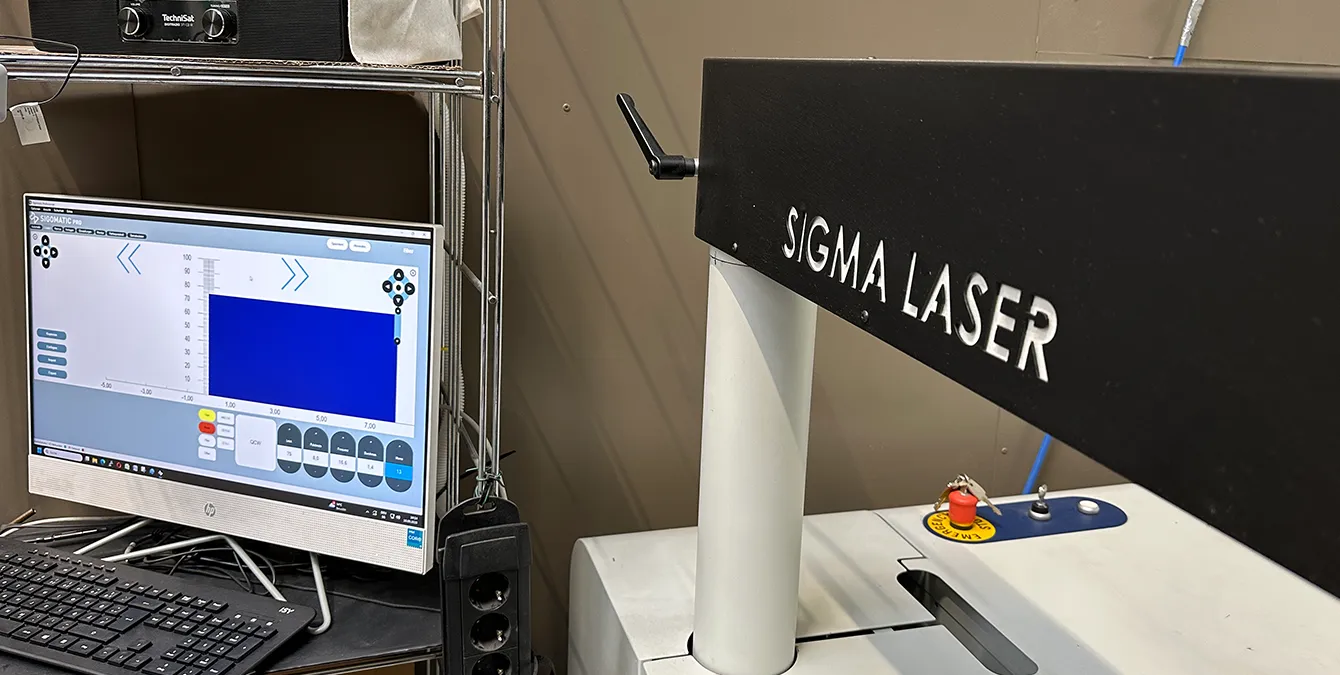
Welding speed is a critical parameter influencing the heat input and cooling rate during the process. Excessive speed can result in insufficient heat application, leading to weak joints with poor penetration. Conversely, slower speeds may cause overheating, which can lead to warping or excessive melt pool formation. For instance, when using the Sigomatic Pro with Swivel Optics, adjusting the welding speed is key to balancing penetration and surface integrity, especially in sensitive materials like aluminum.
Typically, welding speeds range from 0.5 to 10 meters per minute, depending on the material and thickness. For aluminum alloys, a speed of around 2 to 5 meters per minute is common to ensure adequate penetration without excessive heat input, minimizing the risk of thermal distortion.
Role of Power in Weld Integrity
The power setting of a laser welding system, such as the Sidanus Fibre equipped with Super Pulse Technology (SPT), directly impacts the depth of penetration and the strength of the weld. High power levels can achieve deep penetrations needed for thick materials, but they can also introduce defects like porosity if not controlled. Lower power settings are suitable for delicate applications but may compromise the weld’s mechanical properties if not finely tuned. Proper calibration of laser power ensures compliance with ISO 9001 standards for quality assurance.
Power levels in industrial laser welding systems typically range from 500 watts to 10 kilowatts, with a common operational range for precision applications being 1 to 3 kilowatts. The beam quality, often measured by the M² factor, should ideally be less than 1.5 for high-precision welding tasks.
Focus and Its Effect on Weld Precision
Focus is another pivotal factor affecting weld precision. The laser beam diameter, controlled through Swivel Optics with Telescopic Lens, determines the concentration of energy on the weld area. A precise focus ensures a narrow, deep weld with minimal distortion, which is crucial for high-precision industries. Misalignment or defocusing can lead to broader, shallow welds that are prone to cracking and other defects. Adhering to standards such as DIN EN ISO 4063 ensures that focus settings are optimized for each application.
The focal length, typically ranging from 100 to 200 mm, plays a crucial role in determining the spot size and energy density. Maintaining a focus tolerance of ±0.1 mm is critical to achieving consistent weld quality, particularly in applications involving high-strength steels or titanium alloys.
In conclusion, mastering laser welding parameters is vital for manufacturing engineers seeking to enhance weld quality and ensure product reliability. Through careful adjustment of speed, power, and focus, Sigma Laser systems offer unparalleled precision and efficiency in industrial applications.
What Are the Optimal Laser Welding Settings for Aluminum?
In industrial applications, precise control over laser welding parameters is crucial for achieving high-quality welds, especially when working with aluminum. Given its high thermal conductivity and reflectivity, aluminum presents unique challenges in laser welding. Sigma Laser’s advanced systems, such as the Sidanus Light and Siega Fibre, are engineered to effectively address these challenges.
Recommended Speed and Power for Aluminum
When establishing laser welding parameters for aluminum, it is essential to focus on the balance between welding speed and power. Typically, a higher power setting is recommended to penetrate aluminum’s reflective surface effectively. For instance, a power setting ranging from 3 to 6 kW is generally optimal. The speed, on the other hand, needs to be adjusted to ensure adequate fusion without overheating the material. A welding speed between 1 to 3 m/min is often recommended depending on the thickness and specific alloy of the aluminum. Utilizing Sigma Laser’s Super Pulse Technology (SPT) can help maintain a stable weld pool, thus reducing the risk of defects.
For optimal results, a laser with a wavelength of approximately 1.06 µm, typical for fiber lasers, is often used due to its efficiency in penetrating aluminum’s surface. The beam quality, characterized by an M² value of less than 1.5, ensures precise energy delivery and minimal heat-affected zone (HAZ), which is crucial for maintaining the integrity of the weld.
Material-Specific Considerations
When welding aluminum, engineers must consider the specific alloy, as variations in silicon and magnesium content can affect weldability. Pre-weld cleaning is critical due to aluminum oxide formation, which can hinder proper fusion. Sigma Laser’s Swivel Optics and Z-Axis Module provide the flexibility needed to adjust the laser focus accurately, accommodating different surface conditions and ensuring consistent weld quality.
Alloys such as 6061 and 5052 are commonly used in industrial applications. The presence of elements like magnesium can enhance the weldability but also necessitates precise control over parameters to prevent defects such as porosity and cracking.
Common Challenges and Solutions
Common challenges in laser welding aluminum include porosity and cracking due to its thermal properties. To mitigate these issues, Sigma Laser systems incorporate advanced features such as Heat Application Control, which allows precise modulation of heat input to manage cooling rates effectively. Additionally, our Simass Rotate and Simass Slide motion systems ensure superior control over joint alignment, further contributing to the reduction of potential defects.
Adhering to standards such as ISO 15614-11:2002 for welding procedure qualification can ensure compliance with industry requirements and enhance the reliability of welds. The systems are designed to operate within a repeatability tolerance of ±0.1 mm, ensuring precision in high-volume manufacturing environments.
The optimal setup of laser welding parameters is crucial for achieving reliable and high-quality welds in aluminum, a mission well-supported by Sigma Laser’s cutting-edge welding technologies.
Which Laser Welding Parameters Are Crucial for Different Materials?
In precision engineering, understanding laser welding parameters is essential for achieving optimal results across various materials. Sigma Laser’s advanced systems, such as the Sidanus Fibre and Sirius Light, offer unmatched precision and control, making them ideal for complex industrial applications. Here, we explore the key parameters necessary for welding steel, titanium, and copper—three materials frequently used in high-stakes manufacturing environments.
Steel: Parameter Settings and Considerations
Steel is a staple in many industries due to its strength and versatility. However, achieving a high-quality weld requires meticulous adjustment of laser welding parameters. The laser beam diameter and power settings are crucial. For instance, a smaller beam diameter enhances precision, while power settings must be fine-tuned to ensure penetration without compromising material integrity.
- Welding Speed: Adjusting the speed is critical; slower speeds increase penetration but may risk overheating. Typical welding speeds range from 0.5 to 3 m/min depending on the thickness and grade of steel.
- Laser Power: High power is often necessary for thicker sections, but it must be balanced to prevent thermal distortion. Power settings can range from 1 kW to 10 kW, with beam quality M² values typically around 1.1 to 1.3 for high precision.
- Heat Application Control: Essential for maintaining the mechanical properties of steel, especially in automotive and aerospace applications. The heat-affected zone (HAZ) should be minimized to less than 2 mm for most applications.
- Material Compatibility: Common steel grades such as AISI 304 and AISI 316L are frequently used, requiring specific parameter adjustments to ensure optimal results.
Titanium: Adjustments for Optimal Welding
Titanium’s excellent corrosion resistance and high strength-to-weight ratio make it valuable in industries like aerospace. However, its reactivity at high temperatures poses challenges. Sigma Laser’s Super Pulse Technology (SPT) provides the precise control needed to manage these challenges.
- Pulse Settings: Short, controlled pulses reduce the risk of oxidation and maintain the material’s integrity. Pulse durations typically range from 0.1 to 10 ms with peak powers up to 5 kW.
- Shielding Gas: Argon is typically used to prevent contamination and ensure high-quality welds. The flow rate should be maintained at approximately 10-15 L/min to ensure adequate coverage.
- Welding Environment: A controlled environment minimizes exposure to air, further protecting the weld area. This is critical to comply with ISO 15614-11:2002 standards for titanium welding.
Copper: Unique Challenges and Solutions
Copper’s high thermal conductivity requires specialized approaches. Utilizing Sigma Laser’s fiber laser systems, which offer superior control over welding speed and power, can mitigate common issues like heat dissipation.
- Power Density: High power density is crucial to overcome copper’s thermal conductivity, ensuring effective penetration. Power densities of 10^6 W/cm² or higher are typically required.
- Welding Speed: Faster speeds reduce heat input, preventing excessive heat saturation. Speeds of up to 5 m/min are often used to manage heat input effectively.
- Laser Beam Modulation: Techniques like beam shaping can enhance absorption and improve weld quality. Beam modulation frequencies can range from 1 kHz to 5 kHz to optimize energy distribution.
- Engineering Constraints: The reflectivity of copper necessitates careful parameter tuning to avoid back-reflection, which can damage laser optics.
By understanding and adjusting these laser welding parameters, manufacturers can significantly improve the reliability and quality of welds in diverse industrial applications. Sigma Laser’s technology, integrated with solutions like the Swivel Optics and Simass Base Unit, sets the standard for precision and efficiency in laser welding.
Can Environmental Conditions Affect Laser Welding Performance?
In precision manufacturing, the performance of laser welding systems, including Sigma Laser’s Sidanus Light and Sirius Light, can be significantly influenced by environmental conditions. Understanding these factors is crucial for maintaining optimal laser welding parameters and ensuring weld quality in industrial applications.
Temperature and Its Influence on Welding
Temperature fluctuations can impact laser welding parameters, such as welding speed and power. Elevated temperatures may lead to increased thermal expansion of materials, potentially causing misalignment in welding paths. Conversely, low temperatures can affect the consistency of laser beam delivery and absorption. It is essential for welding engineers to monitor and control the ambient temperature in the welding environment to maintain consistent performance. Employing climate control systems can mitigate these effects, ensuring that the precision of systems like the Sidanus Fibre remains uncompromised.
For instance, in laser welding of stainless steel (e.g., AISI 304), the welding speed typically ranges from 1 to 10 m/min, with laser power settings between 1 kW to 6 kW, depending on the material thickness and desired penetration depth. Temperature control is crucial to maintain these parameters within a ±5% tolerance to ensure consistent weld quality and prevent defects such as porosity or cracking.
Humidity: Effects and Precautions
Humidity levels can also impact laser welding operations. High humidity can lead to condensation on optical components, impairing laser focus and beam quality. This is particularly detrimental to applications involving sensitive materials like aluminum. To counteract these effects, maintaining a stable, controlled humidity level within the welding facility is advisable. Utilizing dehumidifiers or air conditioning units can help prevent moisture accumulation that might otherwise degrade weld integrity.
This is especially critical when working with high-reflectivity materials such as aluminum alloys (e.g., 6061-T6), where beam absorption efficiency is already a challenge.
Importance of a Clean Environment
The cleanliness of the welding environment is paramount in achieving high-quality welds. Contaminants such as dust or oil can interfere with the laser beam path, reducing efficiency and causing defects in the weld. Implementing strict cleanliness protocols, such as regular cleaning of the workspace and equipment, ensures that laser welding systems like the Siega Fibre operate at peak performance. Adhering to standards such as ISO 9001 can further enhance process reliability and product quality.
In environments where precision is critical, such as in the aerospace industry, maintaining a cleanroom standard with particle counts below ISO Class 7 can significantly reduce the risk of contamination. This level of cleanliness helps maintain the beam quality (M² value typically < 1.2 for high-precision applications) and ensures consistent weld penetration and minimal heat-affected zones, crucial for materials like titanium alloys (e.g., Ti-6Al-4V).
Why Is It Important to Optimize Welding Speed and Power?
In the realm of precision manufacturing, optimizing laser welding parameters such as welding speed and power is crucial for achieving superior efficiency and product quality. This optimization is pivotal in sectors demanding high precision, such as aerospace, automotive, and medical device manufacturing. By fine-tuning these parameters, manufacturers can ensure consistent weld quality, reduce waste, and enhance the overall productivity of their operations.
Benefits of Optimizing Welding Speed
Optimal welding speed is essential for maintaining the integrity of the weld joint. When correctly adjusted, it minimizes heat distortion and ensures uniform penetration, which is crucial for materials like aluminum. Sigma Laser’s advanced systems, such as the Sidanus Fibre, are engineered to allow precise control over welding speed, ensuring that each weld meets stringent quality standards like ISO 9001 and DIN EN ISO 4063. This precision reduces the need for post-process corrections, saving both time and resources.
In practical applications, welding speeds can range from 1 mm/s to 100 mm/s, depending on the material and thickness. For instance, when welding 2 mm thick aluminum alloys, a speed of approximately 30 mm/s is typically used to achieve a penetration depth of 1.5 mm with minimal heat-affected zone (HAZ), as per guidelines from the Laser Welding Handbook.
Power Optimization for Cost Efficiency
Power optimization directly impacts energy consumption and operational costs. By utilizing Sigma Laser’s Super Pulse Technology (SPT), engineers can achieve optimal energy efficiency without sacrificing welding performance. Proper power settings reduce the risk of overheating and material wastage, leading to significant cost savings. This is particularly advantageous in large-scale production environments where hundreds or thousands of welds are performed daily.
Laser power settings typically range from 500 W to 6 kW for industrial applications, with beam quality M² values of less than 1.2 being ideal for high precision tasks. The choice of power is influenced by the material’s thermal conductivity and thickness, with higher powers being necessary for thicker sections or materials with high thermal conductivity like copper and aluminum.
Impact on Production Rates
Optimizing welding speed and power contributes to higher production rates by reducing cycle times and ensuring consistent output quality. Systems like the Sigomatic Pro, equipped with motor-driven turning devices and swivelling optics, streamline the welding process, enabling faster throughput. This efficiency translates to increased production capacity, allowing manufacturers to meet tighter deadlines and higher market demands effectively.
Empirical constraints, such as the repeatability of ±0.1 mm for positioning systems and focal length tolerances of ±0.5 mm, are crucial for maintaining consistent quality across high-volume production. Adhering to standards like ISO 15614-11:2002 ensures that welding procedures are qualified and repeatable, thus supporting robust production workflows.
How to Adjust Laser Welding Parameters for Maximum Efficiency?
For manufacturing engineers and welding operators using Sigma Laser systems, optimizing laser welding parameters is essential for achieving industrial-grade efficiency. Proper adjustments ensure high-quality welds, reduce material waste, and improve production timelines—key factors in competitive manufacturing environments.
Step-by-Step Parameter Adjustment
Adjusting laser welding parameters involves fine-tuning core settings that directly impact the welding process. Follow these steps for optimal results:
- Determine Material and Thickness: Start by identifying the type and thickness of the material, such as aluminum (e.g., 6061-T6) or stainless steel (e.g., 304 or 316), to set appropriate parameters. The material’s thermal conductivity and reflectivity will influence the laser settings.
- Set Laser Power and Speed: Adjust the laser power and welding speed based on material properties and desired weld depth. For instance, heavier materials require higher power settings, typically ranging from 1 kW to 10 kW for industrial applications. Welding speeds can vary from 0.5 m/min to 5 m/min depending on the material and thickness.
- Focus on Beam Diameter: Optimize the laser beam diameter to ensure precision. Sigma Laser’s Swivel Optics with Telescopic Lens can assist in achieving the correct focus for intricate applications. Beam quality (M²) typically ranges from 1.1 to 1.5 for high-precision tasks.
- Control Heat Application: Use Sigma Laser’s Super Pulse Technology (SPT) to manage heat input effectively, preventing distortions and ensuring consistent weld quality. This is crucial for minimizing the heat-affected zone (HAZ), which should be kept as small as possible to maintain material properties.
- Consider Focal Length: The focal length of the lens, typically between 100 mm and 200 mm, should be selected based on the desired spot size and working distance, impacting the depth of focus and penetration depth.
Practical Tips for Efficiency
Enhance operational efficiency by integrating these practical tips:
- Regular Calibration: Maintain equipment calibration to ensure accuracy in laser output and motion systems. Calibration should adhere to ISO 11145 standards for laser and laser-related equipment.
- Use Automation: Implement automation solutions like the Simass Rotate for consistent, repeatable welding cycles. Automation can achieve repeatability within ±0.1 mm, crucial for high-volume production.
- Adhere to Standards: Follow ISO 9001 and DIN EN ISO 4063 to maintain quality and compliance in welding processes. Additionally, consider ISO 15614-11:2002 for qualification of welding procedures.
Common Mistakes and How to Avoid Them
Avoid these frequent errors to maintain efficiency:
- Incorrect Parameter Settings: Refrain from using default settings without adjustments; tailor parameters to each specific material and application. Consider empirical data from sources like the Journal of Laser Applications to guide parameter selection.
- Neglecting Maintenance: Regularly inspect and maintain all components, including optics and motion systems, to prevent unexpected downtimes.
- Overlooking Safety Protocols: Implement and adhere to safety standards, reducing risks associated with high-power lasers. Ensure compliance with ANSI Z136.1 for safe use of lasers.
By mastering the adjustment of laser welding parameters, engineers can leverage Sigma Laser’s advanced systems for superior industrial applications, aligning with market leaders like Trumpf and IPG Photonics.
Frequently Asked Questions
How do laser welding parameters affect weld quality?
Laser welding parameters such as power, speed, focus position, and shielding gas directly influence weld quality. High power can increase penetration but may cause defects like burn-through, while low power may result in weak joints. Adjusting speed affects heat input and cooling rates, impacting microstructure and tensile strength. Proper parameter selection ensures optimal weld integrity and performance.
What are the optimal laser welding settings for aluminum?
For aluminum, optimal settings typically involve high laser power levels (1-3 kW) to overcome reflectivity and thermal conductivity. A focus position slightly above the surface helps achieve deeper penetration. Shielding gases like argon or helium prevent oxidation. Adjusting travel speed between 1-3 m/min ensures sufficient heat input without excessive melting.
What role does focus position play in laser welding?
Focus position determines the concentration of laser energy on the workpiece. A precise focus position ensures maximum energy density at the weld zone, enhancing penetration and reducing defects. Deviations can lead to insufficient fusion or excessive spatter. Proper alignment is crucial for consistent, high-quality welds.
How does travel speed impact laser welds?
Travel speed affects the heat input and cooling rate. High speeds reduce heat input, minimizing distortion but potentially causing incomplete fusion. Low speeds increase heat input, improving penetration but risking excessive melting and distortion. Balancing speed with power and material properties is essential for optimal weld quality.
Why is shielding gas important in laser welding?
Shielding gas protects the weld pool from atmospheric contamination, preventing oxidation and porosity. It stabilizes the arc and influences bead shape and penetration. Common gases include argon, helium, or mixtures, chosen based on material type and desired weld characteristics. Proper gas flow and composition are critical for achieving defect-free welds.
How do material properties influence laser welding parameters?
Material properties like thermal conductivity, reflectivity, and melting point dictate parameter settings. High conductivity materials like copper require higher power and slower speeds, while reflective materials like aluminum need careful focus adjustments. Understanding material behavior ensures parameter optimization for robust and efficient welding processes.