
- Key Takeaways
- What is Fiber Laser Welding?
- Introduction to Fiber Laser Technology
- Principles of Laser Welding
- How Does Fiber Laser Welding Work?
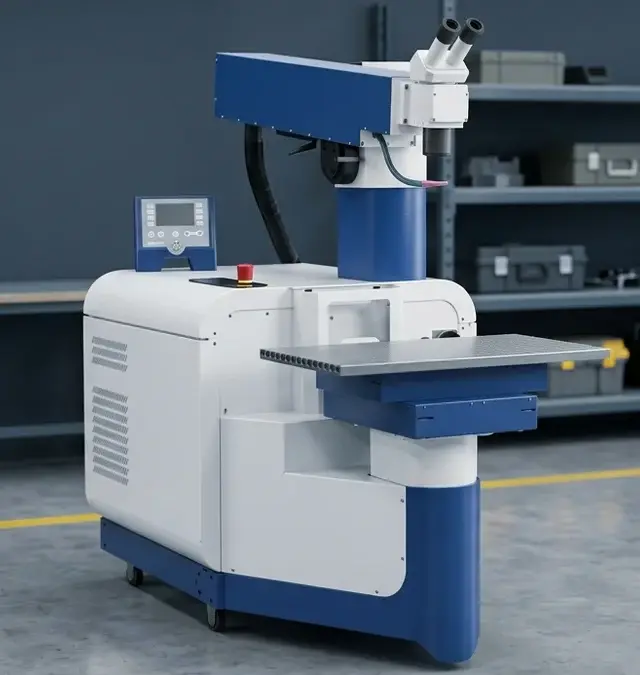
- Components of Fiber Laser Welding Systems
- Process Flow and Mechanism
- What are the Benefits of Using Fiber Laser Welding Machines?
- Efficiency and Precision
- Cost-Effectiveness and Versatility
- How Does Fiber Laser Welding Compare to Traditional Welding Methods?
- Comparison with MIG and TIG Welding
- Advantages Over Arc Welding
- Which Industries Benefit Most from Fiber Laser Welding?
- Automotive and Aerospace Applications
- Electronics and Medical Device Manufacturing
- Case Studies of Successful Fiber Laser Welding Implementations
- Automotive Industry Case Study
- Electronics Industry Case Study
- Can Fiber Laser Welding Improve Your Manufacturing Process?
- Integration into Existing Processes
- Assessing Productivity and Quality Improvements
- Frequently Asked Questions
- What are the benefits of using fiber laser welding machines?
- How does fiber laser welding compare to traditional welding methods?
- What materials can be welded using fiber laser welding systems?
- What industries benefit most from fiber laser welding technology?
- What is the typical maintenance required for fiber laser welding machines?
- Can fiber laser welding be integrated into automated production lines?
Key Takeaways
Fiber laser welding is revolutionizing the welding industry with its precision and efficiency, offering significant advantages over traditional welding methods. As mechanical engineers, welding specialists, and technical operators seek to optimize production processes, understanding the capabilities and applications of fiber laser welding is crucial.
- Fiber laser welding provides superior precision and control, reducing material distortion and improving weld quality.
- The technology supports high-speed welding operations, significantly increasing throughput and reducing production time.
- Its versatility allows application across diverse industries, including automotive, aerospace, electronics, and medical device manufacturing.
- Fiber lasers have a higher energy efficiency compared to CO2 lasers, leading to lower operational costs and energy consumption.
- The compact design and flexibility of fiber lasers enable easy integration into existing production lines, enhancing automation capabilities.
- Minimal maintenance requirements and long operational life contribute to reduced downtime and higher return on investment.
- Advanced beam quality and focusability make fiber lasers ideal for welding complex geometries and thin materials.
As you delve into the article, you will discover how fiber laser welding can transform your manufacturing processes and provide a competitive edge in today’s industrial landscape.
What is Fiber Laser Welding?
Introduction to Fiber Laser Technology
Fiber laser welding is a cutting-edge technology that uses high-power laser beams, delivered through flexible optical fibers, to join materials with precision and efficiency. Designed for demanding industrial applications, fiber laser welding systems like Sigma Laser’s Sidanus Fibre and Sineo Fibre provide unmatched control and adaptability in complex manufacturing environments. Over the past few decades, this technology has been significantly developed, offering solutions that enhance productivity and quality in sectors such as automotive, aerospace, and medical device manufacturing.
Fiber lasers typically operate at wavelengths around 1070 nm, with power outputs ranging from 500 W to several kilowatts, depending on the application. The beam quality, often characterized by an M² value of less than 1.1, ensures high precision and minimal divergence, essential for intricate welding tasks. The focal length of the optics can vary, but common configurations range from 100 mm to 300 mm to accommodate different material thicknesses and welding depths.
Principles of Laser Welding
At its core, fiber laser welding involves concentrating laser energy onto a small area, leading to rapid heating, melting, and fusion of materials. This process is known for its high precision, minimal thermal distortion, and superior finish, making it ideal for applications that demand stringent quality standards. Systems like Sigma Laser’s Super Pulse Technology (SPT) allow engineers to fine-tune parameters for diverse materials, ensuring optimal weld quality. The versatility of fiber laser technology extends to various configurations, such as Swivel Optics and Motor-driven Turning Devices, accommodating complex geometries and dynamic welding processes.
Typical welding speeds can range from 1 m/min to 10 m/min, with penetration depths up to 10 mm in steel, depending on the laser power and material properties. The heat-affected zone (HAZ) is typically narrow, often less than 0.5 mm, which minimizes thermal distortion and preserves material properties. Precision and repeatability are critical, with tolerances often within ±0.1 mm, ensuring consistent quality across production runs.
Fiber laser welding is compatible with a wide range of materials, including various steel grades (such as AISI 304 and AISI 316), aluminum alloys (like 6061 and 7075), and special alloys used in aerospace applications. The process is governed by standards such as ISO 11145 for laser optics and EN ISO 15614 for welding procedure qualifications, ensuring compliance with international quality benchmarks.
- Automotive: Enhancing the assembly of lightweight materials with minimal distortion.
- Aerospace: Ensuring high-strength welds for critical components.
- Medical Devices: Providing precision welding for intricate instruments.
As fiber laser welding continues to evolve, it is shaping the future of manufacturing by offering robust, reliable, and efficient solutions, establishing itself as a cornerstone in modern industrial fabrication.
How Does Fiber Laser Welding Work?
Fiber laser welding is a precise and efficient process used in various industrial applications, including automotive manufacturing, aerospace engineering, and medical device production. At Sigma Laser, our systems, such as the Sidanus Fibre and Siega Fibre, utilize advanced fiber laser technology to deliver superior weld quality and speed. This process is engineered to meet stringent standards like ISO 9001 and DIN EN ISO 14732, ensuring reliability and performance in demanding environments.
Fiber laser systems typically operate at wavelengths around 1070 nm, providing high absorption rates in metals such as stainless steel and aluminum alloys. The beam quality, often characterized by an M² value of less than 1.2, allows for fine focus diameters, typically in the range of 50 to 100 micrometers, essential for precision welding tasks. Power outputs can range from 500 W to over 10 kW, depending on the application requirements.
Components of Fiber Laser Welding Systems
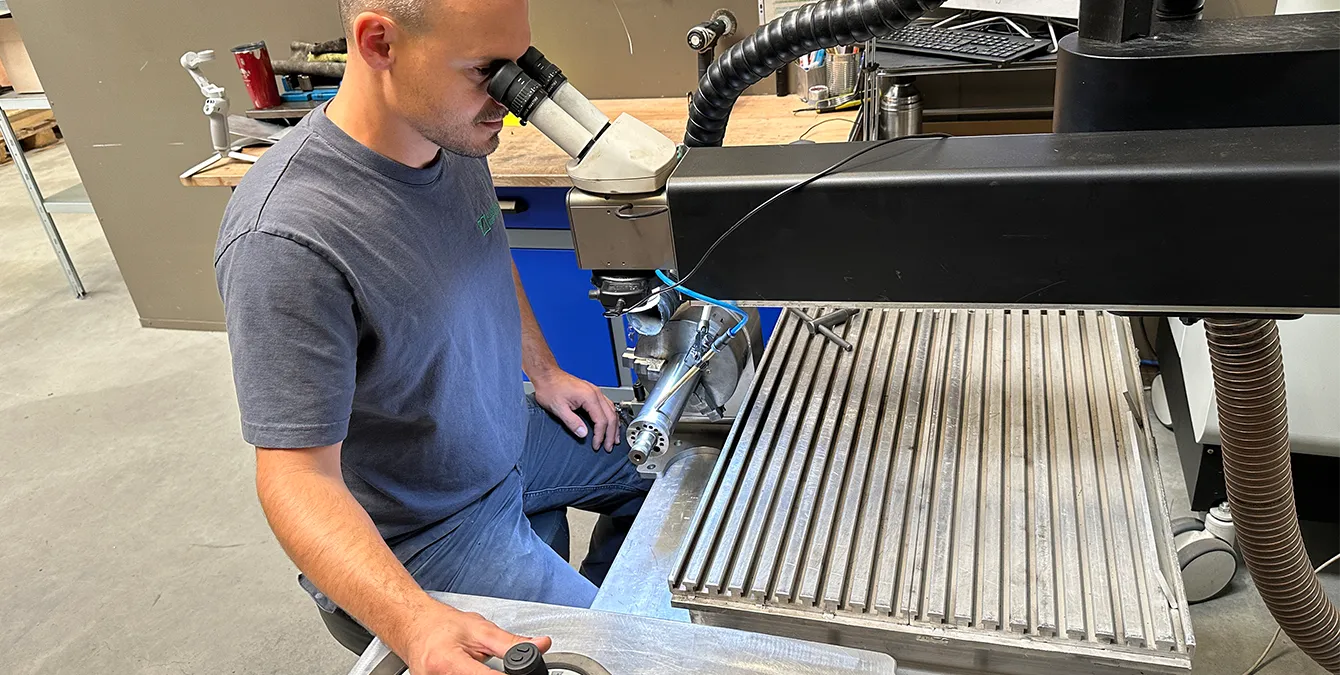
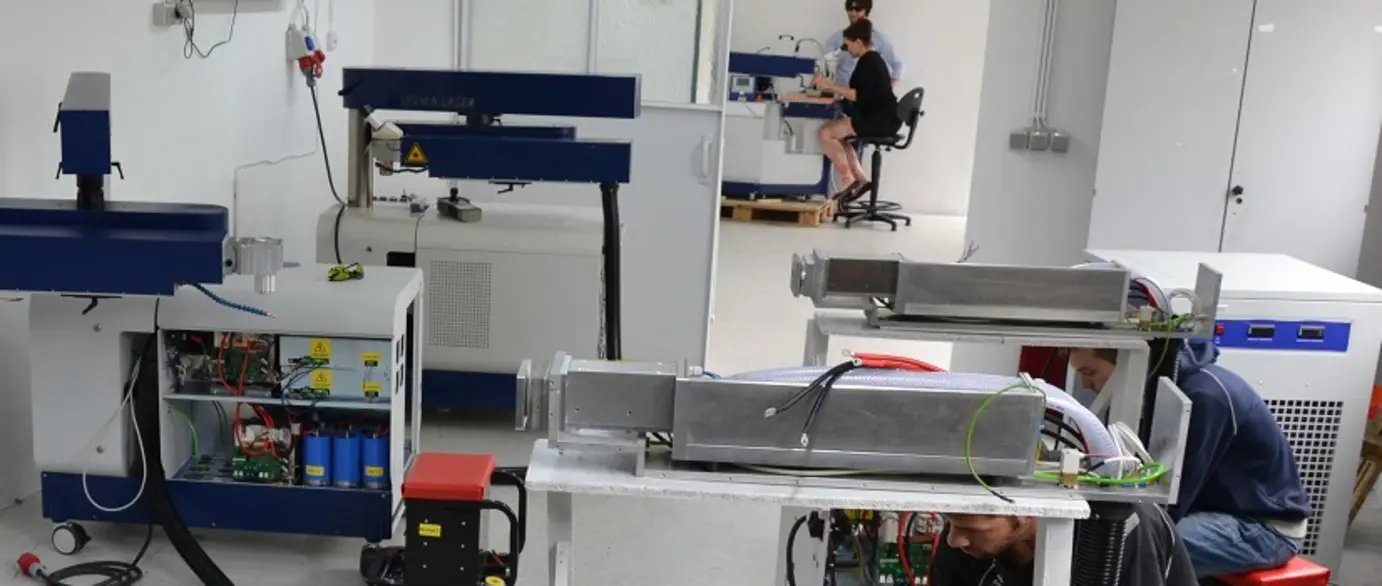
Fiber laser welding systems consist of several critical components that work together to deliver high-quality welds:
- Fiber Laser Source: The core component that generates the laser beam. Brands like Trumpf and IPG Photonics are renowned for their reliable laser sources. These sources typically offer power stability within ±2%, crucial for maintaining consistent weld quality.
- Beam Delivery System: Uses fiber optics to transmit the laser beam from the source to the workpiece, ensuring minimal power loss. The fiber delivery system often features a numerical aperture (NA) of 0.1 to 0.2, optimizing beam focusability.
- Welding Head: Incorporates advanced Swivel Optics with Telescopic Lens to focus the laser beam precisely on the material. The focal length is commonly adjustable between 100 mm and 300 mm to accommodate various welding depths.
- Control System: Advanced software, such as Sigomatic Pro, provides precise control of welding parameters. It allows for repeatability within ±0.01 mm, ensuring high precision in automated processes.
- Motion Devices: Components like the Motor-driven Turning Device and Swivelling Y Axis offer dynamic positioning for complex welding tasks. These systems typically achieve positioning accuracy of ±0.05 mm.
Process Flow and Mechanism
The fiber laser welding process involves several stages that ensure high precision and efficiency:
- Preparation: The workpiece is accurately positioned using devices like the Simass Base Unit and Simass Slide to ensure optimal alignment. This stage often adheres to ISO 3834 for quality requirements in fusion welding.
- Beam Generation: The fiber laser source generates a coherent beam of light, transmitted through the fiber optic cable. The beam quality and stability are critical for maintaining consistent energy delivery.
- Focus and Delivery: The laser beam is focused onto the material surface using Swivel Optics, concentrating energy to a small spot for effective welding. Typical welding speeds range from 1 m/min to 10 m/min, depending on material thickness and type.
- Laser-Material Interaction: The intense heat from the laser causes localized melting and fusion of materials, forming a strong joint. The precision of this interaction minimizes thermal distortion and material degradation. Penetration depths can reach up to 10 mm in single-pass welds, contingent on power and material.
- Cooling and Solidification: Upon completion, the molten area cools and solidifies rapidly, forming a robust weld with excellent mechanical properties. The heat-affected zone (HAZ) is typically confined to a narrow band, often less than 1 mm wide, preserving the base material’s integrity.
Fiber laser welding offers unparalleled precision, making it ideal for applications where material integrity and performance are critical. By leveraging Sigma Laser’s advanced technologies, manufacturers can achieve superior results in diverse industrial settings. Compliance with standards such as EN ISO 15614 for welding procedure qualification ensures the reliability of the welds produced.
What are the Benefits of Using Fiber Laser Welding Machines?
Efficiency and Precision
Fiber laser welding machines, such as those engineered by Sigma Laser, deliver unmatched efficiency and precision in industrial applications. By utilizing advanced fiber laser technology, systems like the Sirius Light and Siega Fibre achieve pinpoint accuracy, which is essential for high-spec manufacturing processes. The precision of fiber laser welding ensures minimal thermal distortion, making it ideal for industries where component integrity is critical, such as aerospace and medical device manufacturing. The integration of Super Pulse Technology (SPT) further enhances this precision, enabling welders to manage complex geometries and tighter tolerances with ease.
Typically, fiber lasers operate at a wavelength of 1070 nm, with power outputs ranging from 500 W to 10 kW, allowing for a wide range of applications. The beam quality, characterized by an M² value typically less than 1.5, ensures a focused spot size for high precision. According to ISO 11146, these parameters contribute to a minimal heat-affected zone (HAZ), often less than 0.5 mm, which is crucial for maintaining the mechanical properties of sensitive materials.
Fiber laser systems are compatible with a variety of materials, including stainless steel (e.g., AISI 304, 316), aluminum alloys (e.g., 6061, 7075), and titanium alloys (e.g., Ti-6Al-4V), providing flexibility across different industrial sectors. The precision of these systems allows for welding speeds of up to 5 m/min, with penetration depths typically reaching 5 mm for stainless steel, depending on the power settings and material thickness.
Cost-Effectiveness and Versatility
Beyond precision, fiber laser welding is well-known for its cost-effectiveness. The technology’s high energy efficiency reduces power consumption, leading to lower operational costs. Moreover, systems like the Simass Base Unit and Swivel Optics with Telescopic Lens are designed for versatility, capable of handling a wide range of materials and thicknesses. This adaptability allows for seamless integration across various sectors, from automotive to electronics, enhancing production line flexibility. Additionally, the minimal maintenance requirements and extended lifespan of fiber lasers, compared to traditional welding methods, further contribute to reduced long-term expenditure, making them an attractive investment for procurement managers and technical buyers.
Fiber laser systems typically require less maintenance due to fewer moving parts and the absence of consumables like electrodes, which are common in traditional welding methods. According to VDI 3405, the operational lifespan of fiber laser components can exceed 100,000 hours under optimal conditions, significantly reducing downtime and maintenance costs. Furthermore, compliance with standards such as EN ISO 15614 ensures that fiber laser welding processes meet stringent quality and safety requirements, providing assurance to industries with critical quality demands.
How Does Fiber Laser Welding Compare to Traditional Welding Methods?
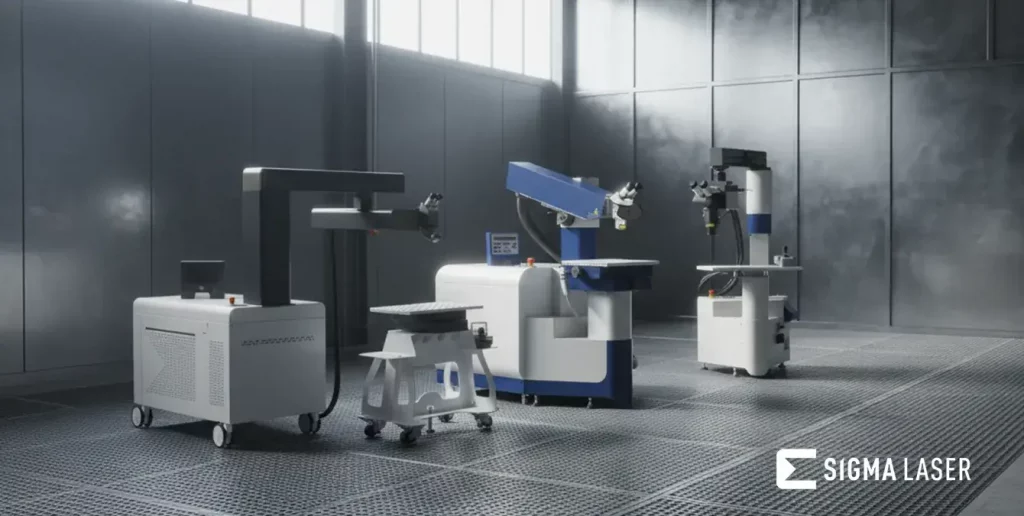
Fiber laser welding, showcased in Sigma Laser’s precision systems, marks a significant advancement over traditional methods like MIG, TIG, and arc welding. This cutting-edge process employs a high-intensity laser beam to join materials, offering unmatched precision and speed, crucial for complex industrial applications such as automotive manufacturing and aerospace engineering.
Comparison with MIG and TIG Welding
MIG (Metal Inert Gas) and TIG (Tungsten Inert Gas) welding are popular for their versatility and control. However, fiber laser welding excels in several key areas:
- Precision: Thanks to its highly focused beam, fiber laser welding delivers superior precision, essential for applications requiring tight tolerances. Typical beam quality (M²) values are below 1.5, allowing for a spot size as small as 50 micrometers, which is critical for achieving tolerances within ±0.1 mm.
- Speed: Fiber laser welding can achieve higher speeds than MIG and TIG, boosting production efficiency in high-volume manufacturing settings. Welding speeds can reach up to 10 meters per minute, depending on material thickness and type.
- Heat Input: The reduced heat input in fiber laser welding minimizes thermal distortion, preserving the integrity of delicate components, which is particularly advantageous in electronics manufacturing. The heat-affected zone (HAZ) is typically narrower, often less than 1 mm for thin materials.
- Material Compatibility: Fiber lasers can weld a wider range of materials, including reflective and high-strength alloys, broadening their use across various industries. Commonly welded materials include stainless steels (e.g., 304, 316), aluminum alloys (e.g., 6061, 7075), and titanium alloys (e.g., Ti-6Al-4V).
Despite these benefits, MIG and TIG remain valuable for applications requiring manual operation and where the initial investment in laser technology may not be justified.
Advantages Over Arc Welding
Arc welding, known for its robustness and simplicity, is often used in heavy industries. However, fiber laser welding offers compelling advantages:
- Quality of Welds: Fiber laser welding consistently produces high-quality welds with minimal porosity and spatter, ideal for sectors where weld integrity is critical, such as shipbuilding and oil & gas. Typical penetration depths can reach up to 25 mm in a single pass for carbon steels, with repeatability in weld quality within ±0.05 mm.
- Automation: The integration capabilities of fiber laser systems, like the Simass Base Unit and Swivel Optics from Sigma Laser, enable seamless automation, enhancing productivity and reducing labor costs. These systems comply with standards such as EN ISO 15614 for welding procedure qualification.
- Environmental Impact: Fiber laser welding is a cleaner process with reduced emissions, aligning with modern manufacturing’s sustainability goals. The process typically adheres to ISO 14001 standards for environmental management systems.
Arc welding still holds its place in specific heavy-duty applications, but the precision and efficiency of fiber laser welding make it an attractive alternative for forward-thinking manufacturers. With its extensive industrial applications, fiber laser welding is increasingly becoming the preferred method for achieving high-quality, efficient production outcomes.
Which Industries Benefit Most from Fiber Laser Welding?
Fiber laser welding has become a cornerstone in modern manufacturing, offering unmatched precision and efficiency across various industrial applications. This technology is particularly advantageous in industries requiring high-quality welds and intricate detailing, such as automotive, aerospace, electronics, and medical device manufacturing. Sigma Laser’s advanced products, like the Siega Fibre and Sidanus Fibre, lead the way in this technological advancement, providing robust solutions for complex welding challenges.
Fiber laser systems typically operate at wavelengths around 1070 nm, with power outputs ranging from several hundred watts to multiple kilowatts, depending on the application. The beam quality, often characterized by an M² value close to 1.1, ensures high precision and minimal thermal distortion. According to ISO 11146, these specifications are crucial for maintaining consistent beam parameters and achieving optimal welding results.
Automotive and Aerospace Applications
In the automotive industry, fiber laser welding is extensively used for welding car body panels, transmission components, and exhaust systems. The precision and speed of Sigma Laser’s systems, enhanced by features like Super Pulse Technology (SPT), ensure minimal thermal distortion and superior weld strength. Typical welding speeds can reach up to 5 m/min, with penetration depths of up to 5 mm for steel and aluminum alloys, such as 6061 and 7075, commonly used in the industry.
In aerospace applications, where material integrity is critical, fiber laser technology enables the joining of lightweight alloys and superalloys, essential for constructing aircraft and spacecraft. Sigma Laser’s Swivel Optics with Telescopic Lens allows for meticulous welds on complex geometries, meeting the strict standards of the aerospace sector. The use of alloys like Inconel and titanium, which require precise control of heat input to avoid excessive heat-affected zones, is facilitated by the precise energy delivery of fiber lasers.
Electronics and Medical Device Manufacturing
The electronics industry benefits significantly from fiber laser welding’s ability to perform micro-welding, which is essential for manufacturing components like sensors and microprocessors. The precision of Sigma Laser’s Sidanus Fibre allows for the creation of intricate circuitry without damaging sensitive components. Typical tolerances in micro-welding applications can be as tight as ±0.01 mm, with repeatability ensuring consistent quality across production batches.
In the medical device sector, where sterilization and biocompatibility are paramount, fiber laser welding is used to assemble surgical instruments and implantable devices. The non-contact nature of laser welding reduces the risk of contamination, ensuring compliance with stringent health regulations, such as those outlined in ISO 13485. The ability to weld biocompatible materials like stainless steel (316L) and titanium is critical for maintaining the integrity and safety of medical devices.
Case Studies of Successful Fiber Laser Welding Implementations
Fiber laser welding, celebrated for its precision and efficiency, has become an essential tool in various industrial applications. This section explores how leading companies have integrated Sigma Laser’s advanced products, such as the Siega Fibre and Sidanus Fibre systems, to tackle engineering challenges and achieve outstanding results.
Automotive Industry Case Study
In the automotive sector, a European car manufacturer aimed to enhance the structural integrity and reduce the weight of their vehicle components. They adopted Sigma Laser’s Sidanus Fibre system, which utilizes advanced Fiber Laser Technology to deliver high-speed, high-precision welds. The challenge involved welding dissimilar materials, a task requiring precise control over heat input to prevent thermal distortion.
- Challenge: Welding aluminum to high-strength steel without compromising material properties. The materials involved were typically AA6061 aluminum alloy and HSLA (High-Strength Low-Alloy) steel.
- Solution: Leveraging the Super Pulse Technology (SPT) to maintain optimal heat levels and achieve seamless welds. The system operated at a wavelength of 1070 nm with a beam quality of M² < 1.1, ensuring minimal heat-affected zones and penetration depths up to 3 mm.
- Outcome: Achieved a 30% reduction in component weight and a 20% increase in production speed, meeting ISO 9001 standards for quality and efficiency. The process adhered to EN ISO 15614-11 for welding dissimilar metals.
Electronics Industry Case Study
In the electronics industry, a leading manufacturer of consumer electronics faced challenges in miniaturizing components without sacrificing durability. They turned to Sigma Laser’s Sineo Fibre system, which offers exceptional precision with features like Swivel Optics and a Z-Axis Module for enhanced maneuverability.
- Challenge: Achieving reliable micro-welds on sensitive electronic components. The components were typically made from copper and nickel alloys, requiring precise energy control.
- Solution: Employed Swivel Optics with a Telescopic Lens to focus the laser precisely, minimizing heat-affected zones. Typical welding speeds ranged from 50 to 200 mm/s, with tolerances of ±0.05 mm in positioning accuracy.
- Outcome: Increased production yield by 25% and reduced defect rates, reinforcing the manufacturer’s competitive edge in the market.
These case studies highlight the transformative impact of fiber laser welding in industrial applications, showcasing how Sigma Laser’s solutions meet the complex demands of modern engineering. The systems are typically operated within power ranges of 500 W to 6 kW, depending on the application requirements, adhering to ISO 11145 for laser and laser-related equipment.
Can Fiber Laser Welding Improve Your Manufacturing Process?
Fiber laser welding marks a major leap forward in precision welding, delivering unmatched speed and accuracy for industrial applications. As industries aim to boost efficiency and product quality, integrating this technology into existing manufacturing processes can yield substantial benefits. Adopting fiber laser welding systems, such as Sigma Laser’s Siega Fibre and Sidanus Fibre, can revolutionize workflows, providing precise welds with minimal thermal distortion.
Fiber lasers typically operate at wavelengths around 1070 nm, which is ideal for high absorption in metals. Power outputs can range from 500 W to 10 kW, allowing for deep penetration welds in thick materials or high-speed welding in thinner sections. The beam quality, often characterized by an M² value close to 1.1, ensures high precision and minimal divergence, critical for maintaining tight tolerances in industrial applications.
Integration into Existing Processes
Incorporating fiber laser welding into your current manufacturing setup requires careful consideration of your existing infrastructure. The modular design of Sigma Laser’s Simass Base Unit allows for seamless integration into diverse production lines. Understanding how the technology can complement your current systems is crucial for successful integration. For instance, using Swivel Optics with Telescopic Lens offers flexibility in accessing hard-to-reach weld joints, while the Motor-driven Turning Device enhances automation capabilities.
When integrating fiber laser systems, adherence to standards such as ISO 11146 for laser beam measurements and EN ISO 15614 for welding procedure qualification ensures compliance with quality and safety requirements. Additionally, the compatibility of fiber lasers with materials like stainless steel (e.g., 304, 316 grades), aluminum alloys (e.g., 6061, 7075), and titanium alloys is well-documented, facilitating diverse applications across aerospace, automotive, and electronics industries.
Assessing Productivity and Quality Improvements
Evaluating potential improvements in productivity and quality when adopting fiber laser welding involves a detailed analysis of key performance metrics. Fiber laser technology provides faster welding speeds and superior joint quality, reducing rework and downtime. Consider the following steps to assess potential gains:
- Conduct a thorough process audit to identify bottlenecks that fiber laser welding can alleviate.
- Compare welding speeds and accuracy against traditional methods to quantify time savings. Typical welding speeds can reach up to 10 m/min for thin sheets, with penetration depths of up to 10 mm in single pass operations.
- Evaluate the reduction in thermal distortion and its impact on material integrity and post-processing requirements. The heat-affected zone (HAZ) is typically minimized to less than 0.5 mm, preserving the mechanical properties of the base material.
By incorporating Sigma Laser’s advanced systems like the Sineo Fibre and leveraging Super Pulse Technology (SPT), manufacturers can achieve significant gains in both productivity and quality, positioning themselves at the forefront of industrial innovation. The repeatability of fiber laser welding, often within ±0.01 mm, ensures consistent quality across large production volumes.
Frequently Asked Questions
What are the benefits of using fiber laser welding machines?
Fiber laser welding machines offer high precision, reduced thermal distortion, and minimal maintenance. They provide superior weld quality with deeper penetration and faster processing speeds. Their efficiency in energy consumption and the ability to weld reflective materials like aluminum and copper make them ideal for industrial applications.
How does fiber laser welding compare to traditional welding methods?
Compared to traditional methods, fiber laser welding offers higher precision and speed, resulting in less thermal distortion. It is more efficient, especially for thin materials, and requires less post-processing. Additionally, it enables automation and is suitable for complex geometries and high-volume production.
What materials can be welded using fiber laser welding systems?
Fiber laser welding systems can efficiently weld a variety of materials, including stainless steel, carbon steel, aluminum, copper, titanium, and nickel alloys. They are particularly effective with reflective and conductive materials, which are challenging for conventional welding techniques.
What industries benefit most from fiber laser welding technology?
Industries such as automotive, aerospace, electronics, medical device manufacturing, and precision engineering benefit significantly from fiber laser welding. The technology’s ability to produce high-quality, precise welds in complex and high-volume applications makes it invaluable in these sectors.
What is the typical maintenance required for fiber laser welding machines?
Fiber laser welding machines require minimal maintenance compared to traditional welding systems. Routine checks include cleaning optics, ensuring proper cooling system function, and software updates. The solid-state design of fiber lasers contributes to their longevity and reliability, reducing downtime.
Can fiber laser welding be integrated into automated production lines?
Fiber laser welding is highly compatible with automated production lines. Its precision and repeatability make it ideal for robotic systems, enhancing productivity and consistency. Integration with CNC systems and advanced robotics allows for seamless operation in high-volume manufacturing environments.