
Sigma Laser GmbH is a trusted manufacturer of high-performance laser welding systems for industrial applications. Since 2005, we have been delivering precision, innovation, and reliability to industries worldwide.

Die Sigma Laser GmbH ist ein vertrauenswürdiger Hersteller von Hochleistungs-Laserschweißsystemen für industrielle Anwendungen. Seit 2005 stehen wir weltweit für Präzision, Innovation und Zuverlässigkeit.

A Sigma Laser GmbH é uma fabricante confiável de sistemas de soldagem a laser de alto desempenho para aplicações industriais. Desde 2005, somos reconhecidos mundialmente por nossa precisão, inovação e confiabilidade.

Sigma Laser GmbH es un fabricante de confianza de sistemas de soldadura láser de alto rendimiento para aplicaciones industriales. Desde 2005, hemos proporcionado precisión, innovación y fiabilidad a industrias de todo el mundo.

Contacts
Location
Liebigstr. 2 , 63477 Maintal
Germany
Email
info (at) sigma-laser.com
Follow us
Folge uns
Siga-nos
Síganos
Super Pulse Technology (SPT)
Advanced Pulse Modulation

Super Pulse Technology (SPT)

Advanced Pulse Modulation for Precision Laser Welding | Sigma Laser

Super Pulse Technology (SPT) by Sigma Laser is a proprietary innovation that transforms precision laser welding. Designed to modulate energy delivery into the weld pool, SPT enables superior control over heat input, solidification, and grain structure making it the ideal solution for high-performance applications involving complex materials.

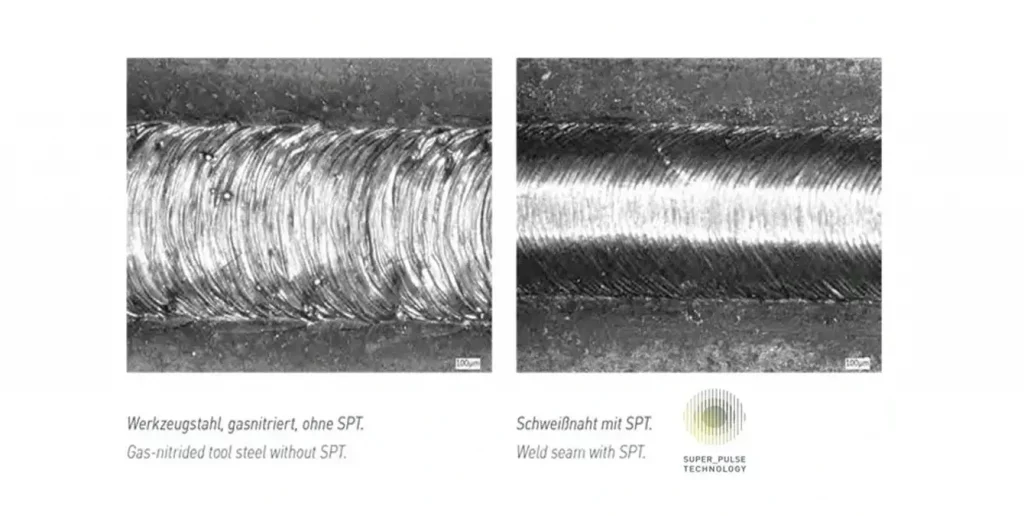
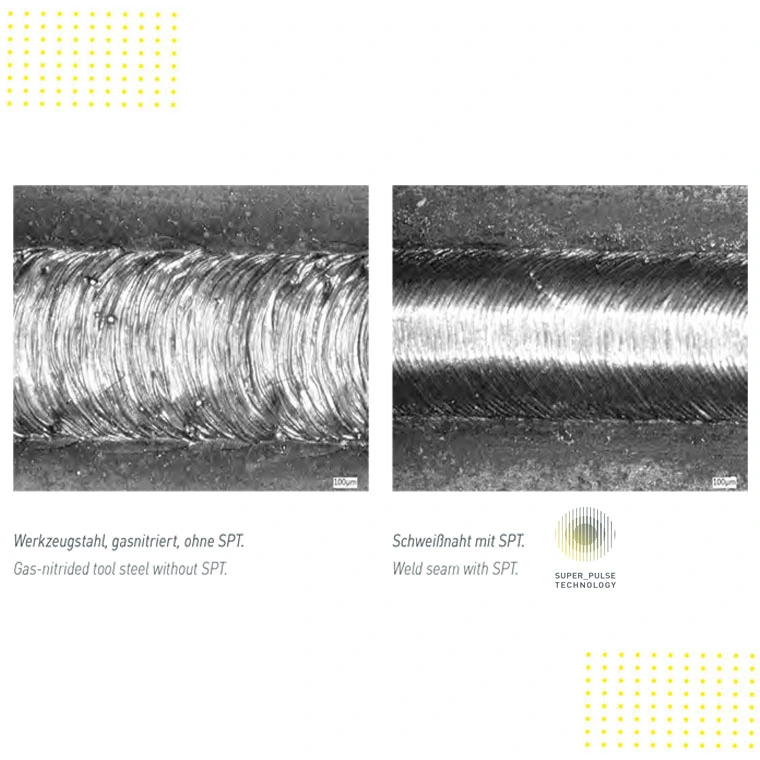
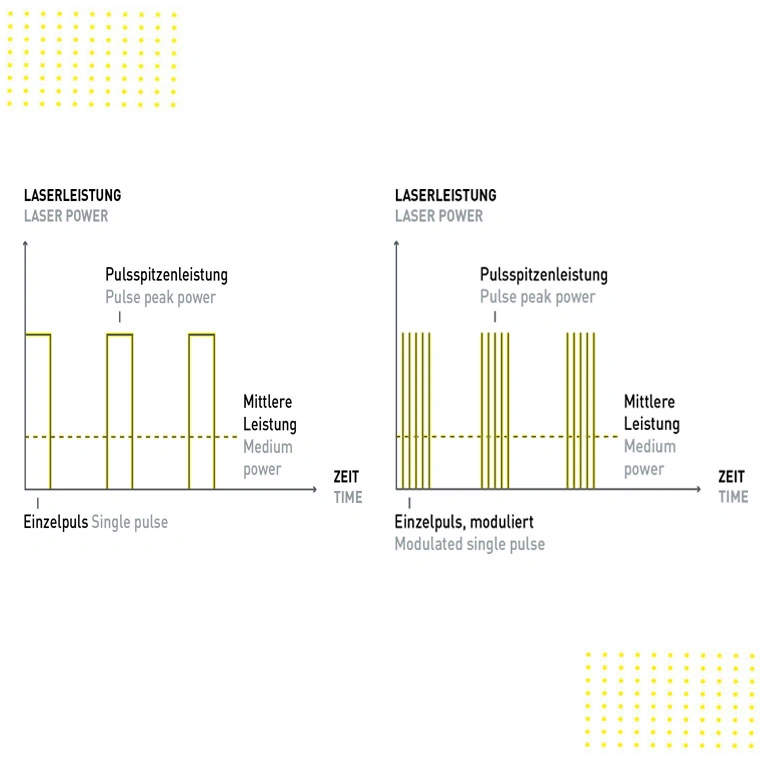
At the heart of Sigma Laser’s technological leadership is Super Pulse Technology (SPT)—a patented pulse modulation system that allows unmatched control over laser welding dynamics. Traditional pulsed laser systems often introduce excessive peak power, leading to weld seam defects, overheating, or micro-cracks.

SPT solves these issues by giving operators fine-tuned control over pulse shape, melting bath temperature, and solidification behavior. Whether you’re welding titanium, stainless steel, aluminium, or refractory alloys, SPT ensures superior metallurgical results with homogeneous, fine-grained welds and minimal post-processing.

This technology is especially vital for industries like medical device manufacturing, aerospace, toolmaking, and additive repairs, where material sensitivity and microstructure integrity are paramount.
Quick Access to Sections:

    Engineered for precision tasksTechnical Specifications of Laser Welding Super Pulse Technology (SPT)

    Super Pulse Technology (SPT) is a game-changing innovation by Sigma Laser that enhances the precision, control, and quality of laser welding by introducing advanced pulse modulation capabilities. Unlike conventional continuous-wave (CW) or standard pulsed laser systems, SPT enables users to finely tailor the thermal energy delivered into the weld zone—resulting in improved material compatibility, structural integrity, and minimal thermal distortion.

    Below is a detailed breakdown of the key technological features:

    Advanced Pulse Modulation

    Instead of relying on fixed pulse profiles, SPT allows complete customization of the pulse shape, duration, and energy distribution, offering optimal control over heat input. This eliminates common issues like overheating, spatter, and weld defects.

    Dynamic Melt Pool Temperature Control

    Operators can precisely adjust the melt pool temperature in real-time, optimizing it for specific materials. This significantly reduces the risk of burn-through, incomplete fusion, or metal fatigue.

    Controlled Solidification & Grain Refinement

    SPT gives users control over the nucleation rate and solidification morphology, producing weld seams that are homogeneous, fine-grained, and structurally stable—especially critical in aerospace, medical, and precision tooling.

    Improved Ductility for Dissimilar Material Welding

    Welding different materials like aluminium to stainless steel or titanium to copper is challenging due to differing thermal behaviors. SPT enhances plastic ductility, reducing the chance of microcracks and improving mechanical bonding.

    Integration with Sigomatic Pro

    SPT is fully integrated with the Sigomatic Pro control software, ensuring real-time process feedback, adaptive control, and seamless usability without external modules or hardware upgrades.

    Compatibility with Refractory and High-Carbon Materials

    Welding brittle or sensitive materials such as Inconel, Tantalum, Titanium alloys, and high-carbon steels becomes practical and efficient. SPT avoids heat-affected zone cracking and allows crack-free welds even on difficult surfaces.

    Versatility Across Pulse Modes

    SPT enhances both pulsed laser and continuous wave (CW) modes. In CW, it reduces unnecessary energy dispersion. In pulsed mode, it adds shape control to each pulse, yielding supercooled, high-quality welds.

    User Benefits at a Glance:

    • Ultra-precise energy delivery
    • Less heat input = Less distortion
    • Higher-quality welds with reduced post-processing
    • Increased yield in difficult materials
    • Greater repeatability and lower error rate
    • No need for additional hardware — software-based optimization

    Where the Super Pulse Technology (SPT) ExcelsIndustrial Applications of Laser Welding Super Pulse Technology (SPT)

    Super Pulse Technology (SPT) is engineered to tackle the most demanding laser welding challenges across diverse industries. Its advanced control over heat input, pulse shape, and solidification dynamics makes it ideal for high-precision tasks and difficult-to-weld materials. Below are the key application areas where SPT significantly enhances welding performance:

    laser welding in medical devices and instruments

    Medical Device Manufacturing


    In the medical industry, where precision and material integrity are paramount, SPT enables the welding of biocompatible metals like titanium and stainless steel with ultra-fine control. The result is micro-welds with smooth seams, minimal thermal distortion, and no contamination—critical for implants, surgical tools, and diagnostic devices.

    laser welding in tool and mould making

    Tool & Mould Making


    Welding brittle or hard steels like 1.2379 (D2) often results in cracking with traditional methods. SPT makes it possible to rebuild tools and moulds with flawless seam quality and dimensional accuracy, reducing the need for grinding or heat treatment.

    laser welding in electronic devices

    Electronics & Precision Assemblies


    SPT's fine energy modulation enables microscale welding without damaging sensitive electronic components. It’s ideal for battery welding, sensor housings, and micro-circuit assemblies where conventional lasers may overheat the substrate.

    laser welding in jewellery precision craftsmanship

    Jewelry and Watchmaking


    For delicate items made from precious metals, SPT enables aesthetic welds with minimal polishing and precise material handling—critical in luxury manufacturing.

    laser welding in aerospace manufacturing

    Aerospace & Aviation Components


    SPT provides the grain refinement and crack resistance needed for welding titanium alloys, Inconel, and aluminium parts used in jet engines and structural components. Its ability to reduce post-processing and improve fatigue life is a major asset in aerospace production.

    laser welding in automotive manufacturing

    Automotive & E-Mobility Applications


    When welding components like battery modules, drive units, and heat exchangers, SPT offers strong joints with reduced HAZ (heat-affected zone). It also supports welding dissimilar materials commonly found in electric vehicles.

    Key Advantages Across Applications:

    • Superior weld quality on challenging materials like Inconel, titanium, and tool steel
    • Minimal distortion – perfect for precision and delicate components
    • Optimized grain structure and enhanced joint ductility
    • Increased production yield by reducing rework and post-processing
    • Compatible with small-scale, medium, and mass production workflows
    • Environmentally friendly – reduced energy input and minimal waste
    • Enhanced material bonding for dissimilar metal welding

    Built to Match Your Production NeedsCustomization Options of Laser Welding Super Pulse Technology (SPT)

    Tailored Laser Modulation for Every Application

    One of the most powerful advantages of Super Pulse Technology (SPT) lies in its extensive customizability, making it adaptable to a wide range of industries, materials, and production environments. Unlike rigid, pre-configured laser systems, SPT empowers you to fine-tune every critical aspect of the welding process.

    Whether you’re working with high-carbon steels, heat-sensitive alloys, or composite materials, SPT allows you to define custom settings that ensure optimal results every time.

    Key Customization Options:

    • Pulse Shape Design
      • Create and store complex pulse shapes with multi-stage ramps, plateaus, and drops.
      • Achieve greater control over heat input, fusion depth, and weld seam geometry.
    • Energy & Frequency Adjustment
      • Precisely adjust peak power, pulse energy, pulse width, and repetition rate for material-specific requirements.
    • Thermal Profile Programming
      • Define how heat is introduced and dissipated with real-time temperature modeling.
      • Prevent thermal distortion or material warping.
    • Material Presets & Memory Functions
      • Pre-configured profiles for commonly used alloys such as titanium, aluminum, Inconel, and tool steels.
      • Save and recall welding parameters for repeatable results in series production.
    • Integration with Sigomatic Pro
      • Seamless software integration for automated workflows, remote diagnostics, and real-time feedback loops.
    • Compatibility-Based Modulation
      • Tailor pulse modulation based on whether you’re using light-pumped Nd:YAG systems or fiber laser sources.
      • Switch between CW, pulsed, and SPT-enhanced modes based on project needs.

    Smart Modulation Logic

    Sigma’s SPT isn’t just customizable—it’s intelligent. With adaptive logic modules, the system can adjust parameters in real time to compensate for surface changes, material inconsistencies, and dynamic part geometries—ensuring unmatched precision and weld consistency.

    Customize with Confidence

    Whether you’re welding micro-components in medical devices or performing structural repairs in aerospace and tooling, the modular nature of SPT allows you to build a welding system that fits your exact workflow—not the other way around.

    FAQsFrequently Asked Questions

    Answers to common questions about Super Pulse Technology (SPT):

    What is Super Pulse Technology (SPT) and how is it different from standard pulsed lasers?

    SPT is a proprietary technology developed by Sigma Laser that allows users to modulate laser pulses in a customized way. Unlike standard pulsed lasers, SPT lets you control pulse shape, frequency, energy, and thermal behavior—enabling superior control over heat input and weld seam quality.

    Which materials benefit most from using SPT?

    SPT is ideal for critical, heat-sensitive, or brittle materials such as:

    • Titanium and its alloys
    • Aluminum
    • Stainless steels
    • Inconel and high-temperature alloys
    • High-carbon steels
      These materials require fine-grained welds with minimal thermal distortion, which SPT helps achieve.
    Can SPT be used in both continuous wave (CW) and pulsed laser systems?

    SPT is specifically designed for pulsed systems, but Sigma Laser platforms allow seamless switching between CW mode, standard pulsed mode, and SPT-enhanced mode, depending on the material and welding task.

    Is SPT suitable for high-volume production environments?

    Absolutely. Thanks to programmable settings, repeatable pulse profiles, and full software integration with Sigomatic Pro, SPT offers excellent performance and consistency in series production, medical device manufacturing, and toolmaking industries.

    How does SPT improve weld seam quality?

    By controlling the melting bath temperature, solidification rate, and pulse shape, SPT enables:

    • Fine-grained microstructures
    • Reduced porosity and cracking
    • Better material bonding
    • Improved surface aesthetics
    Can I retrofit my existing Sigma Laser system with SPT?

    Yes, most Sigma Laser platforms are designed to support SPT as an upgrade. Contact Sigma's support team to assess compatibility and receive a tailored integration plan.

    Helpful Guides & Articles for Laser Welding Super Pulse Technology (SPT)

    Langfristige Unterstützung, auf die Sie sich verlassen könnenAfter-Sales Services of Laser Welding Super Pulse Technology (SPT)

    At Sigma Laser, our commitment to excellence doesn’t end at delivery. The Super Pulse Technology (SPT) comes with a full suite of after-sales services designed to ensure optimal performance, operator confidence, and long-term value from your investment. Whether you’re a small workshop or a multinational manufacturer, our support ecosystem keeps your production running smoothly.

    Performance Optimization Consulting

    For customers with high-throughput needs or complex applications, we offer:

    1. Process auditing
    2. Automation optimization
    3. Custom software macros
    4. Fixture design and integration consulting

    Spare Parts & Consumables

    We maintain a well-stocked inventory of Replacement lamps, Optical components, Cooling units and Wear parts. Fast shipping worldwide ensures minimal downtime.

    Remote Diagnostics & Global Support

    From preventive maintenance to rapid troubleshooting, our global service team keeps your laser welding equipment running with minimal downtime through on‑site visits and secure remote diagnostics.

    Operator Training & System Onboarding

    Hands‑on training programs give your staff the skills to operate, maintain, and optimize Sigma laser welding systems safely and productively right from day one.

    Extended Warranty & Lamp Breakage Protection

    Enjoy long‑term peace of mind with comprehensive warranty coverage—including exclusive lamp break protection—for all light‑pumped laser welding systems.

    Keeping Your Super Pulse Technology (SPT) in Peak ConditionMaintenance Instructions for Laser Welding Super Pulse Technology (SPT)

    Proper maintenance of Super Pulse Technology (SPT) ensures consistent pulse modulation, reliable weld quality, and extended system longevity. While SPT is a software-based innovation integrated into Sigma Laser systems, it still requires periodic system-level checks, especially for associated hardware such as lasers, optics, and cooling systems.

    Daily Maintenance Tasks

    • Inspect Laser Optics
      Clean and check lenses for dust or spatter. Ensure the optical path is unobstructed.
    • Pulse Monitoring Logs
      Review pulse waveform stability and check for irregularities in modulation output.
    • Check Cooling Flow Rate
      Ensure stable water or air cooling for temperature-sensitive components.
    • Review Active Weld Settings
      Confirm correct SPT presets are loaded for each material type.

    Weekly Maintenance Checklist

    • SPT Firmware & Software Update Check
      Verify that Sigomatic/Sigomatic Pro and the SPT modules are running the latest firmware versions.
    • Data Logging Review
      Export and analyze weld logs to assess pulse performance trends.
    • Inspect Connectors and Wiring
      Ensure tight, clean connections between control modules and the main laser system.
    • Check for Error Logs or Warnings
      Use diagnostic tools to identify any latent issues in SPT processing behavior.

    Monthly Maintenance Checklist

    • Calibration of Pulse Timing
      Use built-in calibration routines to fine-tune timing and amplitude of pulses.
    • Evaluate Weld Quality Consistency
      Perform sample weld tests across common materials to verify output reliability.
    • Inspect Signal Transmission
      Test and verify proper communication between the software interface and pulse modulation unit.
    • Thermal Stress Audit
      Use thermal imaging (if available) to analyze hotspots in pulse delivery and system electronics.

    Long-Term Preventive Maintenance

    • System Audit Every 6 Months
      Schedule a full system audit, including waveform profiling and modulation consistency.
    • Backup and Archive SPT Configurations
      Maintain a secure archive of pulse profiles and configuration presets.
    • Review Component Wear
      Inspect diodes, lamps, and circuit boards for wear caused by frequent high-frequency operation.
    • Training for Operators
      Provide periodic refresher training on SPT features, usage, and maintenance to ensure optimal utilization.

    Pro Maintenance Tips

    • Use Pulse Monitoring Oscilloscopes
      Professionals can benefit from real-time analysis using digital scopes to assess pulse shape, rise time, and falloff.
    • Avoid Pulse Overdrive Settings
      Continuously operating at max pulse peak can degrade hardware faster—tune for efficiency, not extremes.
    • Enable SPT Logging by Default
      Always keep logging on for auditability and easier troubleshooting.
    • Leverage Sigma Remote Support
      Use Sigma’s remote diagnostic tools for instant expert help when anomalies appear.

    Summary

    Super Pulse Technology (SPT) significantly improves welding performance by allowing granular control over heat input and pulse modulation. While it is robust by design, maintaining it through daily checkups, regular updates, and deep diagnostics will ensure peak performance, reduced downtime, and consistent weld quality across all applications.

    Operating the Super Pulse Technology (SPT) with ConfidenceSafety Guidelines of Laser Welding Super Pulse Technology (SPT)

    A Complete Safety Framework for Industrial Laser Welding with Motion Components Ensuring operator safety and system integrity is crucial when working with advanced motion components like the Swivelling Y Axis. This tilting mechanism introduces dynamic movement into the laser welding system, which, while improving flexibility and reach, also requires strict adherence to safety protocols. From mechanical precautions to proper handling of laser exposure during angled operations, these guidelines help reduce risks and maintain compliance with industrial safety standards. Whether you’re performing routine maintenance, adjusting tilt angles, or integrating the axis into your system, following the correct safety practices ensures smooth, injury-free operation and prolonged equipment life.

    Laser Safety Classification

    • The Z Axis is used within Class 1 laser systems (fully enclosed), or optionally with Class 4 open setups under operator control.
    • Always verify the enclosure is properly sealed when operating in Class 1 mode.
    • Operators must never enter the machine’s movement range while the axis is powered on.

    Personal Protective Equipment (PPE)

    • Laser safety goggles (wavelength-specific)
    • Anti-static gloves for handling wiring or electronics
    • Steel-toe safety shoes when working near moving modules
    • Tight-fitting clothing to avoid snagging in motion systems
    TaskRecommended PPE
    Routine operationNo PPE required under closed housing
    Maintenance (open casing)Laser safety goggles (1064 nm rated)
    Welding setup adjustmentsSafety gloves, protective sleeves
    Handling heavy componentsSafety shoes, cut-resistant gloves
    Optical cleaning or inspectionAnti-static gloves and lens-safe cloths

    Workspace Safety Requirements

    • Maintain a clear zone of at least 1 meter around the Z-axis system
    • Ensure firm, vibration-free mounting of the entire assembly
    • Install indicator lights showing active laser or axis movement status
    • Enclosures must include interlocked access doors

    Electrical & Cooling System Safety

    • Only trained personnel should connect power supplies
    • Ensure ambient temperature and humidity remain within safe operating limits
    • Passive or active cooling elements (if any) must be kept dust-free
    • Never bypass safety fuses, relays, or grounding components

    Software & Control Warnings

    • Use only official Sigomatic software for motion control
    • Always home the axis before running a new program
    • Do not interrupt or power down while axis is in motion
    • Update software only under guidance of technical support

    Emergency Procedures

    • Emergency Stop Button must be within operator’s reach at all times
    • Have a CO₂ fire extinguisher nearby for electronics and laser equipment
    • In case of collision or jamming, immediately shut off main power and inspect axis alignment

    Training & Access Control

    • Only certified operators should access system controls
    • Password-protect control software on shared workstations
    • Keep updated safety manuals and SOPs accessible to all personnel

    Safety Summary

    Safety in vertical motion laser systems is not optional — it’s a requirement for accuracy, uptime, and team well-being. Sigma Laser recommends following ISO 11553 and local machine safety standards.

    Comparison: SPT vs Traditional Pulse/CW Systems

    Introduction

    When it comes to industrial laser welding, not all laser systems are created equal. Traditional Continuous Wave (CW) and standard pulsed lasers have served various manufacturing needs for decades, but as demands for precision, material compatibility, and microstructural control grow, their limitations become evident.

    Super Pulse Technology (SPT) by Sigma Laser represents a new generation of laser processing—enabling advanced control over the entire welding process, from heat input to solidification dynamics. This results in superior weld quality, enhanced flexibility, and minimized post-processing.

    Why Super Pulse Technology Outperforms Conventional Systems?

    • Precision Heat Input Control
      While traditional pulsed lasers deliver fixed energy bursts, SPT allows dynamic pulse modulation, enabling precise heat targeting based on material properties. This prevents overheating, burn-through, or melt pool instability.
    • Optimized Weld Microstructure
      Standard systems often lead to coarse-grained welds prone to cracking. SPT modulates the nucleation and solidification rate, producing homogeneous, fine-grained structures with higher ductility and strength.
    • Superior Material Compatibility
      SPT is uniquely suited for high-temperature resistant alloys, brittle steels, and dissimilar materials. Traditional systems often struggle or fail in these scenarios due to uncontrolled thermal profiles.
    • Enhanced Control with Sigomatic Software
      SPT integrates seamlessly with Sigma’s proprietary Sigomatic Pro software, offering real-time feedback, advanced waveform design, and parameter memory, allowing reproducibility and automation that basic systems cannot match.
    • Minimized Post-Processing
      With SPT, the resulting weld seams are cleaner, tighter, and require significantly less polishing or grinding, reducing production time and cost.
    mitigating weld seam defects with super pulse technology
    mitigating weld seam defects with super pulse technology

    Comparison Table: Super Pulse vs Traditional Laser Modes

    Feature Super Pulse Technology (SPT) Traditional Pulsed Laser Continuous Wave (CW) Laser
    Pulse Modulation Full, programmable Fixed Not applicable
    Thermal Control Precise, localized General heat spread High total heat input
    Material Compatibility Excellent (even brittle/special alloys) Limited to common metals Limited, risk of overheating
    Microstructure Control Optimized, fine-grained Often coarse-grained Uncontrolled grain formation
    Weld Seam Quality High – minimal defects Moderate – cracking possible High, but risk of burn-through
    Speed High with precision Medium Very high, but rougher finish
    Post-processing Needed Minimal Moderate to extensive Often extensive
    Best Use Cases Complex materials, precision welding General industrial applications High-speed, high-heat applications

    Why Choose SPT?

    If your laser welding applications demand:

    • High-performance on difficult materials
    • Minimal heat-affected zones
    • Superior mechanical and aesthetic weld quality
    • Compatibility with automation and smart control systems
    • And a clear return on investment from reduced rework…

    Then Super Pulse Technology (SPT) is the clear choice.

    Sigma Laser’s SPT isn’t just an upgrade—it’s a paradigm shift in laser welding technology.


    Why Super Pulse Technology is the Future of Precision Laser Welding?

    Super Pulse Technology (SPT) by Sigma Laser is not just a feature—it’s a revolution in laser welding precision, safety, and material versatility. By combining advanced pulse modulation, real-time thermal control, and proprietary software integration, SPT empowers manufacturers to overcome the limitations of traditional CW and pulsed laser systems.

    Whether you’re working with sensitive alloys, complex geometries, or high-precision components, SPT provides superior weld quality, crack-free joints, and reduced post-processing, all while increasing productivity and safety.

    If you’re looking to future-proof your laser welding operations, optimize process control, and gain a competitive edge in demanding industries like aerospace, medical, or toolmaking, then Super Pulse Technology is your ideal solution.

    Related Products