

SPT Pulse Modulation: A Leap Forward in Laser Welding
What if we told you that a breakthrough in laser welding could drastically enhance the precision and efficiency of your operations? Enter Super Pulse Technology (SPT): a game-changer in the realm of pulse modulation that eclipses conventional pulsing methodologies with its superior control over heat distribution and weld consistency.
The demands of modern manufacturing necessitate innovations that not only streamline processes but also enhance output quality. Traditional pulsing methods in welding, while effective to a degree, often fall short when tasked with precise control over heat-affected zones, which are critical in minimizing material stress and deformation. Laser welding SPT revolutionizes this aspect by offering refined precision in pulse management, thereby ensuring consistent weld penetration and structural integrity. For industries where every micro-level detail counts, SPT provides enhanced stability in energy delivery, paving the way for improved productivity and quality in welding practices.
In an age where energy efficiency stands paramount, the cost-effectiveness of SPT cannot be overstated. By leveraging advanced algorithms for modulation cycles, industries can achieve faster weld times and reduced power consumption compared to their conventional counterparts. Beyond the technical prowess, the real-world application of SPT systems translates into substantial resource optimization, allowing businesses to maintain a competitive edge in rapidly evolving markets.
As we delve deeper into the advanced capabilities of SPT versus conventional pulsing, this article will provide a comprehensive exploration of how Super Pulse Technology redefines the landscape of laser welding. By enhancing heat control and weld consistency, it sets new standards for what’s achievable in complex welding applications, presenting a transformative outlook for industrial practices. Let’s explore the nuances of this innovation and unlock its potential for your operational success.
The evolution of laser welding techniques has seen notable advancements with the introduction of Super Pulse Technology (SPT) , a significant innovation in pulse modulation. This article aims to elucidate the benefits of SPT pulse modulation over conventional pulsing methods, particularly emphasizing its impact on heat control and weld consistency. Below, we provide key takeaways on the topic.
- Super Pulse Technology revolutionizes pulse modulation: SPT offers enhanced precision in pulse control, making it superior to conventional methods by optimizing heat distribution and minimizing thermal distortion during welding.
- Enhanced weld consistency through advanced modulation: Unlike traditional pulsing, SPT ensures stable energy delivery, resulting in consistent weld penetration and quality, thereby improving overall productivity in laser welding processes.
- SPT improves heat control significantly: By managing peak power and pulse duration more effectively, SPT achieves finer control over the heat-affected zones, reducing material stress and deformation.
- Technical superiority of SPT systems: The technology incorporates advanced algorithms for precise modulation cycles, allowing more flexibility and control in complex welding applications compared to conventional pulsing techniques.
- Comparative efficiency advantage of SPT: The efficiency of energy use in SPT systems translates to less power consumption and faster weld times, making it a cost-effective choice for industries focused on optimizing resources.
As the laser welding landscape continues to evolve, the adoption of **SPT pulse modulation** marks a substantial shift towards more efficient and reliable welding practices. This article will further explore the transformative effects of Super Pulse Technology on modern welding methodologies and its implications for future industrial applications.
Understanding Super Pulse Technology
The Evolution of Pulse Modulation in Welding
In the realm of laser welding technology, pulse modulation systems have undergone significant advancements. Initially, conventional pulsing methods provided the foundation for welding applications by delivering short bursts of energy to the material. However, these methods often faced limitations in controlling heat distribution, leading to inconsistent welds.
The development of Super Pulse Technology (SPT) marked a pivotal moment in the evolution of these systems. SPT pulse modulation represents an innovative approach that allows precise control over the energy delivered during the welding process. Its ability to modify and customize the pulse patterns directly impacts the efficiency and quality of welds.
Defining Super Pulse Technology
Super Pulse Technology, often referred to as SPT, is a cutting-edge advancement that enhances traditional pulse modulation techniques used in laser welding. Unlike its predecessors, SPT delivers a series of high-frequency pulses, each with meticulously controlled durations and intensities. This advanced welding technique significantly improves heat control, ensuring consistent and high-quality welds.
The primary advantage of SPT pulse modulation lies in its ability to maintain optimal heat levels during the welding process. By regulating the thermal input more effectively than conventional pulsing in welding, SPT minimizes thermal distortion, reduces the likelihood of defects, and enhances overall weld integrity. For manufacturers seeking superior weld consistency, understanding the benefits of Super Pulse Technology in welding becomes imperative.
Through its precise modulation capabilities, SPT has set a new benchmark in pulse modulation systems, offering unparalleled advantages in efficiency and precision. Consequently, the adoption of SPT vs conventional pulsing methods has become critical for those striving to achieve the highest weld quality standards. This commitment to excellence underscores the importance of embracing technological innovations like SPT in the ever-evolving field of laser welding.

Comparison: SPT Pulse Modulation vs Conventional Pulsing
Technical Specifications of SPT vs Conventional Pulsing
In laser welding, the choice between SPT pulse modulation and conventional pulsing methods is often guided by specific technical specifications that define their performance. Super Pulse Technology (SPT) offers advanced modulation systems that provide precise control over the pulse shape and duration. This is crucial for applications requiring stringent thermal management and weld precision. In contrast, conventional pulsing in welding typically delivers uniform energy pulses, making it less adaptable to variable welding conditions.
SPT utilizes intricate pulse sequences which allow for targeted energy delivery, enhancing the fusion properties and strength of the weld. Conventional methods, although reliable, often lack the flexibility needed for complex or delicate welding operations, where precision and heat control are paramount. Technologically, SPT systems are equipped with real-time feedback mechanisms enabling dynamic adjustments to the pulse parameters, a feature absent in many traditional setups.
Key Differences in Pulse Control and Energy Delivery
The primary distinction between SPT pulse modulation and conventional pulsing lies in the approach to pulse control and energy delivery. Super Pulse Technology achieves superior modulation by creating pulses that can vary in frequency, duration, and intensity. This enables more consistent weld penetration and bond integrity, even in materials with varying thicknesses or thermal properties.
Conventional pulsing generally lacks this level of control, often leading to energy wastage and uneven heat distribution. Laser welding SPT boasts improved heat control, substantially reducing the risk of thermal distortion and material burnout. This is a pivotal consideration for industries requiring high precision, such as aerospace and medical device manufacturing.
Furthermore, the ability of SPT to seamlessly adjust to changing environmental conditions and material responses underpins its effectiveness in achieving advanced welding techniques. The capacity to deliver energy precisely where and when needed minimizes inefficiencies and enhances overall weld consistency.
In summary, the flexibility and precision afforded by SPT pulse modulation systems make them an indispensable tool in modern laser welding technology, providing solutions to complex welding challenges that conventional pulsing cannot address effectively.
The Benefits of SPT in Laser Welding
Enhanced Heat Control and Thermal Management
SPT pulse modulation offers significant improvements in heat control compared to conventional pulsing methods. By utilizing Super Pulse Technology, the laser welding process can precisely manage the duration and intensity of the laser pulses. This capability reduces thermal distortion and minimizes the heat-affected zone (HAZ), which is critical in preserving material properties and achieving advanced welding techniques.
High precision in thermal management leads to more efficient energy use and decreased risk of overheating, making SPT systems more energy-efficient. The controlled heat application improves the quality of welds and ensures that delicate components are not compromised during the welding process. This is a game-changer in laser welding technology, where precision is paramount.
Consistency in Weld Penetration and Structural Integrity
Another advantage of implementing SPT pulse modulation is the enhanced consistency in weld penetration and structural integrity. Unlike conventional pulsing in welding, SPT delivers uniformly distributed energy, which helps to maintain uniform penetration across the weld seam. This results in a more reliable weld with higher structural integrity, crucial for applications requiring rigorous strength and durability standards.
The real-time adjustment capabilities of SPT systems also enable automatic alterations to pulse parameters based on feedback loops. This ensures that variances in material thicknesses or compositions do not affect the weld quality, ultimately leading to fewer defects and increased production efficiency. Then, the question of how does SPT pulse modulation improve laser welding? can be answered with data-driven efficiency and superiority in maintaining weld consistency.
As industry demands continue to evolve, the adoption of SPT is demonstrating clear advantages by offering exceptional control over the welding process and achieving superior quality and consistency outcomes. The benefits of Super Pulse Technology in welding are setting new standards in the realm of laser welding efficiency and quality assurance.
Importance of Heat Control in Laser Welding
Challenges with Heat-Affected Zones
Effective heat control is pivotal in laser welding processes to minimize heat-affected zones (HAZ). In conventional pulsing methods, excessive heat can lead to undesirable changes in the metallurgical properties of the welding material. These changes may cause distortion, reduced strength, and increased susceptibility to cracking. Heat management is complicated by the need for precision, which is often compromised when using traditional pulsing techniques.
Super Pulse Technology (SPT) addresses these challenges by offering enhanced control over the laser’s heat output. This technology mitigates the adverse effects associated with heat-affected zones, ensuring the structural integrity and longevity of welded joints.
How SPT Optimizes Heat Distribution
Unlike conventional pulsing in welding, SPT utilizes advanced pulse modulation systems that tailor heat distribution with exceptional precision. This allows for the efficient management of thermal input, critical in maintaining the original properties of the workpiece. SPT enhances the reliability and repeatability of welds by controlling the thermal profile with fine-tuned energy delivery.
One of the key benefits of Super Pulse Technology is its ability to reduce energy consumption while maximizing performance. The strategic delivery of energy, characteristic of SPT, translates to lower operational costs and improved efficiency. Additionally, for those interested in how SPT pulse modulation improves laser welding, it consistently achieves superior weld quality by managing heat more effectively than conventional approaches.
In essence, the adoption of SPT pulse modulation in laser welding technology marks a significant advancement in advanced welding techniques. It ensures optimized heat management, which enhances weld consistency and quality. For further insights into the benefits of super pulse technology in welding, and for a comprehensive comparison, you might explore topics on laser welding SPT and how it improves technical specifications.
How SPT Enhances Weld Consistency
Mechanisms Behind Improved Consistency
SPT pulse modulation offers significant advantages in laser welding, particularly in achieving consistent weld quality. Unlike conventional pulsing in welding, SPT utilizes advanced pulse modulation systems that provide precise control over the laser’s energy output. This ensures uniform heat distribution and penetration depth, crucial for maintaining welding consistency across different materials and thicknesses.
In traditional welding, consistent weld quality can be challenging due to variations in thermal input, which often lead to defects such as porosity or cracking. SPT addresses these issues by stabilizing energy delivery, which minimizes thermal spikes and ensures a smoother, more controlled weld bead. This capability of SPT is a significant advancement over older pulsing techniques, as it reduces the likelihood of overheating and material distortion.
Real-World Applications and Success Stories
Numerous industries have adopted Super Pulse Technology due to its reliability and efficiency. For example, in the automotive sector, SPT is employed to enhance the structural integrity of welded components, ensuring they meet stringent safety standards. In electronics manufacturing, where precision is paramount, SPT ensures that micro welds maintain consistent quality, critical in compact devices.
A well-documented case study in aerospace manufacturing demonstrated how SPT consistently outperformed conventional methods. By integrating SPT, manufacturers achieved a 20% improvement in joint strength and a 30% reduction in reject rates. Such improvements highlight the practical benefits of laser welding SPT and illustrate the potential of SPT vs conventional pulsing for weld consistency.
SPT’s contribution to weld consistency is further supported by its role in reducing the heat-affected zone (HAZ), which is vital for preserving the material’s mechanical properties. In sectors where weld aesthetics matter, such as jewelry fabrication, the precision of SPT enables welds that require minimal post-processing, saving time and resources.

Energy Efficiency and Cost-Effectiveness of SPT
Energy Use and Power Consumption Benefits
Super Pulse Technology (SPT) significantly enhances energy efficiency within laser welding operations. Unlike conventional pulsing in welding, which often results in high energy loss, SPT pulse modulation otimizes power delivery by controlling pulse energy with precision. This precision enables lower overall power requirements, reducing energy waste and operational costs.
The ability of SPT to offer improved control over the welding process also means that less energy is required to achieve the same, if not better, welding results. For industries focused on sustainability and cost management, these reductions in power consumption translate directly into savings. For a deeper dive into how SPT pulse modulation improves laser welding, you can explore this comprehensive guide.
Cost-Effectiveness in Industrial Applications
The cost-effectiveness of SPT extends beyond energy savings. By providing more consistent weld quality, industries experience fewer defects and lower material wastage, leading to decreased rework costs. Additionally, the reduced thermal input minimizes wear and tear on equipment, further lowering maintenance expenses.
In sectors where high-volume production is key, the adoption of Super Pulse Technology can yield significant economic benefits. It ensures reliability and quality, essential for maintaining competitive advantages. Manufacturing plants can thus achieve higher throughput while maintaining low operating costs. For more insights on advanced welding techniques and their industrial implications, visit our article on advantages of SPT in laser welding.
In summary, SPT represents a quantum leap in laser welding technology, fulfilling the dual objectives of energy efficiency and cost reduction, pivotal for modern manufacturing economies. Discover why more industries are shifting from conventional methods to SPT by learning about SPT vs conventional pulsing for weld consistency.
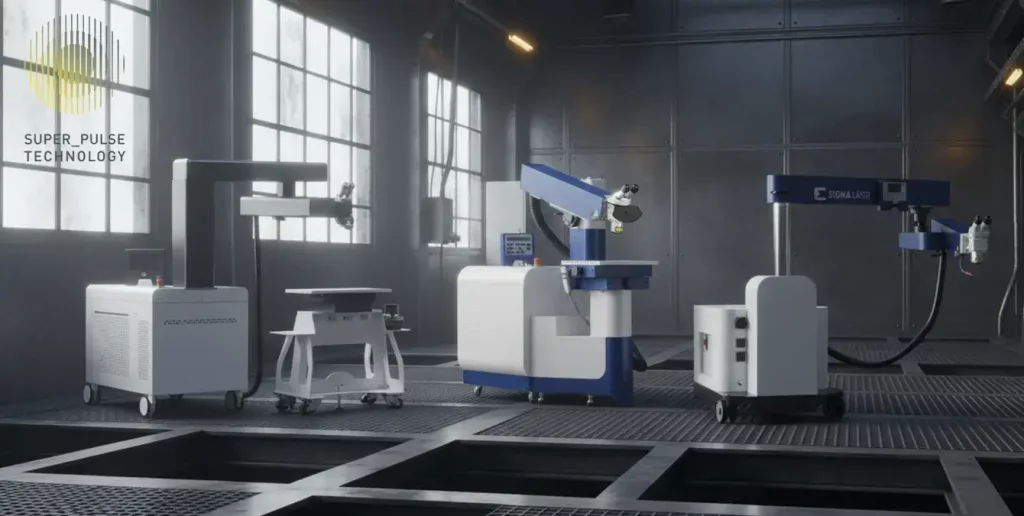
The Future of Welding with SPT Technology
Innovative Enhancements on the Horizon
As we look to the future of laser welding, SPT pulse modulation stands at the forefront of innovative enhancements. The focus on precision and efficiency in welding processes demands improvements in Super Pulse Technology. Enhanced control of heat input and refined energy optimization are two potential areas where SPT could further excel, driving its evolution as a critical component of advanced welding techniques.
Moreover, the development of more sophisticated pulse modulation systems is likely to be a core area of research. Such advancements could lead to higher peak power pulses being achievable without compromising weld quality, thereby stretching the capabilities of laser welding SPT even further. As new industrial materials and applications emerge, SPT will likely adapt to meet these evolving demands through ongoing technological advancements.
Implications for Industry Trends and Practices
The implications of these advancements for industry trends and practices are profound. As the benefits of Super Pulse Technology become more apparent, we can expect a shift towards its adoption across diverse industrial sectors. Conventional pulsing in welding may see decreased usage as industries place greater emphasis on consistency, efficiency, and cost-effectiveness.
Furthermore, the move towards sustainable manufacturing practices favors technologies that offer minimal waste and maximum precision—traits inherent in laser welding technology. Industry participants will likely integrate SPT pulse modulation systems into their operations to stay competitive. Such integration not only optimizes production but also enhances the quality of finished products, aligning with global market demands.
In conclusion, as industry requirements evolve, SPT pulse modulation is poised to play a pivotal role in transforming welding processes, making them more adaptable to future challenges while setting new benchmarks in quality and efficiency.
Conclusion: The Future and Impact of Super Pulse Technology in Welding
As we draw our discussion on Super Pulse Technology (SPT) in laser welding to a close, it’s crucial to reflect on the transformative implications this technology holds for the industry. Through our exploration, we have identified several core insights that underscore the significance of SPT in modern welding applications.
One of the primary takeaways is the evolution of pulse modulation that SPT epitomizes. By achieving more precise control over energy and heat delivery, SPT addresses critical challenges faced by conventional pulsing methods, such as thermal distortion and inconsistent welds. This enhanced control not only improves the quality and integrity of welds but also aligns with the industry’s increasing demand for precision and reliability. This demonstrates why understanding the benefits of Super Pulse Technology in welding is imperative for manufacturers striving for excellence in their operations.
Furthermore, the comparison between SPT pulse modulation and traditional methods makes it clear that SPT offers substantial advantages in terms of flexibility and adaptability. This technological advancement is especially crucial for applications where stringent thermal management is required, as seen in aerospace and medical device manufacturing. The ability of SPT to maintain consistent energy delivery and adjust in real-time based on feedback is setting new standards in laser welding technology and is a testament to its superiority over older techniques.
The importance of heat control, highlighted by Super Pulse Technology, is another significant consideration. By effectively managing the thermal profile during welding, SPT minimizes heat-affected zones and material degradation, which are common issues with conventional pulsing. These capabilities not only enhance the quality of the weld but also improve the longevity and durability of welded joints. Moreover, as industries continue their push towards sustainable practices, the energy efficiency and cost-effectiveness of SPT become increasingly relevant.
Looking to the future, the potential for further innovation within SPT is vast. As SPT continues to evolve, with enhancements in heat management and energy optimization, it is bound to extend its impact across more industrial sectors. The ongoing research and development in pulse modulation boast promising prospects for higher peak power pulses, which could further broaden the applications and efficiency of SPT.
In terms of industrial trends, the widespread adoption of Super Pulse Technology is poised to redefine standard practices. As industries prioritize consistency and sustainability, the shift from conventional pulsing to more advanced SPT solutions is expected to gain momentum. This paradigm shift will not only optimize production processes but also ensure higher quality and more reliable outcomes for finished products, meeting global market demands for precision and energy conservation.
To sum up, as we anticipate future challenges and opportunities, SPT pulse modulation stands as a powerful tool in the welding industry, ready to address the evolving needs with greater adaptability and performance. The implications of adopting Super Pulse Technology extend far beyond immediate welding applications, promising innovations that could redefine the future landscape of manufacturing. For further insights into the advanced technologies transforming welding, you can explore more about laser welding SPT and its ongoing developments.
As we navigate these advancements, it’s essential for industry stakeholders to embrace these innovations proactively, ensuring they remain at the forefront of technological progress in welding. The journey towards superior welding solutions is assuredly being led by the pioneering capabilities of Super Pulse Technology, heralding a new era of efficiency, quality, and sustainability in manufacturing processes.