
Troubleshooting Laser Beam Misalignment: A Critical Guide
In laser technology, precision is everything. Misaligned laser beams can degrade system performance, leading to costly downtime and reduced operational efficiency. For technicians and engineers, understanding and correcting laser beam misalignment is essential to maintaining peak functionality. This guide is designed to equip you with the knowledge and tools necessary to diagnose and rectify these issues effectively, ensuring your laser systems operate precisely and efficiently.
Why does laser beam alignment matter so much? Misalignment doesn’t merely affect accuracy; it can lead to inefficient energy usage and increased wear and tear on your equipment. Solid alignment ensures your lasers deliver optimal results consistently, maximizing their power, precision, and longevity. Addressing misalignment proactively can prevent unnecessary maintenance costs and extend the lifespan of your system, keeping disruptions to a minimum.
Let’s explore how to harness the full potential of your laser systems through proper alignment techniques. This comprehensive guide outlines everything from recognizing common alignment issues—such as beam divergence or distortion—to employing specific tools like laser alignment kits and beam profilers. By mastering these aspects, you unlock the ability to troubleshoot tilt angle errors effectively and optimize your system’s performance.
Laser beam misalignment can significantly impact the performance and efficiency of laser systems. Understanding how to diagnose and correct these issues is crucial for maintaining optimal functionality. This guide will delve into the importance of proper alignment, the tools required, and the steps to effectively address misalignment and tilt angle errors. Below are the key insights on solving these pressing issues.
- Understand the stakes of misalignment: Poor laser beam alignment can degrade performance and operational accuracy, leading to increased errors and inefficiencies in applications.
- Importance of laser alignment: Proper alignment ensures lasers operate at full capacity, maximizing precision, power, and lifespan, thereby preventing costly downtimes and maintenance.
- Use specialized alignment tools: Employ devices such as laser alignment kits, beam profilers, and levelers to achieve precise adjustments and ensure consistent calibration.
- Steps for correcting misalignment: Follow a systematic process involving initial assessment, adjustment of mirrors or lenses, and verification to fully correct any beam path deviations.
- Recognize common alignment issues: Identifying signs such as beam divergence, spot distortion, or focal point errors can aid in diagnosing alignment problems faster.
- Address laser tilt effectively: Correcting tilt angle errors involves adjusting the laser’s support mounts and ensuring the beam path aligns perpendicularly with target surfaces.
- Optimize performance through regular maintenance: Implement routine checks and recalibrations to prevent alignment drift and maintain consistent laser output quality.
- Integrate advanced calibration methods: Utilize automated alignment technologies and software to enhance precision and reduce manual adjustment times.
In this comprehensive guide, we offer a detailed exploration of each step involved in diagnosing and correcting laser beam misalignments. By understanding and implementing these strategies, laser operators can significantly improve their systems’ performance and reliability. Let’s delve deeper into the critical components and methods involved in troubleshooting these issues effectively.
Understanding Laser Beam Misalignment
Defining Misalignment Issues
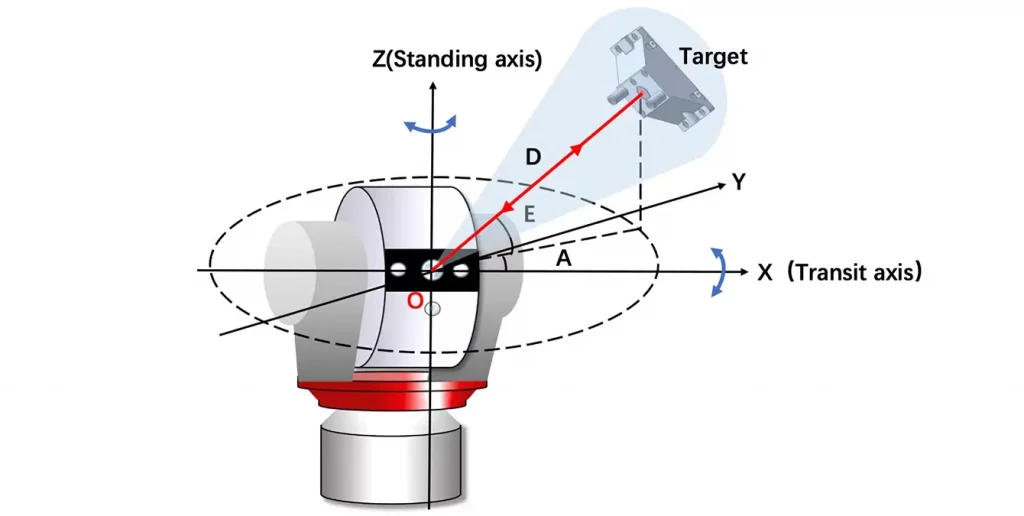
Laser beam misalignment refers to the deviation of the laser beam from its intended path. This issue can arise when the beam does not hit the target at the correct angle or is not perfectly linear. Misalignment can occur during the initial setup or due to external factors affecting the laser system.
Maintaining correct alignment is of utmost importance because even minor deviations can significantly impact the laser’s functionality and efficiency. Whether employed in industrial settings or scientific research, accurate laser alignment is crucial for achieving optimal performance and precision.
Causes and Consequences of Misalignment
Various factors can lead to laser alignment issues, including mechanical vibrations, thermal expansion, and inaccurate system setup. These causes can disrupt the alignment tools and components necessary for maintaining proper beam trajectory.
The consequences of laser beam misalignment are manifold. Firstly, misalignment can result in decreased accuracy and efficiency. Additionally, it can cause focal point discrepancies, leading to weak or inconsistent outputs, which is particularly problematic in applications requiring exact specifications.
These issues highlight why laser beam alignment is critical. Misalignment affects not only performance but also longevity and safety of the laser system. Frequent troubleshooting and readjustments are often required to correct these problems and prevent adverse effects on overall system operations.
By understanding the nature and impact of laser tilt errors and misalignment, technicians can better address how to fix laser beam misalignment, ensuring that their tools and processes are accurately aligned in order to maintain peak efficiency.
The Importance of Proper Laser Beam Alignment
Operational Efficiency and Precision
Proper laser beam alignment is crucial for enhancing operational efficiency and precision. Misaligned beams can lead to significant laser alignment issues, affecting the accuracy of the laser systems. By ensuring correct alignment, the beam path is optimized, allowing for precise control and reducing the risk of errors.
In operations requiring high precision, such as medical procedures or fabrication processes, even slight laser tilt errors can compromise the outcome. Correcting beam alignment ensures that the laser performs accurately, maintaining the intended trajectory and intensity, thus optimizing performance.
Preventive Maintenance and Longevity
Consistently addressing laser beam misalignment plays a vital role in preventive maintenance and extends the longevity of laser equipment. Misalignment not only affects performance but also increases wear and tear on optical components, leading to higher maintenance costs over time.
- Reduced stress on optical parts.
- Decreased need for frequent repairs.
- Long-term cost savings on maintenance.
Addressing such laser alignment issues early can prevent complex troubleshooting laser tilt problems later, as misalignment left unchecked might escalate to more severe mechanical issues. Thus, ensuring correcting beam alignment promotes both current performance and future equipment reliability.
Overall, understanding the impact of laser misalignment on performance underscores the necessity of regular calibrating lasers and utilizing dedicated alignment tools. Through proactive maintenance, businesses can benefit from enhanced operational efficiency and lower long-term expenses.
Tools and Equipment for Adjusting Laser Alignment
Essential Alignment Tools
When addressing laser alignment issues, having the right alignment tools is crucial. These tools are designed to help professionals and technicians precisely adjust the laser beam alignment, ensuring optimal performance. Among the primary tools are laser alignment kits and beam profilers.
Laser alignment kits typically consist of components like beam targets, alignment telescopes, and optical mounts, which facilitate the meticulous process of correcting beam alignment. These kits provide the necessary equipment to identify misalignment in the beam path quickly.
Beam profilers are another essential tool. They measure the laser beam’s spatial intensity and energy distribution, allowing for the detection of inaccuracies in the beam’s path. With this data, technicians can make precise adjustments, correcting any laser beam misalignment effectively.
Advanced Technologies for Alignment
Modern advancements in technology have introduced sophisticated methods for calibrating lasers. Devices equipped with digital sensors and automated systems provide higher accuracy in alignment tasks. Laser autofocus mechanisms, for example, adjust the beam path in real-time, reducing errors related to laser tilt.
Another innovative solution involves the use of interferometers, which measure wavefront distortions to detect misalignment with extreme precision. These technologies simplify and expedite the troubleshooting process, enabling efficient troubleshooting laser tilt problems.
The integration of these advanced technologies not only streamlines the correction of laser tilt errors but also minimizes the impact of laser misalignment on performance, ensuring reliable and consistent results in various applications.
Diagnosing Common Laser Beam Alignment Issues
Recognizing Misalignment Symptoms
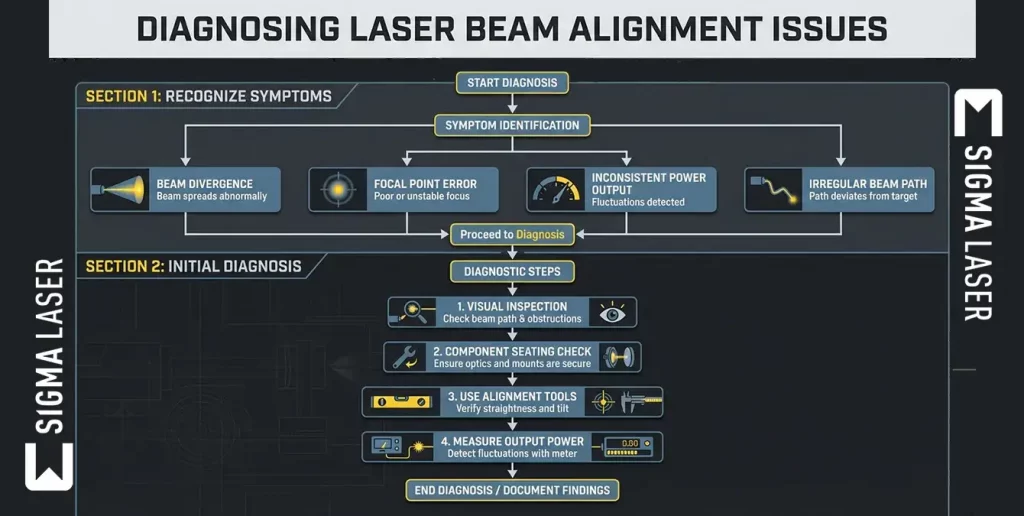
Understanding the symptoms of laser beam misalignment is key in maintaining optimal laser performance. Common signs of misalignment include beam divergence, where the laser spreads out more than intended, and focal point errors, which is when the laser fails to focus correctly on the target.
Beyond these, other symptoms can manifest, such as inconsistent power delivery and irregular beam paths. These indicators often lead to increased wear on components and reduced efficiency. Recognizing these early can prevent costly repairs and downtime.
Initial Diagnosis Steps
Initial diagnosis of laser alignment issues involves a systematic approach. Begin by visually inspecting the laser path as it operates. Check for obstructions and ensure that all components are correctly seated.
Use alignment tools to verify the straightness and accuracy of the laser beam. These tools are essential for troubleshooting and addressing laser tilt errors. If discrepancies are found, manual adjustments may be needed to ensure proper alignment.
Another crucial step in initial diagnosis is to measure the laser’s output power regularly. Fluctuations in power can indicate alignment problems. Implementing beam path correction techniques can address these issues and restore performance.
- Visual inspection for component seating and obstructions.
- Use of alignment tools for precision checking.
- Regular output power measurement to detect anomalies.
Step-by-Step Guide for Correcting Beam Misalignment
Assessment and Adjustment Process
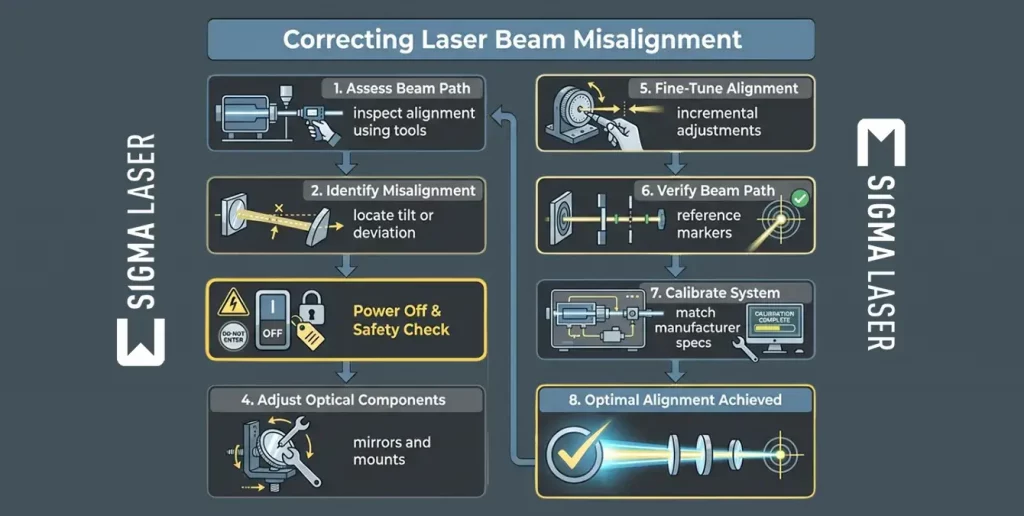
Correcting laser beam misalignment begins with a thorough assessment. Proper laser alignment issues identification is crucial. Start by examining the beam path correction using alignment tools. These tools assist in pinpointing any deviation in alignment as well as identifying potential laser tilt errors.
To proceed with the adjustment, first switch off the laser and ensure safety protocols are in place. Adjust the laser’s position iteratively, following the path visualized during the assessment. Key areas to examine include mirror mounts and optical components that may have shifted over time. Address the tilt angle errors by realigning to the specifications detailed in the laser manual.
- Identify the starting point of misalignment.
- Adjust components step-by-step using a calibrating lasers guide.
- Ensure each adjustment results in an incremental improvement in alignment.
- Repeat until optimal alignment is achieved.
Verification and Calibration
Verification is the next critical step once adjustments are made. Re-activate the laser and check the beam’s alignment using a reference beam path marker. Utilize alignment tools to verify precision and rectify any discrepancies still present.
Calibration ensures that the adjustments not only resolve the misalignment but also sustain optimal performance. Calibrating lasers involves synchronizing the beam path with performance metrics defined by the manufacturer. Continuous calibration is advisable to mitigate future issues and fine-tune the setup routinely. Through this systematic process, you ensure that the impact of laser misalignment on performance is minimized.
By following these steps, you can effectively resolve laser tilt errors and achieve precise beam alignment, optimizing the laser’s overall functionality.
Addressing Laser Tilt Angle Errors
Understanding Tilt Angle Deviations
Laser tilt angle errors occur when the orientation of the laser beam deviates from its intended path, differing from typical laser beam misalignment where the entire beam path shifts. Tilt errors can lead to significant laser alignment issues because they alter the angle of incidence at the target surface, affecting precision and performance.
These errors are primarily caused by mechanical stresses, thermal effects, or improper mounting, which can distort the structure supporting the laser. Understanding the root causes is crucial for effective troubleshooting laser tilt problems. Unlike general correcting beam alignment, addressing tilt errors requires meticulous attention to the angling mechanisms within the laser assembly.
Techniques for Correcting Tilt Errors
To correct tilt angle deviations, several practical techniques can be employed. First, using quality alignment tools is essential for precise calibration. Laser levels and goniometers can accurately detect minute deviations in the beam angle.
Begin by calibrating lasers using these tools to identify discrepancies. Once identified, physically adjust the laser mounting. Ensuring that the mount is stable and free from any stressors helps maintain the alignment.
- Inspect the mounting brackets and supports for any signs of wear or slippage.
- Realign mechanical components to ensure the laser remains at the correct tilt.
- Utilize software solutions that offer real-time feedback on beam path correction.
By implementing these techniques for correcting tilt errors, you ensure that the laser system maintains optimal performance. This proactive approach minimizes the impact of laser misalignment on performance, safeguarding your projects against unwanted deviations.
Maintaining Optimal Performance Through Regular Checks
Routine Alignment Checks
Implementing routine alignment checks is essential for preventing laser beam misalignment and ensuring consistent performance. Over time, even minor shifts in the setup can lead to significant laser alignment issues, impacting the precision of laser operations. By scheduling regular inspections, you can identify potential problems early and take corrective measures before they become critical.
These checks should include a thorough examination of the alignment tools and the beam path. Engaging in systematic inspections helps in diagnosing and rectifying laser tilt errors that might affect the overall functionality of the laser.
Recalibration Strategies
Recalibration is a proactive strategy to maintain optimal laser performance. Each component of the laser setup should be calibrated according to the manufacturer’s guidelines to eliminate discrepancies in beam path correction. Recalibration might involve adjusting mirrors, lenses, and other critical parts of the equipment.
Regular recalibration minimizes the risk of prolonged operation under misaligned conditions, which could otherwise degrade performance. Developing a tailored recalibration strategy based on specific operational needs can further assist in correcting beam alignment and preventing future issues.
By adopting these practices, you ensure that laser systems operate at their maximum potential, reducing downtime and enhancing precision in calibrating lasers. This commitment to maintaining high standards through routine checks and recalibration is vital in extending the lifespan and reliability of laser equipment.
Conclusion: Ensuring Precision and Performance with Proper Laser Alignment
The insights from our exploration into laser beam misalignment highlight the intricate factors impacting laser performance and emphasize the necessity of precise alignment. From understanding the fundamental issues to employing advanced alignment tools, the article outlines a comprehensive approach for maintaining optimal laser functionality.
Firstly, recognizing and addressing the sources of misalignment, such as mechanical vibrations, thermal expansion, and improper setup, are key. These factors not only diminish efficiency but also undermine the very purpose of employing lasers in high-precision tasks. By scrutinizing these elements, technicians are better prepared to mitigate alignment errors before they escalate into severe system complications.
Furthermore, the article underscores the significance of operational efficiency and precision, illustrating the benefits of maintaining an aligned state. Accuracy in the beam trajectory ensures that lasers function optimally across various applications, from industrial settings to scientific pursuits. This precision is not merely a technical requirement but a strategic advantage, reducing errors and enhancing output quality.
Preventive maintenance also plays a pivotal role in the broader context of laser equipment longevity. By consistently monitoring and correcting beam alignment, one can substantially reduce wear and tear on optical components, leading to fewer repairs and lower maintenance costs in the long term. This proactive care not only safeguards investment in equipment but also ensures continual operational capability.
Incorporating advanced technologies and tools, such as alignment kits and beam profilers, empowers technicians to perform precise adjustments. Utilizing these modern solutions effectively reduces the time required for troubleshooting and fosters a deeper understanding of the beam dynamics at play. This technological integration ensures that the impact of misalignment is minimized, providing reliable and consistent results.
Finally, regular diagnostic and recalibration strategies are pivotal in maintaining laser alignment and preventing future issues. Routine checks and systematic recalibrations, guided by manufacturer protocols, help preserve the equipment’s integrity and performance standards. Such diligence prevents minor issues from becoming major setbacks, thereby ensuring that lasers remain at peak efficiency.
The necessity for precise laser alignment is clear: it is crucial for achieving the desired performance and efficiency in any application involving laser technology. By integrating regular maintenance, cutting-edge tools, and strategic recalibrations, stakeholders can ensure that their laser systems remain robust, reliable, and ready to meet both current and future demands.
As we look towards the future, the ongoing development and refinement of alignment technologies promise enhanced capabilities in addressing laser misalignment challenges. This progression offers exciting prospects for increased precision and efficiency, fostering innovation across industries that rely heavily on laser technologies.